
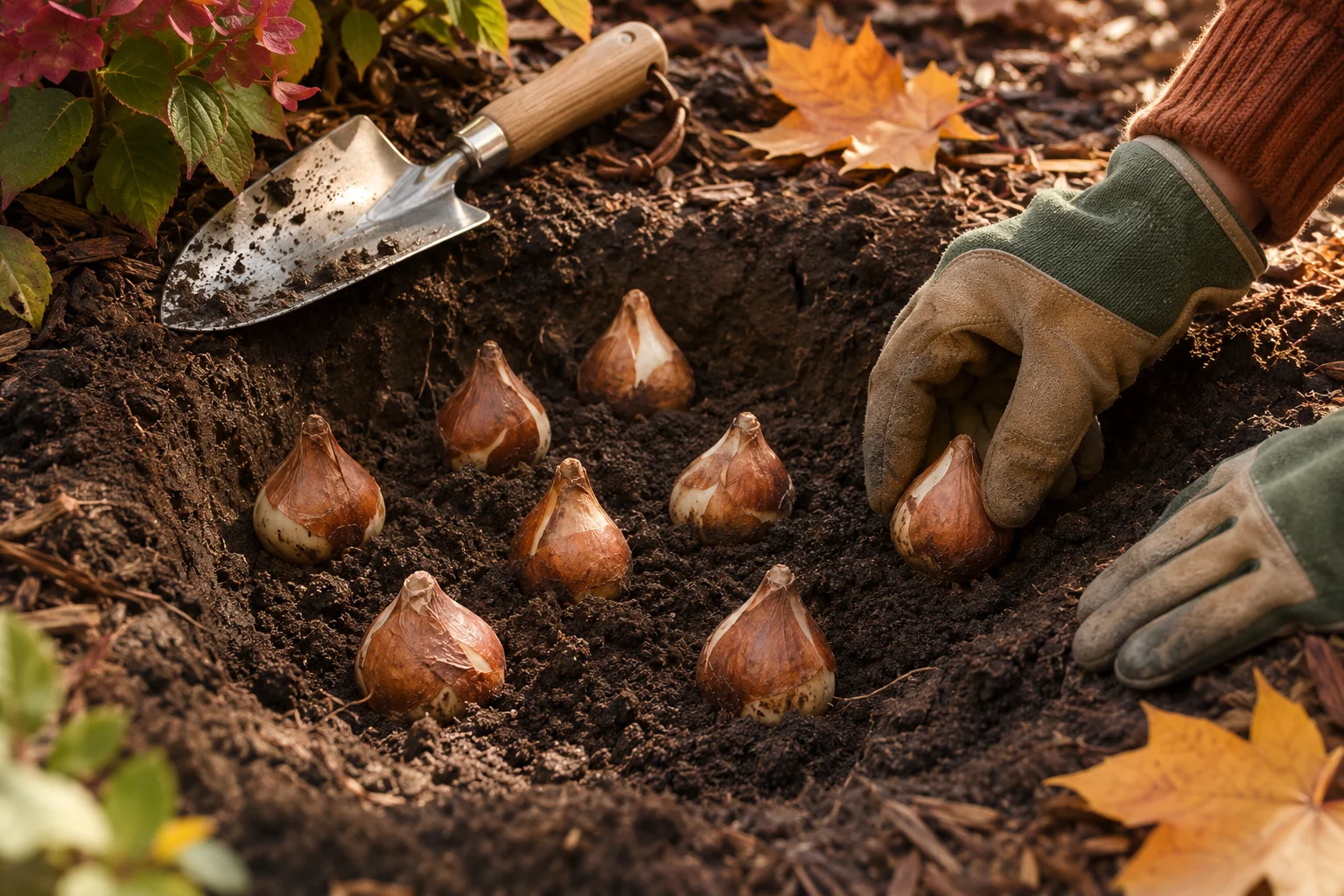
The mesh bag of bulbs is sitting by the door, papery skins flaking onto the floor every time you move it. Outside, the maples have gone amber and the soil still smells warm and earthy. You know these lumpy brown things are supposed to become a sheet of tulips and daffodils in April, but which end goes down, and how deep is deep enough?
Learning how to plant spring bulbs takes one fall afternoon and a few numbers: when the soil is cool enough, how deep each bulb goes, and how to keep squirrels from digging up your work. This guide walks through all of it for a garden bed, then for a pot on a porch or balcony, so you can plant this week and stop guessing.
Quick answer: Plant spring bulbs in fall, once the soil at planting depth stays below 60°F, roughly four to six weeks before the ground freezes. Dig a hole two to three times as deep as the bulb is wide (6 to 8 inches for tulips and daffodils, 3 to 4 inches for crocus), set the bulb pointed end up, cover it, water once and mulch.
One note on the name: “spring bulbs” means bulbs that flower in spring, and they go in the ground in fall. Summer bloomers such as dahlias and gladiolus are the ones you plant in spring, after the soil warms.
Table of Contents
At a Glance
- Plant in fall once the soil at planting depth stays below 60°F: mid-September to mid-October in the coldest northern states, October to early November across much of the Midwest and inland South, and late December to early January on the Southeast coast.
- Large bulbs (tulips, daffodils, hyacinths) go about 6 to 8 inches deep; small bulbs (crocus, squill, snowdrops) go 3 to 4 inches deep.
- Set the pointed end up; if you can’t find it, lay the bulb on its side.
- Good drainage matters more than fertilizer, which most one-season plantings don’t need.
- Tulip, daffodil and hyacinth bulbs are toxic to dogs and cats, so store and plant them out of reach.
What You’ll Need
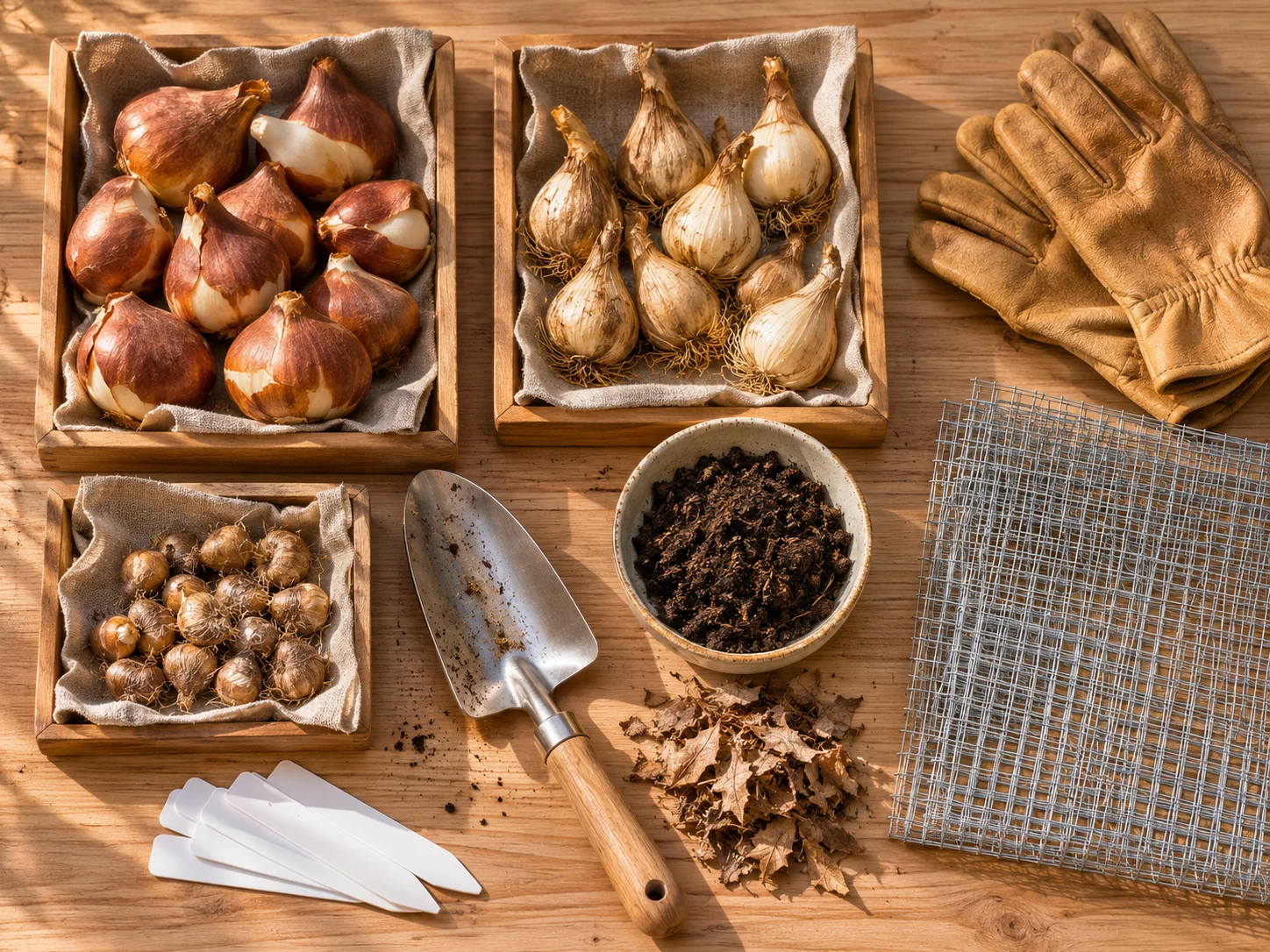
You need bulbs, a digging tool and some way to cover the bed afterward; everything else is optional and depends on your yard. Buy bulbs that feel firm and heavy for their size, and skip any that are soft, moldy or shriveled.
Essentials:
- Spring-flowering bulbs, such as tulips (Tulipa), daffodils (Narcissus), crocus (Crocus), hyacinths (Hyacinthus orientalis) or grape hyacinths (Muscari)
- A hand trowel, bulb planter or spade (a spade is faster when you plant a group in one wide hole)
- Compost or other organic matter for heavy or poorly drained soil
- Garden gloves
- Shredded leaves, pine straw or bark mulch
- Plant labels or markers
Optional, depending on your situation:
- Galvanized hardware cloth with 1/2-inch openings, if squirrels, chipmunks or voles live nearby
- A 14- to 20-inch wide container and fresh potting mix, if you are planting on a porch or balcony
- A slow-release fertilizer, only for bulbs you want to keep for several years
Before You Start: Timing, Site and Soil
Spring bulbs need a long cold spell before they bloom, so the right planting time depends on soil temperature, not a date on the calendar. Clemson Extension advises waiting until the soil at planting depth stays below 60°F, and notes that most bulbs need a 12- to 16-week chilling period to flower.
When to Plant Spring Bulbs Where You Live
Where winters are cold, the goal is to get bulbs in about four to six weeks before the ground freezes, so they have time to grow roots first. University of Illinois Extension puts that window at mid-October to early November for Illinois, while University of Minnesota Extension says mid-September to mid-October is usual there. Use the table below as a starting point, then let your soil have the final say.
| Where you garden | Typical planting window | Good to know |
|---|---|---|
| Coldest northern states, such as Minnesota | Mid-September to mid-October | Tulips can still go in as long as you can dig |
| Cold, dry areas, such as Colorado | September and October | Bulbs planted after October may bloom unevenly |
| Midwest, such as Illinois and Iowa | October to early November | Aim for four to six weeks before the ground freezes |
| Inland Southeast, such as the Carolina Piedmont | October and November | Wait until the soil at planting depth stays below 60°F |
| Mild-winter Southeast coast | Late December to early January | Refrigerate tulips and hyacinths before planting |
A cheap soil thermometer pushed to bulb depth answers the question faster than any calendar. The rhythm is the same as planting garlic in the fall: cool soil, roots in autumn, growth in spring.
Mild winters change one thing. Where winters are too warm to chill bulbs naturally, as on the Southeast coast, keep tulip bulbs in the refrigerator from purchase until planting, and give hyacinths six to eight weeks of refrigeration first. Store them in a ventilated paper or mesh bag, label the bag as not edible, and keep fruit out of that fridge drawer, since the ethylene gas fruit gives off can stop bulbs from blooming.
If you bought bulbs before the soil has cooled, keep them somewhere cool, dry and airy below 60°F until planting day.
Check Sun, Drainage and Soil pH
- Sun: Full sun or part shade works, and flowers last longer when they skip harsh midday sun. Daffodils need at least six hours of sun a day while their leaves are green.
- Drainage: Bulbs rot in soggy ground. If water stands in the spot for hours after rain, choose another place, build a raised bed or plant in a pot.
- Soil pH: Aim for a pH between 6 and 7; a soil test is the only way to know yours.
How to Plant Spring Bulbs Step by Step
The method below works for any common spring bulb in a garden bed. Once the soil is cool and the spot is chosen, work through the steps in order.
Step 1: Pick a Sunny, Well-Drained Spot
Choose where you will see the flowers from a window or path in early spring, when you’re not out in the garden much. Bulbs look best in groups rather than single-file lines, so mark out a patch or a curving drift rather than a row. Start with at least five or six bulbs of one kind per group; most kinds other than tulips and hyacinths fill in a little more each year.
Early bloomers like crocus and snowdrops can go under deciduous trees, because they flower before the leaves fill in. Mid- and late-spring bulbs such as tulips need a spot that stays sunny. For a shady corner, plan bulbs for the early slot and fill in later with plants from these shade flower garden ideas.
Step 2: Loosen the Soil and Add Compost
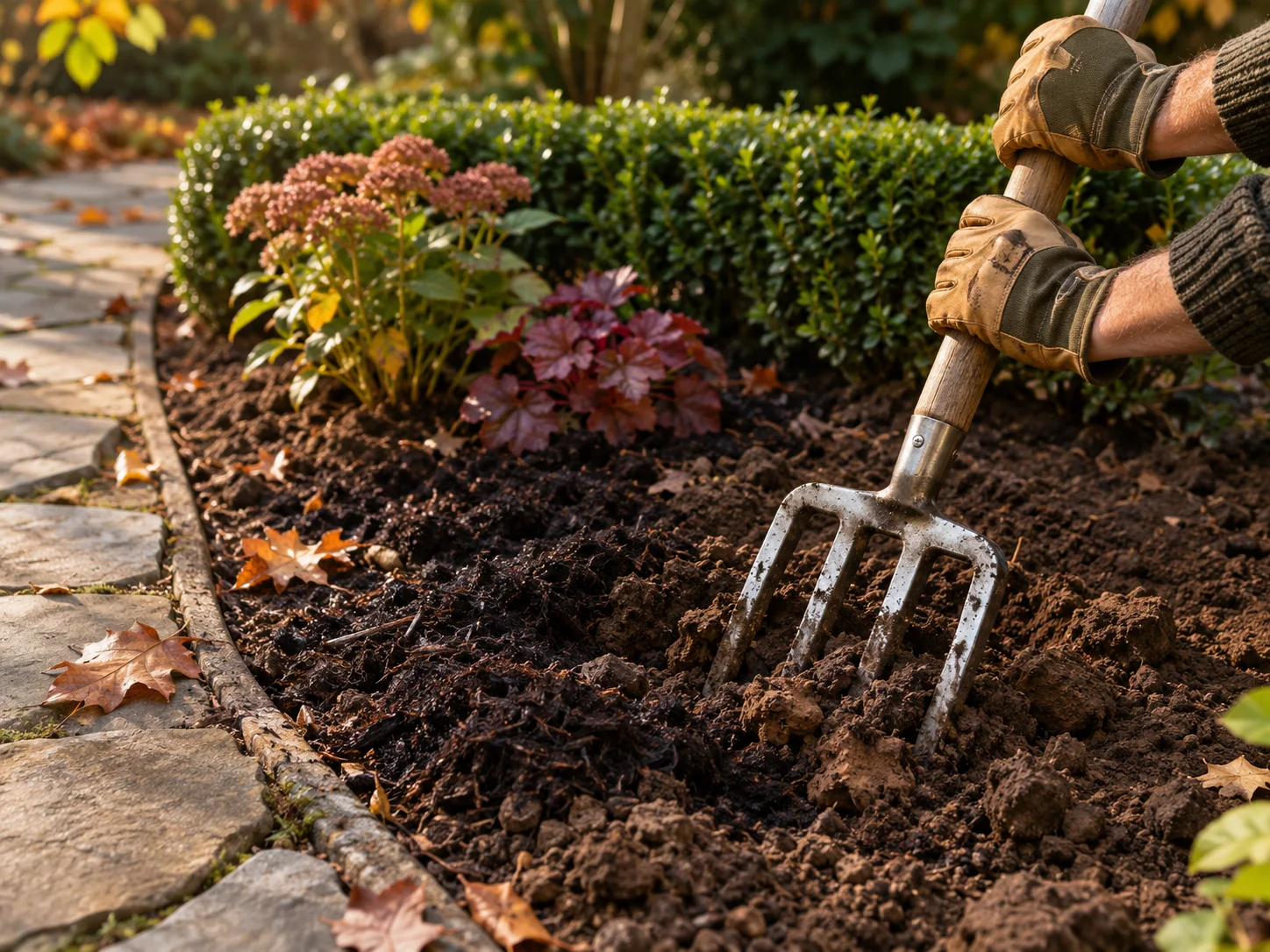
Dig or fork the bed to about 10 to 12 inches deep and break up clods. If your soil is heavy clay or drains slowly, mix 2 to 3 inches of compost or other organic matter through that loosened layer. This gives roots an easy start and lets winter rain drain away from the bulbs.
Fertilizer is optional here. Iowa State Extension notes it isn’t typically necessary for the first spring’s flowers, since bulbs already hold the food for that bloom. If you want tulips or daffodils to return for years, a slow-release fertilizer worked in at planting, used at the label rate, supports next year’s bulb.
Step 3: Dig to the Right Depth
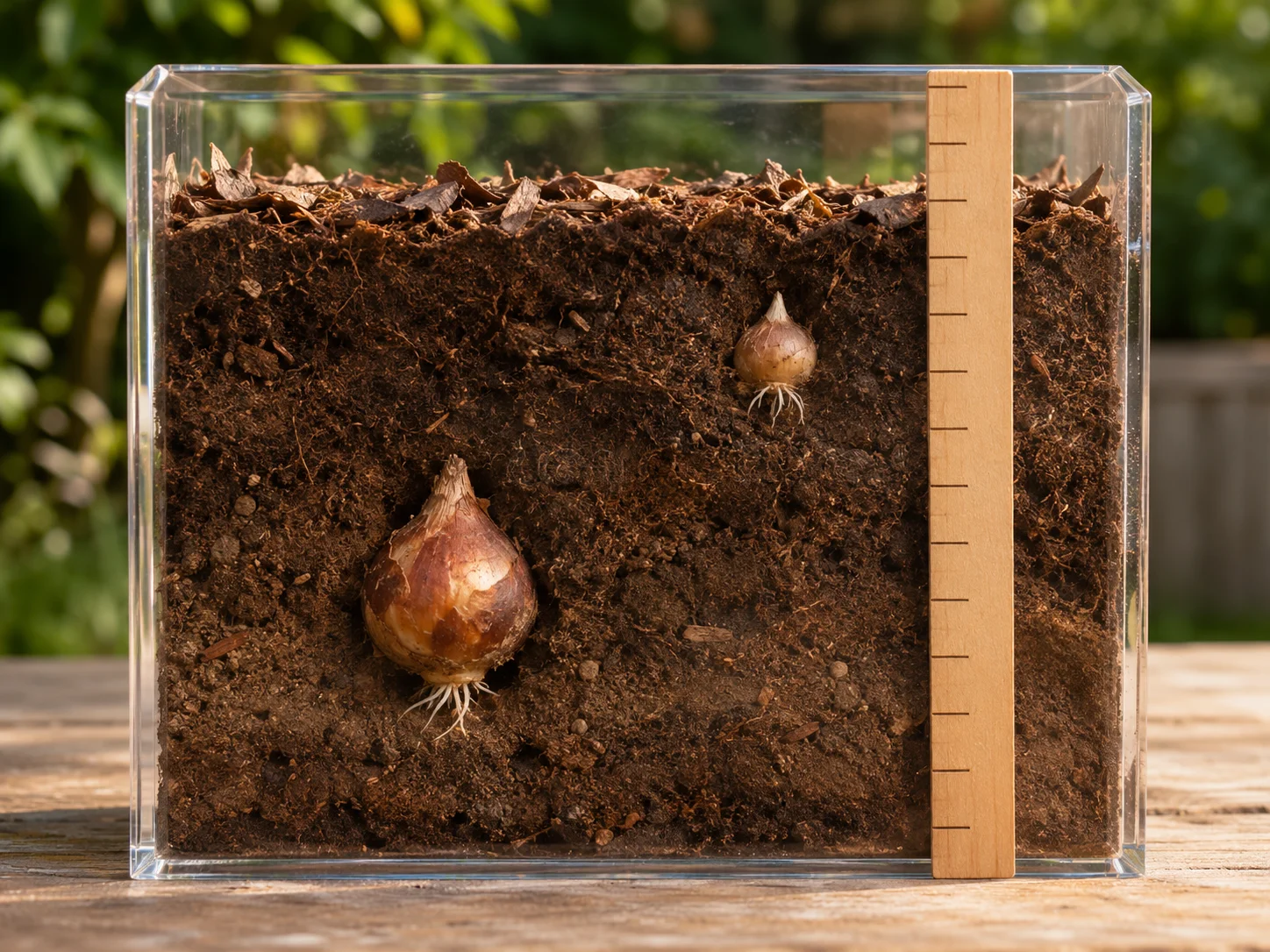
Plant each bulb about two to three times as deep as the bulb is wide. In practice, large bulbs go 6 to 8 inches deep and small bulbs 3 to 4 inches deep, measured from the base of the bulb to the soil surface. Digging one wide hole for a group is quicker than many small ones and gives a fuller look.
Soil type can nudge the number. In light, sandy soil, aim for the deeper end of the range; in heavy clay, plant about 1 to 2 inches shallower so the bulb doesn’t sit in wet soil.
| Bulb | Planting depth | Spacing | Animal interest |
|---|---|---|---|
| Tulip (Tulipa) | 6-8 in | 4-6 in | High: often dug and eaten |
| Daffodil (Narcissus) | 6-8 in | 4-6 in | Low: rarely eaten |
| Hyacinth (Hyacinthus orientalis) | 4-8 in | 3-6 in | Usually low |
| Crocus (Crocus) | 3-4 in | 2-3 in | Moderate to high |
| Grape hyacinth (Muscari) | 3-4 in | 2-3 in | Usually low |
| Snowdrop (Galanthus), Siberian squill (Scilla siberica) | 3-4 in | 2-3 in | Usually low |
Step 4: Set Bulbs Pointed End Up, in Groups
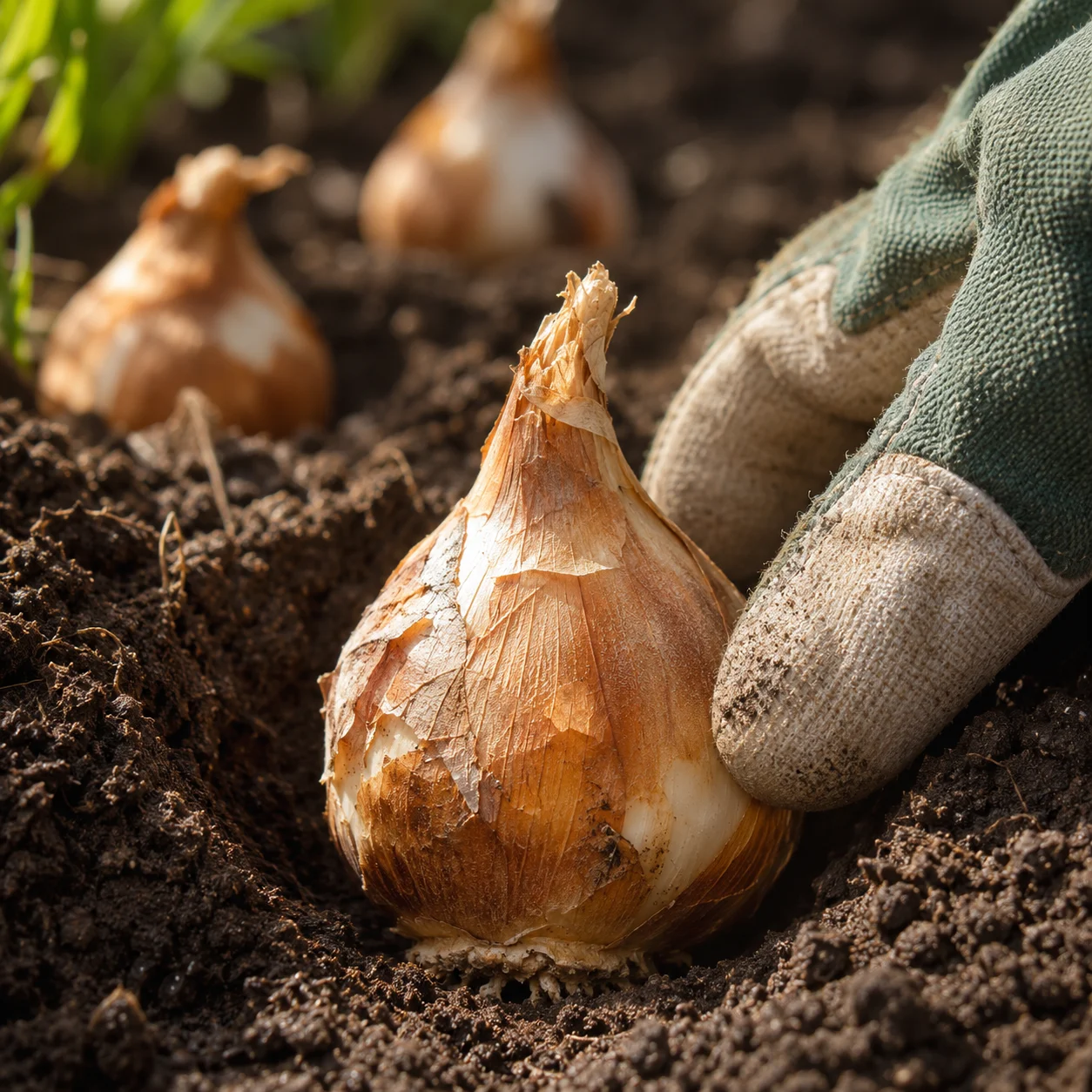
Place each bulb with its pointed tip up and the flat root plate down. Some bulbs, especially small corms, make this hard to judge; if you see no tip, roots or buds, set the bulb on its side and it will still find its way up.
Space them using the table above and press each one gently into the soil so it sits firm. For a fuller look, group several of one kind together, and repeat that clump along the bed for rhythm. Tall tulips at the back and low crocus at the front keep every bloom visible.
Pets and kids: The ASPCA lists tulips as toxic to dogs and cats, with the highest concentration of toxin in the bulb, and also lists daffodils and hyacinths as toxic; daffodil bulbs are the most poisonous part of that plant. Plant when dogs are indoors, don’t leave loose bulbs or the bag on the ground, and call your vet or a pet poison hotline if one gets chewed.
Step 5: Add Animal Protection If You Need It
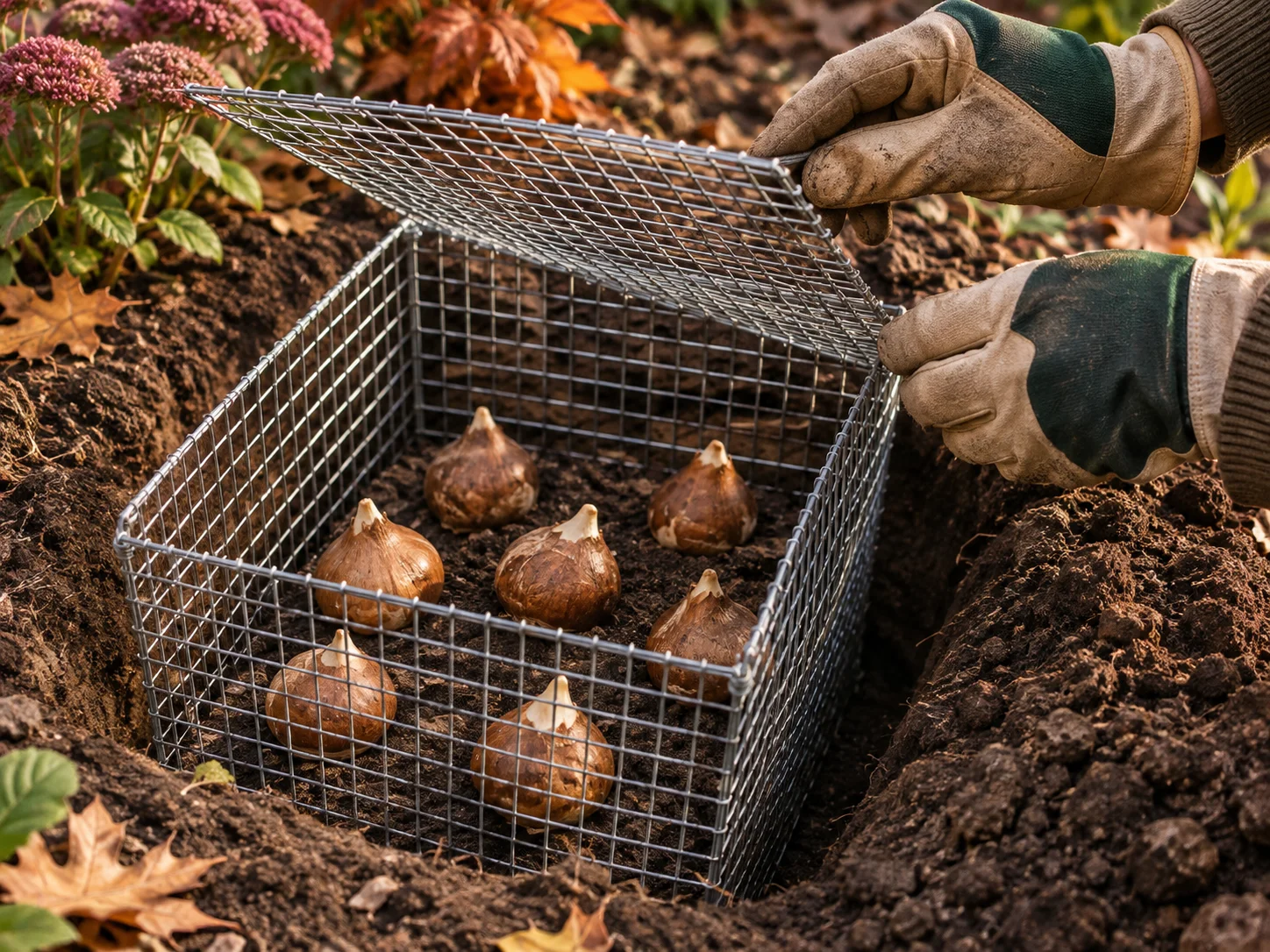
If tulips or crocus have vanished from your yard before, protect them now; daffodils usually need nothing. The only sure barrier is wire mesh. UNH Extension suggests building cages from 1/2-inch galvanized hardware cloth, setting the bulbs inside root end down and burying the whole cage at planting depth.
A simpler option for squirrels is a sheet of chicken wire or hardware cloth laid flat over the filled bed and weighted with bricks. Remove it in early spring before the tulip leaves come up, or they will grow tangled in it.
Planting bulbs animals tend to leave alone helps too. Daffodils, snowdrops, glory-of-the-snow (Chionodoxa), Siberian squill, grape hyacinth and allium (Allium) are usually skipped, although a curious squirrel may still dig them up once. Repellents need reapplying often, especially after each rain. If deer visit your yard as well, daffodils, alliums and snowdrops also earn a spot on our list of deer resistant flowers.
Step 6: Backfill and Water Once
Refill the hole with the loosened soil, firm it gently with your hands to remove air pockets, then water the area well. That single soaking settles soil around the bulbs and starts root growth, which matters most in a dry fall.
After that, let the weather do the work. Normal rainfall usually covers bulbs through winter, and extra watering in cold, wet soil only raises the risk of rot.
Step 7: Mulch and Label
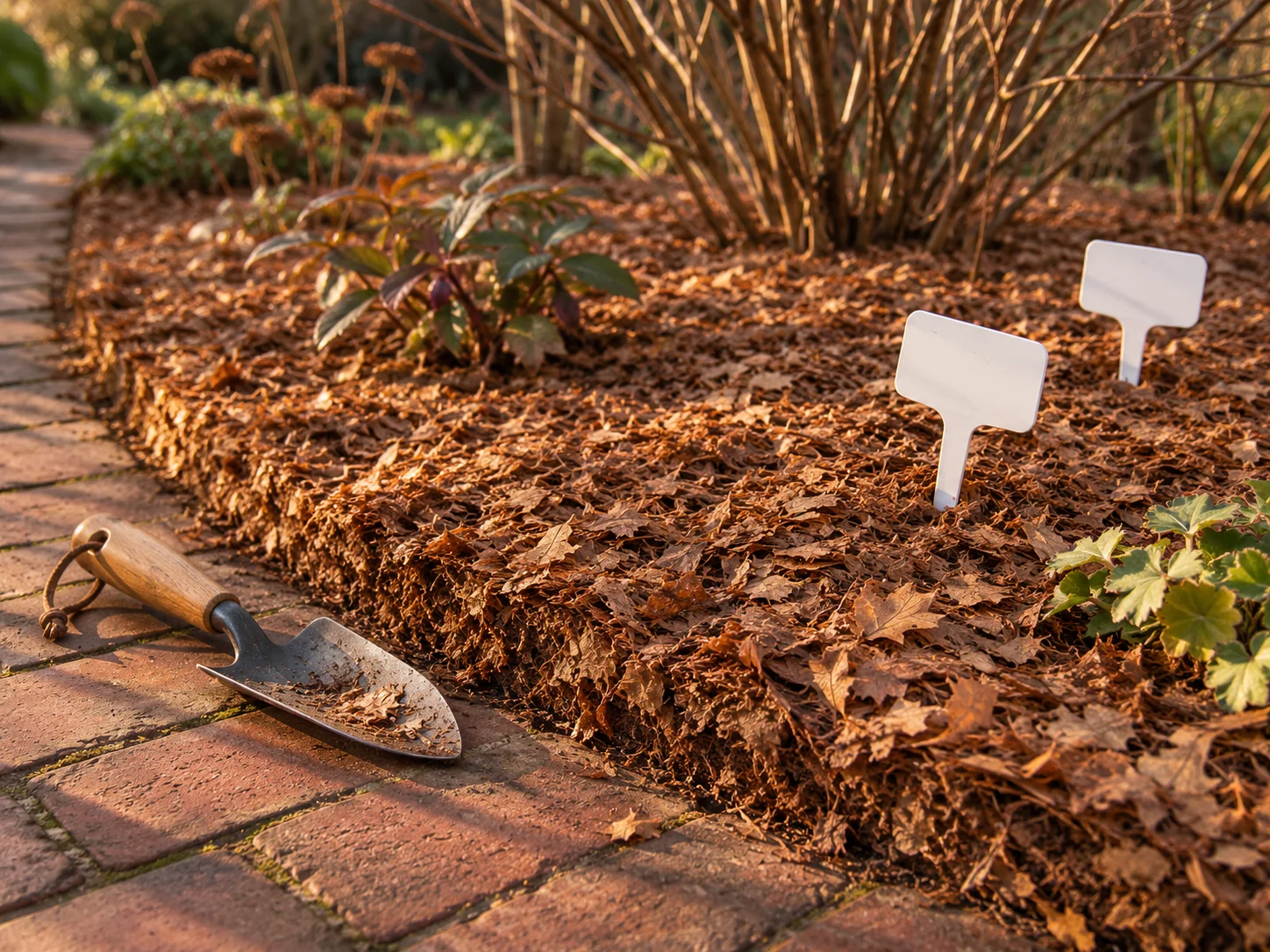
Cover the bed with 2 to 3 inches of mulch after planting. Mulch evens out soil temperature and moisture, and in spring it keeps mud from splashing onto the petals.
Push a label in at each group with the bulb name and the date. In April, it stops you from digging into a bed that looks empty, and later it tells you which variety did best.
Planting Spring Bulbs in Pots
No yard? A wide pot on a porch, stoop or balcony works well, and containers often drain better than garden soil. Oregon State University Extension says a 14- to 20-inch wide pot can hold 20 to 30 bulbs or more, planted much closer than in the ground.
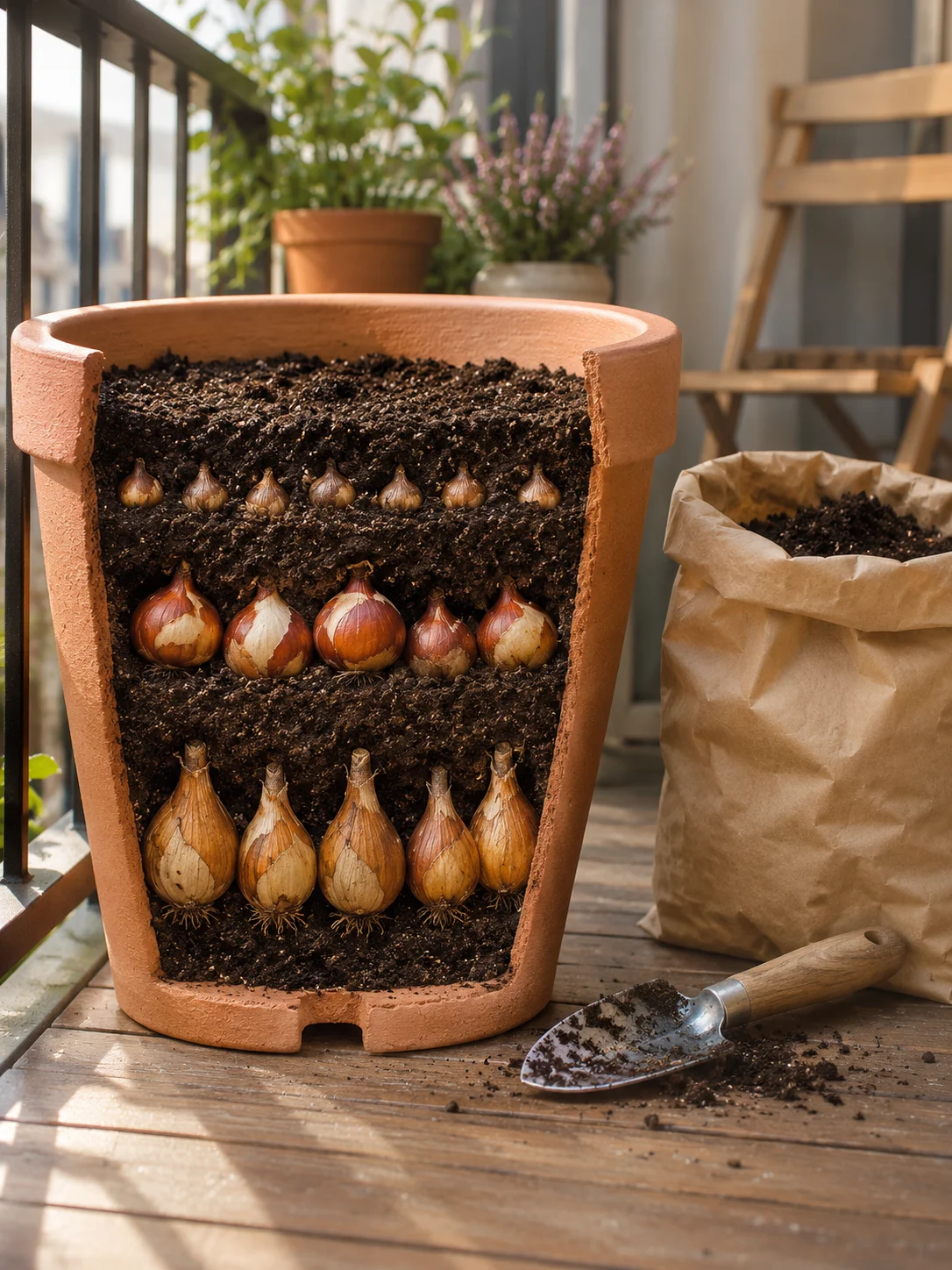
Use fresh, well-draining potting mix, never garden soil, in a pot with drainage holes. For a layered pot that blooms in waves, try this order:
- Fill the pot a little more than halfway with mix.
- Set large bulbs such as daffodils on that layer, tips up, about 1/2 inch apart.
- Cover them with a few inches of mix, then add a layer of tulips.
- Add more mix, then a top layer of small bulbs such as crocus or grape hyacinth.
- Top off with mix and water thoroughly.
Winter is the tricky part. Pots need cold to bloom, so keep them outdoors in a sheltered spot, but a small pot can freeze right through. If temperatures drop below about 28 to 30°F, move the pot temporarily into an unheated garage, shed or basement. Bigger pots hold warmth better and are less likely to freeze through, and our guide to winterizing potted plants on a balcony covers wrapping and grouping pots in more detail.
Water once at planting, then only if the mix goes completely dry. Bulbs need little water until growth resumes in late winter. When shoots appear, move the pot back into the sun; it makes a ready-made centerpiece for one of these farmhouse spring porch planter ideas.
Fall to Spring Bulb Timeline
Most of the work happens in one afternoon; the rest is patience and a little aftercare. Exact timing shifts with your climate, so follow the stage rather than the month.
| Stage | What to do |
|---|---|
| Bulbs arrive, soil still warm | Store cool and dry below 60°F; refrigerate tulips and hyacinths in mild-winter areas |
| Soil below 60°F at planting depth | Plant, water once, mulch 2-3 in |
| Winter | Leave beds alone; move pots under cover during hard freezes |
| Late winter to early spring | Remove wire laid over beds before shoots emerge; put pots back in sun |
| After flowers fade | Snap off faded tulip and daffodil flowers; leave leaves for at least 6 weeks or until they turn brown |
That last row is what decides next year’s flowers. The leaves feed the bulb for the following spring, so leave them in place even when they look untidy. Planting perennials or annuals around the bulbs hides the yellowing foliage nicely.
Common Mistakes
- Adding bone meal “for the bulbs.” It isn’t needed for the first bloom, and it can attract rodents that then dig bulbs up. See Step 2 for when feeding makes sense.
- Planting by the calendar in a warm fall. Bulbs need that cool soil to root on schedule, so check the temperature first (see When to Plant Spring Bulbs Where You Live).
- Storing chilling bulbs next to fruit. Ethylene from ripening fruit can stop flowering.
- Cutting or braiding leaves right after bloom. This starves next year’s bulb; let foliage die back naturally.
- Planting in a low, soggy spot. No depth or fertilizer fixes poor drainage.
Troubleshooting
Holes in the bed and missing bulbs
Squirrels, chipmunks, voles and mice all dig up or eat freshly planted bulbs, with tulips and crocus the usual targets. Replant what you can, then cage the next planting or lay mesh over the bed as in Step 5, and swap tulips for daffodils or alliums where losses keep happening.
Flowers open right at soil level on very short stems
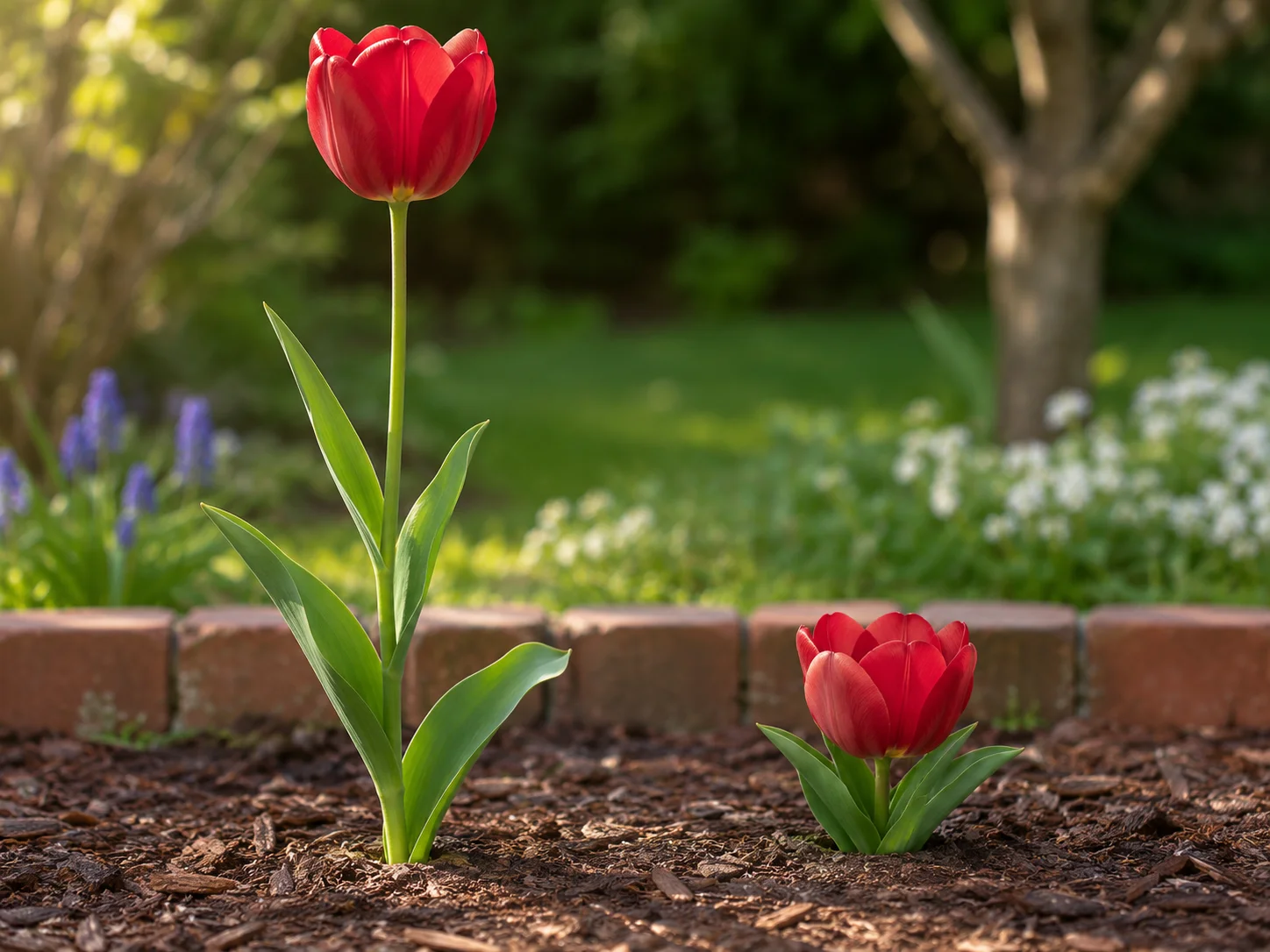
This usually means the bulbs didn’t get enough cold. It’s common in mild-winter areas and in pots kept somewhere too warm. Next fall, pre-chill tulips and hyacinths in the refrigerator before planting, or choose bulbs that need less chilling.
Leaves but no flowers
Several causes look the same. Bulbs may have been small or stressed when planted, the spot may be too shady, or last year’s leaves were cut before they browned. Tulips and hyacinths also tend to decline after a year or two, so fewer flowers in year three is normal for them. Move bulbs to more sun, leave foliage longer, and treat tulips as a fresh planting every fall or two.
Green leaves poking up in late fall or winter
Some bulbs send up leaves in late fall or winter. This is normal, and the leaves need no special protection; the flower buds are still safely below ground.
Soft, mushy or moldy bulbs when you dig
Rot usually follows soil that stays wet or heavy watering, and bulbs that were already soft at planting rarely recover. Discard soft bulbs, improve drainage with compost or a raised bed, and plant firm, healthy bulbs in that spot next fall.
Frequently Asked Questions
Is it too late to plant bulbs in December?
On the Southeast coast, no: late December to early January is the normal window there. In colder areas, bulbs planted after October may not root enough to bloom evenly, and freeze-thaw cycles can push unrooted bulbs up out of the soil. Tulips are the most forgiving, so if you can still dig, plant them now and cover the bed with mulch; flowering may be less even the first spring.
Will my tulips come back every year?
Often only for a year or two. Tulips and hyacinths tend to decline after their first seasons, so plan to refresh them with new bulbs every fall or two. To give any bulb its best chance, leave the leaves until they brown and, for permanent beds, use a slow-release fertilizer at planting as described in Step 2.
I forgot to plant my bulbs. Can I plant them in spring?
Don’t hold them until spring. Unplanted spring bulbs usually dry out and die over winter, and the ones that survive tend to bloom poorly, so plant them as soon as you find them, any time the ground isn’t frozen. If the ground is already frozen, pot them up and force them as described in the next answer. Saving them for next fall rarely works.
Can I grow spring bulbs indoors in pots instead?
Yes, by forcing them. Pot hardy bulbs in October, keep the pots somewhere between 35 and 48°F (40°F is ideal) for about 13 to 14 weeks, then bring them into warmth; most bloom three to four weeks later. Forced bulbs are usually spent afterward, so treat them as a one-season display.
When should I pull back the mulch in spring?
Remove heavy mulch in early spring before shoots break through, or leave a light layer in place if the shoots can push through it easily. Any wire or mesh laid over the bed should come off at the same time, before leaves start to grow into it.
What Actually Matters
Knowing how to plant spring bulbs comes down to three things: cool soil at planting time, the right depth, and a spot where water drains away. Get those right and most bulbs forgive everything else, including uneven spacing and a bulb or two set sideways.
If you only do one thing this week, push a thermometer into the soil. Once it reads below 60°F at bulb depth, plant. For a first attempt, we’d start with daffodils, because animals rarely bother them.
Then add a few early bloomers near the front walk, where you’ll see them first. If you’re still planning that space, these low maintenance front yard flower garden ideas show what to grow once the bulbs fade.
Sources
- Clemson Cooperative Extension, Home and Garden Information Center – Spring-Flowering Bulbs – soil temperature below 60°F, chilling period, Southeast planting times, pre-chilling, sun, drainage, pH, mulch depth, animal damage, foliage aftercare
- University of Illinois Extension – How to plant flower bulbs for a colorful spring display – planting four to six weeks before the ground freezes, Illinois planting window
- University of Minnesota Extension – Planting bulbs, tubers and rhizomes – northern planting window, late tulip planting, spring planting of tender summer bulbs
- Iowa State University Extension and Outreach – How do I plant spring-blooming bulbs? – depth rule, depths and spacing, bulb orientation, fertilizer, watering after planting
- Iowa State University Extension and Outreach – Do you have unplanted bulbs? There’s still time to plant them – October planting, late planting, forcing leftover bulbs
- Iowa State University Extension and Outreach – How can I keep squirrels from digging up newly planted tulip bulbs? – mesh over the bed and spring removal
- University of New Hampshire Extension – How can I keep wildlife from eating my new bulbs? – hardware cloth cages, bulbs animals tend to avoid, bone meal and rodents, repellents
- Oregon State University Extension Service – Plant bulbs in pots now for vibrant blooms in spring – pot size and bulb numbers, layering, freeze protection for pots
- ASPCA Animal Poison Control – Tulip, Daffodil and Hyacinth plant entries – toxicity to dogs and cats
- University of Georgia Extension, Forsyth County – Plant bulbs now for an early start on spring – drainage, sun for early versus later bloomers, group size, labeling chilled bulbs, tulip and hyacinth decline
- Colorado State University Extension – Fall-Planted Bulbs and Corms – September and October planting window, late planting, shallower planting in heavy soils, spring mulch removal
- Oklahoma State University Extension – Protect bulbs from pesky critters – bulbs squirrels tend to avoid, including hyacinth
- University of Missouri Extension – Forcing Bulbs for Indoor Bloom – cold storage temperatures and weeks for forced bulbs.