

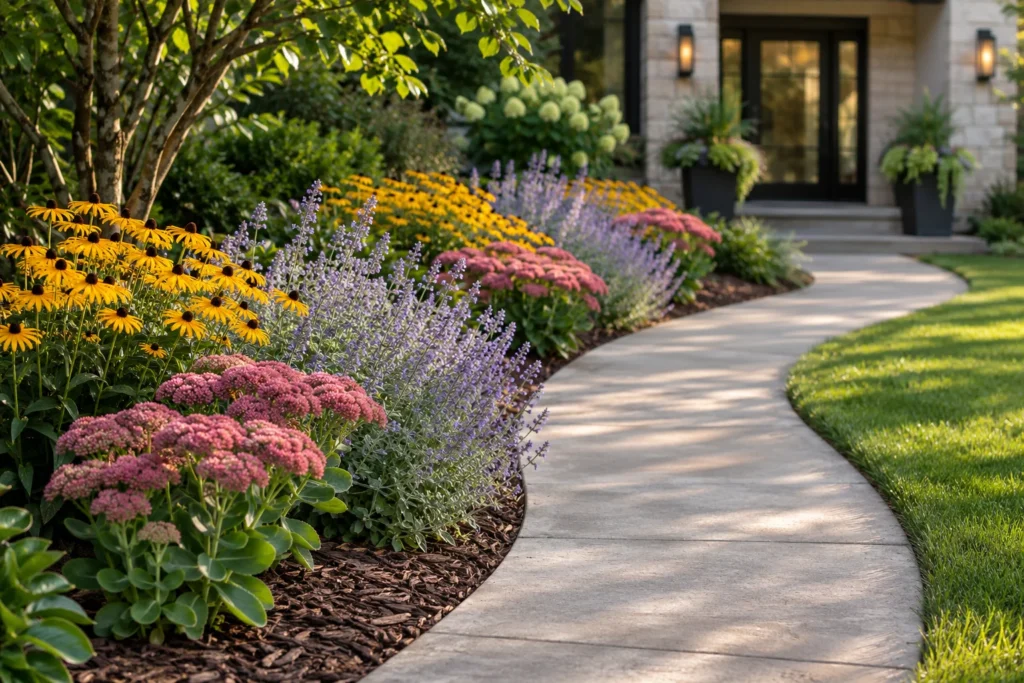
You pull into the driveway and there it is: the strip of soil by the front walk, the one every neighbor and delivery driver sees, sprouting weeds again. You want it to look cared for. You just don’t want it to eat your Saturdays.
These low maintenance front yard flower garden ideas start from that wish. Each of the 14 picks below comes with its hardiness zones, mature size, sun needs and the one or two chores it really asks for in a year, plus pet and deer notes, so you know the true workload before you buy.
Low maintenance never means no maintenance. It means the plant tolerates your conditions, rarely needs spraying or staking, and asks for a quick cut-back on a predictable schedule. If you only have a porch or steps to work with, our front porch container garden ideas cover the potted version.
Table of Contents
At a Glance
- Match plants to your real sun first: most picks here want full sun, which means 6 or more hours of direct light a day.
- Expect one scheduled chore per plant, usually a spring cut-back or a quick shear after flowering.
- Repeat three to five plants in groups instead of buying one of everything; it looks deliberate and is easier to care for.
- Fall is bulb season: daffodils and ornamental onions planted now come back on their own.
- Pets change the list. Skip daylilies if you have cats. Keep daffodils, Lenten rose and hydrangeas away from pets, and treat ornamental onion ‘Millenium’ as a potential ingestion risk for dogs and cats.
Short on time to plan? For a sunny bed, start with black-eyed Susan, catmint and ‘Autumn Joy’ stonecrop. For a shady north-facing front, start with Lenten rose.
Low Maintenance Front Yard Flower Garden Ideas Compared
Use this table to shortlist plants by zone, sunlight and available space, then read each entry for pet and deer notes. Mature spread is the approximate width of an established plant. Bloom timing can shift with climate and cultivar; little bluestem is included for its seasonal grass display as well as its flowers.
| Plant | USDA zones | Mature height | Mature spread | Sun | Bloom / seasonal interest | Main yearly chore |
|---|---|---|---|---|---|---|
| Black-eyed Susan ‘Goldsturm’ | 3-9 | 1.5-2 ft | 1-2 ft | Full sun | Summer-fall (June-October) | Deadhead for more bloom (optional) |
| Purple coneflower | 3-8 | 3-4 ft | 1-2 ft | Full sun to part shade | June-August | Cut dead stems to 12-24 in |
| Catmint ‘Walker’s Low’ | 4-8 | About 2 ft | 18-36 in | Full sun | Spring-fall with a midsummer trim | Cut back midsummer for rebloom |
| Stonecrop ‘Autumn Joy’ | 3-9 | 1.5-2 ft | 1.5-2 ft | Full sun | Late summer-fall | Optional late-spring cut-back |
| Russian sage | 5-9 | 2-4 ft | 2-4 ft | Full sun | June-October | Early spring cut-back |
| Woodland sage | 4-8 | 1.5-3 ft | Up to 2 ft | Full sun to part shade | June-September | Cut spent stems for rebloom |
| Cranesbill ‘Rozanne’ | 5-8 | 1-1.5 ft | 1-2 ft | Full sun to part shade | Late spring-summer; may continue later | Shear if tired in summer |
| Daylily ‘Stella de Oro’ | 3-10 | 0.75-1 ft | About 1 ft | Full sun to part shade | May-August | Remove spent flowers and scapes |
| Ornamental onion ‘Millenium’ | 5-8 | 1-1.5 ft | 10-15 in | Full sun to part shade | Mid-late summer | Deadhead to limit seeding |
| Little bluestem | 3-9 | 2-4 ft | 1.5-3 ft | Full sun | Summer-fall flowers; copper foliage in fall | Cut to the ground in late winter |
| Creeping phlox | 3-9 | Up to 6 in | 2-3 ft | Full sun | April-May | Cut stems by half after bloom |
| Daffodils | 4-8 | 8-30 in | 6-12 in | Full sun to part shade | Late winter-late spring (variety-dependent) | Leave foliage until it yellows |
| Lenten rose | 4-9 | 1-1.5 ft | 1-1.5 ft | Shade | Late winter-spring | Cut flowering stems after bloom |
| Panicle hydrangea | 3-8 | 8-15 ft (species) | 6-12 ft (species) | Morning sun, afternoon shade | Summer-fall | Prune in late winter or spring |
The 14 Ideas
The list runs from tough sun lovers to shade plants, bulbs and one shrub anchor. Each pick earned its place by carrying a low maintenance rating or a short, predictable care routine in extension and botanical garden plant records, including the Missouri Botanical Garden’s visual guide to low-maintenance perennials.
1. Black-eyed Susan ‘Goldsturm’ (Rudbeckia fulgida var. sullivantii ‘Goldsturm’)
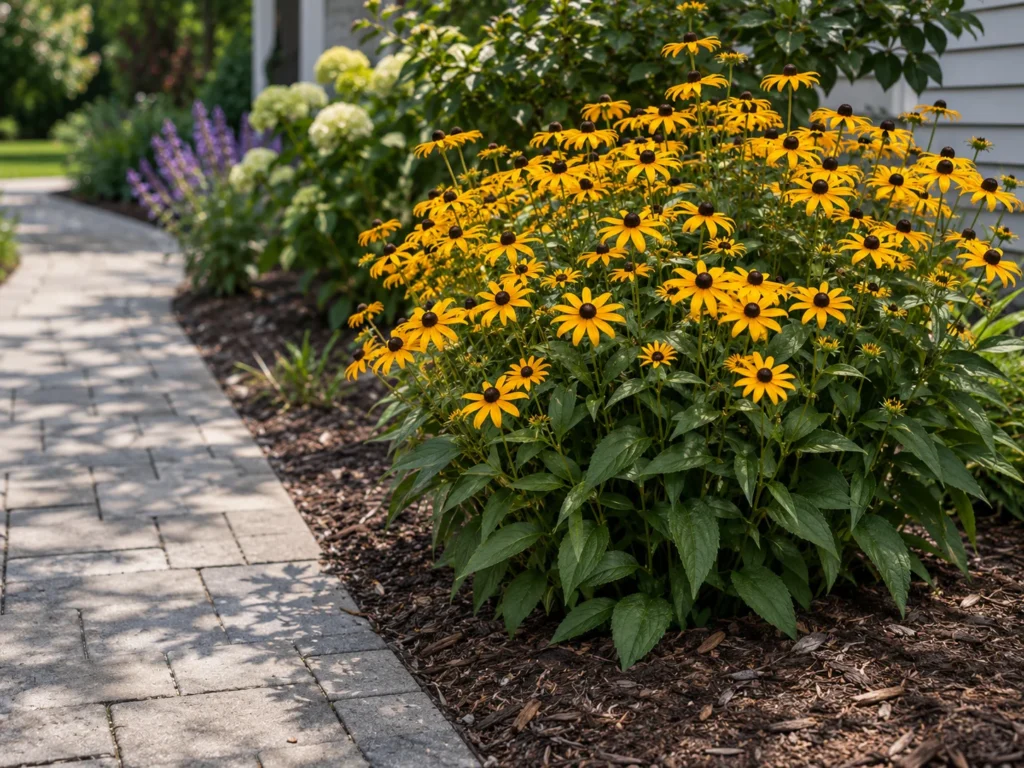
Picture a wash of gold with dark button centers from early summer into fall. ‘Goldsturm’ is the workhorse of sunny front beds, and it fills out by slowly spreading through rhizomes, so a few plants become a patch.
- Size and season: about 18 to 24 inches tall and 1 to 2 feet wide, blooming from June into October.
- Conditions: full sun, dry to medium soil; tolerates clay, drought and air pollution once settled.
- Deer: moderately resistant, occasionally browsed.
- Care: deadhead if you want extra flowers; leave the last seed heads standing for winter texture.
Skip it if your bed stays damp and crowded: angular leaf spot is a common problem with this cultivar, and good air circulation helps.
2. Purple Coneflower (Echinacea purpurea)
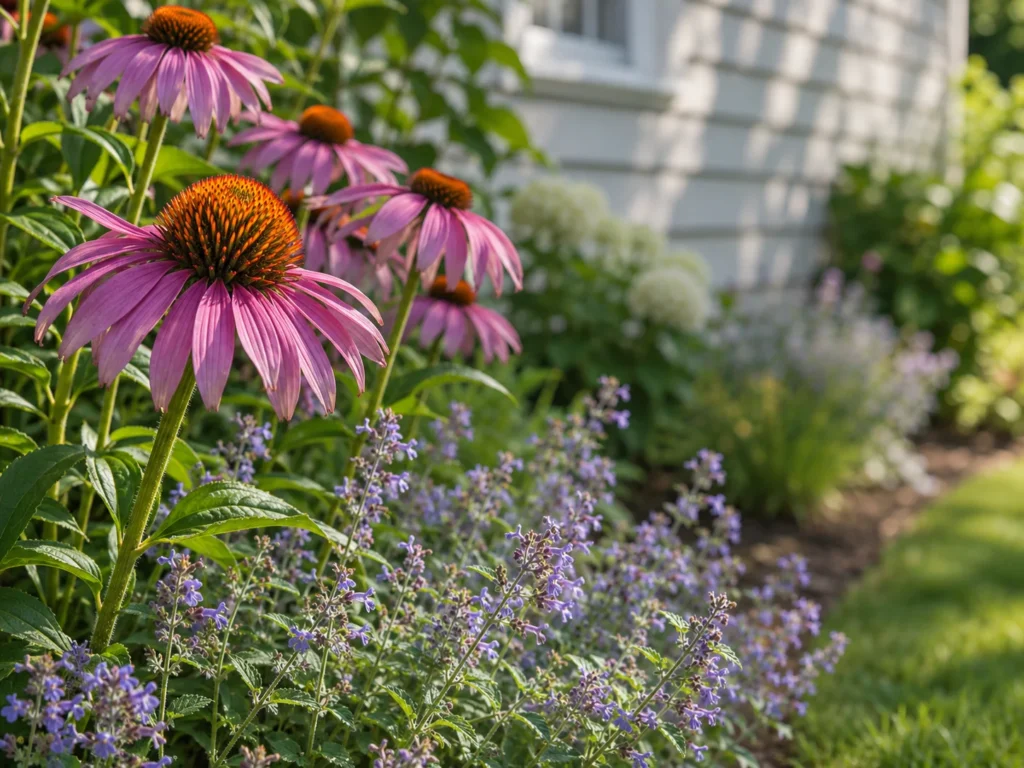
Coneflower gives height at the back of the bed and a native plant’s toughness: it resists deer, heat and salt and handles dry spells once established. Leave some seed heads standing in fall and birds will pick at them.
- Size and season: 3 to 4 feet tall, 1 to 2 feet wide, blooming June to August.
- Conditions: full sun to part shade; adaptable to most soils, including clay and sand.
- Care: in winter, cut dead stems to 12 to 24 inches and leave them standing; native stem-nesting bees can use them.
It reseeds itself, which some gardeners love and others pull. Skip it if you want a bed that never changes shape, and watch for Japanese beetles and aster yellows.
3. Catmint ‘Walker’s Low’ (Nepeta × faassenii ‘Walker’s Low’)
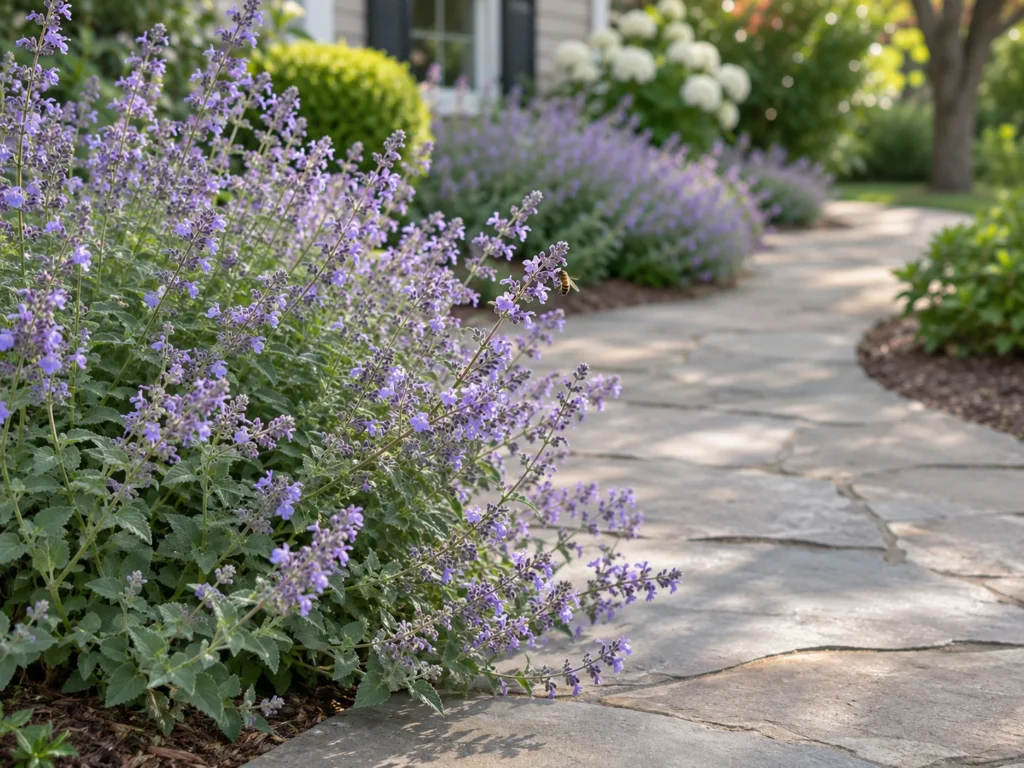
Catmint is the soft, smoky blue edge that makes a front walk look planned. It thrives in dry, even rocky soil, deer tend to leave it alone, and it can be divided in spring without taking over the bed.
- Size: about 2 feet tall and 18 to 36 inches wide, so give it room at the path edge.
- Season: blooms spring into fall with a midsummer trim.
- Care: shear spent flowers in midsummer and it reblooms; in the hot South, a spot with some afternoon shade helps.
- Pets: ASPCA lists its relative catnip (Nepeta cataria) as able to cause vomiting and diarrhea in cats; this hybrid is less attractive to cats than catnip, but check before planting near a cat that roams the yard.
Skip it in soggy, poorly drained ground.
4. Stonecrop ‘Autumn Joy’ (Hylotelephium ‘Herbstfreude’)
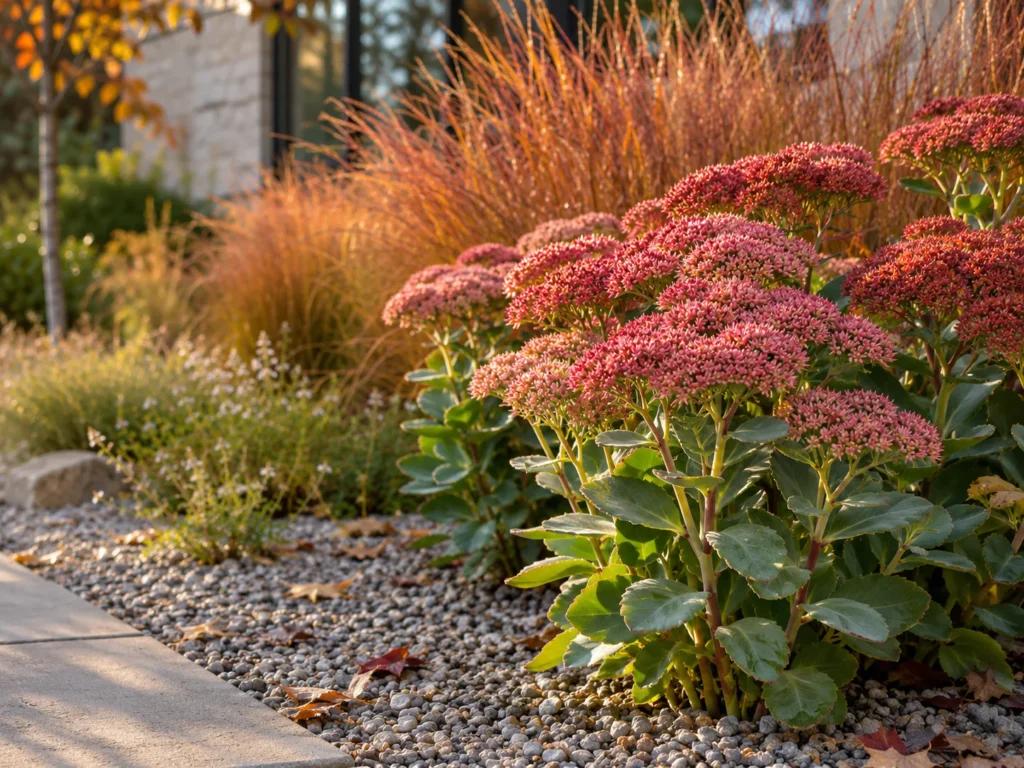
When most of the bed is fading, ‘Autumn Joy’ turns its broccoli-like buds rosy pink, then red, from September into October. The thick leaves store water, which is why it shrugs off drought and shallow, rocky soil.
- Size: 1.5 to 2 feet tall and wide.
- Conditions: full sun with good drainage; dry to medium moisture.
- Care: none required, though you can cut it back in late spring to keep it shorter, or pinch it for thicker, bushier stems.
Skip rich soil and shade: both give weak, floppy growth, and wet ground can rot the crowns.
5. Russian Sage (Salvia yangii)
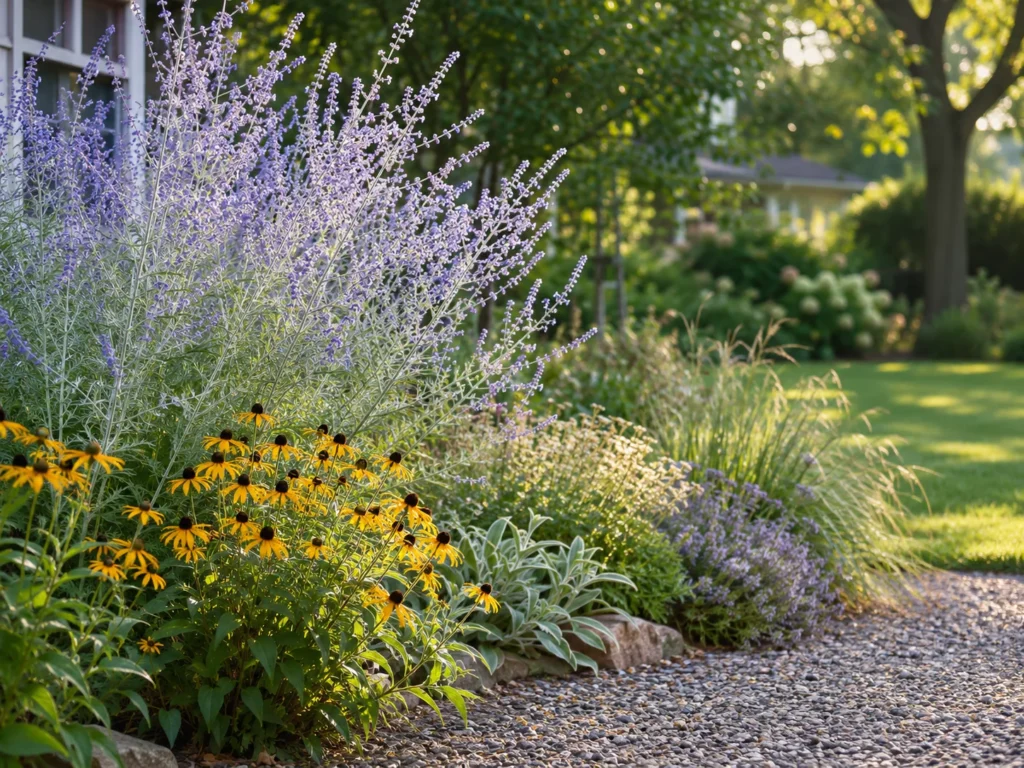
Russian sage reads as a soft lavender cloud from the street, blooming from June to October. It resists deer, rabbits and drought and copes with poor soil, which makes it a strong pick for a hot strip near the driveway.
- Size: 2 to 4 feet tall and wide at maturity.
- Conditions: full sun and well-drained, occasionally dry soil; avoid wet ground.
- Care: cut the stems back to several inches above the ground in early spring; leave them up over winter for structure.
Skip it for a shady bed; it flowers best and flops least in full sun.
6. Woodland Sage (Salvia nemorosa)
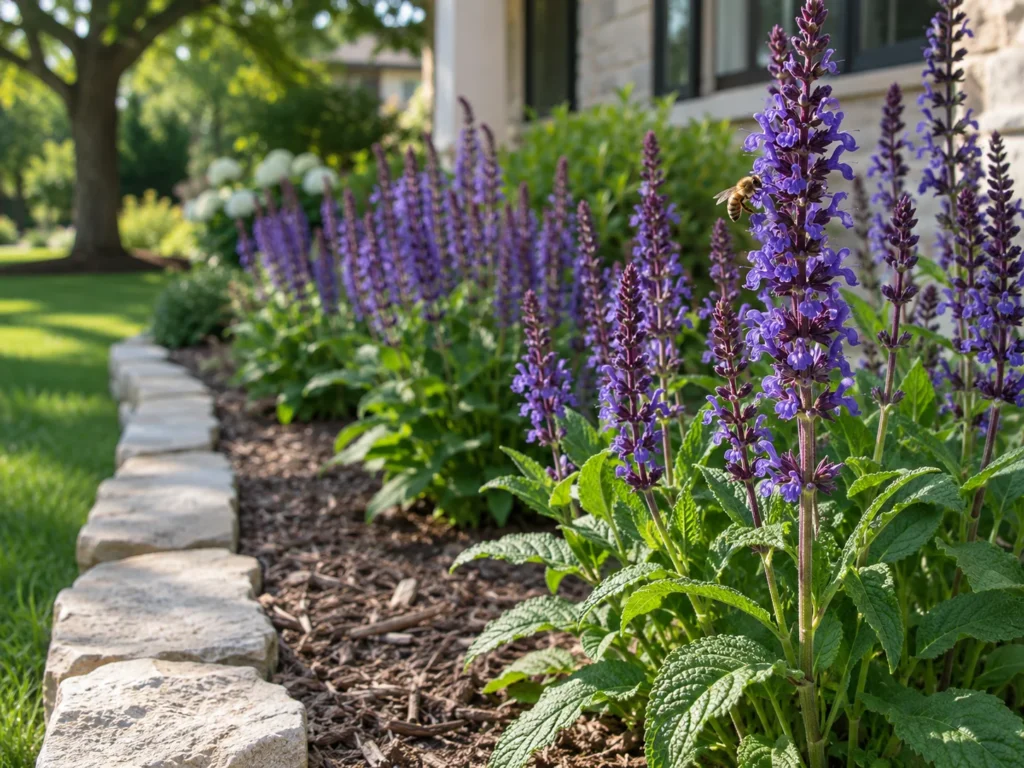
Woodland sage brings upright violet spikes, a strong vertical line that contrasts with the round daisies of coneflower and black-eyed Susan. It flowers from June to September and draws bees, butterflies and hummingbirds.
- Size: 1.5 to 3 feet tall and up to 2 feet wide.
- Conditions: full sun to part shade; prefers sandy or gravelly soil but handles most well-drained ground, even dry.
- Deer and rabbits: seldom damaged.
- Care: once a flush fades and the stems brown, cut them down to the basal leaves for another round of bloom.
Skip it if you want a plant you never touch; its best show depends on that midsummer cut.
7. Cranesbill ‘Rozanne’ (Geranium ‘Gerwat’)
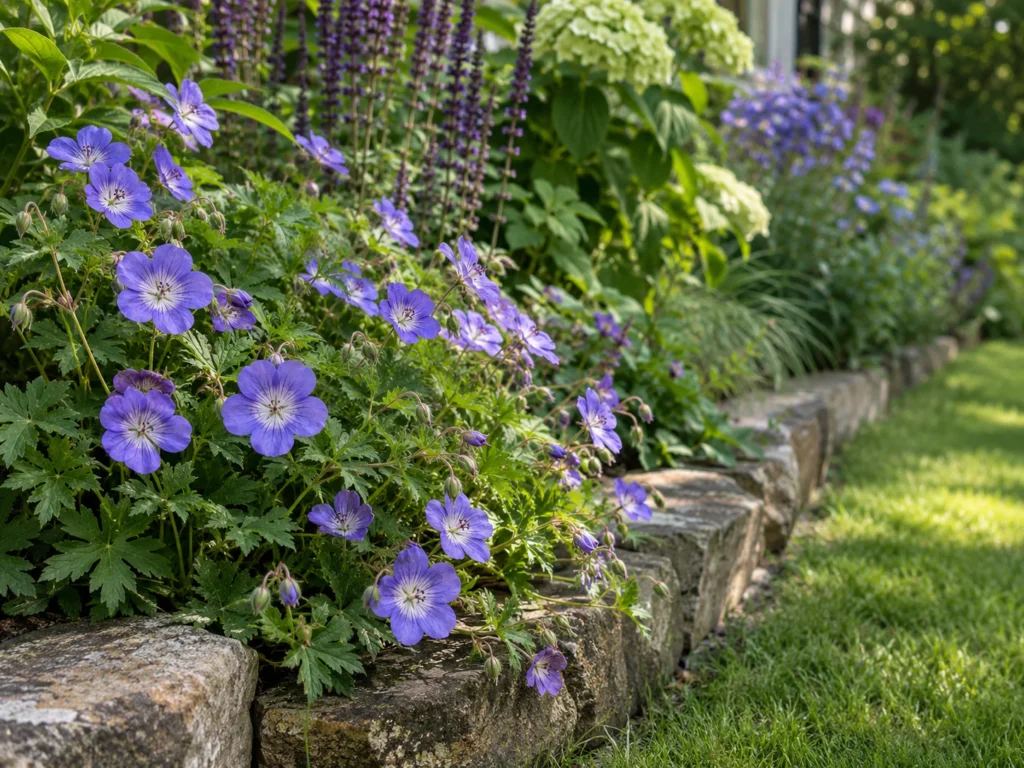
‘Rozanne’ is the plant that knits a bed together. Its stems weave through neighbors and fill bare gaps, and it has exceptional heat tolerance, often flowering from May through summer and on into fall.
- Size: 1 to 1.5 feet tall, 1 to 2 feet wide.
- Conditions: full sun to part shade, medium moisture.
- Deer and rabbits: tolerated.
- Care: if flowering stalls or the foliage looks tired in summer heat, shear it back to refresh it; trim side stems anytime to control spread.
Skip it if you garden in zone 4 or colder, or in zone 9 and warmer; its listed range is zones 5 to 8.
8. Daylily ‘Stella de Oro’ (Hemerocallis ‘Stella de Oro’)
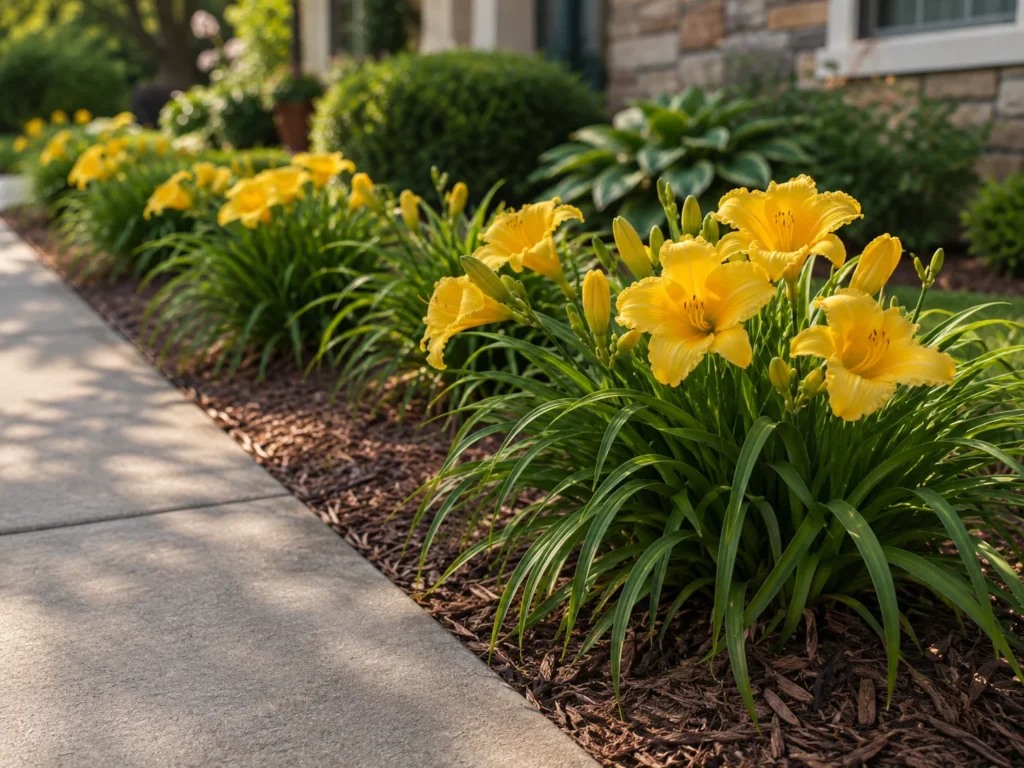
‘Stella de Oro’ stays small and keeps producing golden flowers from May to August, which makes it a classic edging plant along drives and walks. It has no serious pest problems and handles part shade.
- Size: 9 to 12 inches tall and wide.
- Conditions: full sun to part shade, medium moisture; deep watering in dry spells keeps the leaves looking good.
- Care: pick off spent flowers for neatness, remove finished flower stalks, and divide every 3 to 4 years.
Skip it entirely if you have cats. The ASPCA lists daylilies as toxic to cats, with kidney failure possible, even though they are listed as non-toxic to dogs.
9. Ornamental Onion ‘Millenium’ (Allium ‘Millenium’)
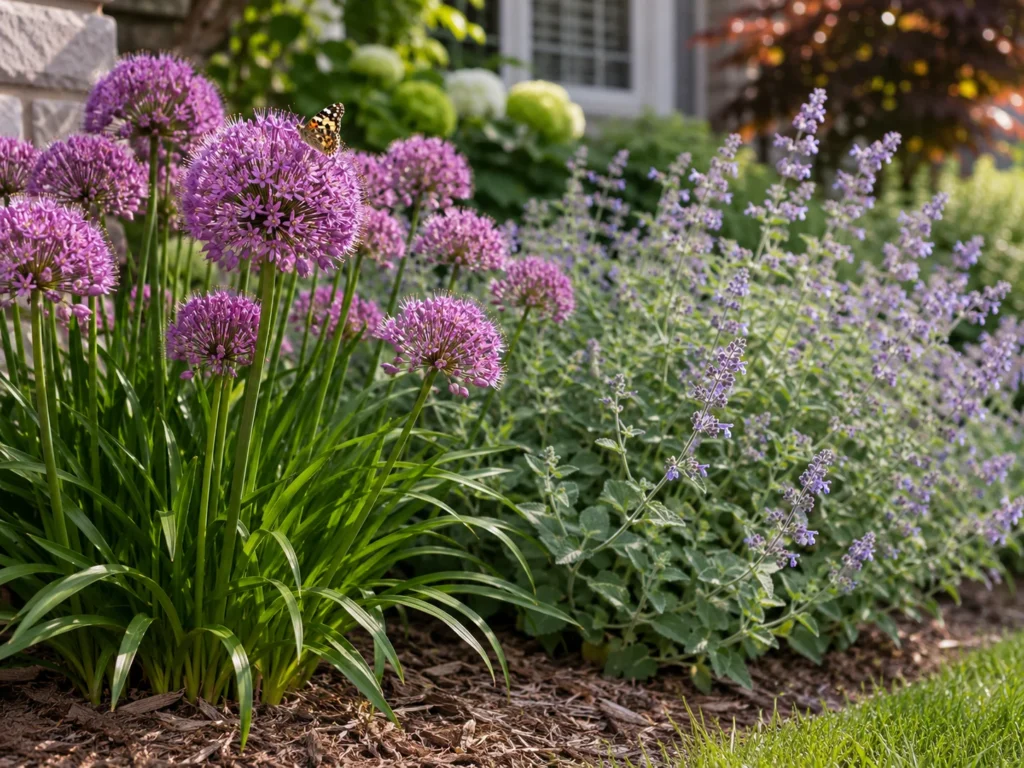
‘Millenium’ sends up rose-purple globes in July and August, a fun shape among daisies and spikes. Deer and rabbits tend to avoid it, and it handles drought and dry soil, so it suits a bed near the street.
- Size: 1 to 1.5 feet tall and about 10 to 15 inches wide.
- Conditions: full sun to part shade, dry to medium soil.
- Care: plant in fall; deadhead after bloom if you don’t want seedlings, and divide in spring or early fall.
- Pets: ‘Millenium’ is an ornamental Allium. A peer-reviewed veterinary review notes that Allium species, including ornamental types, can be toxic to dogs and cats, although the risk varies by species and has not been quantified for this cultivar. Keep it away from pets that chew plants; see the veterinary review of Allium poisoning and the MSD Veterinary Manual.
Skip it in soggy soil, where bulb rot can set in.
10. Little Bluestem (Schizachyrium scoparium)
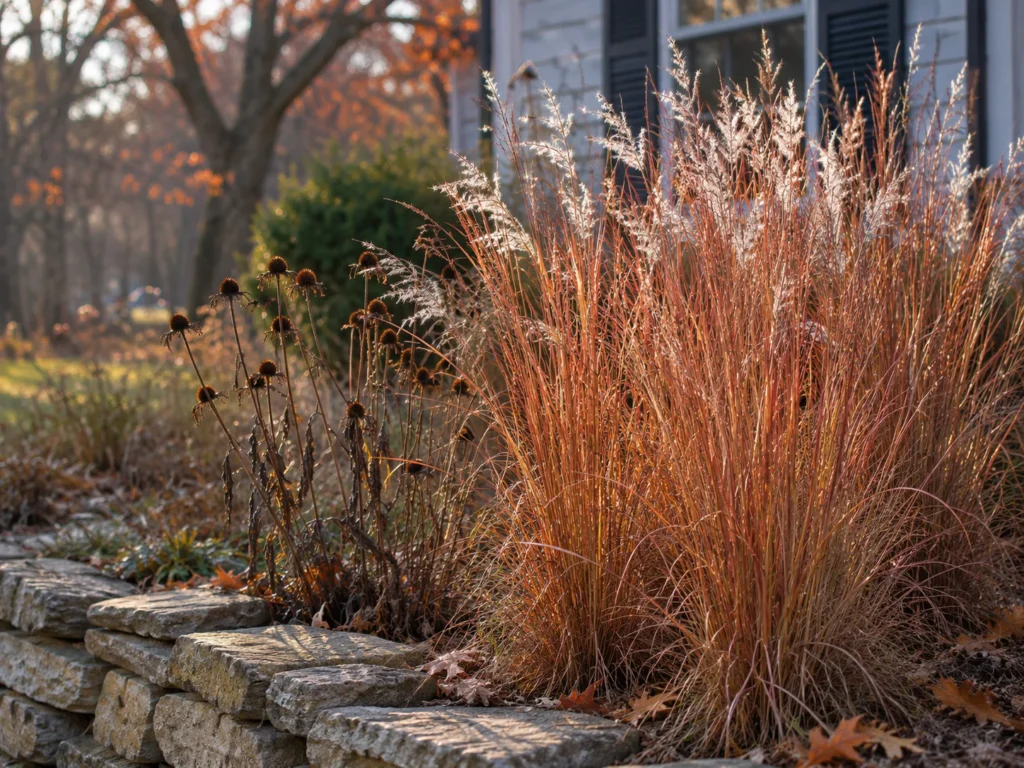
A flower bed needs a little calm between the blooms, and this native grass supplies it. It turns a warm copper in fall that holds through winter, so the bed still looks finished in January.
- Size: 2 to 4 feet tall with a similar spread.
- Conditions: full sun; dry to medium-moist, well-drained soil, including infertile and clay soils.
- Toughness: excellent drought resistance once established, tolerates heat, humidity and salt, and is highly resistant to deer browsing.
- Care: cut it to the ground in late winter or early spring, and keep mulch away from the crown.
Skip it if part of your bed is shady; it wants full sun.
11. Creeping Phlox (Phlox subulata)
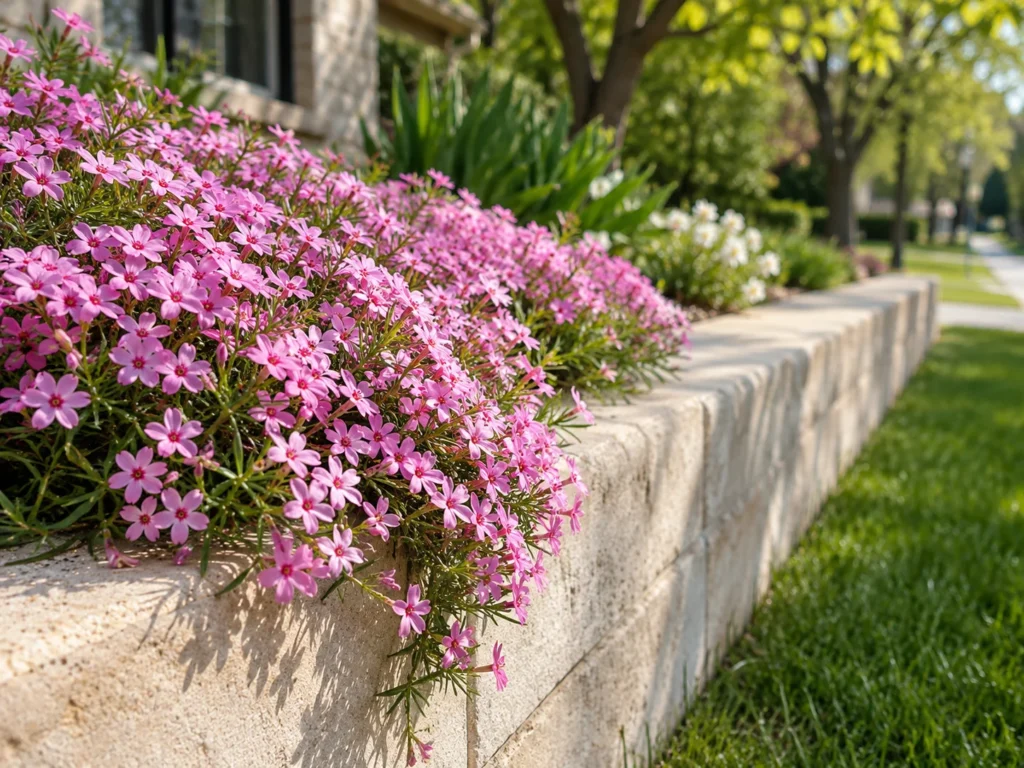
In April and May, creeping phlox turns into a solid carpet of pink, white, blue or lavender, the best way to dress a slope or the top of a low wall where mowing is a chore. The rest of the year it stays a neat green mat.
- Size: up to 6 inches tall, spreading 2 to 3 feet wide.
- Conditions: full sun with good drainage; handles sandy, gravelly soil and heat better than other phlox. Some dappled shade helps in hot, humid summers.
- Deer: tolerated, though rabbits may nibble it.
- Care: after flowering, cut stems back by half to keep it dense.
- Pets: moss phlox is listed as non-toxic to dogs, cats and horses.
Skip it in heavy, wet clay.
12. Daffodils (Narcissus)
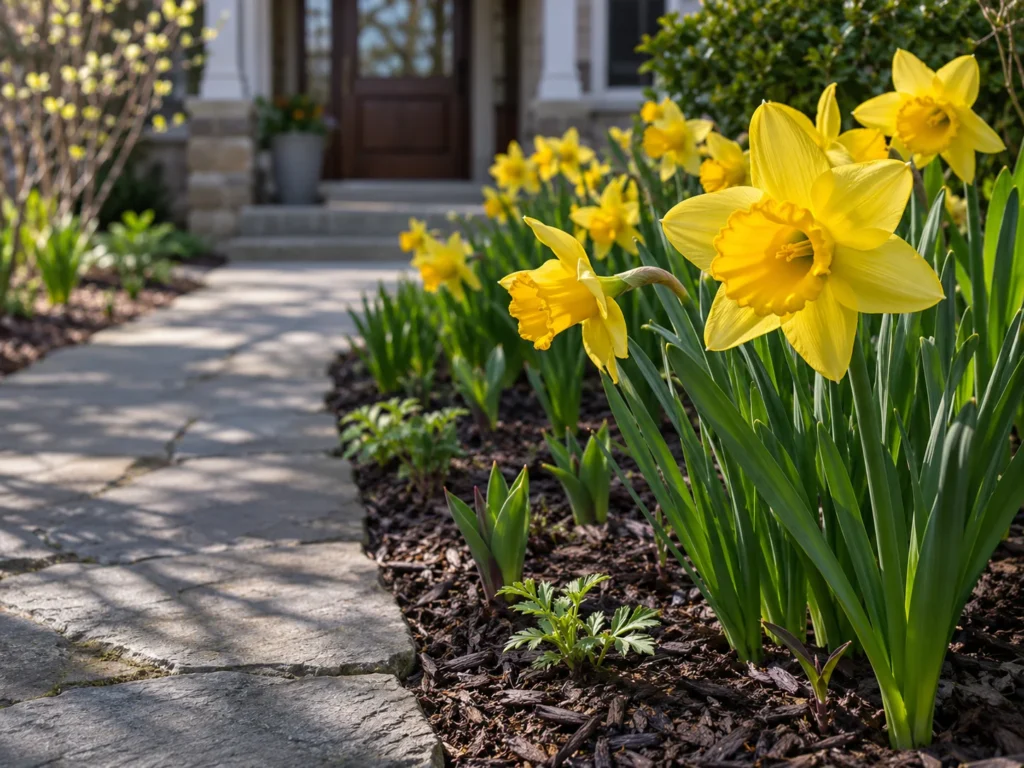
This is the pick for right now. Daffodil bulbs go in during fall, need nothing more once planted, and bloom for two to three weeks between late winter and late spring, before most perennials have even woken up. Deer and rabbits leave them alone.
- Size: 8 to 30 inches tall, depending on the variety; zones 4 to 8.
- Planting: set standard bulbs about 8 inches deep in groups of at least six, roughly 10 to 12 bulbs per square foot; see Care Basics for timing.
- Care: snip off faded flowers if you like, but leave the leaves until they yellow; they feed next year’s bloom.
Every part is poisonous to dogs, cats and horses, the bulbs most of all, and the sap can cause a skin rash, so wear gloves when planting. Skip them where a dog likes to dig.
13. Lenten Rose (Helleborus orientalis)
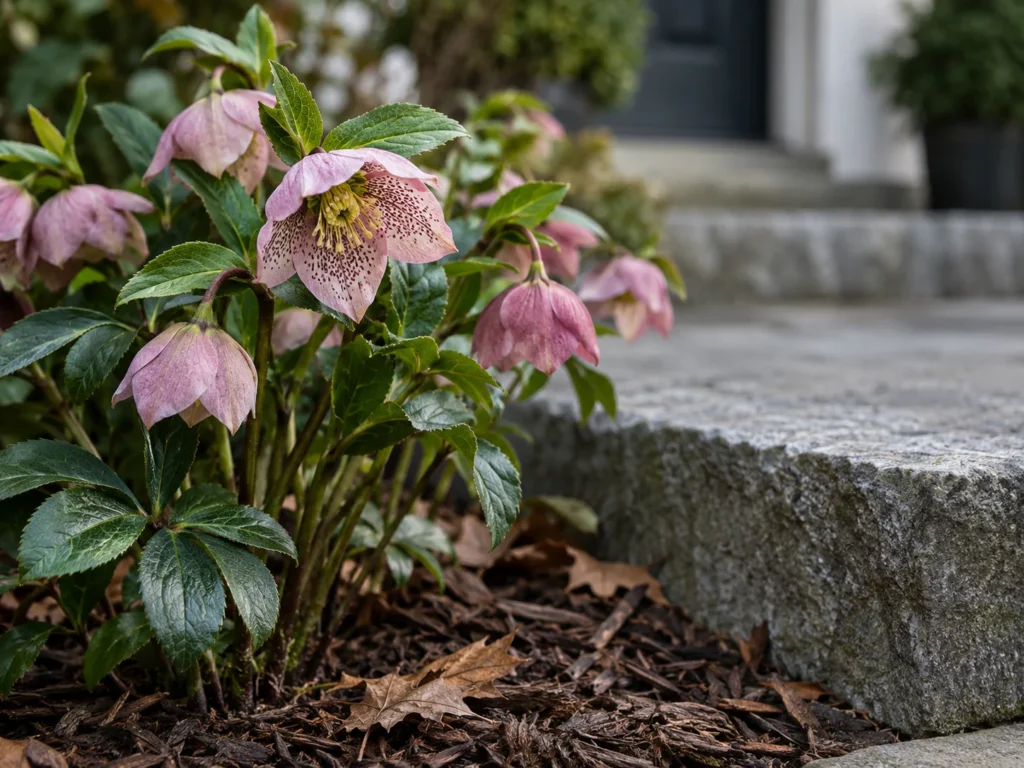
A north-facing front yard needs something that blooms in shade, and Lenten rose flowers in late winter, when the rest of the street is bare. Its leathery leaves stay evergreen in warmer climates and resist deer browsing.
- Size: 1 to 1.5 feet tall and wide; zones 4 to 9.
- Conditions: shade, ideally with some winter sun and shelter from wind; moist, well-drained soil.
- Care: cut back the flowering stems once blooming ends to make room for new foliage; it may self-seed.
The leaves and roots are toxic to cats, dogs, horses and people, and the sap can irritate skin, so wear gloves when trimming. Skip it in hot, bright spots; it dislikes strong winter sun and high temperatures.
14. Panicle Hydrangea (Hydrangea paniculata)
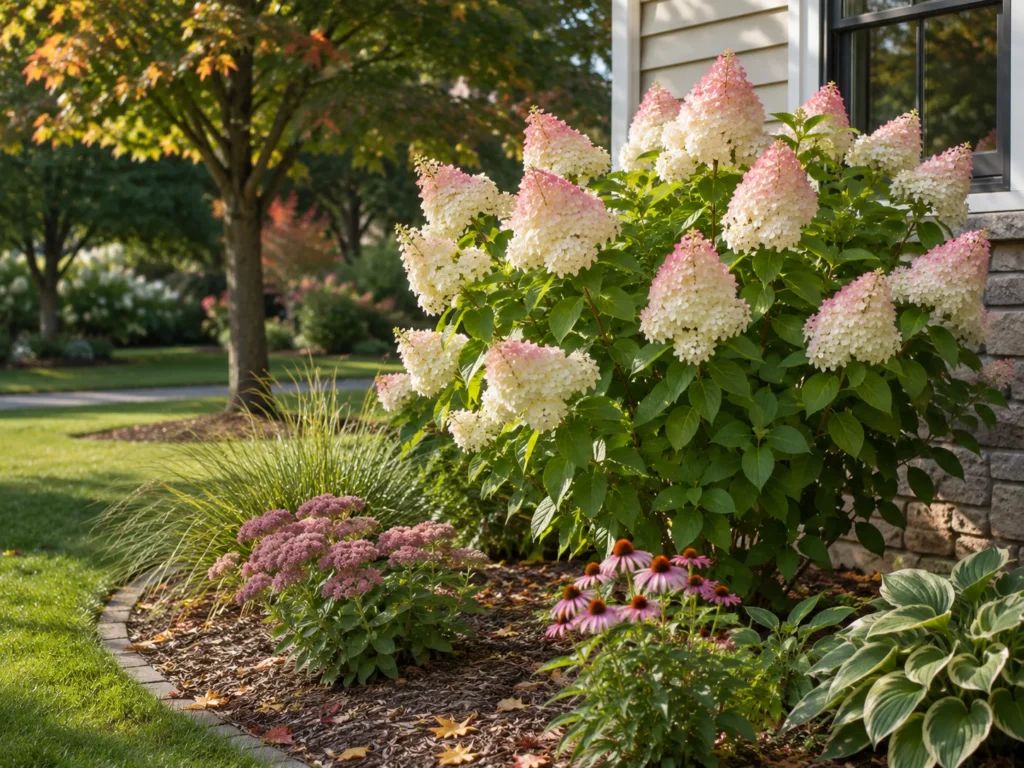
Every bed reads better with one woody anchor, and panicle hydrangea gives you big cone-shaped white flowers in summer that blush pink and then brown as fall nears. It takes more sun than other hydrangeas, though it prefers morning sun and afternoon shade.
- Size: the species can reach 8 to 15 feet tall and about 6 to 12 feet wide, so choose a compact cultivar for a front bed and check the tag’s mature size before buying.
- Care: it blooms on new growth, so prune in late winter or spring without losing flowers. It is shallow-rooted and benefits from mulch.
- Watch for: deer damage and brittle stems in windy spots.
Hydrangea is toxic to dogs, cats and horses, so skip it if a pet tends to chew shrubs.
How to Pick the Right Plants for Your Front Yard
Start with sun, then narrow by zone, soil and who shares the yard. Get those four right and most of the maintenance disappears, because a plant in the right spot doesn’t need rescuing.
- Count your sun hours. Watch the bed on a clear day. Six or more hours of direct sun suits the sun lovers above; 2 to 6 hours suits part-shade picks like ‘Rozanne’, woodland sage and ‘Stella de Oro’; deep shade points you to Lenten rose.
- Check your USDA zone against the table. ‘Rozanne’ and ‘Millenium’ are the pickiest here at zones 5 to 8.
- Test drainage. If water sits after rain, skip stonecrop, Russian sage and creeping phlox, which all need drainage, and lean on black-eyed Susan and coneflower, which tolerate clay.
- Factor in deer and pets. Little bluestem, Russian sage, catmint, daffodils and Lenten rose are rated deer resistant. For a cat household, leave out daylilies first, and for any plant without a pet note above, check the ASPCA plant list for your exact species before planting.
Then think like a designer. Pick three to five plants and repeat each in groups of three or more along the bed; repetition is what makes a planting look intentional from the street. Put tall plants (coneflower, Russian sage, little bluestem) at the back or center, mid-height ones in the middle, and edgers like catmint, ‘Stella de Oro’ and creeping phlox at the front. Choosing plants that peak at different times, daffodils in spring, sage in summer, stonecrop in fall, keeps color going without extra work.
If your front yard is mostly hardscape, a pair of matched planters can carry the same palette; these hanging basket flower combinations for a sunny porch show how to echo bed colors up at eye level.
Three Low-Maintenance Front Yard Flower Garden Plans
These sample layouts turn the plant list into practical starting points. Plant counts assume the bed dimensions shown and average mature spacing; adjust them for the exact cultivar, local climate and the space available. Measure from the center of one plant to the center of the next, and leave room for plants to reach their mature spread.
1. Sunny Front Yard Flower Garden Plan (10 x 7 ft)
For a bed that receives at least six hours of direct sun, repeat three reliable plants in simple layers. This combination gives you yellow summer flowers, rosy fall color and a soft lavender-blue edge.
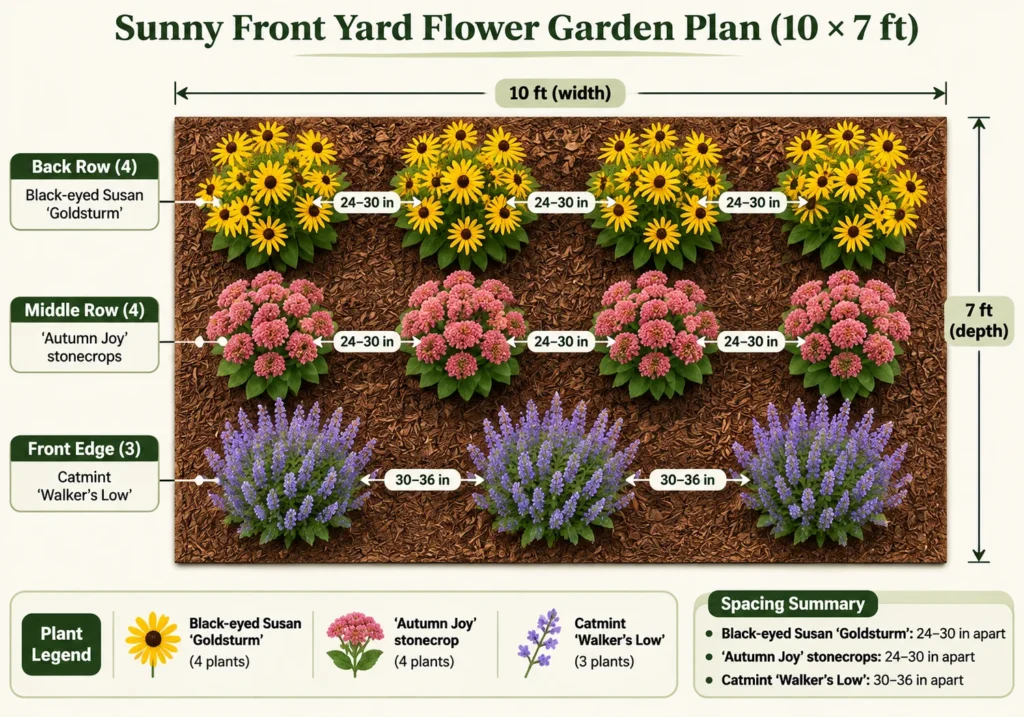
- Back row: Plant 4 Black-eyed Susan ‘Goldsturm’ about 24 to 30 inches apart. Their yellow flowers form the main summer display.
- Middle row: Plant 4 ‘Autumn Joy’ stonecrops about 24 to 30 inches apart. Their pink buds deepen to red in late summer and fall.
- Front edge: Plant 3 ‘Walker’s Low’ catmints about 30 to 36 inches apart. Their lavender-blue flowers soften the edge and can rebloom after a midsummer shear.
Stagger the middle and front rows rather than lining every plant up directly behind another. Leave roughly 30 inches between row centers. This plan suits a sunny, well-drained bed; do not use stonecrop or catmint where water regularly stands after rain.
2. Shade-Friendly Front Yard Garden (8 x 6 ft)
For a shady north-facing bed, use Lenten rose as the main flowering plant and add two companions for spring flowers and foliage texture. The Japanese painted fern and foamflower are supporting plants, not part of the 14 featured picks above.
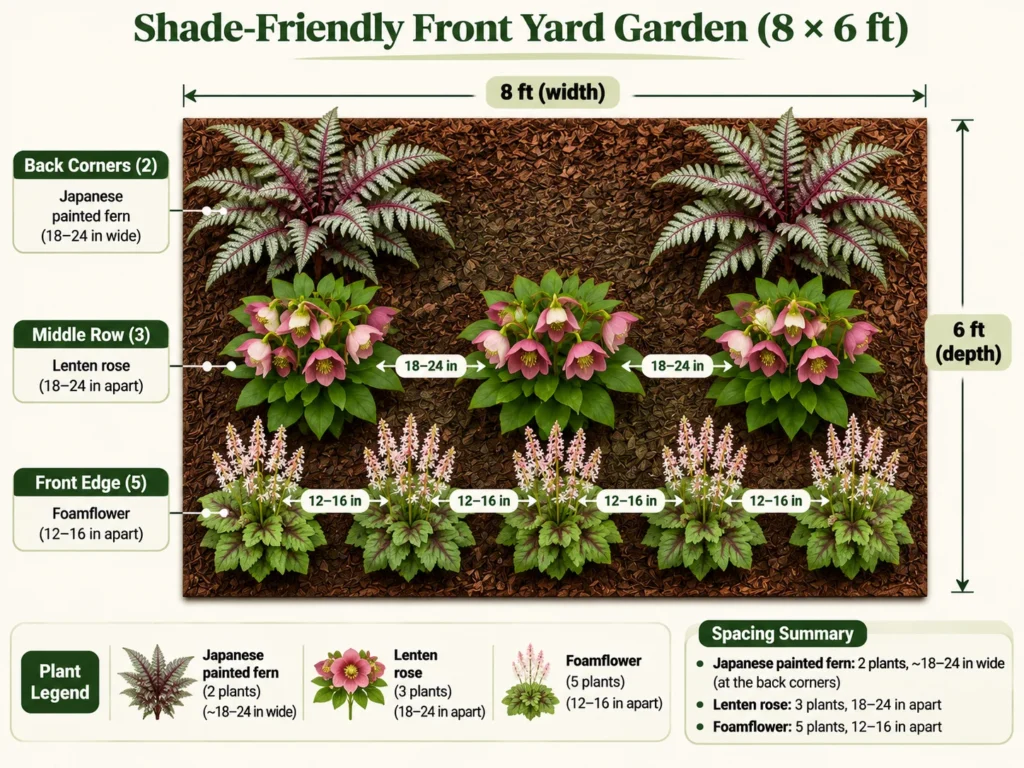
- Back corners: Plant 2 Japanese painted ferns, allowing about 18 to 24 inches of mature width for each. Their silver, green and burgundy fronds add color without needing flowers.
- Middle row: Plant 3 Lenten roses about 18 to 24 inches apart. They provide late-winter flowers and tolerate dappled or deeper shade.
- Front edge: Plant 5 foamflowers about 12 to 16 inches apart. Their small spring flower spikes and spreading foliage gradually knit the front edge together.
This layout works best in moist, well-drained soil rich in organic matter. Japanese painted fern prefers partial to full shade, while foamflower does best in shade with consistent moisture. Avoid this combination in a hot, dry bed. Lenten rose is toxic if eaten, so do not plant it where pets or children are likely to chew it. See the Japanese painted fern and foamflower profiles for growing details.
3. Narrow Front Walkway Flower Bed (12 x 4 ft)
For a narrow strip beside a path, keep the lowest plant at the edge and use taller plants sparingly. This arrangement adds color without turning the walkway into an obstacle course.
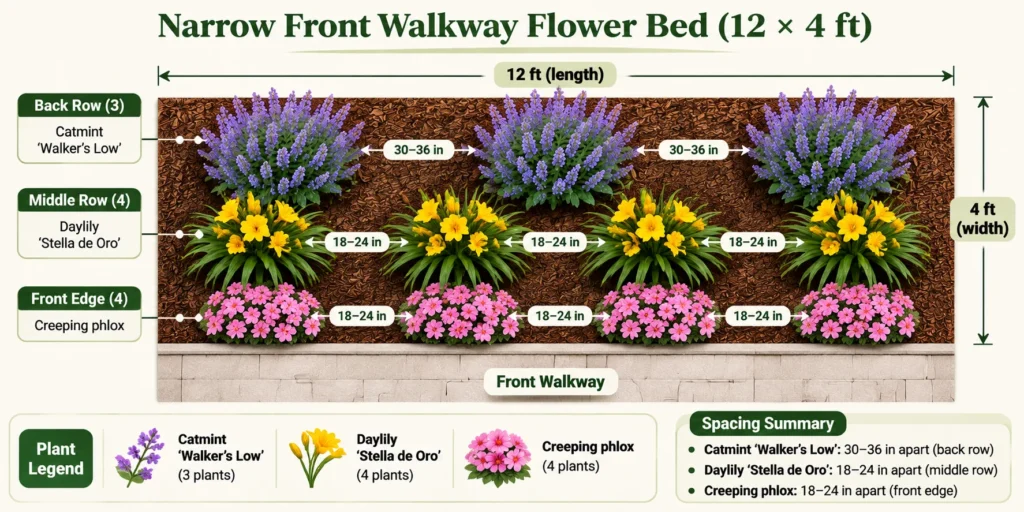
- Path edge: Plant 5 creeping phlox about 24 to 30 inches apart. Let the mats spread toward the hard edge, but trim any growth that makes the path slippery or too narrow.
- Behind the phlox: Plant 7 ‘Stella de Oro’ daylilies about 15 to 18 inches apart for a compact line of golden flowers.
- At the two ends: Add 1 ‘Walker’s Low’ catmint at each end, set back from the paving and with about 30 to 36 inches of room. Use it as an accent rather than a continuous row because it can spread 18 to 36 inches.
Keep the rows staggered and check the mature spread before buying. If cats visit the yard, leave out daylilies: even small amounts can be dangerous to cats. In that case, extend the creeping-phlox edging or choose another plant after checking its pet-safety profile.
Care Basics for a Low-Effort Front Bed
Most of the work in a low maintenance bed happens in the first season: planting at the right depth, mulching and watering in. After that, the yearly routine fits on an index card.
What to plant this fall
Bulbs come first in November. As a general rule, plant bulbs two to three times deeper than their diameter, going an inch or two deeper in sandy soil and an inch or two shallower in heavy clay. In cold climates like Minnesota, the usual window runs mid-September to mid-October so roots can grow before the ground freezes, so plant any bulbs you still have as soon as possible. Water them if the fall is dry, then cover the soil with 2 to 3 inches of leaf mulch, wood mulch or clean straw.
Perennials and shrubs are easy to plan over winter and plant in spring once the ground thaws. If you want to plant some now, ask your local extension office whether your area’s fall planting window is still open.
Mulch and weeds
Mulch is the biggest time saver in a front bed because it helps control weed seed germination. Keep it to about 3 inches at most around shrubs, and pull it back from stems, trunks and crowns; little bluestem in particular should have mulch kept away from its crown. A neat edge between bed and lawn, whether a cut trench or a simple border, stops grass from creeping in.
Watering
Water each new plant in thoroughly at planting, and check the soil when rain is scarce while roots establish. A newly planted shrub like hydrangea needs closer attention: daily for the first one to two weeks, every two to three days through week 12, then weekly until established.
The yearly chore calendar
| When | Job | Plants |
|---|---|---|
| Late winter to early spring | Cut back old stems and foliage | Little bluestem (to the ground), Russian sage (to several inches), coneflower stems, panicle hydrangea pruning |
| After spring bloom | Trim or tidy | Creeping phlox (stems by half), Lenten rose (flowering stems), daffodils (faded flowers only) |
| Summer | Shear for rebloom | Catmint, woodland sage, ‘Rozanne’ |
| Fall | Plant bulbs; leave seed heads for winter interest | Daffodils, ornamental onion |
| Every 3-4 years | Divide crowded clumps | ‘Stella de Oro’ daylily |
Quick troubleshooting
Stems flopping open in the middle. In stonecrop and Russian sage, look first at shade and overly rich soil; move the plant into full sun and stop feeding it.
Crowns or bulbs rotting. Stonecrop, ornamental onion and daffodils can rot in wet soil. If water pools after rain, replant in a raised or better-drained spot.
Spotted leaves on black-eyed Susan. Angular leaf spot is common on ‘Goldsturm’; leaf spots and powdery mildew can also show up. Thin crowded clumps for airflow and clear away infected leaves in fall.
Frequently Asked Questions
Can I still plant daffodil bulbs in November?
Yes, if you can still dig the soil, plant them as soon as possible. Bulbs need time to grow roots before the ground freezes, which is why cold-climate planting usually happens from mid-September to mid-October. Water them in if the weather is dry and mulch the bed afterward.
Which of these flowers are safe for dogs and cats?
Creeping phlox is the clearest choice here; it is listed as non-toxic to dogs, cats and horses. Daylilies are toxic to cats. Daffodils, Lenten rose and panicle hydrangea should be kept away from pets. ‘Millenium’ is an ornamental Allium, and a peer-reviewed veterinary review says Allium species, including ornamental types, can be toxic to dogs and cats; the risk has not been quantified for this specific cultivar. For any plant without a clear species-specific safety listing, prevent chewing and check the exact plant with a veterinarian or animal poison-control resource.
What should I plant if my front bed stays wet after rain?
Start with black-eyed Susan ‘Goldsturm’, which tolerates clay and is suggested for rain gardens. Leave out stonecrop, Russian sage, creeping phlox, ornamental onion and daffodils, which all need good drainage and can rot in soggy ground. If most of the bed puddles, raising the soil level is usually more practical than fighting the drainage plant by plant.
Do I need to fertilize a low maintenance flower bed?
Usually very little, and for some of these plants none. Rich soil makes ‘Autumn Joy’ stonecrop and Russian sage grow weak and floppy, and little bluestem tolerates infertile soil. A reasonable default is to skip routine feeding and have your soil tested through your local extension office if plants look pale or stunted.
Which plants give color in winter and very early spring?
Lenten rose blooms in late winter, often when the rest of the street is bare, and daffodils follow between late winter and late spring depending on the variety. For winter structure without flowers, leave little bluestem and coneflower seed heads standing until the late-winter cut-back.
What Actually Matters
A front bed that looks cared for comes down to the right plant in the right light, repeated in groups, with mulch doing the weeding for you. Pick for your sun and your pets first, and the rest is a few cut-backs a year.
If you do one thing this week, plant a group of daffodils by the front walk while the soil is still workable. Come spring, you’ll have color before anything else on the street, and a head start on the bed you plan over winter. For seasonal color by the door in the meantime, these winter porch planter ideas with evergreens bridge the gap.
Sources
- Missouri Botanical Garden – Low-maintenance Perennials visual guide – low-maintenance plant selection.
- NC State Extension Gardener Plant Toolbox – plant hardiness, mature dimensions, bloom seasons, growing conditions and maintenance details for the featured plants, including Allium ‘Millenium’.
- NC State Extension – Japanese painted fern and foamflower – shade tolerance, mature size and care.
- Missouri Botanical Garden Plant Finder – Panicle hydrangea – mature height, spread and bloom time.
- Cope, R. B. – Allium species poisoning in dogs and cats – peer-reviewed veterinary toxicology review, including ornamental Allium species.
- MSD Veterinary Manual – Garlic and Onion (Allium spp) Toxicosis in Animals – veterinary information on Allium-related toxicosis.
- ASPCA Animal Poison Control – Toxic and Non-toxic Plants – species-specific pet safety listings.
- University of Minnesota Extension – Planting bulbs, tubers and rhizomes – bulb depth, timing and mulch.
- University of Minnesota Extension – Watering newly planted trees and shrubs – shrub watering schedule and mulch depth.