

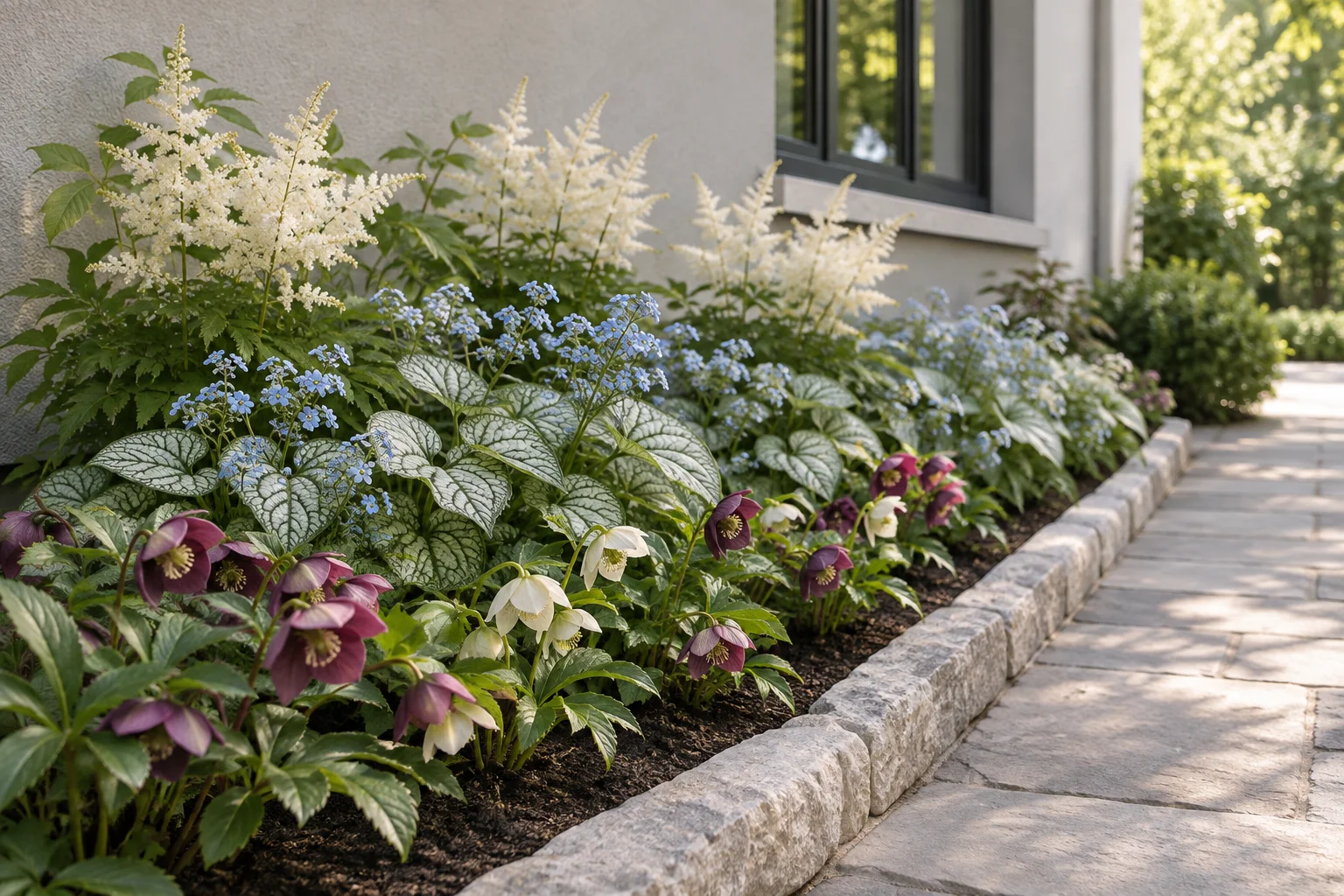
For shade flower garden ideas with a long season of color, combine spring bloomers such as hellebores and brunnera, summer-flowering astilbe, and fall-flowering toad lilies. Add impatiens or wishbone flower for a longer summer display. The right combination depends on how much daylight reaches the bed and whether its soil stays moist or dries out.
Picture the bed along the north side of your building in July: a row of green hostas, a fern, and nothing flowering since May. A mix of bloom seasons can help, but so can correcting too little light, dry soil, or a plant that dislikes your summer heat. These 15 choices include their growing conditions, seasonal limits, and ways to arrange them in beds and containers.
Table of Contents
At a Glance
- For summer flowers: try impatiens in bright shade or torenia in partial shade; both need regular moisture.
- For perennial color: combine plants that flower in different seasons, then use foliage to cover the gaps.
- For dry shade: established Lenten rose and wild columbine are better starting points than thirsty astilbe or lungwort.
- For a small space: use the 4-by-8-foot planting plan or container combination below.
- For pet households: check the botanical-name-specific pet notes before buying.
Match Your Shade, Soil, and Climate Before Choosing Plants
Watch the bed on a clear day after nearby trees have leafed out. University of Minnesota Extension describes partial shade as about 3 to 6 hours of direct sunlight, full shade as less than 3 hours, and deep shade as almost none. Some plant references use slightly different cutoffs. Dappled shade means light filtering through a canopy; it can suit flowers better than a dark corner beneath a solid roof.
Full shade still needs daylight. Morning sun is generally gentler than afternoon sun, and flowering often decreases as shade becomes denser. Check moisture separately: tree roots can make a shaded bed dry, while roof overhangs can keep rain off a north-facing wall. Shade beside a building is not automatically moist.
This guide uses USDA zones and Northern Hemisphere seasons. USDA hardiness zones describe winter cold, not summer heat tolerance or an exact flowering calendar. Bloom times shift with latitude, elevation, weather, and cultivar. A spring flower may open in February in a mild garden and much later in a cold one.
Shade Flowers Compared: Bloom Season, Zones, and Height
Use this table to shortlist plants, then read their individual notes. Zone ranges are general guidance for plants grown in the ground; check the nursery label for your particular cultivar. The flowering windows describe the usual season, not continuous bloom throughout every listed month.
| Plant | Suitable light | Typical flowering season | USDA zones | Height |
|---|---|---|---|---|
| Lenten rose | Partial to full shade | Late winter to spring | 4–9 | 1–2 ft |
| Virginia bluebells | Partial to full shade | Spring; summer dormant | 3–9 | 1–2 ft |
| Lungwort | Partial to full shade | Spring | 3–8 | 9–18 in |
| Brunnera | Partial to full shade; avoid hot afternoon sun | Spring | 3–8 | 1–1.5 ft |
| Wild columbine | Partial shade | Spring to early summer, by region | 3–8 | 1–3 ft |
| Bleeding heart | Partial to full shade | Spring to early summer | 3–9 | 2–3 ft |
| Foamflower | Dappled to full shade | Spring to early summer | 3–8 | 5–12 in |
| Astilbe | Partial or dappled shade | Late spring to summer; cultivar dependent | 3–9 | 2–3 ft |
| Coral bells | Partial shade; cultivar dependent | Late spring to summer; some repeat | 3–9; varies | 6–20 in foliage; flowers taller |
| Impatiens | Partial to bright full shade | Late spring to frost | Usually grown as an annual | 0.5–2 ft |
| Fuchsia | Bright shade or gentle morning sun | Spring to fall in mild conditions | Tender; usually seasonal | 1.5–3 ft |
| Wishbone flower | Partial or bright filtered shade | Summer to frost | Annual | 6–18 in |
| Hardy begonia | Partial to full shade | Summer to fall | 6–9; protect at the cold end | 1.5–3 ft |
| Japanese anemone | Partial shade | Late summer to fall | 4–8 | 3–4 ft in flower |
| Toad lily | Partial to full shade | Late summer to fall | 4–8 | 2–3 ft |
15 Shade Flower Garden Ideas, From Early Blooms to Fall Color
The plants below follow a rough seasonal progression. Several spring bloomers overlap, and their exact order will change from garden to garden. Choose a few that suit the same soil conditions, then repeat them rather than trying to fit all 15 into one bed.
1. Lenten Rose (Helleborus × hybridus)
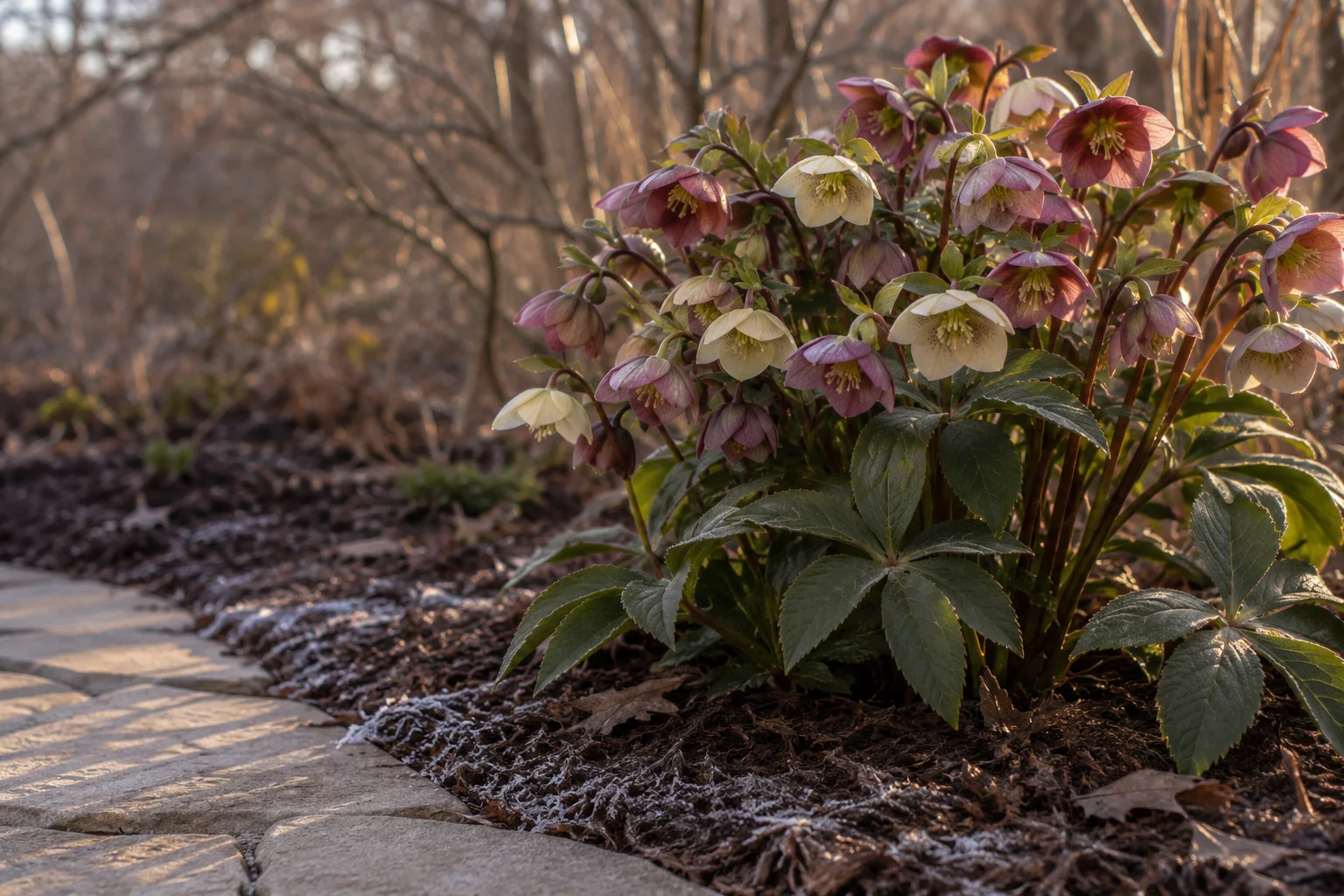
This is the plant that makes a shade bed feel alive before most perennials wake up. Nodding cups in plum, dusty pink, cream, or near-black open over evergreen clumps in late winter or spring. Site it where you can see the flowers from a window or along a path.
- Soil: rich and well-drained. It handles some dry spells once established, but grows better with consistent moisture and dislikes soggy ground.
- Care: remove damaged old leaves as new flower stems emerge, without cutting the buds. Allow room for a clump about 2 feet tall and up to 30 inches wide.
Skip it where pets chew plants. NC State identifies this hybrid as poisonous; wear gloves when handling it and keep discarded leaves out of reach.
2. Virginia Bluebells (Mertensia virginica)
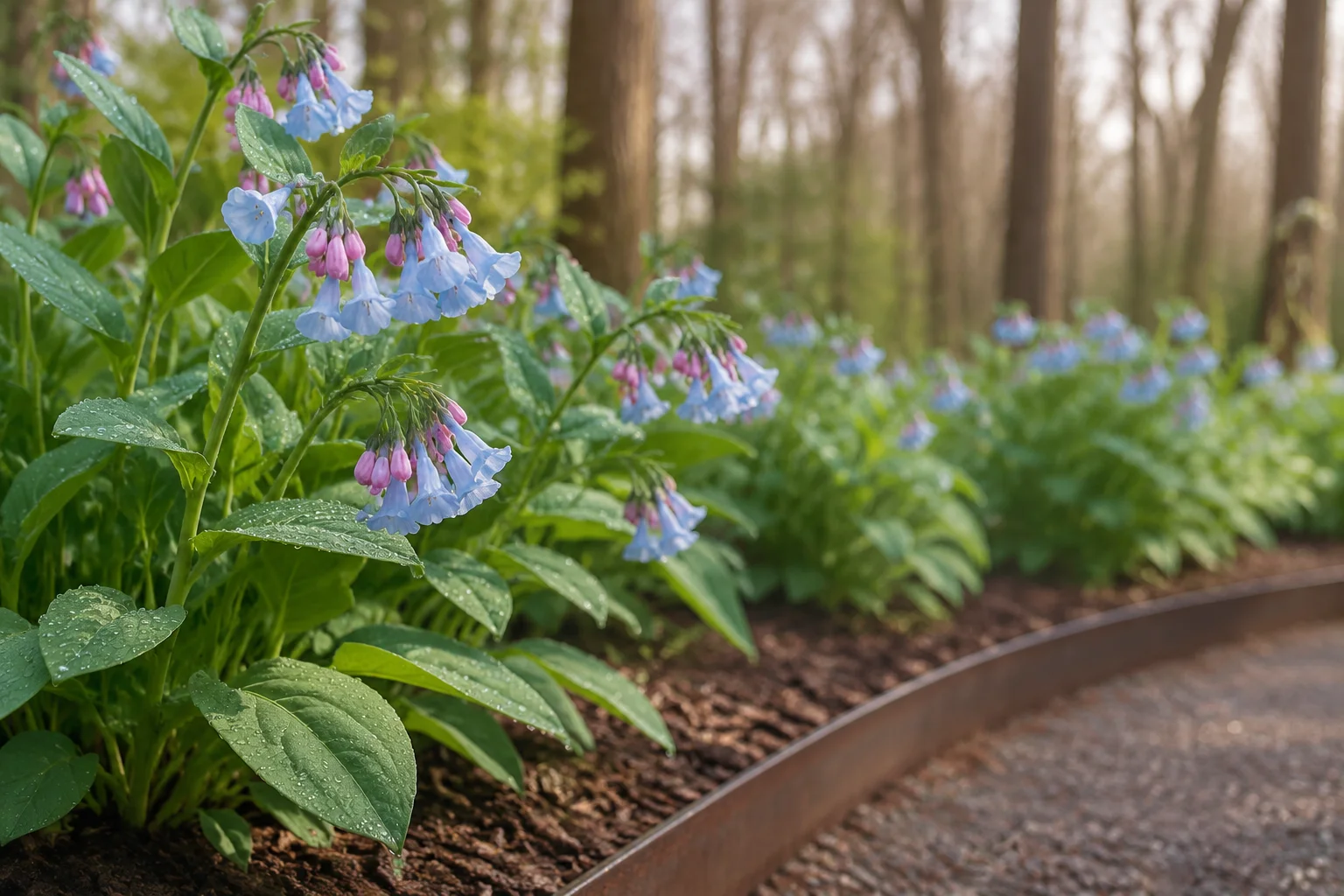
A woodland flower that does one thing beautifully and then leaves. Pink buds open to clear blue bells for a few weeks in spring, and the foliage dies back by midsummer. Plant a drift between later-growing perennials so its disappearance does not leave the bed empty.
- Soil: moist, rich, and well-drained. It is native to eastern and central parts of North America, where it grows in woodland and floodplain habitats.
- Design idea: pair it with nearby astilbe or foamflower. Mark the bluebells’ crowns so you do not accidentally dig them up after dormancy.
Give it a miss as the only plant in a spot that must look full in August. Young growth can also attract slugs.
3. Lungwort (Pulmonaria saccharata ‘Mrs. Moon’)
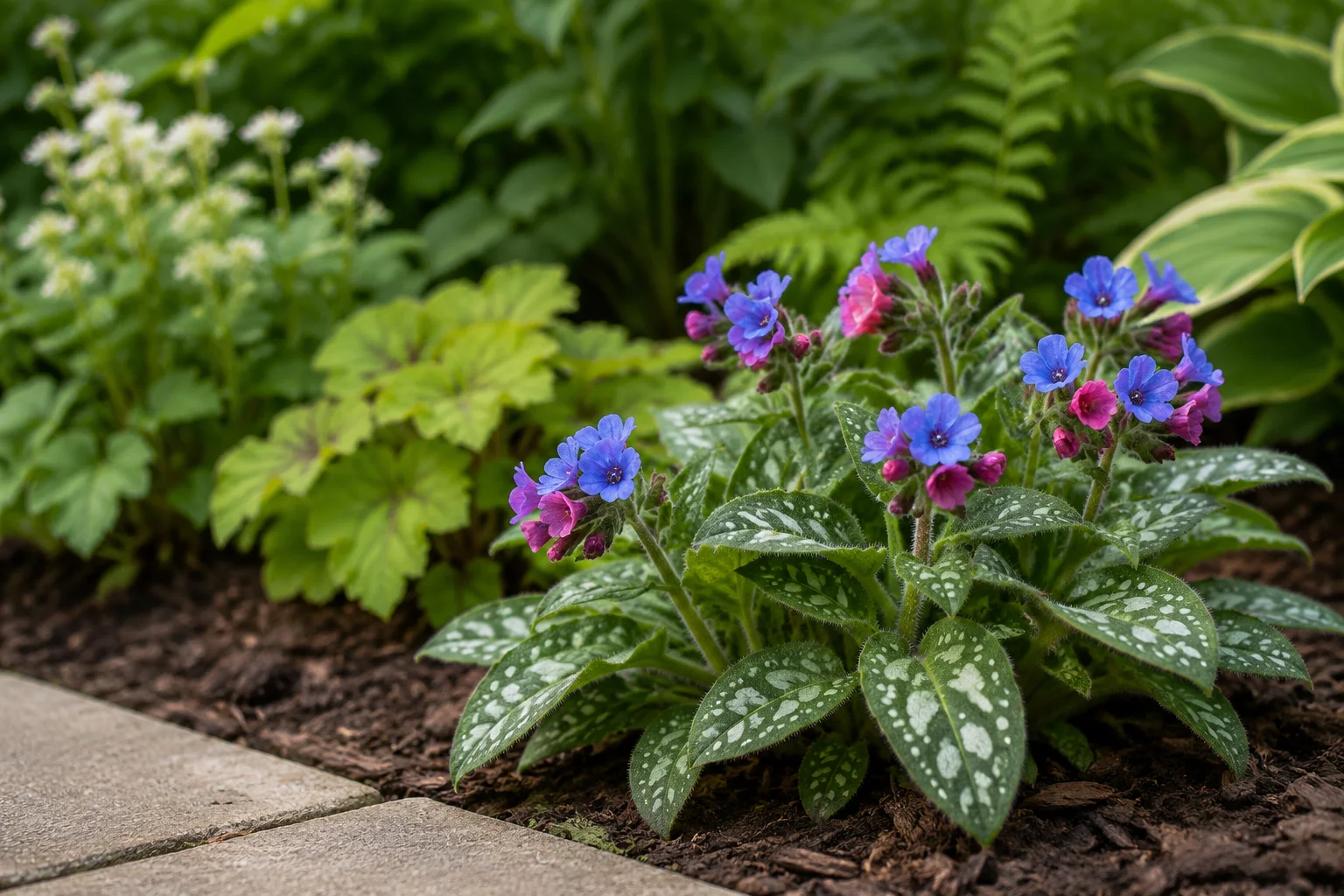
Lungwort earns its place twice: pink buds that open and age toward blue-violet in spring, then silver-spotted leaves that brighten a shaded corner. It is a front-of-bed plant, usually 9 to 18 inches tall, best repeated along an edge rather than hidden behind taller foliage.
- Soil: cool, humus-rich, and evenly moist, with drainage that keeps the crown from staying waterlogged.
- Care: watch for slugs and powdery mildew. Remove tired foliage as needed and divide crowded clumps when growth declines.
Pass on it if your shade bed bakes dry in summer; heat and drought can spoil the foliage even after a good spring display.
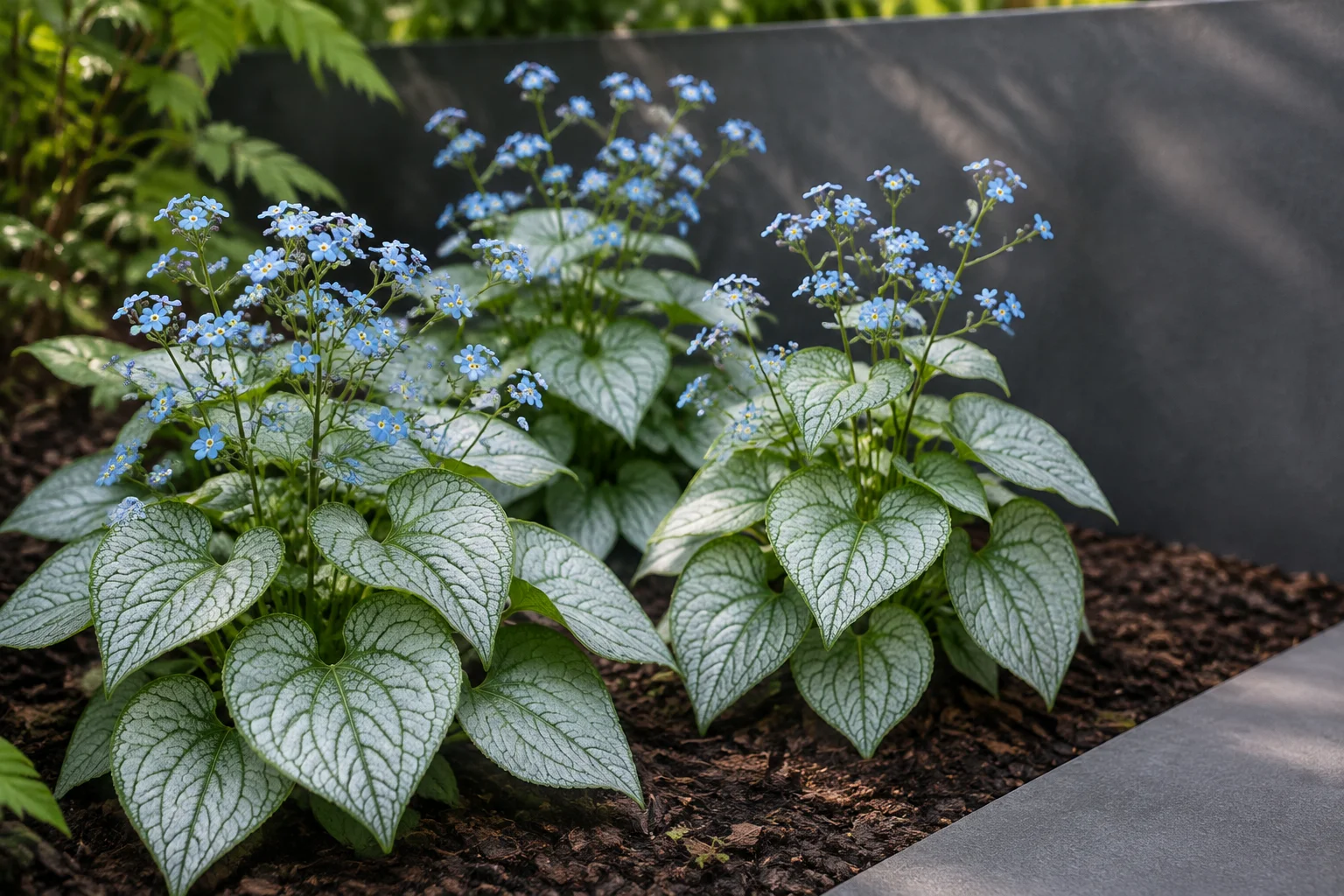
4. Siberian Bugloss (Brunnera macrophylla ‘Jack Frost’)
If you want forget-me-not blue in shade, brunnera offers it above foliage that stays useful after flowering. ‘Jack Frost’ carries sprays of tiny blue flowers over heart-shaped leaves marked with silver. Three plants in a loose triangle give a small bed a clear focal point.
- Soil: fertile, consistently moist, and well-drained; dry ground is a poor match.
- Light and climate: shelter it from hot afternoon sun. It performs best with cooler nights and can struggle in hot, humid southeastern U.S. summers.
Choose a locally recommended heat-tolerant coral bells cultivar instead if summer heat repeatedly damages brunnera in your area. A matching hardiness zone alone does not solve that problem.
5. Wild Columbine (Aquilegia canadensis)
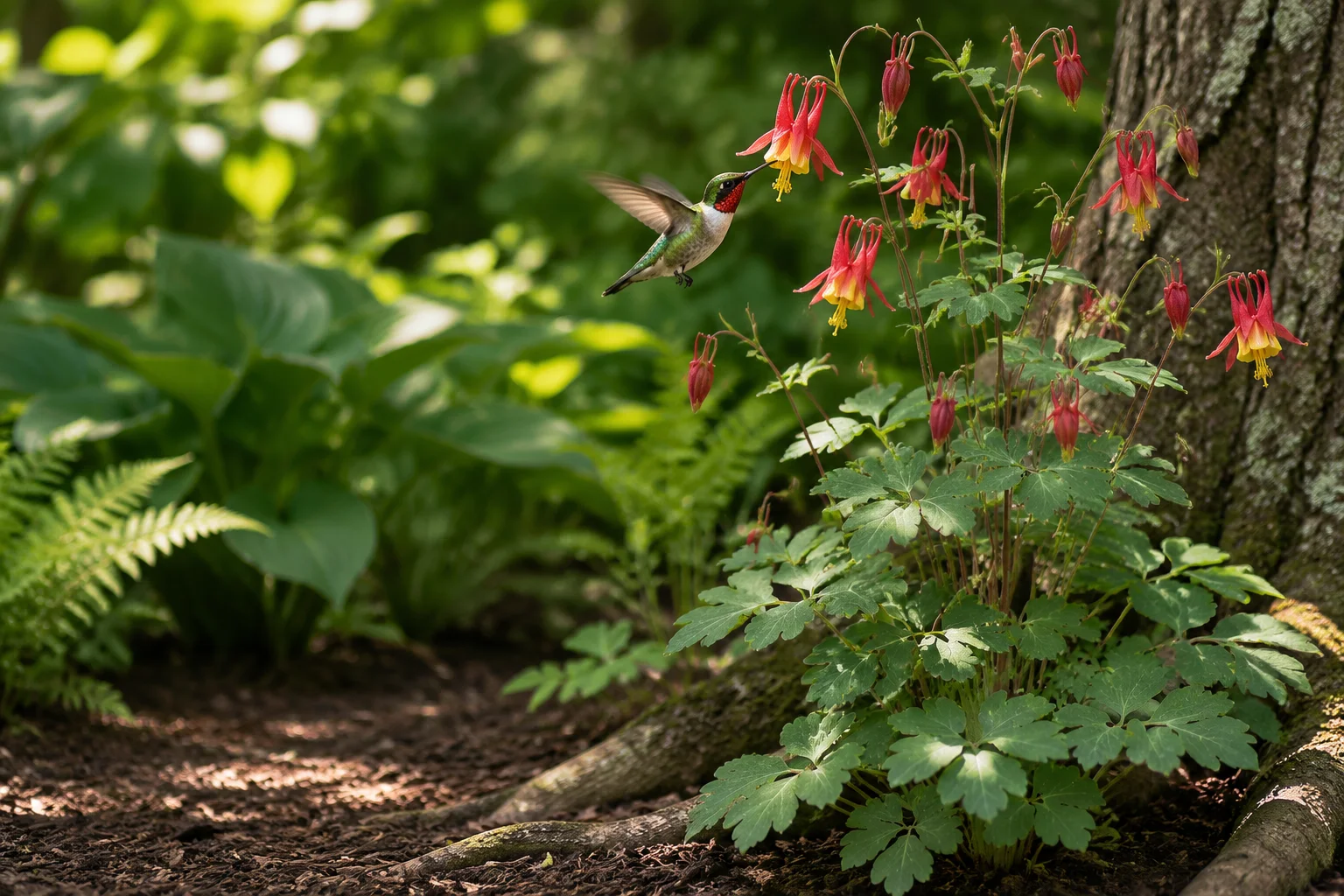
Red and yellow lanterns at hummingbird height make wild columbine useful at the brighter edge of a woodland bed. This eastern North American native is more resistant to leaf miner damage than many other columbines and copes with occasional dry soil once established.
- Soil and light: partial shade and well-drained soil are a good starting point. It accepts more sun where moisture is sufficient.
- Design idea: let a few plants seed between established clumps for a loose woodland effect. Remove seedheads if you want a more fixed outline.
Do not treat it as a solution for a dark, root-packed bed that never receives water. Even a drought-tolerant planting needs help while its roots establish.
6. Bleeding Heart (Lamprocapnos spectabilis)
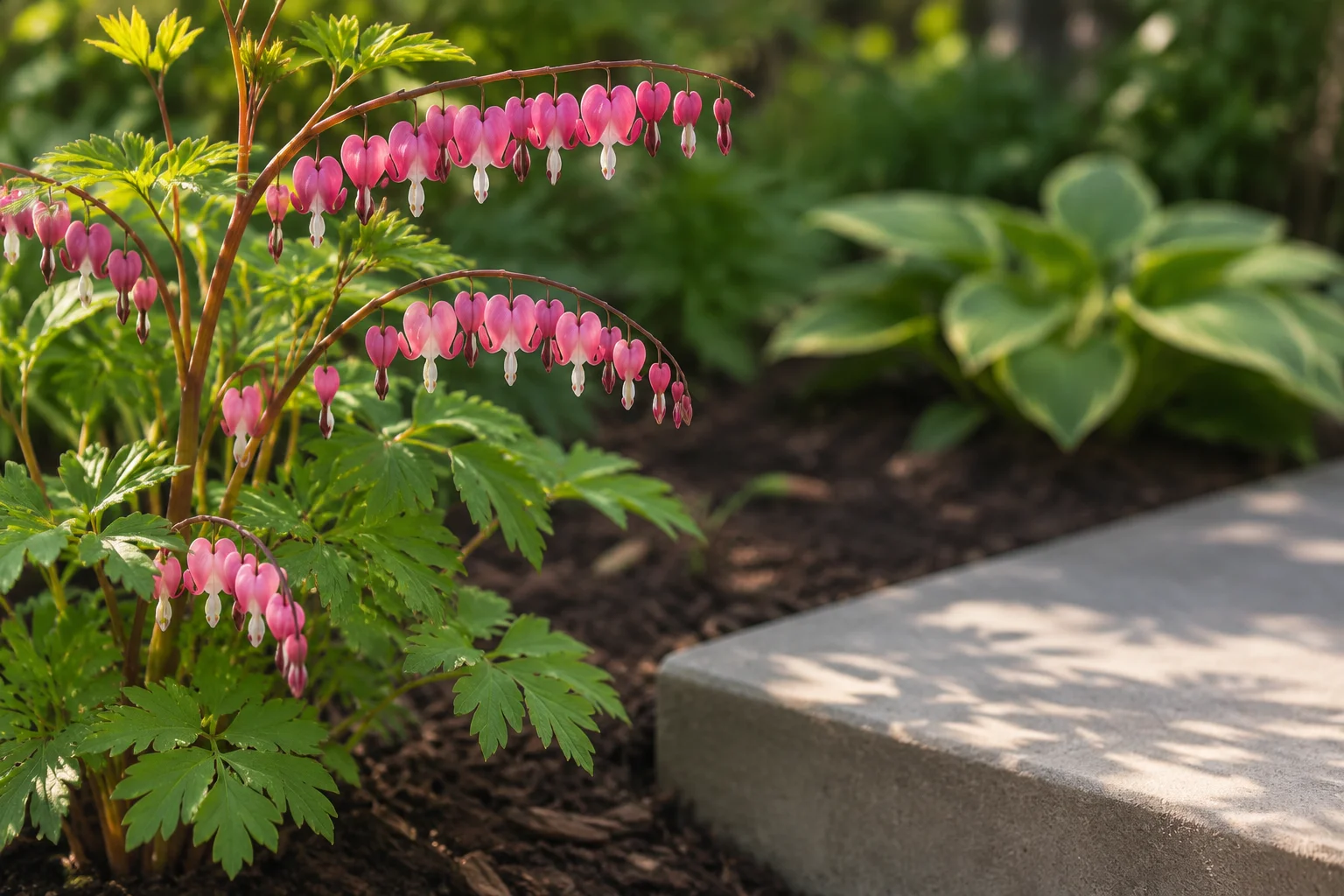
The classic, and still worth it: arching stems of pink and white hearts above soft, divided leaves on a 2- to 3-foot plant. This is an herbaceous perennial, also sold under its older name, Dicentra spectabilis. Give it morning sun and afternoon shade, or a cooler shaded position in hotter regions.
- Soil and gap fillers: rich, moist, well-drained soil. The foliage often yellows and dies back in summer, especially during heat or drought; nearby astilbe or coral bells can help cover the gap.
- Pets and handling: NC State reports that all parts are poisonous if eaten and that contact can irritate skin. Wear gloves and avoid accessible planting sites for pets that graze or dig.
Choose another plant if you need a permanent summer mound in that exact spot. Let its leaves yellow naturally, then mark the dormant crown.
7. Foamflower (Tiarella cordifolia)
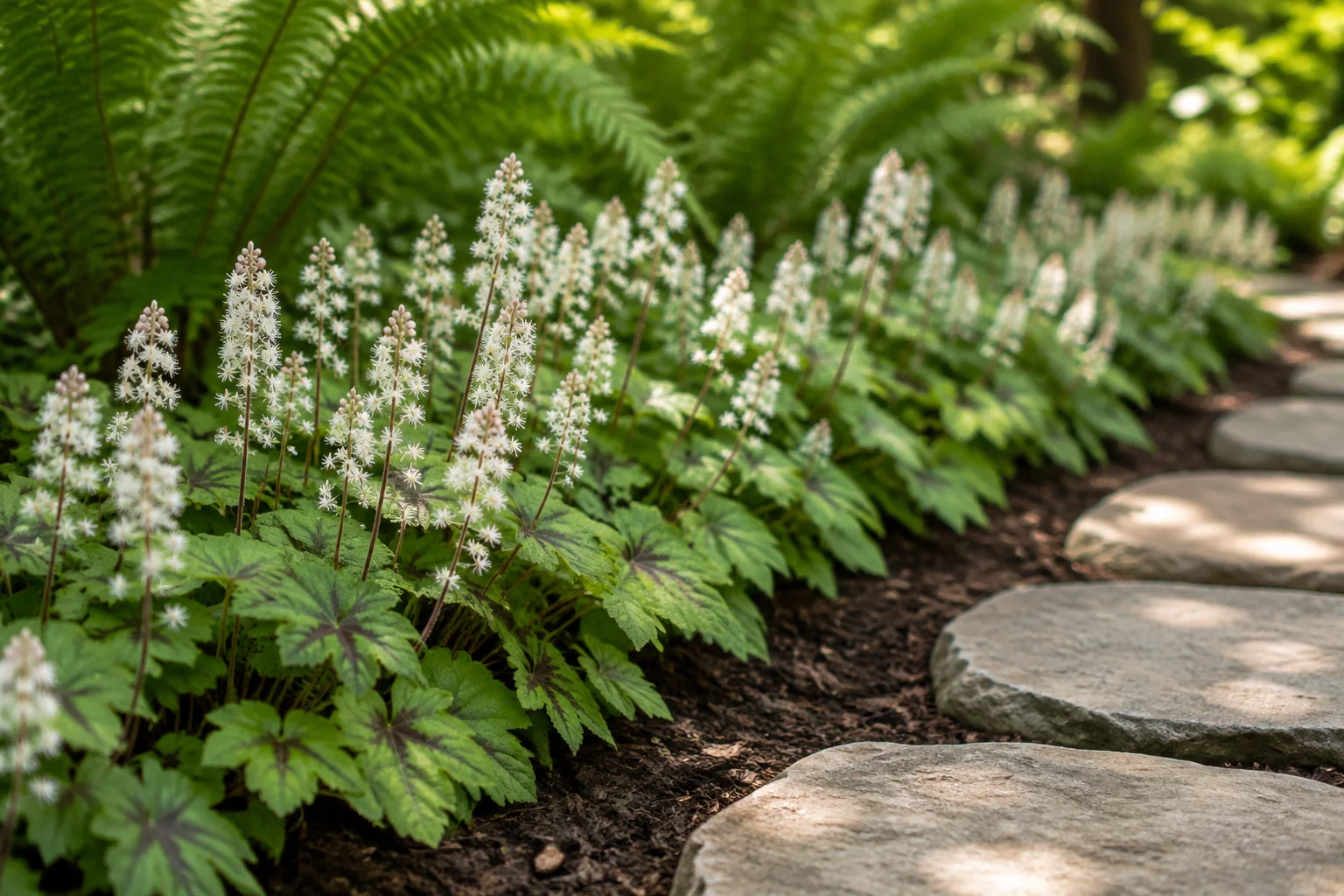
Think of foamflower as the lace edging of the bed. Short spires of white to pale pink flowers rise over lobed leaves in spring, and spreading forms gradually knit into a groundcover. It works especially well along a shaded path where the small flowers are easy to see.
- Soil: moist, humus-rich, and well-drained. Dappled to full shade suits it, but dry soil does not.
- Design idea: repeat several plants along an edge and leave room for runners. Check the cultivar label, because some selections form tidier clumps than others.
Skip it for the driest strip under a mature tree unless you can provide reliable moisture. Hellebore or wild columbine may suit that situation better.
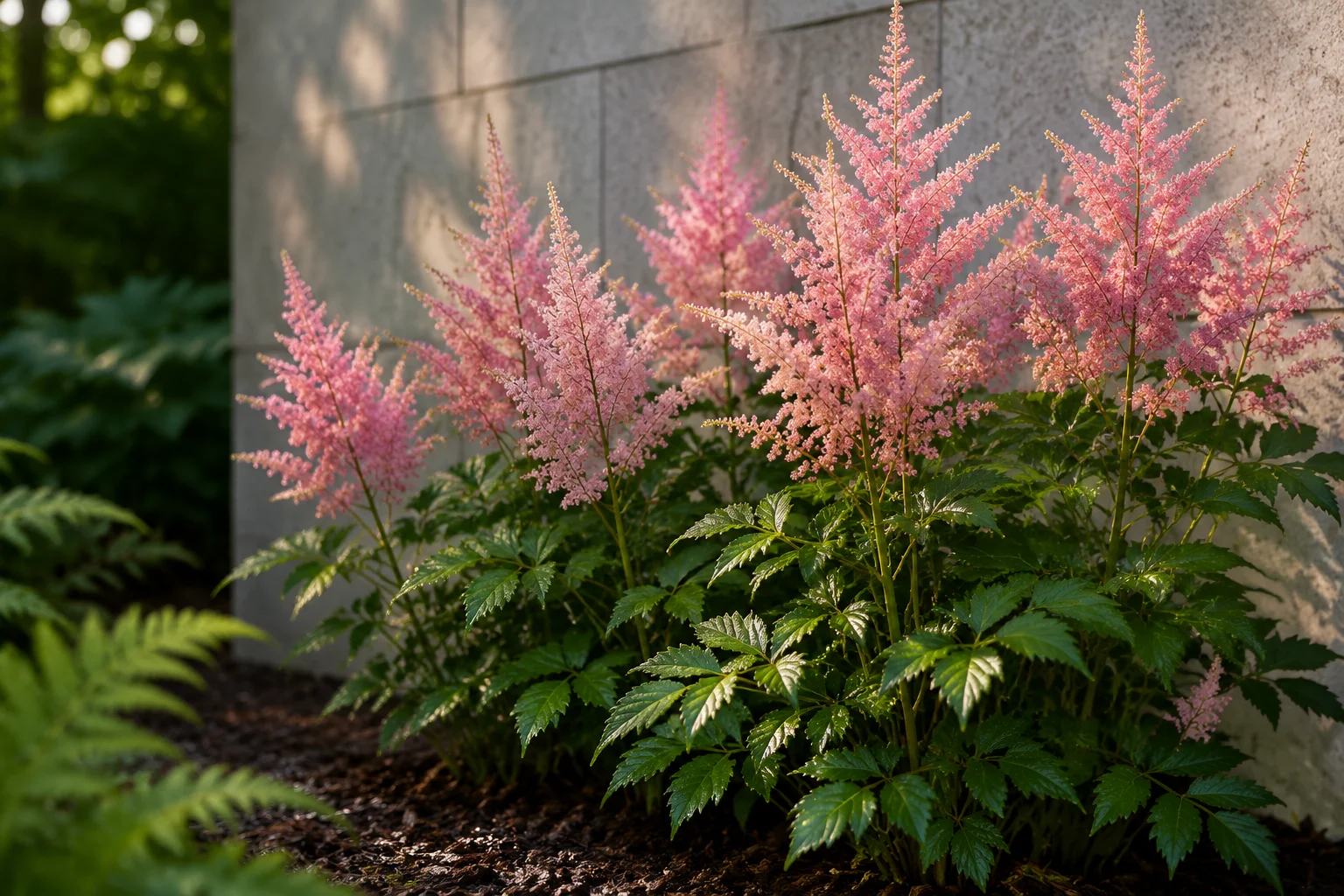
8. Astilbe (Astilbe × arendsii)
Astilbe brings feathery plumes in white, pink, peach, or deep red. A drift of three to five plants of one color looks more settled than a single specimen, especially where soft summer light catches the plumes. Many hybrids reach 2 to 3 feet in flower.
- Soil: organically rich and consistently moist. Leaf edges brown when the soil dries, and drought can send the plant into early dormancy.
- Bloom planning: choose early-, middle-, and later-flowering cultivars if you want a longer display. One astilbe plant does not flower all summer. Divide congested clumps about every three to four years.
Not the plant for dry shade, or for a garden left unwatered through hot weather. Its foliage is most useful after flowering when moisture remains steady.
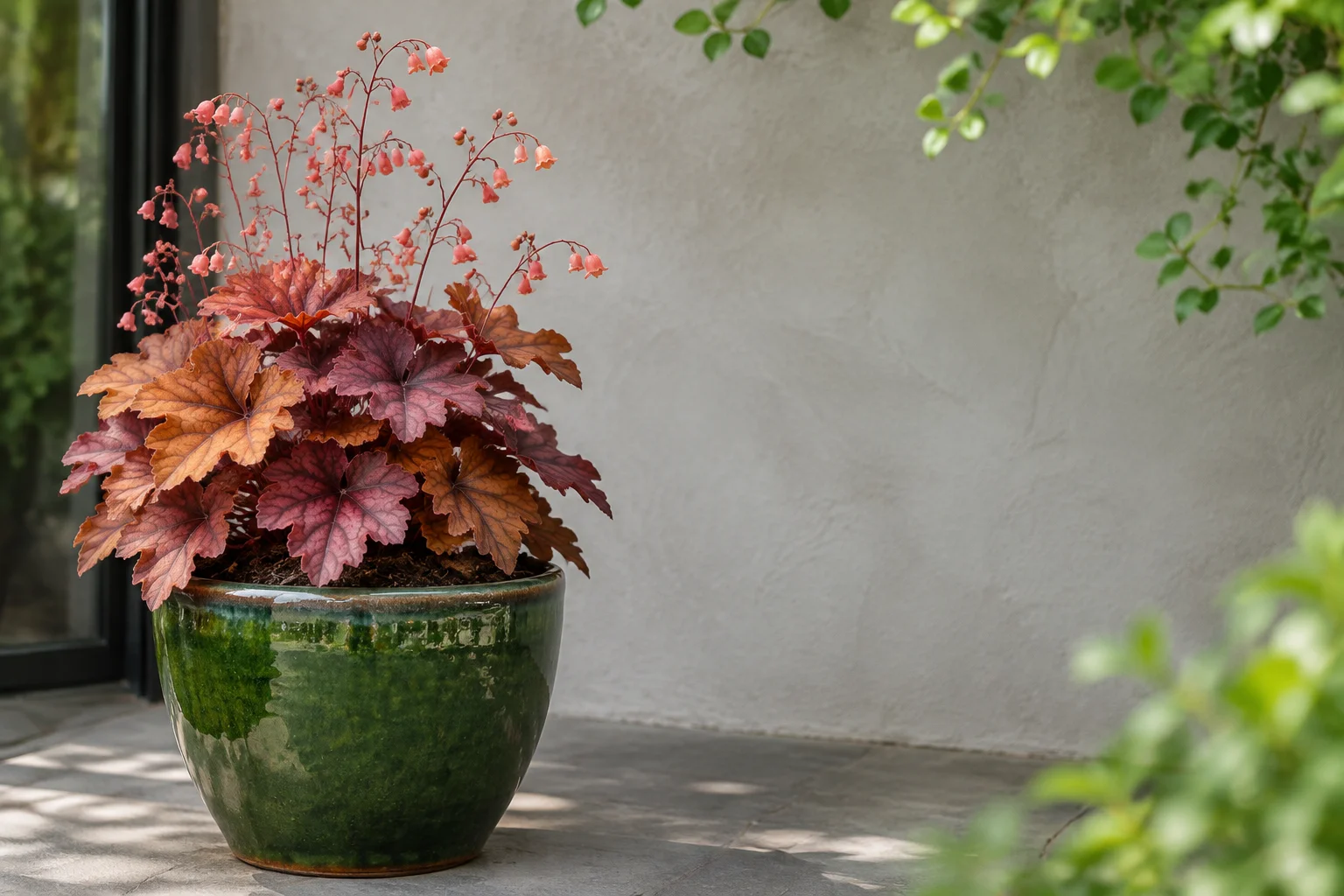
9. Coral Bells (Heuchera species and hybrids)
Coral bells give you a mound of foliage in caramel, lime, purple, or silver, then wiry stems of small flowers above it. Use them at the front of a border or in pots. Flower height and bloom time vary widely, so choose a cultivar for its flowers as well as its leaves if blooms are your priority.
- Soil and climate: moist but well-drained soil. Avoid burying the crown. In hot, humid areas, look for locally recommended selections with Heuchera villosa ancestry.
- Winter care: shallow roots can heave during freeze-thaw cycles. Mulch appropriately for your climate, keeping wet material away from the crown during active growth.
Do not assume every coral bells is equally suited to deep shade or extreme heat. For pet notes, the ASPCA’s specific non-toxic listing is for Heuchera sanguinea; see the species details below.
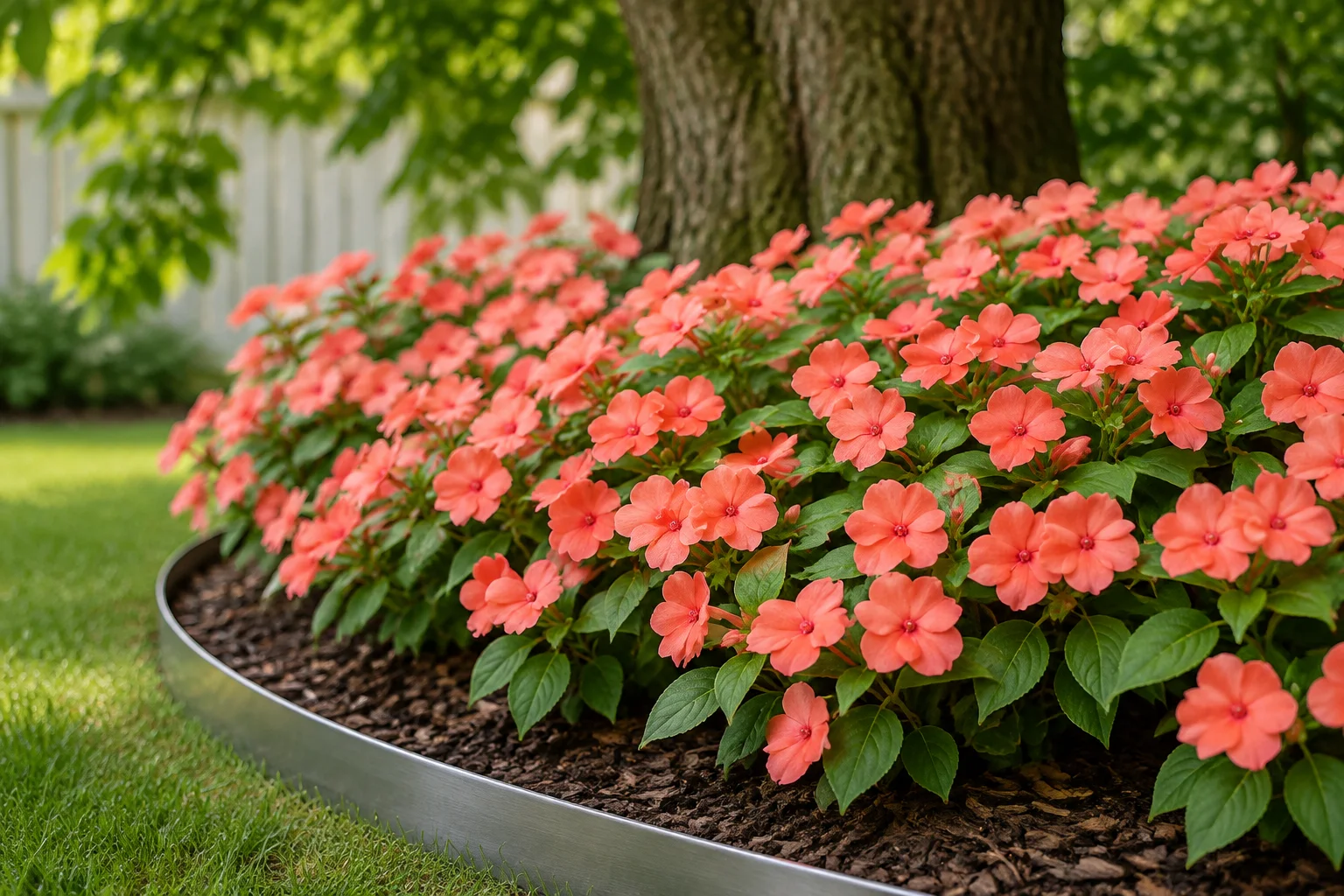
10. Impatiens (Impatiens walleriana)
Impatiens fill gaps between perennials with pink, coral, white, red, or violet flowers from late spring until frost. Mass one color along a shaded border or use a pot beside dormant spring flowers. Plant after frost danger has passed, once conditions are warm enough for growth.
- Light and water: morning sun and afternoon shade, or bright filtered light, usually give the best display. Plants in heavy shade tend to grow taller and flower less. Check soil moisture rather than following a fixed weekly schedule.
- Disease: Iowa State recommends downy mildew-resistant choices such as Beacon and Imara XDR, along with resistant hybrid series. New Guinea impatiens are another option, with light needs that depend on the selection.
If downy mildew has affected the bed, remove infected plants and avoid susceptible varieties. Torenia is an alternative; a fixed two-year wait does not guarantee the site is clear.
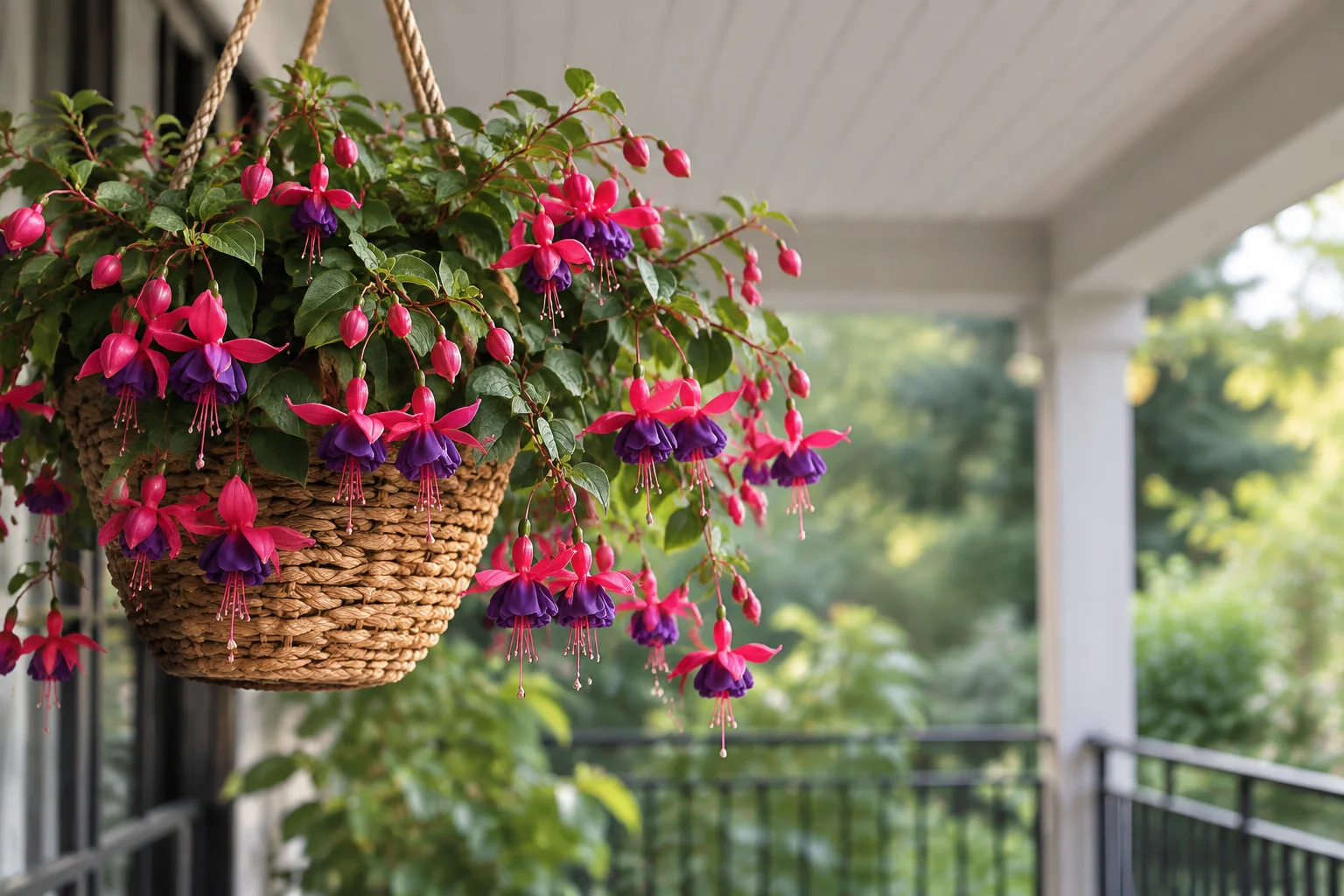
11. Fuchsia (Fuchsia × hybrida)
Fuchsia brings color up to eye level. Dangling two-tone flowers in pink, purple, white, and red hang from baskets and upright pots, and hummingbirds visit them. Bright shade and cool summer conditions suit many basket hybrids; sustained heat can slow or stop flowering.
- Soil and water: use a moisture-retentive, well-drained potting mix. Baskets dry quickly, so check them often and shelter them from drying wind.
- Care: watch for whiteflies and spider mites. Most familiar basket hybrids need protection from frost; hardy fuchsia species and cultivars have different limits.
In hot-summer climates, treat it as a spring or fall display unless you have a suitable cool position. For compatible partners, see our hanging basket combinations for a shady porch.
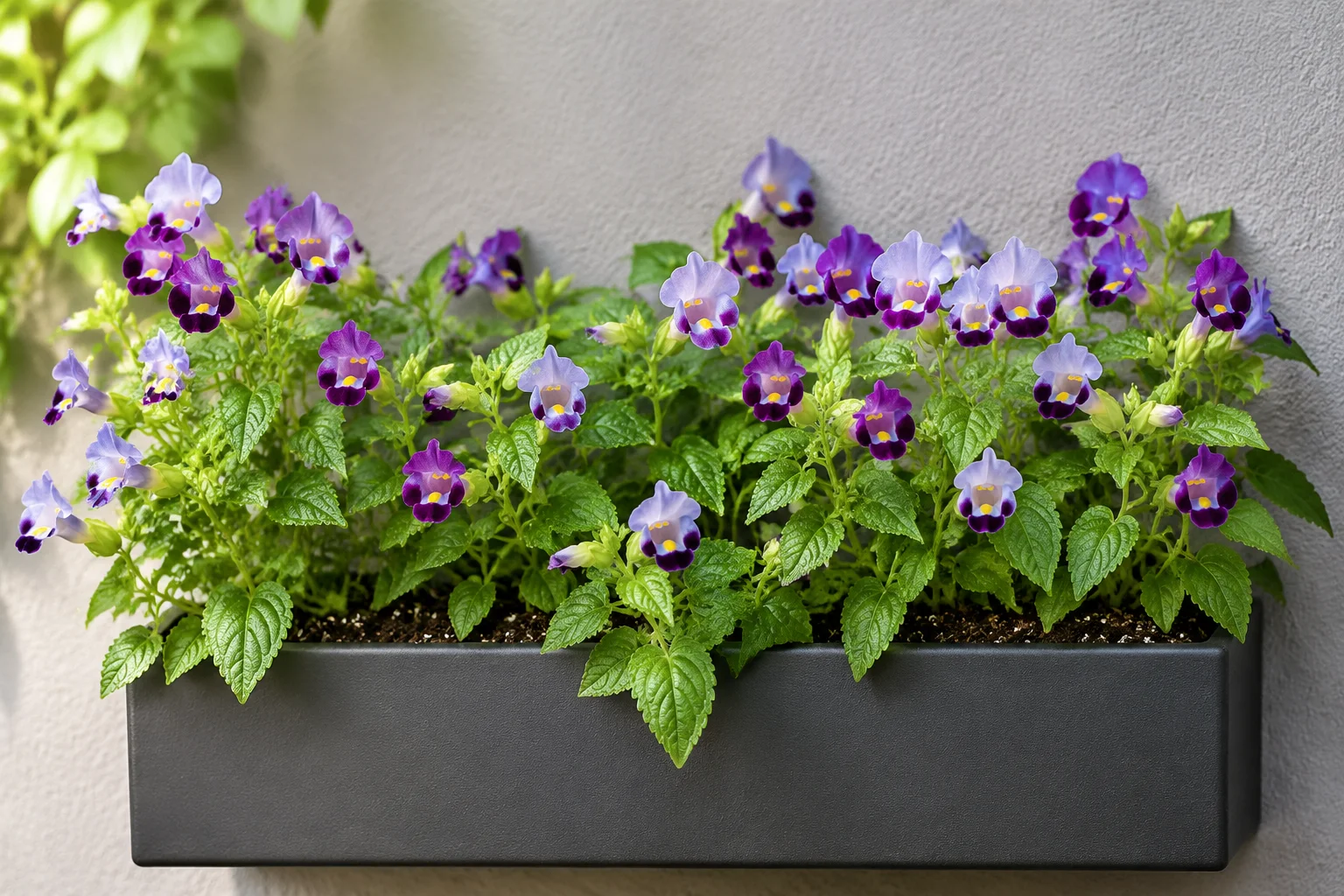
12. Wishbone Flower (Torenia fournieri)
Wishbone flower adds violet, blue, pink, or white blooms to the front of a shaded bed through summer. Compact forms make neat edging, while trailing torenia hybrids suit baskets and window boxes. It is a useful warm-season alternative when a cool-loving fuchsia struggles.
- Soil and light: rich, consistently moist, well-drained soil in partial shade. Gentle morning sun can help flowering; protect it from harsh afternoon sun in hot areas.
- Design idea: repeat its flower color in an adjacent pot of impatiens, or use blue-flowered plants beside silver brunnera foliage where the climate suits both.
Skip a container position that repeatedly dries out. Bright shade is useful; a dark recess under a deep roof is much less likely to give a full display.
13. Hardy Begonia (Begonia grandis)
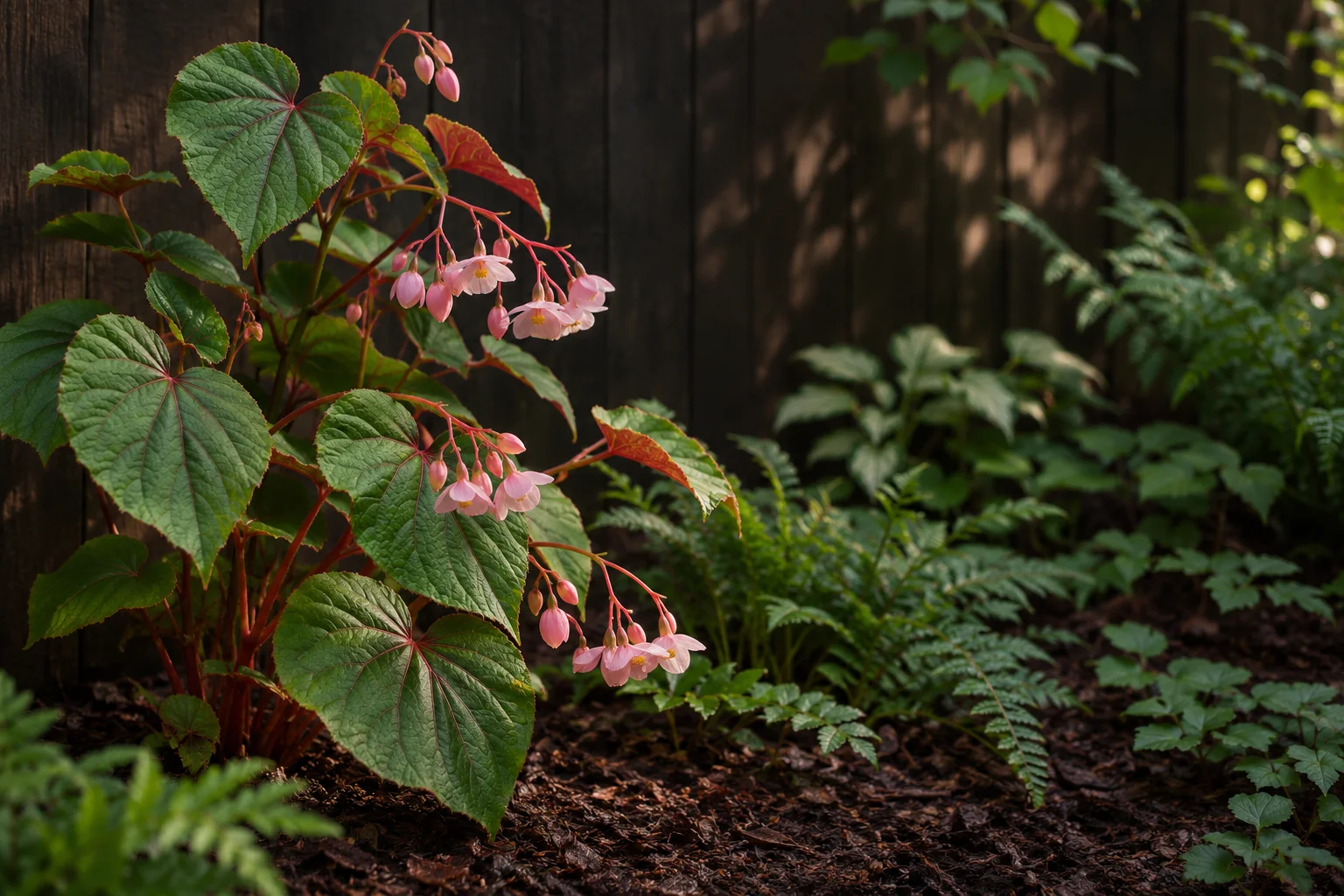
The late-season surprise is a begonia that can return each year where winters suit it. Hardy begonia sends up 18- to 36-inch stems with loose clusters of pale pink flowers from summer into fall. It emerges late in spring, so mark its spot rather than assuming it has died.
- Soil and zones: moist, rich, well-drained soil in partial to full shade. It is generally listed for zones 6–9, but survival at the colder end depends on protection, drainage, and local conditions.
- Spread and pets: small bulbils form in leaf axils and can produce a colony. ASPCA lists begonias as toxic to dogs and cats, with underground parts the most toxic.
Avoid it where a pet digs, or where you need dependable outdoor winter survival below its hardiness range. Do not confuse it with frost-tender wax or tuberous begonias.
14. Japanese Anemone (Anemone × hybrida ‘Honorine Jobert’)
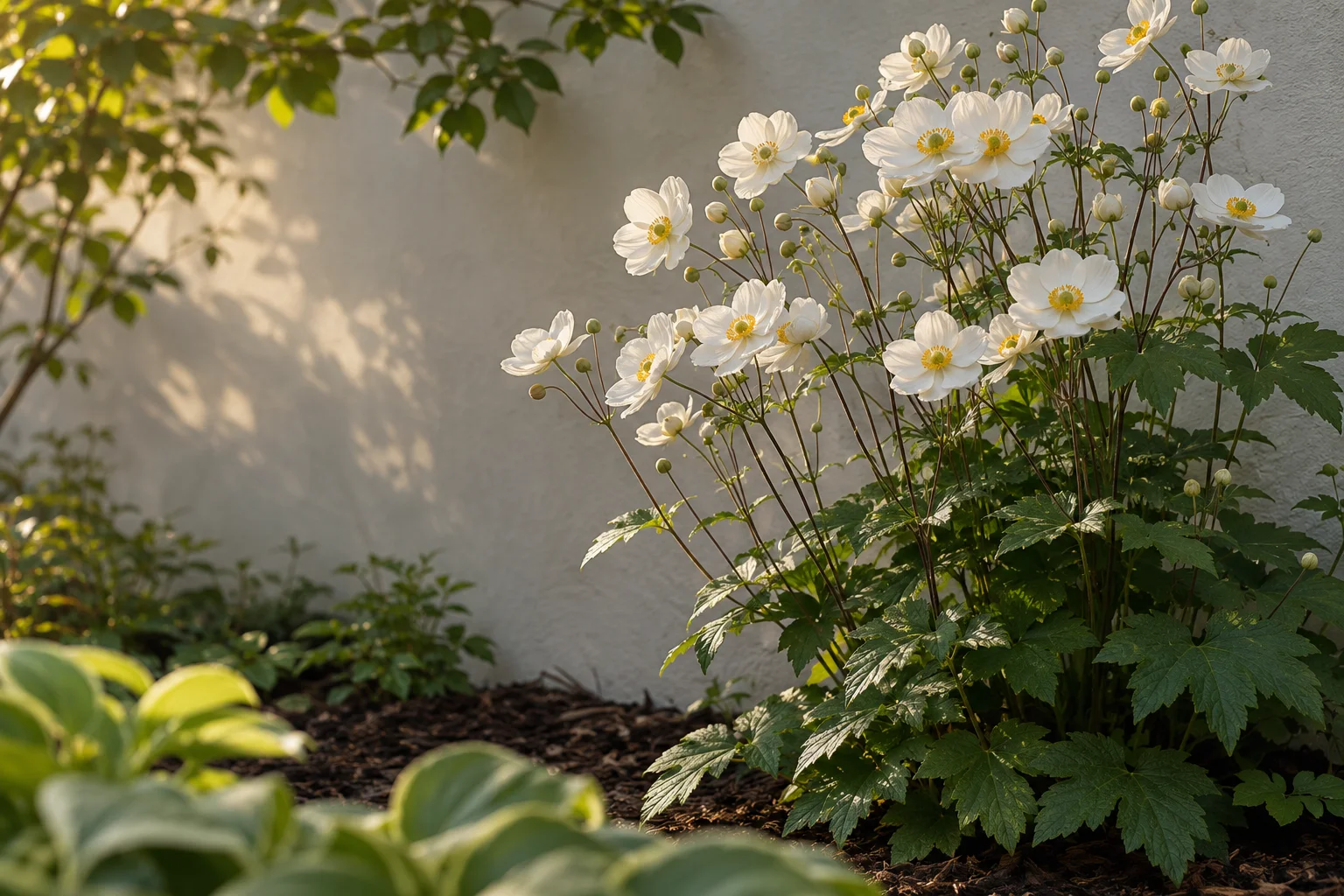
From late summer into fall, Japanese anemone lifts white or pink flowers with yellow centers above the bed on wiry stems. ‘Honorine Jobert’ is white and typically reaches 3 to 4 feet in bloom. Give it space toward the back of a border, with afternoon shade in hotter gardens.
- Soil: moist, fertile, and well-drained. It dislikes both prolonged dryness and wet winter ground.
- Spread and handling: it can be slow to settle, then spread strongly through rhizomes. Wisconsin Extension notes that all parts are toxic if eaten and that sap can irritate skin.
Pass on it for a tightly packed small bed unless you are willing to manage its spread. A large separate container is another option, with a winter protection plan where needed.
15. Toad Lily (Tricyrtis hirta)
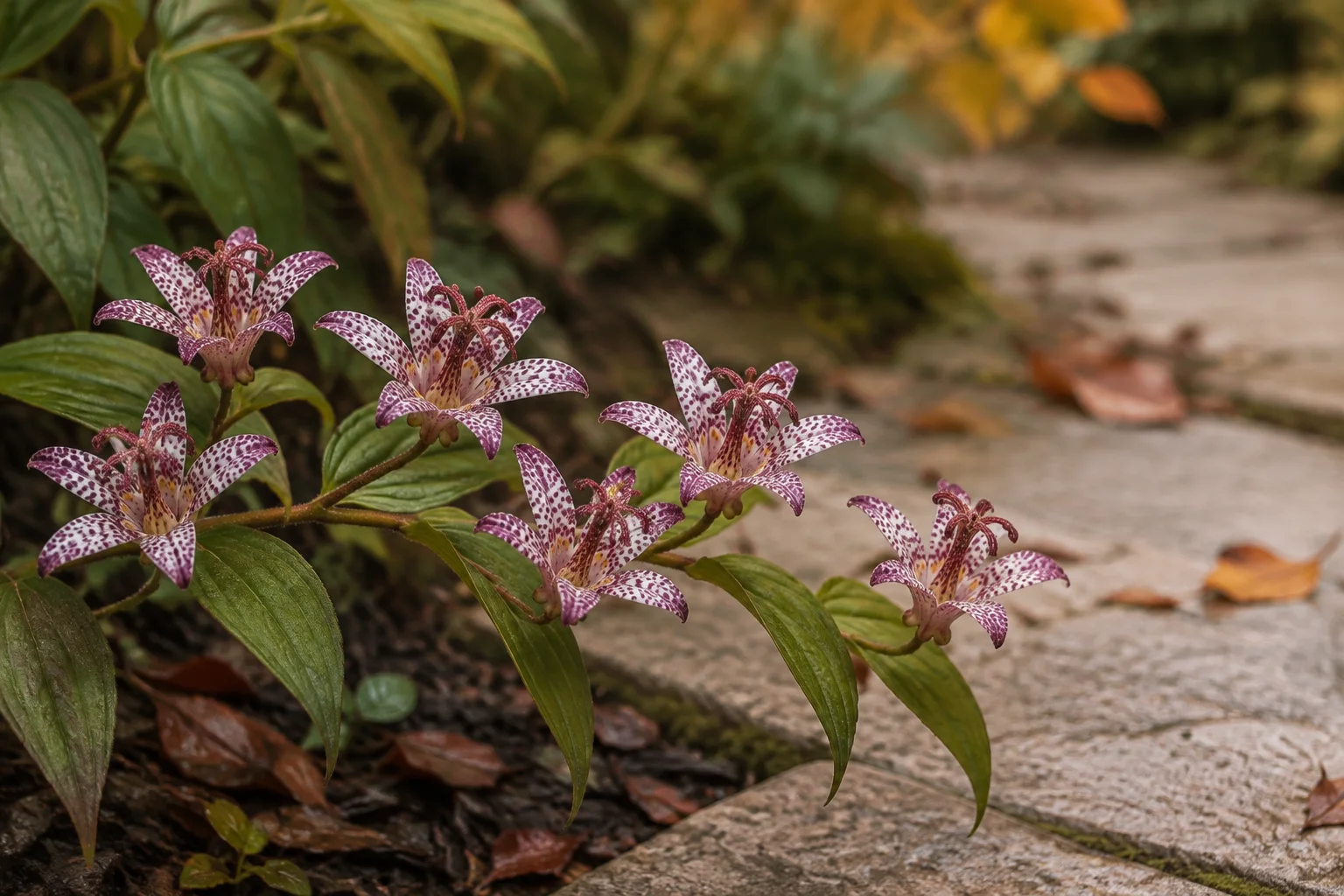
The late flower is the one visitors crouch to inspect. Small orchid-like blooms, white to pale lilac and freckled with purple, line arching stems in late summer or fall. Put it beside a path, because the detail disappears when viewed from across the yard.
- Soil: organically rich, evenly moist, and well-drained. Drought can brown the leaves and reduce flowering.
- Seasonal limit: frost can cut the display short. Choose a cultivar that begins flowering before your usual first hard frost; rabbits and slugs may also damage growth.
Do not rely on a late-flowering cultivar for autumn color where the growing season ends early. Ask a local nursery which selections flower reliably in your area.
3 Shade Flower Garden Layouts You Can Copy
These are suggested combinations based on the plants’ light, moisture, and size requirements. Adjust the spacing to the cultivar you buy and leave room for mature plants; a new bed does not have to look full on planting day.
A 4-by-8-Foot Bed for Moist Partial Shade
For a bed viewed mainly from one side, in a cool-to-moderate garden around zones 5–7, start with six perennials:
- Back row: two astilbes and one toad lily, with the toad lily nearest a path or viewing point.
- Front row: one Lenten rose and two brunneras, arranged in a staggered line rather than directly beneath the taller plants.
- Summer addition: place a separate pot of impatiens beside the bed if you want flowers between the perennial bloom periods.
Choose compact selections with mature spreads around 18–24 inches, allowing up to 30 inches for the hellebore, and space centers roughly 24–30 inches apart as their labels require. Hellebore and brunnera provide the early display, astilbe follows, and toad lily supplies late flowers. This is a seasonal succession, not a guarantee of uninterrupted bloom. Avoid the hellebore where pets can chew it.
A Simple Woodland Edge for Drier Shade
At the brighter edge of a deciduous tree canopy, repeat small groups of Lenten rose and wild columbine between existing roots. Their spring flowers and differing leaf shapes suit a loose woodland arrangement. Use small nursery plants, keep the trunk flare exposed, and water while they establish.
Expect the main flower display in spring. For summer color, use a freestanding pot of impatiens or torenia in a nearby bright spot where you can water it separately. Do not force moisture-loving astilbe into the driest root zone or bury tree roots beneath a new raised bed.
A Blue-and-White Container Group for a Shaded Patio
Group three pots: white impatiens, blue or violet torenia, and silver-leaved coral bells. The annuals provide flowers while the coral bells gives the group a more permanent shape. Separate pots let you adjust watering and move one plant if its light needs differ. Choose containers with drainage holes and enough room for each plant’s mature size.
For a cool porch, a fuchsia basket can add flowers above the group. For more container choices, see our shade-loving plants for a north-facing balcony and low-light outdoor plants for a shaded balcony.
If Dogs or Cats Use the Garden
Check botanical names, because a common name can cover several species. The ASPCA lists Impatiens species and fuchsia as non-toxic to dogs and cats. Its coral bells entry specifically names Heuchera sanguinea; do not use that entry as species-level verification for every hybrid.
Lenten rose, bleeding heart, hardy begonia, and Japanese anemone should stay out of reach of animals that chew or dig. The plant references above identify their toxicity. A missing database entry is not a safety rating, and even non-toxic plants are not intended as pet food. Verify other selections by botanical name; contact a veterinarian promptly if a pet eats a potentially toxic plant.
Care Basics for Shade Flowers
Keep the Soil Moist Without Waterlogging It
Most plants here prefer soil rich in organic matter that holds moisture but drains well. Check below the surface before watering, then water the root zone thoroughly when needed. Rainfall, temperature, soil type, and tree roots change the schedule; containers usually need checking more often than beds. Established hellebore and columbine tolerate drier spells than astilbe, lungwort, or brunnera.
Use a moderate mulch layer, generally about 2 inches in an ordinary perennial bed, while keeping it away from stems and crowns. Avoid adding another thick layer each year over material that has not broken down. Let soil conditions and a soil test guide feeding; extra fertilizer does not compensate for insufficient light.
Plant Around Tree Roots Carefully
Penn State’s underplanting guidance recommends small planting holes and small plants that fit between roots. Do not cut major roots, cover exposed roots, pile soil against the trunk, or construct a raised bed over the root zone. If roots leave no safe planting space, use containers in a suitable nearby position instead.
Give new plants water through their first growing season and during later dry spells. Drought tolerance describes an established plant, not a newly planted plug competing with a mature tree.
Plant and Protect According to Your Local Season
Spring and early fall are useful planting windows for many hardy perennials. In climates where soil freezes, allow roughly 4–6 weeks before ground freeze when planting in fall. Put frost-tender annuals outside after frost danger has passed and temperatures suit them. Avoid relying on a calendar month that belongs to a different climate.
Winter protection is plant- and climate-specific. Where freeze-thaw cycles cause heaving, apply an appropriate insulating winter mulch after the ground freezes and remove excess material as growth resumes. A thick blanket over every crown is not a universal rule, particularly in mild, wet winters.
Potted perennials need extra planning because their roots lack the insulation of garden soil. Illinois Extension suggests choosing plants hardy about two zones colder than your own as a useful starting point, along with larger pots and a sheltered position. That improves the odds; it does not guarantee survival. Our guide to winterizing potted plants on a balcony covers container protection in more detail.
If the Plants Grow Leaves but Few Flowers
- Recheck light: a canopy can become denser over time. Bright shade and a dark covered corner are different growing conditions.
- Check the season: spring perennials finish flowering; replacing them is not always necessary.
- Check moisture and heat: dry roots can stop a display, while cool-loving plants may struggle during a hot summer.
- Review feeding and crowding: overfertilized perennials can produce soft growth and few flowers. Divide congested plants when appropriate rather than adding more feed automatically.
Inspect damaged leaves for slugs and other pests. Hand-pick slugs where practical and reduce hiding places beside vulnerable plants. If using a control product, follow its label and keep pets away as directed; a product described as less toxic is not harmless.
Frequently Asked Questions
What Flowers Bloom All Summer in Shade?
Impatiens and wishbone flower are useful long-flowering choices for bright shade or partial shade, with adequate moisture and suitable temperatures. Fuchsia can flower through summer in cooler conditions, and hardy begonia adds later color where it is hardy. Most shade perennials flower for part of the season, so combine them with annuals instead of expecting one perennial to bloom continuously.
Can a Shade Flower Garden Grow Without Direct Sun?
Some plants, including hellebores, Virginia bluebells, foamflower, and hardy begonia, can flower with little direct sun if the site still receives enough ambient daylight. Dense, dark shade is more limiting. If plants become stretched and flower poorly, move containers toward a brighter edge or use more foliage plants rather than expecting heavy flowering.
Which Shade Flowers Do Deer Tend to Leave Alone?
Hellebores, brunnera, wild columbine, and astilbe are often described as deer resistant. That means less preferred, not deer-proof; hungry deer may browse plants they normally avoid. Impatiens are more vulnerable, so use appropriate protection where deer regularly enter the garden.
Why Did My Bleeding Heart or Virginia Bluebells Disappear in Summer?
Seasonal dormancy is common: Virginia bluebells normally die back by midsummer, and bleeding heart often declines after flowering, especially in hot or dry conditions. Let yellowing foliage finish naturally and mark the crown. A sudden collapse while the plant should be growing can have other causes, so check moisture and signs of damage. Place a seasonal pot nearby, rather than directly on top of dormant crowns.
What Is the Best Time to Plant Shade Perennials?
Spring or early fall often gives plants time to establish without intense summer heat. In cold climates, finish fall planting about 4–6 weeks before the ground is expected to freeze. Local weather and the species matter more than the month. Frost-tender impatiens, torenia, and basket fuchsias need a different schedule from winter-hardy perennials.
Can I Grow These Flowers on a Shaded Balcony?
Yes. Impatiens, fuchsia, torenia, and compact coral bells suit containers, provided there is enough daylight, drainage, and shelter from drying wind. Choose pots for mature plant size, check moisture regularly, and decide how any perennial will overwinter before buying it. A north-facing balcony may still receive very different light from one floor or building to another.
Start With One Well-Matched Combination
Choose plants for the light and moisture you actually have, then spread their flowering seasons. For a small moist bed, the hellebore, brunnera, astilbe, and toad lily combination is a useful starting point where the climate suits them. For containers, impatiens and torenia can carry much of the summer display. Leave space for mature growth and let attractive foliage hold the design together between flowers.
If you are also planning a brighter border, our low-maintenance front yard flower garden ideas covers plants for a different set of growing conditions.
Sources and Growing References
Plant profiles and the guides below support the advice on growing conditions, planting, containers, and pet considerations. Local conditions and cultivar labels should guide final plant choices.
- NC State Extension plant profiles: lenten rose, virginia bluebells, siberian bugloss, wild columbine, bleeding heart, foamflower, astilbe, coral bells, impatiens, fuchsia, wishbone flower, hardy begonia, toad lily.
- Missouri Botanical Garden: Pulmonaria saccharata ‘Mrs. Moon’ — size, flowers, foliage, and growing conditions.
- University of Minnesota Extension: Gardening in the Shade — light levels, site conditions, and root competition.
- Iowa State University Extension: Growing Impatiens in the Home Garden — light needs, downy mildew, and resistant selections.
- Penn State Extension: Underplanting Trees — Respect the Roots — planting without burying or damaging roots.
- Iowa State University Extension: How to Plant Perennials and How to Maintain Perennial Beds and Borders — planting and winter care.
- Illinois Extension: Overwintering Perennial Patio Containers and Planting and Care — root protection, spacing, and feeding.
- University of Wisconsin–Madison Extension: Windflower and Hairy Toad Lily — spread, toxicity, and late-season flowering.
- ASPCA plant entries linked in the pet section — botanical names and toxicity classifications.
- USDA Plant Hardiness Zone Map — winter hardiness zones.