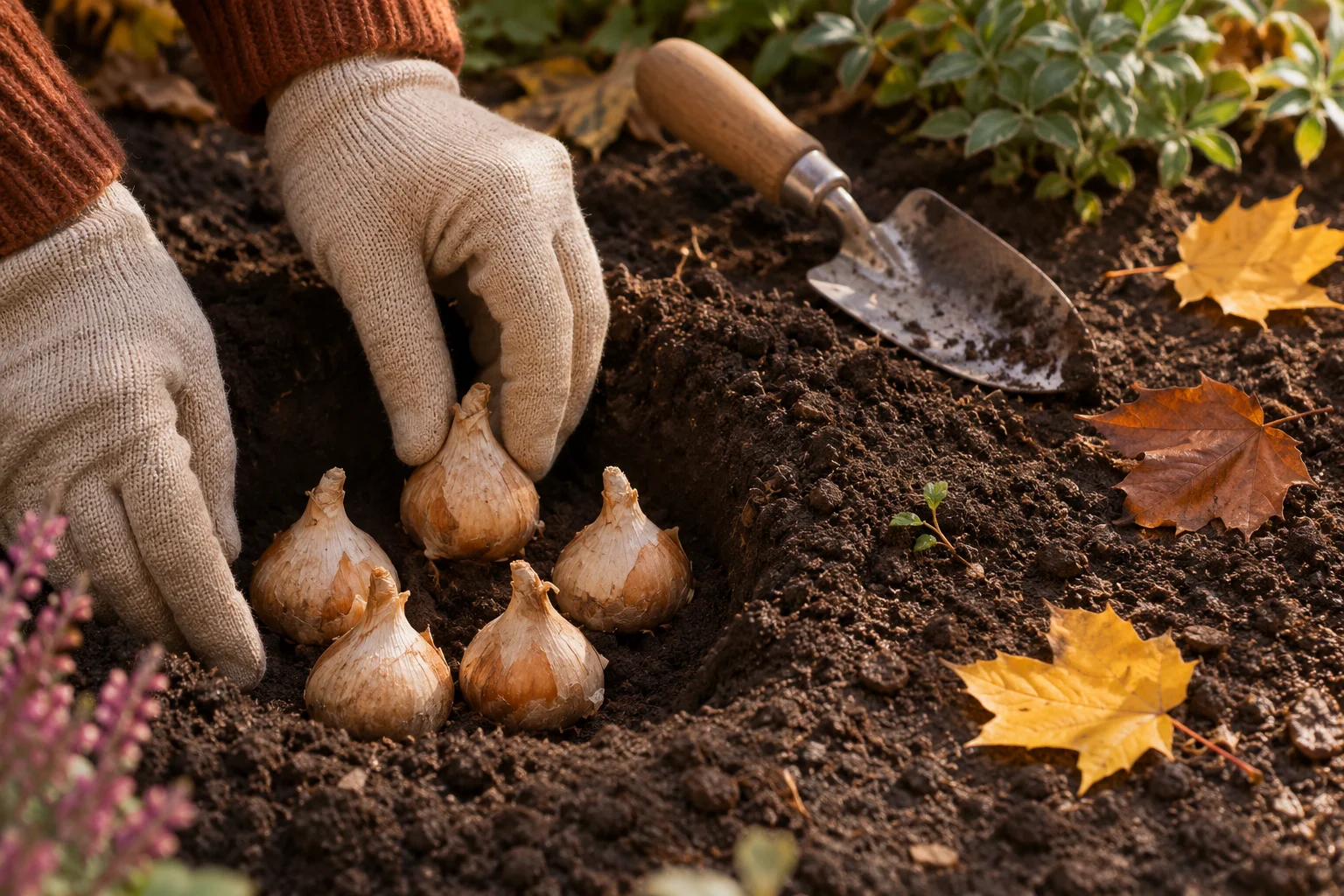
The mesh bag of bulbs has been sitting by the door for a week. They look like small, papery onions, a little dusty, and the label promises a sheet of yellow trumpets next spring. Meanwhile the maple leaves are coming down and the evenings feel sharper.
Learning how to plant daffodil bulbs comes down to four things you control this fall: timing, depth, drainage and a good drink of water. Get those right and daffodils (Narcissus spp.) are one of the easiest flowers you’ll ever grow. The process feels a lot like planting garlic in the fall, just with a much prettier payoff in April.
The short answer: plant daffodil bulbs in fall once the soil is below 60°F and before the ground freezes. Pick a sunny, well-drained spot, dig 6 to 8 inches deep, set each bulb pointed end up about 6 inches apart, cover, water well and mulch. Then leave the leaves alone after bloom.
Table of Contents
At a Glance
- Plant in fall after the soil cools below 60°F and before the ground freezes. In the Midwest, October is the sweet spot.
- Set most daffodils 6 to 8 inches deep, measured to the base of the bulb, pointed end up and about 6 inches apart.
- Drainage matters more than rich soil. Soggy ground is the fastest way to lose bulbs.
- Water well after planting, then leave the leaves alone after bloom until they turn yellow and brown.
- Every part of the plant is toxic to dogs and cats, and the bulb is the most poisonous part.
Short on garden space? Daffodils grow well in pots too, as long as you plan for winter cold. That gets its own section below.
What You’ll Need
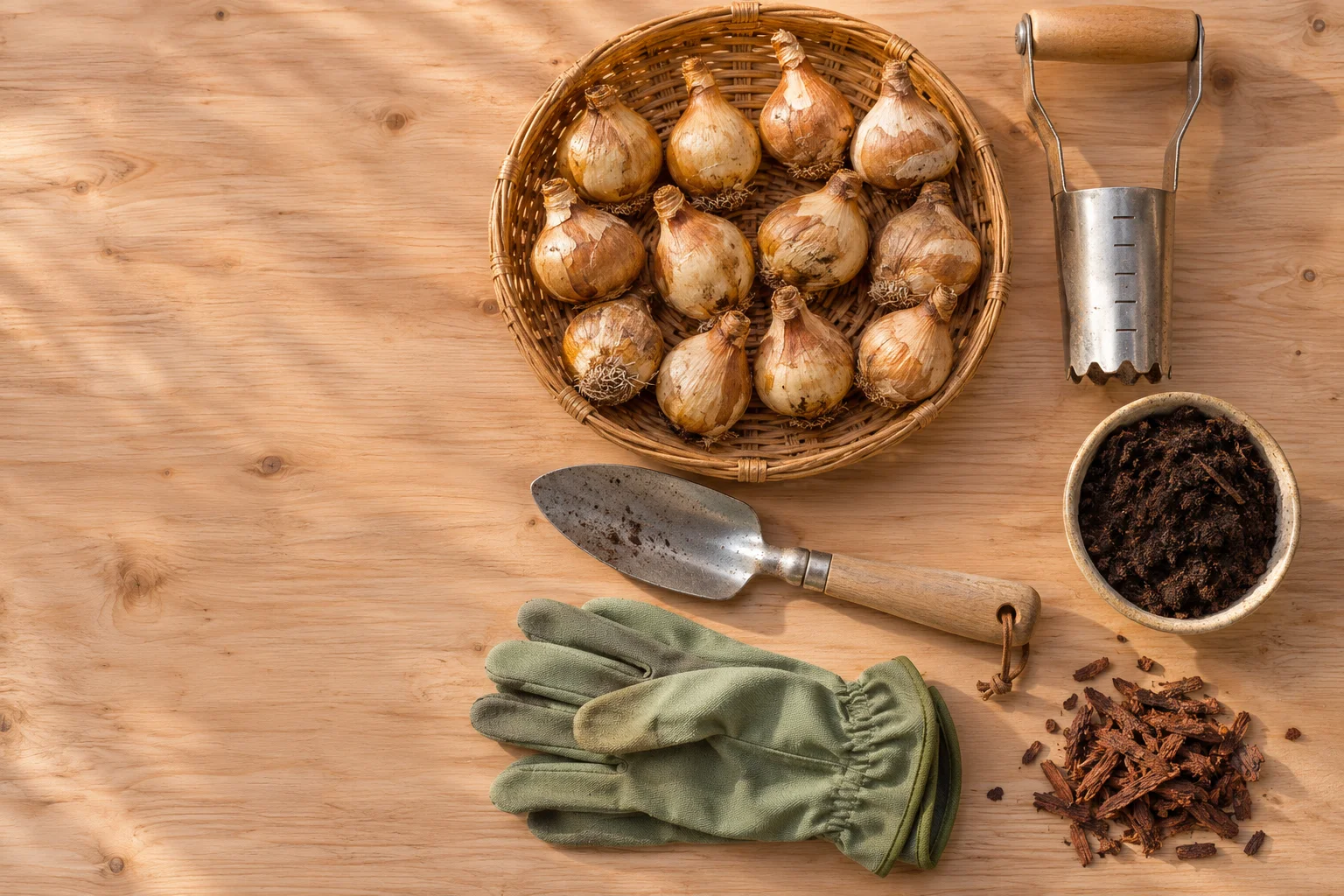
You need very little: good bulbs, a way to dig, and something to improve the soil if it drains slowly. The rest is optional.
Essentials
- Daffodil bulbs, firm and heavy for their size
- A hand trowel, bulb planter or spade (a spade is faster for a group of bulbs in one wide hole)
- Compost or other organic matter for heavy or poorly drained soil
- A watering can or hose
- Mulch such as shredded bark or pine needles
- Gardening gloves
Optional
- A low-nitrogen bulb or garden fertilizer, only if a soil test shows low fertility
- Plant labels or short stakes so you don’t dig into the bulbs later
- Chicken wire to lay over a new planting if pets or animals dig in fresh soil
- Pots with drainage holes and potting mix, for container planting
A quick safety note before the bag is open. The ASPCA lists daffodils as toxic to dogs, cats and horses, with the bulbs the most poisonous part. Swallowing them can cause vomiting, drooling and diarrhea, and large amounts can cause tremors, low blood pressure and heart rhythm problems. Keep the bag up high while you work, plant when a curious dog isn’t helping, and call your vet promptly if a bulb goes missing into a pet.
Wear the gloves, too. NC State Extension notes that handling daffodils can cause a skin rash in some people. Wash your hands when you’re done, and don’t store the bulbs where they could be mistaken for onions in the kitchen.
Before You Start
Three checks decide most of your spring results: when you plant, where you plant, and which bulbs you buy. Each takes a few minutes.
When to Plant Daffodil Bulbs
Plant once the soil has cooled in fall and while it’s still workable. Nebraska Extension recommends planting spring bulbs when soil temperatures are below 60 degrees, which in eastern Nebraska means late September through the end of October. An inexpensive soil thermometer pushed in to planting depth tells you for sure.
Iowa State University Extension calls October the ideal time to plant daffodils in Iowa, and as late as December if the ground stays unfrozen. Farther south in Missouri, the best window runs to mid-October, with planting as late as Thanksgiving still giving good results.
The point of the timing is roots. Daffodils need several weeks to grow a root system before the soil freezes, so in colder regions aim earlier in that window, and in milder regions you have more room to wait. Planting very early, while the soil is still warm in September, can push some bulbs to sprout in fall.
Not sure daffodils suit your climate? NC State Extension lists them for USDA hardiness zones 4 through 8, which covers most of the country. If you garden outside that range, check the cultivar label or ask your local Extension office which types do well near you.
Running late with bulbs still in the bag? If the ground isn’t frozen and you can still push a trowel into it, plant them now. Bulbs kept out of the ground until spring usually dry up over winter.
Pick a Spot
Choose full sun, ideally at least six hours of direct light a day, although daffodils manage in part sun under deciduous trees that leaf out after the flowers fade. Skip the north side of a building and the shade of dense evergreens; bulbs there tend to grow leaves and fewer flowers each year.
Next to sun, drainage is the deal breaker. Avoid low spots where water stands after rain. Step 1 below shows a quick way to check.
Choose Good Bulbs
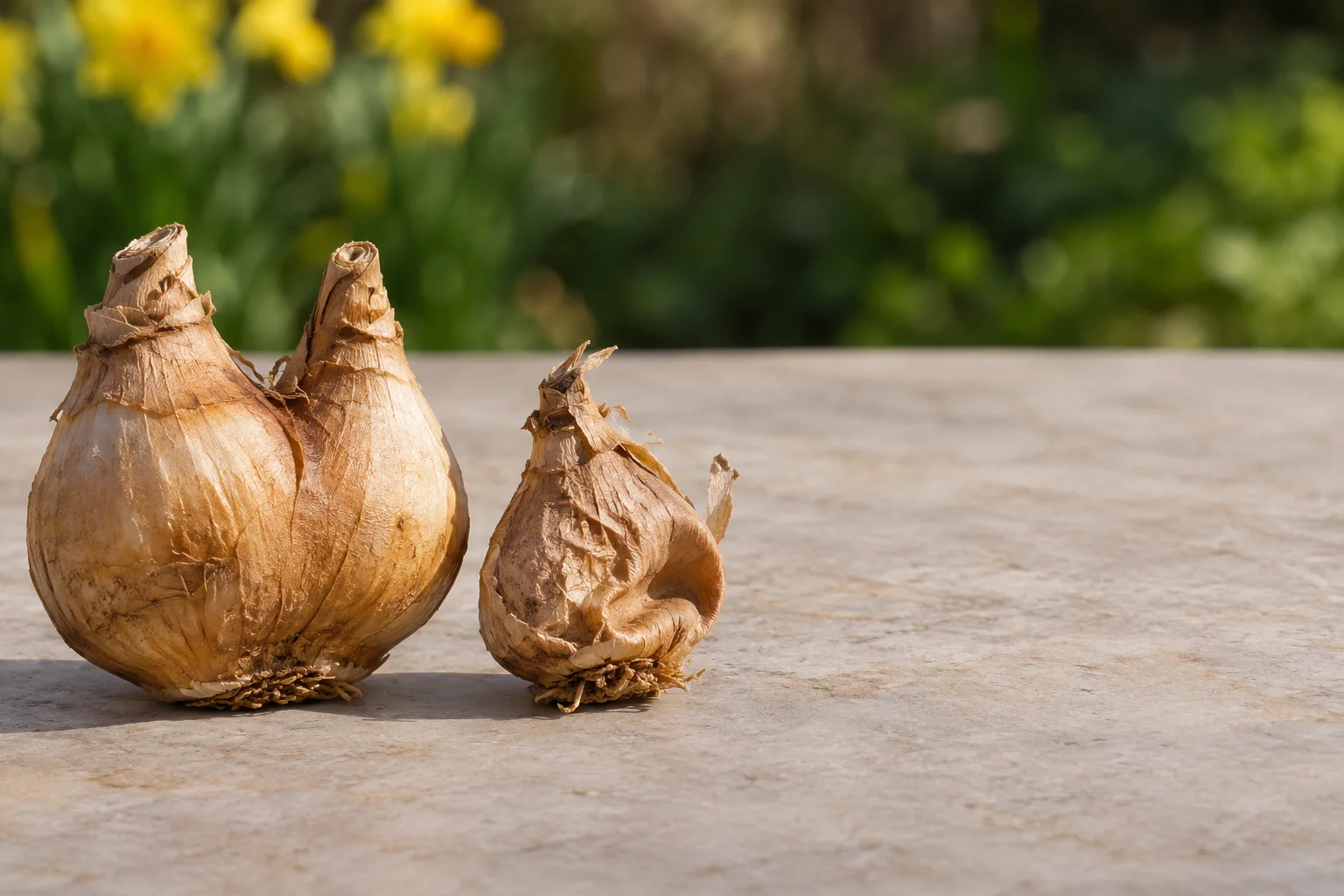
Pick firm, solid bulbs and pass on any that feel soft, shriveled or light for their size. Bigger bulbs give a bigger display, and large double-nosed bulbs (two growing tips joined at the base) are a good pick when you see them. Store them somewhere cool, dry and airy until planting day, not in a sealed plastic bag.
How Deep and How Far Apart to Plant Daffodil Bulbs
A handy rule of thumb from Iowa State is to plant about three times as deep as the bulb is tall. Use this quick reference for depth and spacing; depth is measured from the soil surface to the base of the bulb.
| Bulb type | Planting depth (to base) | Spacing | Notes |
|---|---|---|---|
| Standard and large daffodils | 6 to 8 inches | About 6 inches | Go to about 8 inches in light, sandy soil |
| Miniatures such as ‘Tête-à-Tête’ | 4 to 6 inches | About 4 inches | Good for pots and the front of a bed |
How to Plant Daffodil Bulbs Step-by-Step
The whole job takes seven steps and, for a group of a dozen bulbs, well under an hour. Steps 1 and 2 prepare the soil; steps 3 to 7 get the bulbs in and settled.
Step 1: Check Drainage and Loosen the Soil
University of Missouri Extension calls good drainage perhaps the most exacting need of daffodils; bulbs in poorly drained spots weaken, stop flowering and often rot. Look at the spot the day after a heavy rain. If puddles linger or the soil stays soggy, choose a higher spot or plant in a raised bed or pot instead.
Once you’ve chosen the spot, loosen the soil with a spade or fork a little deeper than you plan to plant, breaking up clods and pulling out roots and stones.
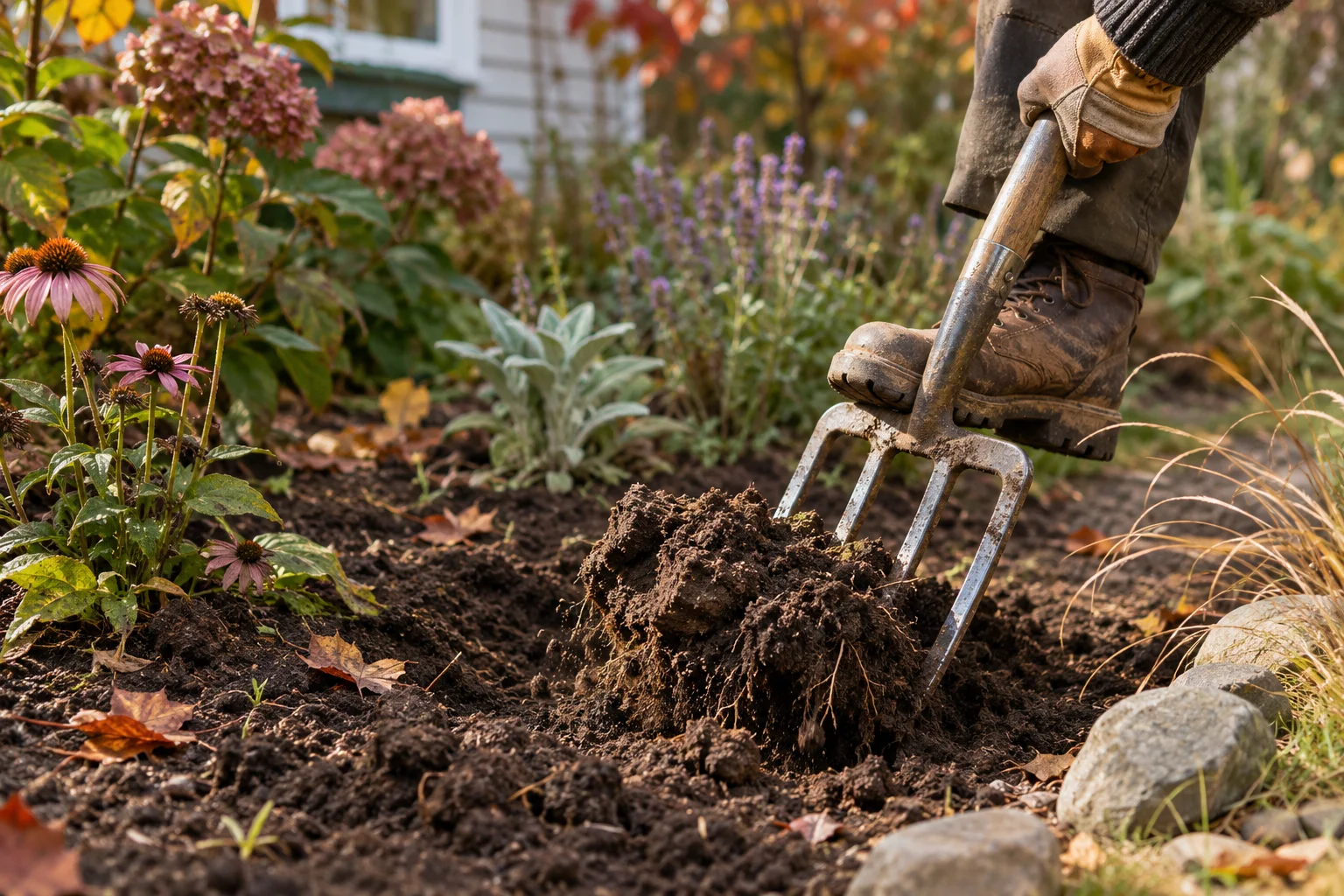
Step 2: Mix In Compost (and Fertilizer Only If Needed)
Daffodils tolerate a wide range of soils, so improvement is mostly about texture. In heavy clay or poor soil, work a few inches of compost into the loosened area; organic matter helps water move through and gives roots an easier path.
Fertilizer is optional. Add it only if a soil test shows exceptionally low fertility, at 2 to 3 pounds of an all-purpose 5-10-5 per 100 square feet, worked deeply into the bed before planting. One firm warning: don’t put fertilizer straight into the bottom of the hole where it touches the bulb. If you’re planting a single clump instead of a bed, a handful of fertilizer per 12 bulbs, mixed through the soil, is plenty. Skip high-nitrogen products and fresh manure.
Step 3: Dig to the Right Depth
Dig so the base of the bulb sits 6 to 8 inches below the soil surface for standard daffodils, and 4 to 6 inches for miniatures. Depth is measured from the base of the bulb to the soil surface, so a 6-inch hole for a 2-inch bulb leaves about 4 inches of soil on top.
Adjust for your soil: in light, sandy soil, go to about 8 inches.
For a group, dig one wide hole rather than a row of narrow ones. It’s quicker, and it’s easier to get every bulb at the same depth.
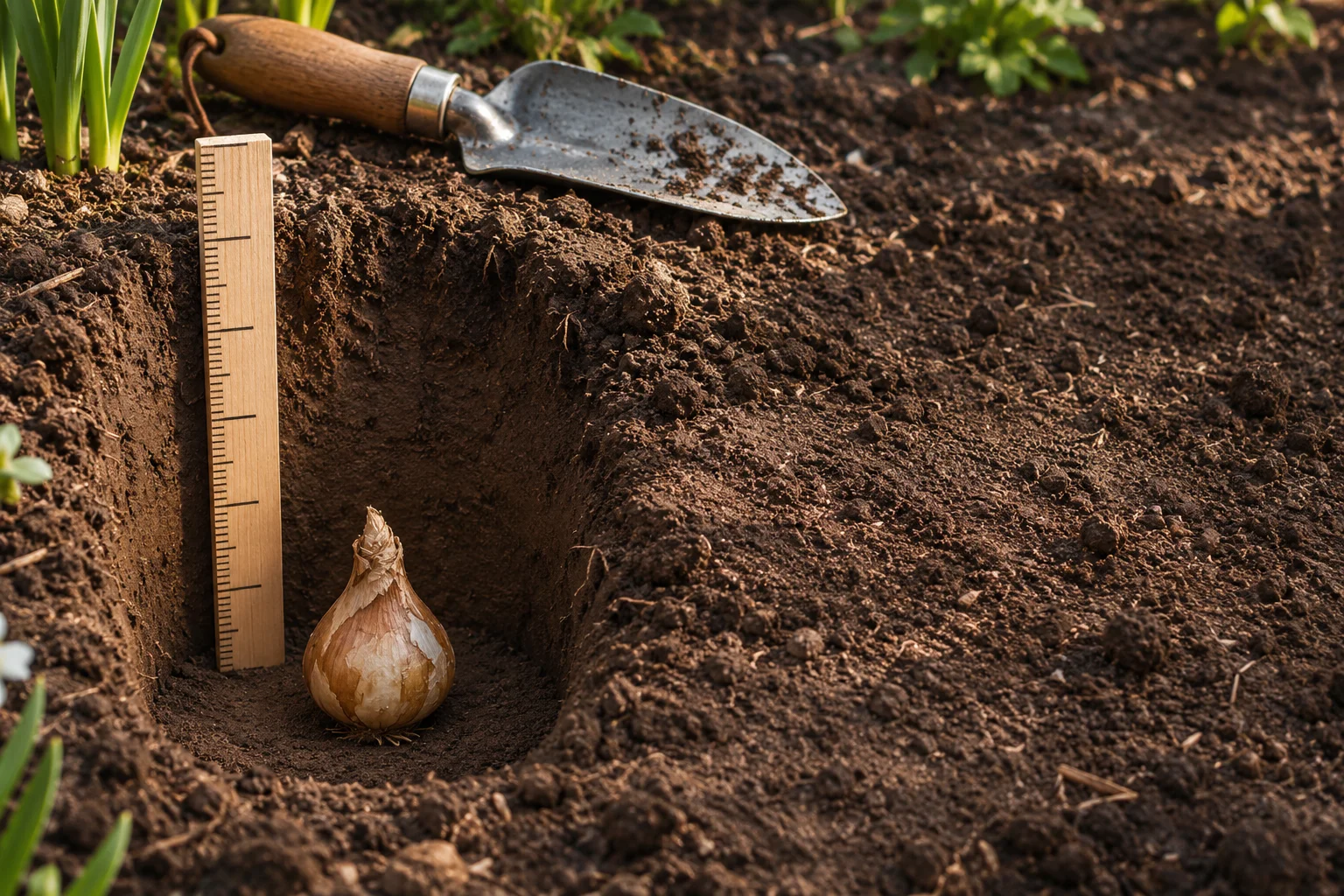
Step 4: Set Bulbs Pointed End Up in Groups
Place each bulb with the pointed tip up and the flat, rooty base down. If you can’t tell which end is which, lay the bulb on its side; the shoot will find its way up.
Space standard bulbs about 6 inches apart and miniatures about 4 inches. If you want clumps that fill in for years without crowding, go wider, up to 12 inches; close spacing means digging and dividing every three to five years.
Daffodils look best in clusters or loose drifts. Five to seven bulbs in an informal group reads well from the street, and the same idea works in the kind of low maintenance front yard flower garden that needs little care once planted.
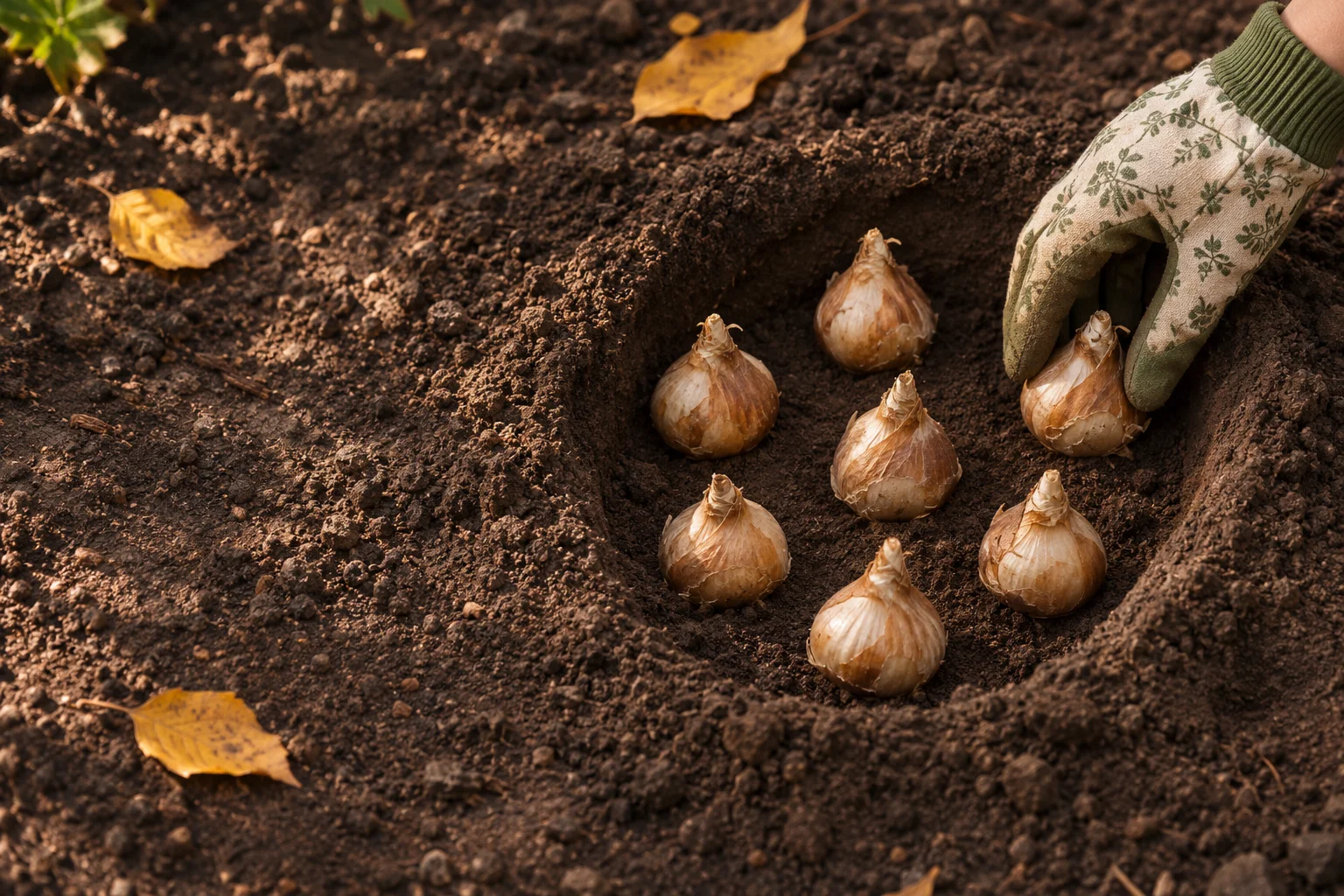
Step 5: Backfill and Firm the Soil
Cover the bulbs with the loosened soil, breaking up any large clumps as you go. Press the surface down gently with your hands or the back of a rake to close air pockets, without stamping hard. The finished surface should be level with the surrounding bed, not mounded or sunken.
Step 6: Water Deeply
Water the area well right after planting. It settles soil around the bulbs and gives the new roots the moisture they need to grow before winter. If fall turns dry, Nebraska Extension suggests watering again about every two weeks until the soil freezes.
Aim for evenly moist soil and skip watering when rain is doing the job, since daffodils don’t tolerate waterlogged ground. There’s no need to soak the bulbs before planting; the deep watering after planting does that job.
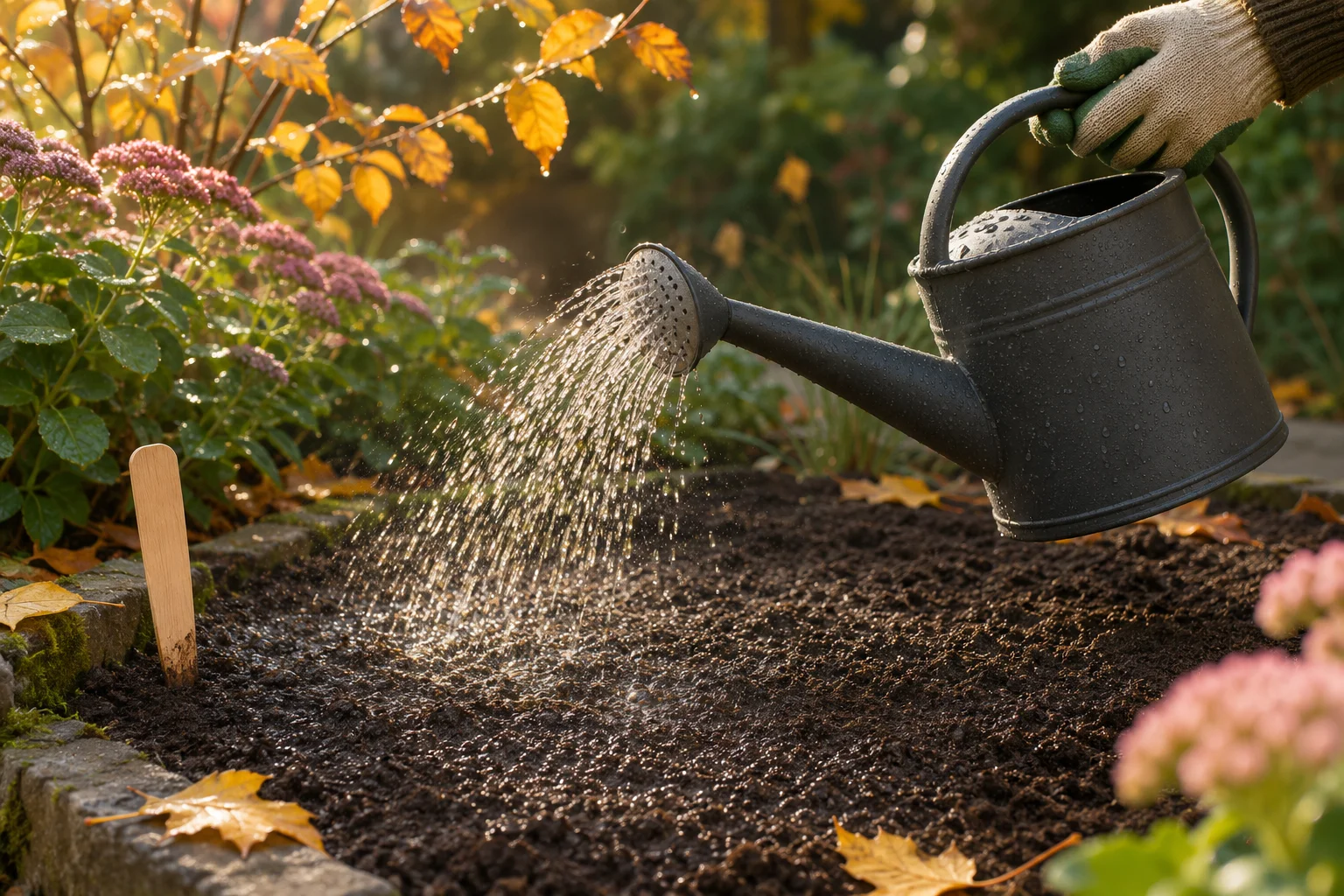
Step 7: Mulch and Mark the Spot
Spread a layer of mulch such as pine needles, shredded bark or wood chips over the bed. Mulch keeps the soil temperature more even, slows weeds, and stops mud splashing onto the flowers in spring rain.
Push in a label or two at the edge. Bulbs disappear underground for months, and a label stops you from planting something else on top of them or slicing into them with a spade next summer. If animals or a dog like to dig in fresh soil, lay chicken wire flat over the bed under the mulch until the ground settles.
Planting Daffodils in Pots
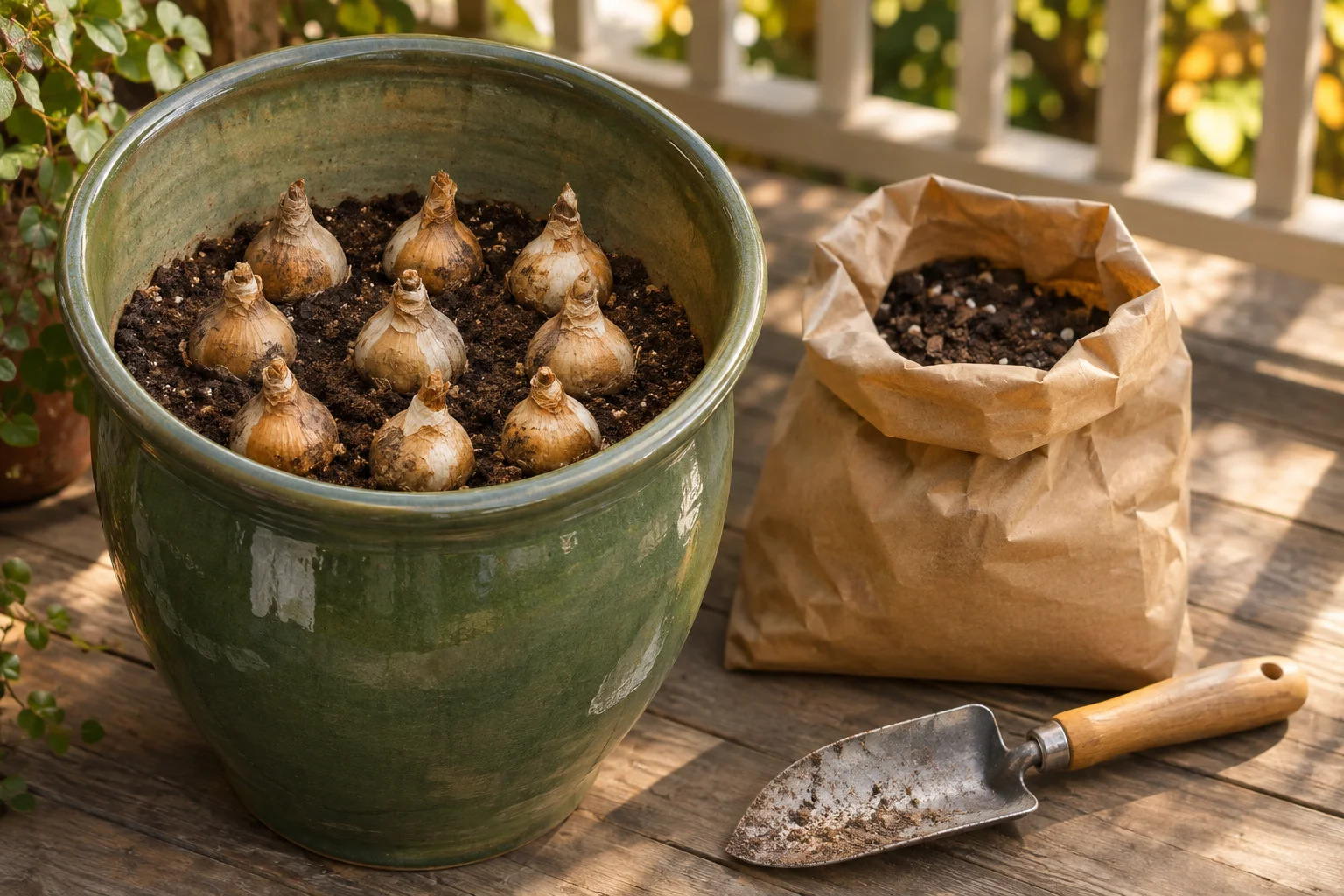
Daffodils grow well in containers on a porch or balcony, but potted bulbs need a winter plan. Bulbs that freeze solid in a pot die, and repeated freezing and thawing can rot them.
Use a pot at least 6 inches deep, preferably deeper for standard daffodils, with drainage holes and a well-draining potting mix, not garden soil. Set bulbs close together but not touching, pointed end up, then fill with mix until only the tips show. Small cultivars such as ‘Tête-à-Tête’ are a good fit for pots.
Daffodils need a long cold spell to flower. University of Wisconsin Extension lists 15 to 17 weeks of cold for daffodils in pots, in a spot that doesn’t drop below 20°F. In practice that gives you two choices:
- Mild winters (lows stay above about 20°F): leave the pot outdoors against a sheltered wall and water when the mix is dry.
- Cold winters: move the pot into an unheated garage, shed or cold porch that stays roughly 35 to 45°F, check moisture once a month, and bring it back outside when the cold stretch is done and shoots appear.
Our guide to winterizing potted plants on a balcony covers wrapping and grouping pots if you can’t move them indoors. When spring arrives, the same pot can anchor one of these farmhouse spring porch planter ideas.
Daffodil Care Calendar
Most of the work happens in fall. After that, daffodils ask for very little, and the most important job comes after the flowers fade. Timing below follows the plant’s stage, so it works whether your spring arrives in February or May.
| When | What to do | Why |
|---|---|---|
| Fall, once soil is below 60°F | Plant, water in, mulch | Roots grow before the ground freezes |
| Dry fall weeks | Water about every two weeks until freeze-up | Steady moisture supports root growth |
| Winter | Leave beds alone; check stored pots monthly | Bulbs need an unbroken cold period |
| Early spring, leaves emerging | Light feeding for established clumps | Supports next year’s flowers |
| Right after bloom | Snap off faded flower heads if you like (optional) | Stops seed pods forming; tidier look |
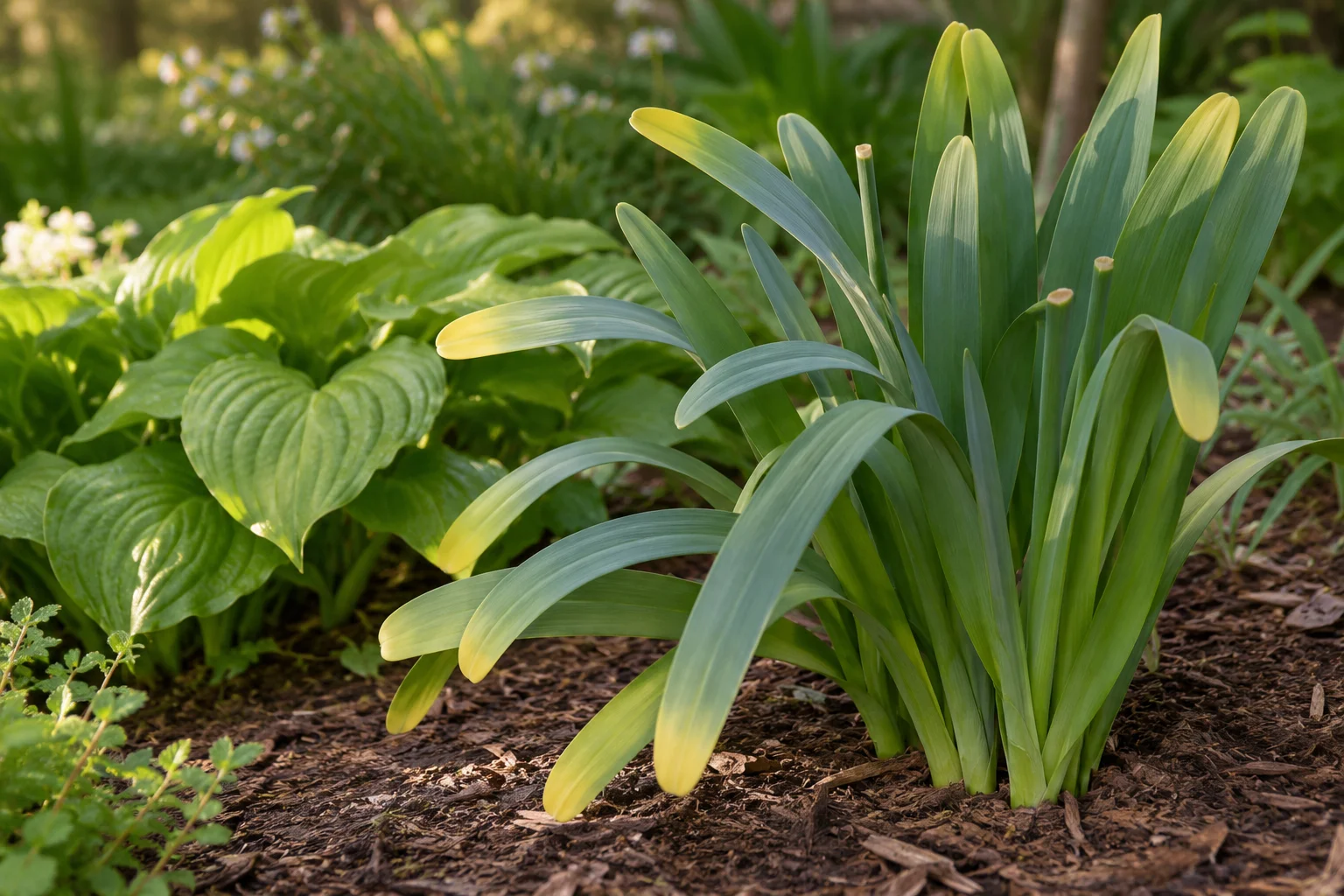
| About 8 weeks after bloom | Leave foliage until it yellows and browns, then cut it | Leaves refill the bulb for next spring |
| Early summer, every 5 to 10 years | Dig and divide crowded clumps while leaves are still visible | Restores flower size |
The foliage rule is the one people break most. University of Missouri Extension recommends leaving the leaves undisturbed for eight weeks after bloom; they are making the food the bulb stores for next year. Don’t braid, fold or tie them, since that cuts the light they use. If the yellowing leaves bother you, plant perennials nearby that leaf out later and hide them.
Common Mistakes
- Planting in a wet spot. Standing water rots bulbs over winter. Check the spot after rain first (Step 1).
- Guessing the depth. Measure to the base of the bulb so standard bulbs sit 6 to 8 inches down (Step 3).
- Planting too early. Bulbs set in warm September soil can sprout in fall. Wait until the soil drops below 60°F (When to Plant).
- Cutting or tying leaves after bloom. It starves next year’s flowers; see the Care Calendar.
- Fertilizer in the bottom of the hole. Mix any fertilizer through the soil instead (Step 2).
- Leaving potted bulbs exposed in a hard freeze. Keep pots cold but above about 20°F (see Planting Daffodils in Pots).
Troubleshooting
| What you see | Likely causes | How to tell and fix |
|---|---|---|
| Nothing comes up in spring | Rot from wet soil; animals digging; frozen pot | Dig gently: mushy bulbs point to drainage, so replant higher next fall. Empty holes mean digging, so use chicken wire. In a pot, mushy bulbs usually point to a hard freeze or soggy mix. |
| Leaves but no flowers | Too much shade; foliage cut early last year; crowded clumps | Check sun first. If clumps are dense, divide them in early summer. Leave this year’s leaves to die back naturally. |
| Shoots appear in fall | Planted early in warm soil | Leave them and mulch; plant later in the window next year. |
| Flowers shrink over the years | Crowding; declining light as trees grow | Dig, divide and replant with more space, or move to a sunnier spot. |
Daffodils that bloom the first spring and then go blind usually didn’t store enough food the year before. Shade, crowding and leaves cut too early are common reasons, and all three are fixable over a season or two once the bulbs get light and time to recharge.
Deer and rabbits generally leave daffodils alone, unlike tulips. If bulbs vanish and you find fresh holes, an animal dug them; the most reliable fix is to keep animals out with wire over next fall’s planting.
Frequently Asked Questions
What month should I plant daffodil bulbs?
For most of the country, plant in October, or whenever your soil drops below 60°F in fall. Cold northern gardens lean toward late September and early October, while milder areas can plant into November or even December as long as the ground isn’t frozen. The details are under When to Plant Daffodil Bulbs.
Can I plant daffodil bulbs in the spring?
It’s not a good plan. Iowa State Extension notes that spring-planted bulbs don’t get the time to grow roots or the cold they need to set flowers, so they rarely bloom well. If you find forgotten bulbs in late fall or winter, plant them right away if the ground isn’t frozen yet; if it is, pot them up and give them a cold period as described in Planting Daffodils in Pots. Soft or dried-out bulbs are best thrown away.
Which way up do daffodil bulbs go?
Pointed end up, flat base down. The flat base is where the roots grow from, and you’ll often see dry root remnants on it. If a bulb is too round to tell, plant it on its side and the shoot will curve upward on its own.
Do daffodils come back every year?
Yes, in a sunny, well-drained spot daffodils return each spring and slowly multiply into larger clumps. Over time those clumps get crowded, and when the flowers start getting smaller it’s a sign to dig and divide them, usually every five to 10 years. Clumps planted at wider spacing go longer between divisions; the timing is in the Care Calendar.
Should I cut off daffodil flowers after they fade?
It’s optional. Missouri Extension suggests removing faded flower heads promptly so the plant doesn’t set seed, while Iowa State notes that seed pods have little effect on plant vigor. If you do it, snap off only the spent flower and leave every leaf in place until it yellows.
How many daffodil bulbs fit in a pot?
About six standard daffodil bulbs fit in a 6-inch pot, set close together but not touching. A wider pot holds more in the same pattern, and miniature types fit more tightly. Whatever the size, the pot needs drainage holes and a plan for winter cold, covered in Planting Daffodils in Pots.
How do I move or store daffodil bulbs?
Dig them in early summer, as soon as the foliage turns brown, while you can still see where the clump is. Let the bulbs dry for 2 to 3 weeks, then store them in a cool, dry place around 50 to 65°F until fall. Replant them at the usual depth once the soil cools.
Can I plant daffodils in my lawn?
Yes, daffodils naturalize well in grass, and a relaxed way to place them is to toss handfuls of bulbs and plant each where it lands. The trade-off is mowing: that patch of lawn has to wait until the daffodil leaves have had their eight weeks or so to yellow, so pick a corner you’re happy to leave shaggy into late spring.
How long after planting do daffodils bloom?
Bulbs planted in the ground this fall bloom next spring, after a winter of cold. In pots, daffodils need about 15 to 17 weeks of cold, then they usually flower three to four weeks after the pot moves somewhere warmer. Exact timing shifts with your climate and with early or late flowering cultivars.
What Actually Matters
Strip it all back and two things decide whether those papery bulbs turn into a sheet of yellow: a spot that drains, and leaves that are left alone after bloom. Depth and spacing matter, but they’re easy to get right with a ruler.
Now that you know how to plant daffodil bulbs, do one thing this week: plant. As long as a trowel still goes into the ground, bulbs in the soil beat bulbs in the bag. Water them in, mark the spot, and let winter do its part. For more ideas to pair them with, browse the Flower Garden guides.
Sources
- Iowa State University Extension and Outreach – All About Daffodils – planting time, depth rule of thumb, spacing, sun, bulb selection, fertilizer rate, watering, deadheading, blooming problems, deer and rabbit resistance
- Iowa State University Extension and Outreach – Selecting and Planting Spring-Blooming Bulbs – depth measured from the base, early planting and fall sprouting, miniature daffodil depth and spacing
- Iowa State University Extension and Outreach – Do You Have Unplanted Bulbs? There’s Still Time to Plant Them – late planting, why spring planting fails
- University of Missouri Extension – Spring Flowering Bulbs: Daffodils (G6610) – drainage, light soils depth, spacing and dividing, fertilizer placement, removing faded flowers, mulch, 8-week foliage rule
- Nebraska Extension in Lancaster County – Daffodils for Early Spring Color – soil below 60 degrees at planting, fall watering every two weeks until the soil freezes
- NC State Extension Plant Toolbox – Narcissus – USDA hardiness zones 4 to 8, skin irritation from handling
- ASPCA Animal Poison Control – Daffodil – toxicity to dogs, cats and horses, clinical signs, bulbs most toxic
- University of Wisconsin-Madison Extension – Forcing Bulbs – cold period for daffodils in pots, minimum temperature, freeze and thaw rot, drainage
- Illinois Extension – Bringing Spring Indoors: How to Force Bulbs to Bloom in Winter – 35 to 45°F cold storage for potted bulbs
- University of Minnesota Extension – Growing Bulbs Indoors – minimum pot depth with drainage holes.