

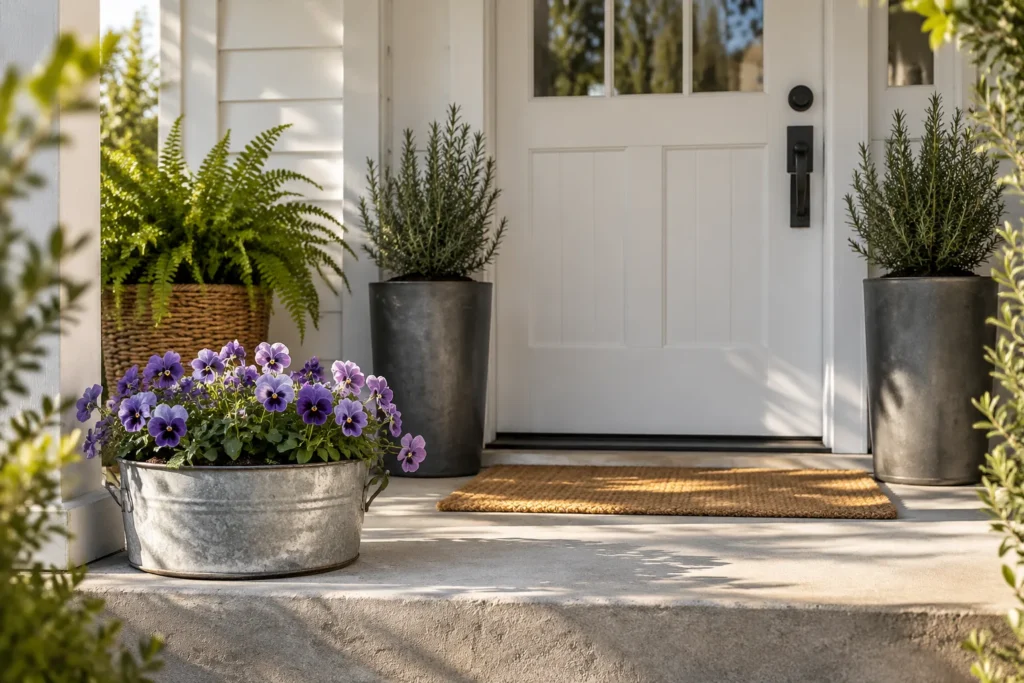
The galvanized tub looks perfect in every farmhouse photo. Then you stand on your own step with a flat of flowers in your arms, the morning air still nippy, the doormat taking up half the stoop, and the dog sniffing every nursery pot you carried home.
These farmhouse spring porch planter ideas start with plants that can handle cold nights, then add the summer bloomers once frost is behind you. Each one pairs a farmhouse container with a live plant, a simple drainage fix and a pet note, all sized for a small stoop or a renter’s front step.
For a year-round planting plan, our front porch container garden ideas for every season cover the whole calendar. Here the focus stays on the parts spring makes tricky: timing, old containers and curious pets.
Table of Contents
At a Glance
- Start with cool-season plants such as pansies and snapdragons, which can go out 2 to 3 weeks before most other bedding annuals.
- Hold petunias and other tender plants until frost danger has passed where you live, and harden them off first (the timeline is in How to Pick).
- Every old bucket, crate or basket needs drainage holes or a plastic nursery pot hidden inside it.
- Save bare galvanized metal for flowers; herbs and greens go in wood, clay or a liner pot.
- With pets around, skip tulips, daffodils, geraniums, mint, lavender and parsley. The ASPCA lists petunias, snapdragons, pansies, Boston fern, rosemary, thyme and strawberries as non-toxic to cats and dogs, though any plant can still upset a stomach if it gets chewed.
For a first farmhouse planter, we’d start with a galvanized tub of pansies, because they shrug off chilly nights and sit on the pet-safe list. If your dog digs in pots, leave the daffodil crate for another year.
Galvanized and Metal Farmhouse Planters
Metal is the most farmhouse thing you can set on a step, and early spring is its best season. It can warm up and dry out quickly in full sun, so check moisture often and keep edible plants out of bare galvanized containers; a plastic liner pot keeps roots off the metal and lifts out for watering. Faux stems suit a deep, dark porch, but most of spring’s look can be live if you begin with cool-season plants.
1. Galvanized Wash Tub of Pansies and Violas
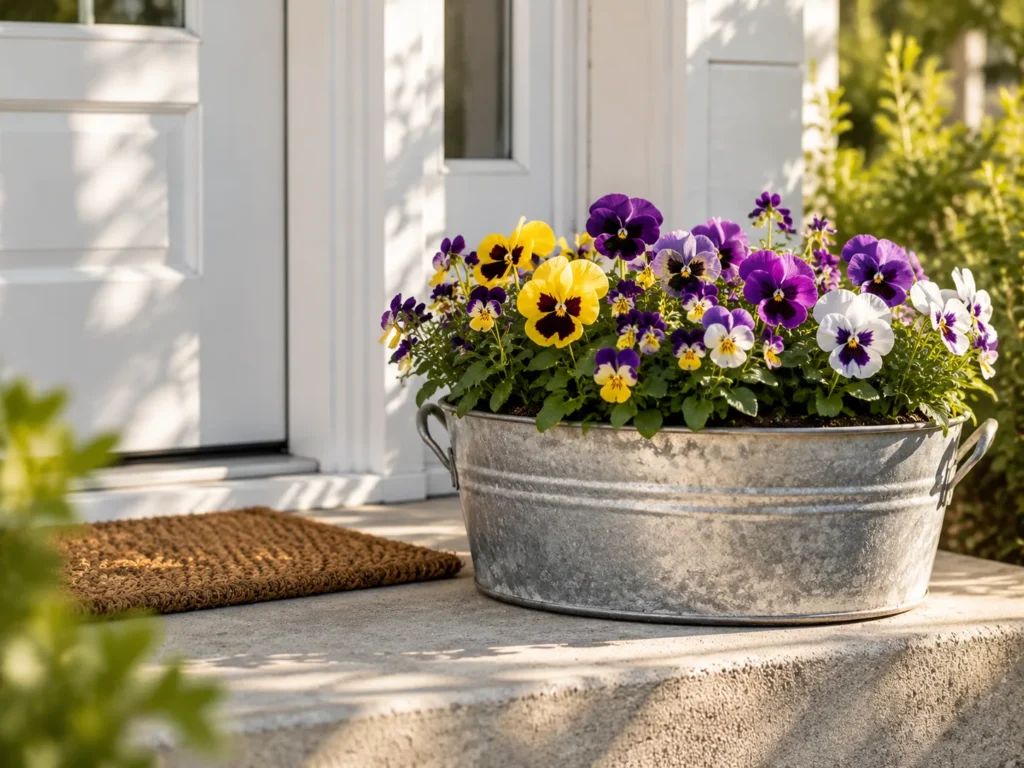
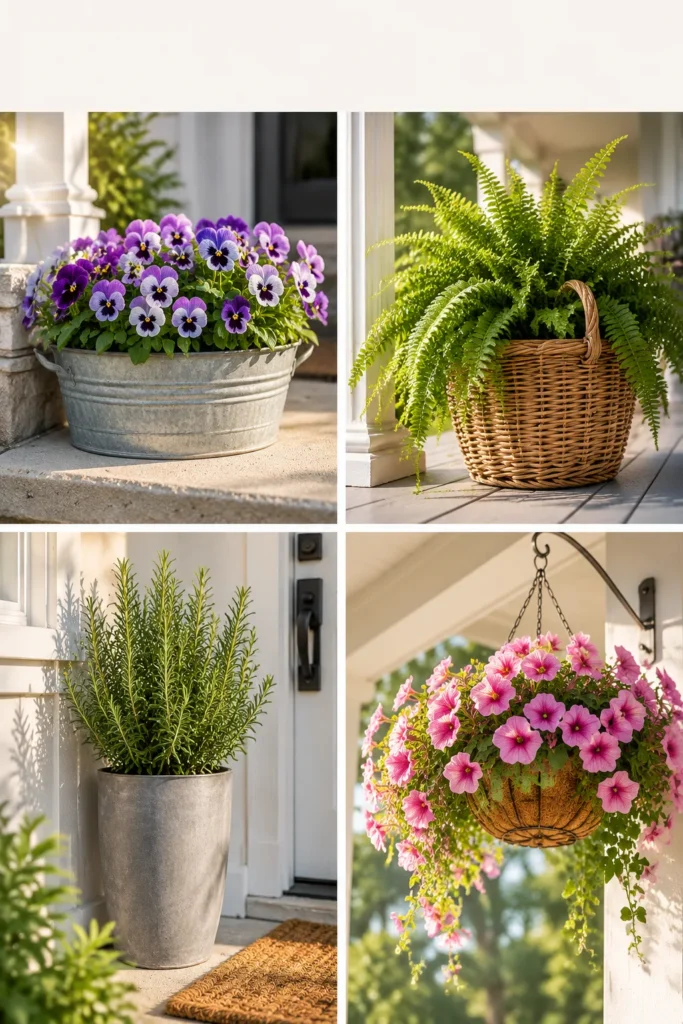
Pansies (Viola × wittrockiana) were made for this job. They grow 4 to 9 inches tall in sun to part shade, so a low, wide tub shows off every face, and many cool-season annuals like them handle nights down to about 28°F, sometimes lower. In mild-winter areas, pansies planted in fall are often already blooming by spring; in colder zones, set them out in early spring.
Most wash tubs have no holes, so drill several in the base with a metal bit before planting. A layer of gravel in the bottom doesn’t make up for missing drainage holes; it only raises the soggy zone closer to the roots. Fill with a soilless potting mix rather than garden soil, which packs down in containers.
Pansies have little heat tolerance and start to stretch and fade as days warm. Plan for that now with the pot-in-pot swap so the tub keeps working into summer.
2. Enamelware Basin with a Thrill, Fill and Spill Mix
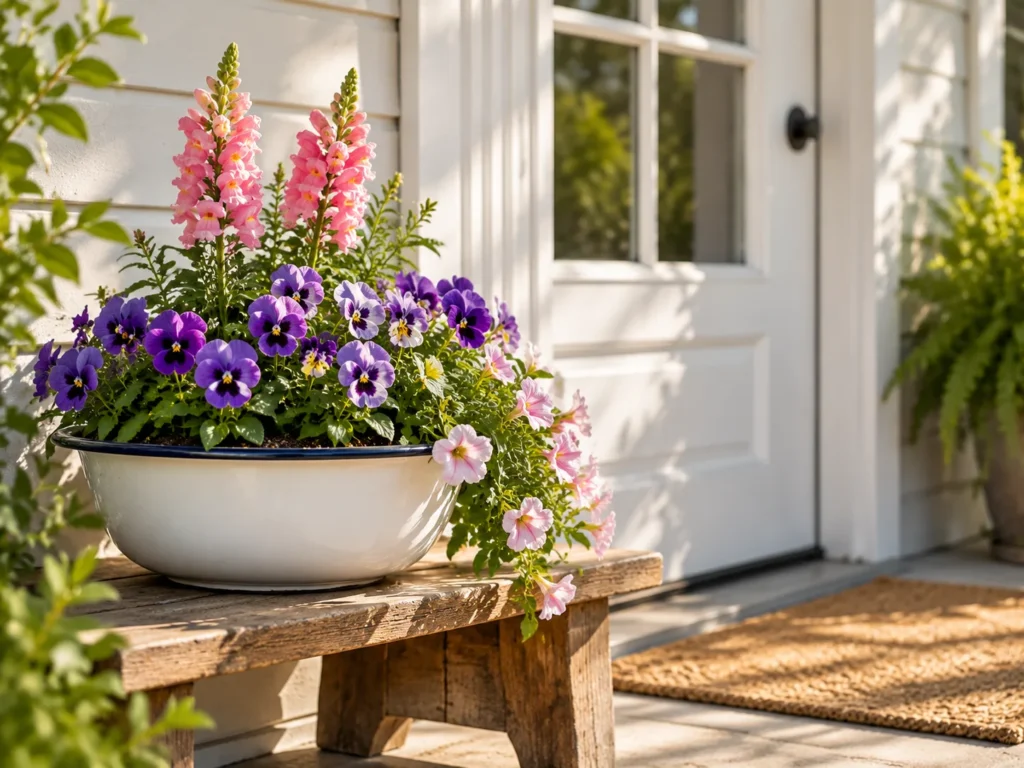
An enamel basin holds a classic three-part container: something tall, something full and something that hangs over the edge. Snapdragons (Antirrhinum majus) make the upright “thrill” in full sun, pansies fill the middle, and a trailing petunia (Petunia × hybrida) spills over the rim once frost danger has passed.
Choose a basin at least 8 to 10 inches across so the three layers have room. Garden spacing for snapdragons is 6 to 10 inches, so in a basin this size one or two stems in the center is plenty. Treat the basin like the tub above: holes in the base, potting mix inside.
3. Milk-Can Style Pair of Rosemary by the Door
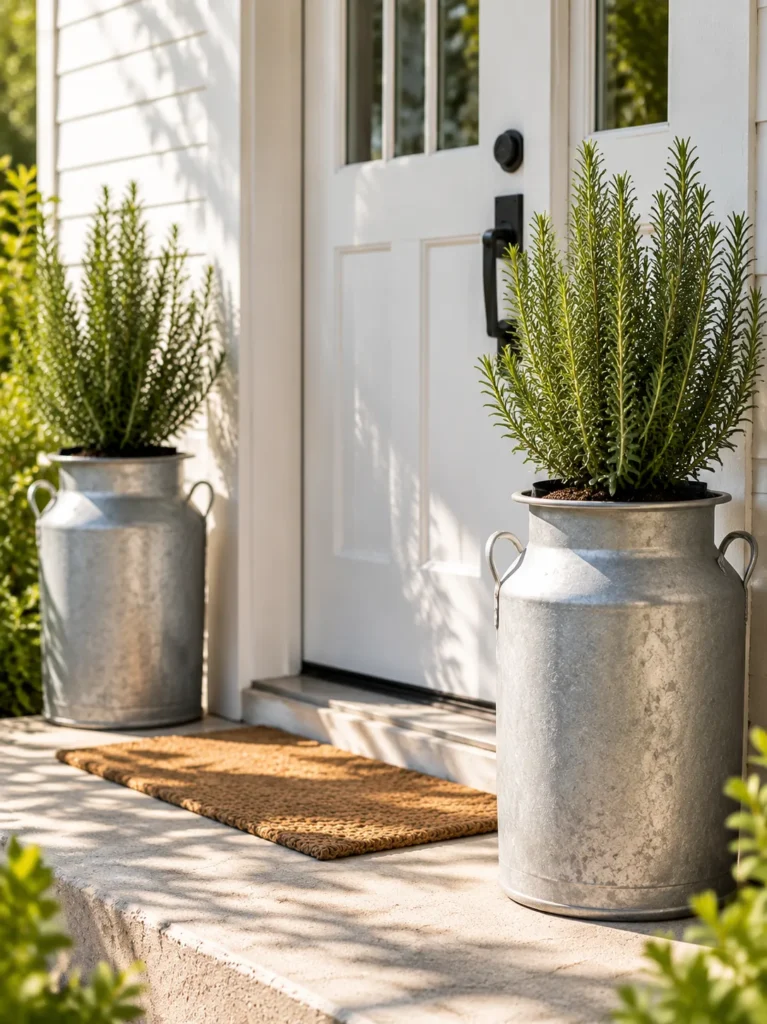
A pair of tall cans flanking the door gives you symmetry for the price of two small squares of floor. Fill them with rosemary (Salvia rosmarinus, formerly Rosmarinus officinalis), an evergreen herb that wants full sun, meaning 6 or more hours of direct light.
Rosemary is hardy outdoors in about USDA zones 8 to 10. Elsewhere, treat it as a seasonal porch plant, since it’s hard to keep happy indoors over winter. Overwatering is the most common reason it declines, so let the top of the mix dry before you water again.
Plant the rosemary in a plastic grower pot and drop it inside the can. That keeps the roots off the metal if you plan to snip sprigs for the kitchen, and it lets you lift the pot out to drain.
Wood Crates, Baskets and Buckets
Wood and wicker give the soft, worn side of farmhouse style. Porous materials like these dry out faster than plastic and break down when they stay wet, so a hidden nursery pot does most of the work while the crate or basket does the looking.
4. Whitewashed Crate with Potted Daffodils (Pet Caution)
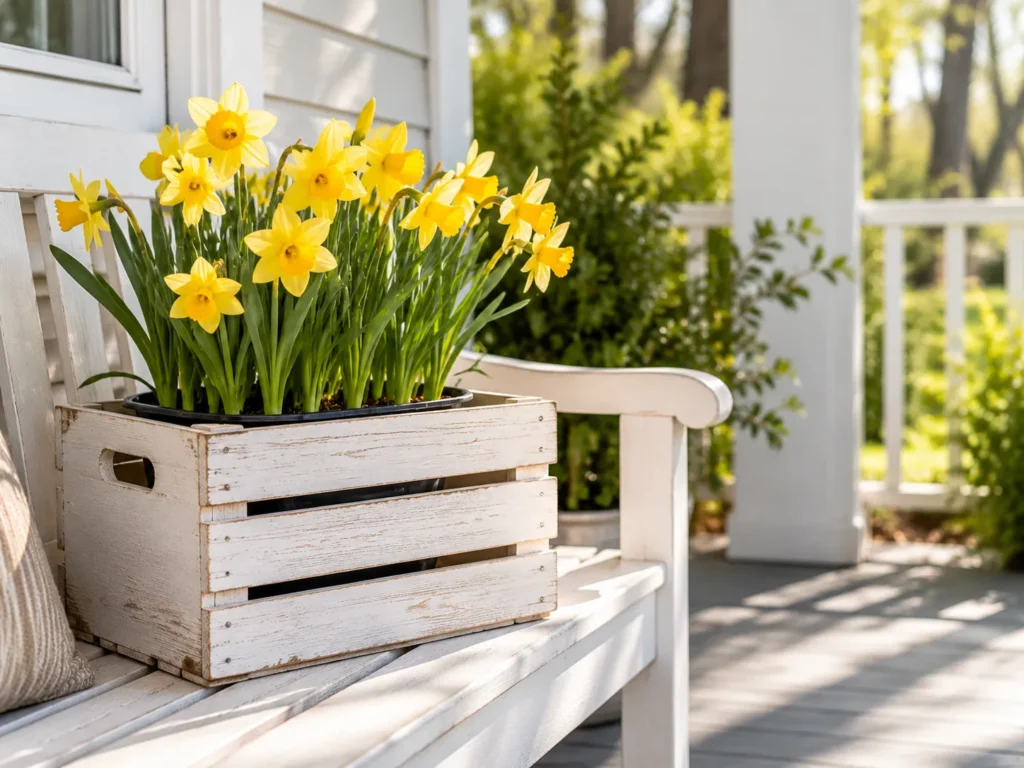
Potted daffodils from the garden center give you instant spring with no fall planting. Set the nursery pot straight into a whitewashed crate, and raise the crate onto a bench or table.
The bench matters because daffodils are toxic to cats and dogs, and the bulbs are the most poisonous part. Tulips carry the same warning. I share a small apartment with a cat and a dog, so bulbs are the plants on this list I’d keep farthest from paws. If you have pets, check the ASPCA page for any plant before it comes home. Skip this idea if your dog digs in pots.
After the flowers fade, tulips forced in pots usually don’t bloom again, so treat them as a one-season display. Many daffodils do better: if you or a friend has a garden bed, they can be planted out later and often flower in later years.
5. The Red Geranium Bucket Look, Made Pet-Safe
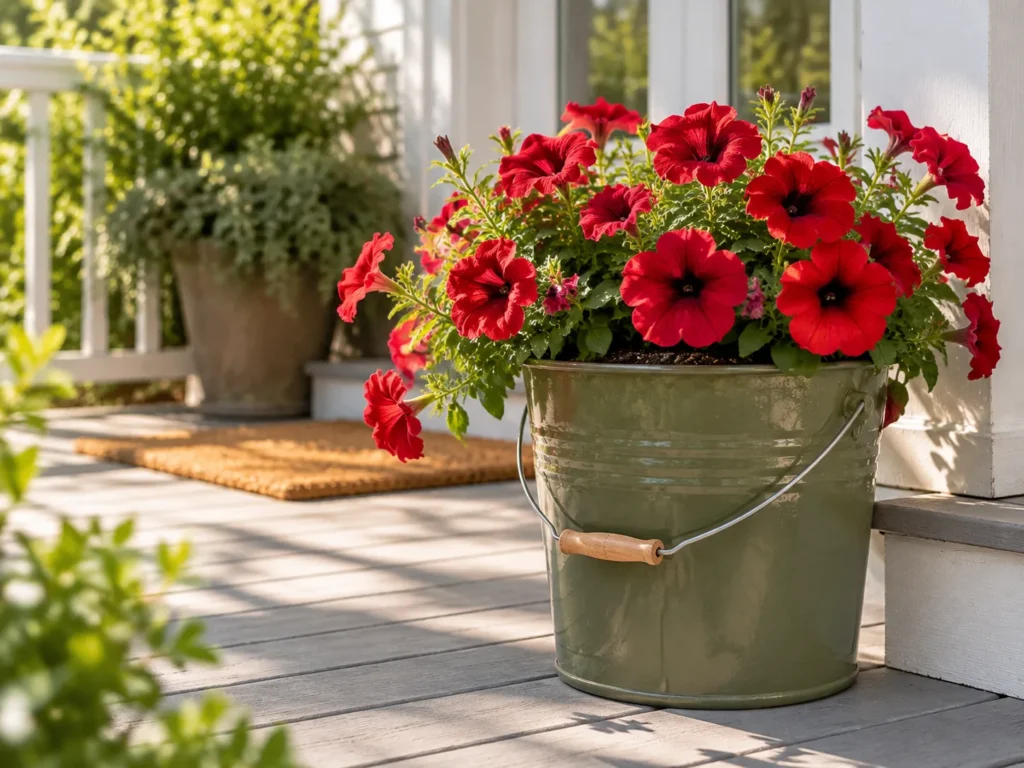
A red geranium in a bucket is about as classic as farmhouse porches get, but geraniums (Pelargonium) are listed as toxic to pets. The look comes from the bucket and the color, so red petunias deliver the same feel with a plant on the non-toxic list.
Petunias are tender, so plant them after your last frost and give them a spot with 6 or more hours of sun. Pinch off faded blooms every few days to keep new ones coming. An olive bucket or painted pail works well; drill holes or use a liner pot, as with the tub in idea 1.
6. Wicker Market Basket with a Boston Fern
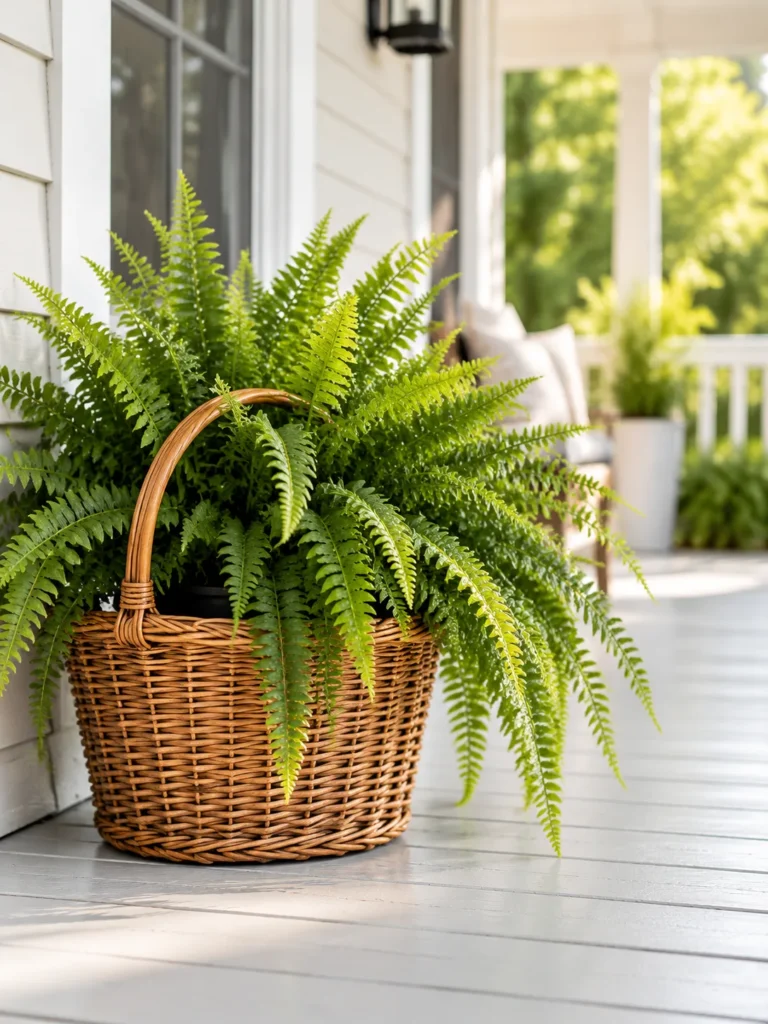
A Boston fern (Nephrolepis exaltata) spilling out of a market basket softens a covered porch better than almost anything. It wants bright indirect light to shade and evenly moist mix, so this idea belongs under a roof, away from direct afternoon sun and driving rain.
Keep the fern in its plastic pot and set that inside the basket, with a saucer if the basket sits on wood. The wicker stays dry and lasts longer. Boston fern is hardy only in about zones 10a to 13b, so in most of the US it’s a seasonal porch plant. For hanging versions, see these shady porch basket combinations.
Edible Farmhouse Porch Planters
A pot you can snip from feels very farmhouse, and spring is the season for leafy greens and herbs. Grow them in wood, clay or a plastic liner pot, for the metal reasons covered in the galvanized section.
7. Salad Greens in a Wooden Crate
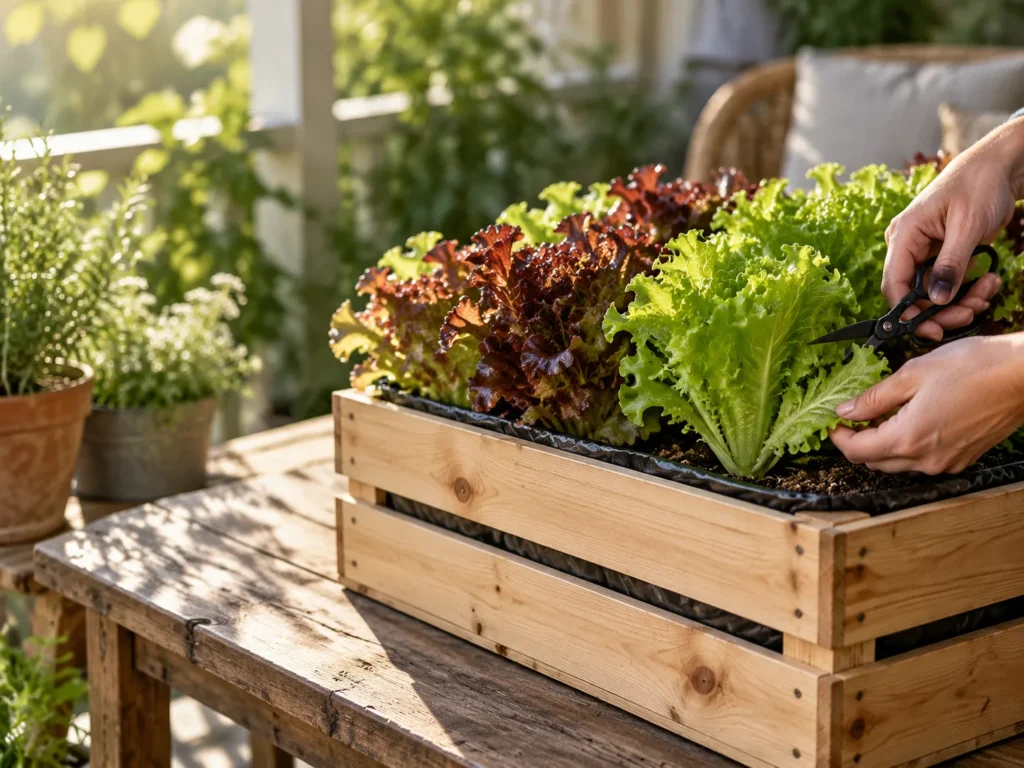
Leaf lettuce (Lactuca sativa) is one of the few edibles that actually prefers spring’s cool weather. Line a wooden crate with plastic, punch drainage holes, fill with potting mix and set plants about 4 inches apart.
Pick outer leaves as they size up, cutting about an inch above the base so the center keeps growing. Once temperatures climb past about 80°F, lettuce tends to bolt, sending up a flower stalk and turning bitter, so this crate is an early-season project. Set it on a bench if your pets like to graze on anything green.
8. Clay Herb Step Pots, Chosen with Pets in Mind
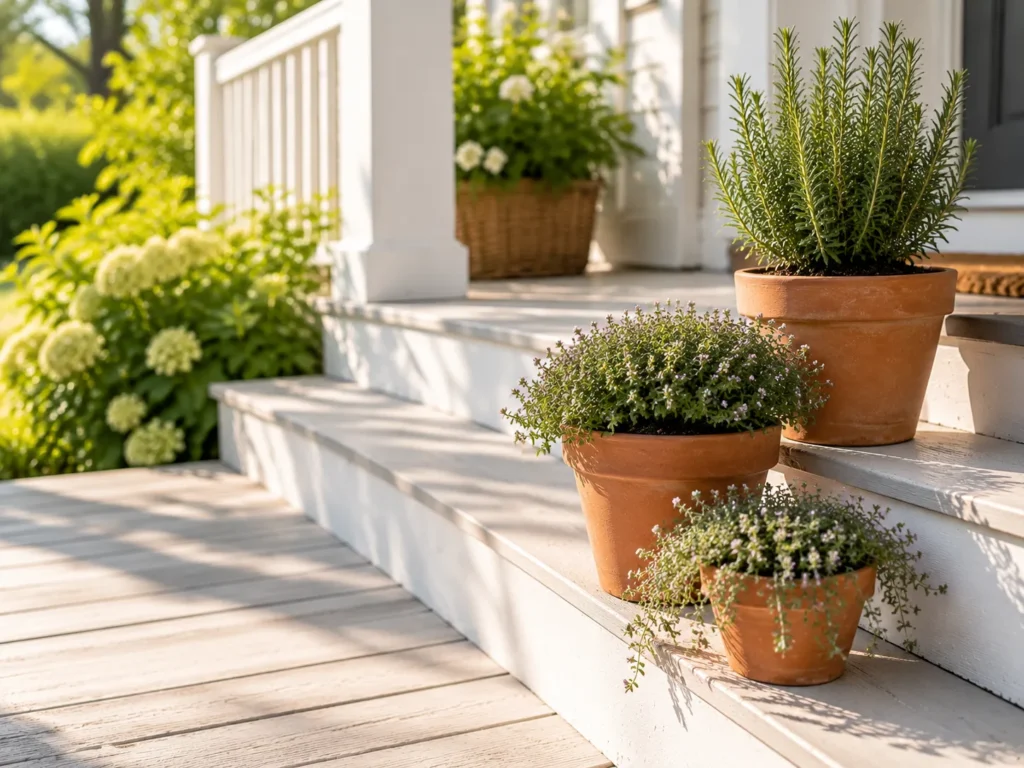
A run of terracotta pots up the side of the steps reads farmhouse and smells good when you brush past. Thyme (Thymus vulgaris) and rosemary are both on the non-toxic list, which makes them the easy picks for a pet home.
Three common herbs need more thought. Mint, parsley and lavender are all listed as toxic to pets, so leave them off a porch your pets share. Clay is porous and dries faster than plastic, so feel the mix every day or two in warm spells, and keep pots to the outer edge of each step so nobody trips.
9. Strawberry Crate or Tub
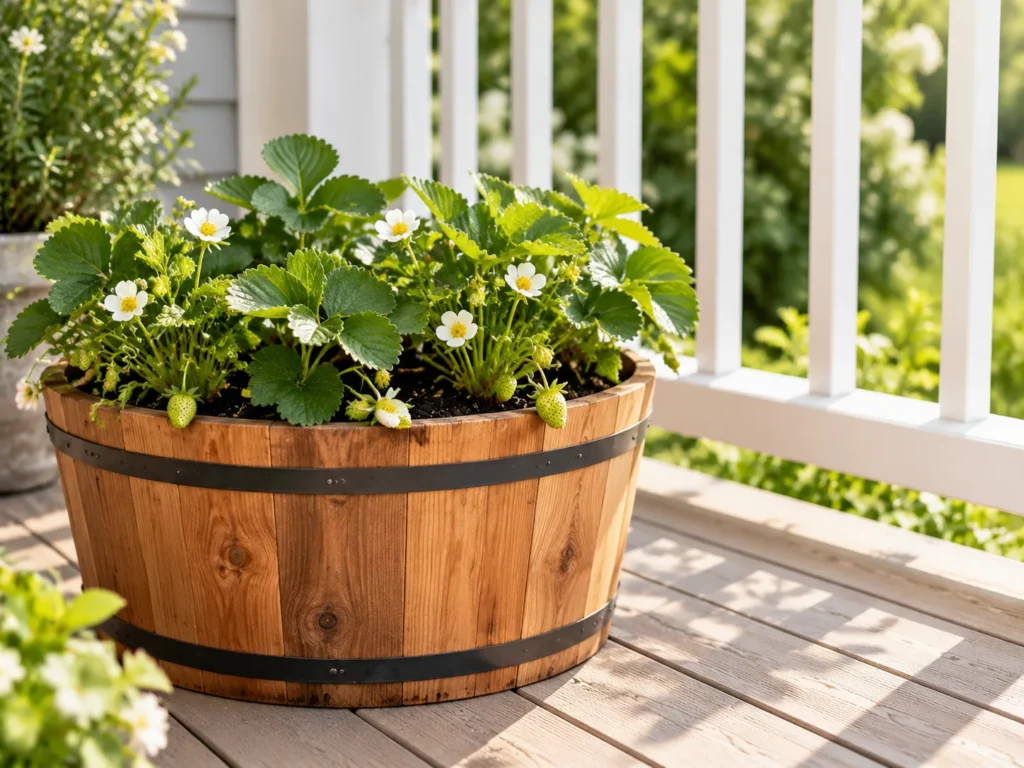
Strawberries (Fragaria spp.) give a crate or wooden tub white spring flowers first and fruit later, and they’re on the same pet-safe list as the herbs above. Give them a container at least 8 inches deep with drainage holes in the base.
Varieties, sun needs and feeding are covered in our guide to growing strawberries in pots.
Small Stoop and Renter-Friendly Setups
If your porch is one step and a doormat, go up instead of out and keep everything movable. These setups need no digging and no screws in walls you don’t own.
10. Ladder or Tiered Stand of Mismatched Pots
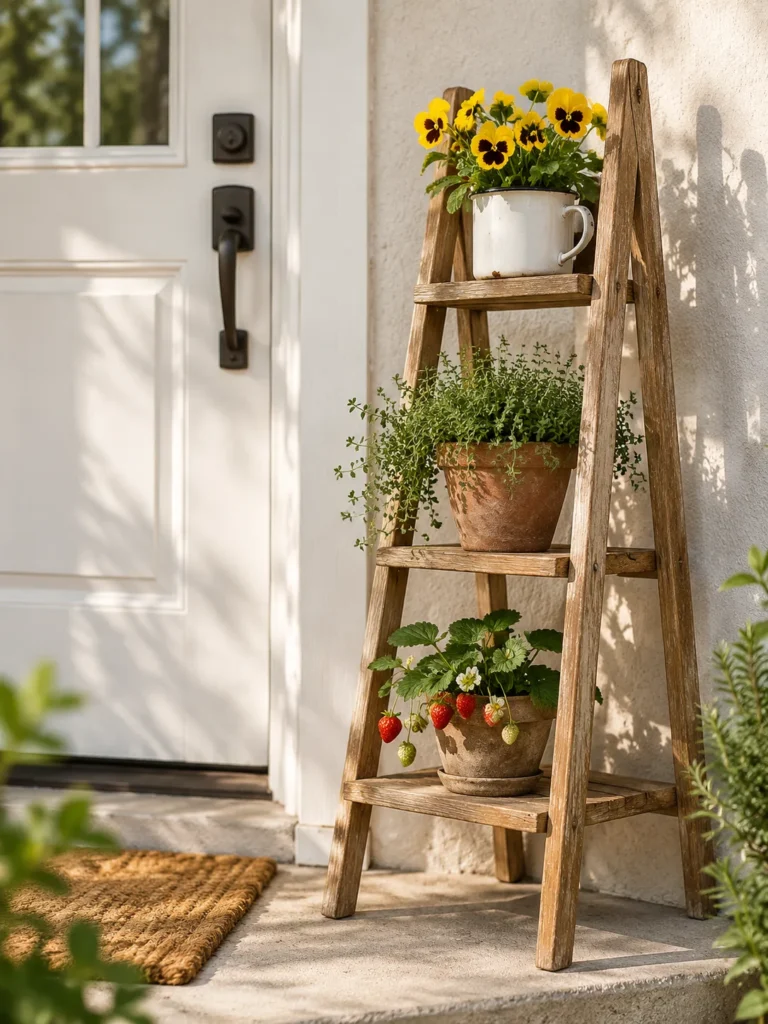
An old wooden ladder or slim tiered stand turns one floor tile into three shelves. Mix small pots for a collected look: pansies on top, thyme in the middle, a strawberry at the bottom where it can trail.
Small flowering containers in the 1 to 3 gallon range suit a stand like this, but small pots dry out fast, so check them daily once spring warms. If you’d rather build one sized to your step, try this tiered plant stand you can build.
11. The Pot-in-Pot Swap Planter
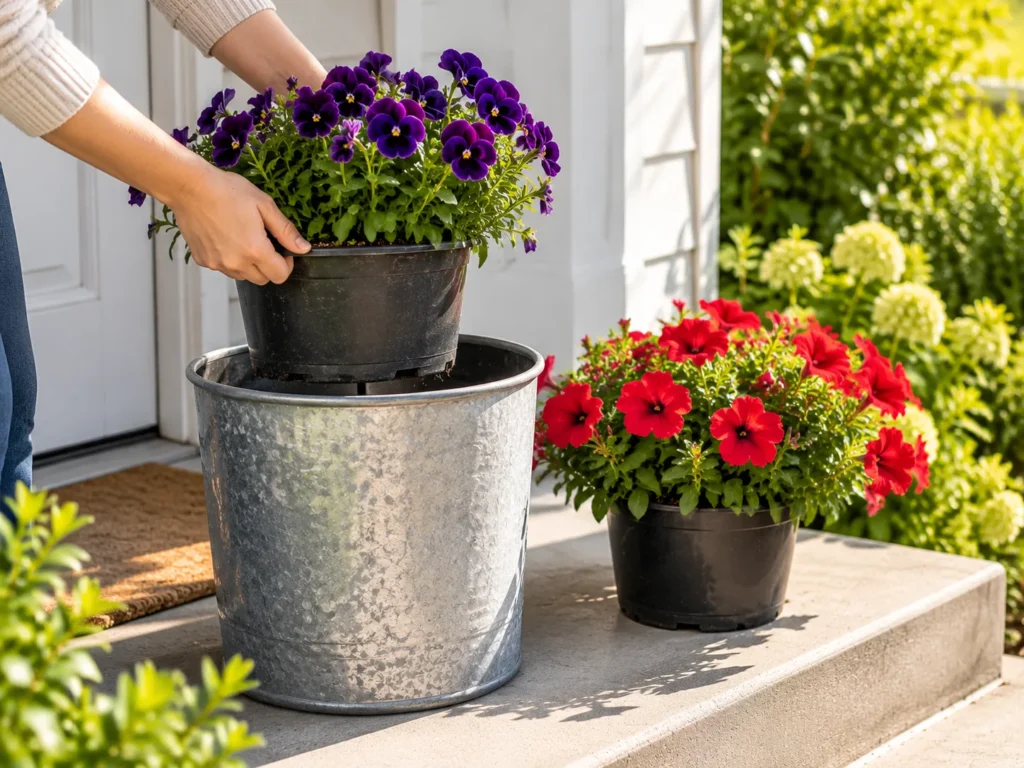
If you buy one statement container this spring, make it a swap planter. Keep a farmhouse tub, urn or can on the step and drop a plastic grower pot inside it, a method extension gardeners call double potting.
Early spring, the insert holds pansies or snapdragons. After your last frost, lift it out and drop in petunias. When fall comes, swap again. Nothing gets dug out or drilled, and a toxic plant can leave the porch in seconds if a pet gets curious.
The one habit that makes it work: lift the inner pot out to water, let it drain, and tip out any water collecting in the outer container. That hidden puddle is the main thing to watch with a swap planter.
12. Hanging Basket from the Porch Hook
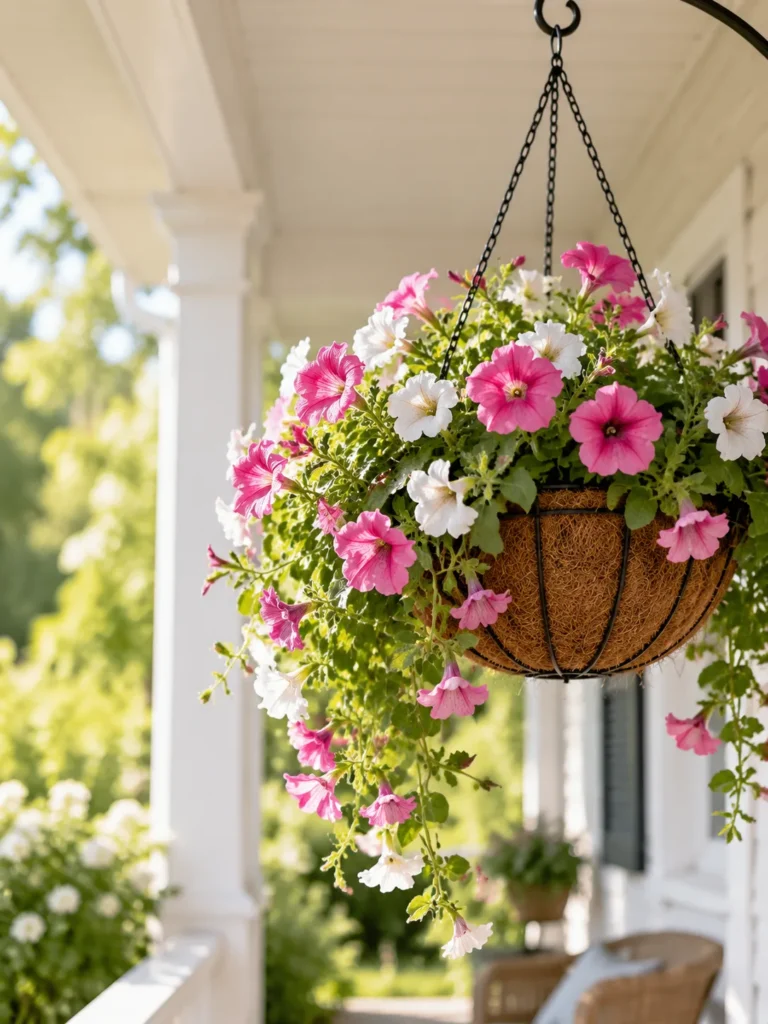
A basket on the porch hook adds color without using any floor at all. Cascading petunias suit a sunny porch after the last frost; a Boston fern suits a shaded one. Before hanging anything, check that the hook is sound and that your lease or building rules allow it, since a watered basket is heavier than it looks.
Baskets dry out quickly. On hot, sunny days they may need water once a day, and they need regular feeding: a diluted fertilizer every 2 weeks, or a slow-release product mixed in at planting. Store fertilizer where pets can’t reach it, because swallowing it can cause vomiting and diarrhea. For more pairings, browse these flower combinations for a sunny porch basket.
How to Pick Farmhouse Spring Porch Planter Ideas for Your Space
Start with your light and your calendar, then pick the container. Count the hours of direct sun your step gets on a clear day, note whether it’s covered, and find your area’s average last frost date from your local extension office.
| Your porch | Start with | Add after last frost | Container tip |
|---|---|---|---|
| Sunny, open stoop (6+ hours) | Pansy tub or snapdragon basin | Red petunias, rosemary pair | Liner pot in metal |
| Covered, shady porch | Pansies at the bright edge | Boston fern basket | Keep wicker under the roof |
| Pets that chew or dig | Pansies, snapdragons, thyme | Petunias, strawberries | Skip bulbs; raise pots on a bench |
| Want edibles | Lettuce crate, thyme pots | Strawberry tub | Wood, clay or liner pot |
| Tiny single step | One swap planter or ladder stand | Hanging basket | Go vertical; keep it movable |
The USDA Plant Hardiness Zone Map tells you your coldest winter temperatures, which helps with perennials like rosemary, but it doesn’t give frost dates. For spring timing, follow this order:
- Early spring: pansies, violas, snapdragons, lettuce and potted bulbs go out first.
- Around your last frost: harden off tender plants for 7 to 10 days. Start them in a sheltered, shaded spot for a few hours, then give them more sun and longer outdoors each day.
- After frost danger: plant petunias, change the swap planter insert and hang baskets.
A few quick fixes if things look off:
- Wilting by afternoon: usually dry mix in metal, wicker or small pots. Water until it drains; soak a bone-dry basket for 1 to 2 hours, no longer.
- Yellow leaves and soggy mix: check for water pooled in the outer container or missing drainage holes.
- Pansies stretching and fading: late-spring heat. Swap in a warm-season insert.
- Bitter lettuce with a tall stalk: it has bolted. Harvest the rest and replant when the weather cools.
Frequently Asked Questions
What should I do if frost is forecast after I’ve planted?
Water the containers well, then move them into a garage for the cold night or two. If a planter is too heavy to carry, push it against the south or west wall of the house, which gives some protection. Pansies and snapdragons handle a light chill, but newly planted petunias need the shelter. With a swap planter, you only have to carry the inner pot.
Can I reuse last year’s potting mix in my porch planters?
Yes, if last year’s plants grew well and showed no disease or insect problems. In a large tub, scoop out the top 6 inches or so, replace it with fresh mix and stir the two together. Used mix has fewer nutrients and packs down, so add a slow-release fertilizer at planting. If anything in that pot got sick, put the old mix on the compost pile and start fresh.
Will my pansies come back next year?
Don’t count on it. On a porch, pansies are grown as cool-season annuals, and once late-spring heat sets in they stretch, fade and are usually done. Treat them as the opening act. In mild-winter areas, pansies planted in fall often bloom right through to spring, so a fresh fall planting is the easiest way to have a tub ready for next spring.
Do porch planters need saucers?
On a wood or painted porch floor, use saucers or pot feet so damp pots don’t stain or soften the boards, which matters if you rent. Empty saucers after watering or rain so the roots never sit in standing water. On a concrete stoop, setting pots straight on the step is fine as long as water can drain away freely.
How many planters does a small stoop really need?
Two or three is plenty for a single step. A good starting setup is one statement container, like the pansy tub or a swap planter, plus either a matching pair by the door or a hanging basket that takes up no floor space. Keep every pot to the outer edge of the step so the walkway stays clear, and go vertical before you add more pots on the ground.
What Actually Matters
Drainage, timing and pets decide whether farmhouse spring porch planter ideas survive past the first cold night. Get those right and almost any old bucket or crate can hold live plants.
If you only do one thing this week, buy a flat of pansies and one container with drainage, or with a grower pot that fits inside it. Everything else can wait until your last frost has passed.
Keep the ASPCA Animal Poison Control Center number, 888-426-4435, saved in your phone if your pets share the porch. And when the pansies finally give up in the heat, these fall front porch planter ideas will be waiting for the next swap.
Sources
- ASPCA – Toxic and Non-toxic Plants: Daffodil, Tulip, Geranium, Mint, Lavender, Parsley – toxicity of bulbs, geraniums and herbs to cats and dogs
- ASPCA – Toxic and Non-toxic Plants: Petunia, Garden Snapdragon, Boston Fern, Rosemary, Thyme, Strawberry – non-toxic status for cats and dogs
- ASPCA – Which Popular Fall Plants Are Safe for Pets? – pansies non-toxic; non-toxic plants can still upset stomachs
- ASPCA – Keeping Your Springtime Garden Safe for Your Pets – fertilizer risks and the Animal Poison Control Center number
- Iowa State University Extension – Selecting, Hardening, and Planting Bedding Plants; What are cool-season annuals? – early planting window, 28°F tolerance, 7 to 10 days of hardening off
- Iowa State University Extension – Potted forced spring bulbs; How often should I water hanging baskets? – bulb reblooming, daily basket watering, 1 to 2 hour soak
- NC State Extension Gardener Plant Toolbox – Pansy, Boston fern, Rosemary, Petunia – height, light, hardiness zones, overwatering, 6+ hours of sun, deadheading
- UF/IFAS Extension – Snapdragon – full sun and 6 to 10 inch spacing
- University of Maryland Extension – Types of Containers for Growing Vegetables – drainage holes, gravel myth, double potting, porous containers, 1 to 3 gallon and 8 inch depth figures
- University of Minnesota Extension – Starting your garden and containers right – potting mix instead of garden soil
- Utah State University Extension – Seven Tips for Container Gardens that Thrill, Fill and Spill – three-layer design and 8 to 10 inch pot width
- University of Illinois Extension – Hanging Baskets – fast drying and feeding every 2 weeks or slow-release
- Oregon State University Extension – Salad Greens – 4 inch spacing, bolting above 80°F, harvest height
- University of Washington Botanic Gardens, Elisabeth C. Miller Library – Growing edible plants in galvanized containers – metal heating and keeping edibles out
- USDA Agricultural Research Service – 2023 USDA Plant Hardiness Zone Map – what hardiness zones measure.