
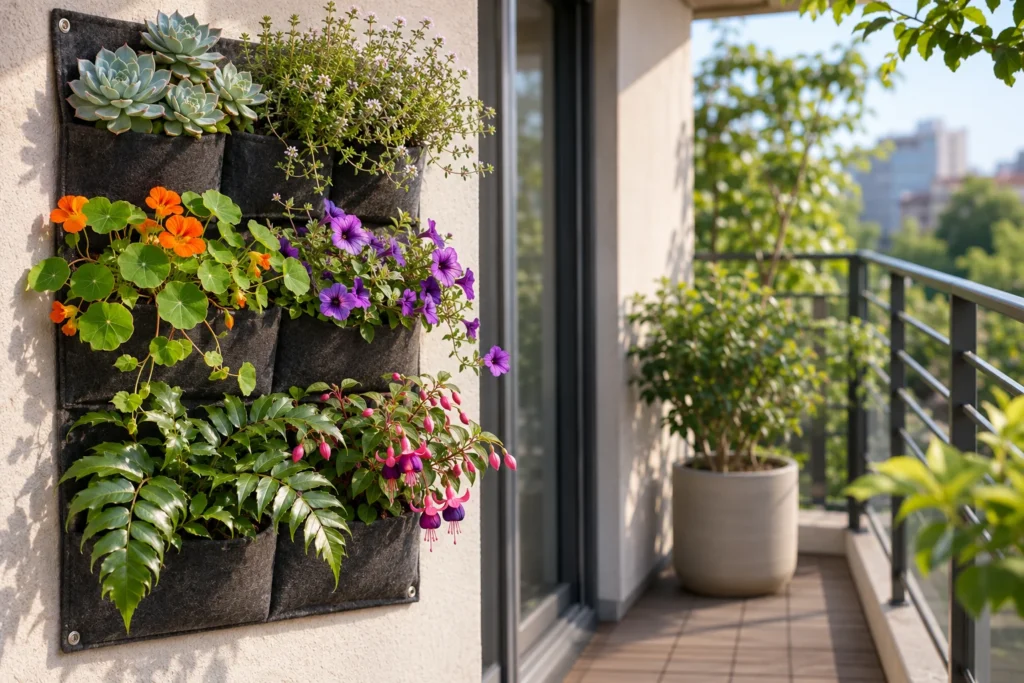
The pocket panel is on the wall, the potting mix is in, and now you’re in the garden center aisle holding a nursery tag that says “well-drained soil, 12 inches deep.” Your pockets hold about a hand’s depth of mix, they hang in full afternoon sun, and the bottom row is still damp from yesterday. That is not a pot on a windowsill.
The best plants for vertical wall garden pockets treat those limits as normal: shallow roots, a tolerance for drying out (top row) or staying damp (bottom row), and a trailing or compact habit. This guide sorts 16 of them by the light your wall gets, names the row each belongs in, and gives every plant its ASPCA cats-and-dogs status. If you haven’t built yet, start with how to build a vertical garden wall or the no-drill vertical garden for renters; this article only covers what goes in the pockets.
Table of Contents
At a Glance
- Pick by light first, then by row: water drains downward, so drought-tolerant plants go up top and moisture lovers at the bottom.
- Shallow, fibrous or trailing roots win; anything with a taproot or a big root ball (tomatoes, hostas, shrubs) belongs in a pot at the base of the wall.
- 13 of the 16 are listed non-toxic to cats and dogs by the ASPCA; the 3 toxic favorites (golden pothos, English ivy, wax begonia) each get a pet-safe swap.
- In most of the US only thyme, coral bells and holly fern come back next year; the rest are summer annuals or move indoors for winter.
Shortcut: sunny balcony wall, thyme, nasturtium and petunias; shady fence, holly fern, impatiens and Swedish ivy; indoor wall with pets, lipstick plant, hoya and nerve plant.
How We Chose These Plants
Every plant here passed three checks: it grows well in a few inches of potting mix, it has its own entry on the ASPCA toxic and non-toxic plant list, and a university extension or botanical garden page confirms its light group. Popular wall plants that failed a check (maidenhair fern, most hardy sedums, creeping Jenny) were left out; ask your vet about any plant with no entry there if a pet can reach the wall. Each “Pets” line below is that plant’s listed status; non-toxic means it isn’t expected to poison a cat or dog, not that chewing it is harmless.
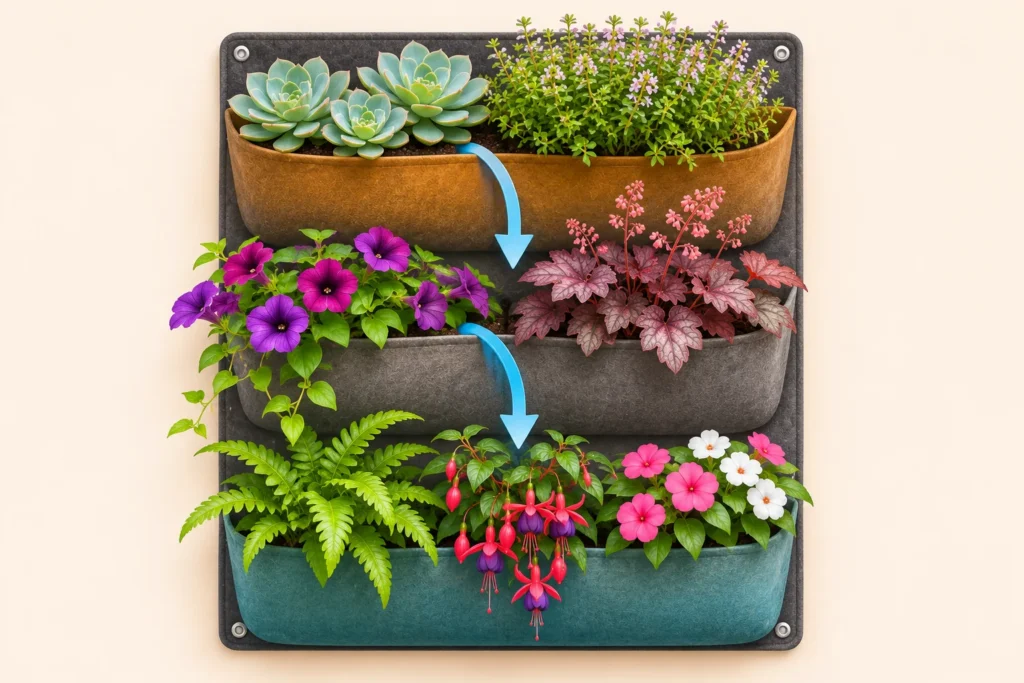
The row rule comes from how these walls drain: water from the upper pockets drains into the lower ones, so the top row dries first and the bottom stays wet longest, and a pocket holds so little mix that it can need water daily in summer. Filling rows by thirst does more for a wall than any watering schedule. Most showy wall plants are also tropical; north of USDA Zone 9 they are a season of color, and the hardy ones carry their zones in the table.
| Plant | Light | Row | Roots and habit | Comes back? | ASPCA: cats and dogs |
|---|---|---|---|---|---|
| Hens and chicks (Echeveria elegans) | Full sun | Top | Shallow, rosette | Zones 9 to 11; indoors in winter elsewhere | Non-toxic |
| Common thyme | Full sun | Top | Shallow, low mound | Perennial, Zones 5 to 9 | Non-toxic |
| Nasturtium | Full sun | Top or middle | Shallow, trailing or mounding | Annual | Non-toxic |
| Trailing petunia | Full sun | Middle | Fibrous, spreading | Annual north of Zone 10 | Non-toxic |
| Ornamental sweet potato vine | Full sun to part shade | Middle or bottom | Tuberous, fast trailing | Annual north of Zone 9 | Non-toxic |
| Coral bells | Part shade | Middle | Fibrous crown, upright clump | Perennial, Zones 3 to 8 | Non-toxic |
| Impatiens | Part shade to shade | Bottom | Fibrous, mounding | Annual north of Zone 10 | Non-toxic |
| Fuchsia (trailing types) | Part shade | Bottom | Fibrous, weeping | Annual north of Zone 10 | Non-toxic |
| Wax begonia | Part shade (bronze-leaf types take sun) | Middle | Fibrous, compact mound | Annual north of Zone 9 | Toxic |
| Holly fern | Shade | Bottom | Fibrous, arching clump | Perennial, Zones 7 to 10 | Non-toxic |
| Swedish ivy | Shade to part shade | Middle | Shallow, trailing mat | Not frost hardy; houseplant in winter | Non-toxic |
| English ivy | Shade to sun | Middle or bottom | Rooting vine | Perennial, Zone 4 and warmer | Toxic |
| Lipstick plant | Indoor, bright indirect | Top or middle | Epiphyte, cascading | Houseplant; Zones 10 to 11 outdoors | Non-toxic |
| Hoya | Indoor, bright indirect | Top | Epiphyte, trailing | Houseplant; outdoors only above 50°F nights | Non-toxic |
| Nerve plant | Indoor, medium to bright | Bottom | Shallow, creeping | Houseplant; Zones 11 to 12 outdoors | Non-toxic |
| Golden pothos | Indoor, bright indirect to low | Middle | Rooting vine, long trailer | Houseplant | Toxic |
The 16 Best Plants for Vertical Wall Garden Pockets
Grouped by the light the wall itself gets: full sun is 6 or more hours of direct sun, part shade 2 to 6, shade under 2. Top-row plants come first in each group.
1. Hens and Chicks (Echeveria elegans)
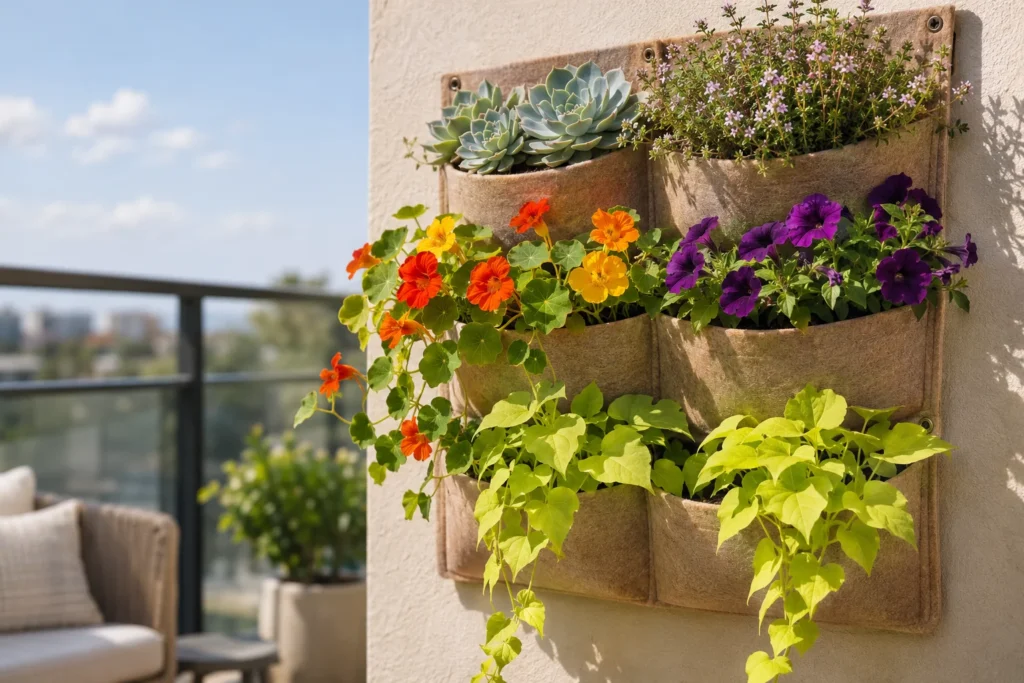
Full sun, top row. A succulent from dry cliffs is the obvious choice for the pocket that dries out first, and echeveria is the one with a clean pet record. The rosettes stay small and shallow-rooted, and the usual way to kill one is watering too often, which the top row makes hard to do.
- Water: let the mix dry fully between drinks.
- Winter: hardy only in Zones 9 to 11; elsewhere, lift the rosettes in fall onto a bright windowsill.
- Hardy look-alike: Sempervivum tectorum survives Zones 3 to 8 in the same spot, but it has no entry on the pet list, so ask your vet first if pets can reach it.
- Pets: non-toxic.
- Skip it if: the wall is in part shade or the pockets stay damp; the rosettes stretch and rot.
2. Common Thyme (Thymus vulgaris)
Full sun, top row. Thyme grows in dry, sandy, rocky ground in the wild, stays 6 to 12 inches tall, and shrugs off a missed watering. It comes back every year in Zones 5 to 9, so it can stay on an outdoor wall through winter in the warmer half of that range; in Zones 5 and 6, give it the same midwinter move to a floor pot as coral bells. For a first sunny wall we’d start with thyme and nasturtium, because both forgive a dry afternoon and both are listed non-toxic.
- Water: on the dry side; drainage matters more than frequency.
- Habit: a low mound that spills over the pocket lip; snip stems for the kitchen and it stays tidy.
- Pets: non-toxic.
- Skip it if: the pocket is in the bottom row or the wall gets under 6 hours of sun.
3. Nasturtium (Tropaeolum majus)
Full sun, top or middle row. Nasturtium is the cheerful one: round leaves, orange and yellow flowers, and a habit of tumbling out of whatever it’s planted in. It flowers better in poor soil, so leave the fertilizer out of its pocket, and choose a dwarf or semi-trailing variety; climbing types reach 10 feet and take over the wall.
- Water: tolerates drought; give it afternoon shade in hot-summer regions.
- Pets: non-toxic. The peppery leaves are edible for people, but they’re not a dog snack, so keep the stems above nose height.
- Skip it if: you want a neat, formal wall; nasturtium sprawls.
4. Trailing Petunia (Petunia x hybrida)
Full sun, middle row. Petunias are the classic basket flower, and the cascading groups sold for hanging baskets trail just as well from a wall. They stay 6 to 18 inches tall and tolerate a short dry spell, but they bloom best with steady moisture, which is why they sit one row below the thyme.
- Water: lightly moist; a middle pocket that catches drainage from above suits them.
- Habit: pinch leggy stems in midsummer to keep the flowers coming.
- Pets: non-toxic.
- Skip it if: the wall gets under 6 hours of sun; flowering drops off fast in shade.
5. Ornamental Sweet Potato Vine (Ipomoea batatas)
Full sun to part shade, middle or bottom row. This is the chartreuse or near-black foliage that pours out of city planters all summer, and it grows fast enough to cover a bare wall in a single season. Look for ‘Margarita’ (lime green), ‘Blackie’ (dark purple) or the Sweet Caroline series. On a hot, exposed wall, pair it with the tougher choices in our guide to full-sun balcony plants that survive heat.
- Water: drinks a lot while growing fast, so the lower rows suit it.
- Roots: it forms small tubers, so give it the deepest pocket and trim it hard when it crowds its neighbors.
- Pets: non-toxic.
- Skip it if: the pockets are very shallow or you want anything else in that row to stay visible.
6. Coral Bells (Heuchera sanguinea and hybrids)
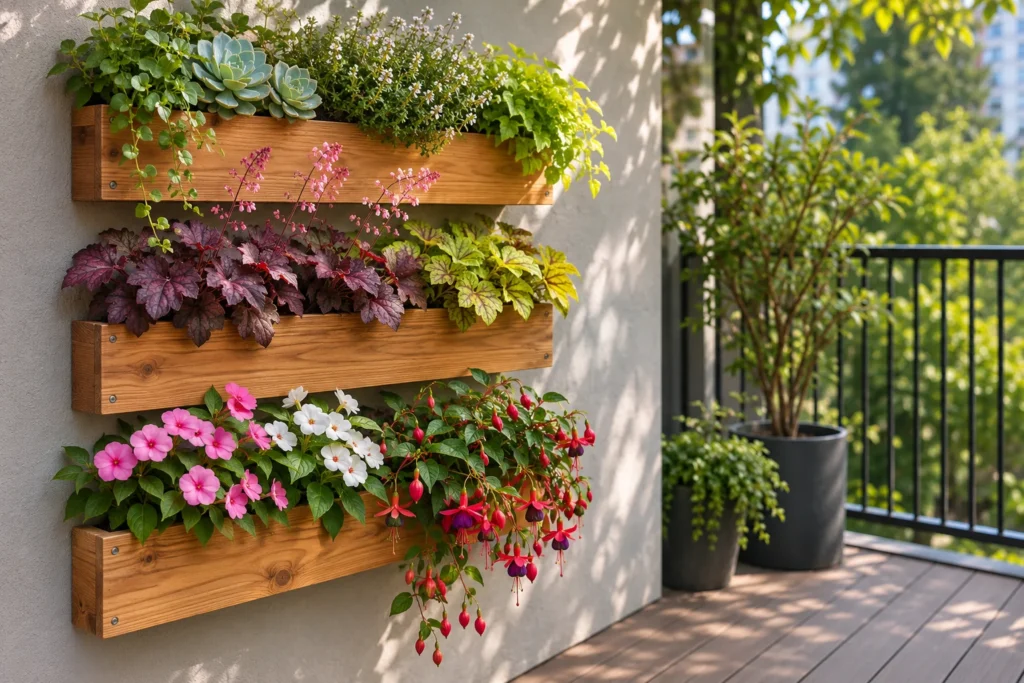
Part shade, middle row. Coral bells makes a shaded wall look planted on purpose: a neat clump of ruffled leaves in burgundy, caramel or lime, with thin flower stalks in late spring. It’s hardy in Zones 3 to 8, so across most of the country it stays on the wall year round, and the compact crown fits a pocket or a box.
- Water: well in dry spells, but the crown rots in a soggy pocket, so keep it out of the bottom row.
- Size: 12 to 19 inches tall in flower; the leaf mound is shorter.
- Winter: in Zones 3 to 5 a wall pocket freezes harder than the ground, so move it into a pot on the floor for the coldest months.
- Pets: non-toxic.
- Skip it if: the wall bakes in afternoon sun.
7. Impatiens (Impatiens walleriana)
Part shade to shade, bottom row. Impatiens wants exactly what the bottom pocket offers: steady moisture, no hot sun, and a little drainage from above. It wilts fast when dry and rots when waterlogged, so it needs a pocket that drains but never fully dries. Downy mildew has hit this species hard, so buy the resistant ‘Beacon’ series or New Guinea impatiens (Impatiens hawkeri), which resists it.
- Size: a dense mound, 6 to 24 inches by variety; dwarf types suit pockets best.
- Pets: non-toxic.
- Skip it if: you can’t water every day in a heat wave.
8. Fuchsia (Fuchsia x hybrida, trailing types)
Part shade, bottom row. A trailing fuchsia in the lowest pocket gives you those dangling two-tone flowers at eye level, and it wants the same cool, damp conditions as impatiens. It dislikes drought and slows its flowering in summer heat, so in the hot South treat it as a spring and fall plant, or pick the heat-tolerant ‘Gartenmeister Bonstedt’.
- Winter: cut it back and overwinter indoors, or take cuttings.
- Pets: non-toxic (the entry is titled Ladies Ear Drops, Fuchsia spp.).
- Skip it if: the balcony is high and windy (the stems snap), or summers are long and hot.
9. Wax Begonia (Begonia Semperflorens-Cultorum Group)
Part shade, middle row. Toxic to cats and dogs. Wax begonia is on nearly every living-wall list because it is nearly indestructible: a 6 to 12 inch mound that handles heat, some drought, and anything from sun (bronze-leaved types) to deep shade. The ASPCA lists begonias as toxic because of soluble calcium oxalates, with vomiting and drooling as the main signs; the roots are the most toxic part.
- Use it where: a wall a pet can’t reach, such as above a railing or on a fence outside the dog run.
- Pet-safe swap: impatiens for the same shade and color, or coral bells for a plant that comes back.
10. Holly Fern (Cyrtomium falcatum)
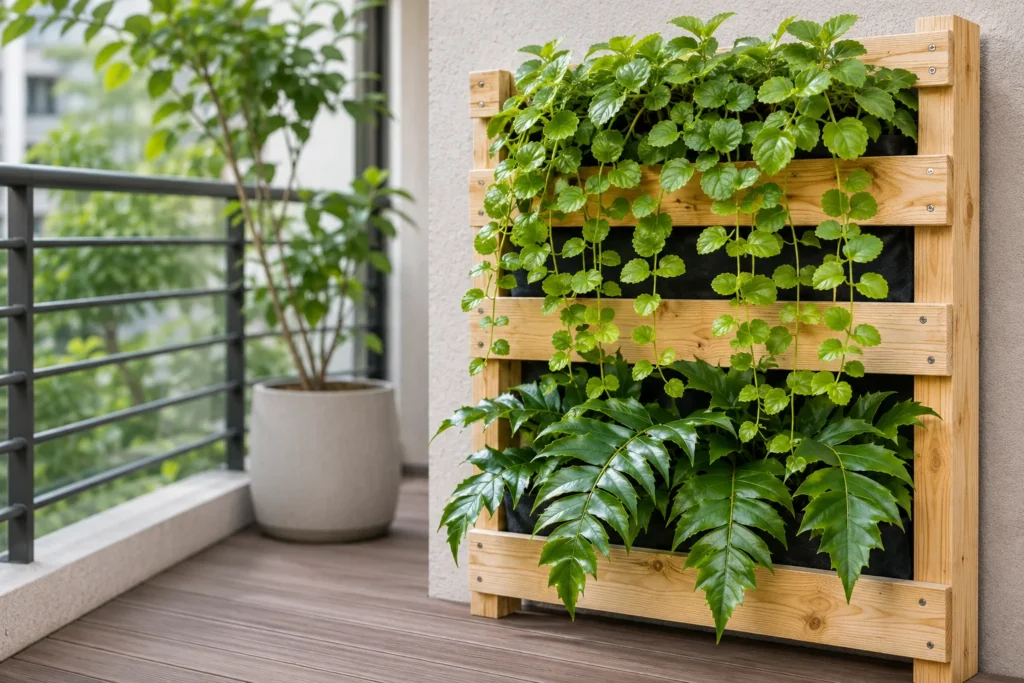
Shade, bottom row. Most ferns sold for living walls are either tender or unlisted for pets; holly fern is hardy in Zones 7 to 10 and listed non-toxic. Its glossy, holly-shaped fronds arch out of a pocket to about 2 feet, it stays evergreen through mild winters, and it wants the moist, humus-rich mix of the lowest row. For more candidates for a dim wall, see our shade-loving plants for a north-facing balcony.
- Water: never let it dry out; a drought-stressed fern invites mites and mealybugs.
- Size: a clump 17 to 24 inches tall, so give it a box or a double-width pocket.
- Winter: trim frost-browned fronds in spring; north of Zone 7, move it to a pot indoors.
- Pets: non-toxic.
- Skip it if: the wall gets hot afternoon sun.
11. Swedish Ivy (Plectranthus verticillatus, sold as P. australis)
Shade to part shade, middle row. Swedish ivy is the pet-safe trailer for a shady wall: scalloped, slightly glossy leaves on stems that spill a foot or more from a pocket. It roots from cuttings in a glass of water, so one plant becomes a row by midsummer, and pinching young tips keeps it full instead of stringy.
- Water: moist but well drained; overwatering yellows and drops the lower leaves.
- Winter: it dies at a frost; bring it in as a houseplant or restart from cuttings in spring.
- Pets: non-toxic, listed under the name Plectranthus australis.
- Skip it if: the pocket gets hot direct sun.
12. English Ivy (Hedera helix)
Shade to sun, middle or bottom row. Toxic to cats and dogs, and invasive in parts of the US. English ivy is here for the same reason as begonia: it’s in every living-wall photo, grows in any light, and survives Zone 4 winters. The ASPCA lists English ivy as toxic, with vomiting, abdominal pain, drooling and diarrhea as the signs, and the leaves are more toxic than the berries. The sap can irritate skin, so wear gloves to trim it.
- Invasive note: listed as invasive in North Carolina and a problem in other states. Keep it in a pocket, never let a stem root into the ground, and check your state’s list.
- Pet-safe swap: Swedish ivy for shade, trailing nasturtium for sun.
- Skip it if: pets or small children can reach the wall.
13. Lipstick Plant (Aeschynanthus radicans)
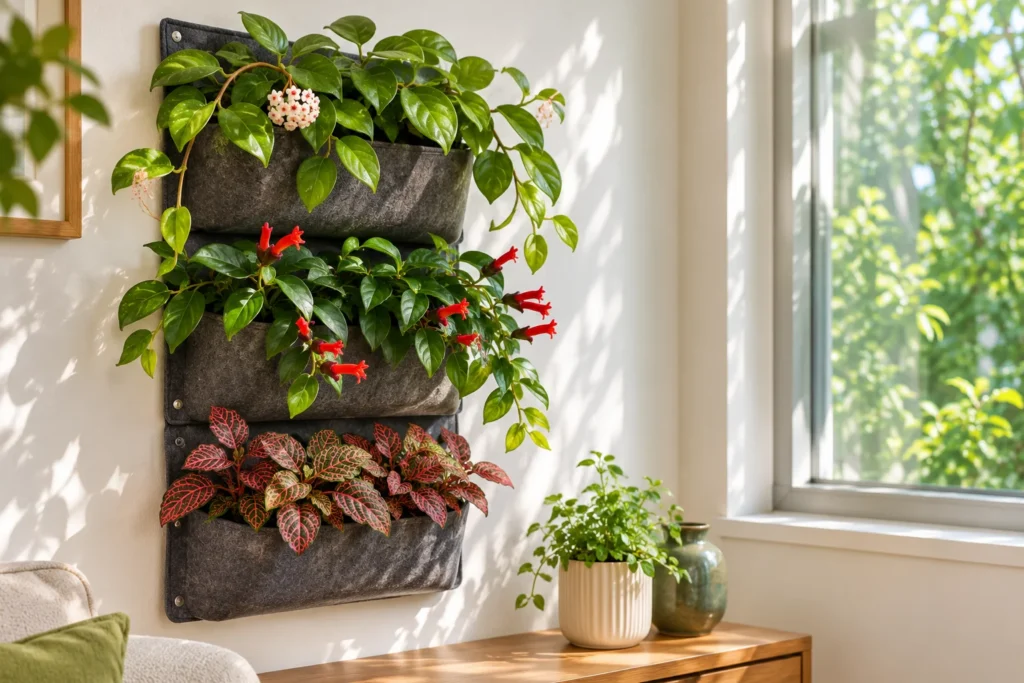
Indoor, bright indirect light, top or middle row. A lipstick plant is an epiphyte: it grows on tree branches in the wild and is happy with a thin layer of mix and plenty of air around its roots. The stems cascade a couple of feet and carry red tubular flowers, and it’s one of the few flowering trailers listed non-toxic.
- Water: often, in a mix that drains fast; it likes humidity but needs moving air or fungal spots show up.
- Temperature: keep it above 50°F; leaves drop in a cold draft.
- Pets: non-toxic (listed as Aeschynanthus).
- Skip it if: the wall is in a dim corner; it lives but won’t flower.
14. Hoya (Hoya carnosa)
Indoor, bright indirect light, top row. Hoya is the indoor version of the top-row succulent: thick waxy leaves that store water, roots that like to dry out between drinks, and a tolerance for being crowded. Those traits put it in the highest, driest pocket of an indoor panel. Give it two or three years and it rewards you with clusters of scented, star-shaped flowers; leave the spurs on, because they rebloom.
- Water: let the mix dry between waterings; soggy and bone-dry roots both drop leaves.
- Pets: non-toxic (listed as Wax Plant).
- Skip it if: you water everything on the same day; hoya needs its own, slower schedule.
15. Nerve Plant (Fittonia albivenis)
Indoor, medium to bright light with no direct sun, bottom row. Nerve plant is only 3 to 8 inches tall, has shallow creeping roots, and wants constant moisture, which makes it the right filler for the wettest indoor pocket. It tells you when it’s thirsty by collapsing, then stands back up soon after a drink. Pinch the stems and it stays a dense mat of pink, red or white veins.
- Water: yellow leaves mean too much, a faint means too little.
- Light and air: fine under ordinary room lighting, but direct sun scorches it and dry winter air shrivels the leaves.
- Pets: non-toxic (listed under its older name Fittonia verschaffeltii).
- Skip it if: the panel hangs over a heat register or you travel for days at a time.
16. Golden Pothos (Epipremnum aureum)
Indoor, bright indirect to low light, middle row. Toxic to cats and dogs. Pothos is the plant every indoor wall seems to come with: it survives low light, dries out between waterings without complaint, and trails for yards. The ASPCA lists golden pothos as toxic because of insoluble calcium oxalate crystals, which cause mouth burning, drooling, vomiting and trouble swallowing. In our apartment anything hanging at nose height gets tasted, so a plant like this either goes on a wall the cat genuinely can’t reach or, more often, gets swapped.
- Pet-safe swaps: lipstick plant or hoya for a trailer in good light, spider plant (Chlorophytum comosum, listed non-toxic) for low light, and more in our guide to pet-friendly indoor plants for small apartments.
- Habit: prune the vines or the pocket ends up with bare stems and leaves only at the tips.
How to Pick the Right Plants for Your Wall
Count the sun hours on the wall itself, then fill rows from the top down. A balcony floor can sit in full sun while the wall behind it loses half the day to shade from the railing, the ceiling slab and the next building. Check the wall at mid-morning, noon and mid-afternoon on one clear day to find your light group.
- Pocket depth: if a pocket holds less than a hand’s depth of mix, shop from the top-row plants only. Coral bells, holly fern and sweet potato vine want the deepest pocket or a box.
- Wind and height: on a high, windy balcony the whole wall behaves like a top row, so go one step more drought-tolerant in every pocket and leave fuchsia out.
- Pets: a toxic plant is only a problem where a pet can reach it. Above a railing or outside a fenced run, begonia and ivy are fine; in the living room, use the swaps.
- Renting: pocket panels and leaning frames come down in minutes, and perennials travel with you in the same pockets.
Fall timing: an indoor wall can be planted any week of the year. In Zones 7 and warmer, thyme, coral bells and holly fern can go into an outdoor wall now, as long as the pockets drain. Everywhere else, hold annuals and tropicals for after your last spring frost; if the wall is already planted, our guide to how to winterize potted plants on a balcony covers what to protect and what to let go.
Care Basics for Wall Pockets
Pocket plants share one routine: a soilless potting mix, a moisture check that starts at the top row, and a light liquid feed, because every watering rinses nutrients out of a few inches of mix. Bagged peat or bark mixes with perlite are the right fill; garden soil packs down and stops draining in a pocket.
In summer, push a finger into a top pocket each morning. If it’s dry an inch down, water from the top until a little drains out of the bottom row, then stop. Feed with a liquid fertilizer at label strength every 2 to 3 weeks during the growing season, skipping the nasturtium and echeveria pockets. Drip lines, emitters and the winter shutdown are in the build guide linked above.
Three things go wrong on most walls, and they all come back to the row rule. If the top row wilts every afternoon, the thirsty plant is in the wrong pocket: move it down, put thyme or echeveria up there, or add a small emitter to the top row. If the bottom row stays soggy and the leaves yellow, water less often and move any succulent out of it. If the indoor trailers stretch and thin out, they want more light: shift the panel closer to the window and pinch the tips.
Frequently Asked Questions
How often do you water a vertical wall garden?
In summer, usually once a day, and the top row may need more on a hot, windy balcony. A pocket holds only a few inches of mix, so it dries far faster than a pot on the floor. Check the top row with a finger each morning and water only when it is dry an inch down; in spring, fall and indoors the gaps stretch out, so let the finger test decide. The routine is in Care Basics.
Do succulents work in a felt pocket wall garden?
Yes, in the top row and in full sun. Echeveria stores water in its leaves and wants the pocket that dries fastest, which is why it leads this list. Keep it out of the bottom row, where drainage from above keeps the mix wet, and bring it indoors for winter north of Zone 9. For a hardy outdoor version, Sempervivum survives Zones 3 to 8, but ask your vet before using it where pets can reach the wall.
Can I grow vegetables or herbs in vertical wall pockets?
Herbs and leafy greens, yes; fruiting vegetables, no. Thyme belongs in the sunny top row, and shallow-rooted greens such as leaf lettuce suit the lower, shadier rows. Tomatoes, peppers and cucumbers need far more root room and 6 to 8 hours of sun, so grow them in a large pot at the base of the wall and let the wall handle the small plants.
Which vertical wall garden plants come back every year?
Outdoors, only the hardy ones on this list: thyme (Zones 5 to 9), coral bells (Zones 3 to 8) and holly fern (Zones 7 to 10), plus Sempervivum if you use it. Everything else is either a summer annual or a tropical that has to come inside before nights drop near 50°F. In the coldest part of each range, a pocket on a wall gets colder than garden soil, so move the plant into a pot on the floor for midwinter.
Are vertical garden plants safe for cats and dogs?
Thirteen of the sixteen plants here are listed non-toxic to cats and dogs; wax begonia, English ivy and golden pothos are listed toxic. Non-toxic means the plant is not expected to poison a pet, not that chewing it is harmless, so a wall that a cat can climb to or a dog can reach is still better planted from the non-toxic rows. Check the ASPCA list for any plant not covered here before you buy it.
How deep do the pockets need to be?
About a hand’s depth of mix suits every plant on this list. Shallower pockets still work for echeveria, thyme and hoya, which have shallow roots and like to dry out. Coral bells, holly fern and sweet potato vine want the deepest pocket on the wall, or a planter box in its place.
What Actually Matters
A wall garden fails for two boring reasons: deep roots in a shallow pocket, or a thirsty plant in the row that dries first. Match the plant to your light, then to its row, and the hard part is done before you’ve bought anything. The pet check takes a minute, and the three toxic favorites each have a swap that looks nearly the same from across the room.
This week: count the sun hours on your wall three times in one day, measure a pocket with your hand, and pick two or three plants from the matching group. If the wall isn’t up yet, the two build guides linked in the introduction get you there in an afternoon.
Sources
- ASPCA – Toxic and Non-Toxic Plants, the entry for each of the 16 plants and for spider plant, plus the letter H index – cats-and-dogs status, toxic principles and signs; Sempervivum has no entry
- NC State Extension Gardener Plant Toolbox – the profile for each plant except Swedish ivy, plus Sempervivum tectorum – zones, light definitions, sizes, water needs, cultivars, downy mildew, invasive and skin-irritation notes
- Royal Horticultural Society – Plectranthus verticillatus – frost tenderness, partial shade, trailing habit, pinching
- Oklahoma State University Extension – Swedish Ivy plant profile – overwatering yellows and drops lower leaves
- UC Master Gardeners of Napa County (UC ANR) – Vertical Gardening – water drains from upper pockets into lower ones; vertical gardens need more water and feeding
- Chicago Botanic Garden – DIY Living Plant Wall – small pocket pots dried out fast and needed daily watering
- Royal Horticultural Society – Green walls – group plants with similar light and moisture needs
- University of Georgia Extension – Gardening in Containers, Circular 787 – soilless mix, water until it drains, liquid feeding every 2 to 3 weeks