

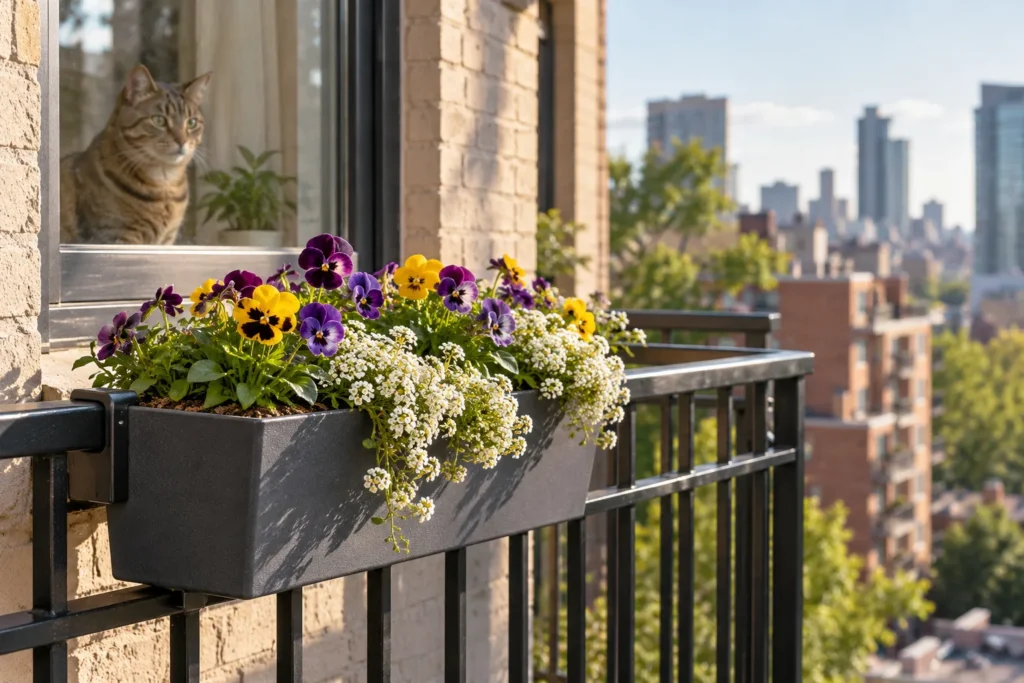
The sill outside your one good window is barely deeper than a paperback, the lease says nothing about planters, and the cat has already claimed the spot inside the glass where the box would go.
That’s the real starting point for most apartment window boxes: an awkward ledge, a landlord you’d rather not ask, and a pet that treats every new plant as a salad bar. These window box garden ideas for apartments are built around those three problems, so you can pick a look that works where you actually live instead of one that assumes a porch and a toolbox.
Each idea tells you how the box is held up, how many hours of sun it wants, what can go in it this spring, and whether it’s safe around a cat or dog. If you’re planning the rest of the balcony too, our renter-friendly balcony garden ideas cover the bigger picture.
Table of Contents
At a Glance
- Decide how the box will be held up before you buy plants: on the inside sill, hooked over a railing, or on exterior brackets with the landlord’s written permission.
- In spring, plant frost-tolerant pansies, violas, sweet alyssum, snapdragons and leaf lettuce now; hold petunias, calibrachoa, basil and tomatoes until after your last frost.
- Count the real sun hours at that one spot: 6 or more means the sun looks, 2 to 6 means the shade looks.
- Every box needs drainage holes, a soilless potting mix and a plan for where the drips land.
- If a cat or dog can reach the box, skip geranium, English ivy, lobelia, coleus, lavender, chives and mint, and check the ASPCA list for anything else on your shopping list.
If you have one sunny window and a pet, the easiest win is a railing or sill box of petunia and sweet potato vine, planted after your last frost. Skip the exterior bracket box if you can’t get written permission or your sill is shallower than the box.
Four Ways to Hold a Window Box Without Losing Your Deposit
The box itself matters less than what holds it up, because a filled window box is heavier than it looks. Pick the method your lease and your sill allow before you fall in love with a planting.
Three of the four options below need no drilling at all. The fourth does, and it’s the one to approach with a signed email from the landlord rather than a hopeful shrug.
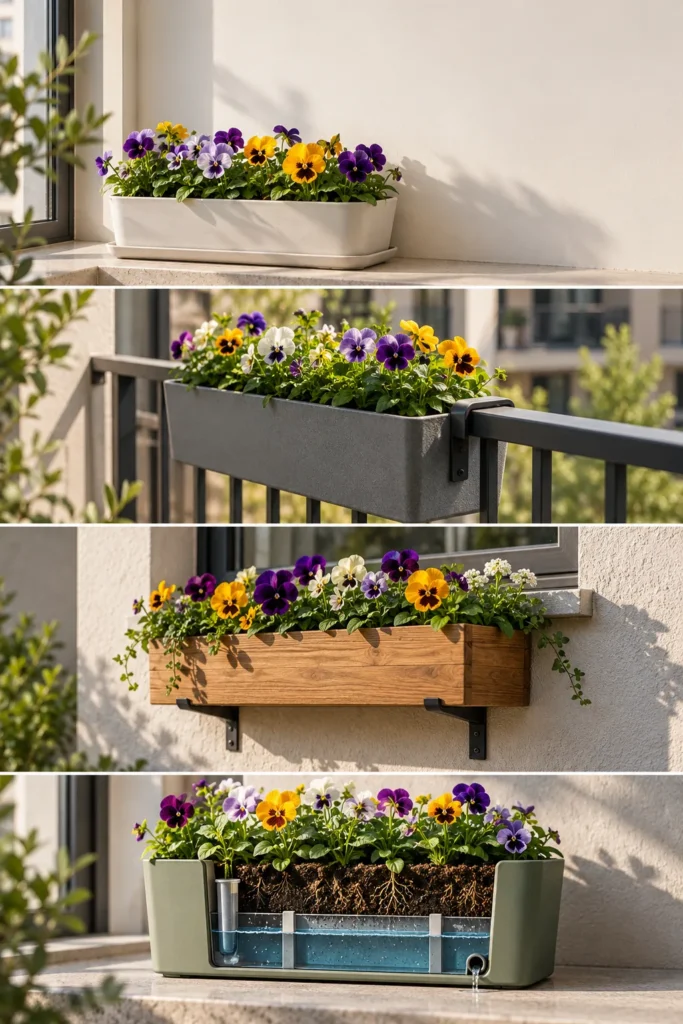
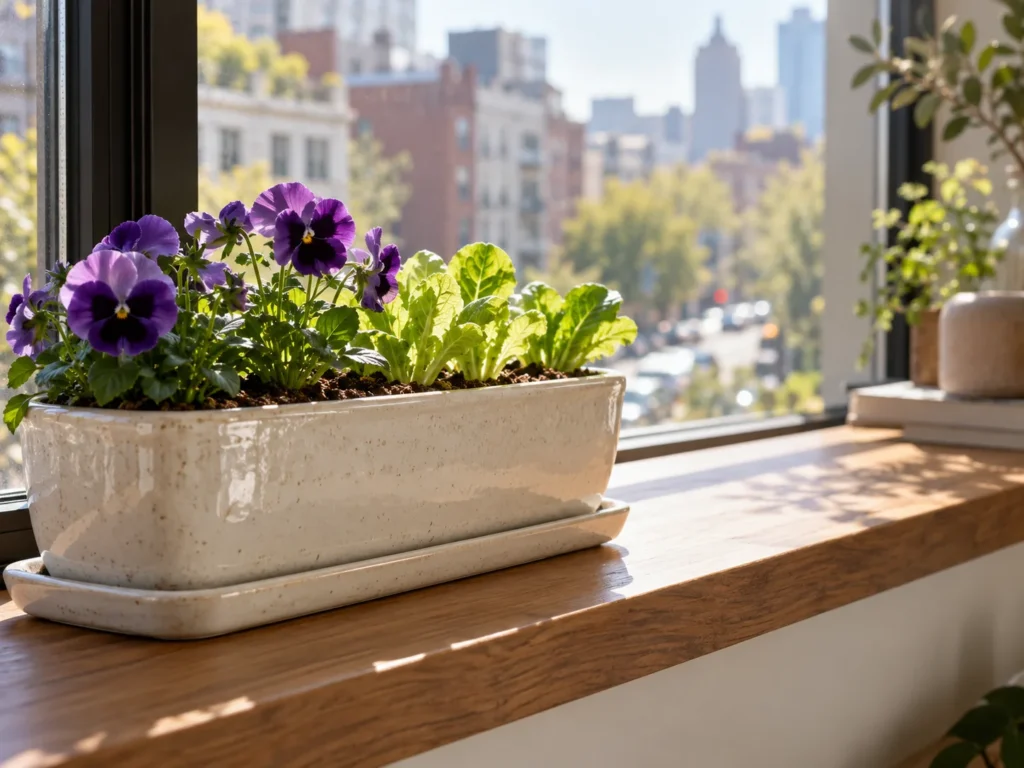
1. The Inside-Sill Box That Needs No Permission
A shallow trough on the interior sill, or on a slim stand pushed up under the window, is the window box nobody can object to. It never touches the building’s exterior, so the lease question disappears before it starts.
Depth is the limit here. A trough 4 to 6 inches deep is enough for pansies, violas and leaf lettuce, which is why those small plants suit 4 to 6 inch containers while a geranium-sized plant wants 12 inches or more. Give herbs and salad greens at least a 10-inch footprint even in a shallow box, so the roots have somewhere to spread sideways.
Two non-negotiables: drainage holes in the box, and a saucer or liner under it, because an indoor sill does not forgive a puddle. Skip the old advice about a gravel layer; it takes up root space and does nothing for drainage.
Light is the quiet catch. Glass, frame and any overhang cut the hours, so count the sun that actually lands on the sill through the window, not what the balcony outside gets. In a small apartment with a cat and a dog, the inside-sill box is the one a pet ends up sitting beside, so this is where the pet-safe picks in idea 14 matter most.
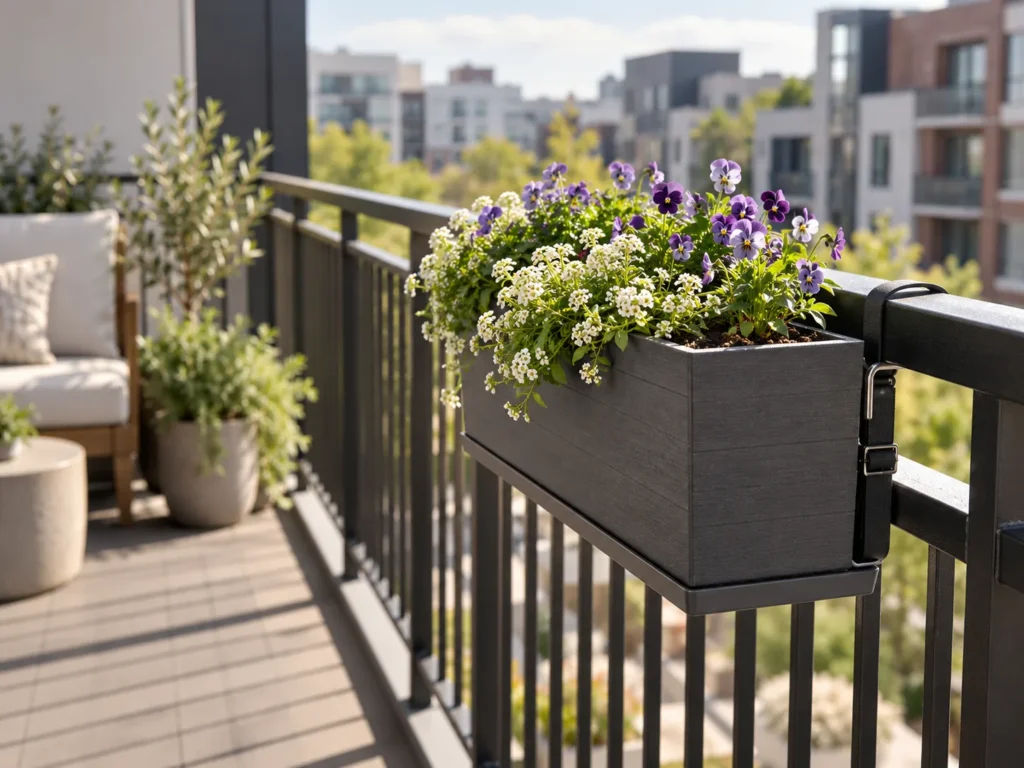
2. The Railing-Hook Box (No Drilling)
If you have a balcony rail, a box that hooks or straps over it is the closest thing to a classic window box a renter can get without a drill. Keep the box narrow and the planting low, so wind has less to grab, and tighten the straps or hooks after the first windy week.
Think about where the water goes before you fill it. Drips from a railing box land on the balcony below, and a liner tray, a saucer or a self-watering box keeps that water off the neighbor’s chairs and off your own decking. The build itself is simple; our guide to build or buy a railing planter box walks through the options.
3. The Bracket Box, Only With the Landlord’s Written OK
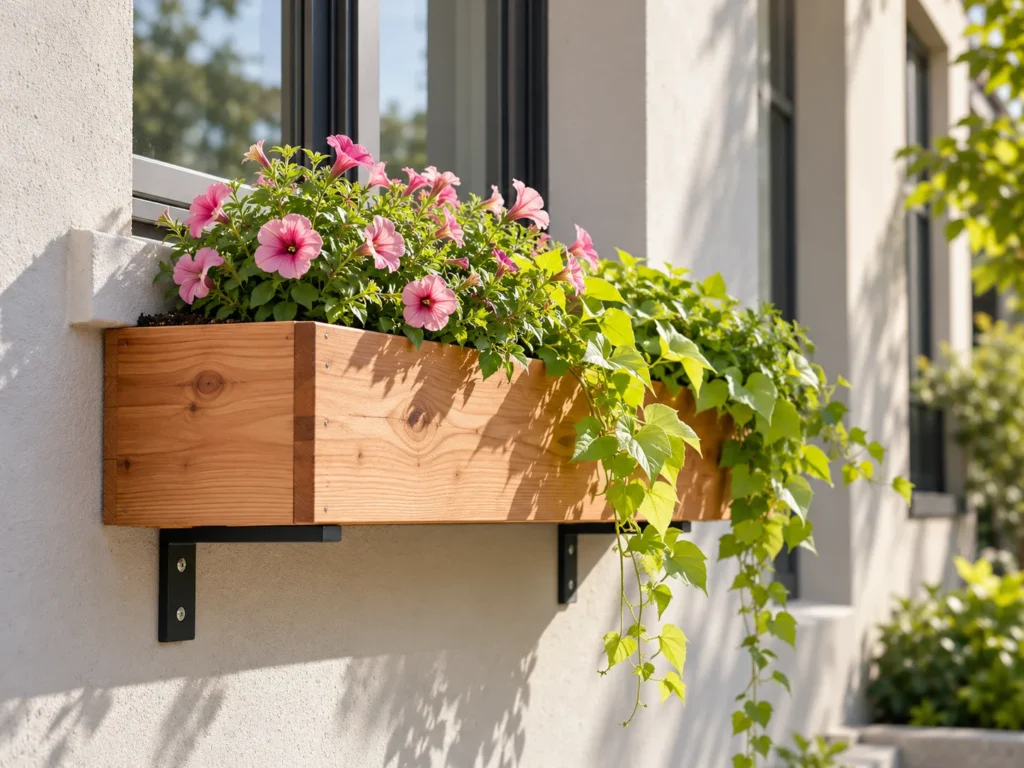
Exterior L-brackets under the sill give the classic look, and they are the one setup that puts holes in the building. Get permission in writing first, and read your lease and building rules for anything about objects hung outside.
Weight is the number people underestimate. A 20-inch container filled with moist mix and plants can weigh around 100 pounds, and most of that is water. The decorative hooks sold with window boxes are rarely the limit; the sill, the fastener and the wall behind it are. Fasteners go into framing, never into vinyl trim or siding alone, and the box should sit on the brackets rather than hang off them.
Skip this one if you can’t get permission, if your building has condo or HOA rules about the facade, or if the box would sit above a walkway where a sagging bracket becomes somebody else’s problem.
4. The Self-Watering Window Box for Hot Sills and Busy Weeks
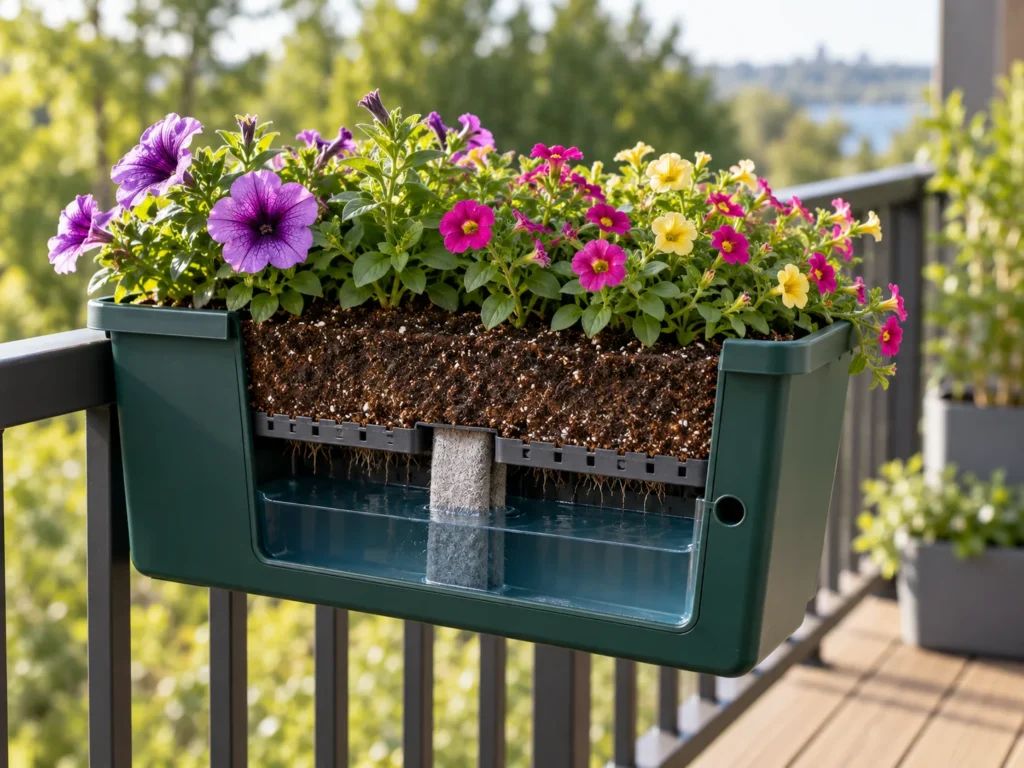
A box with a built-in reservoir is the answer when a shallow planter dries out faster than you can get home. In hot weather a window box can need water once or even twice a day, and a reservoir smooths that out to a top-up every few days.
It still needs an overflow hole you can see, or a storm will turn the box into a bathtub. If you’d rather make one than buy one, our walkthrough on how to make a self-watering container scales down to window-box size.
Spring Window Box Garden Ideas for Apartments That Bloom
These five looks are sorted by the light your window really gets and by what can go in the box this month. Cool-season annuals go in now and shrug off a light frost; the sun lovers wait for frost-free nights.
5. The Plant-It-Now Cool-Season Box
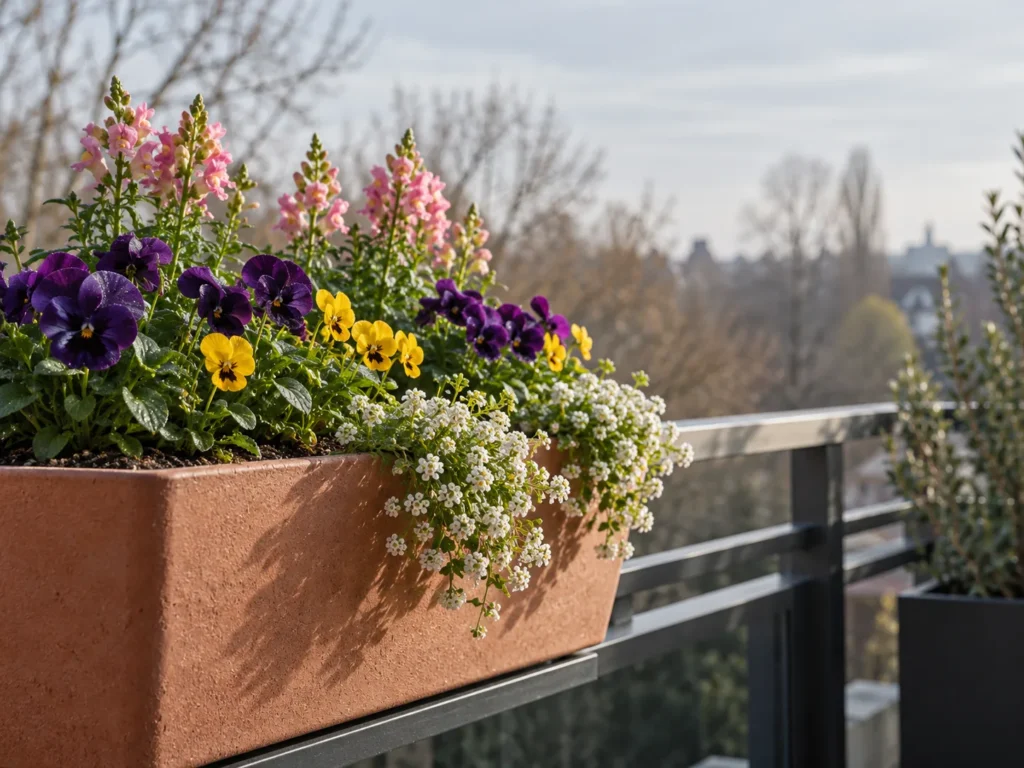
Pansies and violas (Viola), snapdragon (Antirrhinum majus) and sweet alyssum (Lobularia maritima) are the spring box you can plant while the mornings are still cold. Cool-season annuals like these tolerate a light frost, often down to about 28°F, and most stop performing once days hold above 80 to 85°F.
Plant them as soon as the mix is workable and a light frost is the worst thing in the forecast. Pansies take full sun in cool weather and prefer part sun once the days warm, which makes an east-facing sill ideal. Sweet alyssum fades in hot summers; cut it back and it often rebounds, or choose heat-tolerant types such as ‘Snow Princess’.
Pet note: snapdragon and sweet alyssum are both listed as non-toxic to cats and dogs. Pansies and violas aren’t on the ASPCA list under those names, so check the ASPCA site for your exact plant before buying if your pet chews.
6. The Full-Sun Overflow Box
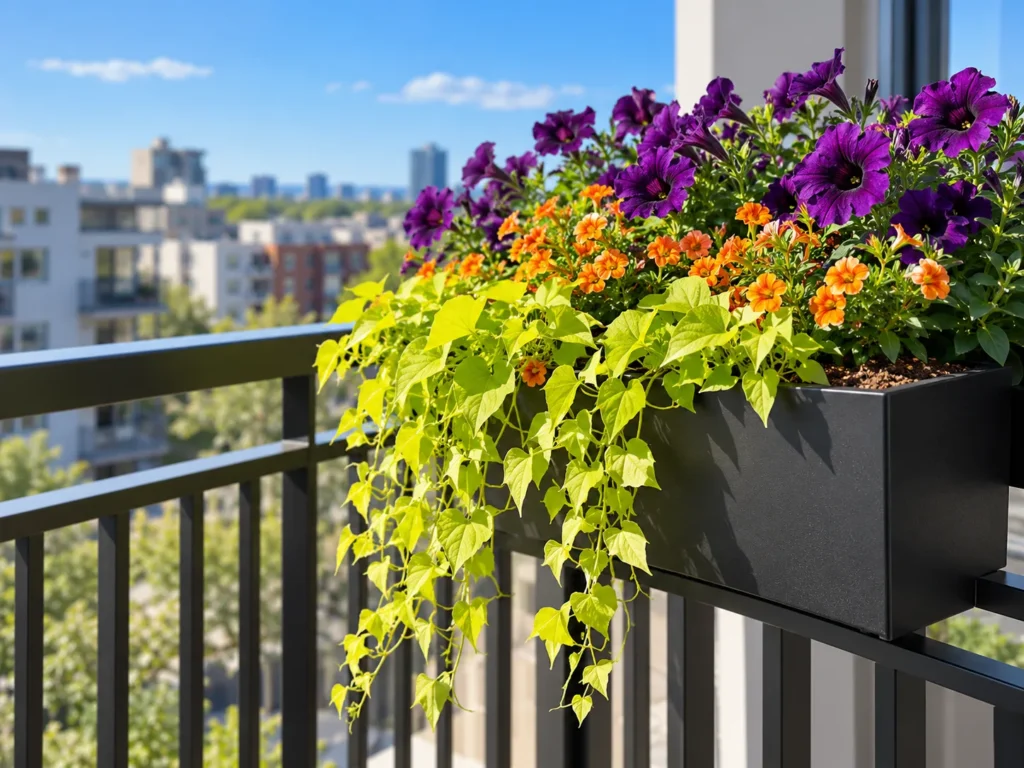
Petunia (Petunia x hybrida), calibrachoa (Calibrachoa x hybrida) and sweet potato vine (Ipomoea batatas) are the classic spilling box, and they want 6 or more hours of direct sun to earn it. Plant them after your last frost; in a box that sees only 2 to 6 hours, petunias still bloom but noticeably less.
Sizes matter on a narrow sill. Petunias run 6 to 18 inches tall and 1 to 3 feet wide, so two or three fill a standard box; calibrachoa stays 3 to 9 inches tall and spreads 6 to 24 inches, making it the better choice for a shallow or windy spot. Petunias need deadheading and an occasional pinch to stay full; calibrachoa drops its spent flowers on its own.
For a sunny window in a pet household we’d start with petunia and sweet potato vine, because both are listed as non-toxic to cats and dogs. Keep calibrachoa for the boxes a pet can’t reach, or ask your vet first.
7. The North-Window Shade Box
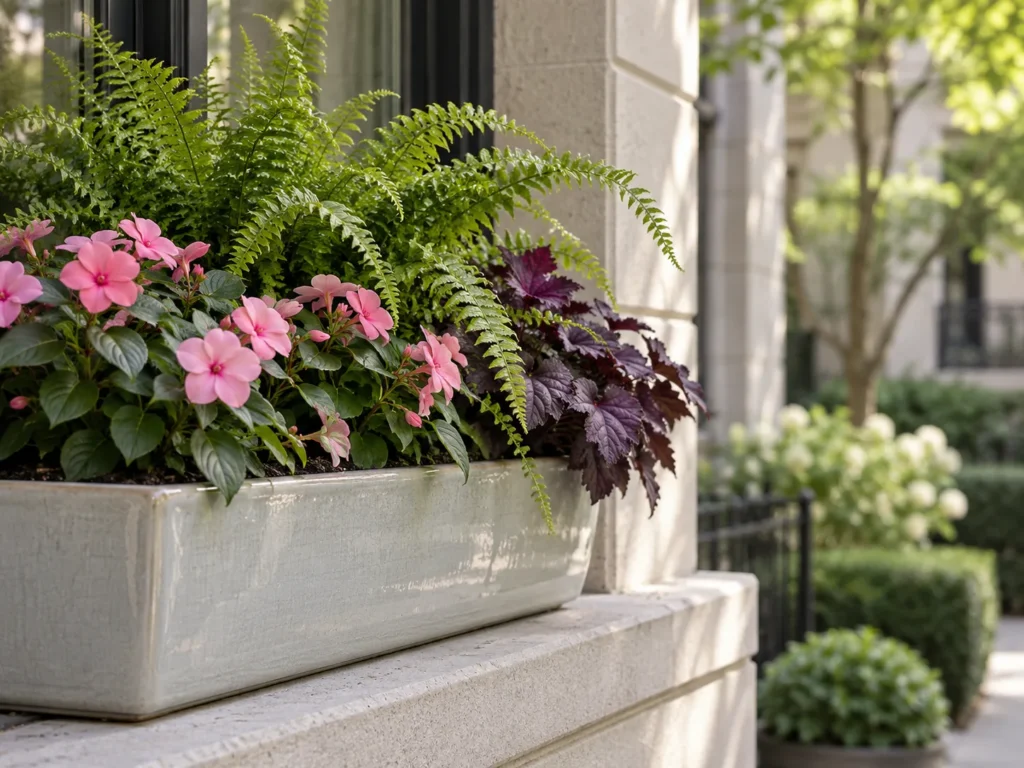
A north-facing sill or a light well that sees 2 to 6 hours of sun can still carry a window box; it just carries a different one. Impatiens (Impatiens spp.), Boston fern (Nephrolepis exaltata ‘Bostoniensis’) and coral bells (Heuchera) give flowers, texture and leaf color without needing afternoon sun.
All three are non-toxic to cats and dogs. Shade plant lists usually add begonia, coleus and fuchsia, but begonia and coleus are both toxic to cats and dogs, so if a pet can reach the box, stay with the three named here. For a bigger palette, see our more shade-loving plants for a north-facing balcony.
8. The One-Plant Monochrome Box
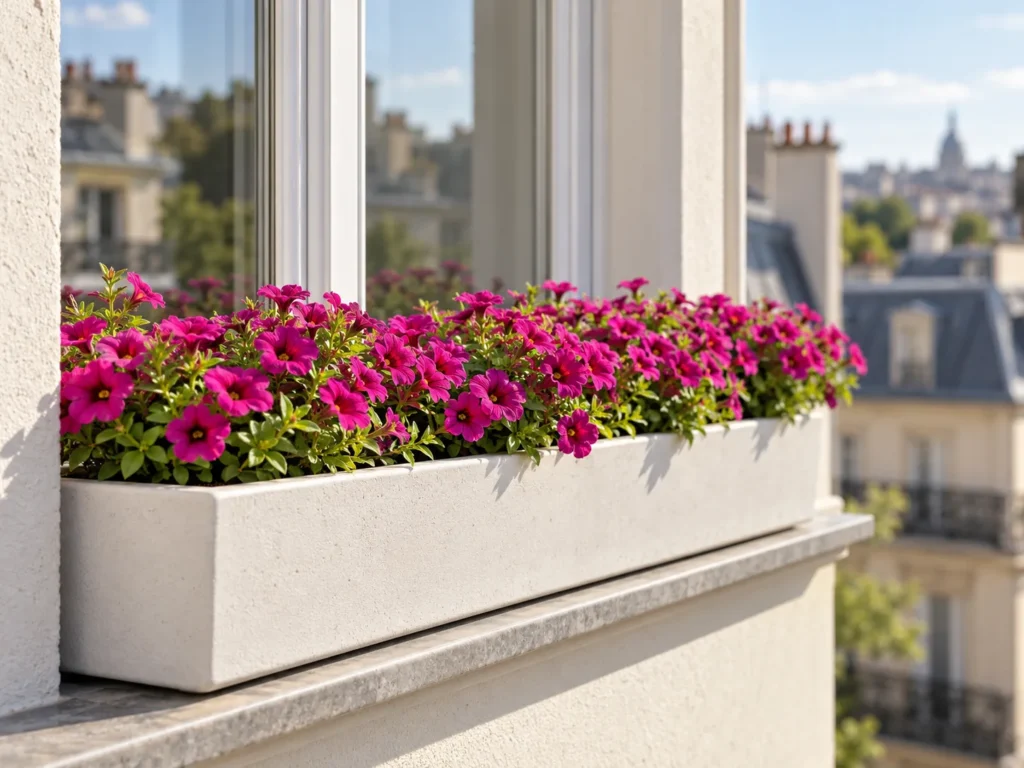
A single species in a single color, planted end to end, is the easiest box to keep looking good on a narrow sill. All white sweet alyssum, all magenta calibrachoa or all one petunia means every plant wants the same water and the same depth, so nothing gets crowded out.
Choose the plant by your sun hours: calibrachoa or petunia for 6 or more, sweet alyssum or violas for less. The pet note simply follows the plant you pick from ideas 5 and 6.
9. The Foliage-First Box That Forgives a Missed Watering
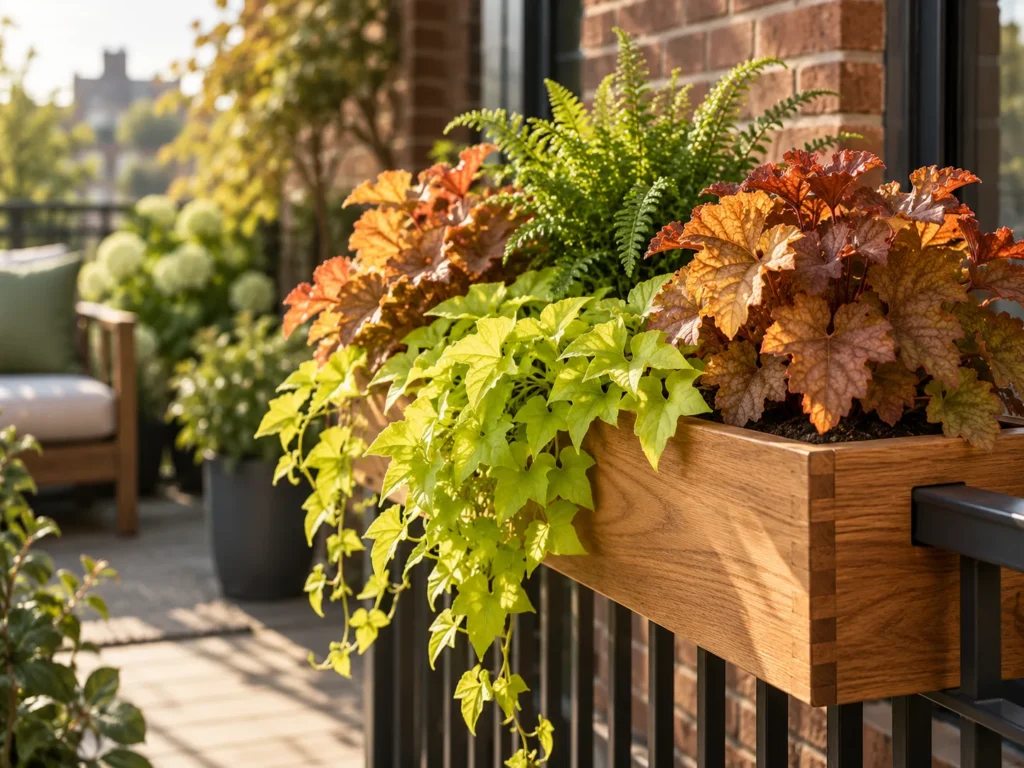
If you’d rather have texture than a daily deadheading job, build the box from leaves. Coral bells plus sweet potato vine plus a Boston fern works for a shady spot; drop the fern and keep the other two for a sunny one.
Many versions of this box add English ivy (Hedera helix) and coleus, and both are toxic to cats and dogs, ivy foliage especially. The three plants named above are all non-toxic, so a pet-reachable sill loses nothing by leaving the ivy at the nursery.
Edible Window Box Ideas for a Kitchen or Balcony Window
A window box can feed you a little, as long as you match the crop to the sun and the depth you really have. Greens tolerate the least light and the shallowest box; tomatoes want the most of both.
| Crop | Direct sun needed | Container volume | Spring timing |
|---|---|---|---|
| Leaf lettuce, spinach | 3 to 5 hours | 1 gallon (4 to 6 lettuce plants) | Sow now, as soon as the mix is workable |
| Radish | 3 to 5 hours | 2 gallons, thinned to 1 to 2 inches apart | Sow now |
| Basil, thyme, rosemary | 6 or more hours ideal, 4 to 6 workable | At least a 10-inch footprint (about 3 gallons) | Thyme and rosemary now; basil after last frost |
| Strawberry (day-neutral) | At least 6 hours, 10 or more ideal | Varies by variety; see the strawberry guide | Potted transplants after frost risk |
| Cherry tomato | 6 to 8 hours | 1 gallon per plant minimum, 12 inches deep | After last frost |
10. The Kitchen-Window Herb Box
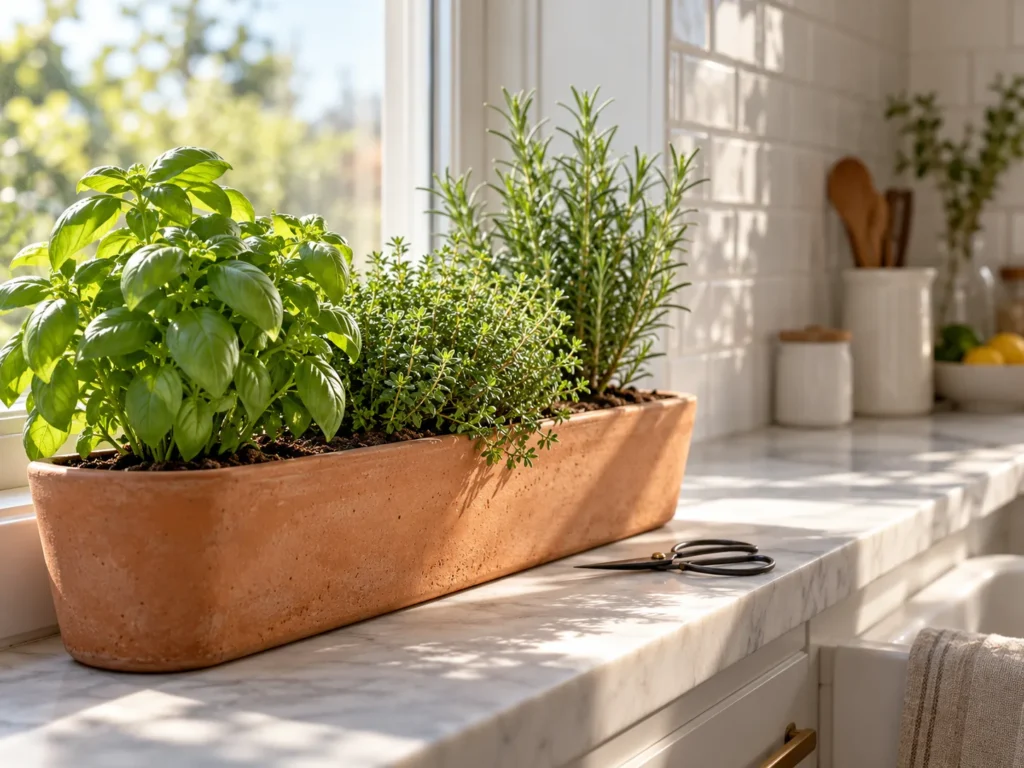
Basil (Ocimum basilicum), thyme (Thymus vulgaris) and rosemary (Rosmarinus officinalis) make a kitchen-window box that gets used every week. Herbs do best with 6 or more hours of direct sun, and 4 to 6 still gives a usable harvest, so a bright east or west kitchen window counts.
Thyme and rosemary can go in now; basil waits until nights are frost-free. Rosemary likes a drier, looser mix than basil, so give it the end of the box or its own small pot, and water the basil end more often. If this is the box that matters most to you, our kitchen window herb garden ideas cover the full setup.
Pet note: basil, thyme and rosemary are all non-toxic to cats and dogs. Chives and mint are toxic to both, chives seriously so, which is why neither appears in this box.
11. The Spring Salad Box
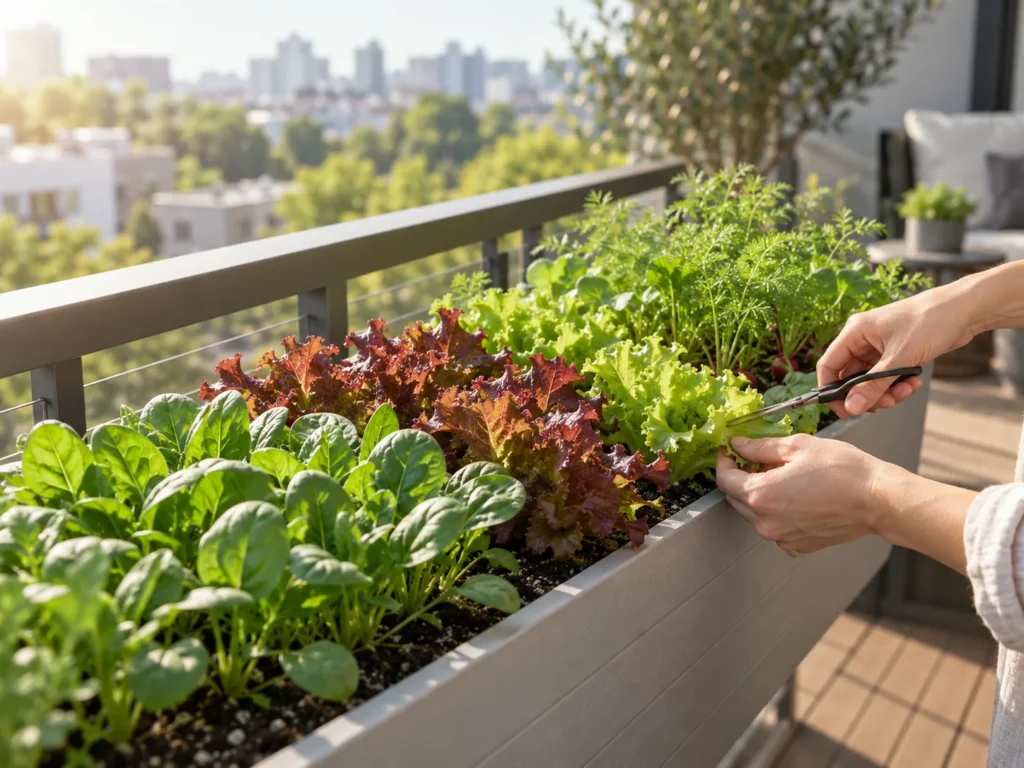
Leaf lettuce (Lactuca sativa), spinach (Spinacia oleracea) and radish (Raphanus sativus) are the crops that forgive a dim window. Cool-season greens get by on 3 to 5 hours of direct sun, which is why a salad box succeeds on sills that would starve a tomato.
Sow directly into the box now and harvest cut-and-come-again: snip the outer leaves and leave the small center ones to keep growing. Lettuce turns bitter and bolts after several days above 75°F, so by late spring plan to eat it out and resow in a shadier spot.
Nothing in this box is on the toxic lists, but the supplies are another matter: fertilizer irritates a pet’s gut, and moldy compost can cause tremors or seizures, so store both where a nose can’t reach.
12. The Strawberry Box for a Sunny Rail
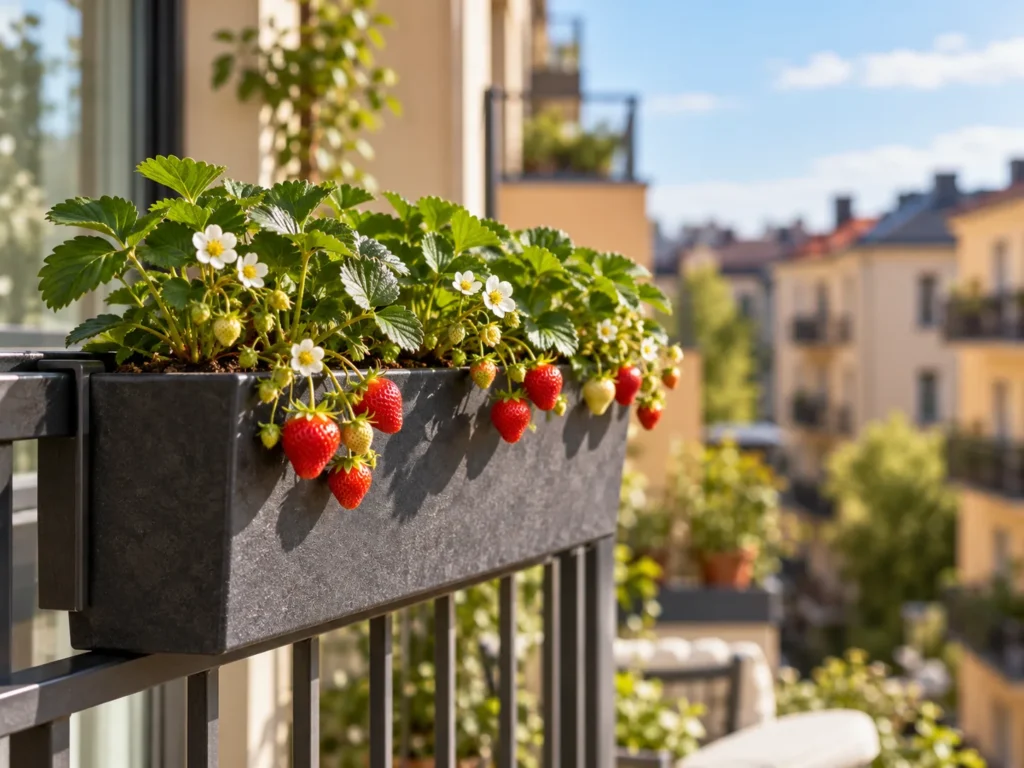
Day-neutral strawberries (Fragaria) such as ‘Albion’ and ‘Seascape’ are the varieties recommended for containers, and they fruit through the season rather than in one June flush. They want at least 6 hours of direct sun and do better with 10, so this box belongs on a south or west rail.
Plant potted transplants after frost risk has passed and give them about an inch of water a week, more in heat. Strawberries are on the ASPCA non-toxic list, which makes this a rare edible box a dog can sniff without worry. The crowns can be killed at around 15°F, so in cold zones the box comes indoors or gets insulated for winter; our guide on how to grow strawberries in pots covers depth and overwintering.
13. The Compact Cherry Tomato Box (Only for 6 to 8 Hours of Sun)
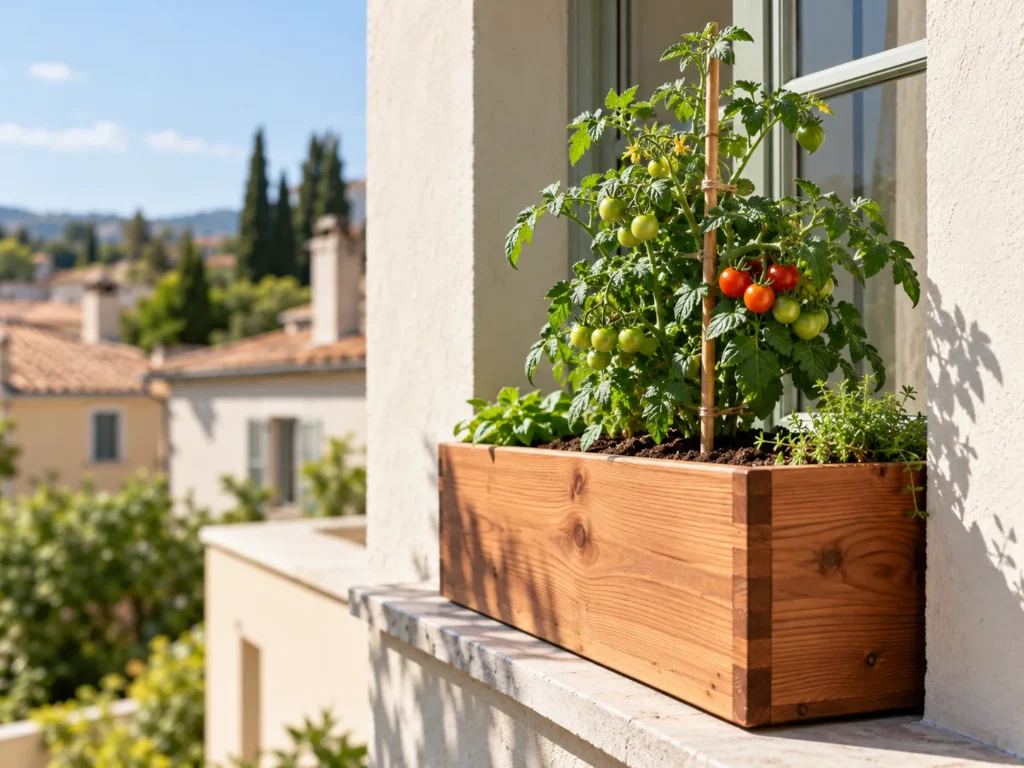
A cherry tomato (Solanum lycopersicum) in a window box is a sunshine commitment: warm-season crops need 6 to 8 hours of direct sun, and a box with less gives you leaves and disappointment. The compact cultivar ‘Pixie’ is suited to a 1-gallon container per plant, and a box 12 inches deep is the practical minimum for any tomato.
Plant after your last frost, add a short stake at planting, and expect to water daily once summer arrives. Skip this box if a dog or cat can reach the leaves: tomato foliage and green fruit are toxic to dogs and cats, while the ripe fruit is fine.
Window Box Ideas for Pets, Wind and a Tight Budget
Three situations change the plant list more than the style does. If one of these is yours, start here.
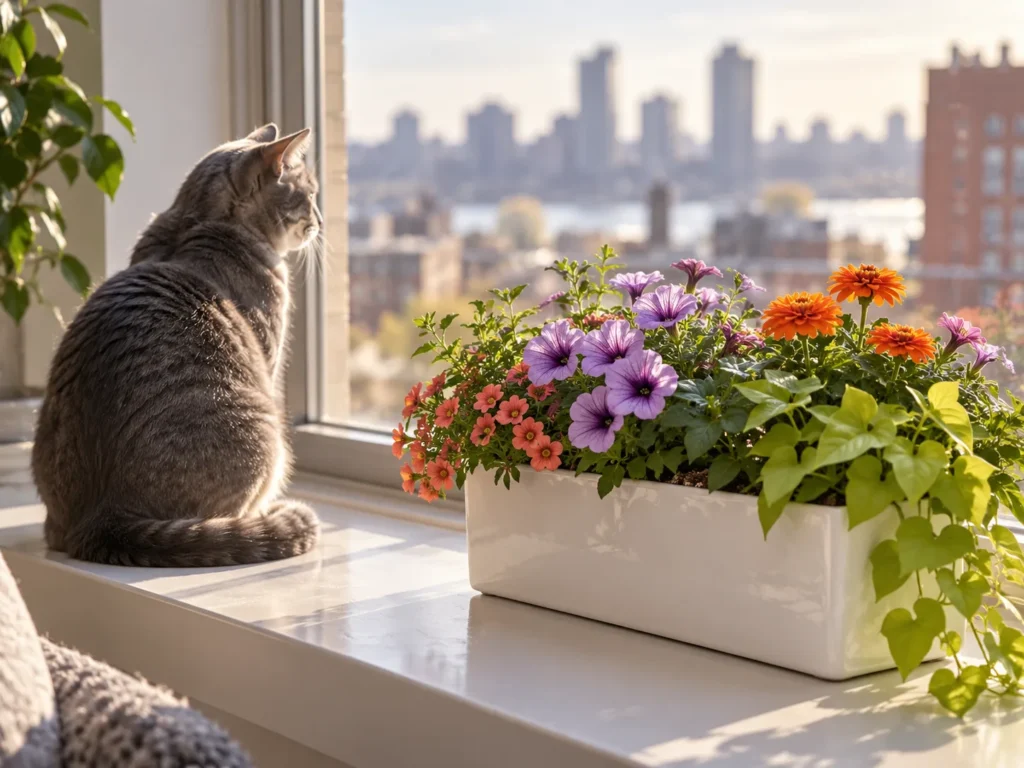
14. The All-Pet-Safe Window Box (the One the Cat Sits Beside)
Build this box only from plants already checked against the ASPCA list, and you can stop worrying about the sill the cat has claimed. The table below gathers every plant in this article, so you can see at a glance which ones belong in reach of a pet.
| Plant (botanical name) | ASPCA status for cats and dogs | Where it appears here |
|---|---|---|
| Petunia (Petunia spp.) | Non-toxic | Ideas 6, 8 |
| Sweet potato vine (Ipomoea batatas) | Non-toxic | Ideas 6, 9 |
| Nasturtium (Tropaeolum majus) | Non-toxic | Idea 15 |
| Zinnia (Zinnia spp.) | Non-toxic | Idea 14 |
| Snapdragon (Antirrhinum majus) | Non-toxic | Idea 5 |
| Impatiens (Impatiens spp.) | Non-toxic | Idea 7 |
| Boston fern (Nephrolepis exaltata ‘Bostoniensis’) | Non-toxic | Ideas 7, 9 |
| Coral bells (Heuchera sanguinea) | Non-toxic | Ideas 7, 9 |
| Pot marigold (Calendula officinalis) | Non-toxic | Idea 14 |
| Basil, thyme, rosemary | Non-toxic | Idea 10 |
| Strawberry (Fragaria spp.) | Non-toxic | Idea 12 |
| Geranium (Pelargonium spp.) | Toxic | Avoid in pet-reachable boxes |
| English ivy (Hedera helix) | Toxic | Avoid (idea 9) |
| Lobelia (Lobelia spp.) | Toxic (listed as L. cardinalis; trailing lobelia is the same genus) | Avoid |
| Coleus | Toxic | Avoid (ideas 7, 9) |
| Lavender (Lavandula angustifolia) | Toxic | Avoid |
| Chives (Allium schoenoprasum), mint (Mentha spp.) | Toxic | Avoid (idea 10) |
| Tomato plant foliage and green fruit | Toxic; ripe fruit non-toxic | Idea 13 |
A pet-safe combination for a sunny sill: petunia and sweet potato vine, with zinnia or pot marigold for extra color. For shade: impatiens, Boston fern and coral bells. Geranium is the one to watch for, because it anchors nearly every classic window box and is listed as toxic to cats and dogs.
Non-toxic still means “may cause an upset stomach if eaten in quantity”, so discourage chewing rather than inviting it. If a plant you want isn’t on the list, ask your vet before it goes within reach. More pet-safe picks for the indoor side of the window are in our guide to pet-friendly indoor plants for small apartments.
15. The Upper-Floor Windy Box
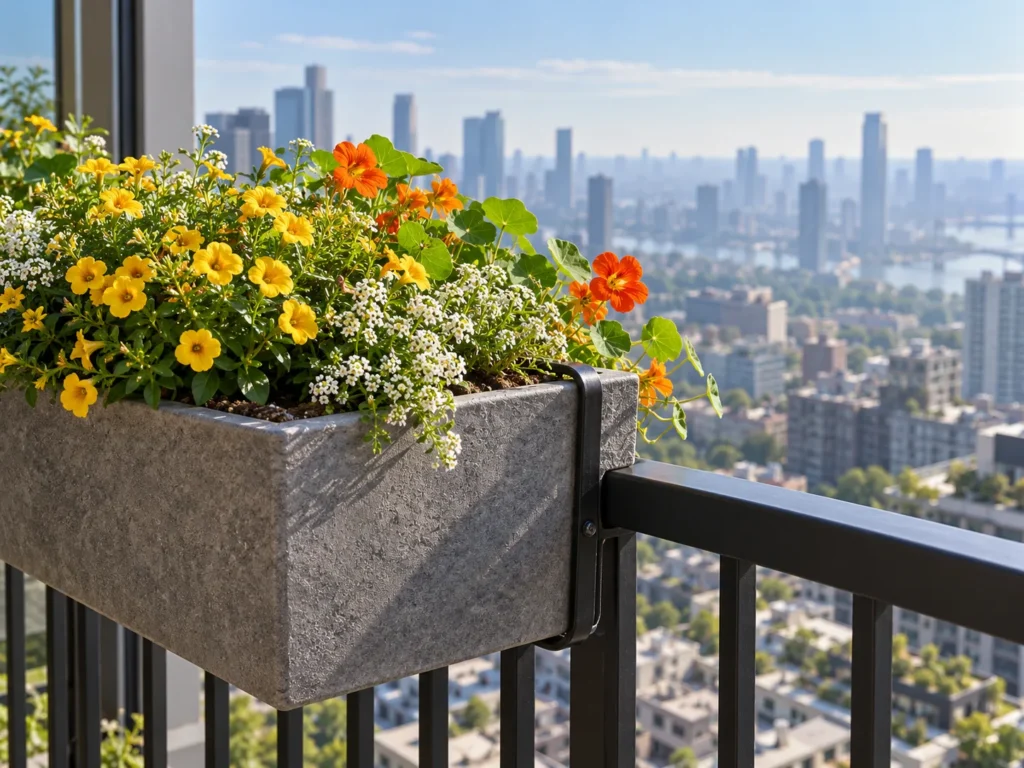
Wind on a high balcony dries a box out in hours and flattens anything tall. Plant low and compact: calibrachoa at 3 to 9 inches tall, sweet alyssum at 3 to 10 inches, and a compact bush-type nasturtium (Tropaeolum majus), which is non-toxic to cats and dogs.
Match the box to the exposure, too. A heavier material and the full weight of moist mix keep the box planted where you put it, as long as the combined weight is balanced against the top growth so the box can’t lever itself over. Use the inside sill or a strapped railing box rather than brackets, and check the mix every morning in spring wind, since it dries from the sides as well as the top. Plant picks that cope with gusts are in our wind-resistant plants for a high-rise balcony.
16. The Low-Cost Box You Already Own
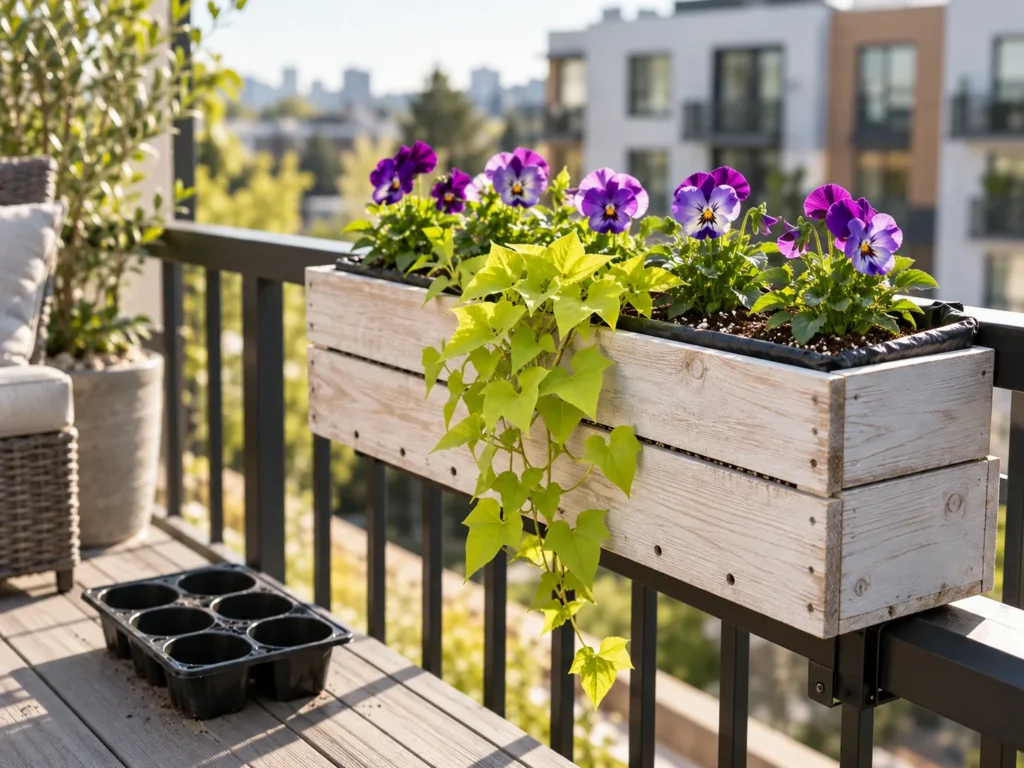
A food-grade bucket, an old drawer or a wooden crate becomes a window box the moment it has drainage holes and a liner. Drill several holes in the base (eye protection on, and a bit sized for plastic or wood), line a wooden box with heavy plastic punched to match the holes, and plant one 6-pack of annuals with a single trailing plant at the front.
Two cautions for free containers. Dark or metal ones absorb heat in full sun, which cooks roots and dries the mix fast, so pick light colors, shade the sides with trailing plants or keep that box on the shadier side of the window. And a light, tall container tips in wind, so a square or wide shape beats a narrow bucket. For more ideas that cost next to nothing, see our small balcony garden ideas on a budget.
How to Pick the Right Setup for Your Space
Three checks decide the box: how it is held, how many hours of direct sun the spot gets, and whether a pet can reach it. Answer those and the plant list writes itself.
For a first apartment window box, we’d choose a railing-hook or inside-sill box over brackets, because the lease question disappears and the weight sits on something built to carry it. Brackets can come later, with permission, once you know the window is worth it.
| Your situation | Best hold-up method | Light band | Plant-now picks (spring) | Pet-reachable pick |
|---|---|---|---|---|
| No permission to drill, no balcony | Inside sill or slim stand (idea 1) | Whatever the glass lets through; count it | Pansy, viola, leaf lettuce | Snapdragon, violas, lettuce; check pansy on the ASPCA site |
| Balcony rail, south or west facing | Railing hook or strap (idea 2) | 6 or more hours | Sweet alyssum, snapdragon now; petunia, calibrachoa after frost | Petunia, calibrachoa, sweet potato vine |
| North window or shaded light well | Inside sill or railing hook | 2 to 6 hours; under 4, use the shade look | Violas now; impatiens after frost | Impatiens, Boston fern, coral bells |
| Written landlord permission, deep sill | Exterior brackets into framing (idea 3) | Any; match plants to the hours | Cool-season annuals now; swap in summer | Any non-toxic row from the pet table |
| Hot sill, travel often, or upper floor | Self-watering box (idea 4), inside or strapped | 6 or more hours typical | Thyme, rosemary now; calibrachoa, nasturtium after frost | Nasturtium, thyme, rosemary |
“Every look above shares the same basics. Fill the box with a soilless potting mix, never garden soil, to within about an inch of the rim. Water when the top inch is dry, slowly until it runs out of the holes; in hot weather that can mean daily or more (idea 4 has the fix). Feed with a slow-release fertilizer at planting, which lasts about 3 to 4 months, or a complete liquid feed at half strength every two weeks from spring through summer. Plant closer than you would in a bed, with trailers at the edges and uprights at the back.
The spring-to-summer sequence runs like this:
- Now, as soon as the mix is workable: plant pansy, viola, snapdragon and sweet alyssum; sow lettuce, spinach and radish; plant thyme and rosemary.
- After your last frost (look up your zone by ZIP code on the USDA Plant Hardiness Zone Map and ask your county extension office for the local last-frost date): add petunia, calibrachoa, sweet potato vine, nasturtium, zinnia, impatiens, basil, strawberry transplants and cherry tomato.
- When several days run above 75°F, harvest the lettuce out and resow it in a shadier box.
- When days hold above 80 to 85°F, pull the cool-season annuals and replant with the full-sun or shade look.
- Weekly through summer: deadhead petunias, pinch leggy stems, and feed as described in the next section.
When something goes wrong, it is usually one of these five:
- The box dries out every day and plants wilt by evening. Likely a shallow or dark box in a hot, windy spot, or unglazed terra cotta. Check the top inch morning and evening; if it’s dry both times, move to a self-watering box, a deeper or lighter-colored container, and morning watering.
- Lots of leaves, few flowers. Usually too little direct sun for the plant chosen, sometimes too much nitrogen or petunias never deadheaded. Count the real hours over one day before you change the feed.
- Pansies collapse or lettuce turns bitter in late spring. Heat, and it’s expected. Replace with warm-season plants rather than trying to rescue them.
- Water drips onto the balcony below. No saucer, liner or overflow, or watering too fast. Water in two slow passes and add a tray.
- The box sags or the hooks shift. Wet weight was underestimated, or fasteners went into trim. Lift the box when wet to feel the load; move it to the sill or a rated strap, and never add a bracket without permission.
Yellowing lower leaves with a soggy mix point the other way: blocked or missing drainage holes, or watering on schedule in cool weather. Tip the box, clear the holes, and let the top inch dry before the next watering.
Frequently Asked Questions
Will a late frost kill the plants in my spring window box?
Not the cool-season ones. Pansies, snapdragons and sweet alyssum often come through nights down to 28°F, and sometimes 25°F, with little damage. The plants at risk are the frost-tender ones you set out after your last frost, such as basil and tomato. If frost shows up in the forecast after those are planted, bring a box you can lift indoors for the night and put it back out in the morning.
Can I grow lettuce and a cherry tomato in the same window box?
It rarely works well. A tomato wants 6 to 8 hours of direct sun and a box about 12 inches deep, while lettuce gets by on 3 to 5 hours in a much shallower trough and turns bitter once days run above 75°F, just as the tomato gets going. Give each one its own box, with the lettuce on the dimmer window, and you’ll get a better harvest from both.
Is calibrachoa safe if my cat or dog chews on it?
Keep calibrachoa, sometimes sold as trailing petunia, where a pet can’t reach it unless your vet says otherwise. If you want that spilling look within reach of a cat or dog, use petunia instead: it’s listed as non-toxic to both and fills a box in much the same way. Save the calibrachoa for the outer edge of a railing box or a window the pets never visit.
Are begonias a safe choice for a shade window box with pets?
No. Begonias are toxic to cats and dogs, and the roots and tubers hold the most soluble calcium oxalates, so a pet that digs in the box is at more risk than one that nibbles a leaf. Vomiting and drooling are the main signs. For a pet-reachable shade box, impatiens, Boston fern and coral bells give a similar full, leafy effect.
What should I do if my pet eats part of a window box plant?
Call your vet or a pet poison control hotline right away; hotlines may charge a consultation fee. Have the plant’s name ready, or snap a photo of the box. Drooling, vomiting or a sudden loss of appetite are worth a call even after a plant listed as non-toxic, because a big enough mouthful of almost any plant can upset a pet’s stomach.
What Actually Matters
Most window box failures come down to a box that dried out, a plant that wanted more sun than the window gives, or a mix that never drained. Everything else is styling.
Fill the box with a soilless potting mix, never garden soil, to within about an inch of the rim. Water when the top inch is dry, slowly until it runs out of the holes, and expect that to mean daily or even twice daily in hot weather. Feed with a slow-release fertilizer at planting, which lasts about 3 to 4 months, or a complete liquid feed at half strength every two weeks from spring through summer. Plant closer than you would in a bed, with trailers at the edges and uprights at the back, and swap the cool-season plants when the heat holds.
If you do one thing this week, settle how the box will be held up, because that decision rules out half the plant list and all of the deposit worries at once. Then buy one box and three to six plants from the look that matches your sun hours, and plant it the same afternoon. The railing planter and self-watering guides linked above will carry you through the build, and the rest of our balcony garden guides take over once the window box is full.
Sources
- Clemson University HGIC – Hanging Baskets and Window Boxes (HGIC 1154) – support and wet weight, drainage holes, no gravel layer, soilless mix, watering and half-strength feeding, close planting with trailers at the edges
- University of Maryland Extension – Growing vegetables in containers – 100-pound filled-container example, 6 to 8 hours for warm-season crops, 3 to 5 hours for cool-season greens, saucers and self-watering boxes to protect surfaces
- University of Maryland Extension – Container garden (how to plant) – fill to an inch below the rim, skip the pebble layer, drier mix for thyme and chives
- Iowa State University Extension – Growing Cool Season Annuals – frost tolerance to about 28°F, decline above 80 to 85°F, replacing with summer annuals
- Iowa State University Extension – Growing Pansies and Violas – containers, full sun in cool weather and part sun when warm
- NC State Extension Gardener Plant Toolbox – Calibrachoa x hybrida, Petunia x hybrida, Lobularia maritima – sun hours, mature sizes, deadheading, heat notes, non-toxic tags
- University of Illinois Extension – Helpful tips for creating a successful container garden; Growing Vegetables in Containers; How to Grow Fruits, Vegetables, Herbs in Container Gardens; Containers – 4 to 6 inch and 12 inch container bands, 1-gallon lettuce and ‘Pixie’ tomato, 2-gallon radish, 10-inch footprint, slow-release duration, dark containers and heat, weight versus top growth in wind
- University of Minnesota Extension – Growing lettuce, endive and radicchio; Growing strawberries in the home garden – 75°F bolting, cut-and-come-again, 6 to 10 hours for strawberries, ‘Albion’ and ‘Seascape’, 1 inch of water a week, 15°F crown damage
- University of New Hampshire Extension and Iowa State University Extension – Growing Herbs in Containers – 6 or more hours ideal and 4 to 6 workable, rosemary alone and drier
- USDA ARS – Plant Hardiness Zone Map – finding your zone by ZIP code
- ASPCA Animal Poison Control – Toxic and Non-Toxic Plants pages for petunia, nasturtium, impatiens, zinnia, snapdragon, sweet potato vine, Boston fern, coral bells, pot marigold, basil, thyme, rosemary, strawberry, geranium, English ivy, coleus, lobelia, lavender, chives, mint and tomato plant; Pets and Produce garden safety article – every pet status in this article, fertilizer and compost caution