
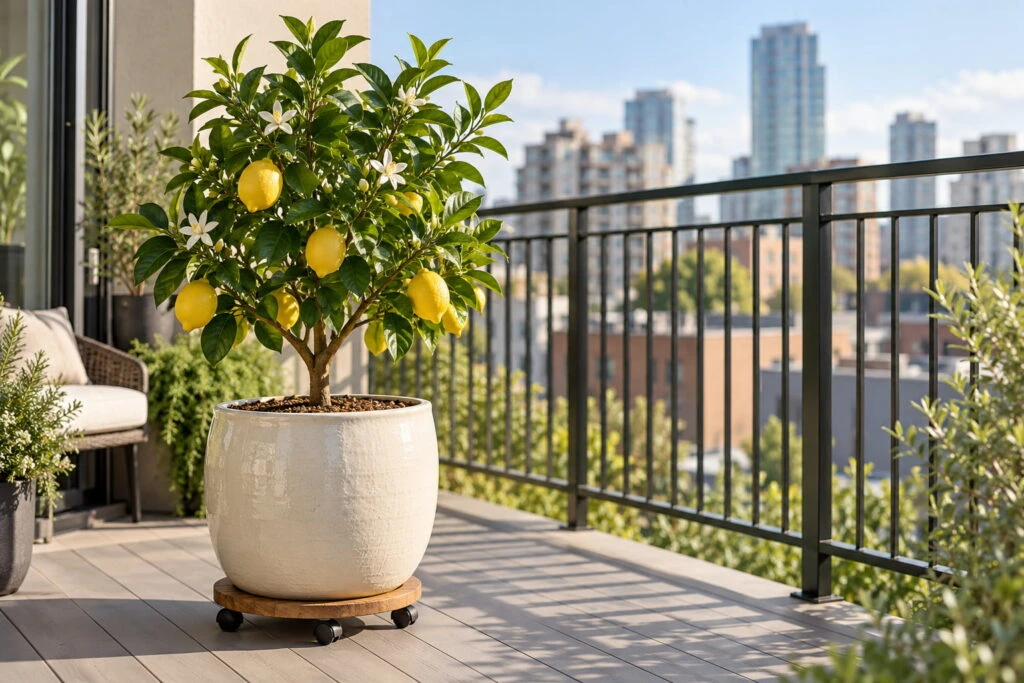
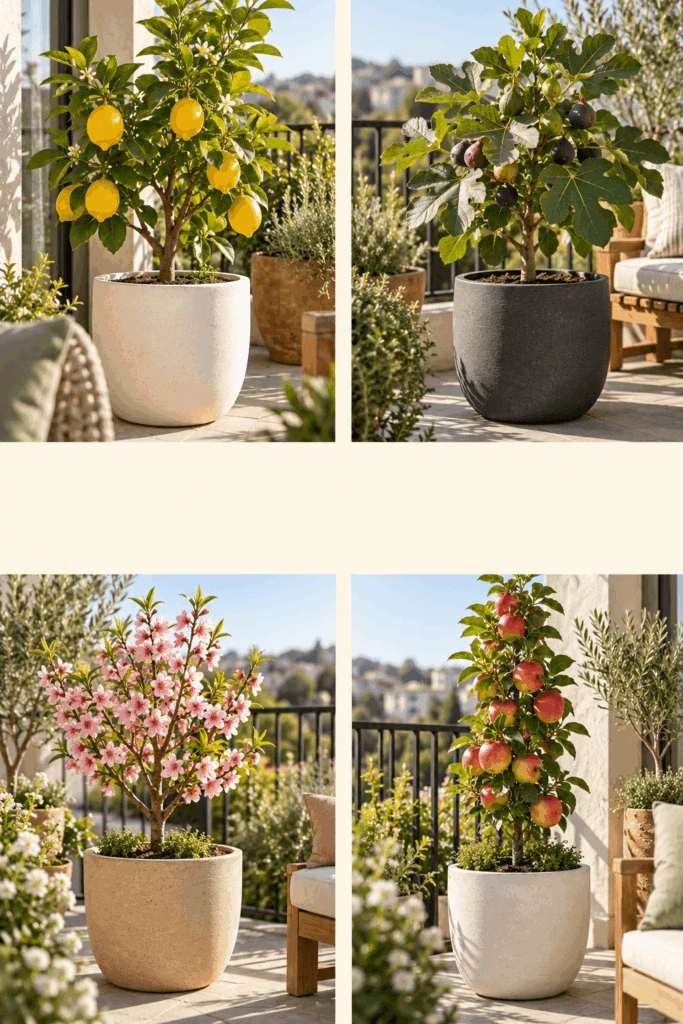
You saved the pin: a little lemon tree in a cream glazed pot, yellow fruit hanging at eye level, on a balcony about the size of yours. Buying the tree is the easy part. What decides whether it fruits next year is where it spends the winter.
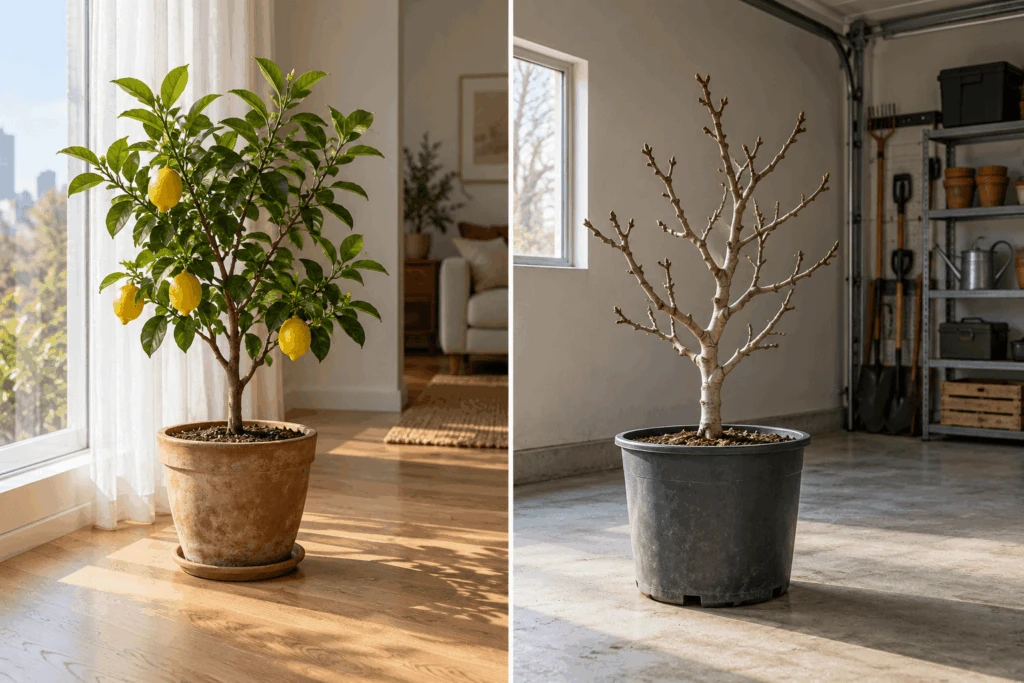
Dwarf fruit trees for patio containers fall into two groups. Citrus moves indoors to a bright window, while figs, peaches, apples and cherries need a cold, sheltered rest in a garage or on a porch. The eight picks below are sorted by that choice, with pot sizes, pollination and pet notes for each, so you can match a tree to the space you actually have.
If your balcony already grows plants that handle full sun and heat, you likely have the light these trees want.
Table of Contents
At a Glance
- Pick by winter home first: a bright indoor window for citrus, or an unheated garage or porch for fig, peach, apple and cherry.
- Citrus can start in a pot of about 5 gallons and move up over the years; figs want 15 gallons or more.
- The columnar apple is the only pick that needs a second, different apple nearby. The other seven fruit on their own.
- Roots in a pot feel far more cold than roots in the ground, so even “hardy” trees need winter shelter.
- Most picks carry a pet caution, from citrus oils to fig sap to stone-fruit pits.
For most renters, an Improved Meyer lemon is the easiest first tree if you have a bright winter window; a dwarf fig is the better bet if you have a cold garage instead. If your balcony gets less than 6 hours of direct sun, hold off on fruit trees for now.
How We Chose These
Every tree here stays small by nature, by grafting or by pruning, and has clear container guidance from a US university extension. Each one also needs at least 6 hours of direct sun a day, and citrus and figs fruit best with 8 hours or more.
“Dwarf” on a plant tag can mean two different things. A genetic dwarf is small because of its own genes, so it stays compact whatever roots it grows on. A rootstock dwarf is a regular variety grafted onto roots that slow it down, such as ‘Flying Dragon’ for citrus. The pot adds its own brake, because a container limits root room and with it the size of the tree.
A few popular choices were left off. Blueberries are shrubs rather than trees, and most sweet cherries need a second variety to set fruit, which is a big ask on a small balcony.
The pet column below flags the main concern for each tree. Before buying, check the ASPCA plant list for your exact tree, and call your vet if a pet eats part of a plant. If you’d rather keep everything low-risk, start with these pet-safe plants for cats and dogs.
| Tree | Best for | Needs a partner tree? | Winter plan | Pet note |
|---|---|---|---|---|
| Improved Meyer lemon (Citrus × limon ‘Meyer’) | First-time growers | No | Bright indoor window | Toxic to dogs and cats |
| Calamondin (Citrus × microcarpa) | Heavy crops of small fruit | No | Bright indoor window | Same as lemon |
| Kumquat (Citrus japonica) | Cooler citrus regions | No | Bright indoor window | Same as lemon |
| Satsuma mandarin (Citrus unshiu) | Seedless fall fruit | No | Bright indoor window | Same as lemon |
| Dwarf fig (Ficus carica) | Cold garage, no window | No | Dark, unheated storage | Sap irritates skin |
| Genetic dwarf peach or nectarine (Prunus persica) | Full-size fruit on a tiny tree | No | Unheated garage | Pits and wilted leaves |
| Columnar apple (Malus domestica) | Narrow corners | Yes, a different apple | Unheated garage or porch | Check before buying |
| ‘North Star’ sour cherry (Prunus cerasus) | Pies and cold winters | No | Unheated garage or porch | Leaves, pits, stems |
The 8 Dwarf Fruit Trees for Patio Containers
The four citrus come first because they spend winter indoors with you. The four deciduous trees after them drop their leaves and need a cold rest somewhere sheltered.
1. Improved Meyer Lemon (Citrus × limon ‘Meyer’)
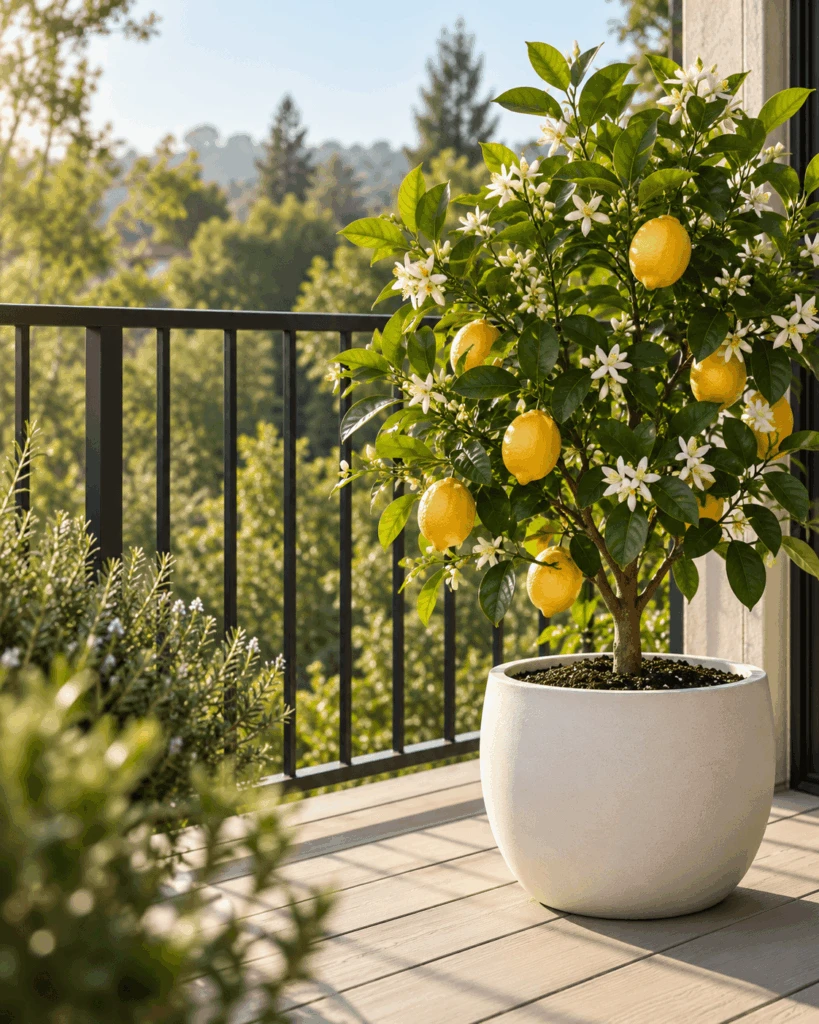
This is the easiest citrus to start with in a sunny apartment. “Improved” marks the virus-free selection nurseries sell today, and Mississippi State Extension names Meyer as the lemon to grow in containers, noting that rooted cuttings tend to do better than grafted plants.
Expect a tree about 3 to 4 feet tall in a pot. It sets fruit on its own, but indoors there are no bees, so move pollen from flower to flower with a small, soft paintbrush when it blooms inside. That same brush trick works for every citrus on this list.
- Pot: begin around 5 gallons, then step up to 15 and later 25 gallons as the tree fills each one.
- Cold: lemons are damaged in the mid to high 20s °F, and they live outdoors year-round only in zones 9 to 10.
- Harvest: fruit ripens from mid-October and holds on the tree into December.
- Pets: lemon is toxic to dogs and cats. Its essential oils and psoralens can cause vomiting, diarrhea, depression and possible skin irritation. Treat the other citrus here the same way.
For a first pot, we’d start with an Improved Meyer lemon because it’s self-fertile and the virus-free selection is what’s sold now.
Skip it if your only winter window is dim, or a pet in your home chews leaves.
2. Calamondin (Citrus × microcarpa)
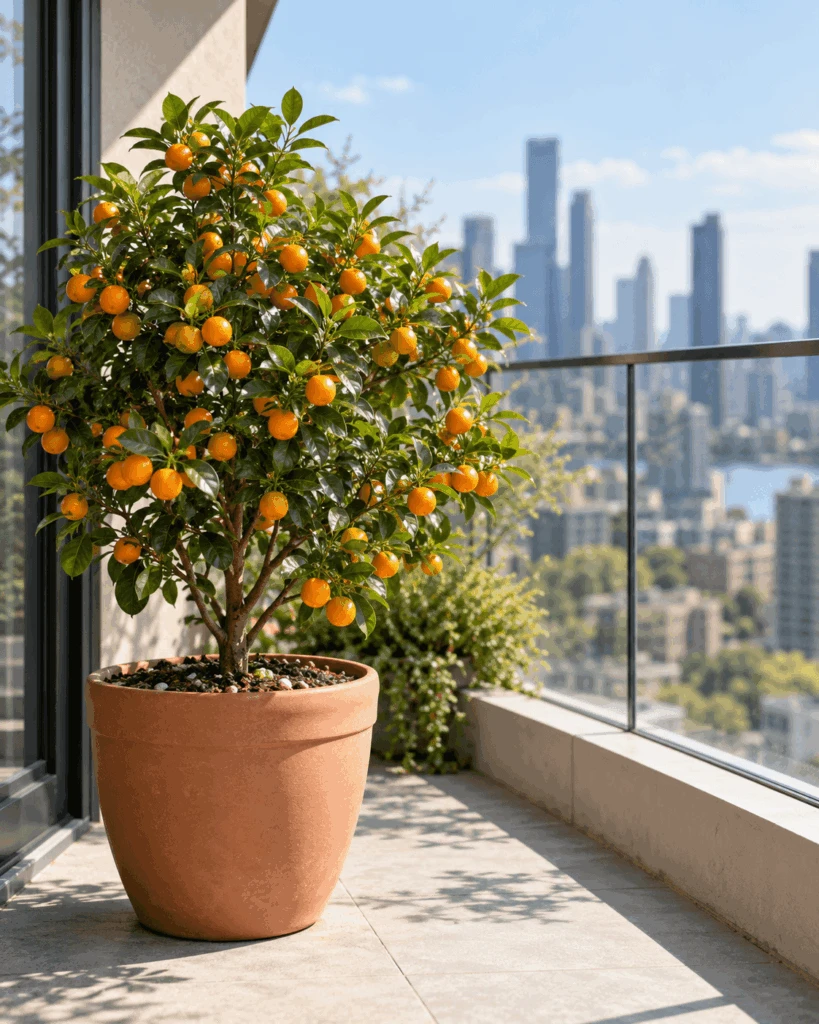
Calamondin is one of the easiest citrus to keep in a container, and it covers itself in small orange fruit. It wants full sun and likes humid air, so the winter humidity tip in Care Basics matters most for this one.
It’s also among the toughest citrus in cold. Properly hardened, bearing calamondin, kumquat and satsuma trees in the ground handle about 18 to 20°F. A pot strips most of that protection away, so it still comes inside for winter.
- Pot: container citrus is usually sold in 2 to 3 gallon pots; move it up within the first year and work toward about 15 gallons.
- Pollination: self-fertile; use the brush trick from the Meyer lemon indoors.
Skip it if you can’t give it full sun outdoors in summer as well as bright light indoors in winter.
3. Kumquat (Citrus japonica, formerly Fortunella)
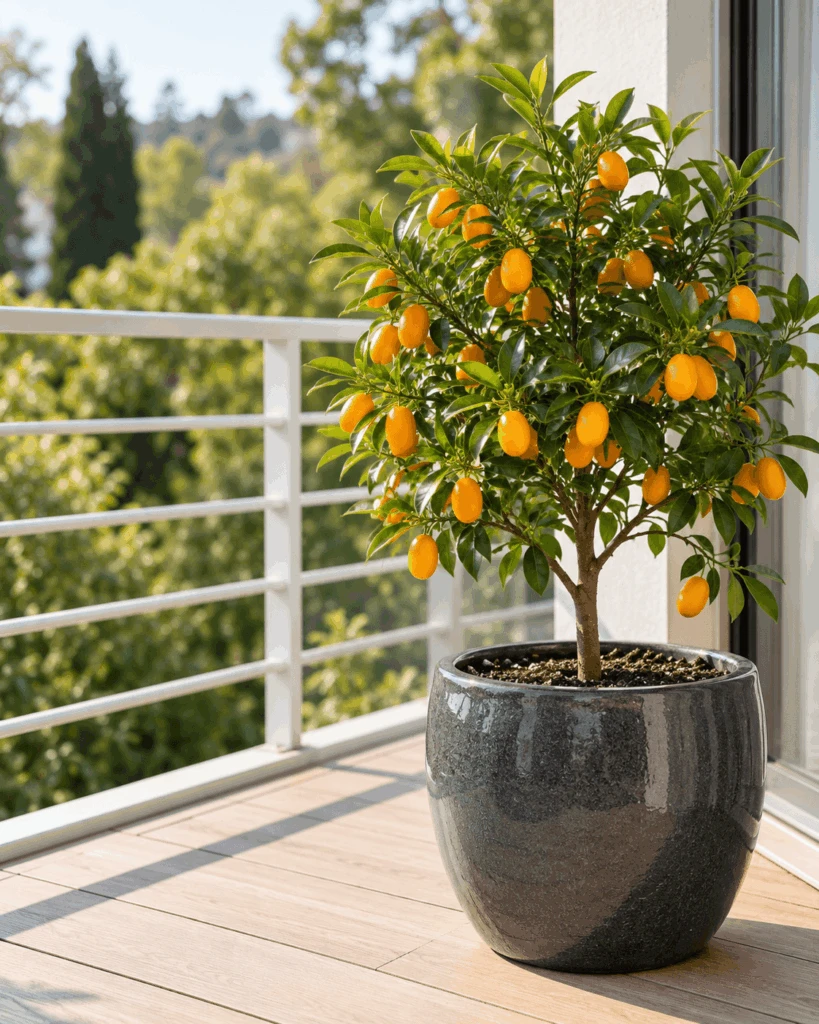
Kumquats sit at the top of the cold-hardiness ranking for citrus, and the cultivar you choose decides how much pot space they need.
- ‘Nagami’: very cold hardy and vigorous, with seeds.
- ‘Meiwa’: very cold hardy and less vigorous, with sweet pulp. It’s the easier fit for a pot.
- Pot and pollination: follow the same pot path as calamondin; self-fertile.
Skip ‘Nagami’ if pot space is tight.
4. Satsuma Mandarin (Citrus unshiu) ‘Owari’
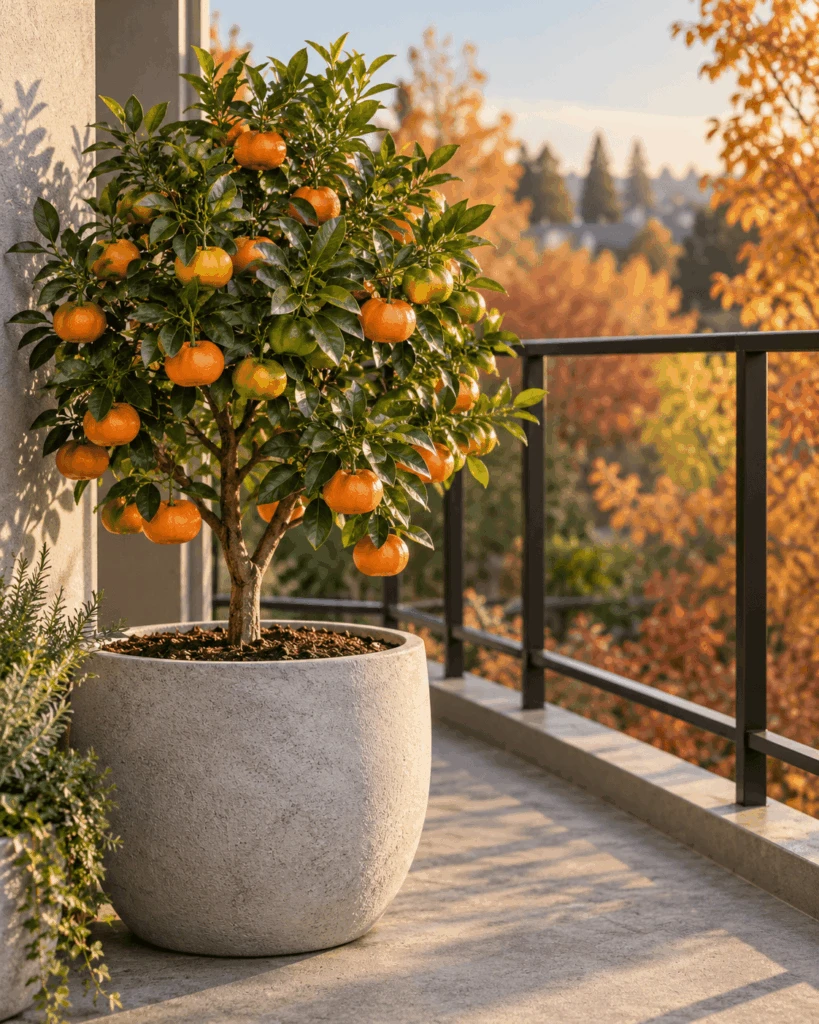
Satsumas give you seedless fruit in fall. ‘Owari’ is the seedless cultivar you’re most likely to find, and it ripens in October and November in Florida trials.
Look for a tree grafted onto ‘Flying Dragon’ rootstock. It dwarfs the tree and helps it last longer in a container; even planted in the ground, satsumas on it seldom grow past 7 feet.
- Cold: in the same hardy group as calamondin and kumquat, but potted roots still need indoor shelter.
- Pot and pollination: same pot path as calamondin; self-fertile.
Skip it if you want fruit in summer.
5. Dwarf Fig (Ficus carica) ‘Petite Negri’
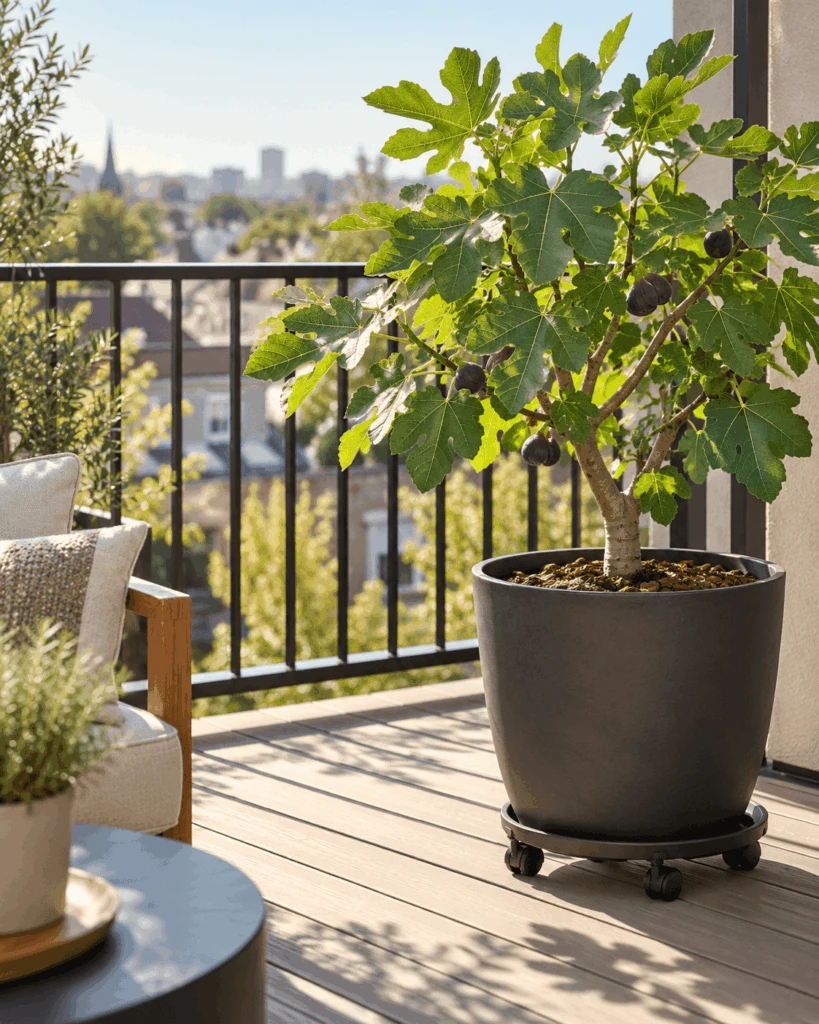
Figs suit the renter with a cold garage but no bright window. Common figs need no pollination at all, and they fruit young: expect a first crop in year 2 or 3.
‘Petite Negri’ is a genetic dwarf that grows 4 to 6 feet tall, which makes it a natural fit for a pot, though most fig cultivars handle container life. Give it a sunny spot through summer; figs want 8 hours or more to ripen well.
- Pot: at least 15 gallons, filled with a 50:50 mix of compost and soilless potting medium.
- Chill: figs need at least 100 chilling hours to fruit, so they have to spend winter somewhere cold. A warm living room won’t do.
- Safety: the milky sap can cause a sunlight-triggered skin rash (phytophotodermatitis) and is flagged as a problem for dogs and cats. Wear gloves and long sleeves when you prune.
If you have a cold garage but no bright window, we’d choose a dwarf fig, because common figs need no pollination and rest dormant all winter.
Skip it if you have no cold, dark storage space for winter.
6. Genetic Dwarf Peach or Nectarine (Prunus persica)
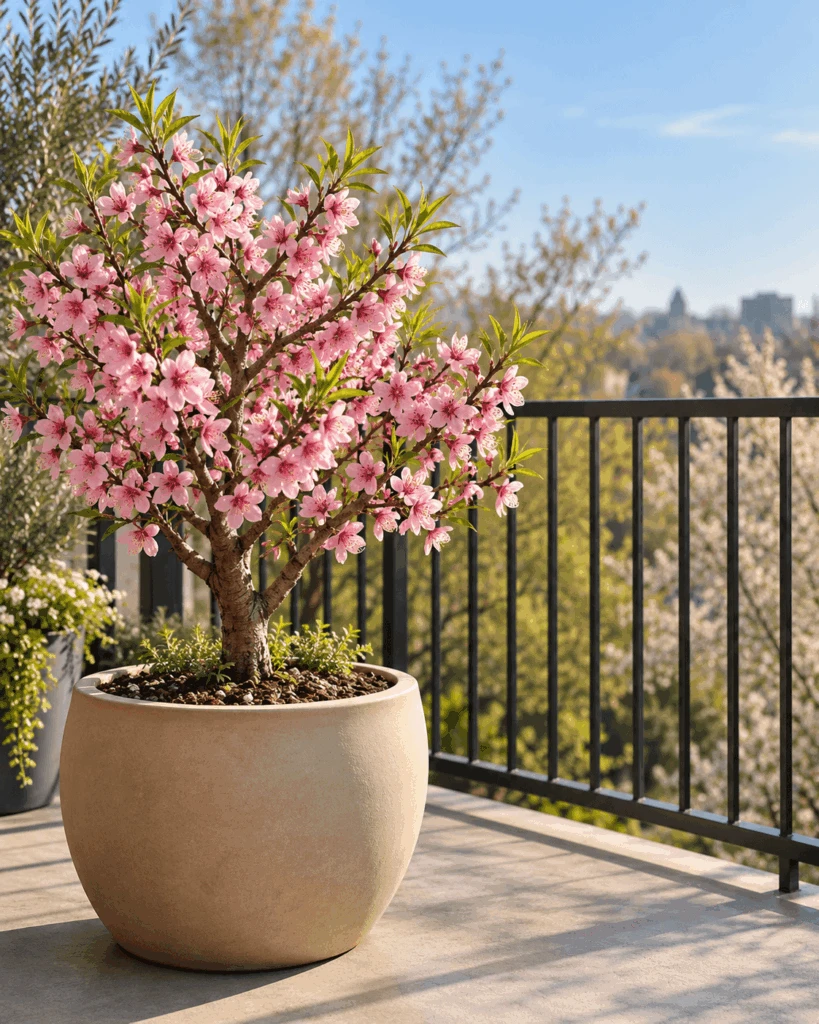
These are the showpieces: a tree only 4 to 6 feet tall that bears full-size peaches. They’re self-fruitful, and they need a large container. Some retailers stock them in early spring.
- Peach cultivars: ‘Bonanza’, ‘Pix Zee’, ‘Bonfire’ and ‘Honey Babe’.
- Nectarine cultivars: ‘Nectar Babe’ and ‘Garden Delight’. Nectarines are the same species, so the care is the same.
- Climate: in the warm-winter South, choose a cultivar whose chill-hour needs match your area. In the Northeast, peach leaf curl is a major disease to watch for.
- Pets: pits and wilted leaves contain cyanogenic compounds. Pick up fallen fruit and leaves promptly if a dog or cat shares the patio.
Skip it if you have no unheated garage or similar shelter for the dormant tree.
7. Columnar Apple (Malus domestica)
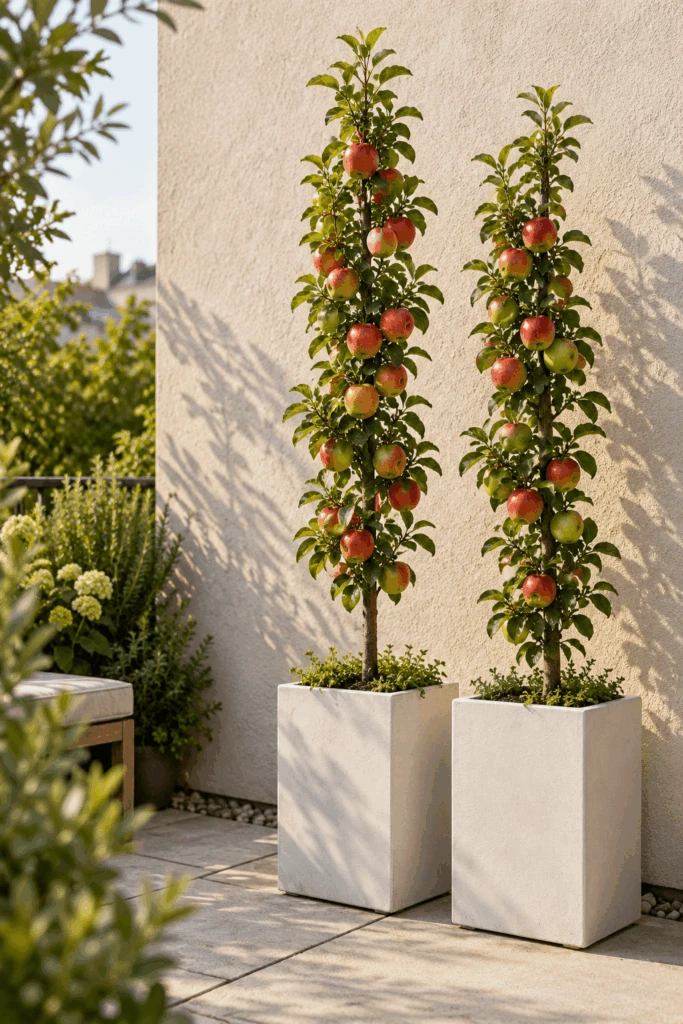
A columnar apple grows as one upright stem lined with short fruiting spurs, reaching 7 to 10 feet tall but only 2 to 3 feet wide. The Urban Apple series is rated hardy to zone 4, and the Spire series is another columnar line.
Plan for pollination. Container apples need two different varieties blooming nearby for a full crop. A flowering crabapple can also act as the pollen partner.
- Pot: a large, stable container, since the tree is tall and narrow.
- Pets: look apple up on the pet-toxicity list from How We Chose before buying.
Skip it if you only have room for one pot and no crabapple grows nearby.
8. ‘North Star’ Sour Cherry (Prunus cerasus)
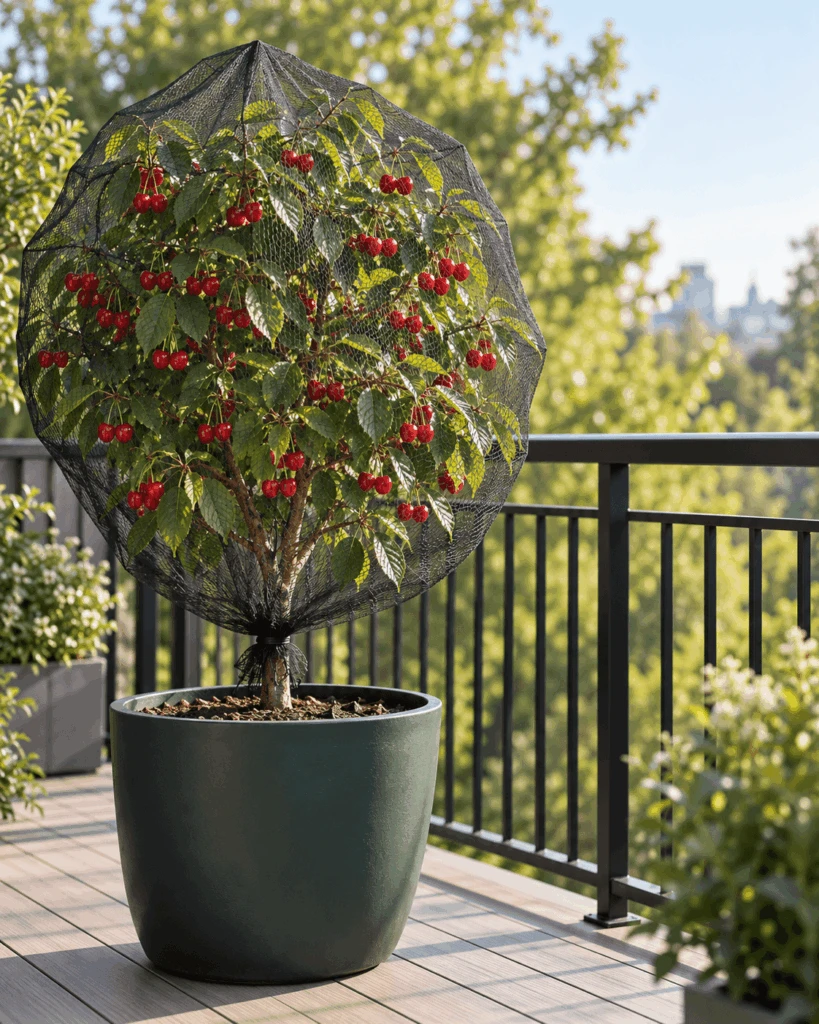
‘North Star’ is a naturally dwarf tart cherry, usually 8 to 10 feet tall in the ground and smaller in a pot. It’s self-fruitful and comes from the University of Minnesota, so it handles cold winters well.
- Pot: a large container with room for the root ball to grow.
- Birds: they’ll find the cherries before you do. Drape netting over the whole canopy; partial cover leaves gaps they’ll use.
- Pets: leaves, pits and stems contain cyanide compounds, rated medium severity.
Skip it if you want sweet dessert cherries, since most of those need a second variety, or your balcony has a low overhang.
How to Pick the Right One for Your Balcony
Start with where the tree will spend December, then check your sun, your pets and what your building allows.
| Your winter space | Also check | Best picks |
|---|---|---|
| Bright window, no cold storage | Room to roll a pot inside | Meyer lemon, calamondin, kumquat, satsuma |
| Unheated garage or porch, no bright window | Space stays cold but sheltered | Dwarf fig, genetic dwarf peach, ‘North Star’ cherry |
| Cold storage plus room for two pots | Height for a 7 to 10 ft tree | Two different columnar apples |
| Neither | Grow something that finishes in one season | Skip fruit trees this year |
Next, look up your zone on the 2023 USDA Plant Hardiness Zone Map, which works by ZIP code. Zones are based on the average coldest winter temperature.
Height adds its own problem. On upper floors, gusts can tip a tall pot, so look at wind-tolerant plants for high-rise balconies before you commit to a 6-foot citrus on the 20th floor.
Weight matters too. A large pot full of wet mix is very heavy, so check your lease and building rules on balcony loads, and set every pot on a saucer so water doesn’t drip onto the unit below. For layouts that won’t cost you your deposit, browse these renter-friendly balcony setup ideas.
If pets share the space, pick up fallen fruit, pits and leaves as they drop.
Finally, buy citrus locally. Federal rules restrict moving citrus nursery stock between states to slow citrus diseases, so a tree shipped across state lines may be breaking the rules. If you notice signs of citrus greening, report them to your state agriculture department or local extension office.
Care Basics for Potted Dwarf Fruit Trees
Most potted fruit tree problems trace back to three things: drainage, watering rhythm and winter roots.
Pot and mix. Use a container with drainage holes and fill it with a quality potting mix; skip garden soil, which gets heavy when wet and can carry diseases and weeds. Raise the pot slightly off the floor on feet or a caddy so water can escape, and add casters to anything you’ll move twice a year. When planting, keep the root flare, where the trunk widens into roots, visible at the surface.
Watering. Push a finger 1 to 2 inches into the mix. Water only when it feels dry at that depth, then water until it runs out the bottom and empty the saucer. In summer heat you may need to do this daily, but don’t let the root ball dry out completely.
Feeding. Feed citrus with a 2-1-1 or 3-1-1 fertilizer in spring, early summer and late summer, then stop by early fall; choose one that includes micronutrients such as iron, manganese and zinc. Feed figs monthly in May, June and July. Follow the label rate every time.
Repotting. Plan on a move to fresh mix every 3 to 5 years, depending on how fast the tree grows, stepping up a pot size while the tree is still filling its containers.
Through the year:
- Spring: after your last frost, move citrus outside into part shade first, then give it more sun a little at a time over about 2 weeks. Bring stored deciduous trees out as the weather warms (around April in Pennsylvania; adjust to your own last frost).
- Summer: water and feed on schedule, and watch for pests.
- Fall: bring citrus in before the first frost. Move deciduous trees into storage after their leaves drop or a hard frost hits.
- Winter, citrus: give it at least 6 hours of direct sun, 65 to 75°F by day and 55 to 65°F at night, and around 50% humidity. Water less than in summer.
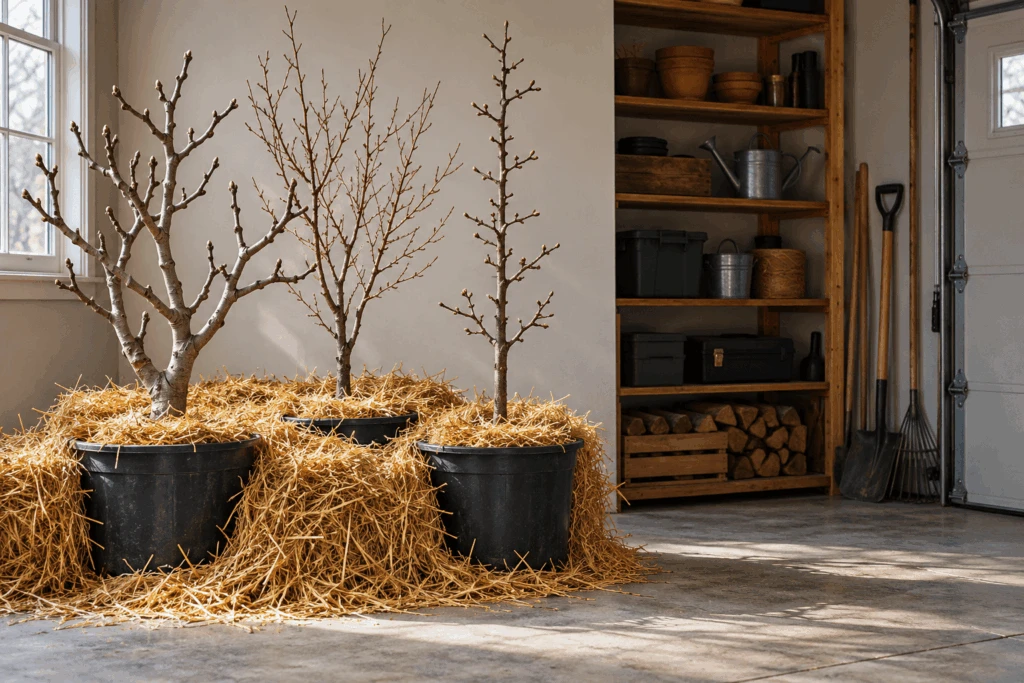
- Winter, deciduous trees: a hardiness rating on the tag describes a tree in the ground. Iowa State Extension points out that roots in an exposed pot get close to air temperature, so move potted fruit trees into an unheated garage or onto a sheltered porch, group the pots together and pack straw or wood chips around them. Penn State Extension adds that a dormant fig can sit in a dark garage or basement if you water it about once a month.
Pests. Potted citrus can pick up scale, spider mites, mealybugs, whiteflies and aphids, especially indoors in winter. Check leaf undersides when you water, learn how to spot and treat spider mites, and treat with insecticidal soap or horticultural oil. This is a food crop, so use only products labeled for edible plants and follow the label exactly.
Troubleshooting
| Sign | Possible causes | How to tell | Fix |
|---|---|---|---|
| Citrus dropping leaves | Overwatering (common); sudden change in light | Mix still wet 2 inches down, or the tree was just moved | Let the top 2 inches dry before watering; empty the saucer; move it gradually |
| Citrus dropping flowers | Mix too dry | Root ball dry or shrunk away from the pot | Water thoroughly and don’t let it dry out again |
| Many tiny citrus fruits falling | Normal thinning; up to 75% can drop | Tree otherwise looks healthy | No action needed |
| No fruit on indoor citrus | No pollinators indoors; young tree | Flowers fall without setting fruit | Hand-pollinate with a brush; give young trees time |
| Sticky leaves or a black film | Honeydew from scale or aphids, then sooty mold | Small bumps (scale) or clusters (aphids) on stems and undersides | Insecticidal soap or horticultural oil per label; control ants |
| Columnar apple flowers but sets little fruit | No compatible partner | Only one apple variety nearby | Add a second variety or a crabapple |
| Cherries vanish as they ripen | Birds | Pecked or missing fruit | Net the whole canopy |
| No figs yet | Tree too young | Planted within the last 1 to 2 years | Wait until year 2 or 3 |
| Water runs straight through the pot | Dry root ball has pulled away from the pot | Visible gap at the pot edge | Water slowly in rounds until the whole root ball is soaked |
Frequently Asked Questions
Can a dwarf citrus tree live indoors all year?
It can survive indoors, but expect a lighter crop. A Meyer lemon is self-fertile, yet it still relies on moving air or insects to spread pollen, and fruit set can drop when the tree stays inside too long. Summering it outdoors in full sun once frost has passed gives the best chance of fruit, with the brush trick covering any indoor blooms.
When should I bring potted citrus inside in fall?
Before your first fall frost, and no later than a forecast low of 28°F. On clear, calm nights, leaves can run 3 to 4 degrees colder than the air, so a forecast of 30°F can still cause damage. Lemons are the most cold-tender of the four citrus here, so move a Meyer first if you can only carry one pot in that evening.
How long until a new tree gives fruit?
Figs are the quickest, usually bearing in year 2 or 3. A young citrus may take several years to start, and once fruit sets, some varieties need 6 to 9 months to ripen fully. Meyer lemons ripen mainly from fall into winter, so fruit from spring blossoms won’t be ready before fall at the earliest.
Do I need a grow light for citrus in winter?
Only if your window can’t give at least 6 hours of direct sun; 8 to 12 hours is better. A south-facing window delivers the strongest winter light. If yours faces another direction or a building shades it, hang an LED or fluorescent grow light above the tree to make up the missing hours.
Is a garage that warms up on sunny days a problem?
It can be. Warm daytime spells in a garage or on a porch may wake dormant trees earlier in spring, before it’s safe to move them outside. Choose the coolest, darkest corner you have, away from windows, and cover figs if the space isn’t dark. Bring trees out once the weather has settled around your last frost.
What Actually Matters
Choose the tree that fits your winter space, and the rest is routine. A citrus with a bright window and a fig with a cold garage are both easy wins; the wrong match is where most first trees fail.
This season: drainage holes, a good mix and wheels if it’ll travel. Then let the finger test from Care Basics, not the calendar, decide when to water.
If December leaves you with neither a sunny window nor a cold shelter, there’s still fruit to grow this season. Growing strawberries in pots is a quick, low-cost start, and you can add a tree once your winter setup changes.
Sources
- Mississippi State University Extension – Growing Citrus in Containers in Mississippi – citrus cultivars, cold ranking, damage temperatures, pot sizes, repotting, potting mix and watering
- University of Maryland Extension – Growing Dwarf Citrus – sun and grow lights, hardening off, indoor conditions, feeding, ripening time, fruit drop and pests
- Oregon State University Extension – How to grow Meyer lemons successfully in the Pacific Northwest – Meyer pot steps, size, zones and pollination
- UC Riverside Citrus Variety Collection – Improved Meyer lemon – botanical name and virus-free selection
- UF/IFAS – The Satsuma Mandarin; Dwarf Fruit Trees; Growing Fruit Trees in Container – satsuma, ‘Flying Dragon’ and container watering
- University of Maryland Extension – Growing Figs in Maryland – ‘Petite Negri’, fig pot, mix, sun and feeding
- Penn State Extension – Winterizing Your Fig Tree – chill hours and dormant fig storage
- NC State Extension Gardener Plant Toolbox – Citrus × microcarpa, Ficus carica, Prunus persica, Prunus cerasus – growing needs and pet toxicity
- Merck Veterinary Manual – Cyanide Poisoning in Animals – cyanogenic Prunus species
- UConn Home and Garden Education Center – Peaches and Nectarines – genetic dwarf peaches
- Utah State University Extension – Dwarf Fruit Trees – dwarf types and cultivars
- Illinois Extension – Save money and space with container-grown fruits; Grow apple trees in your urban garden – columnar apples and pollination
- Iowa State University Extension – Growing Cherries in the Home Garden; Why Potted Cold Hardy Fruit Plants Need Winter Protection – ‘North Star’, winter storage and early dormancy break
- RHS – Citrus japonica – kumquat botanical name
- ASPCA – Lemon – toxicity to dogs and cats
- USDA – 2023 Plant Hardiness Zone Map; APHIS Citrus Diseases – zones and citrus movement rules