
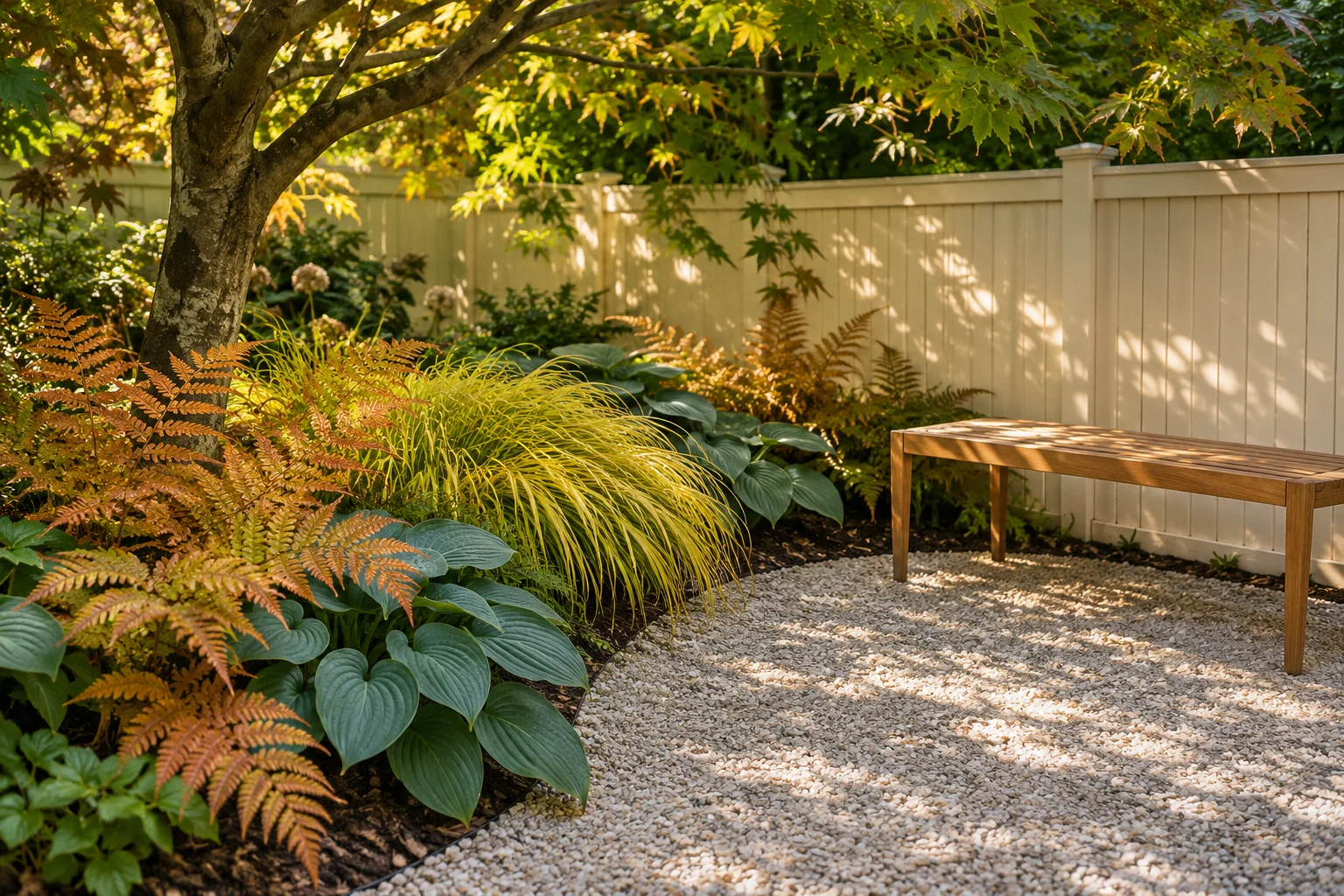
You know the spot. The patch under the big tree where the grass thinned to bare dirt, the corner by the fence that stays cool and gray at noon, the chair nobody ever drags over there. It feels like the part of the yard that gave up.
Shade changes the rules, and it rewards a different kind of garden: layered leaves, pale surfaces that catch the light, and a seat you’ll actually want on a hot afternoon. These 12 shade garden ideas for a backyard start with reading your light, then move through planting, paths and seating, with pet notes for the plants that need them. If flowers are your main goal, our guide to shade flowers that bloom in turns pairs well with this one.
You can start in any season. Spring and fall are the kindest for planting, because cooler weather is easier on you and on new roots, and the sun log in Idea 1 takes a single clear day whenever you read this.
Table of Contents
At a Glance
- Measure your shade before you buy plants: partial shade means about 3 to 6 hours of direct sun, deep shade means less than 2.
- Under trees, plant small plants into gaps between roots and never pile new soil over the root zone.
- Foliage carries a shade garden. Gold, silver and cream leaves, plus pale gravel or mulch, brighten dark corners.
- Hosta, Lenten rose and caladium are toxic to dogs and cats, so place them with care in a pet yard.
Quick pick: for dry shade under a tree, start with a fern and groundcover pocket (Idea 7). For a shady patio, start with a container cluster (Idea 11).
Read the Light and Shape It
Every good shade garden starts with knowing which kind of shade you have, because a fern that thrives in dappled light can sulk in deep shade. These first three ideas cost little and make every planting choice after them easier.
1. Map Your Shade With a One-Day Sun Log
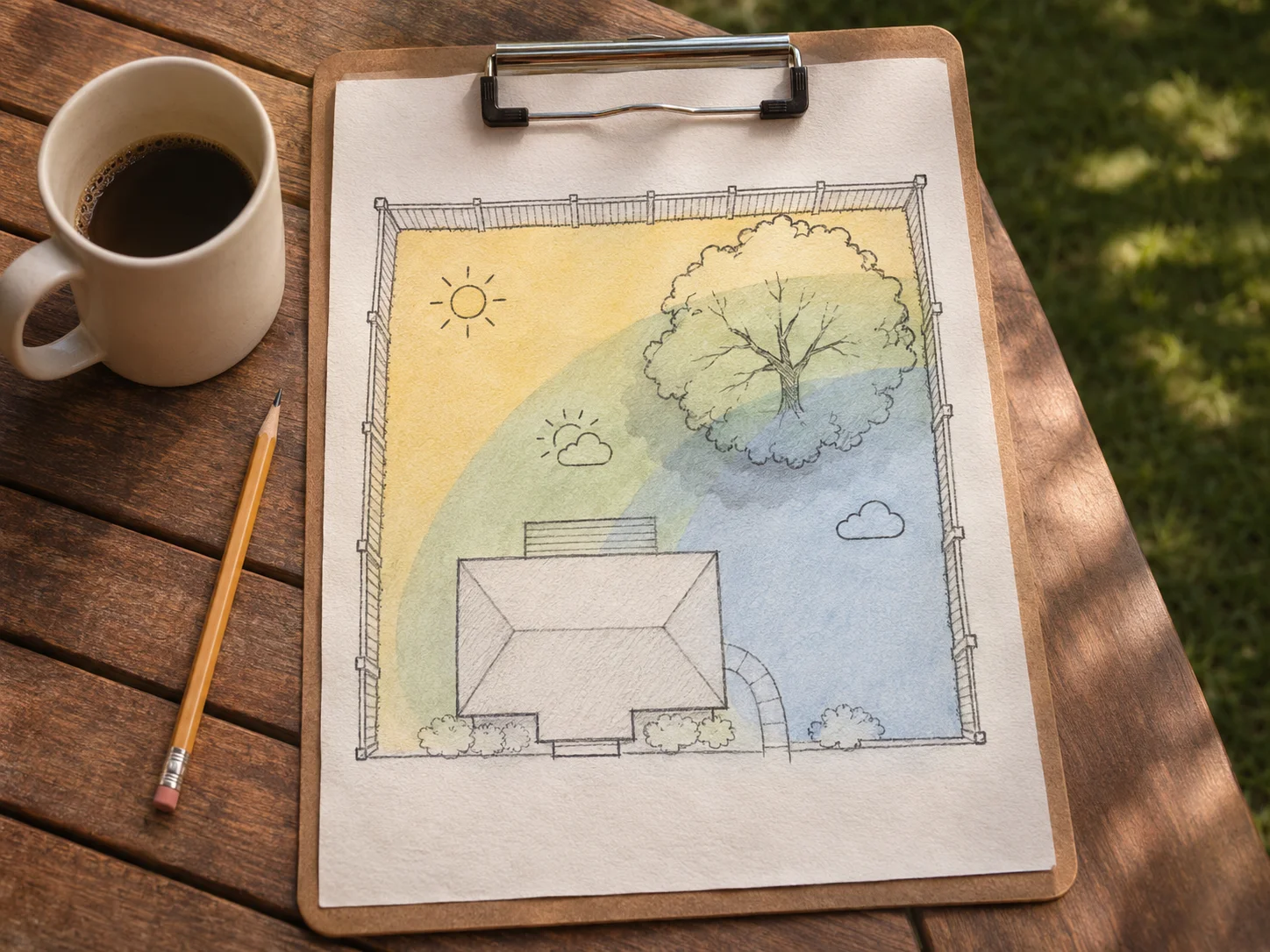
Pick a clear day and check the bed at roughly 9 a.m., noon and 3 p.m. Note which spots get direct sun and for how long, then add it up. A phone photo from the same spot each time makes the pattern obvious.
The RHS defines shade levels by hours of direct sun at midsummer, so a reading taken in another season won’t match your summer reality exactly: the sun sits lower and casts longer shadows, and bare branches let through light that a full canopy blocks. Treat an off-season log as a first draft and check it again in midsummer. Use this ladder:
| Shade type | Direct sun (midsummer) | What it looks like | Ideas that fit |
|---|---|---|---|
| Dappled | Filtered light all day | Sun flickering through an open canopy | 4, 5, 6, 9 |
| Partial | About 3 to 6 hours | Morning sun, afternoon shade (or the reverse) | 4, 8, 11 |
| Full | About 2 to 3 hours | North side of a fence or house | 5, 7, 10 |
| Deep | Under 2 hours, often none | Under dense evergreens or between buildings | 3, 7, 12 |
Also note where the shade comes from. Shade from trees usually means dry soil, because the roots take the water; shade from walls and buildings tends to stay moister. That one detail decides whether you plan for drought or for damp.
2. Lift the Tree Canopy for Dappled Light
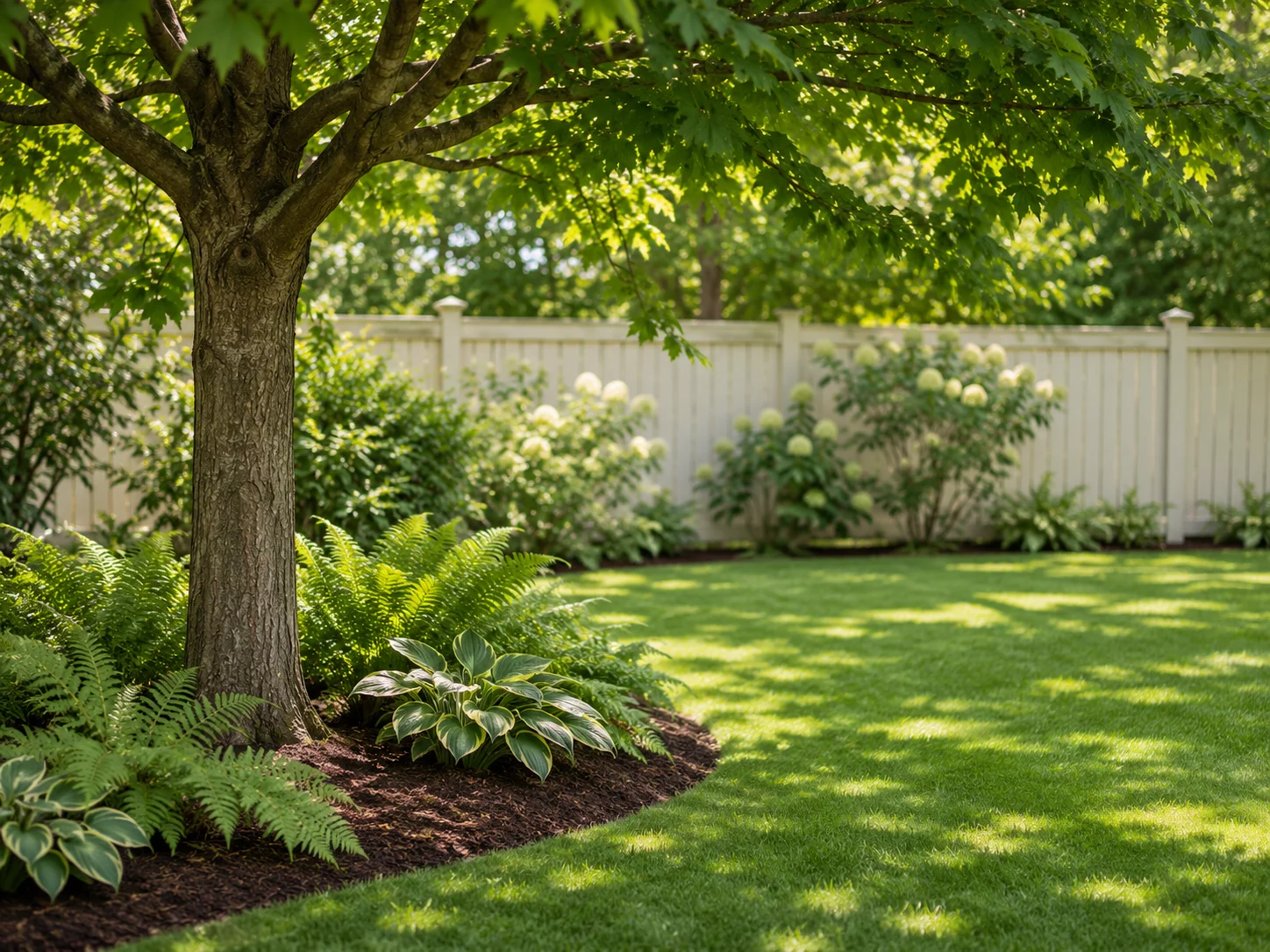
If one tree makes the whole yard gloomy, the fastest fix is above your head. Removing lower limbs, or thinning crowded trees and shrubs, lets more light and air reach the garden below, which reduces disease problems and widens the range of plants you can grow.
Done well, raising a canopy can turn full shade into bright dappled light without losing the cool feel. Large limbs, work near power lines and anything above ladder height belong with a certified arborist. Renters should ask the landlord before any pruning.
Shade also changes over time as trees grow. Check your sun log again every few years and swap plants that start to struggle.
3. Bounce Light With Pale Gravel, Mulch and Fences
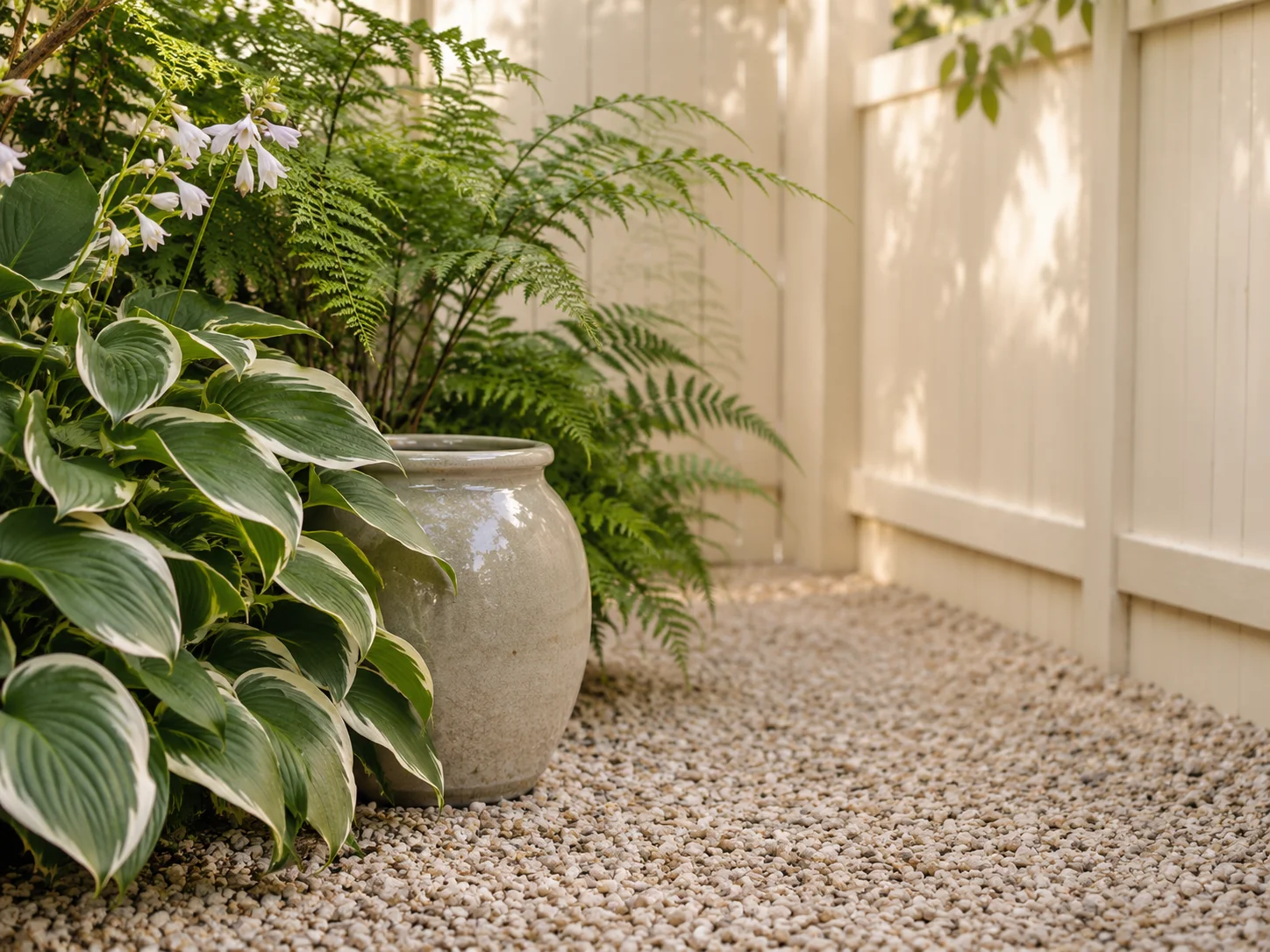
Light colors work like a reflector. In light shade, pale mulches and gravel can reflect useful light back up into the planting, and a fence or wall painted cream or soft white does the same at eye level.
Pale surfaces also suit deep shade, where few plants grow well anyway. A pale gravel floor, one striking pot and a light wall can make a dark side yard look intentional.
Keep a little room between beds and the house: within about 18 inches of a wall, soil tends to stay dry, so start planting a step out from the foundation.
Shade Garden Ideas for a Backyard: Planting That Looks Full
In shade, leaves do most of the work flowers do in a sunny bed. Many shade perennials bloom for just a few weeks, while their foliage holds the look from spring to frost, so plan the bed around leaf shape and color first.
4. Build a Foliage Texture Bed
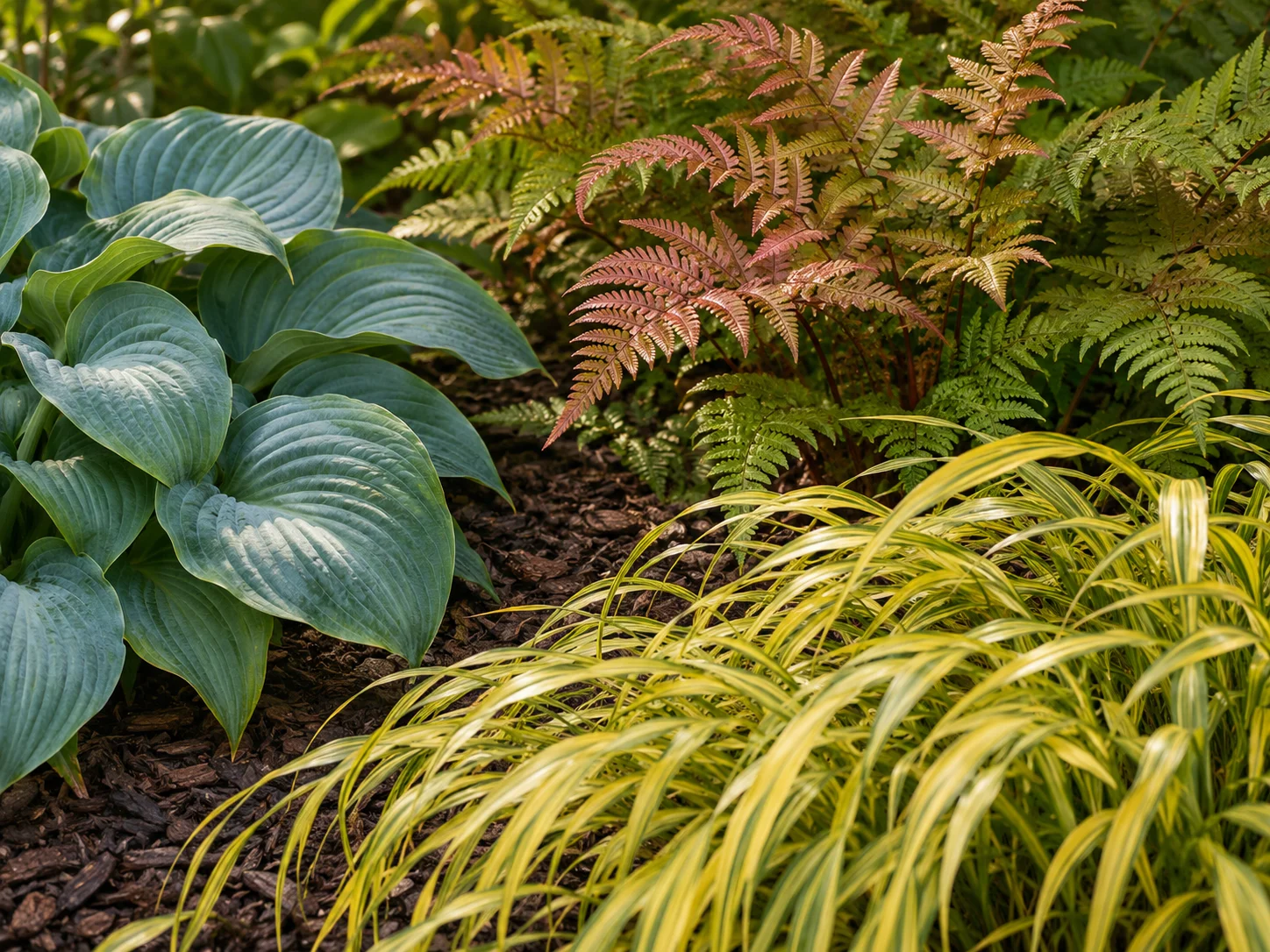
Picture three shapes side by side: broad, quilted hosta leaves, a soft fountain of grass, and lacy fern fronds. Large leaves read as coarse texture and finely divided fronds as fine texture, and putting the two together is what keeps a green bed from looking flat.
- Hosta (Hosta spp.): the coarse anchor. Fragrant plantain lily (Hosta plantaginea) grows about 1 to 2 feet tall and 3 to 4 feet wide in zones 3 to 9. Hostas are toxic to dogs and cats and can cause vomiting and diarrhea, so keep them out of beds where pets chew plants.
- Japanese forest grass (Hakonechloa macra): the soft middle layer, about 1 to 1.5 feet tall, for zones 5 to 9 in partial to deep shade with moist, well-drained soil.
- Autumn fern (Dryopteris erythrosora): the fine texture, about 1.5 to 2 feet tall, zones 6b to 9. Its young fronds open a glossy coppery pink and it tolerates soil that dries out now and then.
Plant each in groups of three or more. Repetition is what makes a small bed look designed.
5. Light Up a Dark Corner With Gold and Silver Leaves
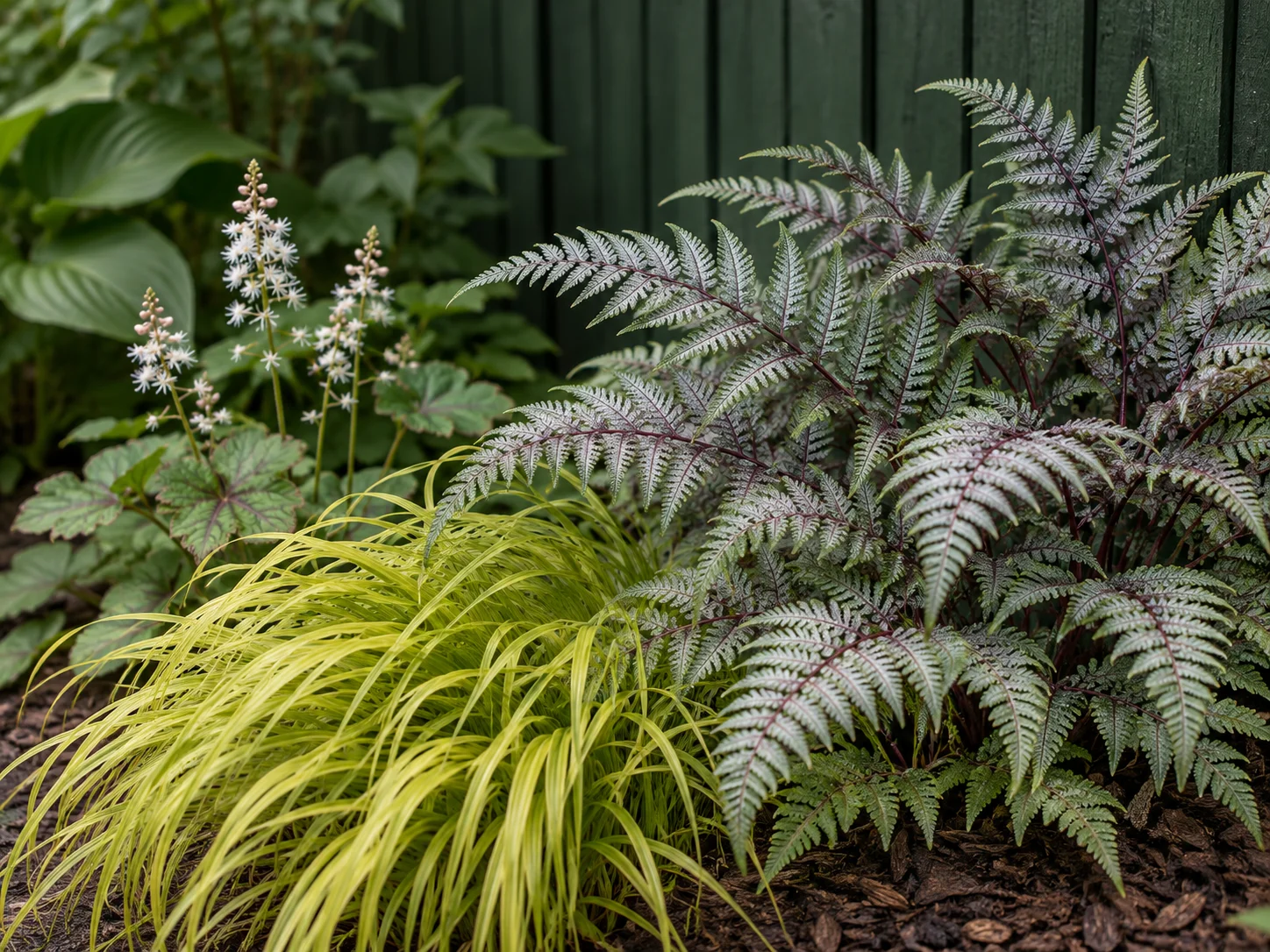
White, cream and pink stand out in shade, while deep blues and purples tend to disappear unless something lighter sits next to them. Gold and silver foliage gives you that glow for the whole season instead of a two-week bloom.
Japanese painted fern (Athyrium niponicum var. pictum) brings silvery gray fronds with maroon stems, about 1.5 to 2 feet tall, in zones 4 to 9. Pair it with the gold form of Japanese forest grass and a few white flowers in spring. We couldn’t find this fern in the ASPCA plant database, so if your pet chews plants, ask your vet before planting it.
Too much dark foliage in one spot can read as a hole in deep shade. Use burgundy leaves as an accent beside lighter ones, the way a red-leaved coral bells sets off plain green.
6. Tuck a Woodland Pocket Under a Mature Tree
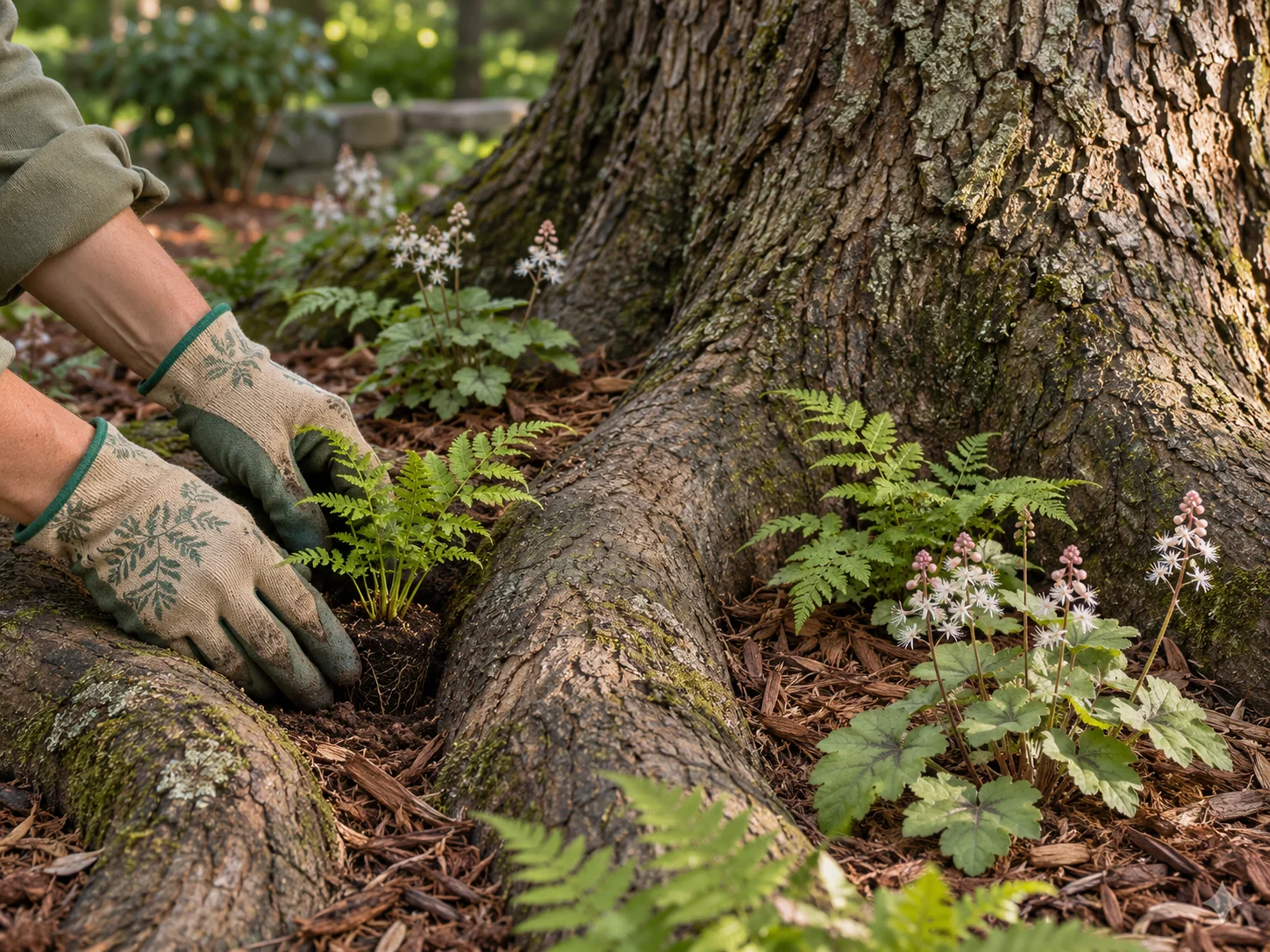
The ground under a big tree looks like the obvious place for a raised bed. Resist it: adding soil over an existing root system cuts the oxygen reaching the roots, and even a few inches can harm the tree, with decline often showing up 2 to 5 years later. Most feeder roots sit in the top 12 to 18 inches of soil, and oaks are especially sensitive to changes in soil depth.
Plant at ground level instead:
- Buy small plants (plugs or quart pots) so the holes stay small.
- Dig in open gaps between roots. If you hit a large root, move a few inches to one side and try again, and avoid scraping root bark.
- Where you want richer soil, spread about 2 inches of compost and work it 4 to 6 inches deep by hand; a tiller can tear tree roots.
- Finish with 2 to 4 inches of organic mulch to keep soil cooler and moister, keeping it off the trunk itself.
Shallow-rooted trees such as maples and willows compete hard for water, so expect to water more here; the watering routine is in How to Pick the Right Setup.
7. Swap Patchy Lawn for a Shade Groundcover
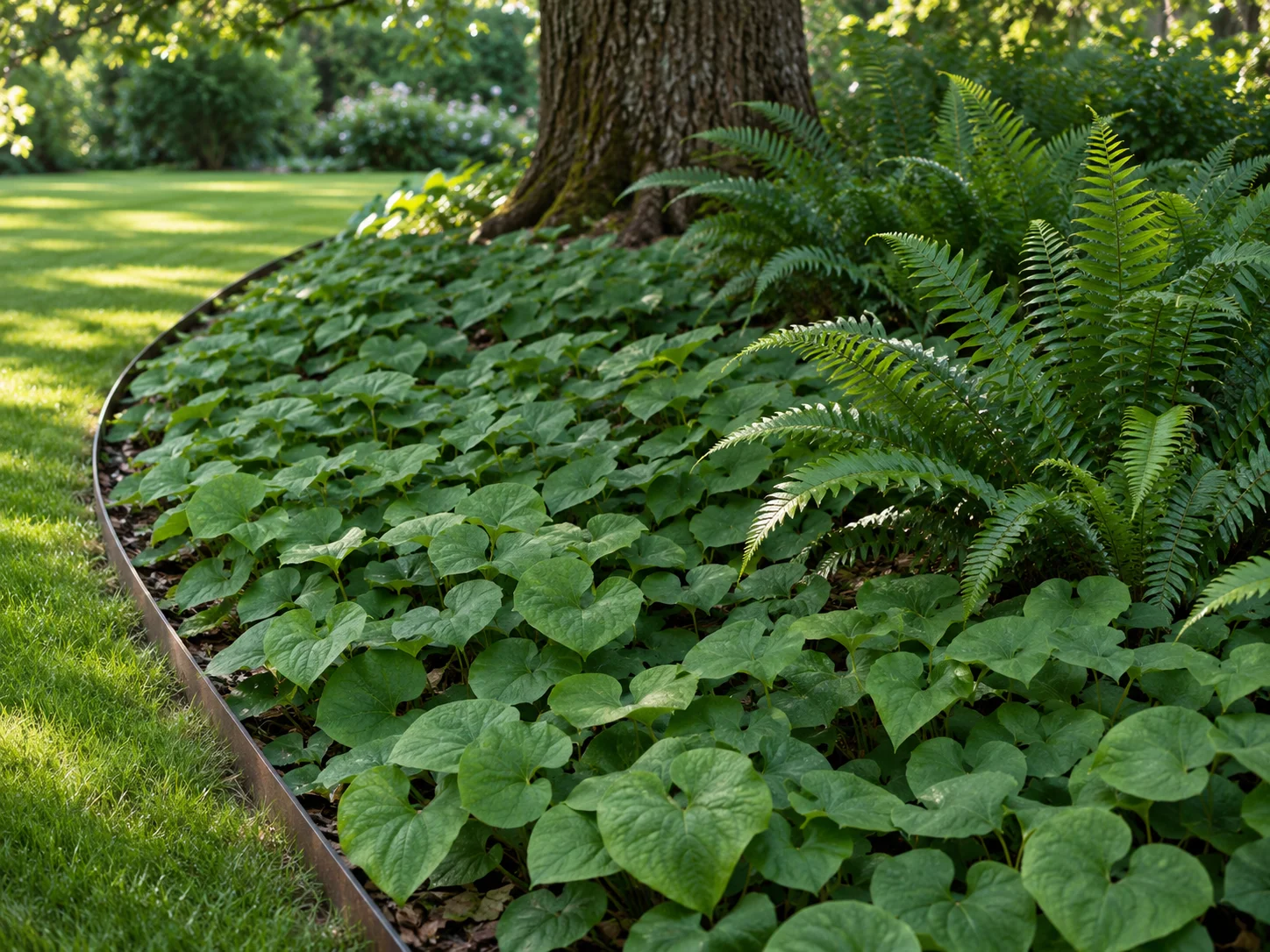
Grass is almost impossible to keep thick in the heavy shade of mature trees, and reseeding every spring rarely wins. A low groundcover planted the pocket way (Idea 6) gives you the same green floor without the struggle.
- Christmas fern (Polystichum acrostichoides): evergreen, glossy, 1 to 3 feet tall, zones 3 to 9, partial to deep shade. NC State Extension tags it non-toxic to cats and dogs, which makes it a strong first choice for a dog yard.
- Wild ginger (Asarum canadense): a native carpet of heart-shaped leaves, 6 to 12 inches tall, zones 4 to 6. It isn’t culinary ginger: every part contains aristolochic acid, so don’t eat it.
- Foamflower (Tiarella cordifolia): low mounds 5 to 12 inches tall with white or pink spring flowers, zones 3 to 8.
Keep a stepping-stone route or edging where people walk, because groundcovers like these won’t take regular foot traffic the way turf does.
8. Plan an Evergreen Backbone for Fall and Winter
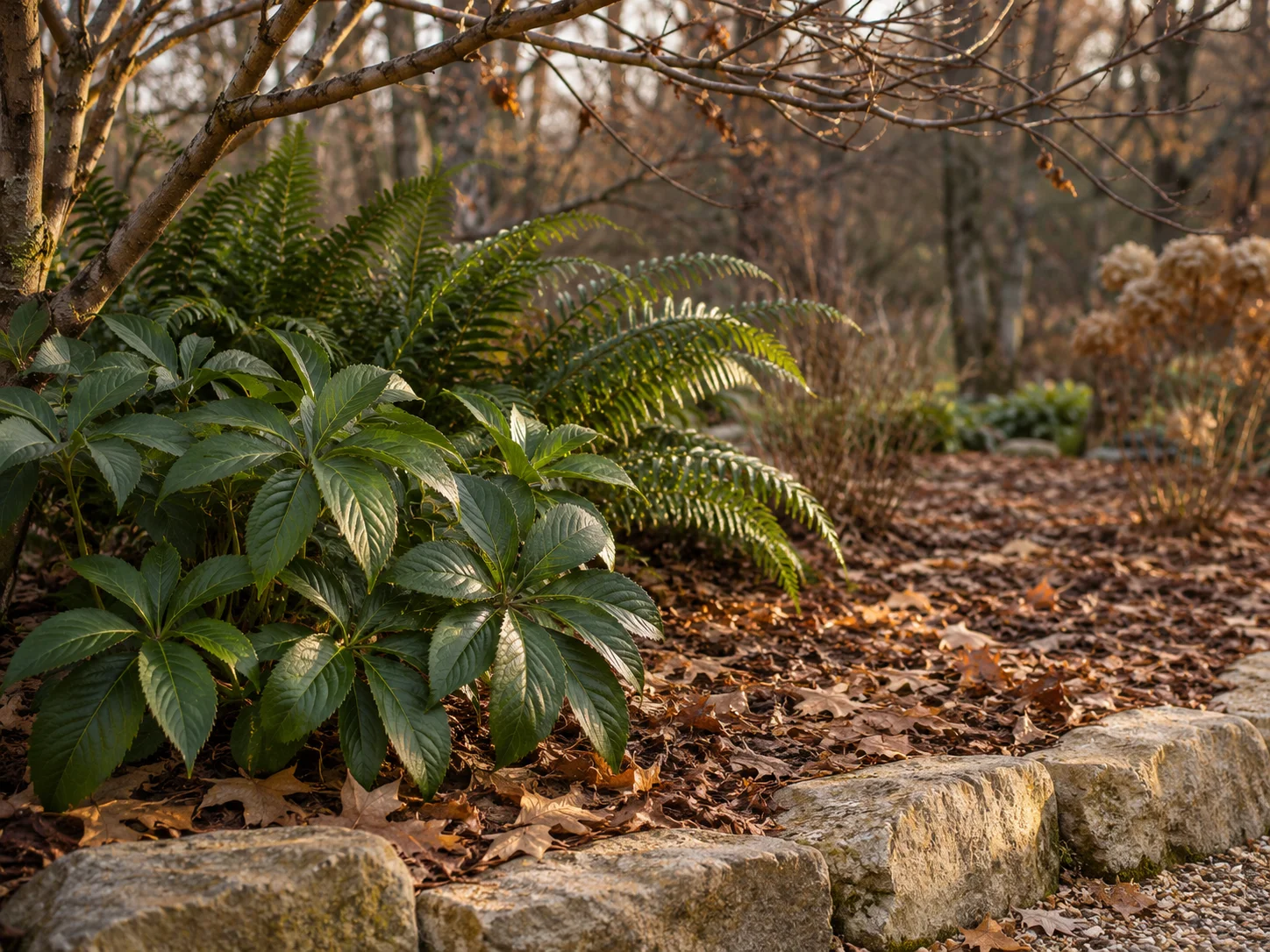
Once the canopy drops, a shade bed of hostas and grasses turns into bare mulch. A few evergreens keep the structure visible from the kitchen window all winter.
Christmas fern stays green through winter, and Lenten rose (Helleborus × hybridus) holds leathery leaves and flowers in late winter to early spring, which makes it one of the earliest blooms in a shade garden. Hellebores are poisonous if eaten; the ASPCA lists the related Christmas rose as toxic to dogs and cats, so keep them where pets don’t graze. In deer country, pair this idea with our list of deer resistant flowers for sun and shade.
Fall leaves deserve a plan, too. Left whole, they can mat down and smother low plants; shredded, they make a good free mulch for the same bed.
Shade Spaces You Will Actually Use
A shady backyard is the coolest place to sit in summer, so give it a reason to be used. These four ideas turn the dark corner into a place to spend time.
9. Make a Cool Reading Nook Under the Canopy
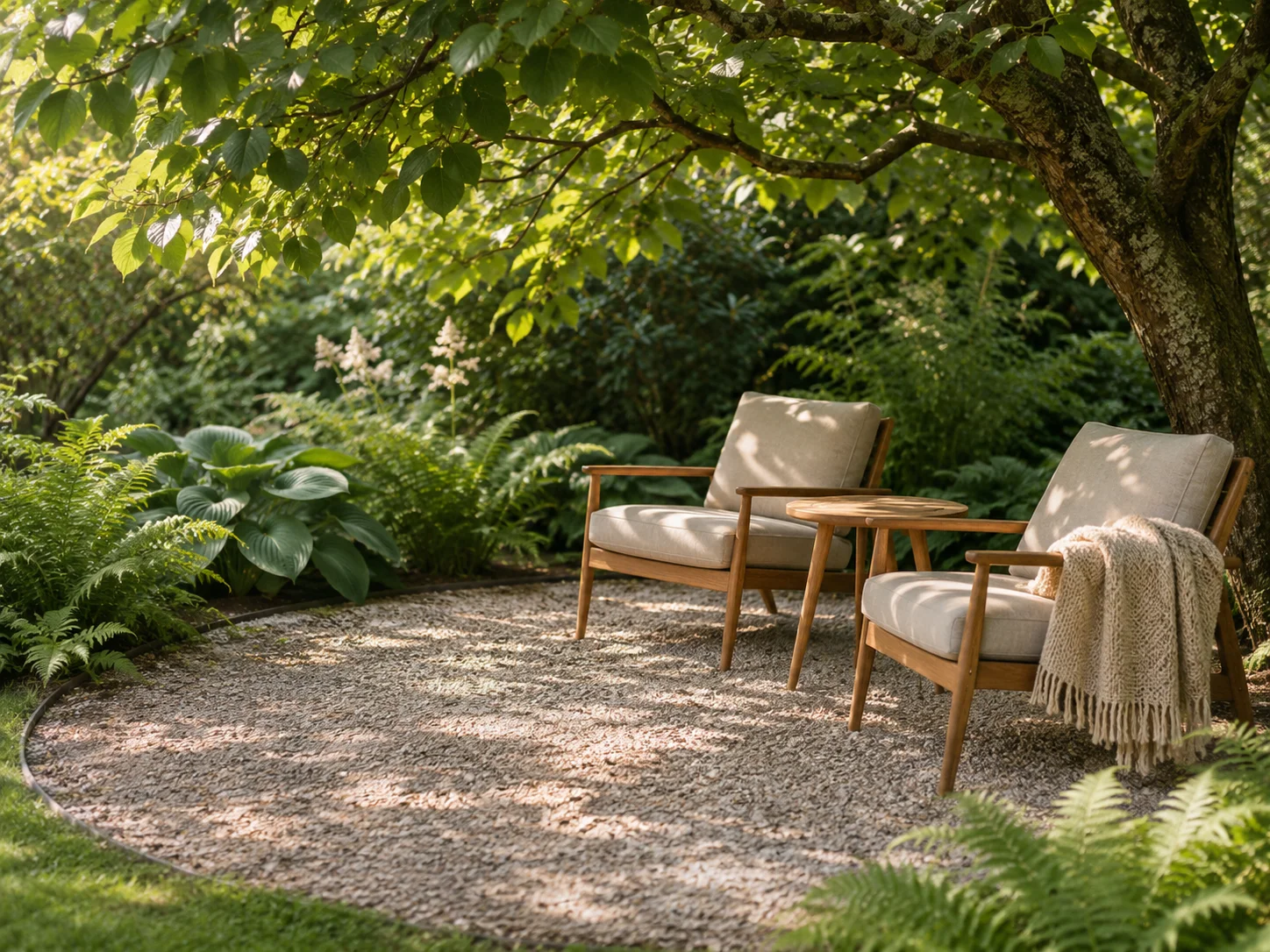
Two chairs, a small table and a pale gravel floor are enough. Gravel is easy to lay without heavy digging, drains well and reflects a little light back up. Under a tree, keep the base thin and avoid deep excavation or a concrete slab over the root zone, for the same reasons as in Idea 6.
Frame the nook with your foliage bed so the seat feels tucked in. A small side table with one pot of something bright, such as a white-variegated hosta in a pet-free home, gives the eye a focal point. For small-space styling ideas that translate well outdoors, browse our cozy small patio makeover ideas.
10. Lay a Stepping-Stone Path Through Ferns
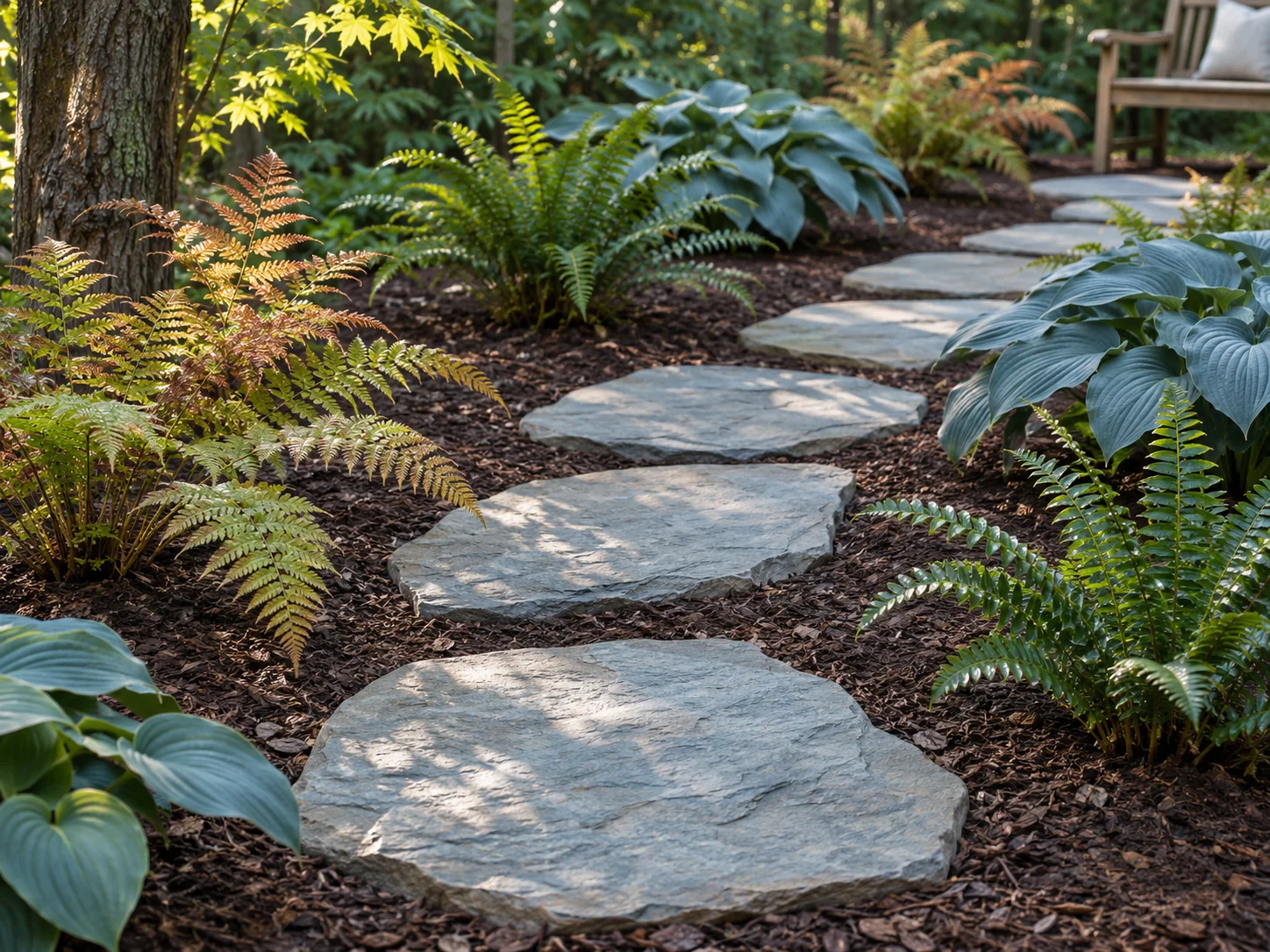
A path pulls people into the shade and gives you a reason to look closely at fern fronds and leaf patterns. Flat stones set into the mulch are low-cost, work around roots, and look natural with woodland plants. A gentle curve that hides the end makes a small yard feel bigger.
Give plants beside the path more elbow room than you would in sun. Spacing them farther apart lets air move through, and watering with a soaker hose or drip line keeps the leaves dry. Both help in shade, where poor air circulation and damp foliage invite disease.
11. Group Containers for Summer Color on a Shady Patio
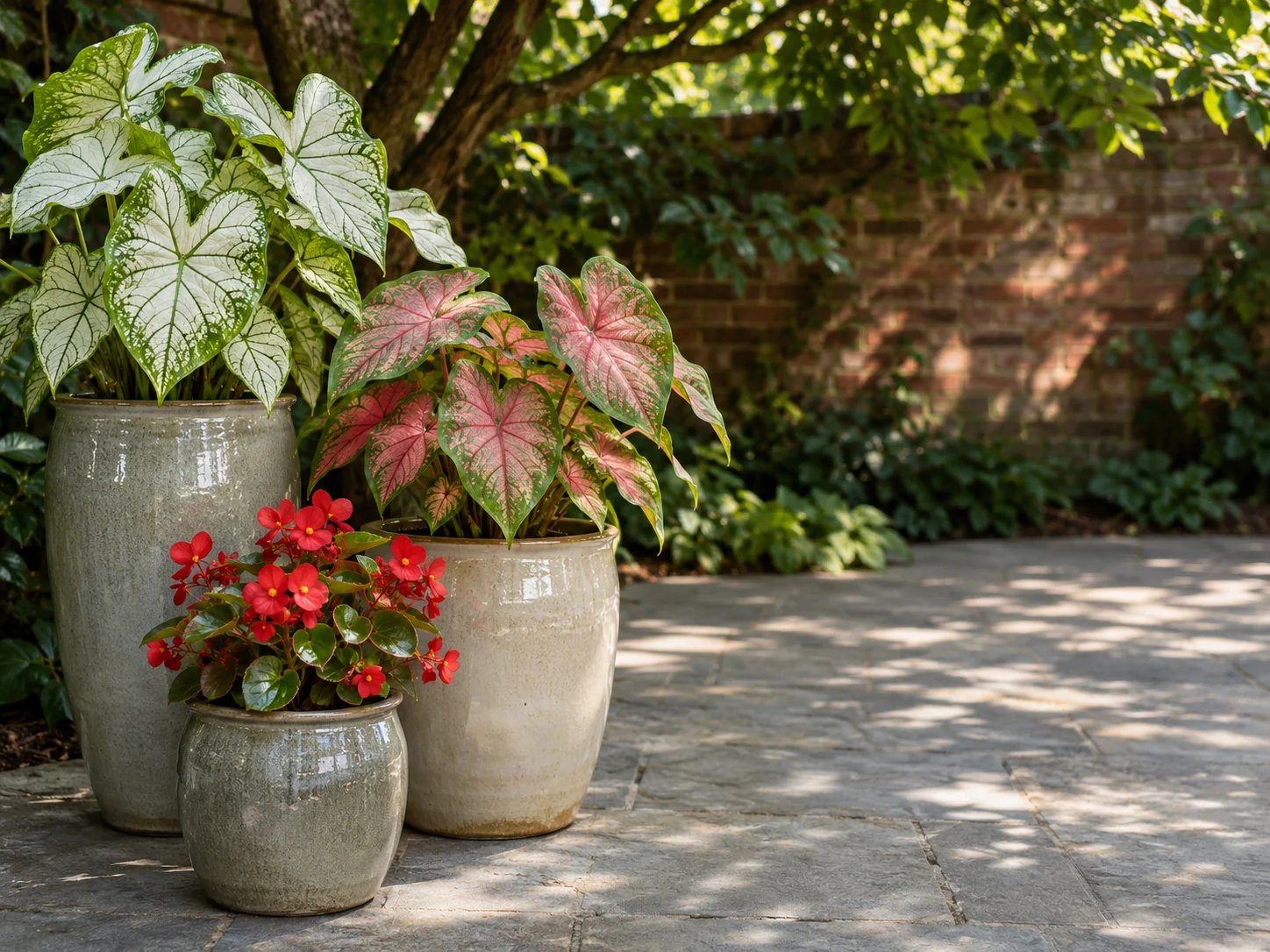
Containers let you add color where tree roots or a paved patio make planting impossible, and they work for renters too. Impatiens and begonias are reliable bedding choices for shade, and you can move pots to follow the brightest spots.
Caladium (Caladium bicolor) is the showstopper: big leaves splashed in pink, red, white and green, 1 to 2 feet tall, happy in partial to deep shade. It’s hardy only in zones 9 and 10, so elsewhere treat it as a summer annual. Caladium is toxic to pets and can cause painful mouth swelling if chewed, and the sap can bother sensitive skin, so wear gloves and keep pots out of a pet’s reach.
Group three pots of different heights for a finished look. If the patio has a porch roof, our hanging basket combinations for a shady porch add color at eye level.
12. Add Soft Evening Light
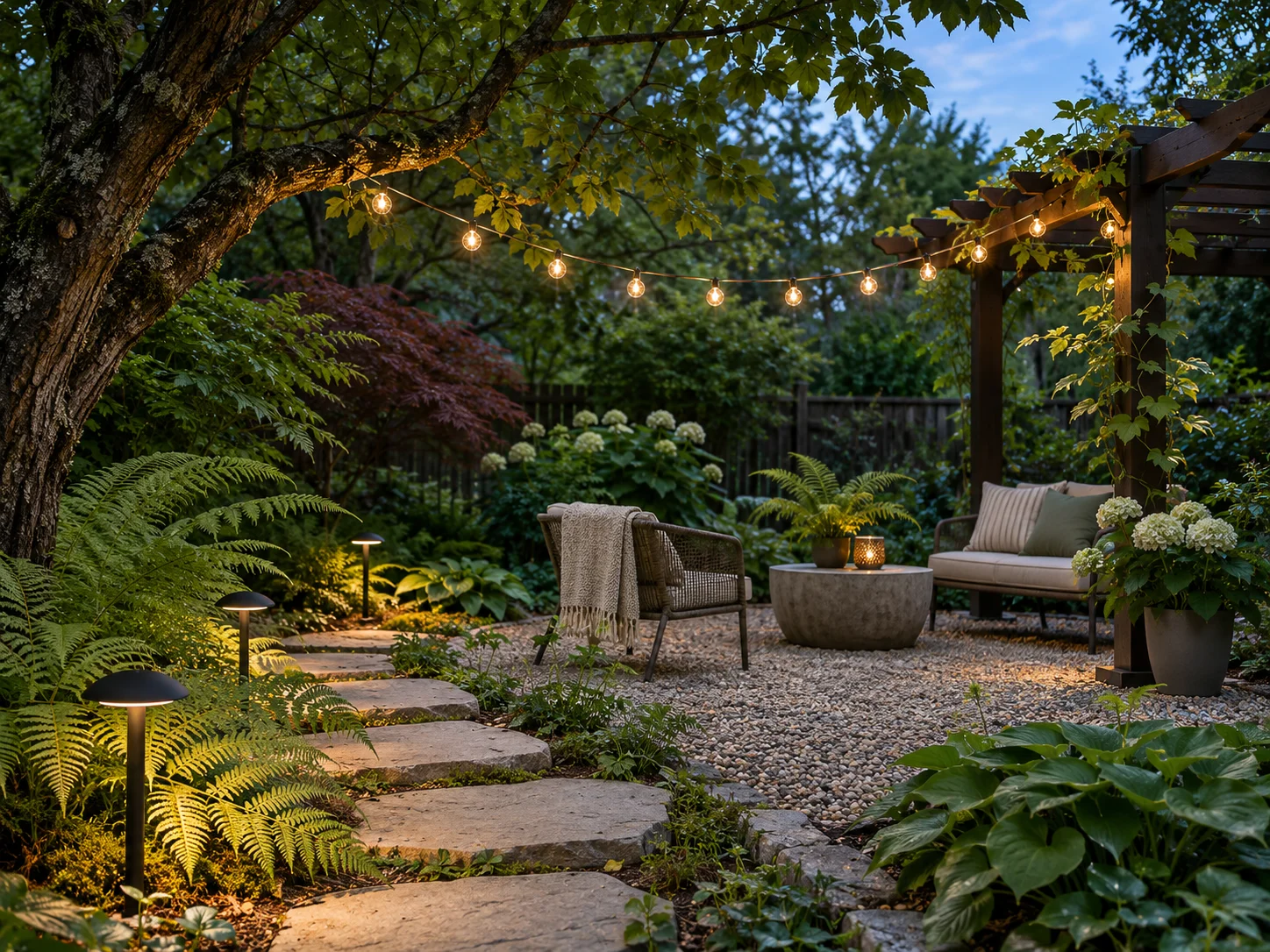
Shade gardens come alive at dusk, when pale leaves and white flowers seem to glow. Low path lights along the stepping stones and warm string lights over the nook make the space usable after work.
Solar lights need sun on their panels, which is exactly what a shade garden lacks, so mount the panel in an open spot or choose plug-in low-voltage lighting. Clip string lights to branches with soft ties rather than nails or wire wrapped around the bark.
How to Pick the Right Setup for Your Space
Start with your shade type and soil, then pick one idea to finish this season. This table matches common backyard situations with a first project:
| Your backyard | Start with | Plants to try | Watch out for |
|---|---|---|---|
| Dry shade under a big tree | Ideas 6 and 7 | Christmas fern, autumn fern, wild ginger | Root competition for water |
| Moist partial shade by the house | Ideas 4 and 5 | Hosta, Japanese forest grass, painted fern | Pets near hostas |
| Deep shade, side yard | Ideas 3 and 12 | Christmas fern, pots of caladium in summer | Very few plants thrive |
| Paved patio or renting | Ideas 9 and 11 | Caladium, begonias, impatiens in pots | Pets near toxic pots |
Watering dry shade. New plants under trees need a deep soaking about once a week, roughly 1 inch of water, during the first weeks. Once they settle in, you can usually stretch that to every two weeks in dry spells. Water slowly at the base so it soaks down past the tree’s thirsty surface roots.
Quick fixes when something looks wrong:
- Plants wilt by afternoon under a tree: usually root competition for water. Feel the soil under the mulch; if it’s dry, water deeply.
- Leaves look bleached or scorched: the spot gets more direct sun than your sun log suggested, often in midsummer. Move the plant or swap in one rated for partial sun.
- Leaves rot or develop spots: poor airflow or wet foliage. Thin crowded plants and water at the soil line.
Renters without ground to plant can borrow the container ideas here and pick from our low light outdoor plants for shaded balconies.
Frequently Asked Questions
What Can I Plant in a Backyard With Full Shade?
Start with foliage plants rated for partial to deep shade. Christmas fern and Japanese forest grass both tolerate low light, caladium adds summer color in pots, and wild ginger or foamflower can cover the ground under trees. In the very darkest spots, where less than 2 hours of sun reaches the ground, plant less and lean on pale gravel, a light-painted fence and one bold container instead.
Can I Grow Vegetables or Fruit in a Shady Backyard?
Some fruit, yes, if the spot gets light or partial shade. Raspberries, currants and rhubarb can give reasonable crops with about 3 to 6 hours of direct summer sun. Dappled, full or deep shade is a poor bet for fruit, so save those corners for foliage plants and grow edibles in your sunniest patch.
Will My Shade Plants Survive if the Tree Comes Down?
Many won’t be happy. Shade lovers tend to scorch in strong direct sun, so a bed that suddenly gets a full afternoon of light may brown at the edges within a summer. Run a new sun log, move the most delicate plants to a shadier spot, and fill the open space with plants rated for partial or full sun.
Do Flowering Annuals Bloom in Shade?
In partial or dappled shade, several do well, including coleus, begonias, nasturtiums and flowering tobacco (Nicotiana). In heavy shade, most annuals bloom poorly, so lean on leaf color there and keep flowering annuals in pots you can slide toward the brightest edge of the yard.
Can I Add Compost Under a Tree Without Hurting It?
Yes, in small amounts. Rather than hauling in several inches of compost to till under the canopy, add it to small planting pockets or to holes left by core aeration. That feeds new plants while keeping the soil level over the root zone the same, which matters most for sensitive trees such as oaks.
Why Are My Shrubs Thinning Out as the Trees Grow?
Shrubs that need full sun, such as junipers and lilacs, decline as shade increases. If a bed that used to be sunny is now shaded, replace them with shade-tolerant shrubs like azaleas, Japanese kerria or certain viburnums, and check the shade again every few years as the canopy keeps growing.
What Actually Matters
Whichever of these shade garden ideas for a backyard you try first, it succeeds when the plants match the light you really have and the tree overhead stays healthy. Measure first, plant small into the gaps, and let leaves do the heavy lifting while pale surfaces brighten the dark spots.
If you only do one thing this season, run the one-day sun log and plant a single pocket of ferns or groundcover where the grass gave up. Mulch it, water it deeply, and by next summer that gloomy corner can be the coolest seat in the yard.
Sources
- Royal Horticultural Society – Shade gardening – shade levels by hours of direct sun, dry soil under trees, pale mulch, shade bedding for pots, planting distance from walls
- Nebraska Extension in Lancaster County – Planting Under Trees – soil over roots, root depth, compost and mulch depth, small plants, watering under trees, grass in heavy shade
- University of Missouri Extension – Mature trees and plants can cast shade over once-sunny garden – canopy lifting, shallow-rooted trees, oaks and soil depth, fallen leaves, spacing and soaker hoses
- Colorado State University Extension PlantTalk – Designing for Shade – light and dark colors in shade, leaf texture, red-leaved coral bells
- University of Wisconsin-Madison Extension, Chippewa County – Gardening in the Shade – partial and full shade hours, short bloom periods, scorch in strong sun
- NC State Extension Gardener Plant Toolbox – plant pages for Hosta plantaginea, Hakonechloa macra, Dryopteris erythrosora, Polystichum acrostichoides, Athyrium niponicum, Asarum canadense, Tiarella cordifolia, Helleborus x hybridus and Caladium bicolor – zones, sizes, light, toxicity notes
- ASPCA Animal Poison Control – Toxic and Non-Toxic Plants – entries for Hosta, Christmas Rose and Caladium – pet toxicity.