
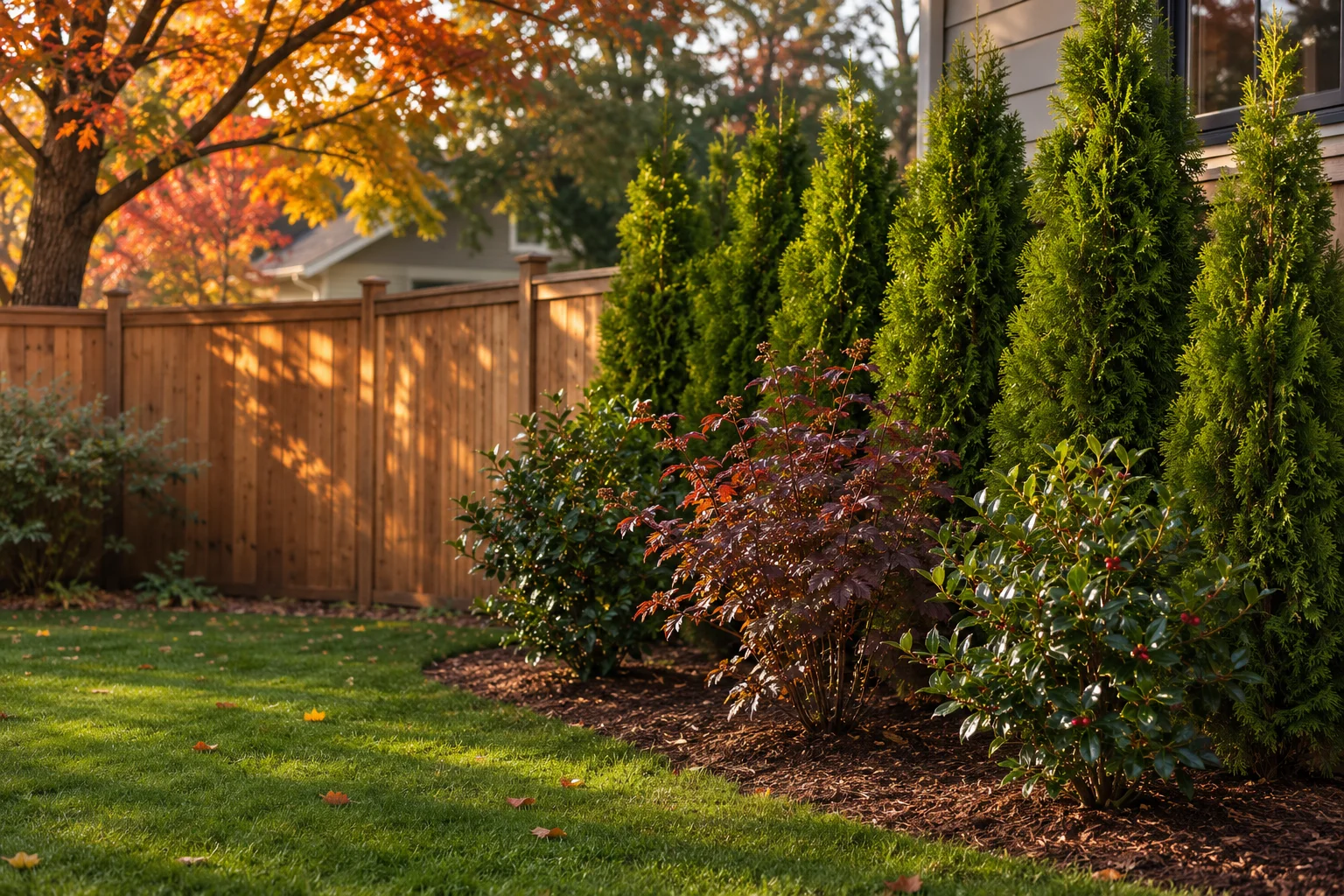
You’re standing on the patio with a coffee, and there it is again: the neighbor’s upstairs window, looking straight down at your chair. A fence only goes so high. What you want is a soft green wall that rises above it, and you’d like it this side of the next decade.
The right fast growing privacy trees and shrubs can do that in a few seasons, but speed alone is a trap. The quickest growers can outgrow a side yard, collapse from one disease or creep into the neighbor’s lawn. This list sorts 16 proven picks by size, USDA zone and pet safety, then shows how to plant them as a privacy screen that fills in and stays healthy. Live in an apartment? The balcony version of this problem has its own guide: privacy plants that work in containers on a balcony.
Table of Contents
At a Glance
- Fastest evergreen for most yards: Green Giant arborvitae, which can add 3 to 4 feet a year in good conditions (zones 5 to 8).
- Narrow side yard: Emerald Green arborvitae (about 3 to 4 feet wide) or ninebark (4 to 6 feet wide).
- Native and tough in the Southeast: wax myrtle, which shrugs off deer, wet spots and dry sand.
- Plant at least two species in staggered rows, so one pest or disease can’t open a gap in the whole line.
- Skip privet, Callery pear and running bamboo, however fast the plant tag says they grow.
If you want one safe pairing for a typical zone 6 or 7 yard, start with Green Giant arborvitae at the back and Nellie R. Stevens holly in front. In hot, dry summers, leave Leyland cypress off the list.
Jump to: comparison chart | the 16 plants | fast growers to skip | picks by zone | spacing and planting | FAQ
Privacy Trees and Shrubs Comparison Chart
Mature width matters more than height for most yards, because that is what decides whether a plant fits between the fence and the patio. Zones, sizes and growth labels come from NC State Extension’s Plant Toolbox; a “medium” grower still screens, it just takes longer to fill in. In the pet column, “ask your vet” means the plant doesn’t appear on the ASPCA toxic plant list, which isn’t the same as a safety guarantee. Tap a plant name to jump to its full entry.
| Plant | USDA zones | Mature height x width | Growth | Type | Pets |
|---|---|---|---|---|---|
| Green Giant arborvitae | 5 to 8 | 40-60 x 12-18 ft | Rapid | Evergreen tree | Ask your vet |
| Leyland cypress | 6 to 10 | 60-70 x 10-15 ft | Rapid | Evergreen tree | Ask your vet |
| Eastern white pine | 3 to 8 | 50-80 x 20-40 ft | Rapid | Evergreen tree | Ask your vet |
| Norway spruce | 2 to 7 | 40-60 x 25-30 ft | Rapid | Evergreen tree | Ask your vet |
| Japanese cedar | 5 to 9 | 50-70 x 20-30 ft | Medium | Evergreen tree | Ask your vet |
| Eastern red cedar | 2 to 9 | 30-40 x 10-20 ft | Medium | Evergreen tree | Ask your vet |
| Emerald Green arborvitae | 3 to 7 | 10-15 x 3-4 ft | Medium | Evergreen tree | Ask your vet |
| Nellie R. Stevens holly | 6 to 9 | 15-30 x 8-25 ft | Rapid | Evergreen shrub | Toxic |
| Wax myrtle | 7 to 11 | Often under 20 x 8-10 ft | Rapid | Evergreen shrub | Ask your vet |
| Skip laurel | 5b to 9 | 10-15 x 5-7 ft | Medium | Evergreen shrub | Toxic |
| Sweet viburnum | 7 to 9 | 10-20 x 15-20 ft | Medium | Evergreen shrub | Ask your vet |
| Fargesia ‘Green Panda’ | 5 to 8 | 6-10 x 6-10 ft | Rapid | Evergreen bamboo | Bamboo listed non-toxic |
| Panicle hydrangea | 3 to 8 | 8-15 x 6-25 ft | Rapid | Deciduous shrub | Toxic |
| Common ninebark | 2 to 8 | 5-8 x 4-6 ft | Rapid | Deciduous shrub | Ask your vet |
| Red osier dogwood | 2 to 7 | 5-9 x 5-10 ft | Rapid | Deciduous shrub | Ask your vet |
| Arrowwood viburnum | 2 to 8 | 5-10 x 6-10 ft | Medium | Deciduous shrub | Ask your vet |
The 16 Fast Growing Privacy Trees and Shrubs
The list runs from tall evergreen trees (1 to 7), through evergreen shrubs that hold their leaves all winter (8 to 12), to deciduous shrubs that screen from spring to fall (13 to 16). Zones and sizes sit in the table above, so each entry covers what the table can’t: where the plant shines and when to pass.
1. Green Giant Arborvitae (Thuja standishii x plicata ‘Green Giant’)
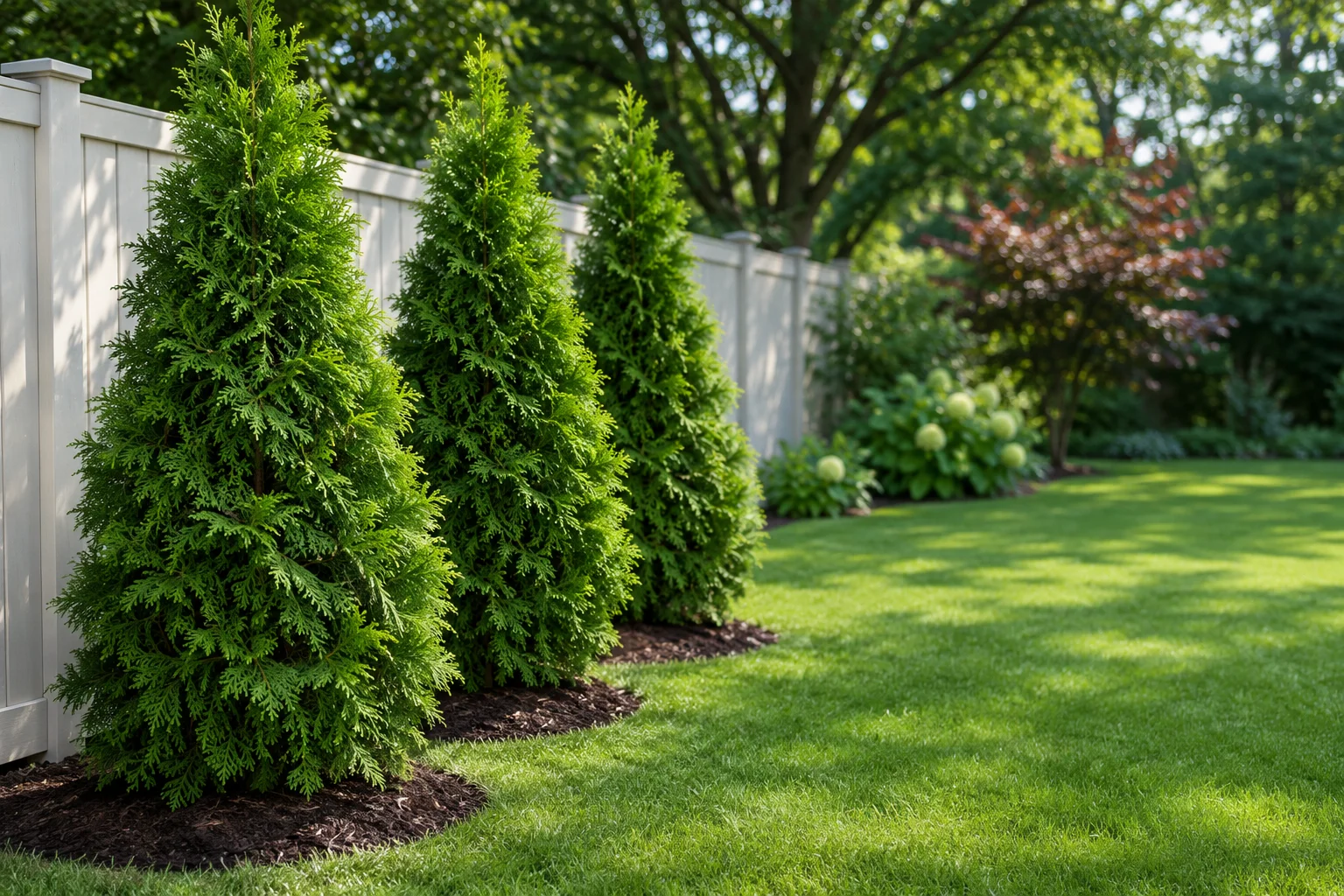
Picture soft, flat sprays of deep green that stay colorful through winter and grow into a tall, tidy cone. This hybrid is the default fast growing evergreen for privacy for a reason: in good conditions it can put on 3 to 4 feet of growth a year, and it resists most diseases, insects, periodic drought and deer.
- Light: full sun, ideally with light afternoon shade.
- Soil: almost any type, clay to sand, as long as it drains; soggy ground invites root rot.
- Watch for: bagworms in summer.
Skip it if your planting strip is narrower than about 12 feet. It gets wide, and shearing it back hard to fit only buys time.
2. Leyland Cypress (x Hesperotropsis leylandii)
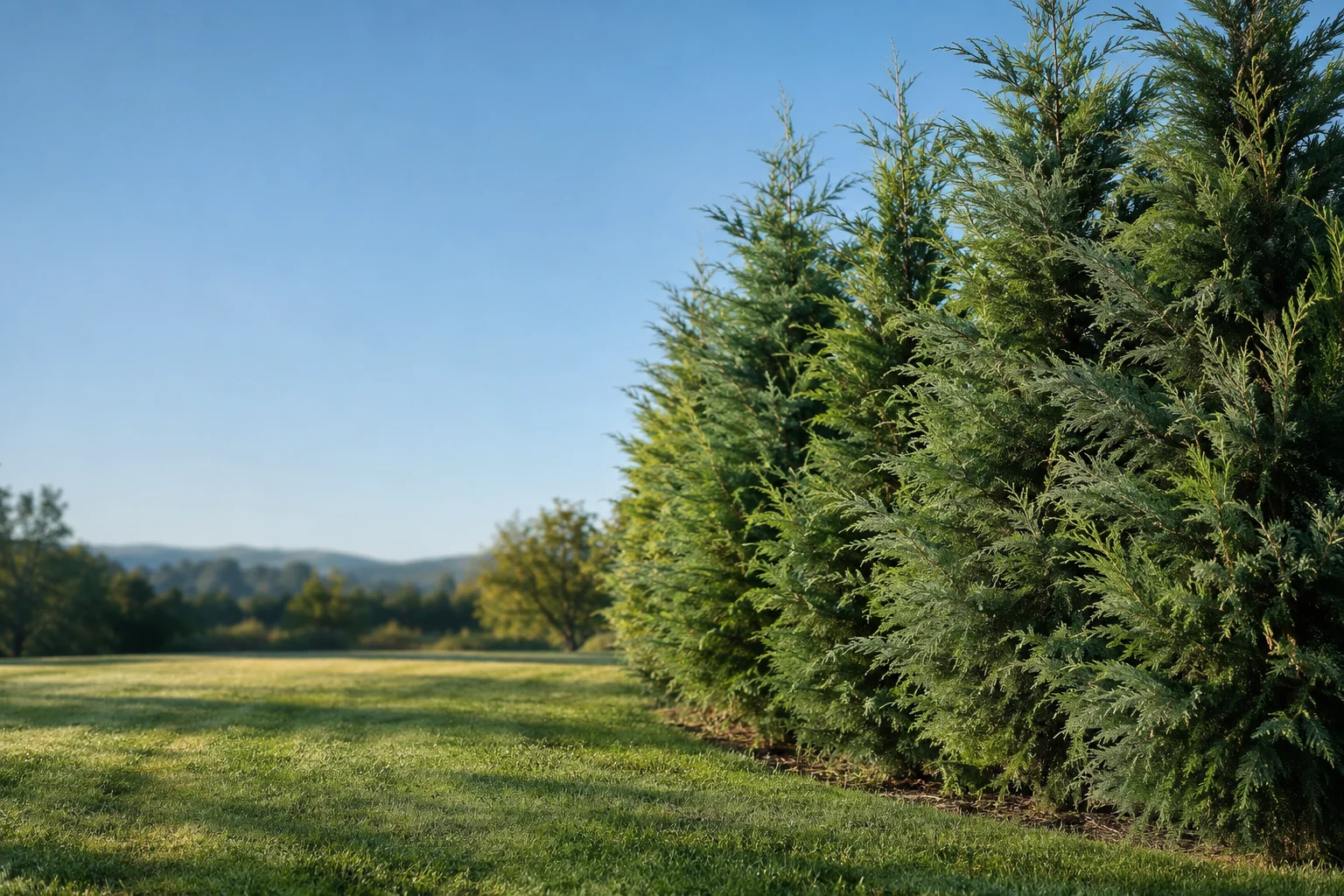
Leyland cypress (often still labeled x Cupressocyparis leylandii at nurseries) builds a feathery, blue-green wall fast, up to 3 feet a year while young. The trouble comes later. Its cankers and root rots can’t be cured, and Seiridium canker spreads faster on drought-stressed trees, especially when they’re planted shoulder to shoulder. Its typical life runs 20 to 50 years, and its shallow roots handle hot summers poorly.
- Light: full sun only.
- Care: water every 7 to 14 days in hot, dry spells to cut canker risk.
- Handling: the foliage can irritate skin, so wear sleeves when pruning.
Skip it if you garden where summers run hot and dry, or if you plan a single-species row.
3. Eastern White Pine (Pinus strobus)
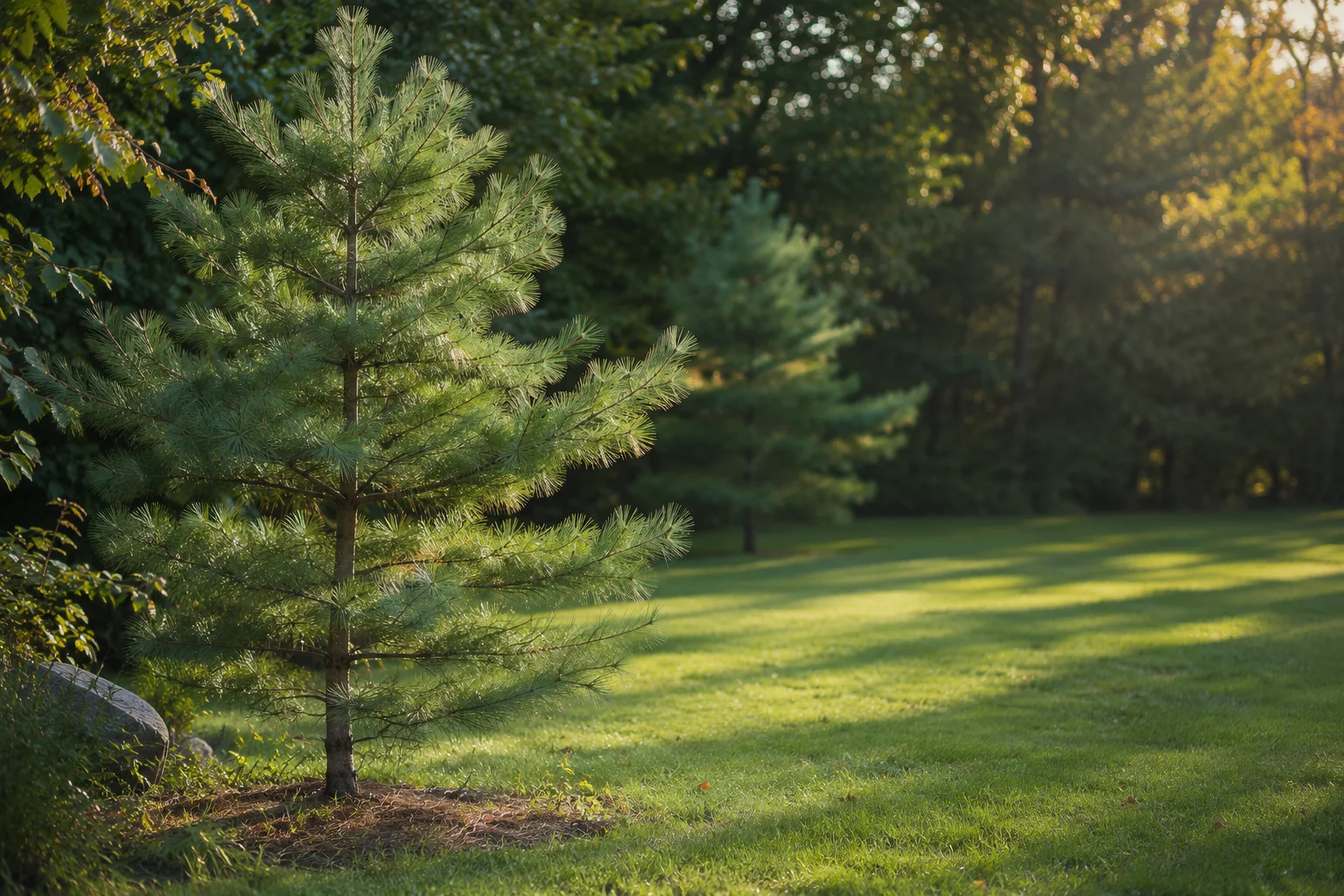
Long, soft needles that ripple in a breeze make white pine one of the gentlest-looking screens. It’s native to the Northeast, grows rapidly and shrugs off deer. It also needs room, since it can spread 20 to 40 feet.
- Light: full sun preferred, light shade tolerated.
- Soil: acidic loam or sand; avoid alkaline soil, road salt spray and polluted roadsides.
- Watch for: white pine blister rust, which is usually fatal, plus wind breakage on exposed sites.
Skip it if you have a small lot, or near a road that gets salted in winter.
4. Norway Spruce (Picea abies)
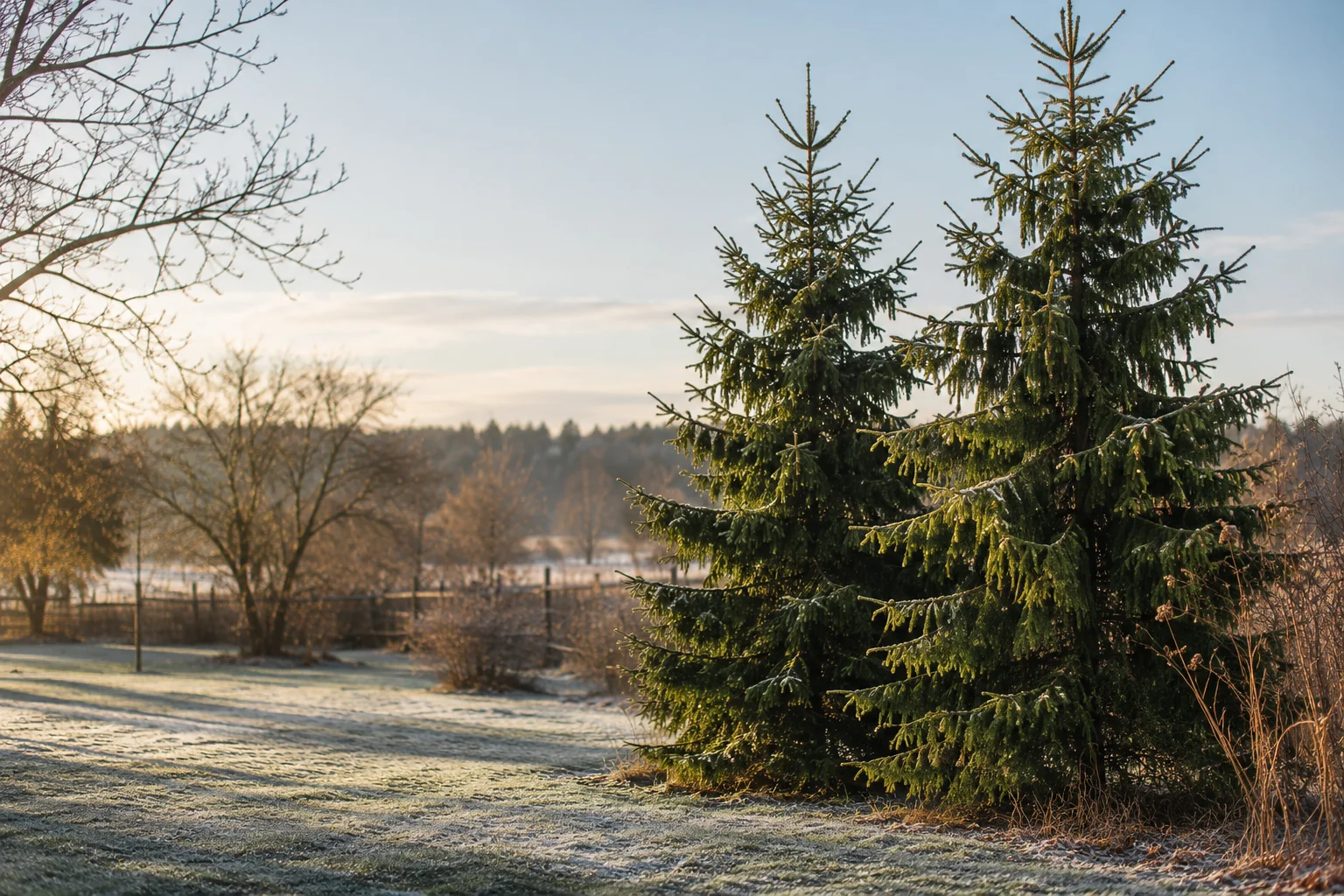
Norway spruce is the cold-climate workhorse: dark, dense and quick, hardy all the way to zone 2. It’s a classic screen and windbreak in colder regions, and deer tend to leave it alone.
- Light: full sun.
- Soil: moist, well-drained, acidic.
- Watch for: bagworms, spider mites and Cytospora canker.
Skip it in the warm South; it does poorly in zone 7 there. At up to 30 feet wide, it also needs a big yard.
5. Japanese Cedar (Cryptomeria japonica)
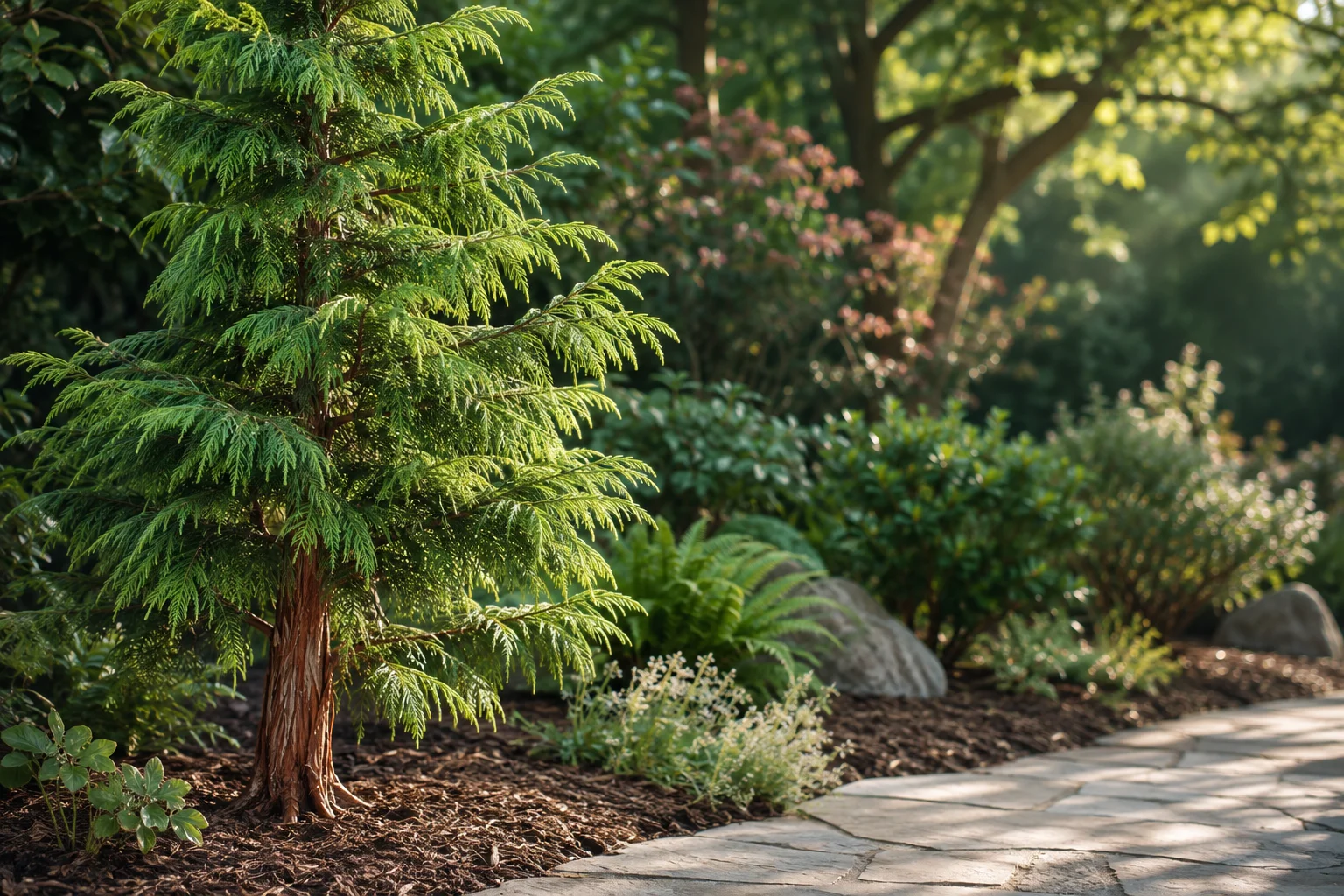
Cryptomeria brings a softer texture, with curving, awl-shaped needles on a tall, upright tree. It covers a wider zone range than Leyland on the cold end and deer usually skip it. Growth is medium, so expect a slower start than Green Giant.
- Light: full sun to part shade.
- Soil: rich, moist, well-drained and acidic is best, though it adapts.
- Watch for: leaf spot and leaf blight.
Skip it for tight spaces; its 20 to 30 foot spread needs open ground.
6. Eastern Red Cedar (Juniperus virginiana)
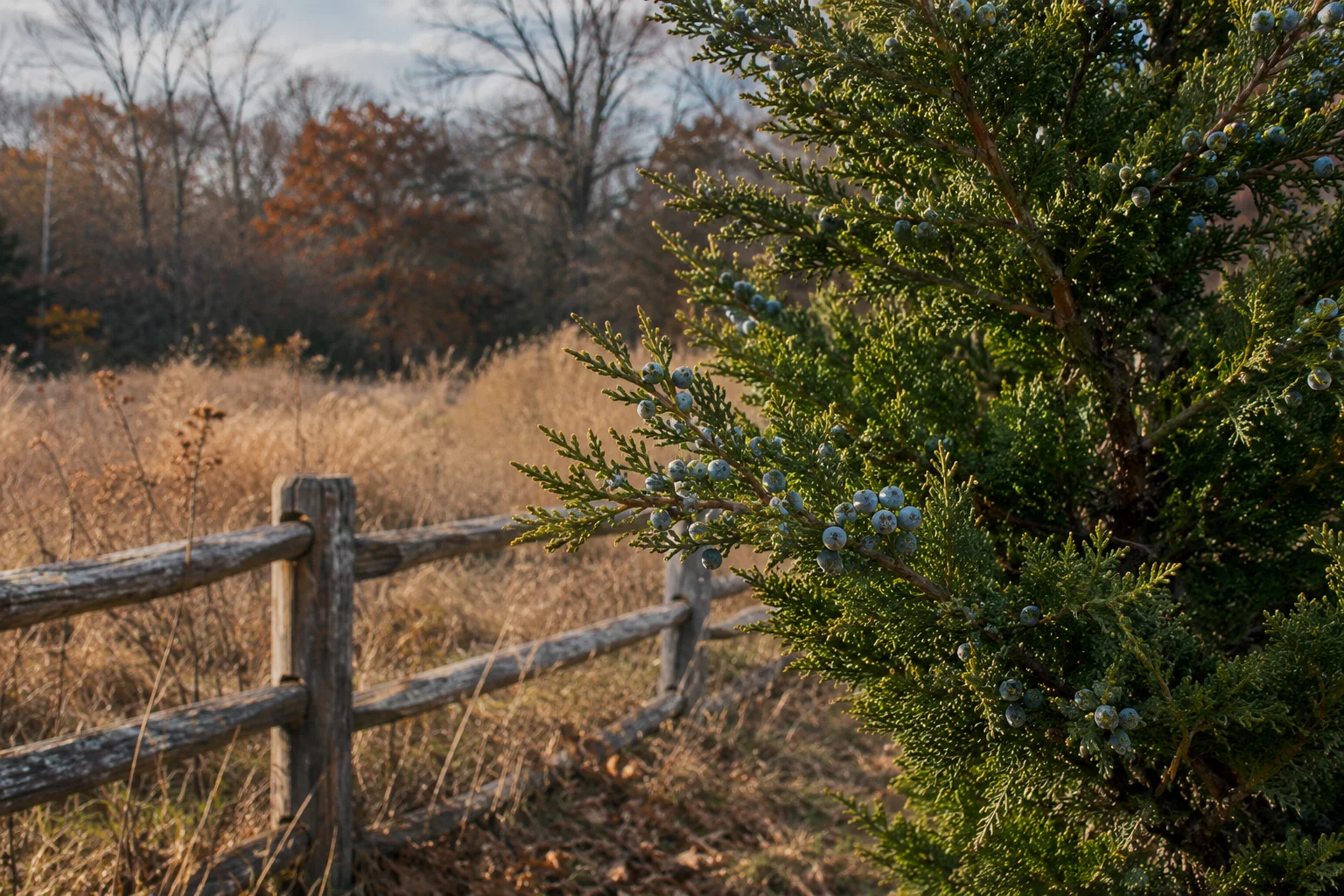
This native juniper grows wild from Maine to Florida, which tells you how tough it is: dry soil, poor soil and salt spray are all fine. Its dense, dark foliage holds through winter, and deer tend to pass it by. Growth is medium, and extension spacing for a screen or windbreak runs 12 to 24 feet apart.
- Light: full sun; it only tolerates shade when very young.
- Soil: dry to moist but never constantly wet.
- Watch for: cedar-apple rust and bagworms.
Skip it if you grow apples or crabapples nearby, since it’s an alternate host for cedar-apple rust.
7. Emerald Green Arborvitae (Thuja occidentalis ‘Smaragd’)
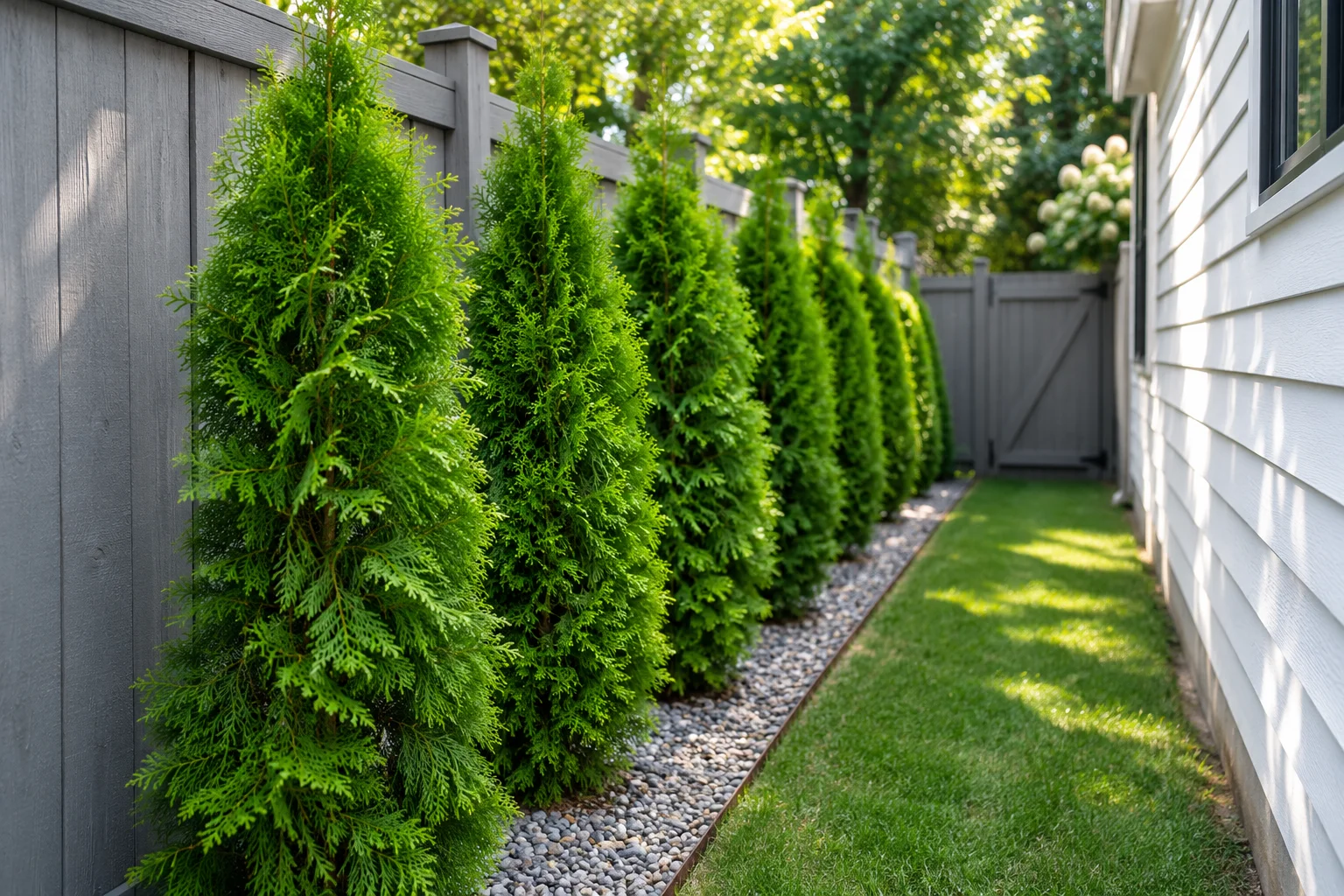
When the gap between the house and the fence is barely a walkway, this is the one. ‘Emerald’ reaches 10 to 15 feet but only about 3 to 4 feet wide, with bright, glossy foliage that keeps its color. Growth is medium, so buy larger plants if you need cover sooner.
- Light: full sun to part shade; foliage thins in deep shade.
- Soil: moist, well-drained, neutral to alkaline; it dislikes dry, windy, exposed spots.
- Watch for: deer, which can strip it badly, plus bagworms and snow breakage.
Skip it where deer roam freely unless you can fence or spray the row through winter.
8. Nellie R. Stevens Holly (Ilex ‘Nellie R. Stevens’)
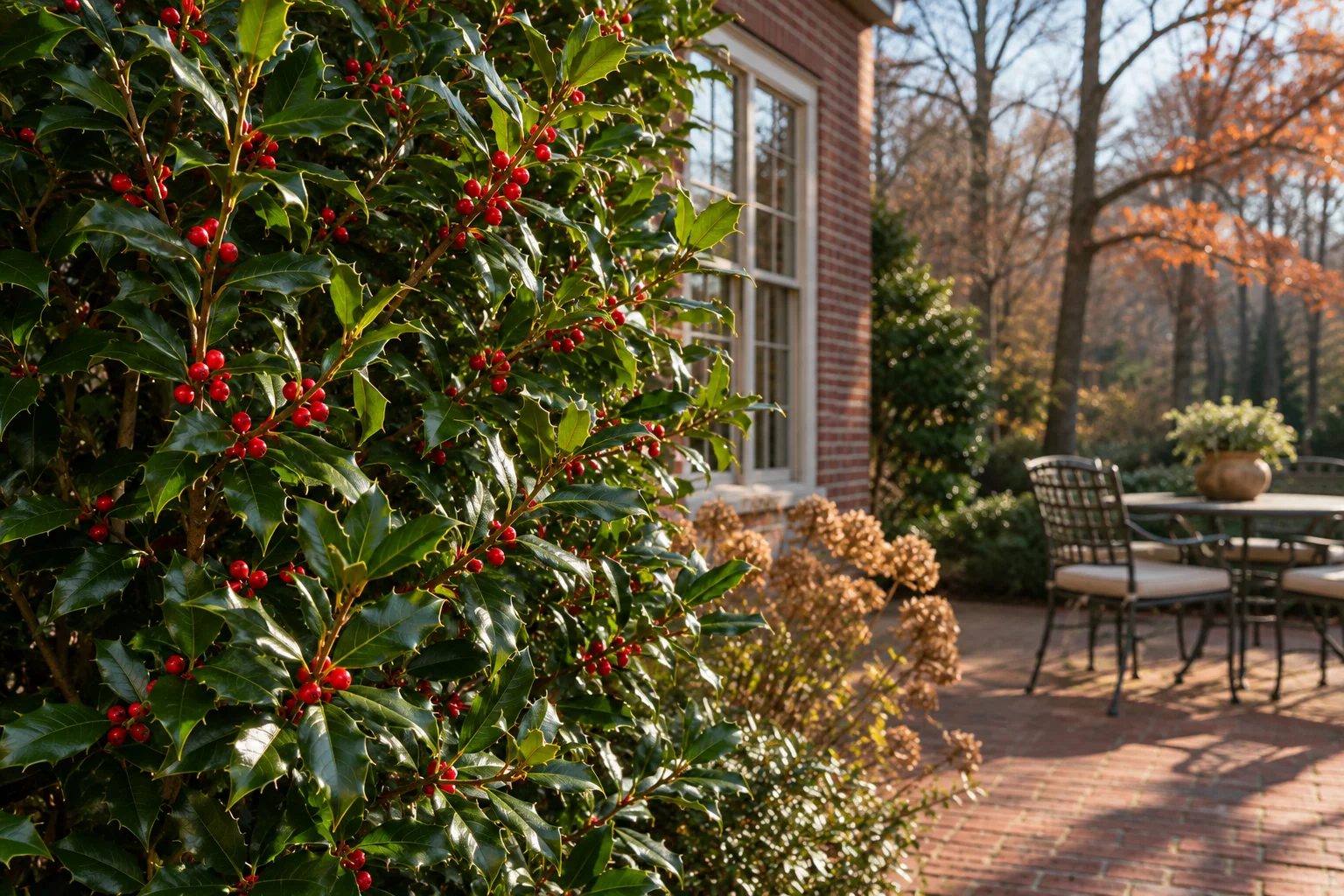
Glossy, near-black-green leaves and winter berries make this holly the handsome partner for arborvitae. It grows rapidly into a dense, tall shrub or small tree and tolerates heavy clay. For a tight privacy hedge, about 8 feet between plants works well.
- Light: full sun to part shade, ideally with some afternoon shade.
- Soil: acidic and well-drained; leaves yellow in alkaline soil and suffer in wet sites.
- Pets: the ASPCA lists holly as toxic to dogs, cats and horses (mainly stomach upset).
Skip it if a dog that chews leaves will share the yard, or if your soil stays soggy.
9. Wax Myrtle (Morella cerifera)
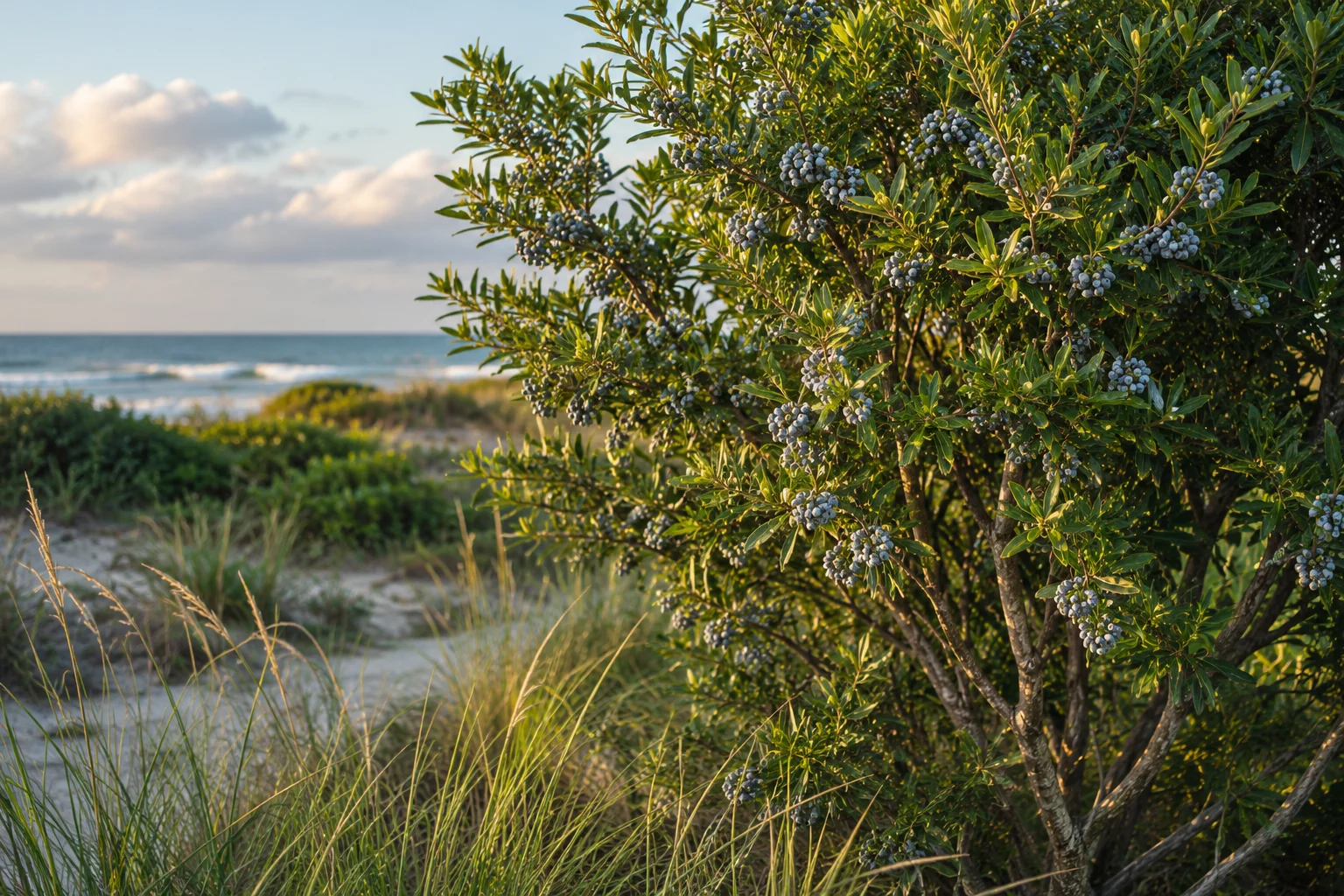
Wax myrtle is the native answer for the Southeast and Gulf Coast. Narrow olive-green leaves form a loose, airy screen, and it grows rapidly in everything from swampy ground to dry sand. Deer find it unappealing, and it has no serious pest or disease problems.
- Light: full sun to part shade, even dry shade.
- Soil: sandy and acidic is ideal; it tolerates flooding and drought.
- Cold: hard winters can make it drop leaves.
Skip it north of zone 7. It can reach 20 feet or more but usually stays well shorter.
10. Skip Laurel (Prunus laurocerasus ‘Schipkaensis’)
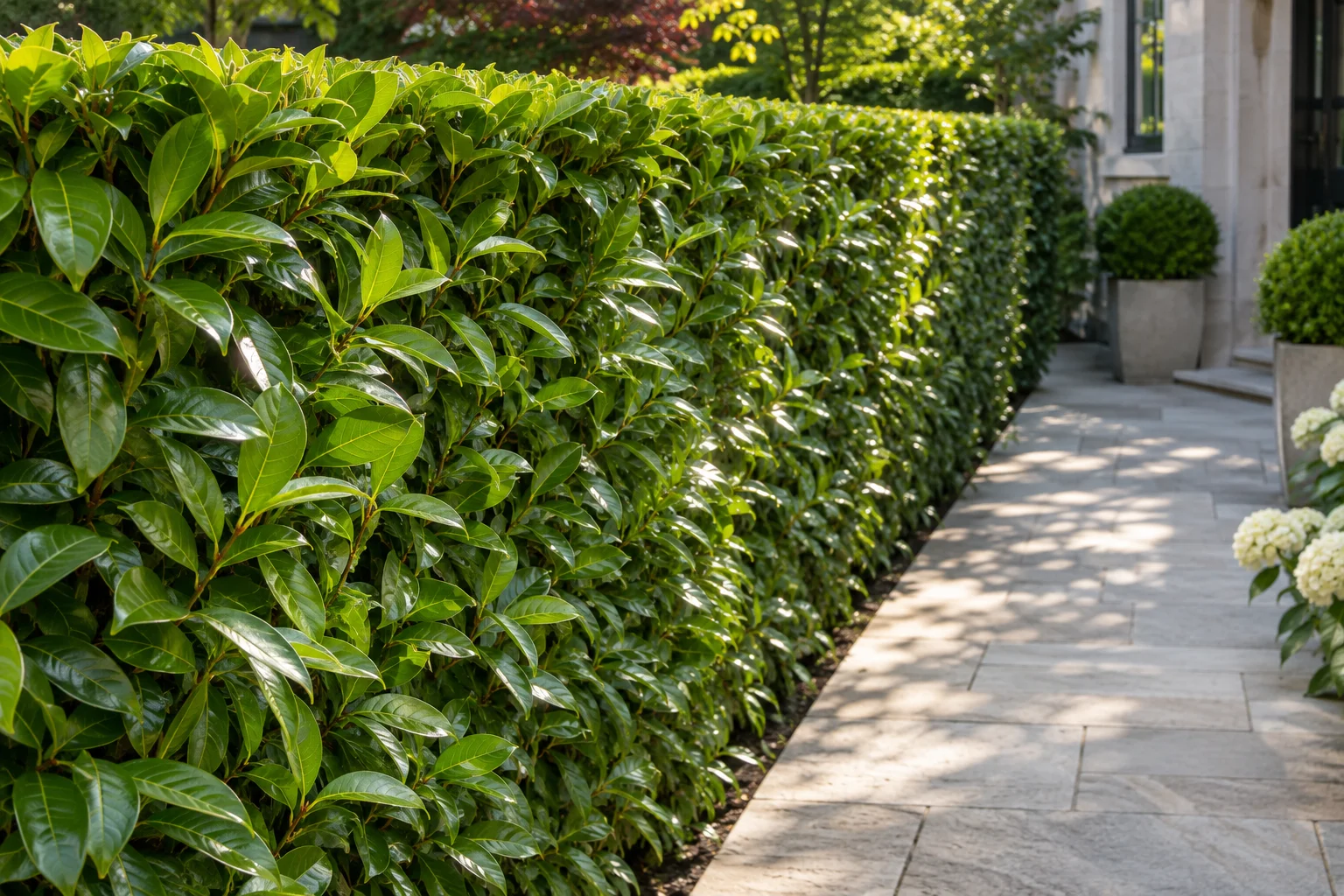
Big, glossy leaves give skip laurel a polished, formal look, and it stays narrower than the species at 5 to 7 feet wide. Growth is medium, and it takes shearing well. The catch is safety: the leaves, stems and seeds contain cyanogenic glycosides, and the ASPCA lists cherry-family plants as toxic to dogs, cats and horses.
- Light: full sun to part shade.
- Soil: well-drained; this cultivar prefers alkaline soil.
- West Coast note: the parent species has escaped cultivation west of the Cascades and is a weed of concern there.
Skip it if pets or grazing animals share the yard, or if you garden in the Pacific Northwest.
11. Sweet Viburnum (Viburnum odoratissimum)
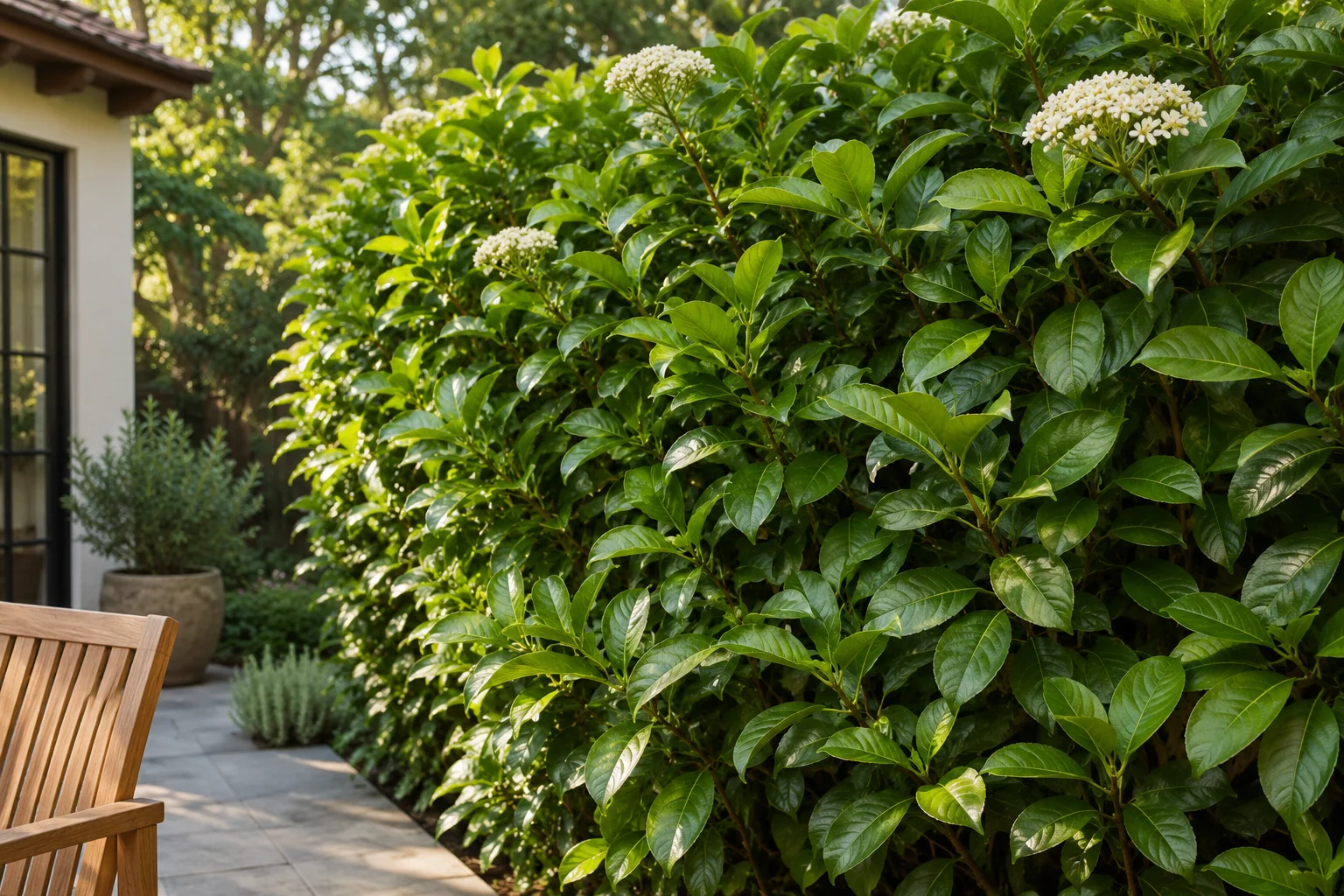
In warm climates, sweet viburnum builds a big, leafy wall of bright green leathery leaves. It grows at a medium pace to 10 to 20 feet tall and nearly as wide, so it suits long property lines more than tight spaces. At the northern edge of its range it may drop some or all of its leaves.
- Light: full sun with afternoon shade, or part shade.
- Soil: moist, well-drained; clay, loam or sand.
- Watch for: mites, and thin bark that a string trimmer can easily wound.
Skip it outside zones 7 to 9, or wherever you only have a few feet of depth.
12. Clumping Bamboo (Fargesia rufa ‘Green Panda’)
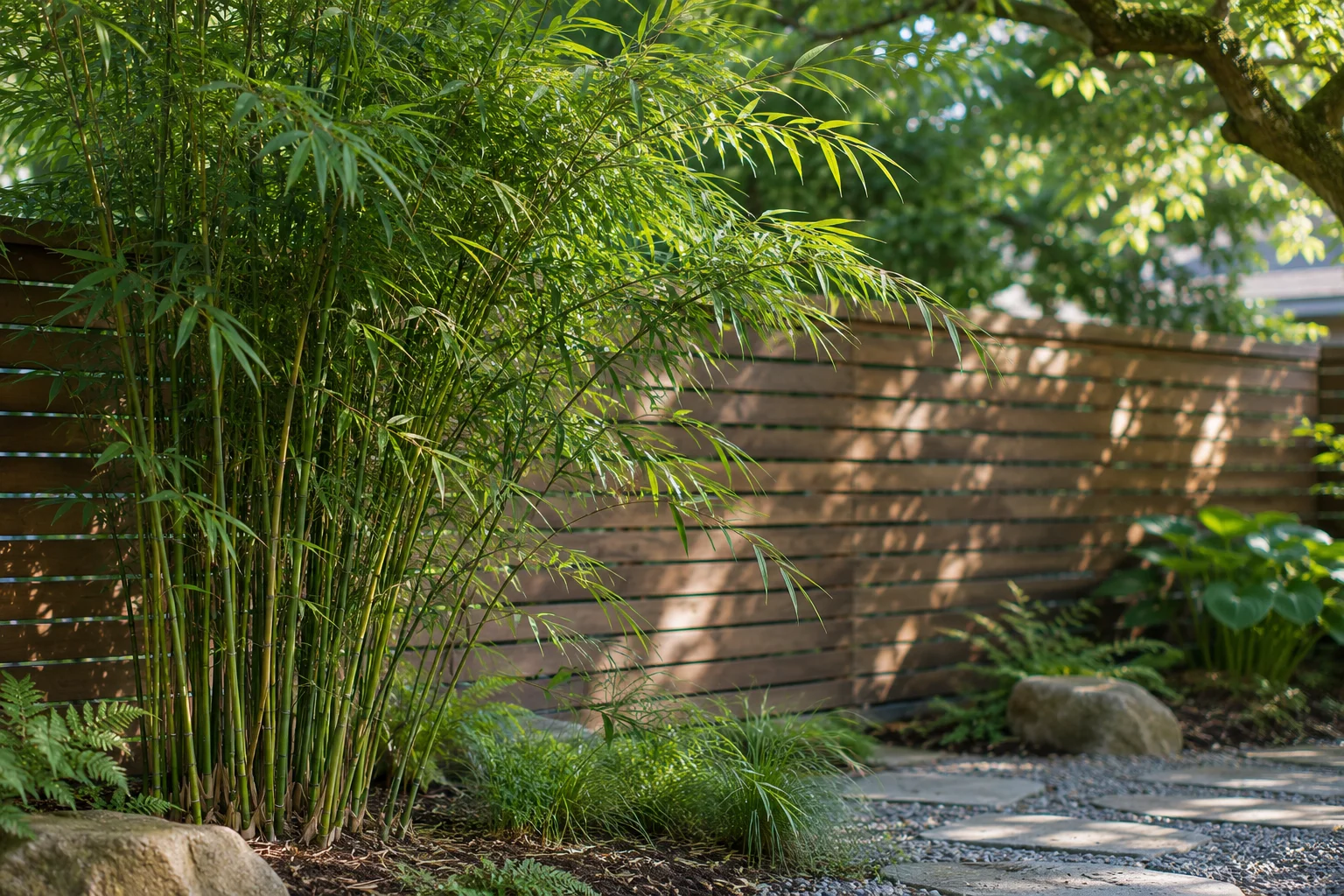
Fine leaves on arching canes rustle in the slightest breeze, which softens a hard fence line nicely. Fargesia stays in a clump instead of running underground, and ‘Green Panda’ grows fast to 6 to 10 feet tall. The clump arches out about as wide as it is tall, so give it a bed at least 6 feet deep. Deer tend to leave it alone, and true bamboo is listed as non-toxic to dogs and cats.
- Light: full sun to part shade, sheltered from hot afternoon sun and winter wind.
- Soil: fertile, moist, well-drained.
- Buying tip: check the label for the genus Fargesia; anything sold as “running” or Phyllostachys belongs in the skip list below.
Skip it in hot, dry, full-sun spots, where the leaves scorch and curl.
13. Panicle Hydrangea (Hydrangea paniculata)
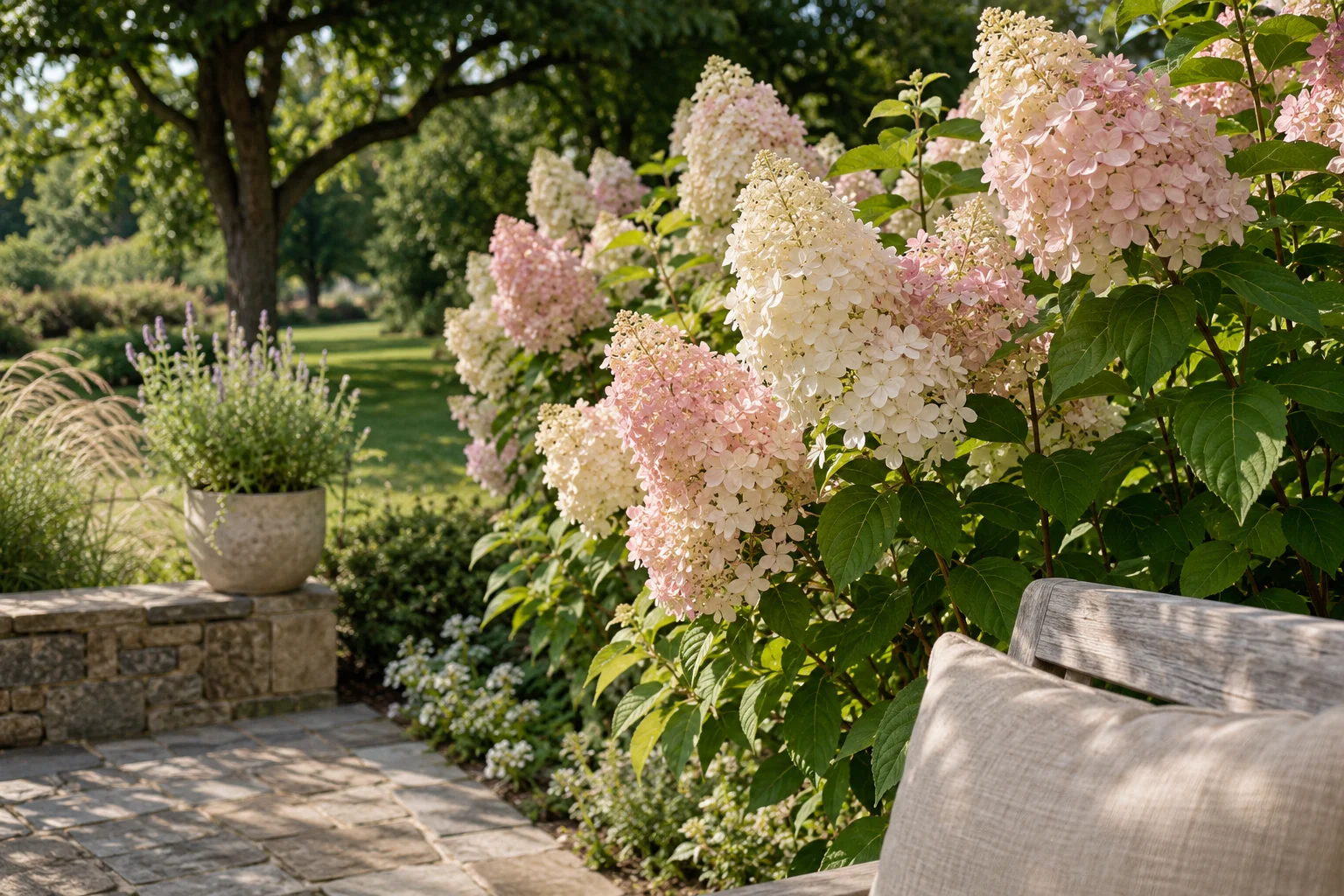
For a patio you only use in warm months, a deciduous screen makes sense, and panicle hydrangea is the showiest. It grows rapidly to 8 to 15 feet, carries large cone-shaped flower clusters in summer and handles cold down to zone 3. Check the tag before you buy: compact cultivars top out at 3 to 5 feet, which is too short to screen a seated view.
- Light: full sun to part shade; morning sun with afternoon shade is ideal in hot areas.
- Soil: well-drained, moist, acidic to neutral.
- Pets: hydrangea is toxic to dogs, cats and horses.
Skip it on windy sites, since the stems are brittle, and wherever deer browse heavily.
14. Common Ninebark (Physocarpus opulifolius)
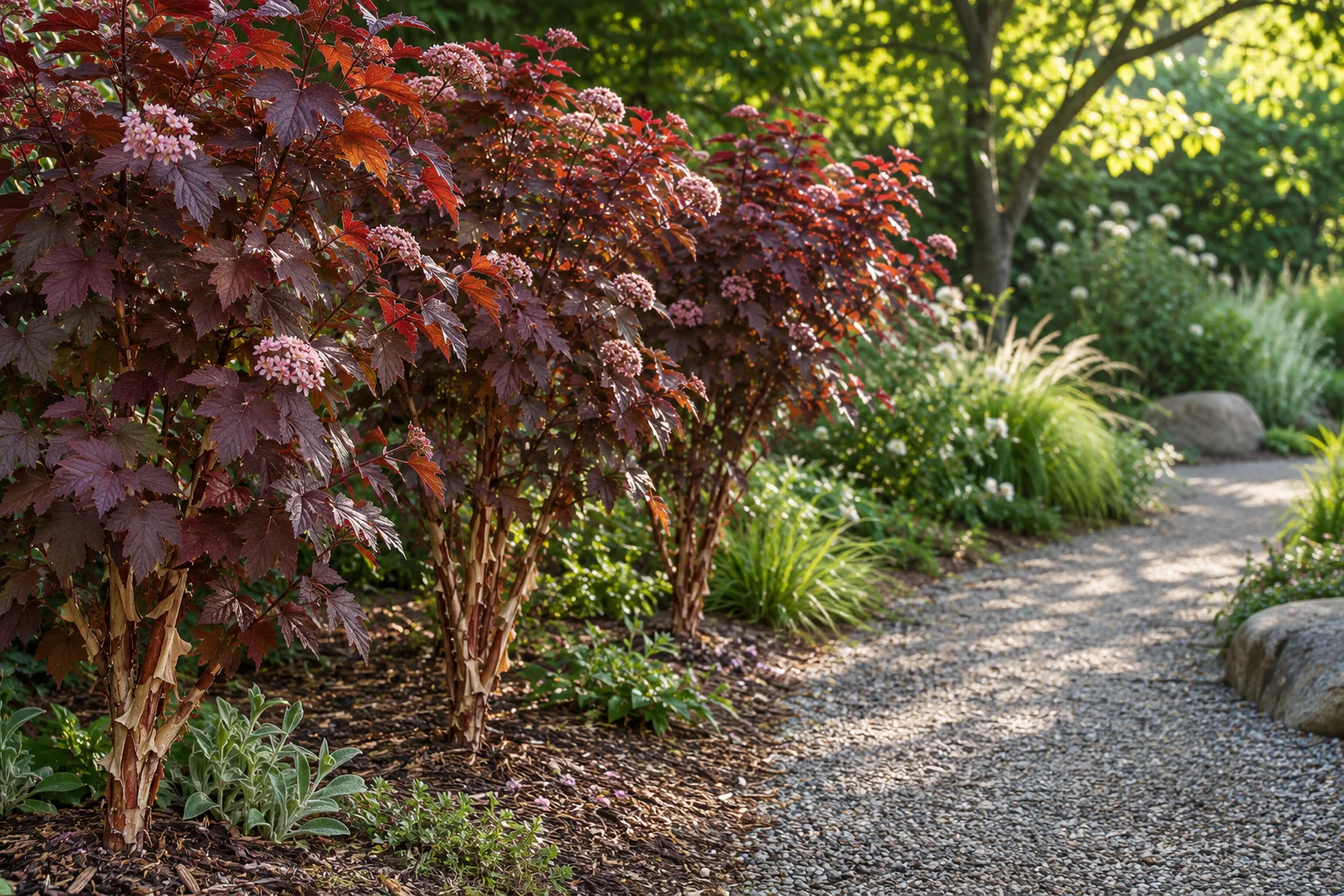
This tough native grows rapidly to 5 to 8 feet and fits a narrow bed at 4 to 6 feet wide. Garden centers sell it in several leaf colors, including burgundy. It takes heat, drought and compacted soil, which makes it a good front-row shrub along a driveway.
- Light: full sun to part shade, with some shade in the South.
- Soil: clay, loam or sand, acid to alkaline, as long as it drains.
- Watch for: powdery mildew.
Skip it if you need winter privacy; it’s bare from late fall to spring.
15. Red Osier Dogwood (Cornus sericea)
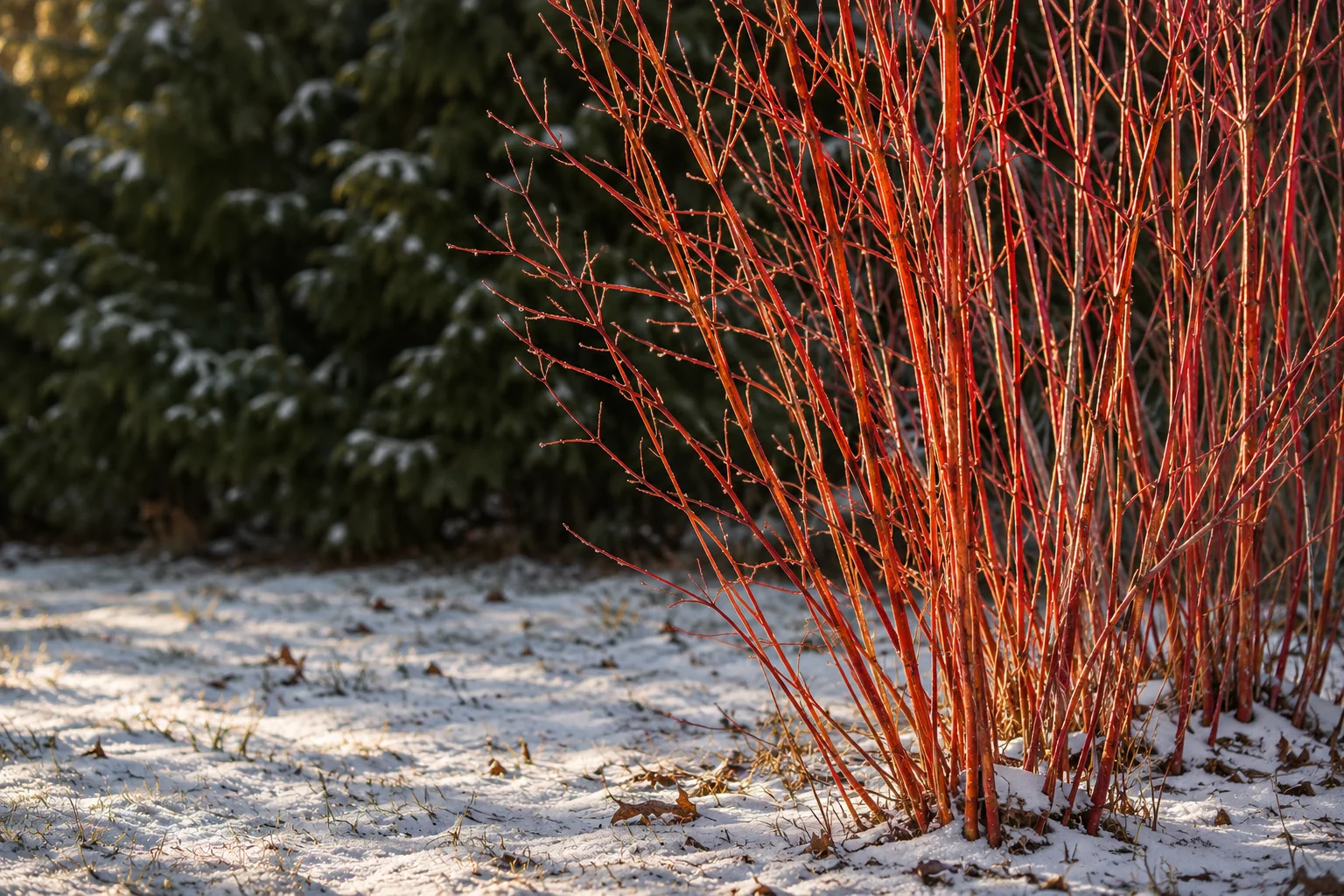
Red osier dogwood (also sold as red twig dogwood) earns its spot in winter, when bare coral-red stems glow against snow or a dark evergreen backdrop. It’s native across most of North America, grows rapidly, and spreads by underground stems into a thicket, so a few plants can screen a wet corner. Deer seldom browse it.
- Light: full sun to part shade; it struggles in full sun through hot southern summers.
- Soil: rich and consistently moist; it handles wet soil and occasional flooding.
- Watch for: leaf spot and canker when stressed.
Skip it for dry, hot sites or where you want plants to stay exactly where you put them.
16. Arrowwood Viburnum (Viburnum dentatum)
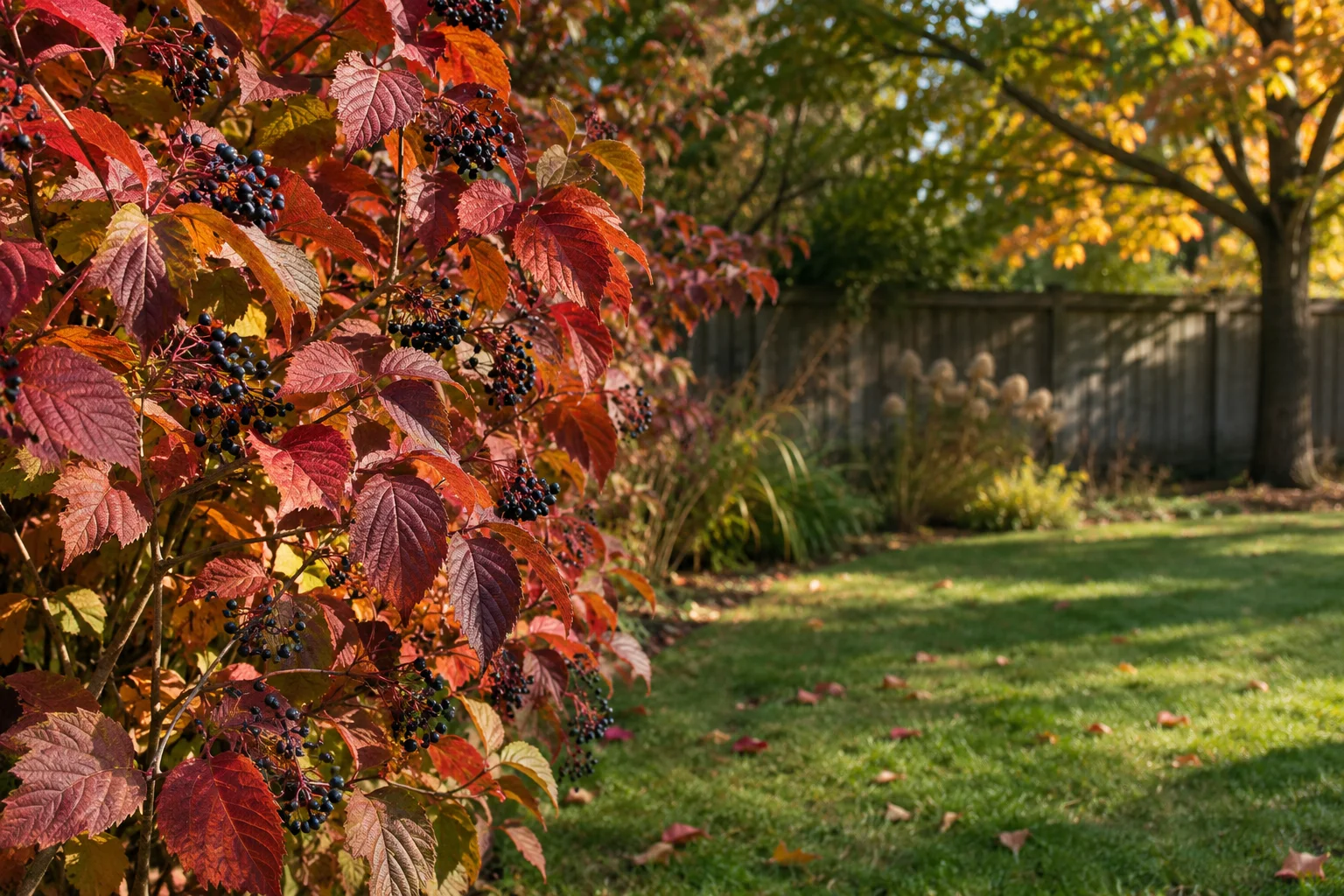
Arrowwood is a native viburnum from the eastern US with vigorous, sturdy growth and coarsely toothed leaves. It works as a hedge or screen, resists deer, and takes clay, sand or rocky soil.
- Light: full sun to part shade.
- Soil: moist and well-drained is best; acid to neutral.
- Watch for: viburnum leaf beetle, which can skeletonize leaves.
Skip it if you need a year-round screen, or pair it with evergreens for winter cover.
Fast Growing Privacy Plants to Skip
Some of the quickest plants on garden-center shelves cause problems that outlast the privacy they give. These are the ones to leave behind, even when a list or a neighbor recommends them.
- Chinese privet (Ligustrum sinense): listed as invasive in North Carolina, where extension advises against planting it in landscapes.
- Callery or Bradford pear (Pyrus calleryana): invasive offspring plus brittle wood that splits in storms.
- Running bamboo (Phyllostachys species, such as golden bamboo): rhizomes can travel a hundred feet or more and into neighboring yards; University of Maryland Extension says running types should never be planted.
- Autumn olive (Elaeagnus umbellata): an invasive shrub that spreads by bird-eaten fruit.
- Hybrid poplar: fast, but short-lived, pest-prone and weak-wooded.
How to Choose Privacy Trees and Shrubs for Your Yard
Start with width, then zone, then sun. Measure the strip from the fence to the nearest thing you care about (patio, path, house wall) and rule out every plant whose mature width won’t fit. That single step removes most of the regret from a privacy planting.
- Under 6 feet of depth: Emerald Green arborvitae or ninebark.
- 6 to 12 feet: skip laurel, Fargesia bamboo, wax myrtle, arrowwood viburnum or red osier dogwood.
- 12 to 20 feet: Green Giant arborvitae, Nellie R. Stevens holly or eastern red cedar.
- A big back line: white pine, Norway spruce, Japanese cedar or sweet viburnum.
Next, check your USDA hardiness zone against the table, and look up at overhead power lines; a tree that tops out at 60 feet doesn’t belong under them. Deer pressure narrows things again: Emerald Green and panicle hydrangea get browsed, while wax myrtle, Green Giant and arrowwood are usually left alone. If deer are your daily visitors, these deer resistant flowers make a good front border for the screen.
Then decide on evergreen or deciduous. If you need privacy in January, the back row has to be evergreen. If the screen is mostly for summer patio time, a deciduous row of hydrangea, ninebark or dogwood gives color and flowers, and lets winter sun through to the house. For a yard with dogs that chew, we’d lean toward Green Giant, wax myrtle and Fargesia, since holly, skip laurel and hydrangea are the toxic ones on this list.
Fast Growing Privacy Trees and Shrubs by USDA Zone
A plant that races ahead in Georgia can die in its first Minnesota winter, so narrow the list by zone before you fall for a photo. These groups come straight from the zone ranges in the chart above.
- Zones 2 to 4 (cold North): Norway spruce, eastern red cedar, ninebark, red osier dogwood and arrowwood viburnum are hardy to zone 2. From zone 3, add eastern white pine, Emerald Green arborvitae and panicle hydrangea.
- Zones 5 to 6 (Midwest, Northeast, upper South): everything above, plus Green Giant arborvitae, Japanese cedar, Fargesia bamboo and skip laurel (zone 5b and warmer). Nellie R. Stevens holly and Leyland cypress start at zone 6.
- Zones 7 to 8 (South, mid-Atlantic, Pacific Northwest): Green Giant arborvitae, Nellie R. Stevens holly, Japanese cedar, eastern red cedar, wax myrtle and sweet viburnum. Norway spruce and red osier dogwood reach their warm limit at zone 7.
- Zones 9 to 11 (Gulf Coast, Florida, warm West): wax myrtle (through zone 11), Leyland cypress (through zone 10), plus Nellie R. Stevens holly, Japanese cedar, eastern red cedar, skip laurel and sweet viburnum through zone 9. Green Giant stops at zone 8.
How to Plant a Privacy Screen That Fills In: Spacing and Timing
The fastest-looking screen is a mixed one, set in staggered rows. A single straight row of one species leaves see-through gaps between trunks, and one disease can take out the whole line. Clemson’s mixed-screen guidance suggests two or three offset rows, at least two types of evergreens, and groups of 3, 5 or 7 plants.
Space by mature width, not by the size of the plant in the pot. Plants set too close fill in quickly, then crowd, shade out their own lower branches and stay damp, which favors disease. As a rough guide, large conifers need at least 15 feet between them; hollies can go about 8 feet apart for a dense hedge. In a staggered layout, each plant in the front row sits in the gap between two in the back.
Timing matters more than most plant tags admit. Roots keep growing in fall until the soil drops below 40°F, so fall planting works well, but plants need at least six weeks of mild weather before freezing temperatures arrive. Deciduous shrubs settle in more easily than evergreens, which keep losing water through their leaves all winter.
- Mark the rows first, setting the back row at least half its mature width in from the fence, so branches stay on your side of the property line.
- After backfilling each plant, water the root ball and surrounding area right away.
- Until the ground freezes, water weekly so the soil is moist 8 to 10 inches down.
- Once established, plan on about 1 inch of water a week in dry spells, more for Leyland in summer heat.
If you’re reading this in mid-to-late fall: when your usual hard freeze is less than six weeks away, buy and plant evergreens in spring instead, and use the winter to mark out the rows and order plants. In milder zones with open ground, deciduous shrubs can still go in. A shady spot in front of a young screen is a natural home for a few shade flower garden ideas once the hedge casts shadows.
If something looks off, start with what you see. Whole branches turning brown on Leyland point to canker, often after drought stress. Bare lower limbs usually mean too much shade or crowding, and stripped foliage up to about deer height speaks for itself.
Frequently Asked Questions
What is the fastest growing privacy tree?
For most US yards in zones 5 to 8, Green Giant arborvitae is the quickest safe choice, adding up to 3 to 4 feet a year in good conditions. Leyland cypress grows about as fast when young, but its incurable cankers make it a riskier bet, especially where summers are hot and dry.
How long until a new privacy screen blocks the view?
It comes down to growth rate and the size you buy. At 3 to 4 feet a year in good conditions, a young Green Giant can rise above a standard fence within a couple of seasons, while medium growers such as Japanese cedar or Emerald Green take noticeably longer. Larger nursery stock, staggered rows and steady watering in the first years all shorten the wait.
What are the best privacy shrubs for a narrow side yard?
Go by mature width. Emerald Green arborvitae stays about 3 to 4 feet wide and ninebark 4 to 6 feet, so both fit a strip under 6 feet deep. Skip laurel runs 5 to 7 feet wide and takes shearing well if you have a little more room. Green Giant arborvitae needs about 12 feet, so it’s the wrong pick for a tight space, however fast it grows.
Which fast growing privacy plants stay green all year?
The evergreens on this list: Green Giant and Emerald Green arborvitae, Leyland cypress, eastern white pine, Norway spruce, Japanese cedar, eastern red cedar, Nellie R. Stevens holly, skip laurel and Fargesia bamboo. Wax myrtle and sweet viburnum are evergreen in warm zones but can drop leaves after a hard winter. Hydrangea, ninebark, dogwood and arrowwood are bare from late fall to spring.
Is arborvitae safe for dogs and cats?
Arborvitae doesn’t appear on the ASPCA toxic plant list, so it’s a common pick for pet households. Absence from the list isn’t a guarantee, though. If your dog chews plants, ask your vet before you buy, and see How to Choose for the toxic ones to avoid.
Which privacy plants handle part shade?
Japanese cedar, Nellie R. Stevens holly, skip laurel, sweet viburnum, arrowwood viburnum, ninebark and Fargesia bamboo all take part shade. Leyland cypress, Norway spruce and eastern red cedar want full sun, and arborvitae foliage thins out in deep shade, so keep those for the open side of the yard.
How close to the property line can I plant a privacy hedge?
Far enough that the mature width stays on your side: set each plant at least half its mature width in from the line. Check your HOA rules and any local setback rules before you dig, and call 811 a few days ahead so buried utility lines get marked.
What Actually Matters
A screen that blocks the view in three years and is still healthy in twenty comes from matching mature width to your space, mixing at least two species and planting in offset rows. With fast growing privacy trees and shrubs, growth speed is the last filter, not the first.
This week, measure your planting strip, look up your zone and pick two plants from the comparison chart that fit both. If the screen will frame a front walk or porch too, these winter porch planter ideas with evergreens pick up the same greens close to the door.
Sources
- NC State Extension Gardener Plant Toolbox – plant pages for Green Giant arborvitae, Leyland cypress, eastern white pine, Norway spruce, Japanese cedar, eastern red cedar, American arborvitae, Nellie R. Stevens holly, wax myrtle, cherry laurel and skip laurel, sweet viburnum, Fargesia rufa ‘Green Panda’, panicle hydrangea, common ninebark, red osier dogwood, arrowwood viburnum and Chinese privet – zones, sizes, growth rates, problems, deer notes
- UGA Cooperative Extension – Diseases of Leyland Cypress in the Landscape – Seiridium canker, drought stress, watering interval
- University of Maryland Extension – Seiridium and Botryosphaeria Canker of Leyland Cypress; Containing and Removing Bamboo – no fungicide cure; running bamboo spread
- Clemson Cooperative Extension HGIC – Mixed Screens – staggered rows, species mix, Emerald arborvitae size, weekly water
- NC State Extension, Henderson County Center – Evergreen Shrubs for Blocking Views – conifer and holly spacing
- UNH Extension – Is fall a good time to plant trees and shrubs? – six-week window, 40°F soil, weekly watering depth
- NC State Extension – Callery Pear, Bradford Pear, Other Varieties and Their Invasive Offspring – invasiveness and brittle wood
- Penn State Extension – Autumn Olive; Utah State University Extension Tree Browser – Carolina poplar – invasive shrub; hybrid poplar weaknesses
- ASPCA Animal Poison Control – Holly, Cherry, Hydrangea and Bamboo entries – pet toxicity.