
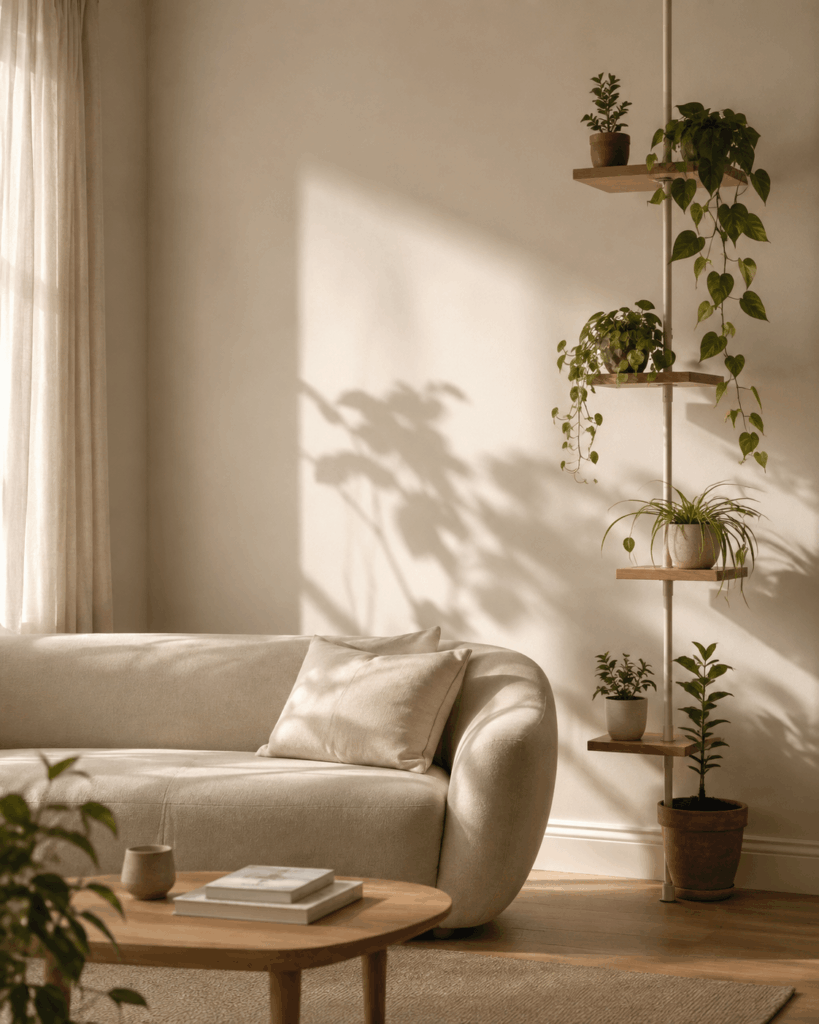
You have one blank wall behind the sofa, almost no floor space left, and three plants already competing for the windowsill. Plant Wall Ideas for Living Room Small Space can solve that problem without turning your rental into a construction project or creating a watering system you dread using.
The useful versions are usually simpler than the Pinterest photo. A narrow shelf, tension pole, freestanding trellis, rail system, or carefully placed grid can create the same green-wall feeling while keeping pots reachable and moisture away from drywall.
Quick recommendation: For most renters, start with a removable tension-pole display, freestanding trellis, or slim vertical shelf. Choose a grow-light shelf if the wall is genuinely dim, and skip a permanent living-wall panel unless drainage, mounting, and wall protection are already solved.
TL;DR – Best Plant Wall Setups for Small Living Rooms
The best plant wall for a small living room uses vertical height without making watering, light, pet access, or move-out day harder. Removable systems are usually the safest starting point for renters, while shelves and grids work well when limited mounting is allowed. Permanent pocket walls make more sense only after you understand the maintenance they require.
- Best overall: A tension-supported or slim freestanding vertical plant display that can move with you.
- Best for almost zero floor space: A narrow wall-mounted shelf, rail, or lightweight grid.
- Plant Wall Ideas for Living Room Small Space work best when access matters as much as appearance.
- Best for dark walls: A plant shelf paired with suitable supplemental lighting and plants matched to the actual light level.
- Avoid: Dense permanent living walls when drainage, waterproofing, and maintenance access are uncertain.
| Setup | Best For | Drilling | Care Level | Avoid If |
|---|---|---|---|---|
| Tension Pole | Renters, narrow walls | None | Easy | Ceiling or floor cannot support it securely |
| Plant Ladder | Corners | None | Easy | Floor space is extremely limited |
| Long Shelf | Sofa walls | Yes | Easy | Wall mounting is not permitted |
| Wire Grid | Flexible displays | Usually | Medium | You want to use heavy pots |
| Rail Shelves | Growing collections | Yes | Medium | Wall anchors are restricted |
| Grow-Light Shelf | Dim walls | Varies | Medium | Supplemental lighting cannot be managed safely |
| Pocket Wall | Plant collectors | Usually | High | Drainage and inspection access are poor |
| Living-Wall Panel | Large focal walls | Permanent | High | Waterproofing or structural support is uncertain |
Takeaway: If two setups look equally good, choose the one that lets you reach, inspect, and water each plant without making routine care difficult.
Takeaway: If two setups look equally good, choose the one that lets you remove, inspect, and water each pot without moving half the room.
33 Plant Wall Ideas for Living Room Small Space
The most practical small-space plant walls gain height while keeping pots accessible, leaves properly lit, and water under control. The 33 ideas below range from completely removable displays to permanent living-wall systems, so you can match the look to your actual wall width, lease restrictions, pet situation, and willingness to maintain it.
No-Drill and Renter-Friendly Ideas
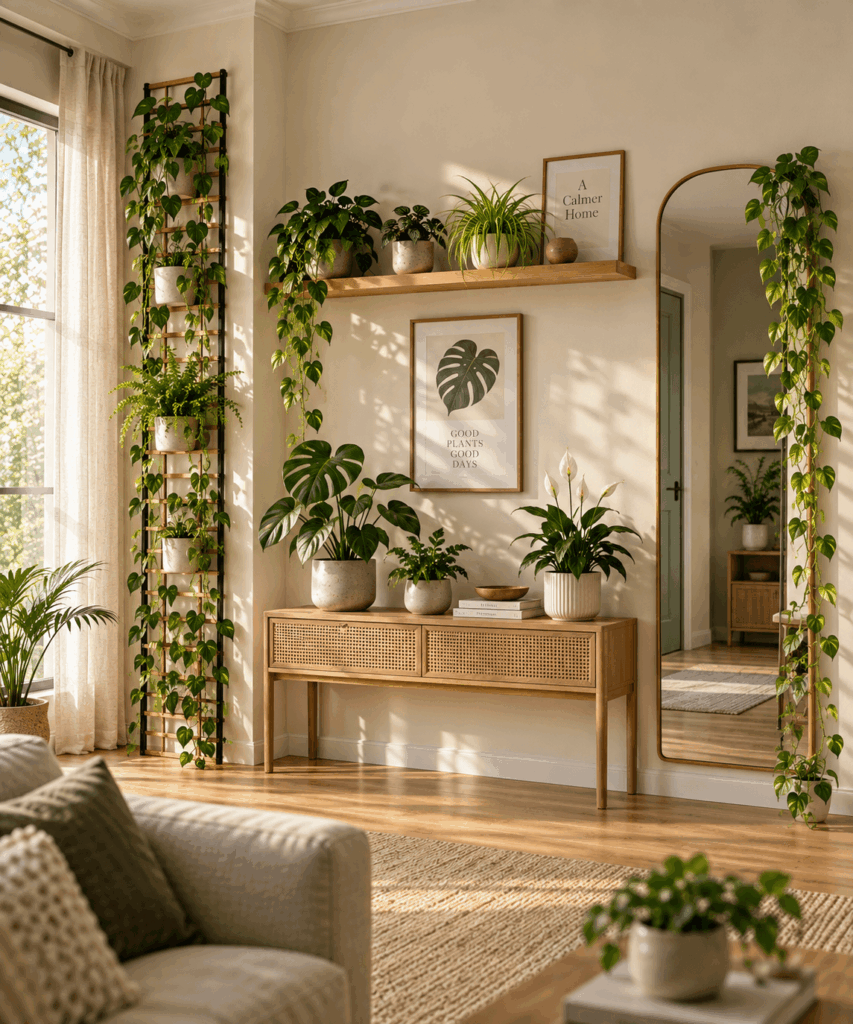
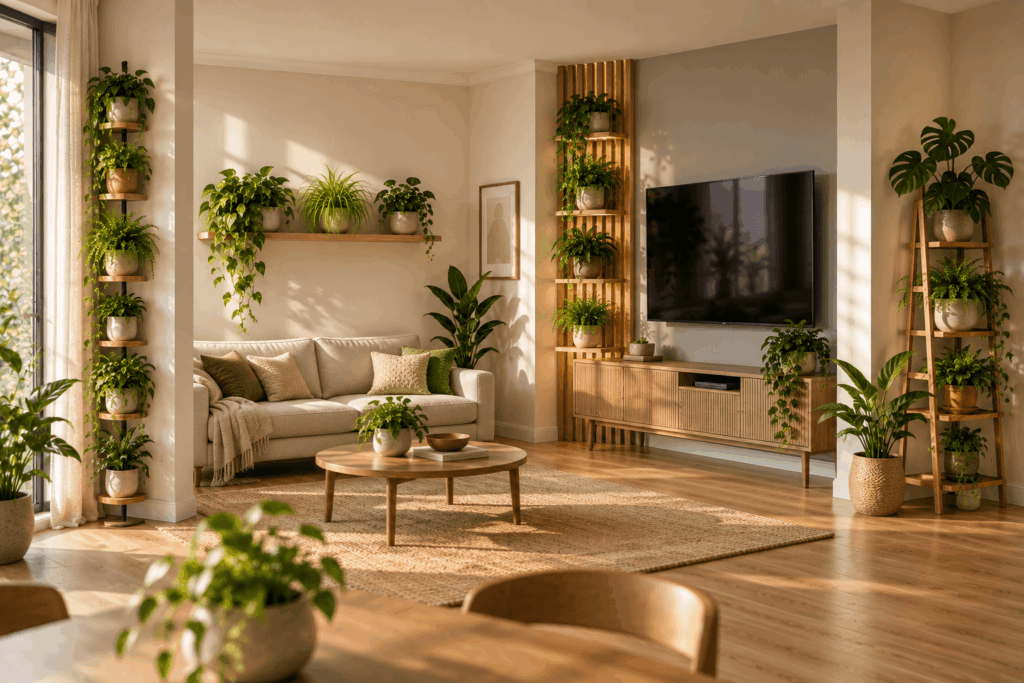
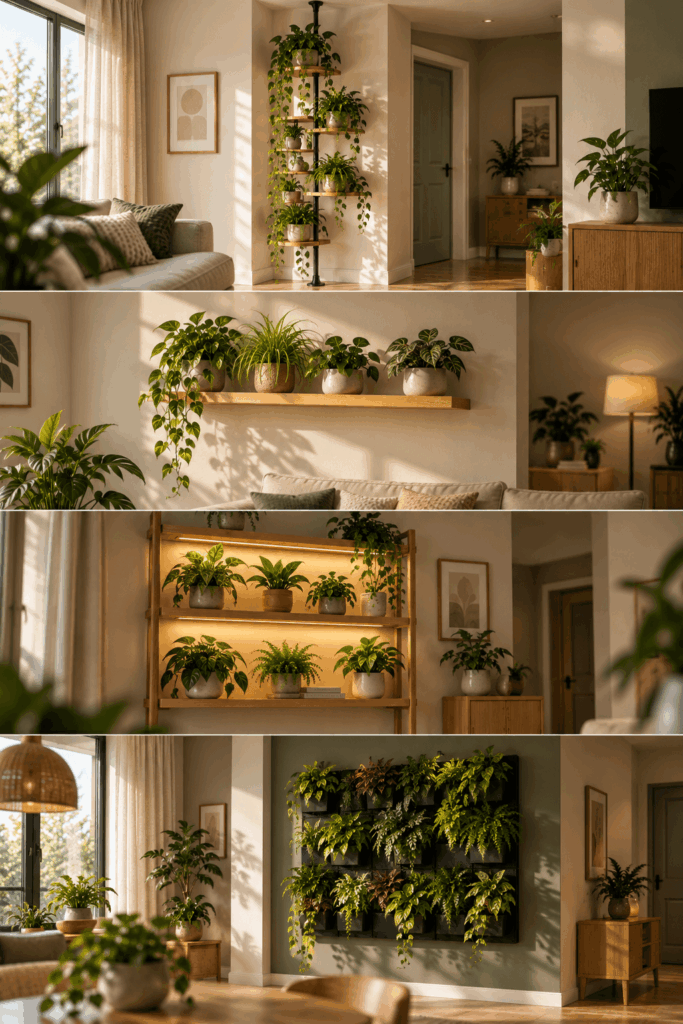
1. Floor-to-Ceiling Tension-Pole Plant Wall
A tension-pole system creates several planting levels without asking drywall to support every pot. Keep smaller upright plants on lower platforms and let one or two trailing plants occupy the upper levels so the display feels vertical rather than crowded.
Best for: Narrow blank walls and renters who want strong visual height. Renter note: Check that the floor and ceiling surfaces are suitable for the system. Avoid if: The pole cannot be installed securely or you plan to overload the platforms.
I would put this close to the top for renters because each pot remains individually accessible, and the wall itself does not need to carry several separate planters.
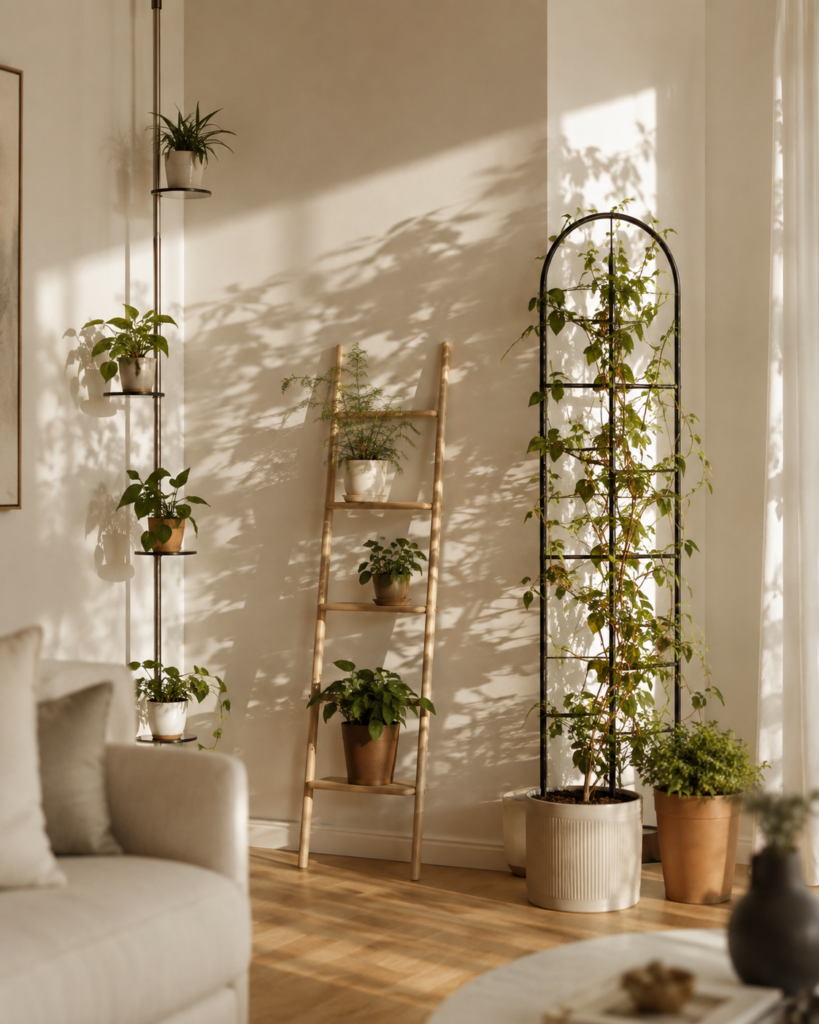
2. Freestanding Ladder Plant Wall
A narrow leaning or freestanding ladder turns one corner into a layered plant display. Put compact upright plants lower down and lighter trailing plants higher so foliage falls through the open structure instead of creating one heavy green block.
Best for: Unused corners and awkward wall sections. Care note: Keep saucers under soil-filled pots and remove plants individually for thorough watering. Avoid if: Even a shallow floor footprint interferes with walking space.
3. Freestanding Trellis Vine Wall
A trellis lets the pots stay on the floor or on a low console while climbing stems create the wall effect. It works especially well when you want a softer, less furniture-heavy composition.
For trailing and climbing choices, GrowDwell’s guide to trailing indoor plants can help you narrow the plant list. Avoid if: The wall is too dark for the species you want to train upward.
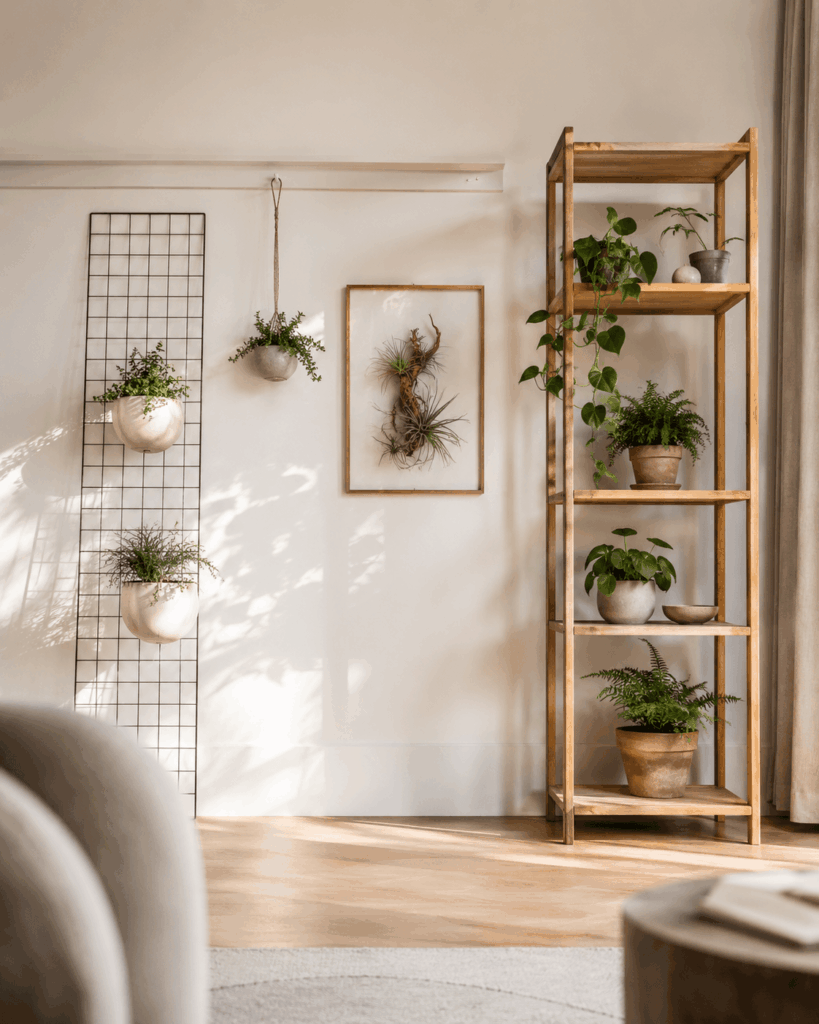
4. Leaning Wire-Grid Plant Display
A lightweight metal grid creates a flexible framework for tiny pots, propagation vessels, air plants, and lightweight accessories. The advantage is changeability: you can move a plant higher or lower as its size and light needs change.
Best for: People who rearrange often. Renter note: A leaning grid still needs to be stable enough not to tip. Avoid if: You plan to hang large wet pots, since container weight rises considerably after watering.
5. Existing Picture-Rail Plant Display
If your apartment already has a usable picture rail, that architecture may give you a display point without creating new holes. A few very light hanging planters can visually connect the upper wall with plants on furniture below.
Best for: Older interiors with a genuinely load-capable rail. Avoid if: You do not know how the rail is attached or what weight it can support. Existing does not automatically mean structural.
6. Lightweight Air-Plant Frame
A framed Tillandsia arrangement provides living texture without a row of soil-filled containers. It is one of the least visually bulky ways to use a tiny vertical surface, especially beside a doorway or between larger pieces of furniture.
Best for: Very narrow walls. Care note: Air plants still have species-specific light, moisture, and drying needs. Avoid if: You are choosing them only because they appear maintenance-free.
7. Slim Freestanding Plant Shelf
A tall shelf only slightly wider than a bookcase can create a convincing plant wall without technically becoming one. Repeating pot materials and limiting each shelf to a few plants helps prevent a small room from looking like storage.
If you want a more composed shelf rather than a crowded collection, these plant shelf styling ideas offer a useful next step. Avoid if: The shelf blocks circulation or forces plants too far from usable light.
Shelves, Grids and Gallery Walls
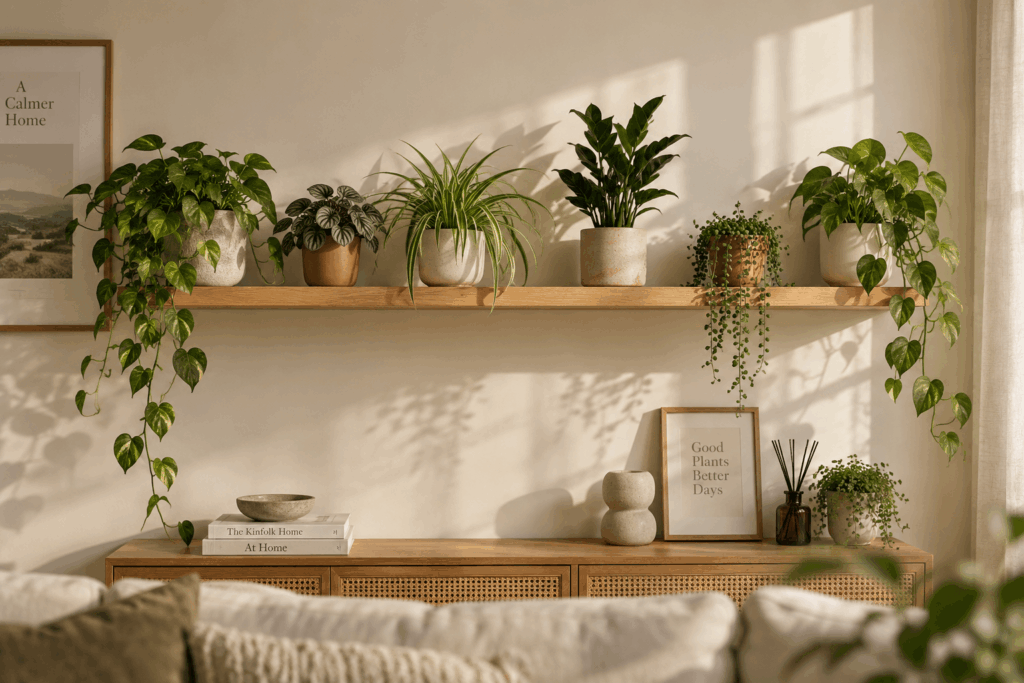
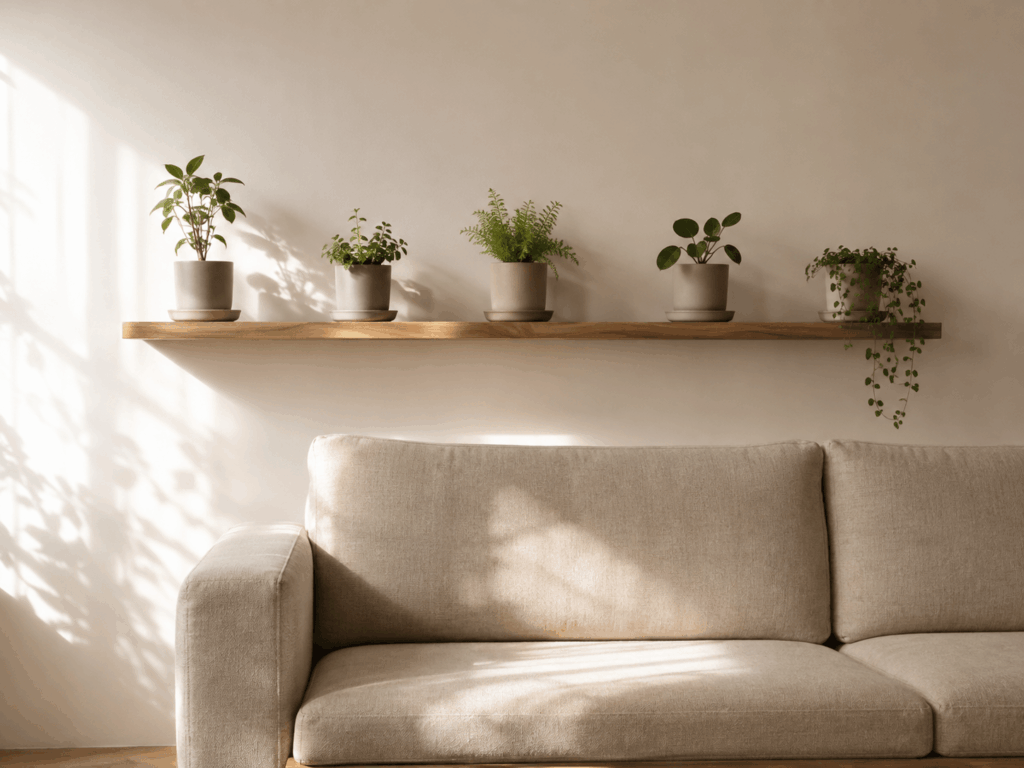
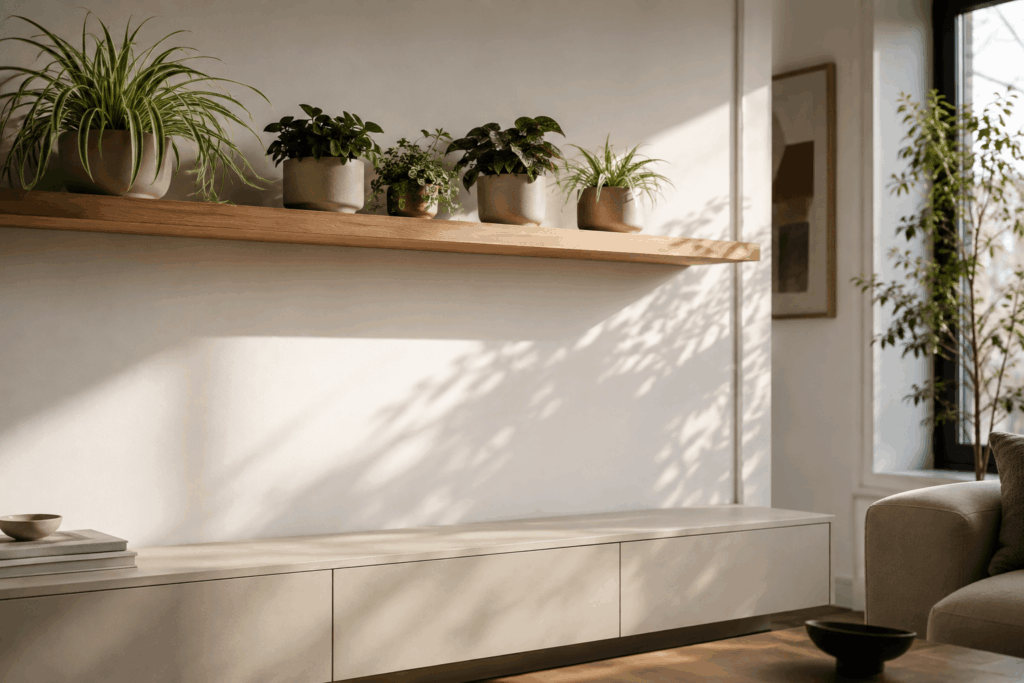
8. One Long Floating Plant Shelf
One properly mounted shelf often looks calmer than five small shelves scattered across the same wall. Use a few plants with different growth habits, then leave visible space between them so each silhouette can be read from across the room.
Best for: Minimalist living rooms and sofa walls. Watering note: Use removable saucers or take pots down to water. Avoid if: You cannot confirm suitable wall anchors and load capacity.
9. Staggered Floating Plant Shelves
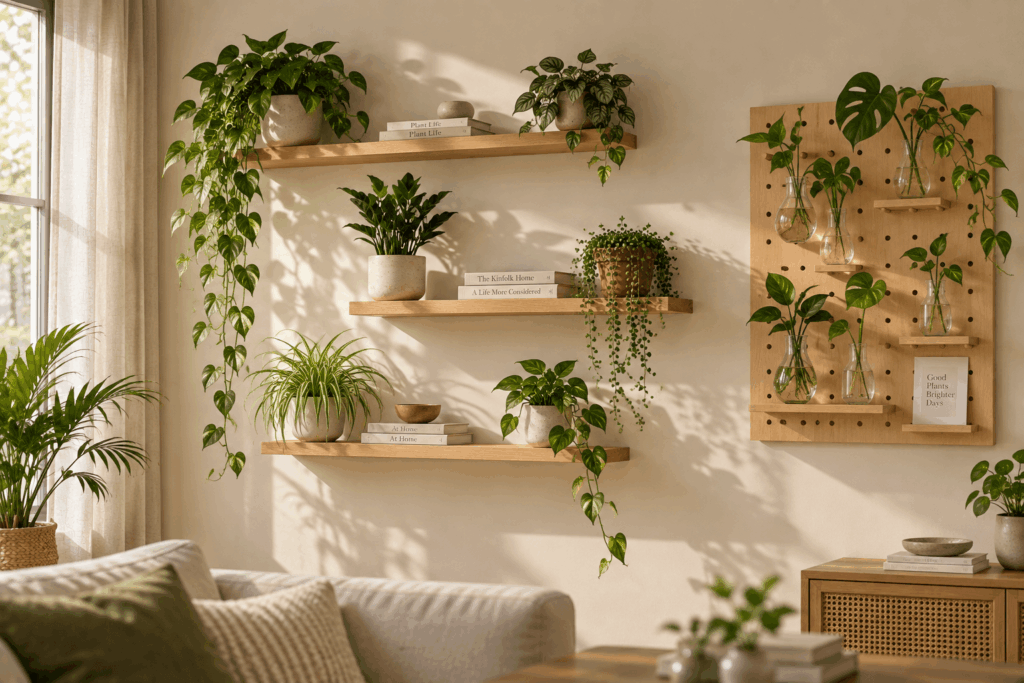
Two or three shelves at different heights make a wall feel more organic and give trailing stems room to fall without covering the plants below. Keep the shelves within comfortable reach rather than placing the highest one where routine watering requires a chair.
Best for: Medium blank walls. Avoid if: You are tempted to fill every gap. A staggered layout needs negative space or it quickly becomes visually noisy.
10. Pegboard Propagation Wall
A pegboard with small propagation vessels and young plants gives you greenery without the visual mass of full-size pots. Because the containers are small, the composition can stay light even on a narrow wall.
Best for: Cuttings, young plants, and people who enjoy watching root development. Care note: Water-grown cuttings need regular water checks. Avoid if: You want the wall to remain unchanged for months.
11. Modular Cube Plant Wall
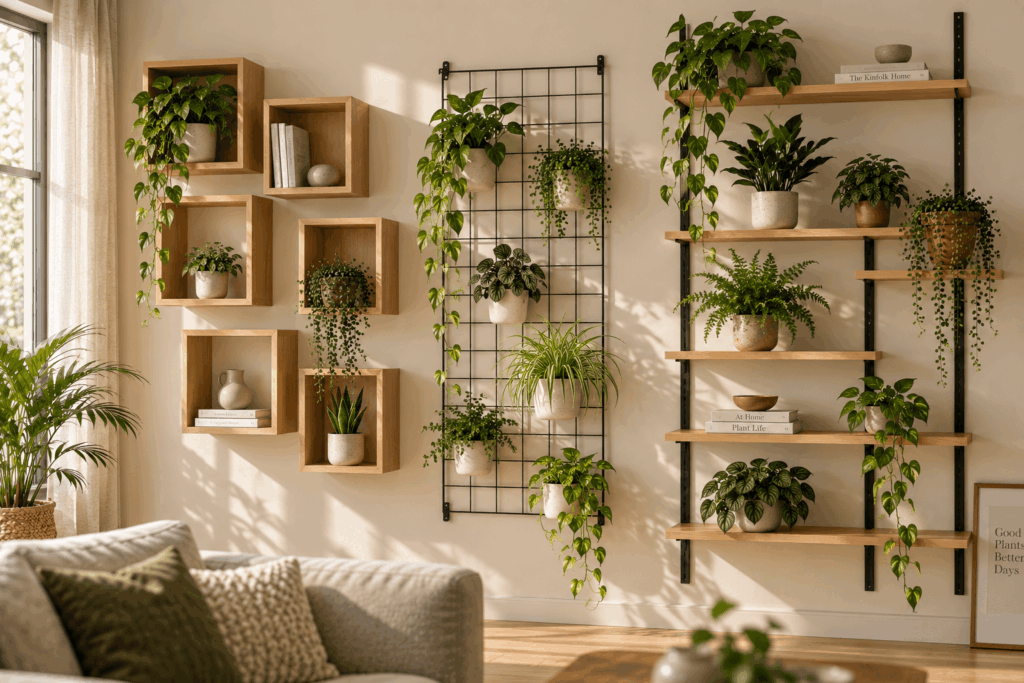
Repeating square modules bring order to mixed plant shapes. You can leave some cubes empty, use others for books or neutral objects, and reserve the rest for plants so the wall reads as furniture rather than a collection of unrelated pots.
Best for: Modern interiors and medium-width walls. Avoid if: Each cube becomes packed with a different color, pot, plant, and accessory. Repetition is what makes this idea work.
12. Wire Grid With Clip-On Pots
A fixed wire grid offers more stability than a leaning version while keeping individual containers moveable. If one plant starts leaning toward the window, its position can be adjusted instead of rebuilding the entire display.
Best for: Small lightweight pots. Care note: Keep moisture from sitting against the wall. Avoid if: Your preferred planters become heavy when fully watered.
13. Adjustable Vertical Rail Shelves
A rail system gives you the structure of wall shelving without locking every shelf into one permanent height. That matters once a six-inch plant becomes a two-foot plant and suddenly needs more headroom.
Best for: Collections expected to change. Renter note: This usually involves mounting, so confirm what your lease allows. Avoid if: You want a completely hole-free setup.
14. Botanical Art + Live Plant Gallery Wall
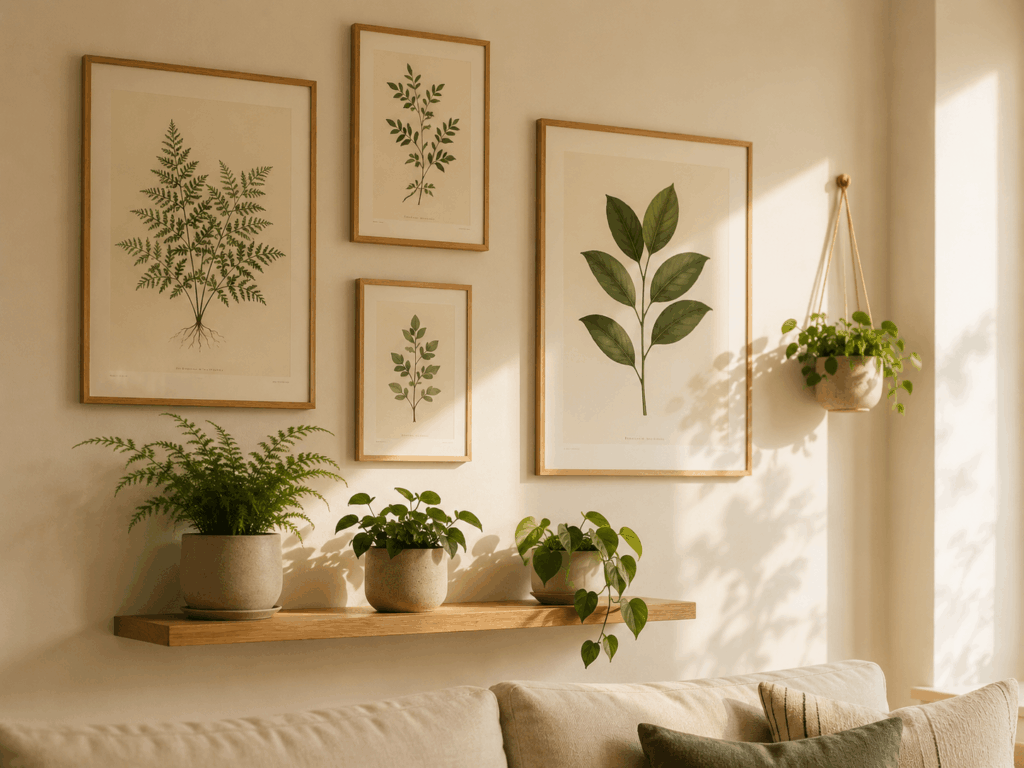
You do not need 20 living plants to make the wall feel botanical. Mix a few framed botanical prints with three or four actual plants, then use similar frame tones and planter materials to make the group read as one composition.
Best for: People who want visual fullness with less watering. Avoid if: The live plants end up positioned according to frame symmetry rather than usable light.
Living-Room-Specific Layouts
15. Sofa-Back Plant Ledge
A shallow ledge behind or above the sofa can produce a continuous line of greenery without scattering multiple hanging pots over seating. Keep the arrangement simple, with secure containers and enough clearance that foliage does not constantly brush anyone using the sofa.
I would keep this shallower and less crowded than many saved inspiration photos. The sofa wall is one of the worst places to create a watering routine that requires stretching over cushions with a full watering can.
16. TV-Side Asymmetrical Plant Wall
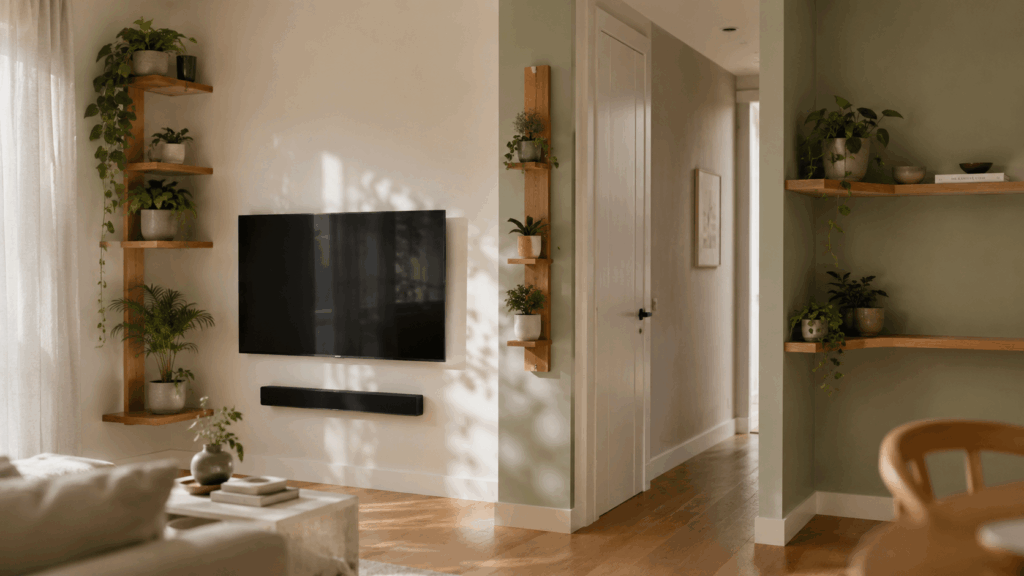
Instead of surrounding a television with pots, place the plant composition mainly to one side. A narrow shelf stack, grid, or vertical rail can visually soften the media wall while keeping routine watering away from electronics.
Best for: Small media walls. Avoid if: Leaves, saucers, or watering tools must pass directly over the screen, speakers, power strips, or other electronics.
17. Narrow Vertical Plant Column
A strip of wall beside a door, cabinet, or media unit can hold a surprisingly strong composition when you build upward instead of outward. Use three to five planting levels rather than trying to fit multiple pots across each level.
Best for: Awkward wall strips. Avoid if: The column would block a switch, thermostat, door swing, curtain, or frequently used storage.
18. Corner-Wrap Plant Wall
Two short wall sections can sometimes create a better plant display than one long wall. A shelf or rail continuing around the corner makes the arrangement feel intentional and gives you more options for positioning plants closer to useful natural light.
If the lower corner also needs height, GrowDwell’s guide to tall living room plants can help anchor the display without covering both walls with small pots.
19. Window-Side Climbing Vine Panel
A plant wall placed beside rather than opposite a usable window can reduce the distance between foliage and natural light. Train vines onto a controlled vertical panel while keeping the pots low enough to inspect and water easily.
Best for: Climbing or trailing plants near good indirect light. Avoid if: The support interferes with curtains, blinds, window handles, airflow, or routine cleaning.
20. Above-Console Plant Composition
A console table gives the plant wall a visual base, which helps a mixed arrangement look grounded instead of suspended randomly on the wall. Combine one wall-mounted shelf or rail with a few plants sitting directly on the console.
Best for: Entry-to-living-room transition walls. Care note: Keep the heaviest and thirstiest pots on the console, where they are easiest to remove and water.
21. Mirror + Trailing Plant Wall
A mirror can make a small amount of foliage feel more expansive by reflecting leaves and available daylight. Keep the live plants to one side or across the top edge rather than covering the mirror evenly.
Best for: Very small rooms where a full wall of pots would feel heavy. Avoid if: Plant placement creates repeated splashes or water marks on the mirror.
Style-Led Plant Walls
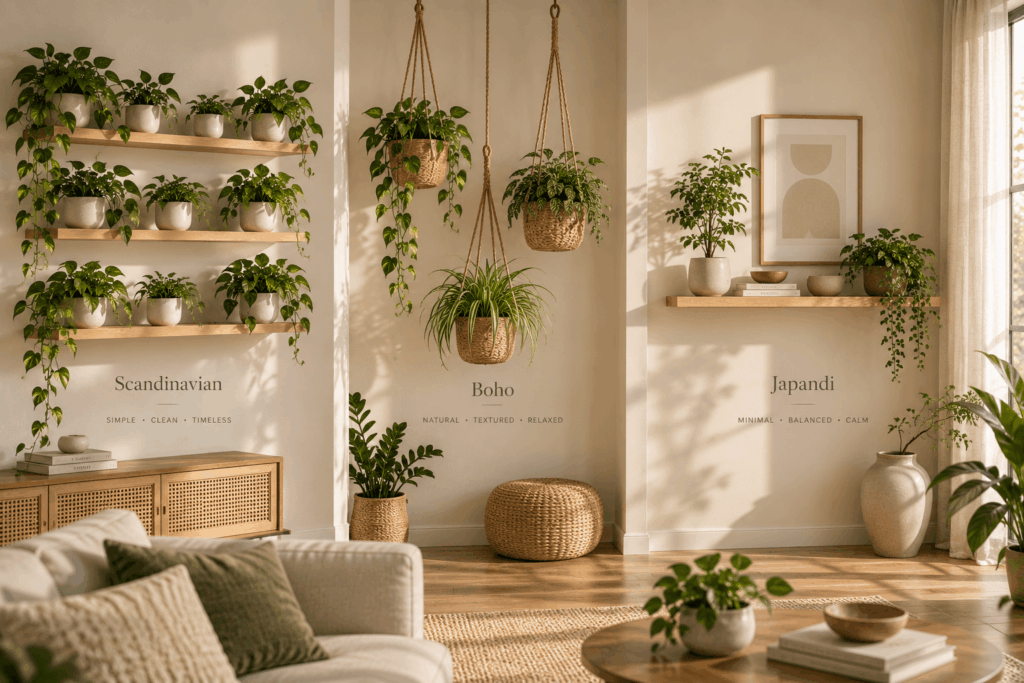
22. Scandinavian Single-Species Shelf Wall
Repeating one main plant type across simple shelves can make a compact living room feel calmer than a wall filled with unrelated foliage. Repeat one or two planter finishes as well, then let differences in plant size provide the variation.
Best for: Clean interiors with limited visual noise. Avoid if: All plants are placed together despite having noticeably different light or watering needs.
23. Boho Macrame Plant Cluster
A few hanging planters at different heights can create a soft vertical composition without installing shelves across the whole wall. Keep the number of cords controlled so the arrangement still feels airy in a small room.
Best for: A wall beside a window or reading corner. Pet note: Hanging foliage may still be reachable by an active cat. Height alone is not a safety guarantee.
24. Japandi Green Wall
This version uses fewer plants, stronger spacing, and natural materials rather than trying to cover the wall. One trailing plant, two upright forms, and a quiet shelf can sometimes communicate the idea better than 15 small containers.
Best for: Readers who prefer visual calm. Avoid if: Your goal is maximum plant capacity rather than a restrained design.
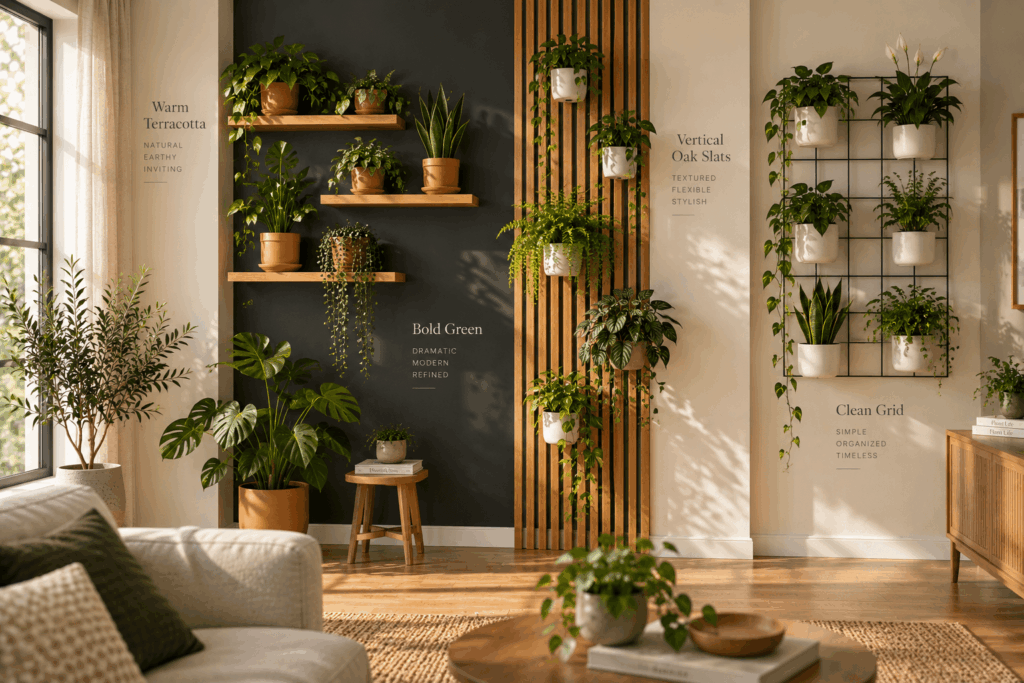
25. Terracotta Plant Wall
Repeating terracotta across shelves, rails, or a grid instantly ties different leaf shapes together. In a small room, material repetition can do more for visual order than trying to make every plant itself match.
Best for: Warm neutral interiors. Care note: Container material can influence how quickly potting mix loses moisture, so water according to the individual plant rather than a wall-wide schedule.
26. Dark Accent Wall + Green Foliage
A deeper wall color can make foliage read more strongly, which means you may need fewer plants to achieve a focal-wall effect. Keep nearby furniture and planters restrained so the wall color and leaves remain the main contrast.
Best for: A controlled focal wall. Avoid if: The wall is already the darkest, least naturally lit part of the room and you are choosing plants based only on appearance.
27. Wood-Slat Plant Wall With Clip-On Pots
Vertical wood slats can add architectural rhythm behind a small number of mounted planters. The plant arrangement then feels integrated with the wall treatment rather than scattered across bare drywall.
Best for: Landlord-approved upgrades or owned homes. Avoid if: The slat system is decorative only and not designed to support the intended loads.
28. Monochrome White-Pot Grid
Matching white pots across a simple grid keeps attention on leaf shapes rather than container colors. This is useful in a compact room where varied pots, shelves, foliage, and furniture could otherwise compete.
Best for: Small modern spaces. Avoid if: Uniform pot size forces plants into containers that are wrong for their root systems.
Light, Maintenance and Pet Reality
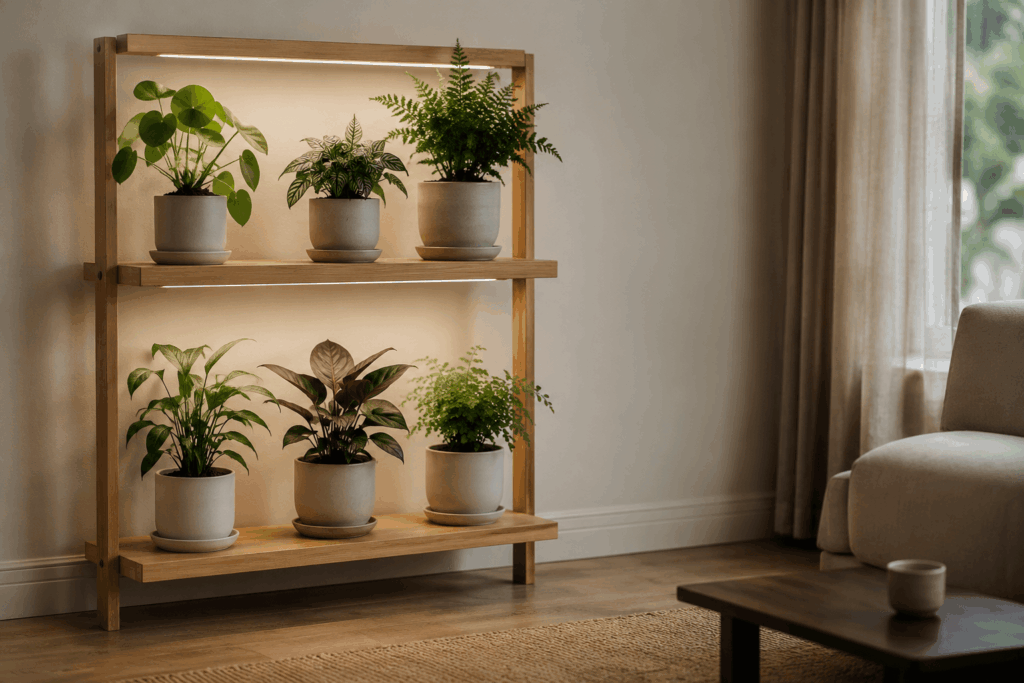
29. Grow-Light Plant Shelf Wall
A blank wall is not automatically a good growing location. If the wall sits too far from useful window light, a properly planned plant shelf with supplemental lighting can give you more flexibility than repeatedly replacing plants that decline there.
Penn State Extension explains that houseplants differ in their light requirements and that lower-light conditions affect plant performance. If your room is genuinely dim, start by reviewing indoor plants for dark rooms before choosing the wall design.
I would make the Pinterest photo follow the plant’s light needs, not make the plant struggle to fit the photo.
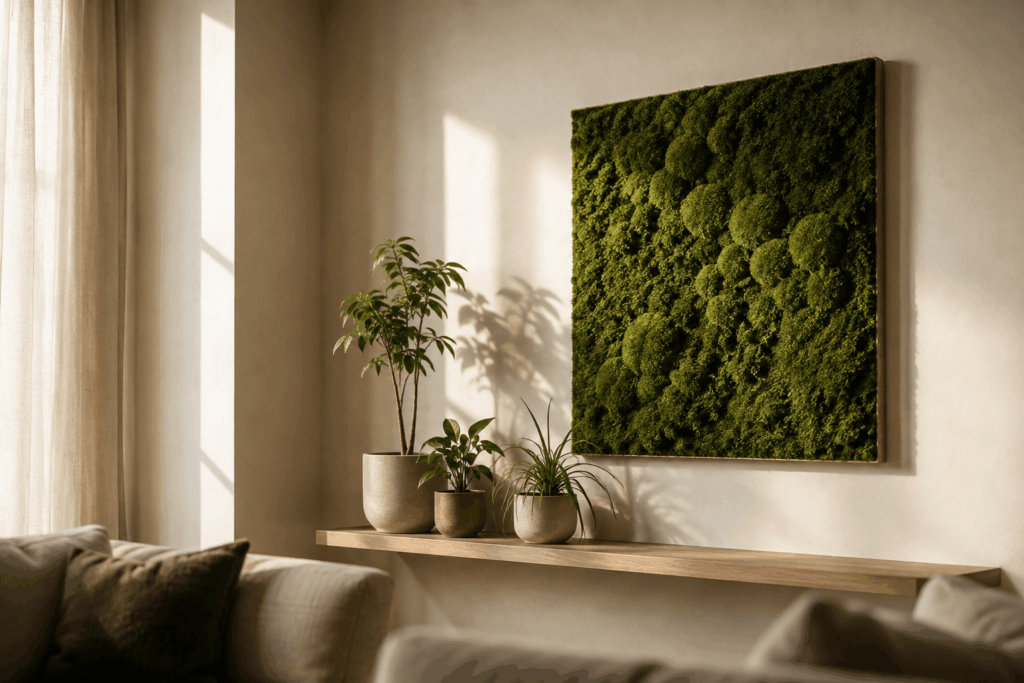
30. Preserved Moss + Live Plant Wall
Preserved moss can provide visual density while a smaller number of living plants supply actual growth and change. The combination can suit readers who like the look of a fuller green wall but do not want dozens of separately watered containers.
Best for: Decorative focal walls with limited live-plant capacity. Avoid if: You assume preserved material should be watered like living moss. Treat each component according to what it actually is.
31. Pet-Aware High Plant Wall
Pet-aware design starts with the plant species, not merely the height of the shelf. A determined cat may reach hanging foliage that looked safely out of the way when the room was styled.
The ASPCA lists spider plant as non-toxic to cats and dogs, while its golden pothos guidance lists pothos as toxic to both. GrowDwell’s pet friendly indoor plant guide is a better starting point than assuming every popular houseplant belongs on a pet-accessible wall.
I would skip the automatic pothos recommendation if your cat reliably climbs furniture or chews hanging leaves. Plant popularity does not override the behavior of the animal living in the room.
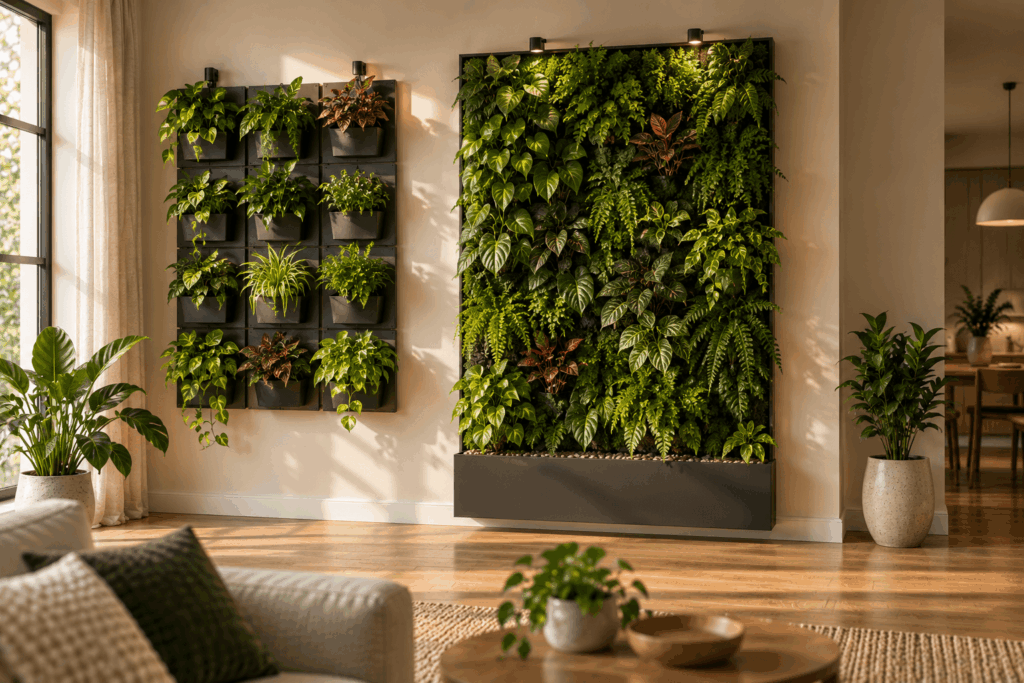
32. Self-Watering Modular Pocket Wall
A modular pocket system creates a denser green surface while keeping plants divided into repeatable units. Some systems reduce day-to-day watering effort, but they still require inspection, cleaning, moisture monitoring, and access to individual plants.
Illinois Extension emphasizes adequate container drainage for houseplants. That becomes especially relevant on a wall, where excess moisture can affect more than roots. Avoid if: You cannot easily inspect drainage or reach every module.
33. Full Living-Wall Panel
A full planted wall has the strongest visual impact on this list and the highest installation commitment. It can involve substantial plant weight, irrigation, drainage planning, moisture protection, lighting, structural support, and ongoing access for trimming or replacement.
Best for: A committed owner or renter with explicit permission and a proper moisture-management plan. Avoid if: Waterproofing, drainage, wall structure, or maintenance access is uncertain.
I would not make this the default beginner recommendation simply because it produces the most impressive photograph. The better beginner wall is the one you can inspect on a Tuesday evening without turning plant care into a maintenance project.
Takeaway: The best idea in this list is not the one with the most plants. It is the one that still makes sense after you account for light, wet soil, mounting, pets, and the ten minutes you actually have for routine care.
How to Pick the Right Plant Wall for Your Small Living Room
Choose the installation method first, then test it against your wall width, lease rules, available light, watering access, pets, and maintenance tolerance. This order prevents a common mistake: falling in love with a layout first and discovering later that the plants are too dark, the pots are unreachable, or the mounting is not allowed.
If your wall is very narrow: Start with an air-plant frame, narrow vertical column, small wire grid, or tension-pole system. These use height without requiring a broad furniture arrangement underneath.
If the wall is behind a sofa: Favor one long shelf, a shallow ledge, or a botanical art and plant gallery. Keep the watering routine simple and avoid containers that must be tipped, moved over upholstery, or reached from an unstable position.
If the wall is beside a TV: Put most of the greenery beside the electronics instead of over them. A side rail, vertical plant column, or asymmetrical shelf arrangement creates the visual connection without making water and electrical equipment share the same work zone.
If you have an unused corner: A ladder, freestanding trellis, corner-wrap shelf, or tall floor plant can create more greenery with less mounting. Corners are especially useful when one side sits closer to usable window light than the center of the room.
If you cannot drill: Narrow the list immediately to tension poles, freestanding ladders, freestanding trellises, and slim floor-supported shelves. That one decision eliminates a lot of attractive ideas that will otherwise tempt you into lease negotiations later.
If limited mounting is allowed: Wire grids, pegboards, floating shelves, and adjustable rail systems offer more wall efficiency. Ask what mounting and patching your lease permits rather than assuming every small screw hole is treated the same way.
If the wall gets weak natural light: Do not rely on the label “low light” without considering the specific location. Distance from windows, obstructions, orientation, and season can all change what reaches that wall, so choose plant species after assessing the location instead of treating light as a styling detail.
If watering access is awkward: Prefer removable individual pots with drainage holes and saucers. Keep thirsty plants on lower levels and use upper positions for plants that can be handled safely without water dripping down several shelves.
If you live with cats or dogs: Verify each species through a recognized plant-safety source. A wall can reduce access, but climbing furniture, jumping, falling leaves, and trailing stems can change the real exposure.
For maintenance: Count the individual watering points. A wall with four removable pots is a different weekly commitment from a pocket system with 24 plant positions, even when both occupy the same amount of wall space.
For wall protection: Think about what happens after watering, not just during installation. Use appropriate drainage, saucers, waterproof backing where necessary, and enough air space to spot moisture before it becomes a hidden problem.
For visual calm: Repeat something. That might be pot color, shelf material, plant family, or spacing. In a small room, repetition often makes a modest collection feel more intentional than simply adding another plant to every empty inch.
Takeaway: Installation, light, watering, and pet access should narrow your options before style does. Once those four pieces work, choosing the visual direction becomes much easier.
FAQs
Can renters create a plant wall without drilling into the wall?
Yes, renters can create a plant wall without drilling by using a tension-pole display, freestanding ladder, freestanding trellis, or slim floor-supported plant shelf. These options use vertical height while keeping most of the load off the wall. Before choosing one, confirm the floor and ceiling are suitable, keep pots accessible, and avoid overloading any platform or freestanding structure.
What is the best plant wall setup for a very small living room?
A tension-pole system or narrow vertical plant column is usually the most space-efficient choice for a very small living room. Both build upward instead of outward and can fit narrow blank wall sections. If you have a usable corner, a slim ladder or trellis can also work well, provided it does not interfere with walking space, doors, curtains, switches, or storage.
Can I put a plant wall behind a sofa?
Yes, but a plant wall behind a sofa should prioritize safe watering and easy access. One long floating shelf, a shallow sofa-back ledge, or a botanical art and live-plant gallery can work better than many scattered planters. Keep containers secure, leave enough clearance above seating, and avoid arrangements that require stretching over cushions with a full watering can.
Do plant walls work in low-light living rooms?
Yes, plant walls can work in low-light living rooms if the plants are matched to the actual light level or supported with suitable supplemental lighting. A blank wall is not automatically a good growing location. Check window distance, obstructions, orientation, and seasonal changes first, then choose species and consider a grow-light shelf if the wall remains too dim.
Are plant walls safe for homes with cats or dogs?
Plant walls can be safer for pets, but shelf height alone does not make a plant safe. Verify every plant species through a recognized pet-safety source because cats may climb furniture, chew hanging leaves, or reach fallen foliage. The article notes that spider plant is listed as non-toxic by the ASPCA, while golden pothos is listed as toxic to cats and dogs.
What Actually Matters
Plant Wall Ideas for Living Room Small Space work best when the setup fits your real wall, real light, and real maintenance routine, not simply the most impressive photo you saved. A smaller removable display that stays healthy and easy to water usually serves a beginner better than a dense wall that immediately creates access and moisture problems.
Start with one controlled section. A narrow tension pole, slim shelf, ladder, or small trellis gives you enough vertical greenery to see how the room feels without committing the entire wall.
Live with that setup for a few weeks. Notice which pots are annoying to reach, which leaves turn toward the window, where water tends to collect, and whether a pet treats your carefully planned display as a new climbing route.
Then look back at that blank wall behind the sofa. If the first few plants are easy to care for and still leave the room feeling open, you have your answer: add slowly, keep access simple, and let the wall grow only as fast as your routine can support it.