
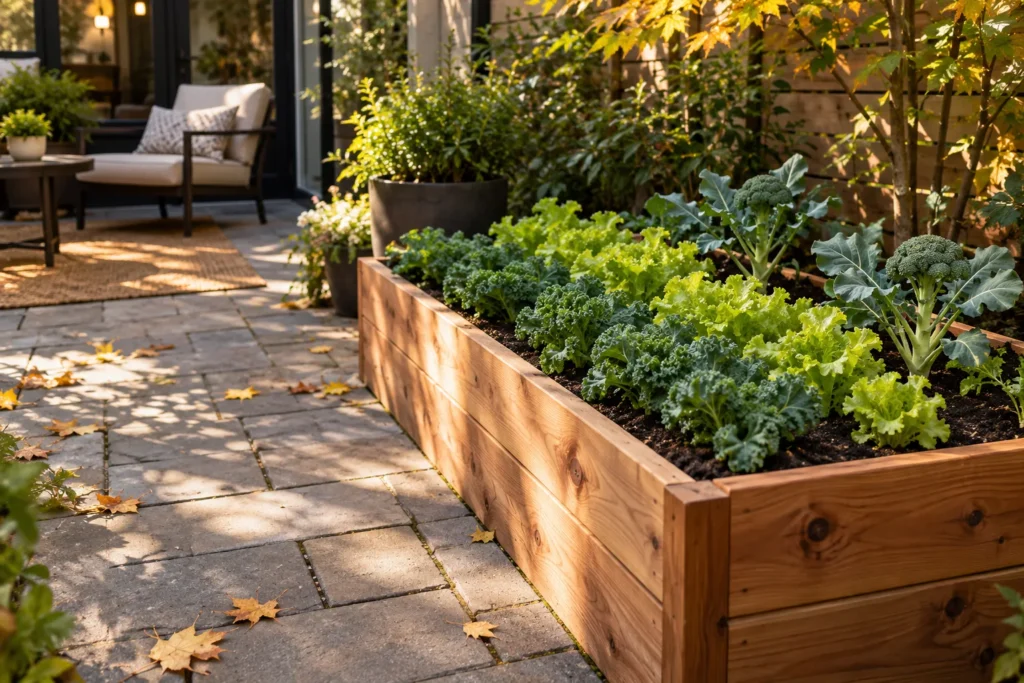
Late summer has a particular look in a small vegetable patch. The tomato vines are leggy and half bare, the soil under them is dusty, and the seed rack at the hardware store has been pushed to a back corner as if gardening season is over.
It isn’t. This fall vegetable garden planting guide shows you how to turn that tired bed or row of containers into a second harvest of greens, roots and cabbage-family crops, timed so they mature before a hard freeze ends things for you. The whole plan rests on one date and a bit of simple counting.
Table of Contents
At a Glance
- Every fall planting date starts from your average first fall frost date, so find that before buying seed.
- Count back from frost using the packet’s days to maturity, plus about two weeks of harvest time and about two weeks of “fall factor” for slower autumn growth.
- Stick to cool-season crops: leafy greens, cabbage-family crops and roots handle cold far better than summer vegetables.
- Late-summer seeds need extra help: sow them deeper than in spring and keep the soil shaded and moist until they sprout.
- On frost nights, cover tender crops with cloth sheets or blankets held up on stakes, never plastic resting on the leaves.
If you have only a few weeks left before frost, put your energy into fast greens and radishes, or buy transplants for the slower crops.
What You’ll Need
A fall garden needs less gear than a spring one, because the bed is usually already built.
Essentials:
- A bed or containers in full sun, checked again now that days are shorter (a spot that was sunny in June may be shaded by October).
- Seed packets or transplants of cool-season crops, with days to maturity printed on the label.
- Compost or aged manure to refresh the soil after summer crops.
- Old cotton sheets, light blankets or cardboard boxes for frost nights.
Optional:
- A board, shade cloth or light mulch to shade seed rows in hot weather.
- Stakes or wire hoops to keep covers off the leaves.
- A complete garden fertilizer such as 12-12-12, used only if your soil needs it.
Containers work too. Choose pots with drainage holes and fresh potting mix, and see our container vegetable garden ideas for beginners for pot sizes and setups that suit a balcony or patio. If you’re working in a raised bed, it helps to map your raised bed layout first so each crop has a home before you sow.
Before You Start: Timing for a Fall Vegetable Garden
Timing matters more in fall than in spring, because you’re racing a deadline instead of waiting for warmth. A crop planted too late can still be half grown when frost arrives.
Three things decide if you’re on time:
- Your first frost date. Northern gardens may start fall crops in midsummer; mild-winter areas in the South can plant well into autumn.
- How much daylight your spot still gets. Shorter, cooler days slow growth, which is why the count-back method in Step 3 adds extra time.
- What’s still growing. Tomatoes, peppers and eggplant keep producing until frost, so decide early which to pull.
I’ve grown tomatoes and chilli peppers in balcony containers for years, and the hardest part of fall planting is admitting the summer plants need to come out. A tomato that is still flowering in late summer rarely pays back the space a row of lettuce could use.
Past your frost window already? Garlic goes in the ground in fall for a summer harvest, and our guide on how to plant garlic in the fall walks through it. Otherwise, plan next year’s dates now.
Fall Vegetable Garden Planting Guide: Step-by-Step
These eight steps follow the order you’ll work in. Steps 1 to 3 happen at a table with seed packets; the rest happen outside.
Step 1: Find Your Average First Fall Frost Date
This date is the anchor for every other date in this guide. It’s the typical first autumn frost for your area, based on years of weather records.
Treat it as a median, not a promise. As one extension educator points out in his guide to calculating fall planting dates, frost can arrive earlier or later than the median in any given year, and your local National Weather Service office publishes these dates. Your county extension office is another good place to ask.
If your yard or balcony sits in a low, cold pocket, plan around a slightly earlier date to be safe.
Step 2: Pick Cool-Season Crops That Fit the Time Left
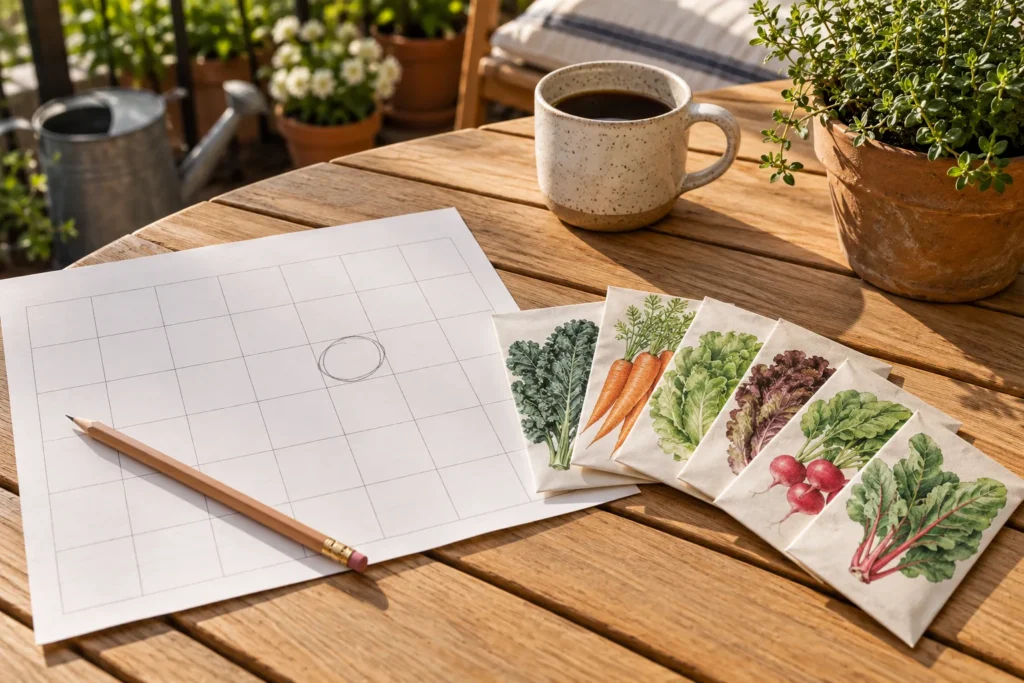
Choose crops that handle cold, then check that each one can mature in the weeks you have. The University of Nebraska’s fall gardening guide sorts common vegetables into two useful groups by how much frost they can take.
| Group | Cold tolerance | Example crops |
|---|---|---|
| Semi-hardy | Tolerate a light frost, about 30 to 32°F | Beets, Chinese cabbage, collards, leaf and bibb lettuce, mustard, radishes, spinach, Swiss chard, green onions, potatoes |
| Hardy | Tolerate several frosts; killed near 20°F | Cabbage, broccoli, cauliflower, Brussels sprouts, carrots, turnips, rutabagas, kale |
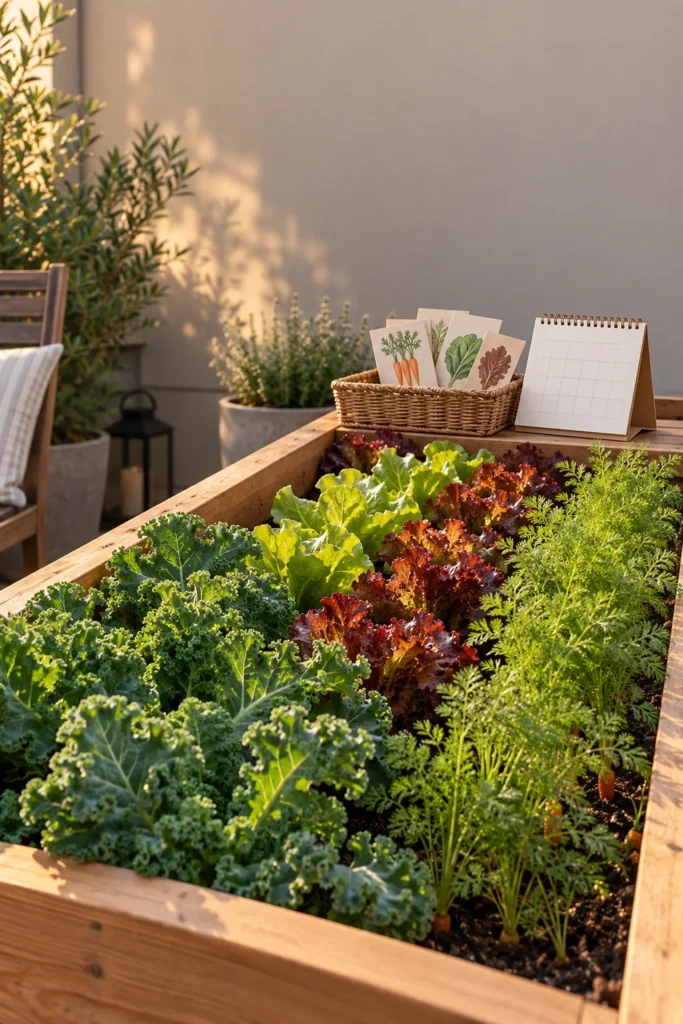
Hardy crops such as kale (Brassica oleracea) and carrots (Daucus carota) keep going after the first frosts. Semi-hardy lettuce (Lactuca sativa) and spinach (Spinacia oleracea) should mature close to the frost date.
Within each crop, pick the variety with the shortest days to maturity you can find. A cabbage that matures in 60 days is a far easier fall crop than one that needs 90 or more. If you’re new to vegetables, our list of the easiest vegetables to grow for beginners is a handy filter.
For a first fall bed, we’d start with leaf lettuce, spinach and radishes, because they grow quickly and give you a harvest even if your timing is a little off.
Step 3: Count Back to Set Each Planting Date
Your planting date is the first frost date minus the total days each crop needs. That total is more than the number on the packet.
Add these together for each crop:
- Days to maturity from the seed packet or plant label.
- Days to grow your own transplants, if you start seeds indoors first.
- About 14 days of harvest time, so you get more than one picking before frost.
- About 14 days as a “fall factor”, because growth slows as days cool and shorten.
- Another 14 days for frost-tender crops such as beans, cucumbers and squash.
Then count that many days back from your frost date. The University of Nebraska formula with its 14-day fall factor is the basis for this method.
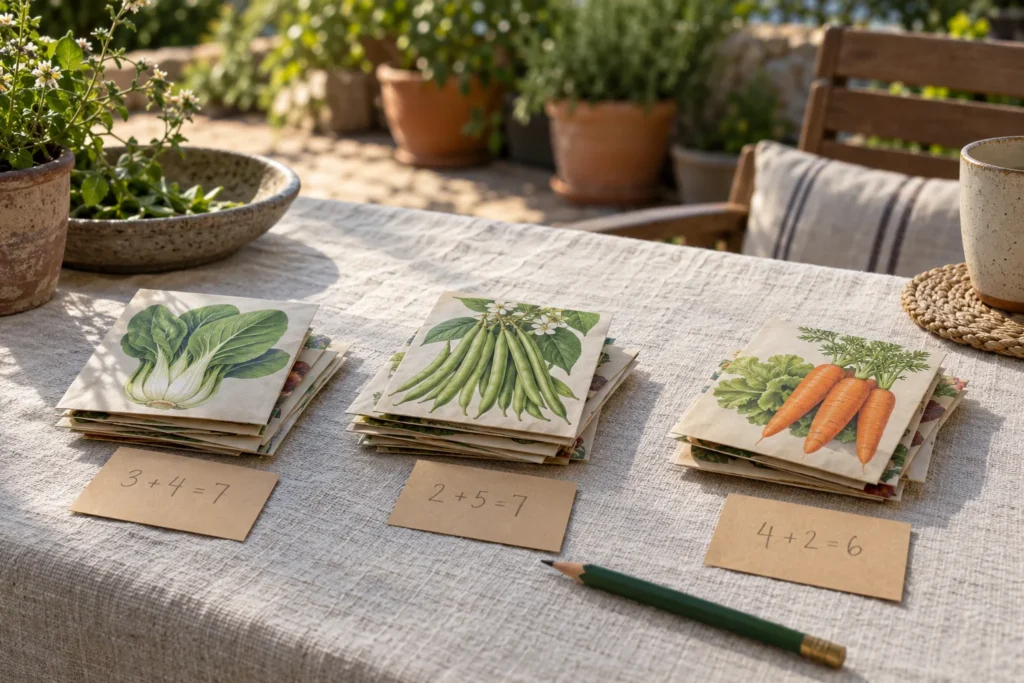
Here’s how it looks in practice. A bok choy variety rated at 37 days needs 37 + 14 + 14 = 65 days, so with a median frost date of October 10 you’d sow it around August 6. A 55-day bush bean, being frost tender, needs 55 + 14 + 14 + 14 = 97 days.
Then group packets with similar dates into two or three sowing sessions.
Step 4: Clear Summer Crops and Refresh the Soil
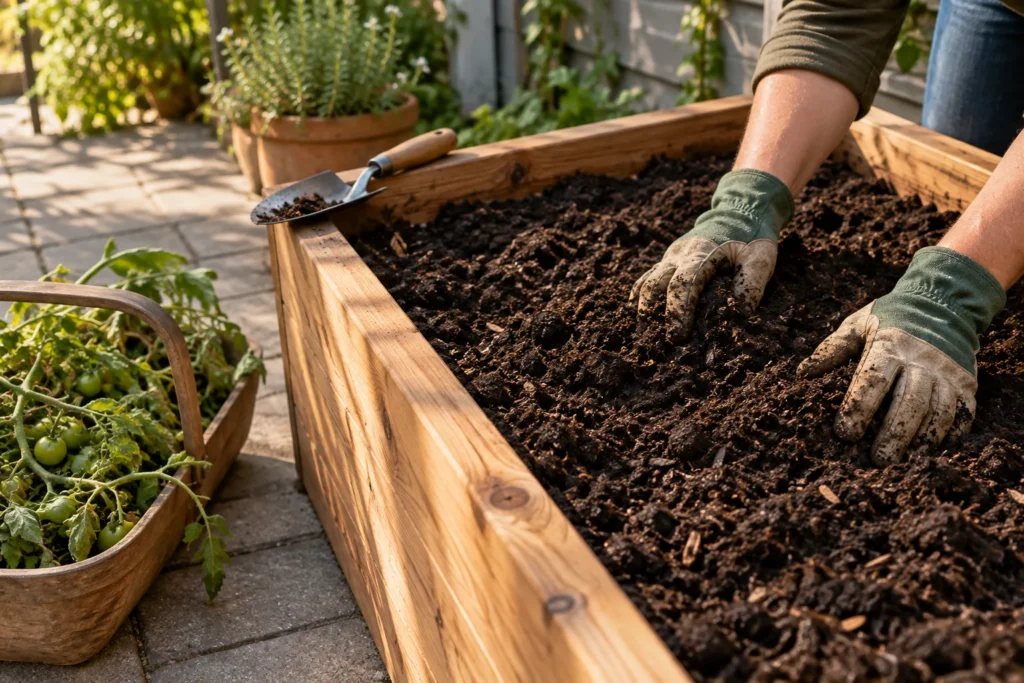
Fall crops go into soil that has just fed a summer garden, so give it a quick refresh before sowing.
Harvest anything usable, then pull spent plants. Healthy plant debris can go to the compost pile, but diseased or insect-infested plants and weeds carrying seed heads belong in the trash, so they don’t carry problems into next season.
Spread 2 to 3 inches of compost or aged manure over the bed. If your soil needs feeding, you can add 1 to 2 pounds of a complete fertilizer such as 12-12-12 per 100 square feet, following the product label. Work it into the top 4 to 6 inches only; deeper digging dries out the soil below.
In containers, scrape off the top few inches of old mix and top up with fresh potting mix and a little compost. Keep the pot’s drainage holes clear, since fall rain plus cool weather keeps pots wet longer.
If the soil is bone dry, water it lightly a day or two before planting.
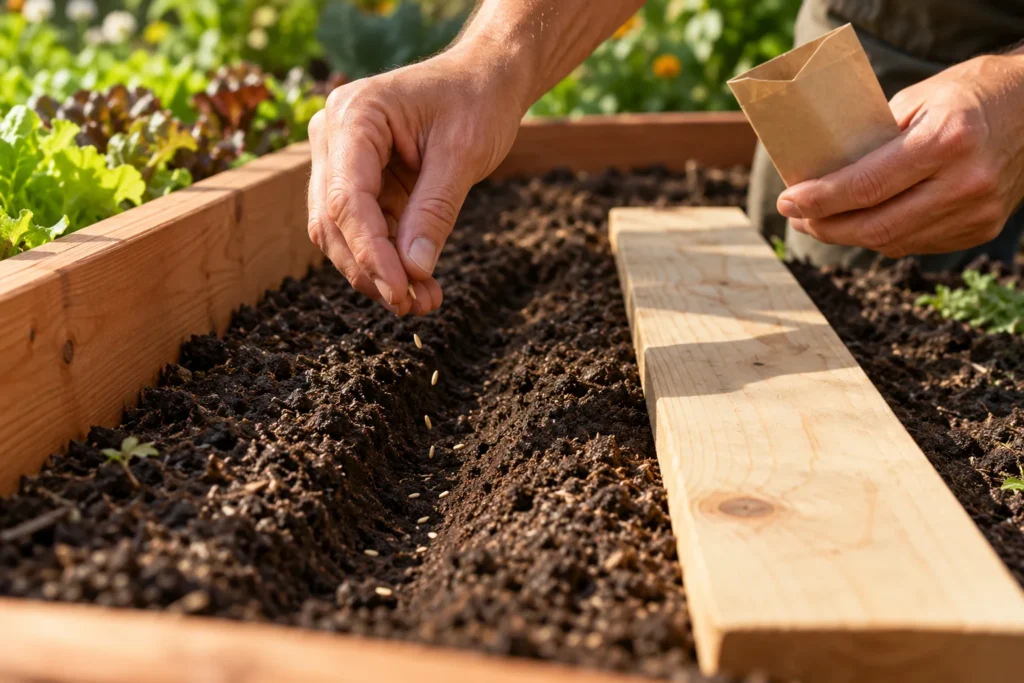
Step 5: Sow Seeds for Late-Summer Heat
Fall seeds are sown into the hottest soil of the year, so the method changes from spring. Lettuce, peas and spinach germinate poorly when soil is above 85°F, and hot, dry soil is one of the main reasons fall sowings fail.
Use these adjustments:
- Sow seeds in a shallow trench and cover them about twice as deep as you would in spring, where the soil stays cooler and moister.
- Shade the row with a board or a light layer of mulch until sprouts appear, then remove it so seedlings get full light.
- In extreme heat, water lightly two to three times a day until the seeds germinate.
- Be patient. Some crops take 10 days or more to come up in late summer.
Shading and keeping seeds evenly moist are the same two steps N.C. Cooperative Extension recommends for fall seeding, because heat and dryness together are what stop germination.
For a steady supply of salad greens, sow a short row of lettuce or radishes every week for about a month.
Step 6: Set Out Transplants for Slow Crops
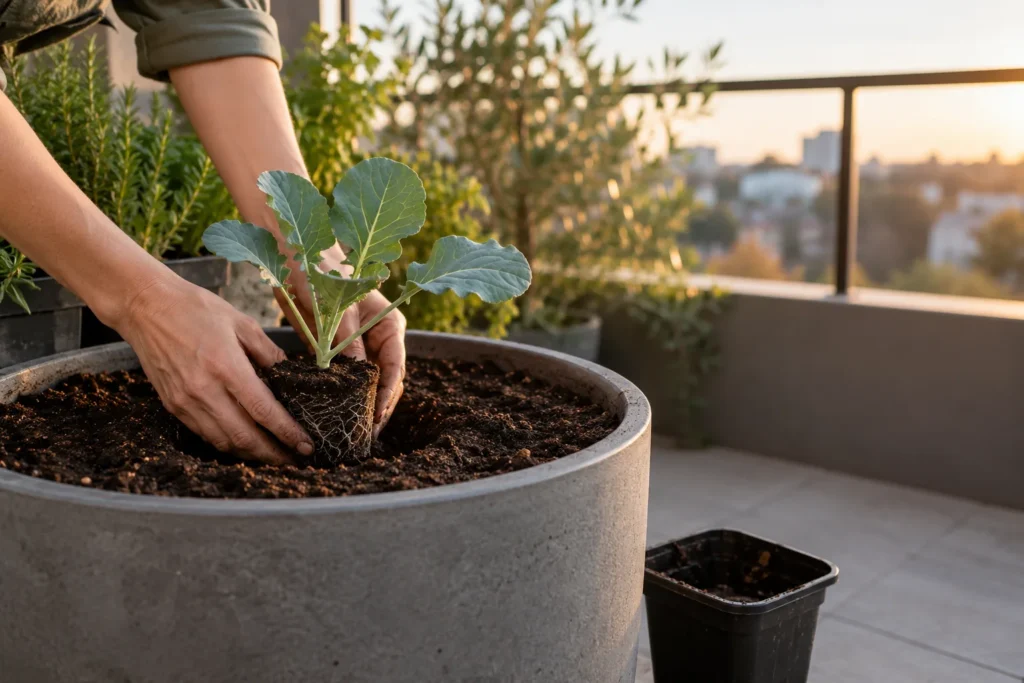
Broccoli, cauliflower, cabbage and Brussels sprouts take a long time from seed, so transplants are the easier route for most fall gardens. Garden centers often sell broccoli and cauliflower starts in late summer for exactly this reason, and a transplant cuts weeks off the time to harvest.
Plant them in the evening or on a cloudy day, at the same depth they grew in their pots, and water them in well.
If you grew your own seedlings indoors, harden them off over several days by setting them outside for a few hours, then longer each day, before planting.
Step 7: Water, Thin and Mulch Through Fall
Young fall crops need steady water while their roots establish, then less as the weather cools. Once seedlings are up, soak the soil thoroughly about once a week rather than sprinkling every day, adjusting for rain and for containers, which dry out faster than beds.
Keep new seedlings lightly shaded on the hottest afternoons until their roots settle in; a strip of shade cloth is enough.
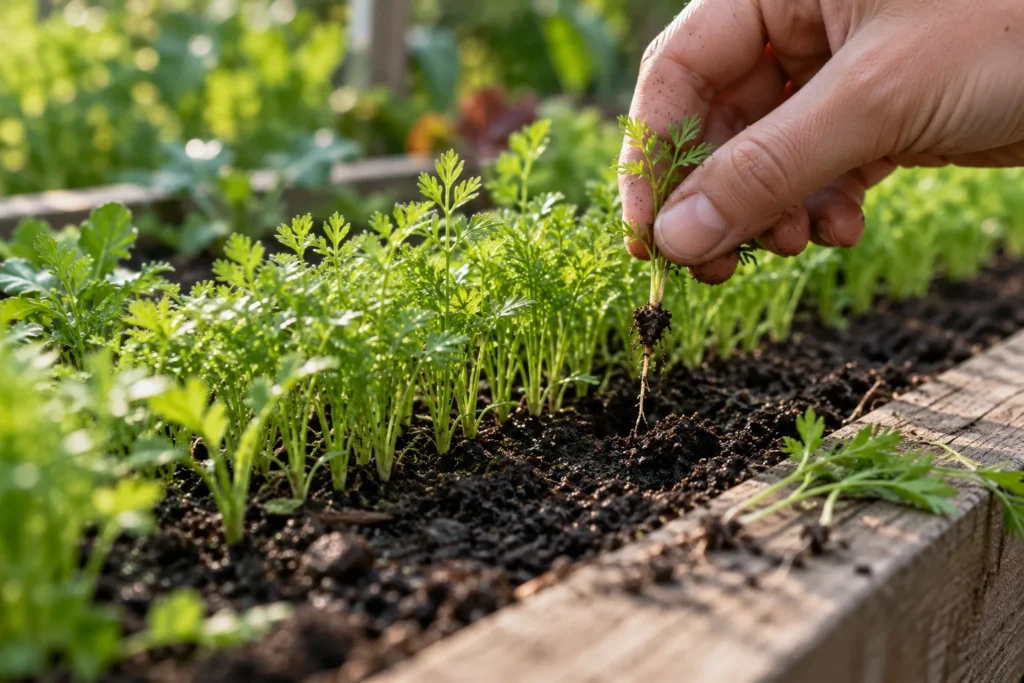
Thin seedlings to the packet spacing once they have true leaves; crowded carrots and beets stay small.
Once seedlings are a few inches tall, add a light mulch of straw or shredded leaves between rows to hold moisture. Hold off until then, since heavy mulch can bury tiny seedlings.
Step 8: Cover on Frost Nights and Harvest
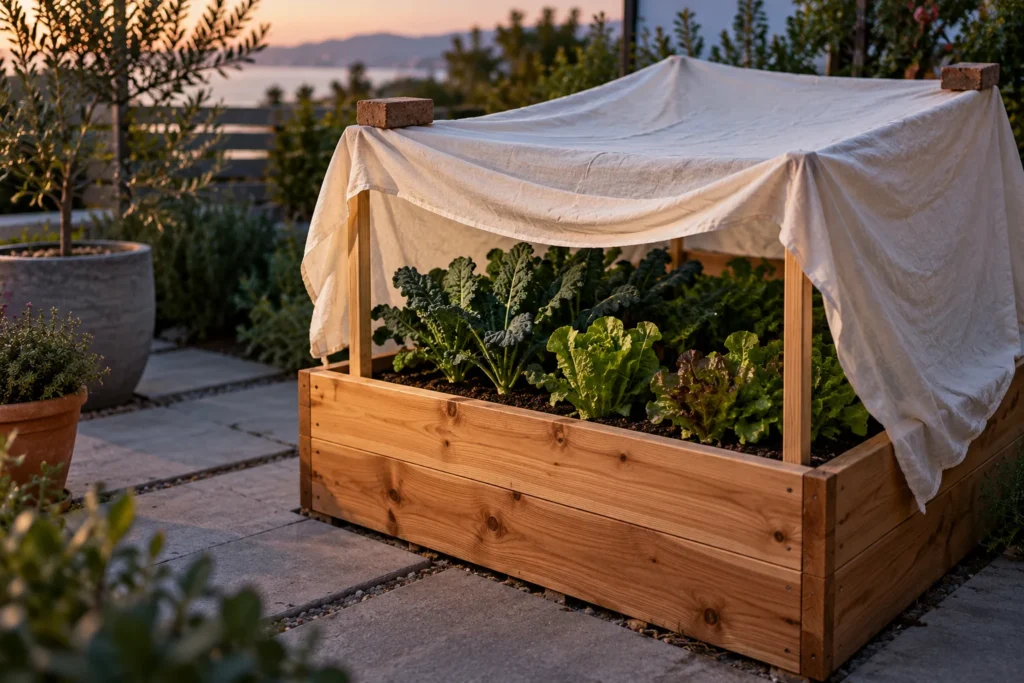
Check the forecast every evening once frost season starts, and cover tender crops when a frost is predicted. Old cloth sheets or light blankets work well for larger plants, held up on stakes so the weight doesn’t crush the leaves. Small plants can go under an upside-down cardboard box weighted with a brick.
Skip plastic sheeting and poly tarps directly on plants. Michigan State University Extension warns that plastic traps moisture and can make plants freeze faster. Take covers off in the morning once temperatures rise above freezing, and know that most simple covers can fail on nights at 32°F or lower, so harvest semi-hardy crops before a hard freeze.
Spinach and kale often taste sweeter after a frost, so hardy crops can stay put while you pick. Carrots, beets, turnips and rutabagas can stay in the ground under heavy straw mulch and be dug into winter.
Growing in pots? Roots in containers are more exposed to cold than roots in the ground, so move pots against a wall or under cover on cold nights. See our guide to winterizing potted plants on a balcony covers that in detail.
Fall Planting Timeline
This table turns the Step 3 formula into rough lead times, so you can see at a glance how early each kind of crop needs to go in. Use your own packet numbers for the final dates.
| Days to maturity on packet | Crop type | Total days to count back | About this many weeks before first frost |
|---|---|---|---|
| 30 | Cold tolerant (radishes, some greens) | 58 | 8 |
| 37 | Cold tolerant (bok choy example) | 65 | 9 |
| 45 | Cold tolerant (leaf lettuce, spinach) | 73 | 10 to 11 |
| 60 | Cold tolerant (carrots, beets, cabbage) | 88 | 12 to 13 |
| 55 | Frost tender (bush beans) | 97 | 14 |
Days to maturity vary a lot by variety, so use the number on your own packet, and add transplant-raising time if you start seeds indoors.
Cover crops fit into this calendar too. Sowing a cover crop 4 to 6 weeks before your first frost protects bare soil from erosion and weeds over winter, which makes it a good use of any bed you won’t replant.
Common Mistakes
Most fall garden problems come from timing and heat. These catch beginners most often.
- Trusting the packet number alone. Days to maturity assume spring and summer growth; leaving out the fall factor and harvest window is the most common reason crops run late. See Step 3.
- Waiting for cool weather to sow. By then, many crops are past their date.
- Keeping every summer plant. Leaving tired tomatoes or squash in place takes sun and space from crops that would actually mature.
- Picking long-season varieties. The same vegetable can vary by weeks between varieties, so the shortest one usually wins in fall.
- Composting diseased plants. See Step 4.
- Covering plants with plastic. Use fabric or cardboard instead (Step 8).
Troubleshooting
Seeds never came up
Hot, dry soil is the most likely cause, especially for lettuce, spinach and peas; old seed is the other usual suspect. If the surface dried out between waterings, resow deeper and shade the row as in Step 5. If the soil stayed moist and nothing appeared after a couple of weeks, sprout a few seeds in a damp paper towel and buy fresh if few come up.
Seedlings wilt or collapse in the afternoon
If the soil is dry, young roots can’t keep up with the heat: water deeply and add afternoon shade. If the soil is wet and seedlings collapse at the soil line, crowding and soggy soil are more likely; thin the row and let the surface dry slightly.
Crops are still small when frost arrives
The planting date was too close to frost, or the variety was too slow. Hardy crops keep growing slowly through several frosts, so cover them and keep harvesting, and next year count back with the fall factor and pick shorter varieties.
Leaves look dark, limp or glassy after a cold night
That’s frost damage. On a hardy crop with only outer leaves hit, trim them and keep going. If lettuce or another semi-hardy crop is limp all the way through, harvest what’s usable and check your cover method against Step 8.
Lettuce or greens bolt and turn bitter
Heat triggers bolting, the switch from leaves to flowers. Pull bolted plants, resow a little later in the window, and give young plants afternoon shade.
Frequently Asked Questions
Can I plant tomatoes or beans for a fall harvest?
Only if you have plenty of time before frost. Frost-tender crops such as beans, cucumbers, squash and tomatoes need an extra 14 days in the Step 3 count, so a 55-day bean needs about 97 days. By late summer, tomatoes planted from scratch rarely have time to ripen fruit, so cool-season crops are the better bet.
Can I grow a fall vegetable garden in containers?
Yes. Leafy greens, radishes and compact brassicas grow well in pots with drainage holes and fresh potting mix, and you use the same count-back dates as a bed. Pots dry out faster in warm weather and get colder on frosty nights, so check moisture more often and move them to a sheltered spot when frost is forecast.
What if frost arrives earlier than my average date?
Average dates are medians, so an early frost happens. Cover semi-hardy crops such as lettuce that night, pick anything close to ready, and leave hardy crops like kale and carrots in place, since they tolerate several frosts. Building the two weeks of fall factor into your dates gives you a cushion for this.
Is it too late to plant anything once fall has started?
For most vegetables in cold areas, yes, once you’re inside the count-back window. Garlic is planted in fall, and a cover crop sown 4 to 6 weeks before your first frost still protects bare soil over winter. In mild-winter areas with a late first frost, fast greens and radishes may still fit, so run the Step 3 count with your own date.
What Actually Matters
A fall vegetable garden planting guide is mostly arithmetic and a little shade. Get the dates right, keep new seed cool and moist, and most of the work is done.
The one thing to get right first is the date. A good crop planted three weeks late will disappoint you; an ordinary crop planted on time won’t.
This week, look up your first frost date, sort your seed packets into count-back groups, and clear one bed or container to start. If the calendar has already beaten you this year, plant garlic or a cover crop now and mark next summer’s sowing dates while they’re fresh.
Sources
- University of Nebraska-Lincoln Extension – Fall Vegetable Gardening (NebGuide G1343) – planting-date formula and fall factor, frost tolerance groups, soil preparation, heat germination, deeper sowing, root crops under straw
- The Garden Professors (John Porter) – Counting the Days to Maturity: Calculating planting dates for fall vegetables – worked count-back example, median frost dates, National Weather Service frost data
- University of Illinois Extension – Fall Vegetable Gardening – transplants for broccoli and cauliflower, germination time, succession sowing, cover crop timing, sweeter spinach and kale after frost
- N.C. Cooperative Extension, Lee County Center – Are You Getting Ready for Your Fall Garden? – shading and moisture for fall seeding, weekly watering after sprouting, grouping packets by planting date, heat and bolting
- Michigan State University Extension – Create a longer growing season for your vegetable garden – fall frost covers, avoiding plastic, cover limits at 32°F.