

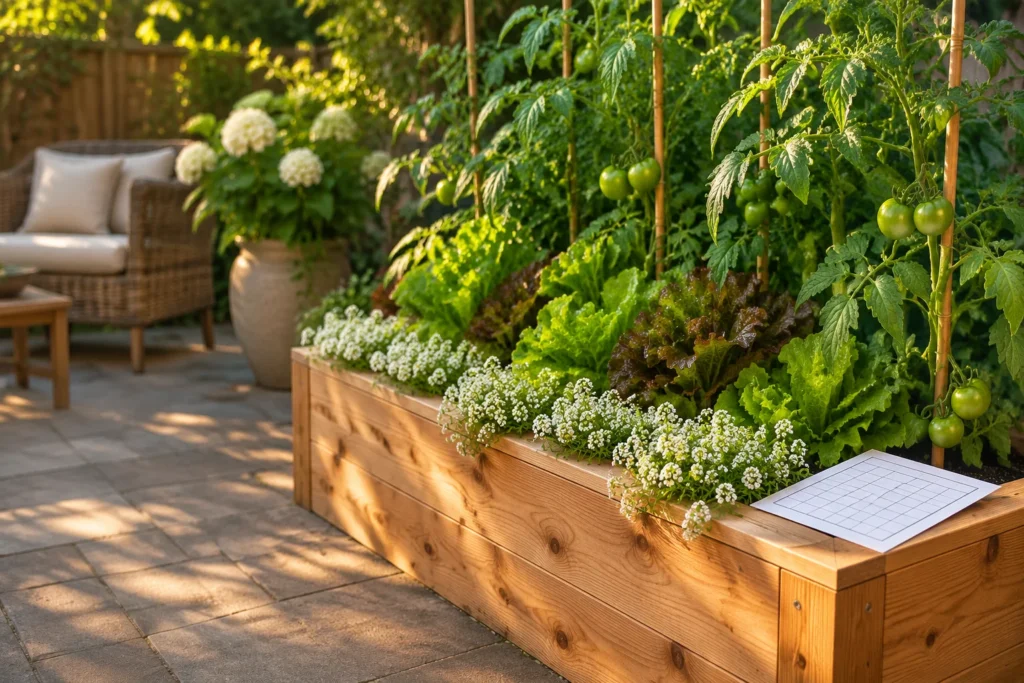
You’ve got a seed catalog open on the couch, a pencil, and a chart that swears beans hate onions, basil makes tomatoes taste better, and marigolds keep every bug away. Next year’s bed is a blank rectangle on graph paper, and you’d like to fill it without making a mistake you’ll be weeding around until August.
This companion planting chart for vegetables keeps the useful part of those old charts and adds the column they always skip: how strong the reason behind each pairing really is. Some pairs earn their spot through research, some through simple geometry, and some through tradition alone. Fall is the cheapest time to sort them out, because moving a crop on paper costs nothing, especially if you map your raised bed layout before you order seed.
Table of Contents
At a Glance
- Most pairings that work do so for plain reasons: shared space, light, root depth and shelter for the insects that eat pests.
- Truly harmful neighbors are few. Black walnut roots, tall crops shading short sun lovers, and plain crowding cause most of the damage.
- Research backs a handful of moves, such as a strip of sweet alyssum near lettuce for aphid control and mixing several kinds of plants instead of relying on one.
- Famous chart lines like “beans hate onions” or “basil improves tomato flavor” are tradition, so treat them as optional.
- Onions, garlic and chives are toxic to cats and dogs, so plant them where pets can’t chew them.
If you’re short on room, start with the spacing pairs (lettuce under tomatoes, radishes with carrots) and add tradition-only pairs only where you have space to spare.
The Companion Planting Chart for Vegetables
Here’s the whole chart in one place: 13 common vegetables, what to grow beside each, what to keep apart, and how solid the reason is. Read across a row before you commit a crop to a spot.
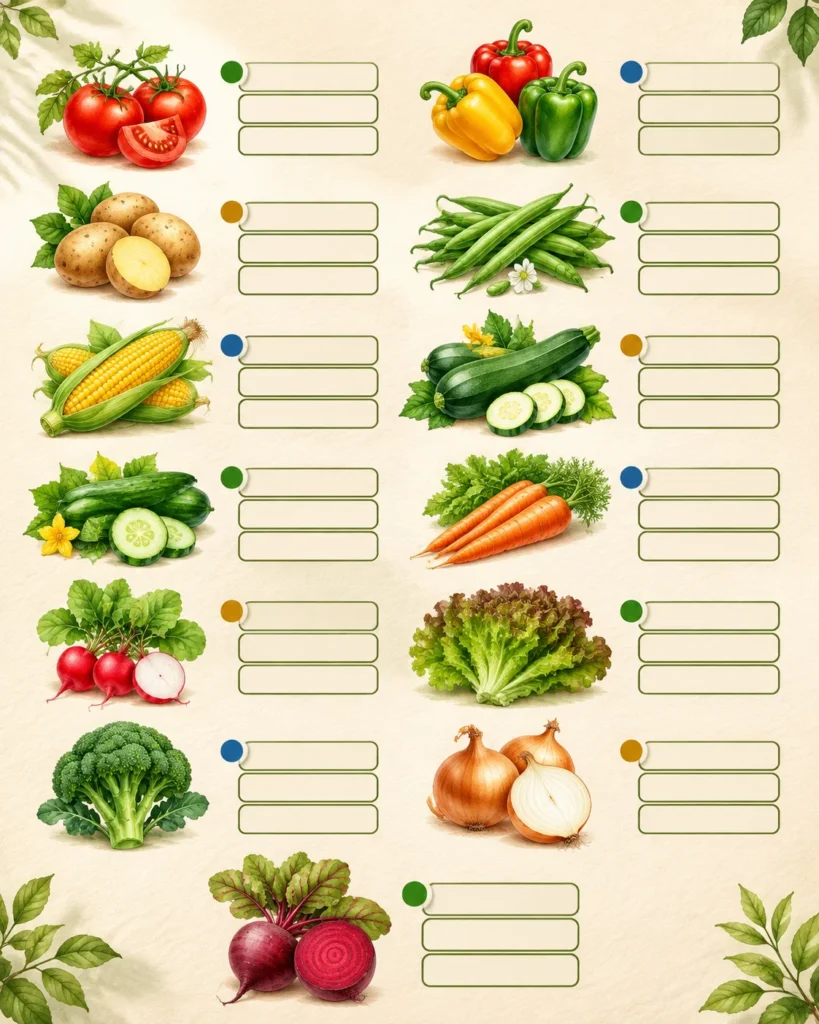
| Vegetable | Grow it with | Keep it apart from | Why | Evidence |
|---|---|---|---|---|
| Tomato | Lettuce underneath, basil nearby | Bush beans on its shady side; black walnut roots | Lettuce uses the shade under the vines; basil flowers feed predatory insects; walnut roots release juglone | Spacing logic; research (walnut) |
| Pepper | Lettuce, spinach or basil sown early | Black walnut roots | Quick greens fill the gap before peppers spread; peppers are juglone sensitive | Spacing logic; research (walnut) |
| Potato | French marigold border | Sunflowers; black walnut roots | Marigold pest claims are mostly folklore; sunflowers can suppress nearby plants; potatoes are juglone sensitive | Tradition; research (walnut) |
| Beans | Corn (pole beans), squash | Onion family; tall crops that shade bush beans | Corn stalks act as a trellis; beans keep most of their nitrogen this season | Spacing logic; tradition (onions) |
| Corn | Pole beans, winter squash | Short sun lovers on its shady side | Three Sisters structure: support plus living mulch | Spacing logic |
| Squash and zucchini | Corn, beans; marigold and nasturtium border | Small crops in the vine path | Big leaves shade soil; a small trial saw less squash bug damage with flower borders | Spacing logic; early research |
| Cucumber | Dill, chamomile and other small-flowered herbs | Small crops in the vine path | Flowers shelter hoverflies and wasps that eat pests | Research (beneficial insects) |
| Carrot | Radish, onions, lettuce | Other root crops crammed into the same row | Deep and shallow roots share space; onions are said to confuse carrot flies | Spacing logic; tradition (carrot fly) |
| Radish | Carrots; cabbage family as a trap crop | Trap radishes left covered in flea beetles | Sprouts fast and marks slow rows; draws flea beetles off cabbage crops | Spacing logic; extension trap-crop guidance |
| Lettuce | Under tomatoes or eggplant; sweet alyssum strip; chives | Few real conflicts | Takes shade from taller crops; alyssum supports aphid-eating hoverflies | Research (alyssum); spacing logic |
| Cabbage family | Beets between plants; mustard or radish as a trap; several varieties together | Few real conflicts | Mixed varieties drew fewer aphids; traps pull flea beetles and cabbageworms | Research (diversity); extension trap-crop guidance |
| Onion and garlic | Carrots, lettuce, beets | Beans and peas; spots pets can reach | Shallow roots fit beside deeper ones; toxic to cats and dogs | Spacing logic; tradition (beans) |
| Beet | Broccoli and other cabbage-family crops, onions | Few real conflicts; tolerates black walnut | Fits in the gaps between wide brassicas | Spacing logic |
Three labels do the heavy lifting in that last column, and they’re worth a minute before you start drawing.
How to Read the Chart
The Evidence column is the part most charts leave out, and it tells you which rows to trust first. Each label answers one question: why should this pairing work?
- Research: a university trial or extension review found a measurable effect, such as fewer aphids or a crop harmed by a nearby tree.
- Spacing logic: the plants use different space, light or soil depth, so they share a bed without fighting. Nothing chemical is claimed.
- Tradition: the pairing is repeated in gardening books and charts but hasn’t held up in formal study. Following it costs little; skipping it costs little too.
That honesty is overdue. A UMass Extension fact sheet on companion planting points out that rigorous studies are few compared with the stack of charts and books, and “intercropping” is the more precise word for what actually happens in a bed.
So read each row of a companion planting chart for vegetables as a starting plan. Pencil the spacing pairs in first, then decide whether the tradition rows deserve the leftover corners.
Pairings That Share Space, Light and Roots
The most reliable pairings come down to geometry. Two crops with different heights, timings or root depths can grow in the space one crop would otherwise leave half empty.
Short Crops in the Shade of Tall Ones
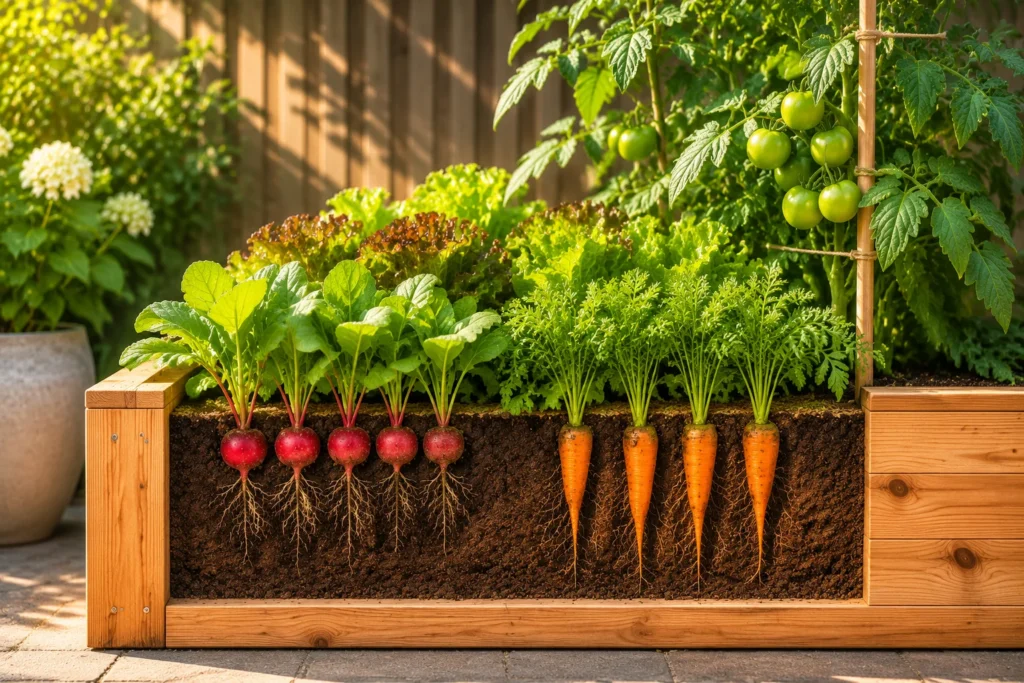
Lettuce tucked under tomatoes or eggplant is a classic intercropping pair. Tomatoes take a while to fill out, and lettuce can use that patch of soil and the afternoon shade in the meantime. For a first bed, we’d start with this pair because it turns wasted space into a harvest without any special claims attached. The same idea works in large containers if you’re growing tomatoes in pots: a few lettuce plants around the rim, harvested before the tomato crowds them out.
Deep Roots Beside Shallow Roots
Pairing taproot vegetables such as carrots and radishes with shallow-rooted crops such as corn, onions and lettuce cuts down on root competition. Radishes sown in a carrot row do double duty: they sprout fast enough to mark the row while slow carrot seed is still thinking about it, and you pull them before the carrots need the room. Beets slipped between broccoli plants follow the same logic.
The Three Sisters, Without the Myth
Corn, pole beans and winter squash planted together give you a living trellis (the corn), a climber (the beans) and a ground cover that shades soil and smothers weeds (the squash). It’s a smart use of space.
The part most charts get wrong is the nitrogen. The nitrogen in bean root nodules is used by the beans themselves, and nitrogen-fixing plants don’t feed their neighbors directly. Field studies of the Three Sisters found lower bean and squash yields in the mix and no compelling evidence of better soil or productivity. Corn and squash are heavy feeders, so fertilize them as you would in a solo bed.
Pairings That Help With Pests
Pest pairings are where the research is both most promising and most oversold. The plants that help tend to do it by feeding the insects that eat pests, or by drawing pests away, rather than by repelling them with scent.
Sweet Alyssum With Lettuce
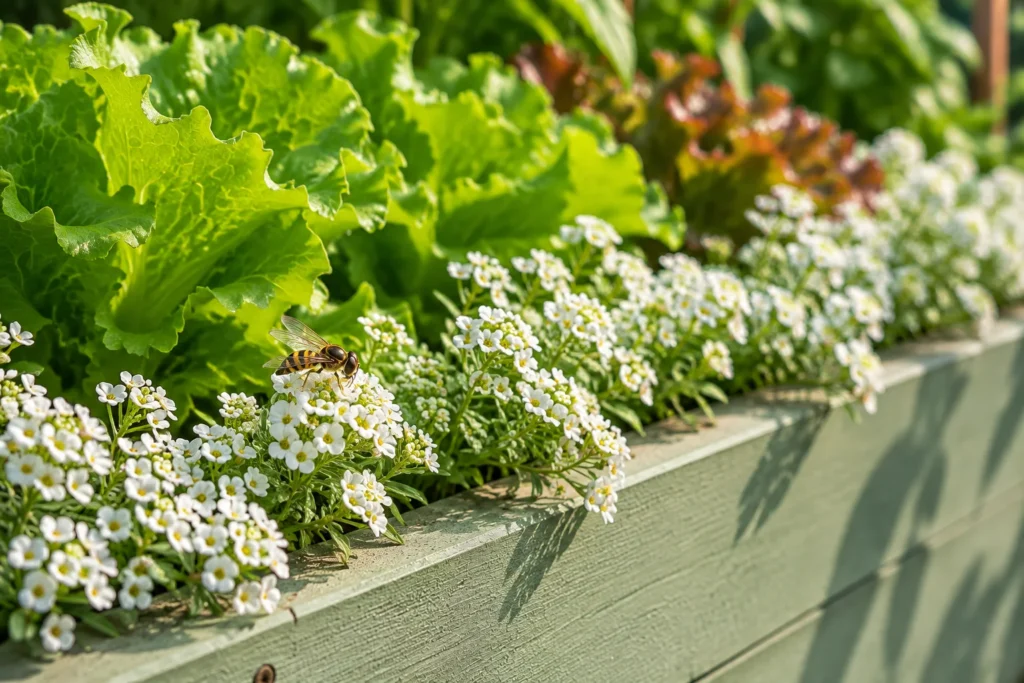
Sweet alyssum (Lobularia maritima) is the best-documented companion on this chart. Its small flowers feed adult hoverflies, whose larvae eat aphids. In UC research on insectary strips in lettuce fields, lettuce grown with sweet alyssum alone had fewer aphids inside the heads, and adding more kinds of flowers to the strip gave no extra benefit. Those were commercial fields with one alyssum bed for every 20 lettuce beds, so in a home bed a narrow edging is in proportion.
Mix Plants Instead of Hunting for One Hero
Variety itself helps. In a University of California experiment, aphid numbers on broccoli dropped as more broccoli varieties were grown together, and reviews of companion studies find that several companion species raise the odds of pest control where one alone often does little. Basil, cilantro, dill, fennel and parsley left to flower all give predatory insects shelter and food.
Marigolds and Nasturtiums: What They Do and Don’t Do
French marigold (Tagetes patula) roots do produce compounds toxic to root-knot nematodes, but the effect depends on growing marigolds as a cover crop and working them into the soil; a few plants dotted around the tomatoes won’t do it. French marigolds also deter some beneficial insects. Strong scents in general don’t travel far outdoors; field studies haven’t backed the idea that aromatic herbs chase pests off.
A small Iowa State trial did see less squash bug and striped cucumber beetle damage on zucchini ringed with marigolds, and fewer squash bugs with nasturtiums (Tropaeolum majus). The researchers called the results indicative, not conclusive. If you’re growing zucchini in pots, a flower border is a low-cost experiment worth trying.
Trap Crops Need a Keeper
A trap crop is a plant pests like more than your main crop. Around the cabbage family, radishes work as a trap for flea beetles and root maggots, and mustard for cabbageworms. Plant the trap about two weeks before the main crop, check it often, and pull and bag it once it’s loaded with pests, before your main crop flowers. A trap left alone becomes a pest nursery.
Placement matters too. Trap plants don’t draw insects from beyond about 16 feet (5 meters), and rows tucked inside the crop work better than a ring around the edge of the garden.
Pairings to Keep Apart
Real conflicts in a vegetable bed are fewer than most charts suggest. Two matter a lot, and the rest are optional tradition.
Black Walnut Roots
Black walnut (Juglans nigra) makes juglone, a compound concentrated in its roots, buds and nut hulls that inhibits many plants. Tomatoes, peppers and potatoes are sensitive to juglone, while beans, beets, carrots, corn, melons and squash tolerate it. Trouble happens mainly in the root zone under the tree, so site sensitive crops away from it, or use a raised bed with a root barrier. Don’t mulch with walnut leaves or husks.
Tall Crops Over Short Sun Lovers
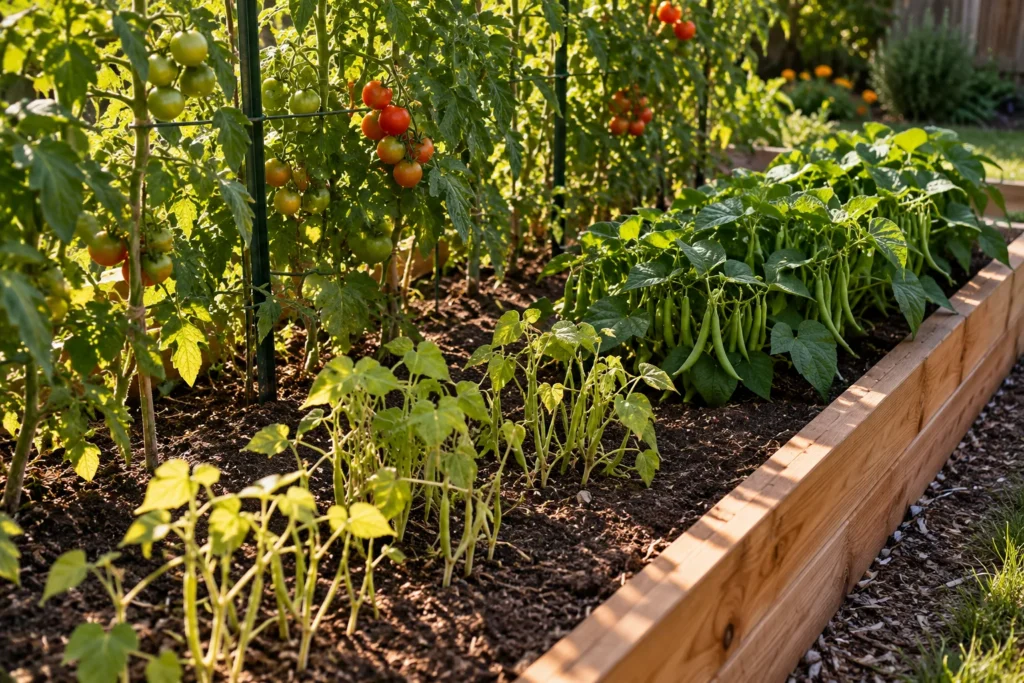
Shade is the most common conflict in a small bed. Tomatoes can shade out bush beans that need full sun, and corn will do the same to anything low on its shady side. Put the tallest crops on the north side of the bed so their shadows fall outside it.
Tradition-Only Conflicts
Beans next to onions and garlic, fennel next to eggplant or tomatoes, and sunflowers beside potatoes show up on many charts. Sunflower allelopathy has some support, and plants within a couple of feet of sunflowers have struggled in extension gardens. The others rest on tradition. Keeping them apart costs you little, so follow them if you have the room and ignore them if you don’t.
How to Use This in Your Space
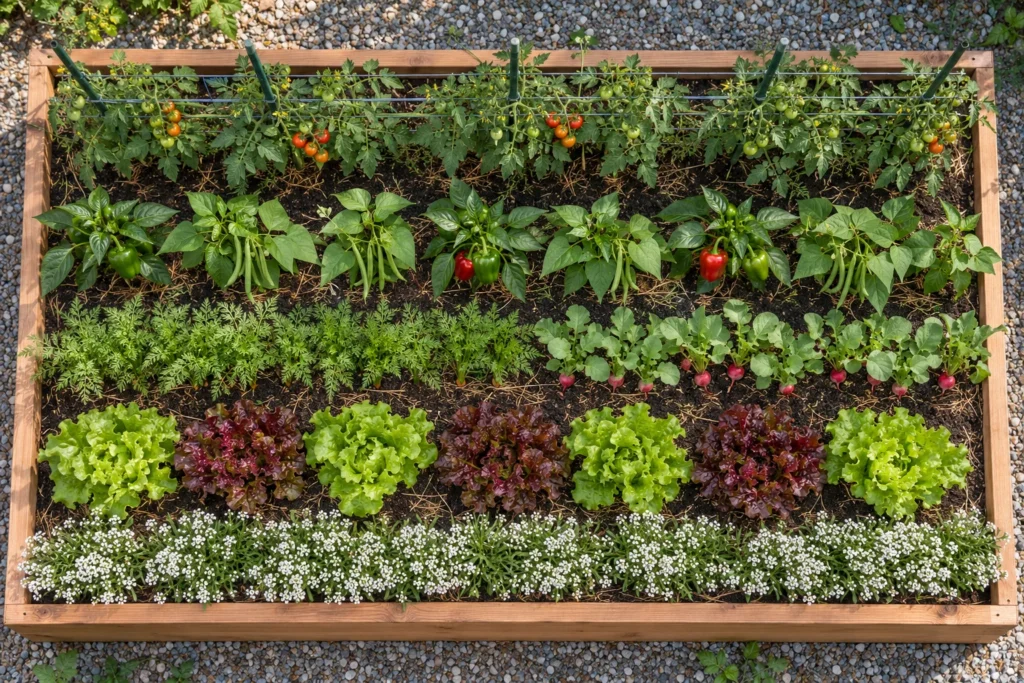
A chart only helps once it’s on your actual bed plan, and fall is the right time to draw it. Here’s a simple order that works for a raised bed, a patio of containers or a community plot.
- Mark the fixed things first: where the shade falls, any walnut tree nearby, and the north side of the bed.
- Split crops into cool-season (lettuce, radish, cabbage family, peas) and warm-season (tomatoes, peppers, squash, beans, corn), since they rarely share a calendar.
- Place the tall crops first (see Pairings to Keep Apart for which side), then fill below and between them with spacing pairs from the chart.
- Add one flowering strip, such as sweet alyssum, and decide whether you’ll actually check a trap crop weekly. If not, skip it.
- Pick one tradition pairing to test, and note what you see, watching both pests and beneficial insects before you rely on any companion.
In Containers
Keep it to one main crop per pot plus one small companion at the edge, such as lettuce or basil under a tomato, or alyssum spilling over the rim of a pepper pot. Crowding a pot with four “companions” usually means four thirsty plants sharing one root ball. Our container vegetable garden ideas cover pot sizes and setups.
With Pets
Onions, garlic, chives and leeks are the companions to think twice about if a cat or dog shares the garden or balcony. The ASPCA lists onion as toxic to dogs and cats, and the MSD Veterinary Manual notes cats are the most susceptible. Grow alliums in a raised bed or railing planter pets can’t reach, and call your vet if a pet chews one.
Quick Troubleshooting
| What you see | Likely cause | What to do |
|---|---|---|
| Short crops stretch and stall next to tall ones | Shade from the taller crop | Move short crops to the sunny side next season (see Pairings to Keep Apart) |
| Tomatoes or peppers wilt and yellow near a large tree | Juglone from black walnut roots, or water stress | Check whether the tree is a black walnut; move sensitive crops out of its root zone |
| Trap radishes or mustard covered in pests | The trap is working and is now full | Pull and bag the plants, then resow |
| Corn and squash pale beside beans | Beans keep most of their nitrogen | Feed corn and squash as heavy feeders |
| A famous pairing made no difference | Many chart pairings are untested | Keep the spacing benefit; drop the expectation |
Frequently Asked Questions
Can companion planting replace pest control?
No. It can lower pest pressure, but it works best as one layer alongside checking plants, hand-picking and good spacing. Some companions even backfire: extra food sources can distract lady beetles from aphids, and broad-spectrum insecticides or hard water sprays knock out the predators your flowers were meant to support.
Why do companion planting charts disagree so much?
Most pairings come from tradition and personal observation, and few have been tested in controlled trials. A pairing that seemed to help in one garden may do nothing in another climate or soil. Treat any single chart line as a hypothesis, and trust a result only after it repeats over a few seasons in your own bed.
What can I plant in my vegetable bed this fall?
A winter cover crop is a good fall companion. Cereal rye sown with hairy vetch pairs a sturdy grass that acts as a trellis with a nitrogen-fixing legume that covers the soil. Check your local extension office for sowing and spring removal dates in your region.
How close do companion plants need to be?
Close enough to share the same bed or row. Flowering strips and trap crops work best tucked inside or right beside the crop; a ring around the garden’s outer edge does less, as explained in Pairings That Help With Pests. In containers, the companion goes in the same pot or the one next to it.
Should I use perennial companion plants?
Only if you can contain them. Avoid invasive or aggressive spreaders, which can crowd out the crops they were meant to help. Perennial companions also take one to two years to settle in, so annual flowers such as sweet alyssum give faster results in a new bed.
What Actually Matters
Most of the value in companion planting comes from fitting plants together well: tall with short, deep roots with shallow ones, and enough flowers to keep predatory insects around. The real enemies are shade, crowding and black walnut roots.
If you do one thing this week, sketch next year’s bed with the tallest crops on the north side and a strip of sweet alyssum along the front. Then fill the gaps from the chart. If you’re still choosing crops, start with the easiest vegetables to grow and pair from there.
Sources
- UMass Amherst Extension – Companion Planting in the Vegetable Garden – intercropping examples, beneficial-insect herbs, marigold nematode effect, broccoli variety trial
- Washington State University Extension – Gardening with Companion Plants (EM128E) – nitrogen fixing, scent repellence, diversity, trap-crop range of about 5 meters, Three Sisters field studies, root pairing
- University of California IPM – Del-Pozo Valdivia confirms the benefit of insectary plants in lettuce – sweet alyssum and aphids, 1 in 20 bed ratio
- University of Wisconsin-Madison Extension – Black Walnut Toxicity to Plants – juglone, sensitive and tolerant vegetables, root zone, mulch
- ASPCA – Toxic and Non-toxic Plants: Onion – onion toxicity to dogs and cats
- MSD Veterinary Manual – Garlic and Onion (Allium spp) Toxicosis in Animals – garlic, onions, chives and leeks; cat susceptibility
- Oregon State University Extension – Tips for planting corn, beans and squash – bean nitrogen, heavy-feeding corn and squash
- WSU Skagit County Extension Master Gardeners – Trap Cropping – radish and mustard traps, two-week head start, trap removal
- University of Arizona Extension – Companion Planting (BYG #254) and The Art of Companion Planting – intercropping term, sunflower observation, traditional pairings, Iowa State zucchini trial.