
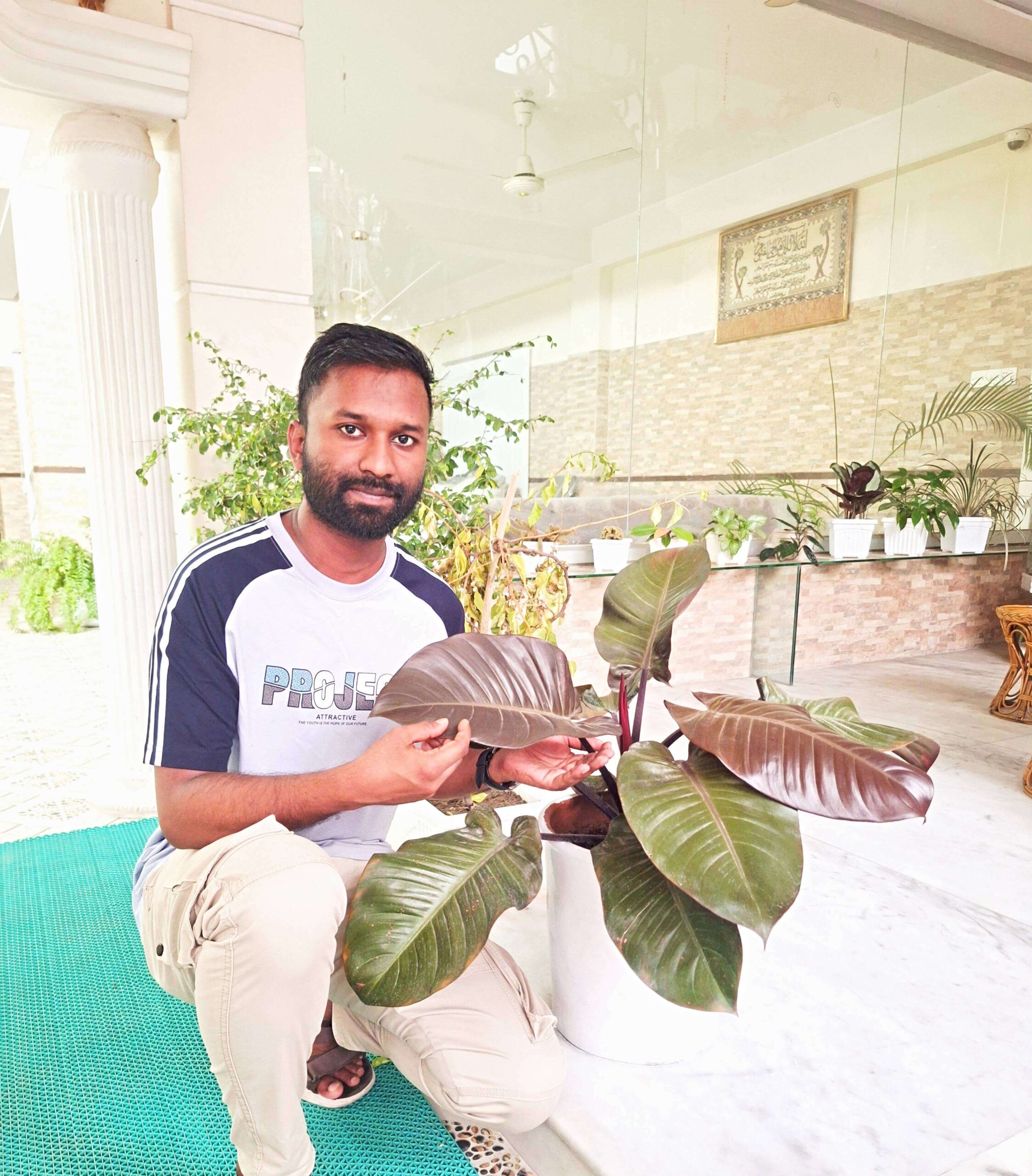
The first rubber plant I researched in detail belonged to a reader who emailed me a photo of four dropped leaves on her radiator-side floor. The plant was beautiful, expensive, and three feet from a heating vent.
Rubber plant care indoors looks straightforward on paper. Then forced-air heating, north-facing windows, and curious pets enter the equation, and the plant starts shedding leaves in ways the nursery care tag never warned about.
This guide pulls together care fundamentals from Clemson HGIC, NC State Extension, Missouri Botanical Garden, and the ASPCA, then adds the apartment-specific failure modes I keep seeing in reader emails. Pet placement is covered. Sap handling is covered. So is the question of which variety actually survives a north-facing room.

TL;DR
- Rubber plant care indoors works best with bright indirect light, watering only when the top inch of soil is dry, and steady warmth above 60 degrees F
- The biggest apartment killer is forced-air heating drying the plant from the vent side first, then dropping leaves on that side
- Variegated varieties (Tineke, Ruby, Tricolor) need a south or west window; Robusta and Burgundy tolerate north-facing rooms with patience
- Ficus elastica is toxic to cats and dogs, and the milky sap also irritates human skin and eyes, so prune with gloves

Rubber Plant at a Glance
Rubber plant (Ficus elastica) is a tropical evergreen tree from Southeast Asia that adapts well to indoor apartment conditions and tolerates the kind of inconsistent care most beginners actually provide.
In its native range across India, Nepal, Myanmar, Malaysia, and Indonesia, it grows into a 100-foot canopy tree. Indoors it tops out at 6 to 10 feet, usually closer to 5 in a normal living room. The leaves are the appeal: thick, glossy, oval, and dramatically large compared to most houseplants. If you want a softer starter option first, Philodendron care tips are more beginner-friendly.
According to NC State Extension’s Plant Toolbox entry, Ficus elastica sits in the Moraceae family alongside fig trees and weeping figs, which matters when you start reading conflicting pet-toxicity information online. More on that in the pet safety section.
Beginners pick this plant for three reasons: it forgives a missed watering, it makes a visual statement with very few leaves, and it tolerates apartments brighter than a north window but dimmer than a sun room.
Popular Varieties for Indoor Growing
The variety you choose matters more than any other care decision, because the cultivar determines how much light the plant actually needs to stay alive.
Robusta: Solid dark green, glossy, the easiest of the bunch. Tolerates north and east windows. The default starter variety for a reason.
Burgundy (also sold as Black Prince): Deep burgundy-black leaves with a red midrib. Surprisingly forgiving of medium light. A close second to Robusta for tolerance.
Tineke: Cream and green variegation with a pink-tinged stem. Looks stunning. Needs bright indirect light from a south or west window with sheer filtering. In a north-facing apartment, expect ongoing leaf loss.
Ruby: Pink, cream, and green variegation. The most demanding variety on this list. Without strong indirect light, the pink fades and the variegation reverts to plain green within a few months.
Tricolor: Similar challenge profile to Ruby. Worth buying only if you have west or south light to give it.
Decora: Wide oval leaves, deep green, a classic mid-century houseplant look. Tolerance similar to Robusta.
If your apartment faces north or you only have an east window with morning sun, choose Robusta or Burgundy. Save the variegated cultivars for when your light situation can support them. A dying Tineke is an expensive lesson. For much darker rooms, low-light snake plant care is usually safer.

Rubber Plant Care Indoors Starts With Light
Bright indirect light is the sweet spot for Ficus elastica. An east-facing window with morning sun, or a south or west window with a sheer curtain, will keep the plant growing steadily without bleaching the leaves.
Clemson HGIC’s houseplant guidance lists rubber plant as tolerant of medium light but happiest in bright indirect exposure. Direct hot afternoon sun through unfiltered glass scorches the leaves, especially on variegated cultivars where the cream tissue burns first.
Here is where apartment reality diverges from the care tag. Cornell-style extension guidance often calls Ficus elastica adaptable to low light. In my own apartment, that proved true for a Burgundy through a winter of skipped fertilizing in a north-facing corner. A Tineke in the same spot lost two variegated leaves a month until I moved it three feet closer to the window, and even then it grew slowly through spring.
If you have a north-facing window: stick with Robusta or Burgundy and accept slow growth. Rotate the pot a quarter turn every two weeks so the plant grows evenly toward the light instead of leaning hard in one direction.
If you have a south or west window: pull the plant back two to three feet from the glass, or hang a sheer curtain. Direct midday sun in summer can burn the upper leaves within a week.
The takeaway: light, not water, determines whether a rubber plant thrives or just survives.

Watering Schedule
Water a rubber plant when the top inch of soil is dry, then water thoroughly until it drains from the bottom. Empty the saucer. Never let the pot sit in standing water.
Missouri Botanical Garden’s care notes for Ficus elastica emphasize letting the top half of the soil dry between waterings, and reducing frequency noticeably in winter. NC State Extension echoes the same drainage and dry-down approach.
After watching three plants drop leaves in heated apartments, I learned that a weekly watering calendar stops working once the heat turns on. Soil that took eight days to dry in October dried in four by December. The finger test beats any calendar every time.
Signs of overwatering: yellow lower leaves, soggy or sour-smelling soil, soft brown spots on the leaves, and leaves dropping from the bottom of the plant upward.
Signs of underwatering: drooping leaves that perk up within hours of a drink, crispy brown edges, and soil that has pulled back from the pot rim.
One rule that keeps beginners alive: when in doubt, wait another day. Rubber plants survive a missed week far better than they survive a soggy root ball.

Soil and Drainage
A standard well-draining indoor potting mix works for rubber plants, with a handful of perlite mixed in for extra aeration if you tend to overwater.
Drainage holes are non-negotiable. A pot without a drainage hole is a slow death sentence for this plant, no matter how careful you are with the watering can.
Pot material affects watering frequency more than most beginners realize. Terracotta breathes and dries faster, which suits anyone who tends to overwater. Glazed ceramic and plastic hold moisture longer, which suits travelers or anyone who tends to forget watering days entirely.
Missouri Botanical Garden lists a slightly acidic to neutral soil pH as ideal, which most commercial indoor mixes already provide. No special amendments needed.
Humidity and Temperature
Rubber plants prefer steady temperatures between 60 and 80 degrees F, and they tolerate average household humidity without complaint. Anything below 55 degrees F triggers leaf drop within days.
Clemson HGIC recommends night temperatures of 60 to 65 degrees F and day temperatures of 75 to 80 degrees F as the comfort zone for Ficus elastica. Most apartments sit inside this range year-round, which is part of why this plant works as a houseplant at all.
Forced-air heating is the apartment killer most care guides skip. A rubber plant three feet from a heating vent will drop leaves on the vent side first, then brown along the edges, then slow down on growth across the rest of the plant. The fix is geometric, not chemical: move the plant, or block the vent path with a side table or screen.
Cold draft warning: a rubber plant placed near a single-pane window in winter, or in the path of an apartment door that opens to a freezing hallway, can drop a handful of leaves inside a week.
Humidity does not need to be tropical. Pebble trays and small misters help marginally; grouping plants together helps more. The real winter humidity problem is heating-vent placement, not whole-room humidity.
Fertilizing
Feed a rubber plant once a month with a balanced liquid fertilizer (10-10-10 or similar), diluted to half strength, during spring and summer. Skip feeding entirely in fall and winter.
Most plants from a nursery come pre-loaded with slow-release fertilizer in the soil. Wait two to three months after bringing a plant home before starting any feeding routine, or you risk salt buildup and brown leaf tips on a plant that was perfectly fine on day one.
Signs of over-fertilizing: brown crispy leaf tips, a white crust on the soil surface, and slowed rather than accelerated growth. The fix is to flush the soil with plain water until it drains clear, then back off the feeding schedule for two months before resuming.
University of Florida IFAS Extension guidance on indoor tropicals confirms monthly feeding during active growth as a safe baseline. More is rarely better with houseplants.
Repotting and Container Sizing
Repot every two to three years in early spring, choosing a new pot one to two inches wider than the rootball. Never jump more than 30 percent in pot size at once.
A pot that is too large holds more wet soil than the roots can actually drink, which leads to rot. This is the most common reason a newly repotted rubber plant suddenly drops leaves while looking otherwise healthy above the soil line.
For renters with hardwood floors, two practical additions matter: a heavier terracotta or stoneware pot prevents top-heavy tipping once the plant clears three feet, and a saucer with a cork base prevents water rings on wood that no security deposit covers.
Signs it is time to repot: roots circling visibly at the soil surface, water draining straight through without absorbing, or growth that has stalled for a full season with no other obvious cause.
Pruning and Shaping
Prune in early spring, just above a leaf node, to control height and encourage branching. New growth emerges below the cut, which is how you turn a single-stemmed plant into a fuller, multi-branched specimen over a couple of seasons.
Sap warning: rubber plants leak a milky white latex sap from every cut. The sap is sticky, stains fabric, and irritates skin and eyes. Wear gloves. Lay down newspaper or a tarp before cutting. Wash any skin contact immediately with soap and water.
For apartment renters trying to keep a rubber plant under 5 feet, top the central stem at the height you want and prune any side branches that exceed that height once a year. The plant will fill out sideways rather than continuing straight up, which keeps a studio living room from feeling overgrown.

Propagation Basics
Two propagation methods work for rubber plants: stem cuttings rooted in water or soil, and air layering for tall leggy plants where you want a new full-sized plant rather than starting from scratch. If you enjoy plant multiplication, Monstera propagation tips follow a similar patience-first rhythm.
For stem cuttings, take a 6-inch tip cutting in spring or early summer, just below a leaf node. Remove the lower leaves. Dip the cut end in rooting hormone if you have it (optional but it improves success rates). Plant in moist indoor potting mix and keep the soil lightly moist for the first three to four weeks. Roots typically establish in four to six weeks.
Water-rooting works too, though the transition from water roots to soil roots can stall a young plant for a month. Bottom-watering during establishment, and a clear plastic bag tented loosely over the pot, helps maintain humidity while the plant adjusts.
Air layering is the better choice for a rubber plant that has grown tall and leggy with bare lower stems. The technique wraps moist sphagnum moss around a wounded section of stem, encouraging roots to form on the plant itself before the new section is cut free. I will cover air layering in a separate step-by-step guide.
Seasonal Care: Winter and Summer Apartment Shifts
Rubber plant care indoors changes more between seasons in an apartment than in any greenhouse. Heated winters and cooled summers create artificial climate swings the plant has to absorb, and the shifts arrive faster than its leaves can adapt.
Winter (heating on): reduce watering frequency, skip fertilizing entirely, move the plant away from any heating vent or radiator, and check humidity in the immediate vicinity of the leaves rather than the whole room. If the plant sits near a window, watch for cold air pooling at the base on freezing nights.
Summer (cooling on or off): increase watering as the plant grows actively, resume monthly feeding, and rotate the pot regularly to keep growth balanced. Outdoor placement on a shaded balcony is possible above 50 degrees F nighttime lows, but only after a slow two-week acclimation in deep shade. Inspect the leaves and stems carefully for spider mites, mealybugs, and scale before bringing the plant back inside in fall.
Common Problems and Fixes
Most rubber plant problems trace back to four causes: watering, light, temperature swings, and recent moves. Diagnose in that order before reaching for any spray or treatment.
Yellow lower leaves: overwatering is the leading cause, followed by natural aging of the oldest leaves. Check soil moisture; if it stays wet for more than five days, reduce frequency and check drainage holes for blockage.
Brown leaf tips or edges: low humidity, underwatering, or salt buildup from fertilizer. Flush the soil with plain water until it drains clear, hold off feeding for a month, and reassess.
Dropping leaves: cold drafts, forced-air heating, a sudden change in location, or normal acclimation after a move from the nursery. Clemson HGIC notes that leaf drop is one of the plant’s primary stress responses to any environmental change. The same prevention-first mindset helps with Fiddle Leaf Fig care.
Leggy growth with widely spaced leaves: not enough light. Move the plant closer to a window and rotate weekly to encourage even fill-in.
Sticky residue on leaves or around the pot: either natural latex droplets (harmless, mostly from new leaves) or pest honeydew. Check the undersides of leaves and the leaf joints for spider mites, mealybugs, or scale. Treat with insecticidal soap or neem oil at the first sign.
Variegation fading on Tineke or Ruby: not enough light. The variegated cells produce less chlorophyll and need more energy from the leaf to function. Without enough light, the plant aborts the variegated tissue and reverts to plain green.
The most common email I receive about this plant is “why are my leaves falling off?” Nine times out of ten the answer is heating vents, drafts, or a recent move from the nursery. The plant is not dying; it is acclimating.

Pet Safety: ASPCA Status and the Naming Confusion
Ficus elastica is toxic to dogs and cats. The milky latex sap contains proteolytic enzymes (including ficin) and a compound called psoralen ficusin, which together irritate the mouth, skin, and digestive tract.
Here is the source of online confusion. The ASPCA Toxic and Non-Toxic Plants database lists “Indian Rubber Plant” under the botanical name Ficus benjamina, which is actually the weeping fig. The plant most stores sell today as “rubber plant” or “rubber tree” is Ficus elastica. Both species sit in the same family (Moraceae) and share the same toxic mechanisms, so the practical advice is identical even when the names disagree.
Symptoms in pets after ingestion include drooling, vomiting, oral irritation, decreased appetite, and sometimes mild skin redness from sap contact. The reaction is usually mild to moderate, not life-threatening, but a call to the vet or the ASPCA Animal Poison Control Center is the right move if any plant material is eaten.
For the humans in the house: the sap can trigger contact dermatitis, and people with latex allergies can react more severely. Wash any skin contact immediately and keep the sap well away from eyes.
Renter-friendly placement strategies: a hanging shelf above pet height, the top of a sturdy bookcase, a separate room with a closed door, or a tall plant stand. The leaves are large and the plant is slow, so vertical separation works better here than it does with trailing plants that drape into reach.

FAQs
Q: Where should I place a rubber plant in my apartment?
A: Place a rubber plant near an east-facing window, or two to three feet back from a south or west window with a sheer curtain filtering the light. Avoid spots within three feet of a heating vent or in the path of cold drafts from doors and single-pane windows, which trigger leaf drop within days.
Q: How often should I water a rubber plant indoors?
A: Water a rubber plant when the top inch of soil is completely dry, then water thoroughly until it drains from the bottom. In summer this usually means every 7 to 10 days, in heated winter apartments every 4 to 7 days. Always empty the saucer to prevent root rot.
Q: Are rubber plants toxic to cats and dogs?
A: Yes, Ficus elastica is toxic to cats and dogs. The milky latex sap contains ficin and psoralen ficusin, which cause drooling, vomiting, oral irritation, and decreased appetite if chewed. Place the plant on a tall stand or high shelf, and call your vet or the ASPCA Animal Poison Control Center if ingested.
Q: Why is my rubber plant dropping leaves?
A: The most common cause is cold drafts or forced-air heating drying the plant from one side. Rubber plants drop leaves in response to any sudden environmental change, including a recent move from the nursery. Move the plant at least three feet from heating vents and check for cold air pooling near windows.
Q: Can a rubber plant survive in a north-facing window?
A: Yes, but only the solid green varieties. Robusta and Burgundy tolerate north and east windows with slow but steady growth. Variegated cultivars like Tineke, Ruby, and Tricolor need south or west light and will gradually lose their variegation in dim corners.
Q: How do I prune a rubber plant without making a mess?
A: Wear gloves and lay newspaper or a tarp under the plant before cutting. Prune in early spring just above a leaf node using clean shears. The milky white latex sap stains fabric and irritates skin, so wash any contact immediately and keep the sap well away from eyes.
What Actually Matters
Rubber plant care indoors comes down to four things: bright indirect light, water when the top inch of soil is dry, distance from heating vents and cold drafts, and careful sap handling around pets and kids. Everything else is fine-tuning.
If your apartment faces north, start with a Robusta or Burgundy. If you have stronger light from a south or west window, a Tineke earns its keep. Skip the variegated cultivars until your light situation can support them, because no amount of fertilizer or humidity makes up for a dim corner.
The reader who emailed me about the radiator-side leaf drop moved her plant four feet down the wall, away from the vent. The leaf loss stopped within ten days. The plant is now in its third year and starting to lean toward the window, which is its way of asking for a stake. That is a problem for another guide.