
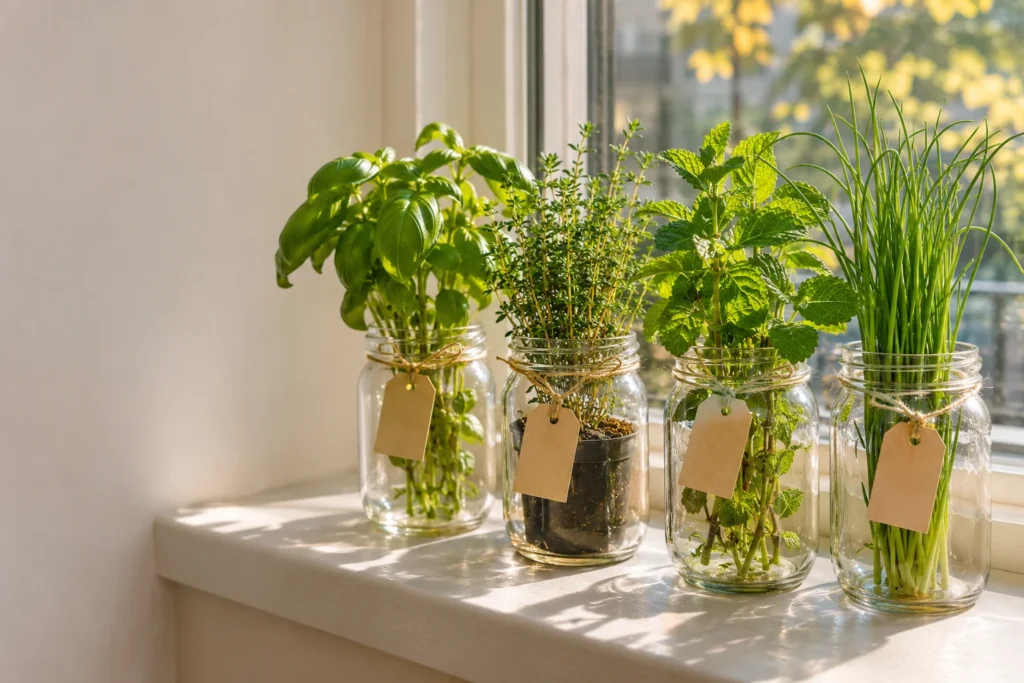
The grocery-store basil is drooping on the counter, six empty jars sit in the cabinet, and the only sunny spot in the apartment is a windowsill the cat also likes. You’ve seen the Pinterest version: pebbles, soil, herb, done.
It’s also why so many of those jars are brown and slimy three weeks later. Glass has no exit for water, and pebbles don’t fix that. These mason jar herb garden ideas solve drainage honestly, then add a pet-safety check, a winter light plan and three displays that need no drill. For window layouts to borrow, see our indoor herb garden kitchen window ideas.
Table of Contents
At a Glance
- Easiest jar herbs: basil, thyme, mint and chives; keep mint and chives in their own jars, away from cats and dogs.
- Skip the gravel layer. Set a nursery pot inside the jar, drill the jar, or grow cuttings in plain water.
- Light is the real limit: a south or west window, or a grow light on a timer in winter.
- Water only when the top half inch to inch of mix feels dry.
- Fall works for you: root cuttings from outdoor herbs before the first frost.
Best for renters with one bright window and spare jars. If you water on a schedule rather than by touch, start with the water-only cutting jars in Variations.
What You’ll Need
Most of this is probably in your kitchen already. Size matters more than style. A pint jar holds 16 ounces, a quart holds 32, and wide-mouth versions make lifting a nursery pot easier. Use quarts for anything with real roots and pints for cuttings. Choose a bagged soilless potting mix over garden soil; it drains better and starts clean. Our guide on how to choose a potting mix decodes the labels.
| Item | Cost level | Why it matters |
|---|---|---|
| Pint or quart mason jars, wide mouth if possible | Free to low-cost | Quarts give roots room; wide mouths fit a nursery pot |
| 3 to 4 inch plastic nursery pots that slide into the jar | Free to low-cost | Real drainage without drilling |
| Soilless potting mix | Low-cost | Drains and dries faster than garden soil |
| Clip-on LED grow light with a timer | Low-cost to mid-range | Surviving versus growing in winter |
One honest limit: jars are small. University of Illinois Extension recommends at least a 6-inch-wide container with a drainage hole for indoor herbs, and anything that fits through a jar mouth is smaller. That’s fine for a few months of snipping, which is why How to Use It covers when to move up.
Step-by-Step
Five steps, in the order that prevents the common failures: choose herbs, settle drainage before any soil goes in, then plant, place and water.
Step 1: Choose Herbs That Fit a Jar and Your Household
Start with the herbs extension guides rate easiest indoors: parsley, mint, chives, basil, oregano, cilantro and thyme. Rosemary, sage and lemon balm want more light and are more prone to pests such as spider mites, so save them for round two. Buy small plants rather than seed; a transplant gives you something to snip within weeks.
In a small apartment with a cat or a dog, the sunniest sill is often the pets’ favorite lookout too, so nothing new should land there before a check of the ASPCA plant list, and a few jar classics fail it. The ASPCA lists chives as toxic to cats and dogs because, like onion and garlic, they can damage red blood cells, and mint is on the toxic list too. Non-toxic doesn’t mean chew-proof; a quart of soil knocked off a sill is its own mess.
| Herb | Botanical name | ASPCA listing (cats and dogs) | Jar note |
|---|---|---|---|
| Basil | Ocimum basilicum | Non-toxic | Easy; wants the warmest, brightest spot |
| Thyme | Thymus vulgaris | Non-toxic | Easy; tolerates drying out |
| Rosemary | Rosmarinus officinalis | Non-toxic | Harder; likes cool, very bright spots |
| Chives | Allium schoenoprasum | Toxic | Easy; keep well away from pets |
| Mint | Mentha species | Toxic | Easy; always its own jar |
| Parsley | Petroselinum crispum | Toxic (large amounts) | Easy; buy a plant for a quicker harvest |
| Oregano | Origanum vulgare | Toxic (mild stomach upset) | Easy; likes to dry a little |
Anything not in the table, cilantro included: look it up on the ASPCA list before it comes home. And since it’s fall, the cheapest herbs are the ones frost is about to kill on a balcony; snip 4 to 6 inch stems now and root them as described in Variations.
Step 2: Solve Drainage Before You Add Any Soil
Leave the pebbles in the craft drawer. Water does not move from fine potting mix into a coarser layer until the mix is saturated, so gravel just raises the soggy zone closer to the roots. University of Illinois Extension calls the idea a myth: water perches in the soil above the gravel until every air space fills. In a sealed jar, that’s root rot with a window seat.
You have three honest options:
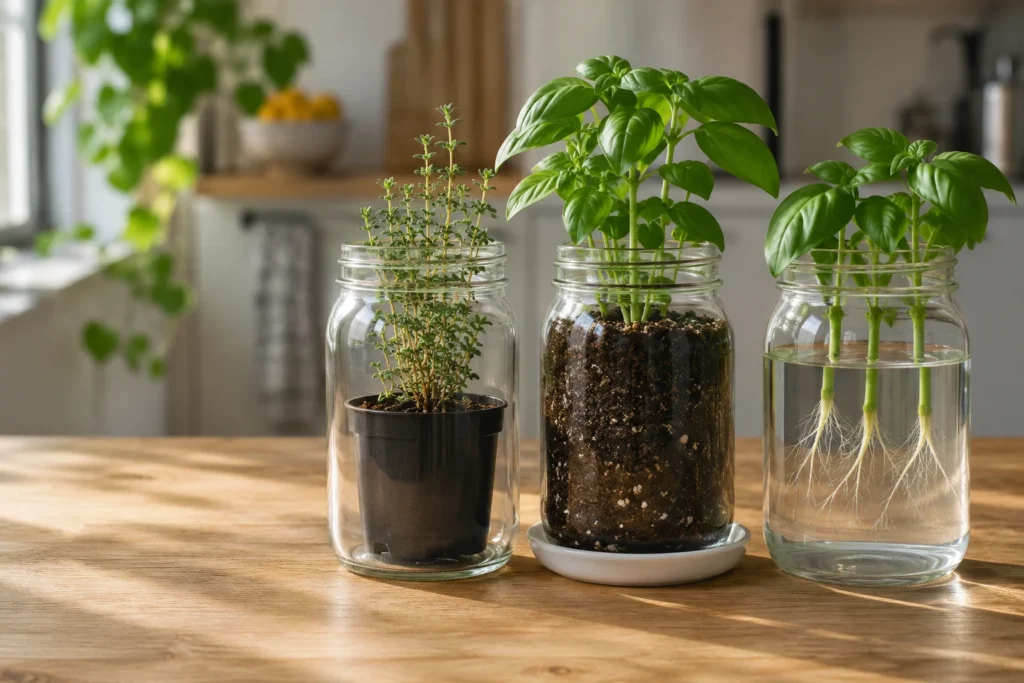
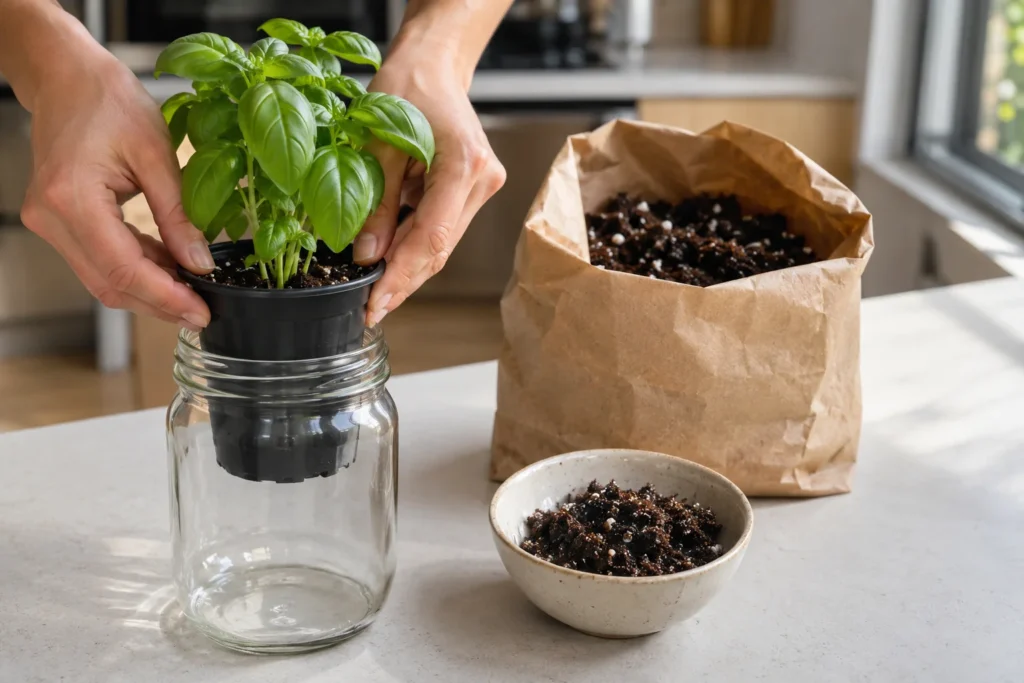
- Nursery pot inside the jar. Plant in a small plastic pot with holes, drop it in, and lift it out to water at the sink. The one rule: the pot never stands in water, so tip out anything that collects.
- A drilled jar. One hole in the base with a diamond bit, and it works like any pot on a saucer (build in Variations).
- A water-only cutting jar. No soil; stems root and grow in plain water. Smaller harvests, impossible to overwater.
For a first jar, we’d start with the nursery pot, because it gives the look of a jar with the drainage of a pot, and it’s what extension guides suggest for any decorative container without holes.
Step 3: Fill and Plant
Moisten the mix until it’s damp like a wrung-out sponge, then fill the nursery pot or drilled jar to about an inch below the rim. Loosen the transplant’s roots, set the root ball level with the mix, and firm gently. One herb per jar. From seed, basil goes only 1/8 inch deep in warm mix around 75 to 85 F and shows up in about 10 to 14 days.
Water everything in until a little runs out of the holes, let the pot drain in the sink, then return it to its jar. Pouring off that runoff is the whole point.
Step 4: Put the Jars Where the Light Really Is
Light decides this project more than the jar does. Most herbs grown indoors want around eight hours of direct light a day, and tough ones such as thyme and chives tolerate six. A south window is first choice, a bright east or west window second. A “sunny” sill in November gets short, weak daylight, which is why winter herbs stretch and pale however carefully you water. Under six hours, add a light.
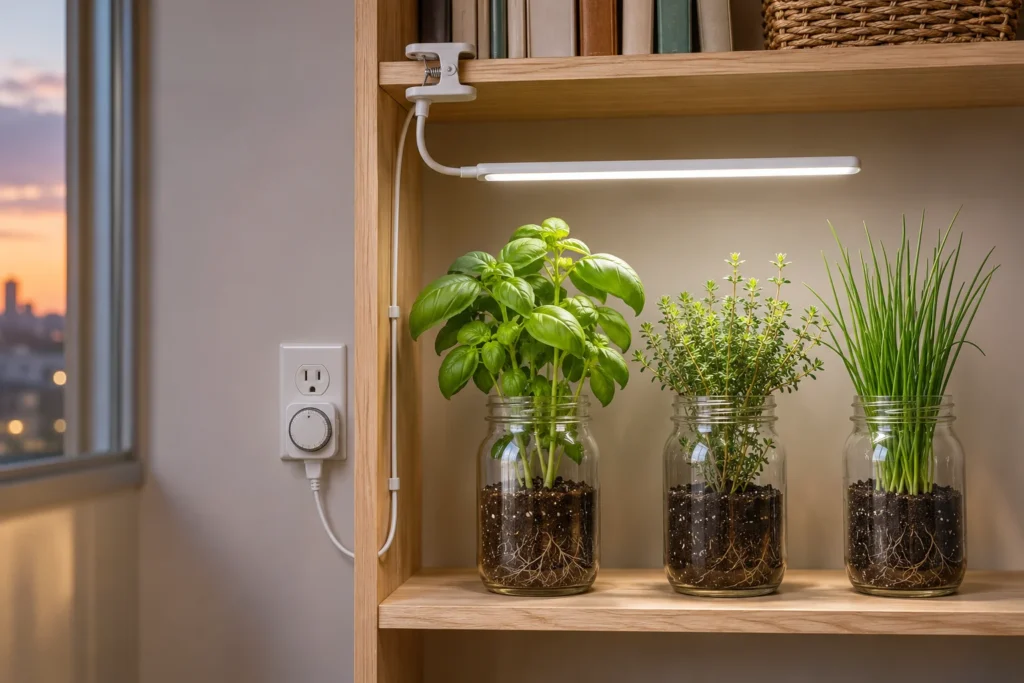
A clip-on LED grow light 6 to 12 inches above the leaves, on a timer for 12 to 16 hours a day, does the job in a studio. Room temperature suits herbs: 65 to 70 F in the day with nights about 10 degrees cooler, but keep leaves off cold glass and basil away from anywhere below 50 F. For the full winter routine in regular pots, see our guide to growing herbs indoors year round.
Step 5: Water by Feel, Feed Lightly, Label
Press a finger into the mix and water only when the top half inch to inch is dry. Lift the nursery pot out, water at the sink until it drains, let it finish dripping, and put it back; a drilled jar gets the same on its saucer, emptied after. Dark, wet mix sitting in the glass for days is your cue to wait.
Feed liquid fertilizer at half strength about every six weeks while plants are actively growing, and not at all in deep winter; overfed herbs put on leaves with less flavor. Then label every jar; thyme and oregano seedlings look identical.
How to Use It
Harvest little and often and the jars pay you back for months. Annuals such as basil and parsley can be cut back to a leaf pair, leaving about 4 to 6 inches of stem to regrow; perennials such as chives, mint, thyme and oregano prefer losing only the top third at a time.
Think of the year in three moves. Fall: build the jars and root cuttings before frost. Winter: run the light, water less, skip fertilizer. Spring: feed again, and when roots circle the nursery pot, move that herb to a pot 1 to 2 inches wider, or outdoors after frost danger passes. The jar is a starter home.
When something goes wrong, the glass usually tells you why before the leaves do.
| What you see | Likely causes | What to do |
|---|---|---|
| Tall, pale, floppy stems | Too little light, most common in winter | Move to the brightest window or add the grow light |
| Yellow lower leaves, mix wet for days, sour smell | Overwatering; water pooling in the jar | Lift the pot, empty the jar, let the mix dry; see root rot signs and rescue |
| Tiny flies lifting off the mix | Fungus gnats in constantly wet mix | Let the top dry between waterings; see our fungus gnat fixes |
| Fine webbing, sticky residue, speckled leaves | Spider mites or aphids in dry winter rooms | Weekly spray of 1 to 2 tablespoons mild dish soap per gallon of warm water while pests show; rinse leaves before eating |
Variations: More Mason Jar Herb Garden Ideas
The nursery pot build is the workhorse. These three mason jar herb garden ideas cover people without a drill, people with one, and people who want it to look good.
Water-Only Cutting Jars
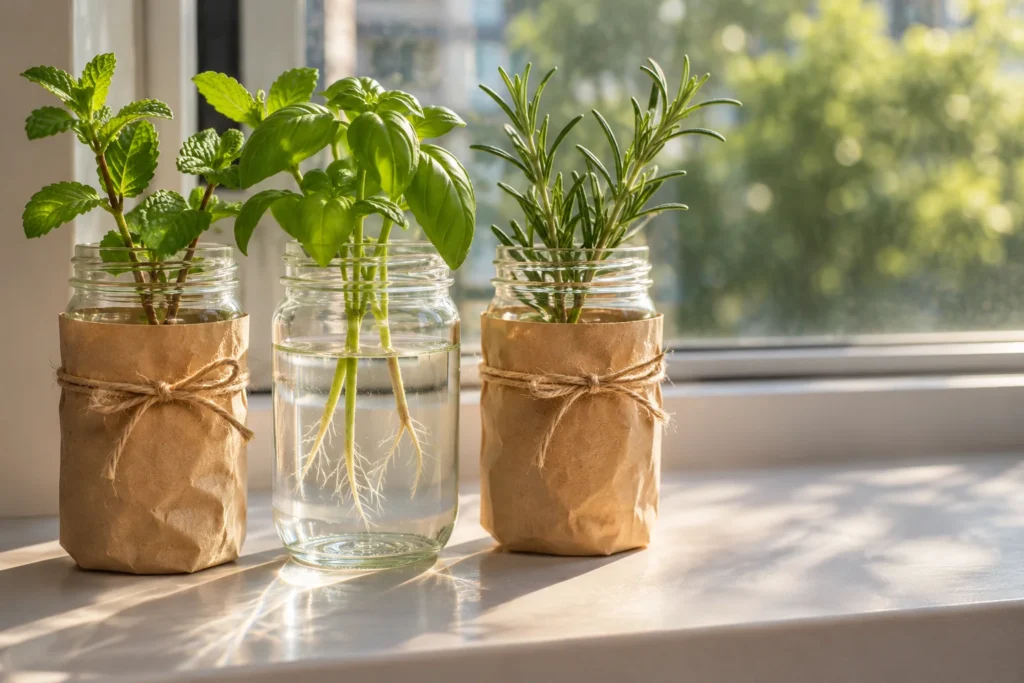
This is the lowest-risk version, because the only job is changing the water. Cut 4 to 6 inch stems from basil, mint, oregano, thyme, rosemary, sage or lemon balm, strip the lower leaves, and stand them in a pint jar of room-temperature water on a bright sill. Replace the water every day or two and expect the first roots within a few days to a week on soft stems such as basil. A paper sleeve around the jar keeps light off the water and algae down. The same jars make a tidy propagation station for houseplant cuttings in spring.
Drilled Jars for the Handy
One hole turns a jar into a real pot. Use a small diamond-coated glass bit, wear safety goggles rather than glasses, and secure the jar upside down on a towel. Glass is drilled wet: keep a small puddle of water on the spot and add more as you go, because drilling dry heats and cracks the glass. Start the bit at about a 45 degree angle so it bites, then bring it upright and let the diamond do the work with light pressure. Expect to lose a jar while you learn.
Crate, Tray or Tension-Rod Display
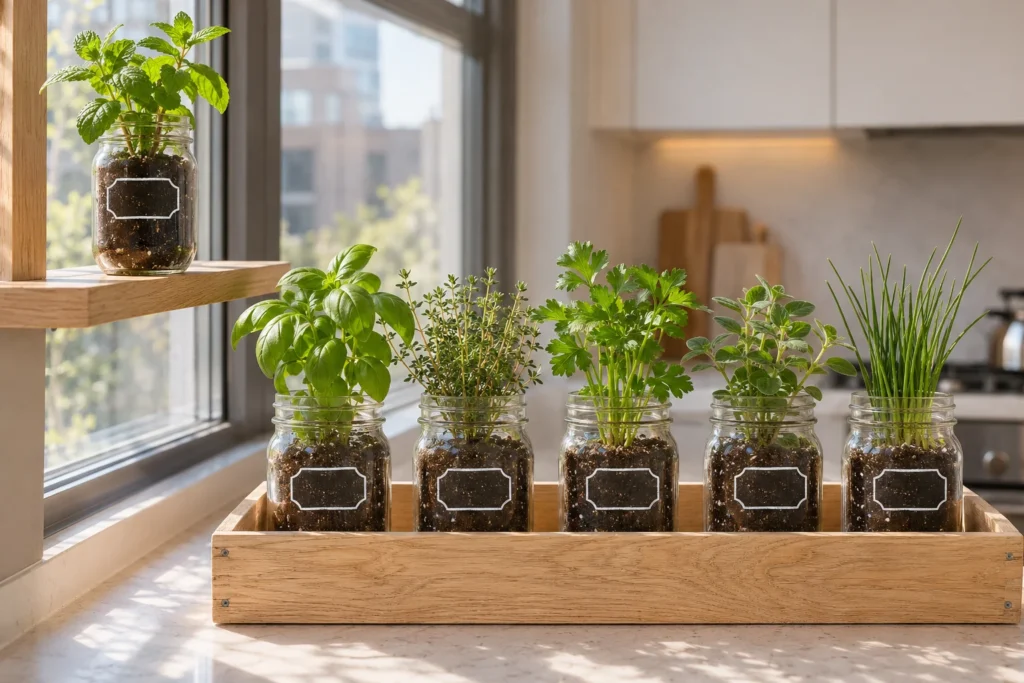
For the look without hardware in the wall, group the jars in a shallow wooden crate or lipped tray, or along a tension-rod shelf inside the window frame. A crate catches drips and hides the nursery pots. In a pet household, use the layout: mint and chives on the highest shelf, the basil the cat ignores on the sill. Chalk markers on the glass turn labels into design.
Frequently Asked Questions
What if my only window faces north?
Use a grow light and treat the window as a bonus. A north window rarely gives the six hours of direct light the toughest herbs need, so herbs there stretch and fade. A small clip-on LED set 6 to 12 inches above the leaves on a 12 to 16 hour timer, as in Step 4, replaces the missing sun; basil is the first herb to complain without it, thyme and chives the last.
What should I do if my cat or dog chews a toxic herb?
Call your veterinarian or the ASPCA Animal Poison Control Center at (888) 426-4435 right away; a consultation fee may apply. Note which herb it was and roughly how much is missing, since chives are a bigger concern than a nibble of mint or oregano. Then move that jar to a high shelf or a room your pet can’t reach.
How long will herbs live in a mason jar?
Months, not years. Soft annuals such as basil and parsley are cut back several times and then replaced from seed or a fresh cutting; perennials such as chives, mint and thyme keep going until their roots circle the nursery pot, usually by spring. At that point move the plant to the next pot size up, as in How to Use It, or outdoors once frost danger has passed, and start the next cutting in the empty jar.
Can I start seeds in a jar in fall instead of buying plants?
Yes, with a grow light; without one, fall seedlings stretch before they are useful. Basil seed sown 1/8 inch deep in mix kept around 75 to 85 F comes up in about 10 to 14 days. Seed is the cheaper route, but a nursery transplant or a rooted cutting gives you leaves to snip weeks sooner, which is why extension guides point beginners to small plants first.
Can the jars stay on the balcony this fall?
Only while nights stay mild. Basil cannot take temperatures below 50 F, so bring its jar in once nighttime lows approach that; chives, thyme, mint and oregano tolerate nights down into the mid 40s F before they need to come inside. Glass on a railing is also one gust from the sidewalk, so keep balcony jars on the floor or inside a crate.
What Actually Matters
Light first, drainage second, then watering by touch. If you fix one thing from an earlier attempt, make it the gravel: swap it for a nursery pot and the jar finally has somewhere for water to go.
The pet check takes two minutes, so run it before the chives come home. This week’s version is simple: snip a few stems from any outdoor basil or mint before frost takes them and stand them in a pint jar of water on your brightest sill. By the time roots show, you’ll know whether that window deserves a soil jar, and these mason jar herb garden ideas will have cost you nothing.
Sources
- University of Illinois Extension – Container Drainage Options – gravel myth; double potting; drilling
- University of Illinois Extension – Herbs all winter: grow them indoors – minimum container size
- Virginia Cooperative Extension Master Gardeners – Garden Myth Busters: Container Drainage with Gravel
- Iowa State University Extension – Growing Herbs Indoors – light, grow lights, herb lists, feeding, harvest
- NC State Extension, Union County – Growing Herbs Indoors – temperatures; watering
- University of Minnesota Extension – Growing herbs in home gardens – half-inch watering check; fertilizer every six weeks
- Cornell Cooperative Extension, Genesee County – Growing Herbs Indoors – basil cold limit; soap spray rate
- UNH Cooperative Extension – Windowsill Gardening – plants beat seed; stretched growth
- Utah State University Extension – How to Grow Basil in Your Garden – seed depth, temperature, days to emerge
- Rutgers Cooperative Extension of Ocean County – Fall Garden Day herb handout – rooting cuttings in water
- Colorado State University Extension PlantTalk – Houseplant containers – next pot 1 to 2 inches wider
- ASPCA – Toxic and Non-Toxic Plants: Chives, Mint, Parsley, Oregano, Basil, Rosemary, Thyme – pet listings
- ASPCA Animal Poison Control Center – emergency contact
- Inland Craft Products and Dremel – diamond bit drilling instructions
- Ball (Newell Brands) – Mason Jars and Lids – pint and quart capacities.