


Droopy Houseplant Leaves Causes and Fix sounds simple until your plant is still sagging after you watered it yesterday. The soil feels damp, the pot feels heavy, and somehow the leaves look more dramatic than before.
That is the moment to pause.
Most droopy leaves are a stress signal, not a goodbye note. The trick is figuring out which stress. Water can help a thirsty plant fast, but the same water can push a wet-rooted plant closer to rot.
I write GrowDwell as a careful curator, not a master gardener. So I like checks that a beginner can do in one minute: touch the soil, lift the pot, look at the drainage, feel the leaves, and notice what changed this week.
TL;DR: What Droopy Houseplant Leaves Usually Mean
Droopy houseplant leaves usually mean the plant is stressed by water, roots, light, air, pests, or temperature, not always that it needs more water. The safest first move is to check soil depth, pot weight, drainage, and leaf texture before you pour anything into the pot.
- Droopy Houseplant Leaves Causes and Fix starts with one rule: do not water first, diagnose first.
- Dry soil plus a light pot usually points to underwatering; wet soil plus a heavy pot points to overwatering or root stress.
- Apartment problems often hide in decorative cachepots, far shelves, hot windows, dry forced air, and AC or heater vents.
- Move toxic trimmings, fallen leaves, treated plants, and plant water away from cats and dogs while you work.
Quick recommendation: Check the soil and pot before watering; water only if dry, pause if wet, and inspect roots if you smell sour soil or see mushy stems.
Clemson Home and Garden Information Center explains that overwatering and underwatering can look similar because both interfere with how roots function. That is why a droopy plant should be checked, not guessed at. Clemson HGIC watering guidance is especially useful for understanding that roots need both water and air.
The takeaway: drooping is a clue, and the pot usually gives the next clue.

Droopy Houseplant Leaves Causes and Fix: 1-Minute Diagnosis
Droopy Houseplant Leaves Causes and Fix works best when you check the plant in the same order every time: soil, pot weight, drainage, leaves, pests, and recent changes. That order stops the most common beginner mistake, which is adding water before you know whether the roots can use it.
Start with the soil. Push your finger, a wooden skewer, or a chopstick about 2 inches down. The top can look dry while the root zone is still damp, especially in deeper pots.
Next, lift the pot. I have found pot weight easier than reading the top inch of soil, especially with small apartment pots under 6 inches wide. A thirsty pot often feels surprisingly light; a waterlogged one feels heavy and dull.
Check the drainage setup. If the plant sits inside a decorative cachepot, lift the nursery pot out and look for standing water. A pretty outer pot can hide a tiny swamp.
Feel the leaves. Papery, thin, curling leaves often point to dryness. Soft yellow leaves, limp stems, or mushy lower growth point toward too much water, root stress, or disease.
Look under leaves and along stems. Spider mites can leave fine webbing. Mealybugs look like white cottony clusters. Sticky leaves can mean sap-feeding pests.
Then ask what changed. Did you repot it? Move it to a darker shelf? Turn on the heater? Put it near an AC vent? Fertilize it after months of plain water?
If you use a decorative pot: treat it as a cover, not the main pot. Keep the plant in a nursery pot with drainage holes, then empty the cachepot after watering.
The takeaway: the fastest diagnosis is not fancy, it is consistent.
| What You See | Soil Feel | Pot Weight | Likely Cause | Fix Today | Wait or Worry | Pet Note |
|---|---|---|---|---|---|---|
| Limp leaves, crispy edges | Dry 2 inches down | Light | Underwatering | Water deeply and drain | Wait a few hours | Move fallen leaves away from pets |
| Droop plus yellow soft leaves | Wet or sour | Heavy | Overwatering or root rot | Pause watering, check drainage | Worry if stems turn mushy | Keep sick leaves away from cats and dogs |
| Weak stems, pale leaves | Normal | Normal | Too little light | Move closer to bright indirect light | Wait 2 to 4 weeks | Check toxicity before relocating |
| Brown tips and tired tropical leaves | Normal | Normal | Dry air or vent stress | Move from airflow, raise humidity | Worry if leaf damage spreads fast | Avoid pet access to humidifier water |
| Webbing, sticky leaves, spots | Varies | Varies | Pests or disease | Isolate and inspect closely | Worry if spreading | Keep treatments away from pets |
The 9 Real Causes of Droopy Houseplant Leaves
The real causes of droopy houseplant leaves usually fall into 9 buckets: underwatering, overwatering, drainage or root problems, low light, direct sun or heat, dry air, temperature shock, recent change, and pests or disease. Each one has a different fix, so matching symptoms matters more than acting fast.
1. Underwatering
Underwatering is the easy one to imagine: dry soil, a light pot, limp leaves, crispy edges, and sometimes soil pulling away from the sides of the pot. Pothos, peace lily, spider plant, calathea, and fittonia can all look theatrical when they get too dry.
Check 2 inches down. If the soil is dry and the pot feels light, water thoroughly until excess runs out of the drainage holes. Then empty the saucer or cachepot.
If water runs straight down the sides and out, the soil may have become hydrophobic. Bottom-water for 20 to 30 minutes, then let the pot drain fully. I have seen a small pothos perk up in about 4 hours after this, while older leaves stayed slightly bent for a day.
If your plant sits on a sunny shelf: small pots dry faster than the same plant on a table farther from the window. A 4-inch pot can need checking twice as often as an 8-inch pot.
The takeaway: water deeply when the root zone is dry, then stop.
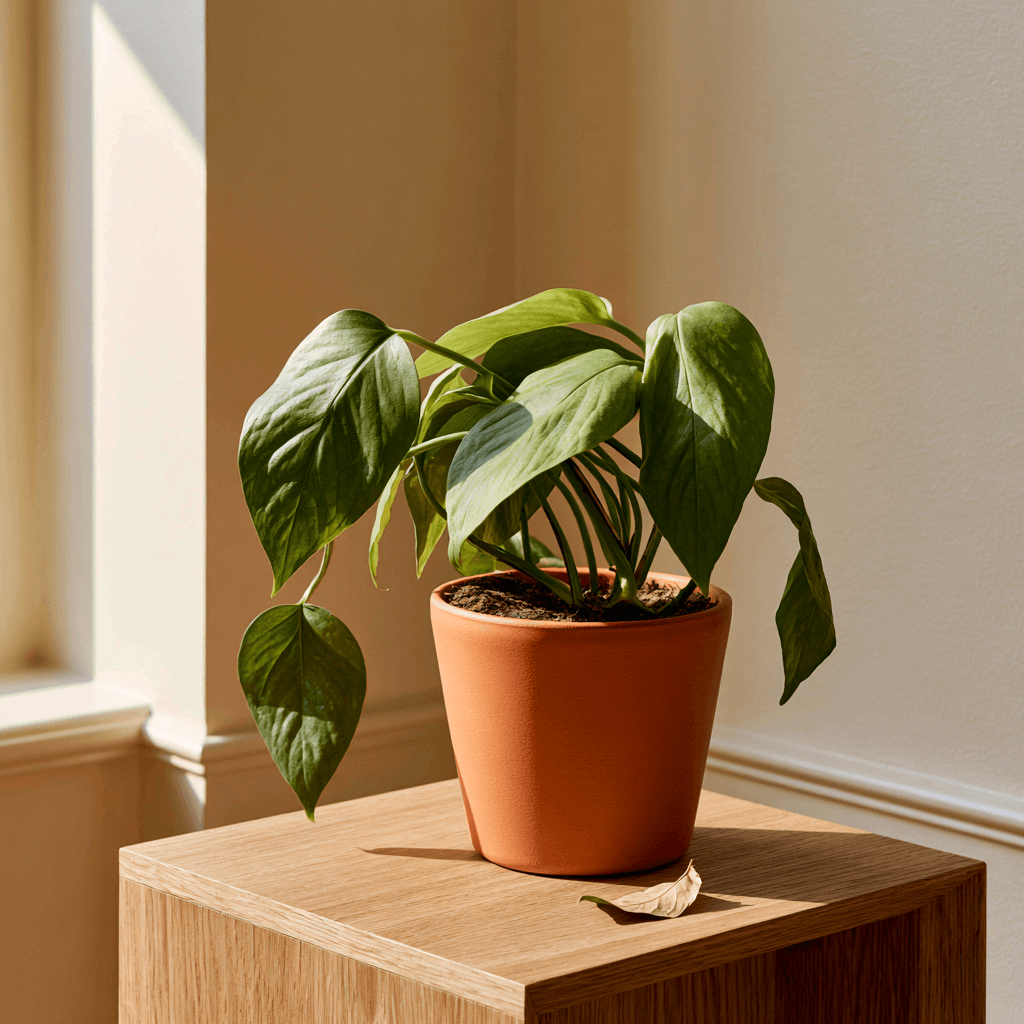
2. Overwatering or Early Root Rot
Overwatering can look unfair because the plant droops even though the soil is wet. The pot feels heavy. Lower leaves may turn yellow, soft, or translucent. The soil may smell sour.
This is where beginners panic-water. Please do not.
Clemson HGIC notes that roots need oxygen, and waterlogged soil limits that oxygen. Over time, wet conditions can favor root disease. Their houseplant diseases and disorders guidance connects overwatering with root decline and wilting.
Fix it by pausing water until the mix dries to the right depth for that plant. Make sure the pot has drainage holes. If drooping continues with wet soil, sour smell, black roots, or mushy stems, unpot and inspect.
If roots are black, soft, and slippery, trim damaged roots with clean shears and repot in fresh airy mix. If only a few roots are bad, the plant may recover. If the stem base is mushy, take healthy cuttings if the species allows it.
If you need a deeper symptom check: compare the plant with overwatered plant signs before adding more water.
The takeaway: wet soil plus droop means pause, not pour.

3. Poor Drainage, Wrong Pot Size, or Rootbound Roots
Some droopy plants are not watered wrong. They are potted wrong. A pot with no drainage, a compacted mix, a too-large pot, or a tight rootbound plant can all make watering confusing.
A too-large pot holds moisture longer than the root ball can use. A rootbound pot may shed water around the edges while the center stays dry. A pot without drainage gives roots no reliable escape from soggy soil.
Look for roots circling the pot, roots coming out of drainage holes, water sitting for days, or soil that dries unevenly. If you see those clues, repot one size up, not five sizes up. Add fresh potting mix with perlite if the mix feels dense.
I like the renter-friendly setup: nursery pot inside a decorative pot. You get drainage and a nice look without turning every watering session into a floor-cleaning event.
The takeaway: the pot is part of the care routine.

4. Too Little Light
Too little light causes slow, quiet droop. The plant may not collapse overnight. Instead, stems stretch, leaves pale, new growth gets smaller, and the whole plant looks weak.
University of Minnesota Extension explains that indoor plants need light for photosynthesis, and inadequate light affects growth and stored energy. Their indoor plant lighting guide is a good reminder that “low light” is not the same as “no light.”
Check distance from the window. A plant on a shelf 8 feet from a bright window may actually live in dim light. A north-facing window can work for snake plant, ZZ plant, pothos, and some philodendrons, but a fiddle leaf fig or many calatheas may sulk.
Move the plant closer to bright indirect light, but do it gradually if the plant was in deep shade. A simple grow light can help in rooms where the best shelf is nowhere near the window.
When I started researching indoor plant problems for GrowDwell, low light kept showing up as the quiet cause behind mystery droop. The plant was watered correctly. It just did not have enough energy to stand proud.
The takeaway: low-light tolerant still means light-tolerant, not light-free.

5. Too Much Direct Sun or Heat
Too much direct sun can make leaves droop even when the soil is not dry. You may also see faded patches, scorched brown areas, crispy edges, or leaves that feel warm in the afternoon.
This often happens on narrow south or west windowsills, near hot glass, or in rooms where afternoon sun hits the plant for hours. A monstera, pothos, peace lily, or calathea can all stress in harsh direct light if they were grown in gentler conditions.
Move the plant a little back from the window or use a sheer curtain. Do not move it from scorching sun to a dark corner. Aim for bright indirect light.
I check leaf temperature with the back of a finger. If the leaf feels warm and the pot is not dry, heat stress is more likely than thirst.
The takeaway: crispy sun stress needs shade, not automatic water.

6. Low Humidity and Dry Forced Air
Low humidity and dry forced air often cause droop with brown tips, crispy margins, curling, or tired-looking tropical leaves. The confusing part is that the soil can be fine while the leaves still sag.
University of Minnesota Extension notes that winter indoor conditions can bring dry air, low humidity, and temperature fluctuations that stress houseplants. Their winter houseplant tips match what many apartment growers notice when heaters and AC systems run for long stretches.
Calathea, prayer plant, fern, peace lily, and some tropical philodendrons often show this faster than snake plant or ZZ plant. Move sensitive plants away from heater vents, radiators, and direct AC flow.
Grouping plants can help a little. A humidifier helps more. Misting feels satisfying, but it usually gives only a brief moisture bump and can worsen leaf spotting if the room has poor airflow.
I have found dry air easy to miss because the soil can pass every test. One calathea can look tired for 6 weeks in a heated living room while a pothos beside it looks perfectly smug.
If you see brown tips too: use this brown leaf tips guide to separate dry air from salt buildup or watering stress.
The takeaway: if the soil is right but tropical leaves sag, check the air.

7. Temperature Shock, Drafts, or Vent Stress
Temperature shock can make a plant droop suddenly after a cold night, an AC blast, a heater stream, or a move to a drafty window. The plant may have normal soil and no pests, but the leaves hang anyway.
Check the plant’s exact spot at different times. A shelf can be calm at noon and chilly at 2 a.m. A radiator can be off while you inspect and hot again by evening.
Move the plant away from vents, door drafts, cold glass, and heat sources. Keep conditions stable for at least 1 to 2 weeks before judging recovery.
Snake plant and ZZ plant handle imperfect rooms better than many tropical plants, but even tough plants dislike repeated blasts of hot and cold air.
The takeaway: stable beats perfect for stressed houseplants.

8. Repotting or Recent Relocation Shock
Repotting and relocation shock are common after bringing a plant home, changing rooms, switching light levels, or disturbing roots. The plant droops because conditions changed faster than it can adjust.
The key clue is timing. If droop starts within a few days of repotting or moving, and the soil is not sour, stems are not mushy, and pests are not visible, shock is likely.
Keep the plant in steady bright indirect light. Do not fertilize right away. Water only when the soil test says it is time.
The beginner mistake I would call out here is fixing a shocked plant 5 more times before it has had a chance to settle. I have seen plants look worse on day 3, flat on day 5, and more normal by day 14 when left alone.
If yellow leaves appear too: compare timing and texture with yellow leaves on houseplants before blaming one single cause.
The takeaway: after a big change, patience can be plant care.

9. Pests, Disease, or Fertilizer Salt Stress
Pests, disease, and fertilizer salt stress can cause stubborn droop that does not match normal watering problems. Look for webbing, sticky leaves, white cottony clusters, spots, distorted growth, crusty soil surface, or tiny flying fungus gnats.
Inspect undersides of leaves, stems, new growth, and the soil surface. Use a flashlight if needed. Close apartment plant shelves can let pests move from one pot to the next quickly.
Isolate the plant first. Rinse leaves if the plant can tolerate it, prune dead tissue with clean shears, and identify the pest before choosing a treatment. Sticky traps can help monitor fungus gnats, but larvae usually mean the soil is staying too wet.
If you see gnats around damp soil, this fungus gnats remedy can help you reduce the problem without turning the whole shelf into a chemical project.
Fertilizer salts can also stress roots. If you see a white crust on soil or pot edges and the plant has been fertilized often, flush the soil thoroughly if the pot drains well. If drainage is poor, repotting may be safer.
ASPCA’s toxic and non-toxic plant database is the source I would use before placing sick plants, trimmings, or treated leaves within reach of pets. Pothos, peace lily, monstera, snake plant, ZZ plant, jade plant, and fiddle leaf fig all deserve pet-safety checks before you move them to the floor. ASPCA plant safety guidance is the safest reference for cats and dogs.
The takeaway: if droop spreads or comes with pests, isolate first.

When to Worry vs When to Wait
You should wait when the plant has firm leaves, normal-smelling soil, no visible pests, and a clear recent stress like moving or repotting. You should worry faster when wet soil comes with sour smell, mushy stems, black roots, spreading spots, sticky leaves, webbing, or visible insects.
Wait: the plant drooped after moving rooms, coming home from a shop, or being repotted, but the soil feels appropriate and leaves are still firm. Give it steady light and 1 to 2 weeks.
Fix today: the pot is bone-dry, the plant is pressed against hot glass, leaves sit in heater airflow, or tropical leaves are curling in dry air. These are placement and water problems you can improve right away.
Unpot and check roots: the soil is wet, the pot is heavy, lower leaves are soft yellow, and the soil smells sour. Healthy roots are usually pale, tan, or firm. Bad roots are often black, mushy, and slippery.
Isolate: you see webbing, sticky residue, white cottony pests, moving dots, or spreading leaf spots. Keep the plant away from the rest of your shelf until you know what is happening.
Peace lily may perk up within hours after a true underwatering fix. Root rot can take weeks of careful recovery. Shock may simply need quiet.
The takeaway: urgent does not always mean more action; sometimes it means the right action.
How to Prevent Droopy Leaves Next Time
You prevent droopy leaves by building a small routine around the real apartment conditions your plant lives in, not around a calendar. Check soil depth and pot weight, use drainage, match plants to actual window light, avoid vents, quarantine new plants, and keep pet safety part of the setup.
Water by feel, not by weekday. A pothos in bright indirect light may dry faster in 6 days during a warm spell, then take 12 days in a dim cooler room. The plant does not care what the calendar says.
Keep nursery pots inside decorative pots. This one habit prevents a lot of hidden standing water. After watering, wait a few minutes, then empty the saucer or cachepot.
Match the plant to the window you actually have. Snake plant and ZZ plant tolerate lower light better than fiddle leaf fig. Pothos and heartleaf philodendron are more forgiving than many prayer plants.
Move plants away from vents and cold glass. Even a tough plant can droop when it gets hit by dry air every time the heat turns on.
Use a hygrometer if you keep tropical plants. You do not need a gadget for every plant, but one small humidity reading can explain a lot of brown tips and tired leaves.
Quarantine new plants for at least 1 to 2 weeks when possible. Apartment shelves are close quarters, and one pesty newcomer can turn into 8 annoyed pots.
Keep toxic plants and fallen leaves away from cats and dogs. Empty plant water from saucers too, especially if fertilizer or treatment has been used.
The takeaway: prevention is mostly better placement, better drainage, and less guessing.

FAQ
Why are my houseplant leaves drooping after I watered?
Your houseplant leaves may be drooping after watering because the roots are too wet or stressed. Wet soil can reduce oxygen around roots, making the plant wilt even though the pot has water. Check if the soil is damp 2 inches down, the pot feels heavy, or the lower leaves are soft yellow before watering again.
Should I water droopy houseplant leaves right away?
No, you should not water droopy houseplant leaves right away without checking the soil first. Dry soil plus a light pot usually means the plant needs water, but wet soil plus a heavy pot points to overwatering or root trouble. The safest first move is checking soil depth, pot weight, and drainage.
How long does it take a droopy plant to recover?
A droopy plant can recover in a few hours if it was simply underwatered. Peace lilies and pothos may perk up the same day after deep watering and proper drainage. If the problem is root rot, low light, pests, or repotting shock, recovery may take 1 to 4 weeks or longer.
What does overwatered droopy houseplant look like?
An overwatered droopy houseplant often has wet soil, a heavy pot, yellow soft lower leaves, and sometimes a sour soil smell. The leaves may hang even though the plant looks “watered.” If stems are mushy or roots look black and slippery, inspect the roots and repot into fresh airy mix.
Can low light cause droopy houseplant leaves?
Yes, low light can cause droopy houseplant leaves because the plant cannot make enough energy for strong growth. You may also see pale leaves, stretched stems, and smaller new growth. Move the plant closer to bright indirect light gradually, especially if it has been sitting far from a window.
Are droopy houseplant leaves dangerous for pets?
Droopy leaves are not automatically dangerous for pets, but fallen leaves, trimmings, treated plants, and plant water can be risky. Many common houseplants, including pothos, peace lily, monstera, snake plant, ZZ plant, jade plant, and fiddle leaf fig, should be checked for pet toxicity before placing them within reach.
What Actually Matters
Droopy Houseplant Leaves Causes and Fix comes down to diagnosing soil, roots, light, and air before adding more water. That one pause can save a thirsty plant from staying dry and a wet-rooted plant from getting worse.
Start with the 1-minute check: soil 2 inches down, pot weight, drainage, leaf texture, pests, and recent changes. You do not need to know every plant Latin name to make a better first decision.
If the pot is dry and light, water deeply and drain. If it is wet and heavy, pause and inspect. If the soil seems fine, look at light, vents, humidity, heat, and pests.
That dramatic plant on the shelf may not be dying. It may just be asking you to stop guessing.