
Your nightstand already holds a lamp, a charger, and yesterday’s water glass, so where does the plant go? If you’ve been searching for “Cozy Bedroom with Plants Ideas Aesthetic,” start with a display that leaves room for everyday life.
These 27 setups work with different bedroom layouts, from one available windowsill to a reading corner. I’m Mehedi Hasan, GrowDwell’s owner and curator, and my approach is to pair the decorating idea with the practical checks that help you choose it.
TL;DR
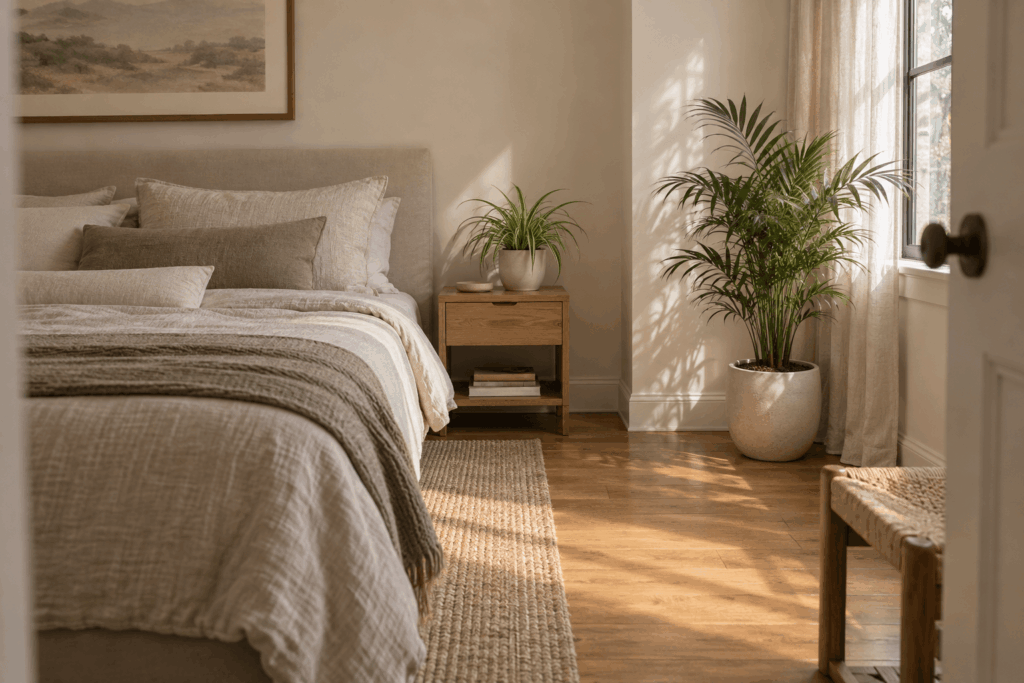
Start with one reachable plant in suitable light, then build the bedroom look around furniture you already use. A small spider plant beside a window is a useful first option when the surface is stable and uncrowded; a dark bedside corner needs a different placement or suitable supplemental lighting.
- Use these Cozy Bedroom with Plants Ideas Aesthetic setups as a menu: choose one arrangement first.
- Match the plant to the light before choosing its pot or stand.
- Freestanding furniture can simplify installation, but check stability and any required anchoring.
- Verify the exact plant’s pet-toxicity listing before bringing it home.
Quick recommendation: Try Idea 1 for a small display, Idea 19 for insufficient daylight, or Idea 27 when maintenance already feels like a lot.
A bedroom doesn’t need a large collection to feel thoughtfully planted.
27 Cozy Bedroom with Plants Ideas Aesthetic Setups
The most workable bedroom plant arrangements combine a clear visual role with suitable light, stable support, and easy watering access. Choose a bedside accent, window display, or reading-corner plant according to the space you actually have, then check the renter and pet limitations before copying the look.
Small surfaces and minimal rooms: These first six ideas give greenery one defined place without asking you to reorganize the whole bedroom.
1. One Spider Plant Beside the Bed
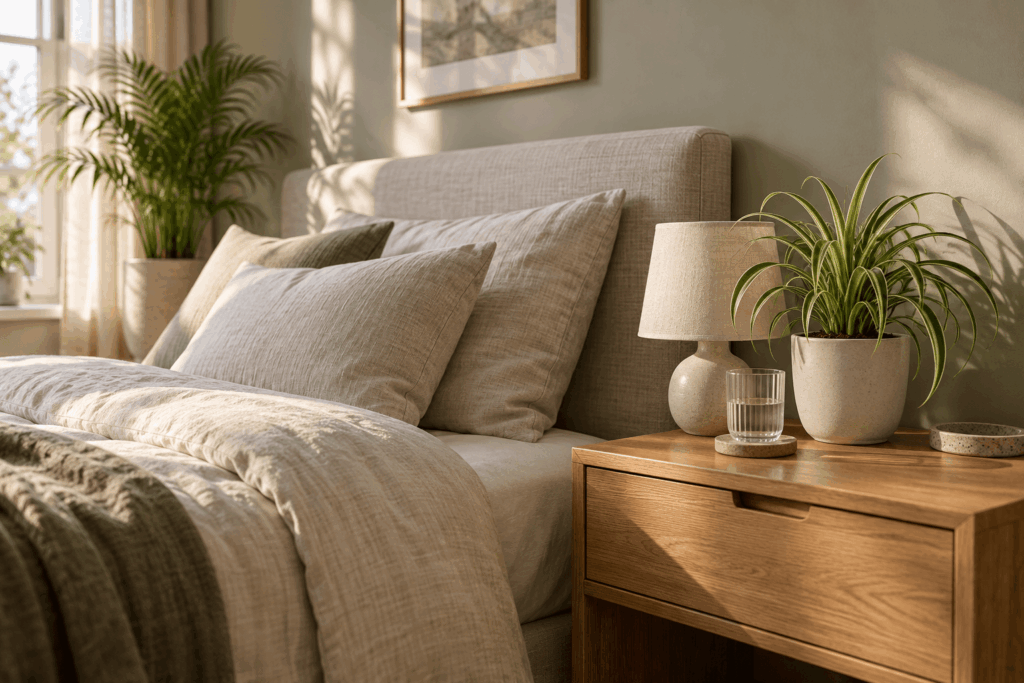
Place a small spider plant, Chlorophytum comosum, in a cream pot at the back of your nightstand. Its arching leaves soften the lamp and tabletop, while the front remains available for your phone and water glass.
I would put this first because it lets you try the look without reorganizing the room. Choose the pot only after checking how much surface your everyday essentials need.
Light: Suitable indirect daylight. Renter fit: Existing furniture. Skip if: Leaves brush your pillow or attract persistent pet chewing.
The ASPCA lists spider plant as non-toxic to cats and dogs, using its synonym Anthericum comosum.
2. A Windowsill Green Ribbon
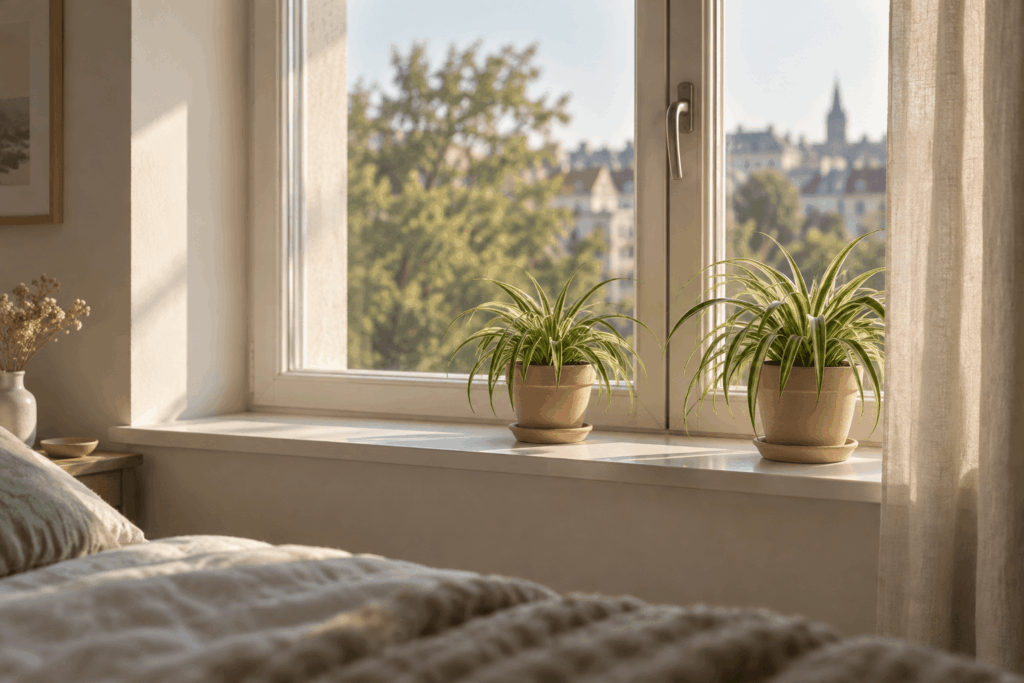
Arrange two small spider plants along a deep windowsill, leaving a gap between their leaf arches. Repeating the same pot finish gives the display a quiet rhythm without introducing several competing colors.
Open the window and move the curtain before committing to the arrangement. Every pot should sit fully on the sill, with a waterproof saucer beneath it and enough room to lift it out.
Light: Check actual exposure, especially direct afternoon sun. Renter fit: No additional fittings. Skip if: The sill is narrow, needed for emergency access, or your cat’s regular lookout.
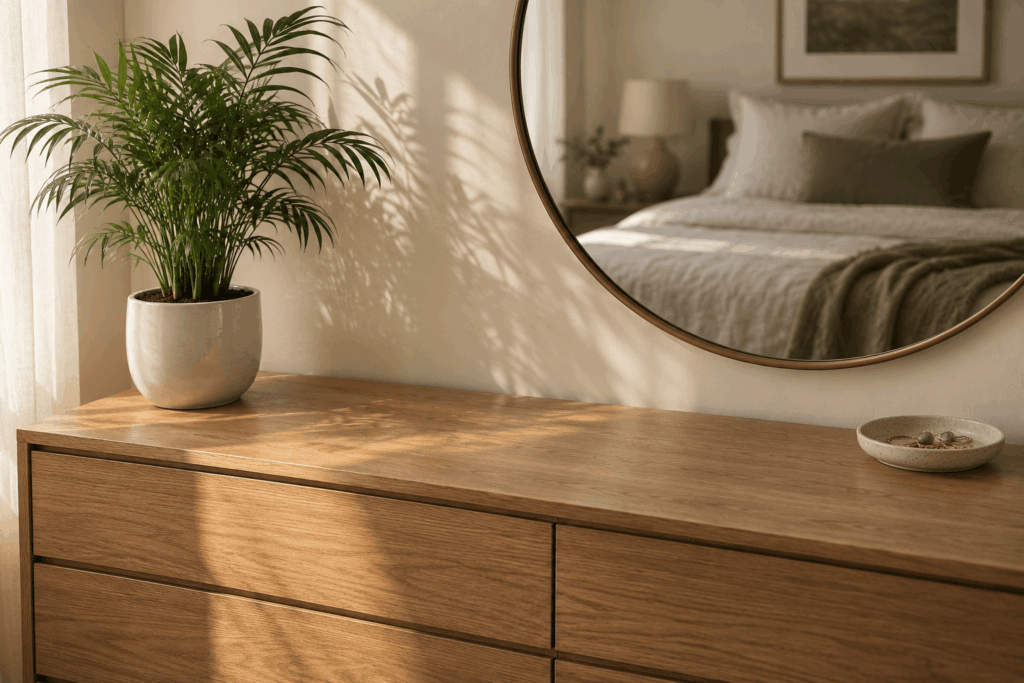
3. A Dresser-End Plant Anchor
Give one end of the dresser a small parlor palm and leave the middle open for getting dressed. The plant adds height beside a broad, low piece of furniture without turning the entire surface into a display shelf.
Repeat one nearby color in the planter, perhaps the cream of your bedding or the warm brown of a picture frame. Use a waterproof outer container, and lift the nursery pot out for watering.
Light: A dresser near a suitable window. Renter fit: Existing furniture, secured as required. Skip if: Fronds obstruct drawers, clothing, or mirror access.
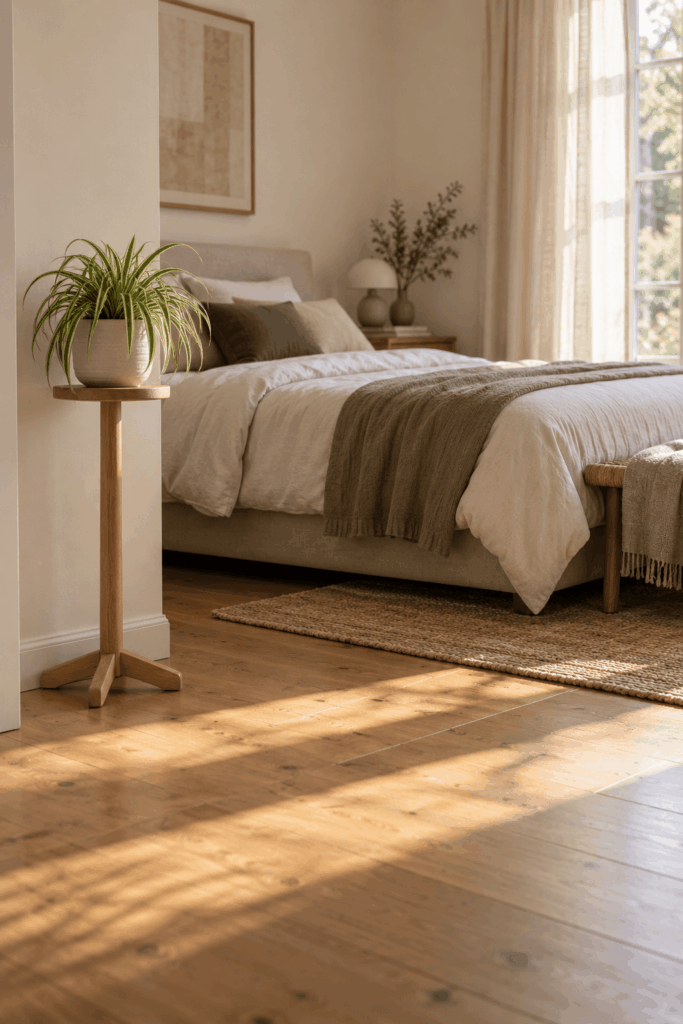
4. A Slim Stand Beside a Nightstand-Free Bed
A narrow, stable plant stand can add greenery beside a bed where a full nightstand won’t fit. Keep the pot modest in size so the arrangement doesn’t become top-heavy.
Check the stand’s entire footprint, including legs that project beyond the top. Walk past it, pull the bedding straight, and open nearby storage before deciding the location works.
Light: A window-side gap with suitable daylight. Renter fit: Freestanding support. Skip if: The stand narrows your walking route or could be knocked over by pets.
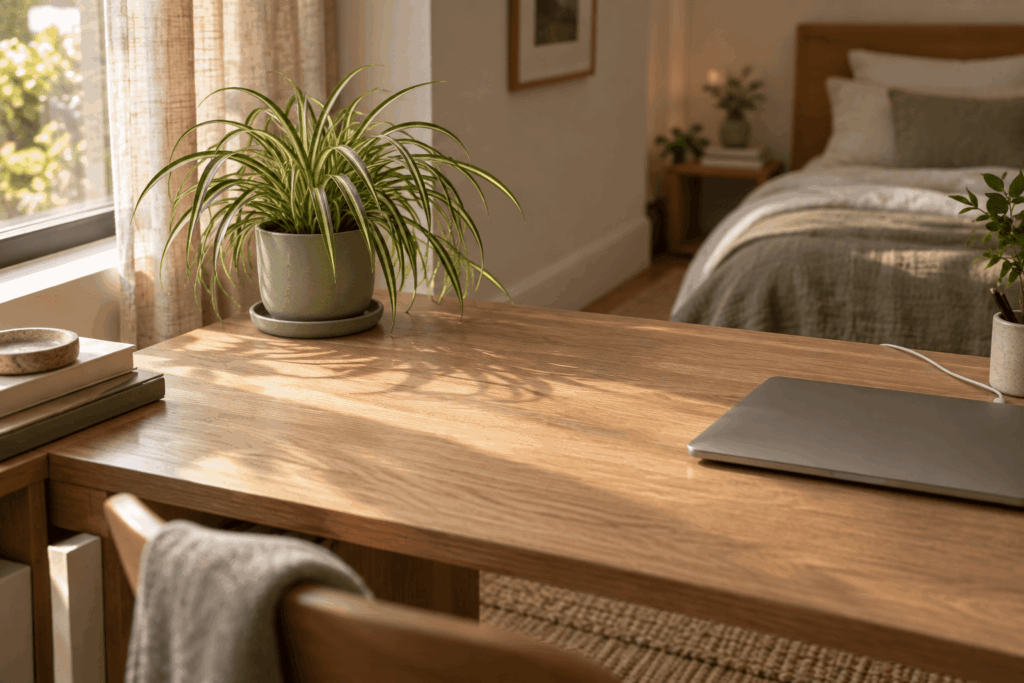
5. A Bedroom Desk With a Green Back Corner
Place one compact plant at the back corner of a bedroom desk, opposite your usual charging area. It gives a work surface a softer edge while preserving the keyboard and writing space.
Keep the pot on a waterproof tray and carry it elsewhere to water. A decorative container beside a laptop is much easier to enjoy when you aren’t balancing a watering can over the keyboard.
Light: Daylight reaching the leaves beyond the monitor. Renter fit: Existing desk. Skip if: The plant crowds equipment, blocks ventilation, or trails into cables that pets investigate.
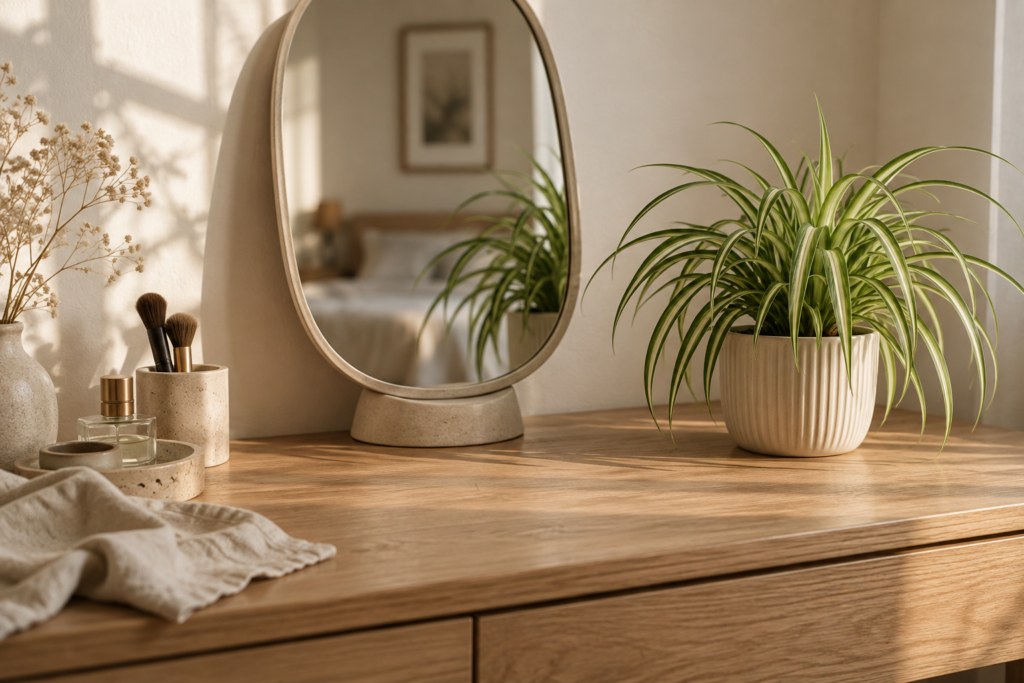
6. A Vanity Plant Reflected in a Tabletop Mirror
Set a small spider plant beside a stable tabletop mirror so the reflection repeats its leaf shape. One pot can give the composition more visual depth without doubling your watering jobs.
Angle the mirror for the view you use when seated, then check that the plant doesn’t hide your face or grooming essentials. The reflection is a styling tool; it doesn’t establish that the plant receives enough light.
Light: Suitable daylight at the actual pot. Renter fit: Tabletop accessories. Skip if: The mirror wobbles or the arrangement creates an accessible pet climbing route.
Warm wood and soft boho rooms: Use baskets, fabric, and repeated materials to create softness without adding a pot to every surface.
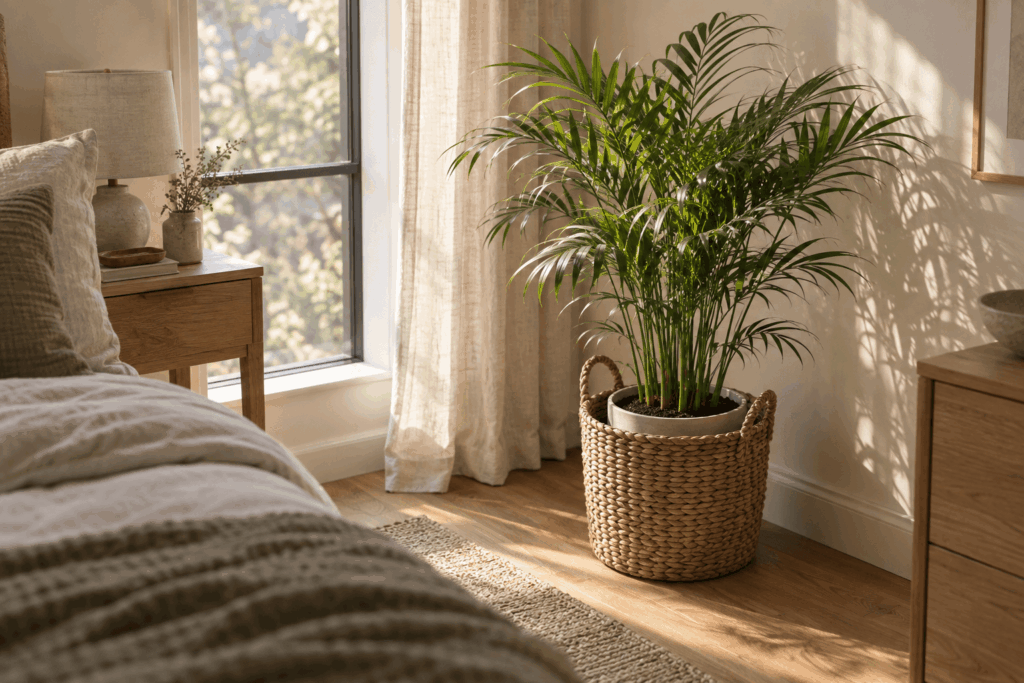
7. A Parlor Palm in a Protected Woven Basket
A parlor palm, Chamaedorea elegans, adds feathery height beside warm wood and plain bedding. Choose a basket wide enough to hold a waterproof cachepot, meaning the decorative outer container around the draining nursery pot.
NC State Extension’s parlor palm profile supports indirect-light placement and protection from direct sun. Keep runoff out of the basket by watering separately and letting the inner pot drain before replacing it.
Light: Indirect window light. Renter fit: Floor display. Skip if: Pets dig in the basket or the container traps unnoticed water.
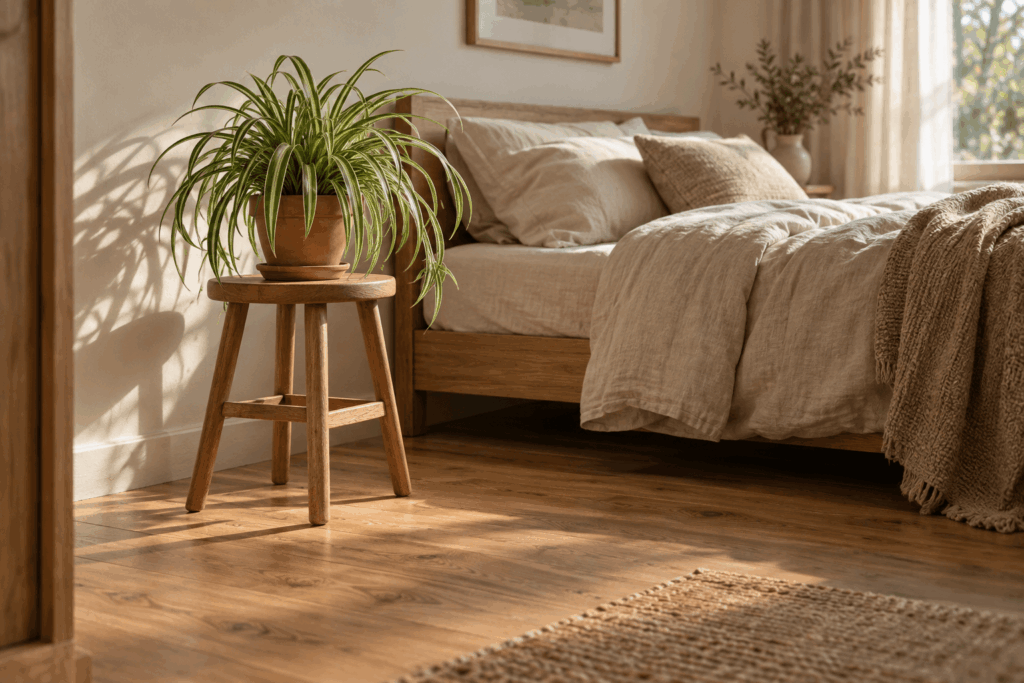
8. A Sturdy Vintage Stool Plant Pedestal
Reuse a sturdy stool to raise one plant beside a low bed. A simple wooden seat adds warmth and makes the pot feel deliberately placed, especially when its finish echoes the headboard.
Check joints and legs before using secondhand furniture, and keep the whole pot base supported. Avoid balancing the stool on books or adding another stand on top to gain height.
Light: A suitable window-side position. Renter fit: Furniture reuse without new fittings. Skip if: The stool rocks, the pot overhangs, or pets can easily tip the arrangement.
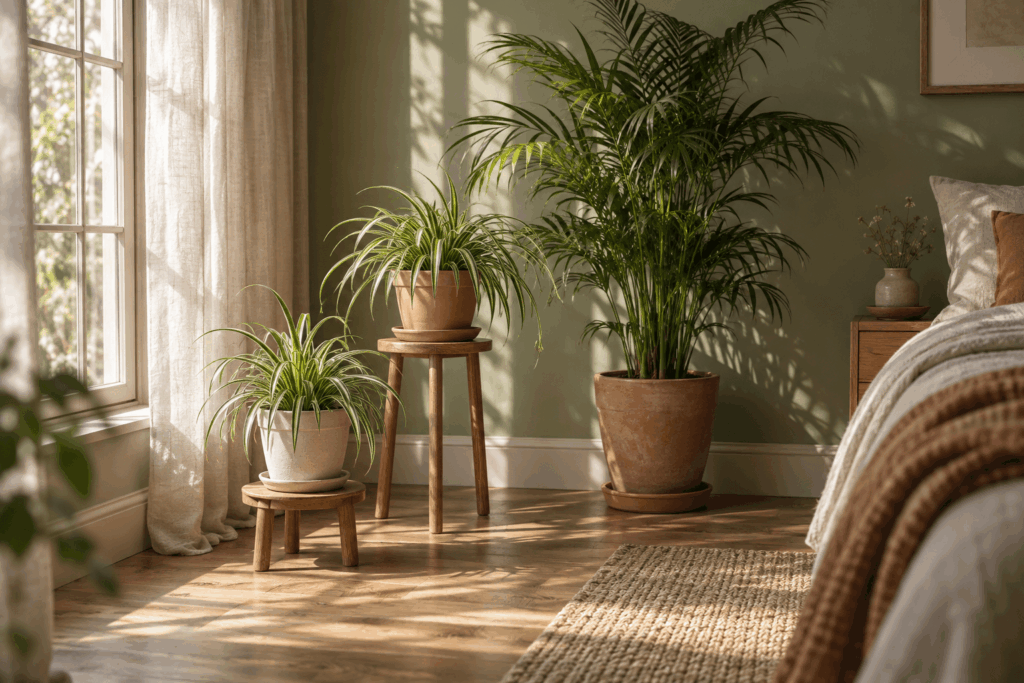
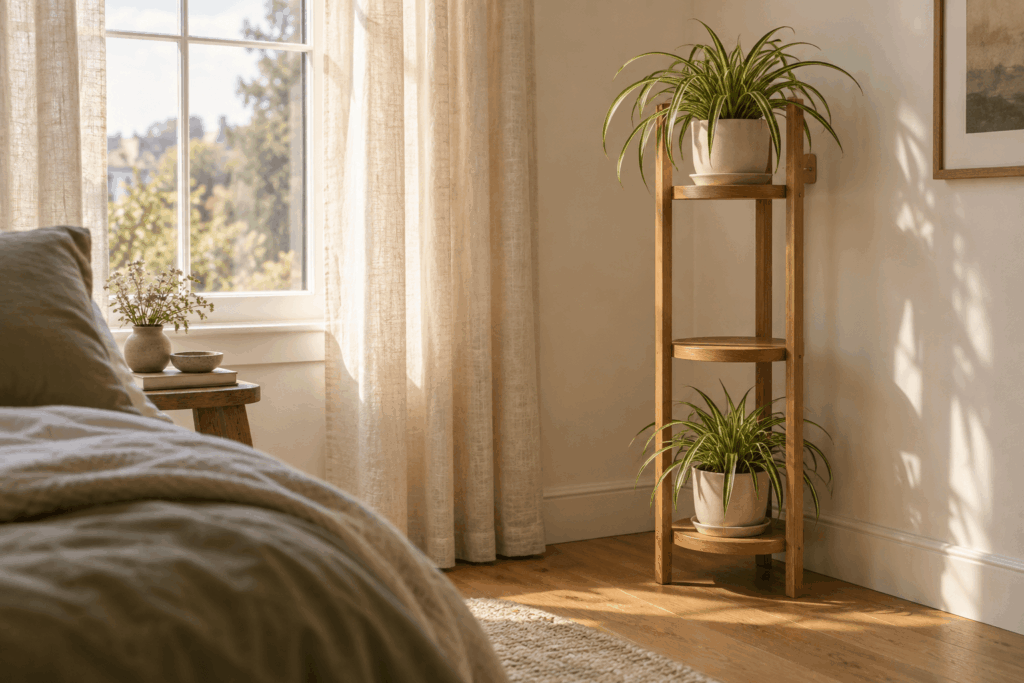
9. A Three-Level Window-Side Plant Cluster
Arrange one floor palm and two smaller spider plants at low, middle, and upper positions beside a window. Use separate stable surfaces rather than a precarious stack.
The different heights create depth, but leave space between the foliage so each pot remains visible and reachable. Repeating two planter colors helps the group feel connected without requiring identical containers.
Light: Check every level, including the lowest leaves. Renter fit: Freestanding supports. Skip if: You must move two plants to water the third, or pets treat the supports as steps.
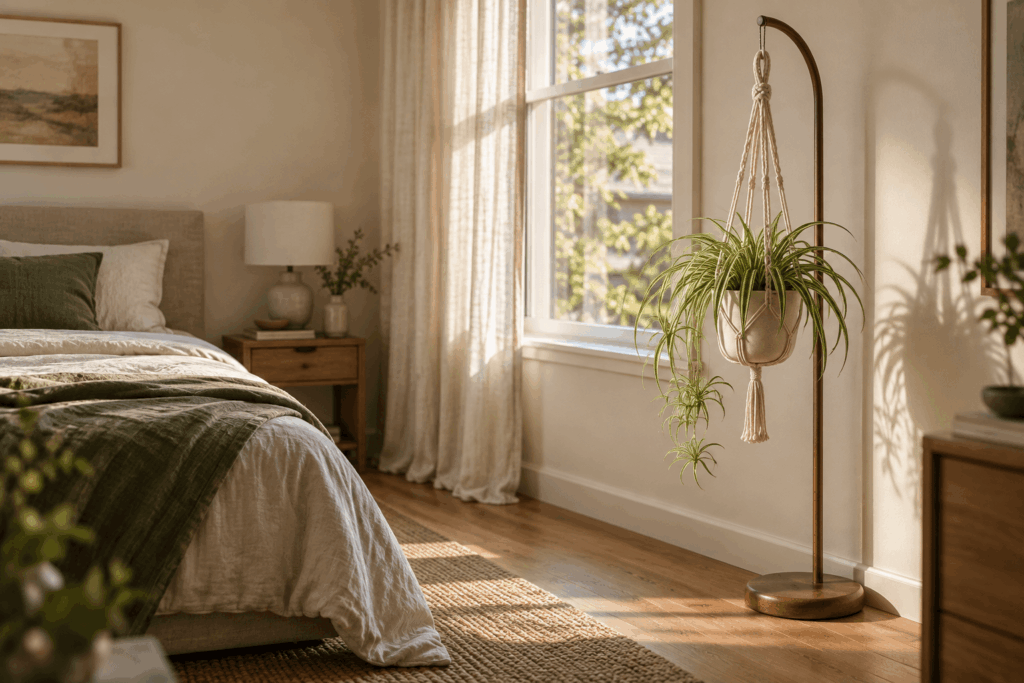
10. A Macramé Hanger on a Freestanding Support
Use a purpose-built freestanding hanging-plant support to introduce a macramé silhouette without a ceiling installation. A spider plant gives the hanger movement through its arching leaves and, when present, dangling plantlets.
For renters, I would check the support before choosing the hanging planter. Its rated load must cover the watered plant, container, and hanger, and its instructions determine whether additional securing is necessary.
Light: Suitable window light at hanging height. Renter fit: Depends on the support’s installation requirements. Skip if: Pets pull cords or the base obstructs circulation.
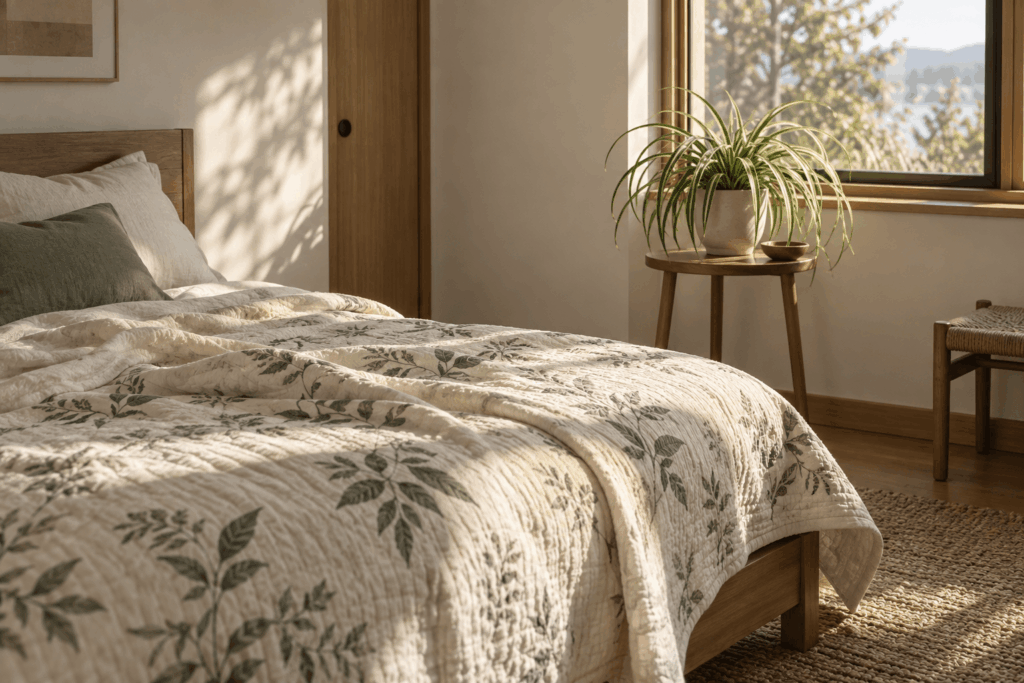
11. A Botanical Quilt With One Living Accent
Let a botanical quilt provide most of the leafy pattern, then add one real plant near the window. This suits anyone who wants a green bedroom aesthetic without managing a collection.
Pick a planter that repeats a background color in the bedding. Leave surrounding surfaces fairly plain so the quilt and living foliage have room to register.
Light: Choose the plant’s location independently of the bed. Renter fit: Textiles and one pot. Skip if: The only available plant position lacks light or remains accessible to a determined chewer.
12. A Reading Chair Framed by One Palm
Set a parlor palm beside the outer edge of a bedroom reading chair, leaving its fronds clear of your shoulder. The plant gives the nook a soft boundary without closing it off.
Try the chair before finalizing the pot position. You should be able to sit, stand, reach a book, and move a footstool without shifting the plant.
Light: A reading corner with suitable indirect daylight. Renter fit: Freestanding furniture. Skip if: The nook doubles as the main walkway or a pet’s frequent launching spot.

Vertical displays for limited floor space: Keep height useful by planning watering access, furniture stability, and the route beneath hanging foliage.
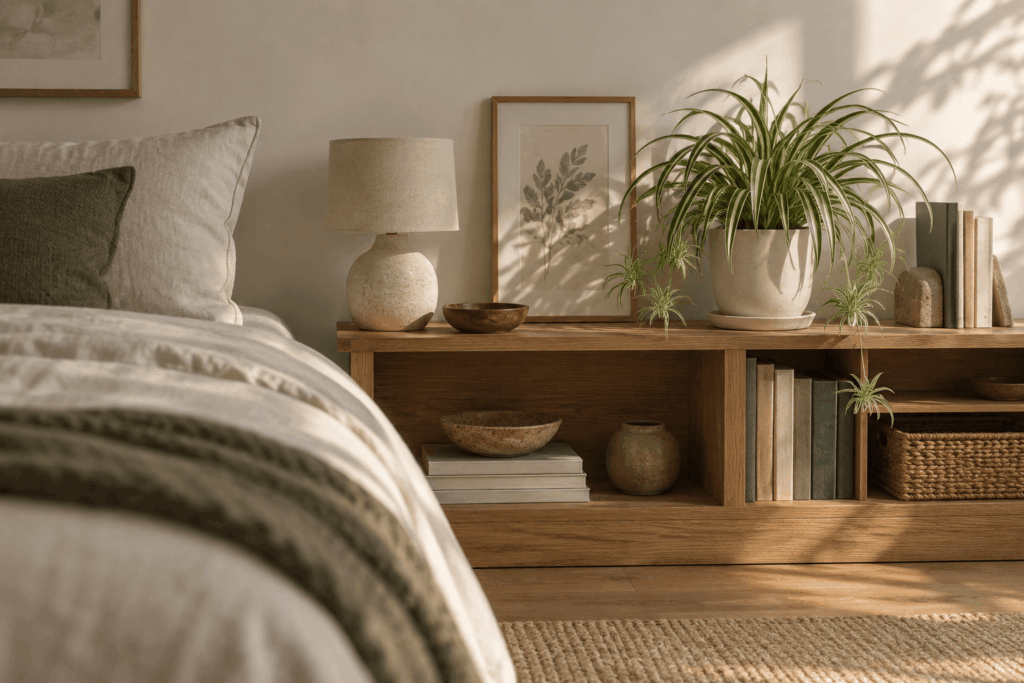
13. A Low Bookcase With a Cascading Edge
Place a mature spider plant near one end of a low bookcase, allowing its arching leaves and plantlets to fall beside the furniture. Keep the pot set back from the edge.
NC State Extension describes spider plants as suitable for cascading containers. A waterproof tray separates the pot from the finish, while a gap keeps foliage away from book spines.
Light: Daylight reaching the bookcase top. Renter fit: Existing furniture, secured as required. Skip if: Dangling growth invites pet pulling.
For spacing inspiration, see these plant shelf styling ideas.
14. A Freestanding Trellis Inside the Planter
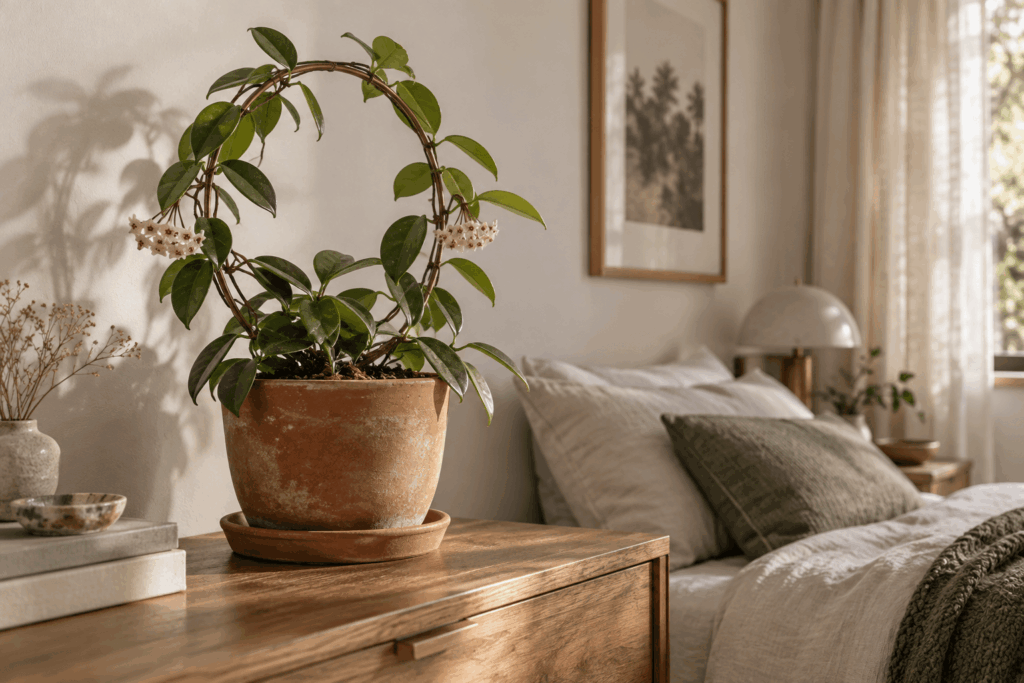
Train a wax plant, Hoya carnosa, onto a compact support anchored inside its own pot. The upright shape adds structure while keeping growth separate from the bedroom wall.
NC State Extension describes its climbing habit; choose bright indirect light and a stable container. For pets, the ASPCA wax plant entry lists Hoya carnosa ‘Krinkle Kurl’ as non-toxic to cats and dogs.
Light: Bright indirect daylight. Renter fit: Pot-contained support. Skip if: The trellis makes the container unstable or pets repeatedly pull its growth.
15. A Low Open Shelf at the Foot of the Bed
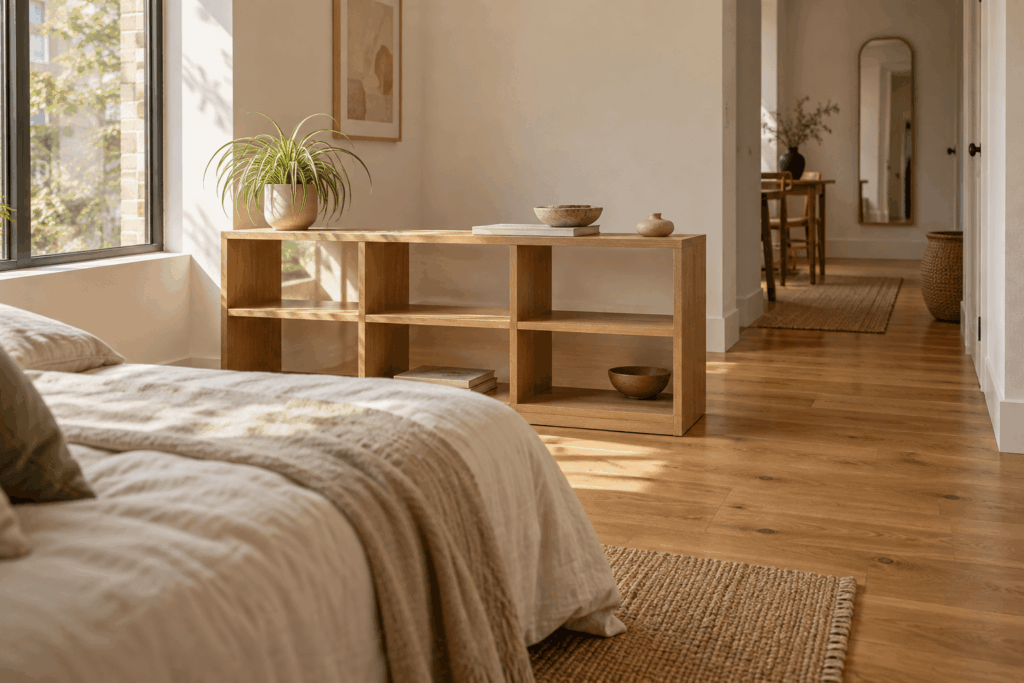
Use a low open shelf to suggest a bedroom boundary in a studio, with one small plant at its brighter end. Open compartments keep the divider visually lighter than a solid cabinet.
Measure the remaining passage and check whether bedding, drawers, or doors need that space. Follow the furniture’s anti-tip instructions; a low profile doesn’t automatically remove anchoring requirements.
Light: Enough daylight at the plant’s end of the shelf. Renter fit: Depends on required securing. Skip if: The shelf obstructs circulation or becomes an unstable pet perch.
16. A Narrow Window-Side Plant Tower
A narrow open plant tower concentrates several small pots beside one window. Choose generous spacing between shelves so upper containers don’t shade everything beneath them.
Start with two plants rather than filling every level. That leaves room to assess light, lift pots out, and see whether the arrangement suits your routine.
Light: Check lower shelves separately. Renter fit: Follow the manufacturer’s anchoring requirements and your lease. Skip if: Required anchoring isn’t permitted, watering needs a ladder, or pets can destabilize the tower.
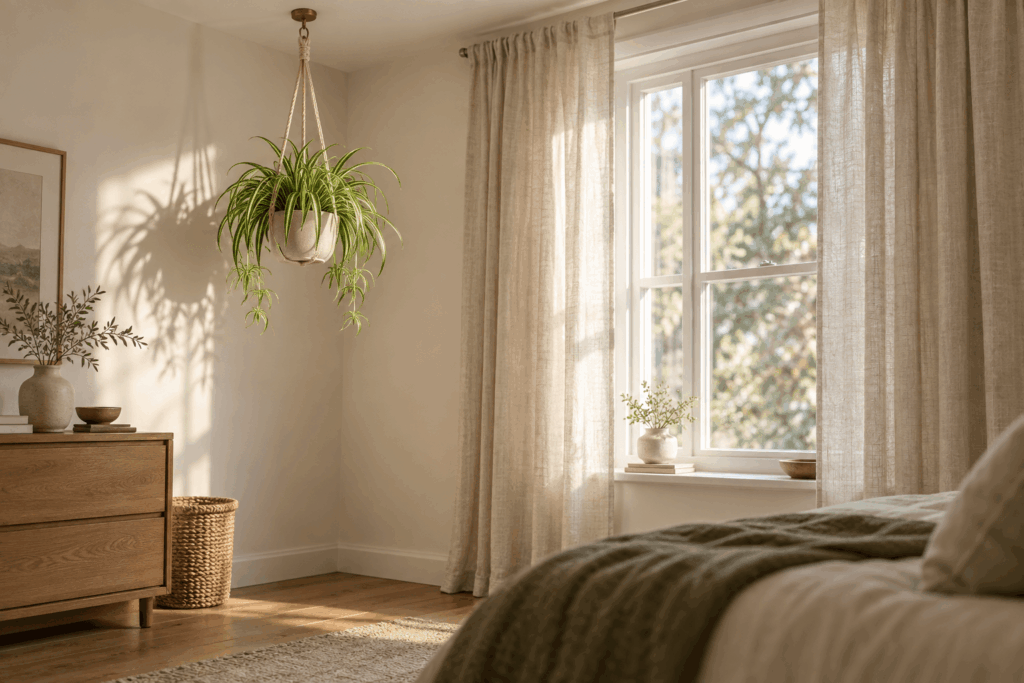
17. A Hanging Plant Beside the Window
Hang a spider plant beside the window using an existing attachment only after its installation and load capacity have been verified. Position the pot away from the bed and anything that could be damaged by drips.
A hook’s appearance doesn’t tell you what it can support. Include watered weight in the check, obtain any necessary permission, and choose a freestanding alternative if the fixing cannot be verified.
Light: Suitable daylight at leaf height. Renter fit: Permission-dependent. Skip if: Access requires awkward reaching or pets can grab the hanger.
Light, pets, and bedtime practicalities: These setups address the conditions that a saved bedroom photo can’t tell you.
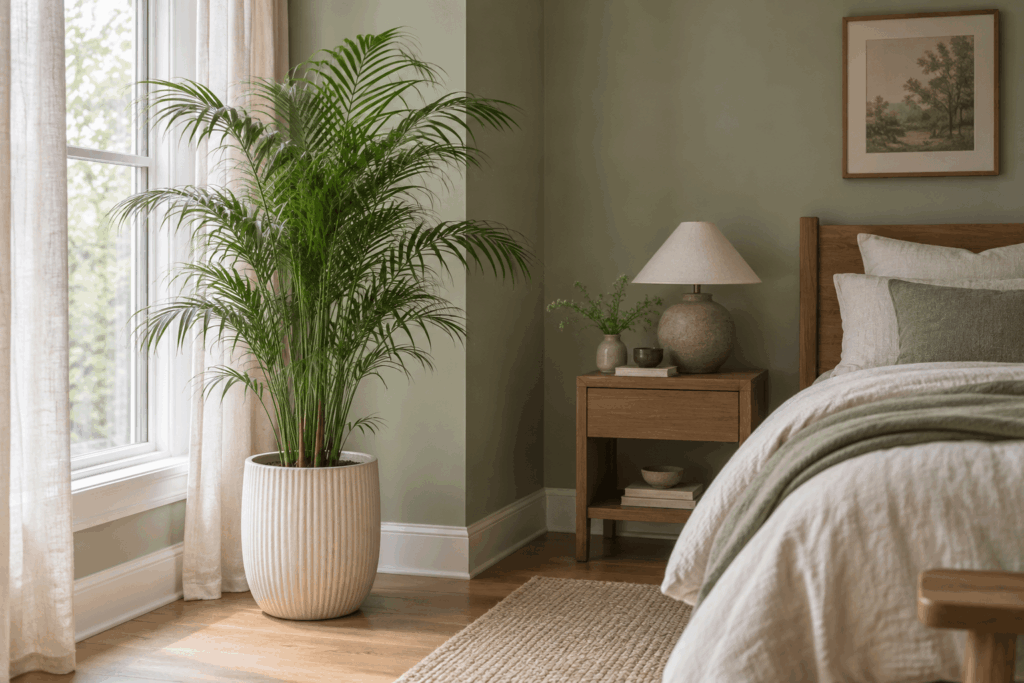
18. A Parlor Palm Near a Modestly Lit Window
Place a parlor palm close to a window with softer daylight rather than pushing it into the room’s darkest corner. Its fine fronds suit restrained bedrooms where a large, heavy-looking plant would dominate.
University of Minnesota Extension includes parlor palms among lower-light plants, but every living plant still needs sufficient light.
If you have a north-facing window: Check outdoor obstructions before using these north-facing window plant options.
Light: Usable indirect daylight. Renter fit: One floor pot. Skip if: Curtains remain closed or pets repeatedly reach the foliage.
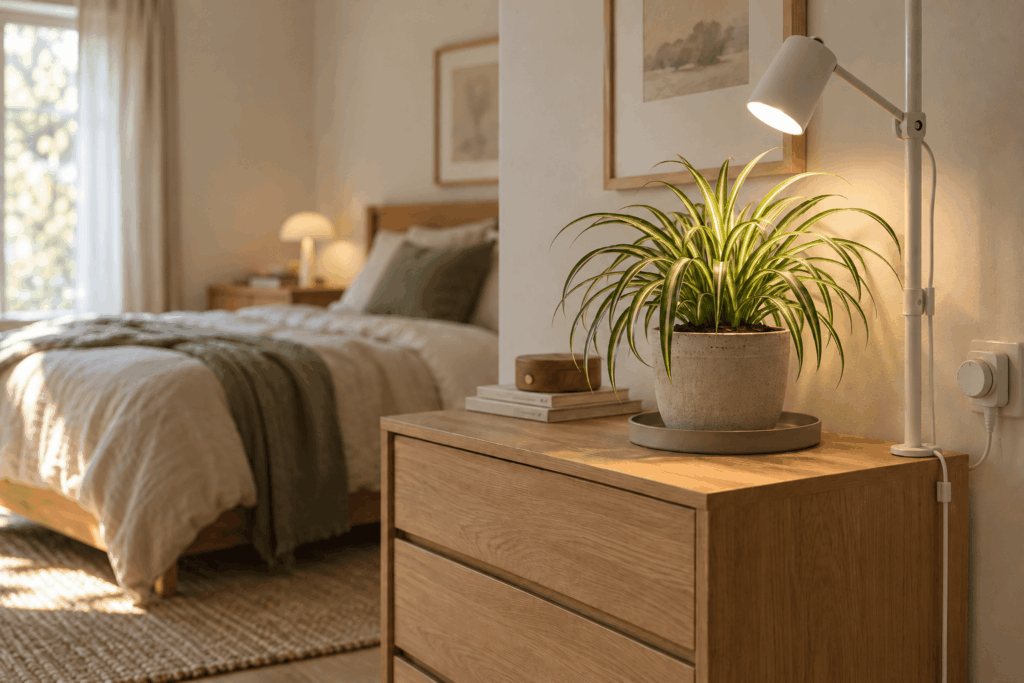
19. A Daytime Grow-Light Plant Station
Create a small plant station with a suitable grow light and timer where daylight falls short. A contained setup on one cabinet is easier to accommodate than lamps scattered around the bedroom.
I would plan the lighting around bedtime before adding another plant. University of Minnesota Extension recommends timers and gives 12-14 total daily light hours as a general guide for foliage houseplants; lamp distance and output also matter.
Light: Follow the lamp’s plant-specific guidance. Renter fit: Freestanding fixture. Skip if: You can’t route cords away from water, bedding, and chewing pets.
20. A Plant Stand Clear of the Heater
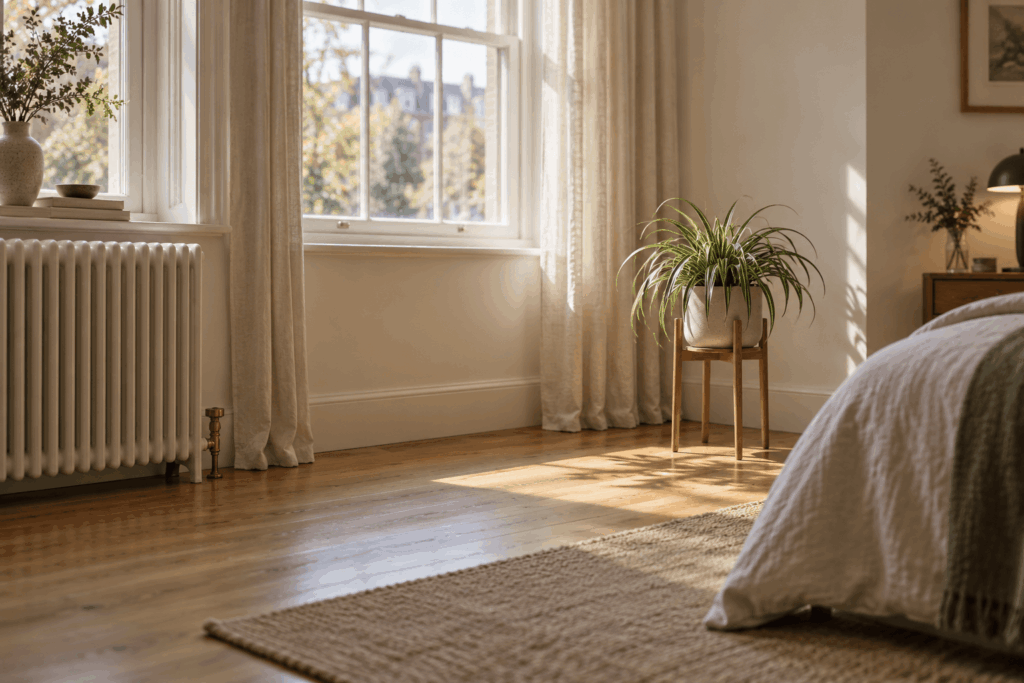
Position a plant beside the window only if the spot also works when the heating is on. A pleasing summer arrangement may put foliage directly above a hot radiator or beside a heating vent in winter.
Move the stand outside the heater’s required clearance and airflow path, following the equipment’s instructions. Don’t use the radiator cover as a plant shelf just because it resembles a convenient ledge.
Light: Preserve suitable daylight after repositioning. Renter fit: Movable floor display. Skip if: Every available position crowds heating equipment or exposes cords to pets.
21. A Pet-Aware Palm and Spider Plant Pair
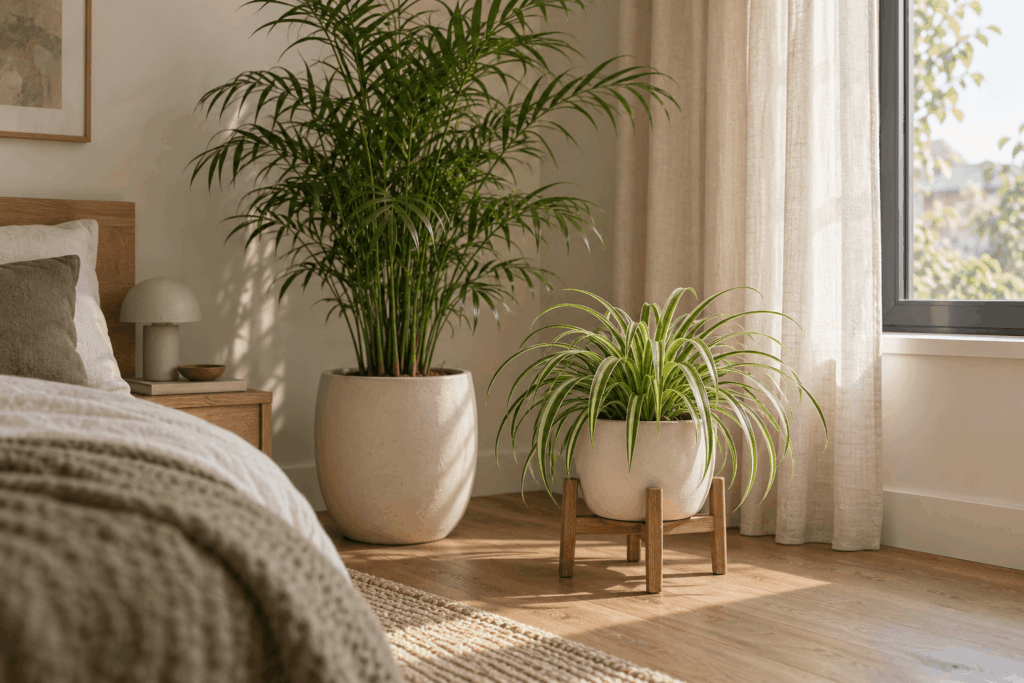
Pair a parlor palm’s upright fronds with a spider plant’s arching leaves for two contrasting shapes. Keep both containers stable and choose positions based on your pet’s actual climbing and chewing habits.
The ASPCA identifies Chamaedorea elegans as non-toxic to cats and dogs; its spider plant listing supports the other half of this pairing. Match botanical names when buying.
Light: A location suitable for both plants. Renter fit: Two freestanding pots. Skip if: Your pet repeatedly eats or damages foliage; a non-toxic listing isn’t permission to encourage chewing.
22. A Dark-Corner Botanical Print With Living Greenery Nearby
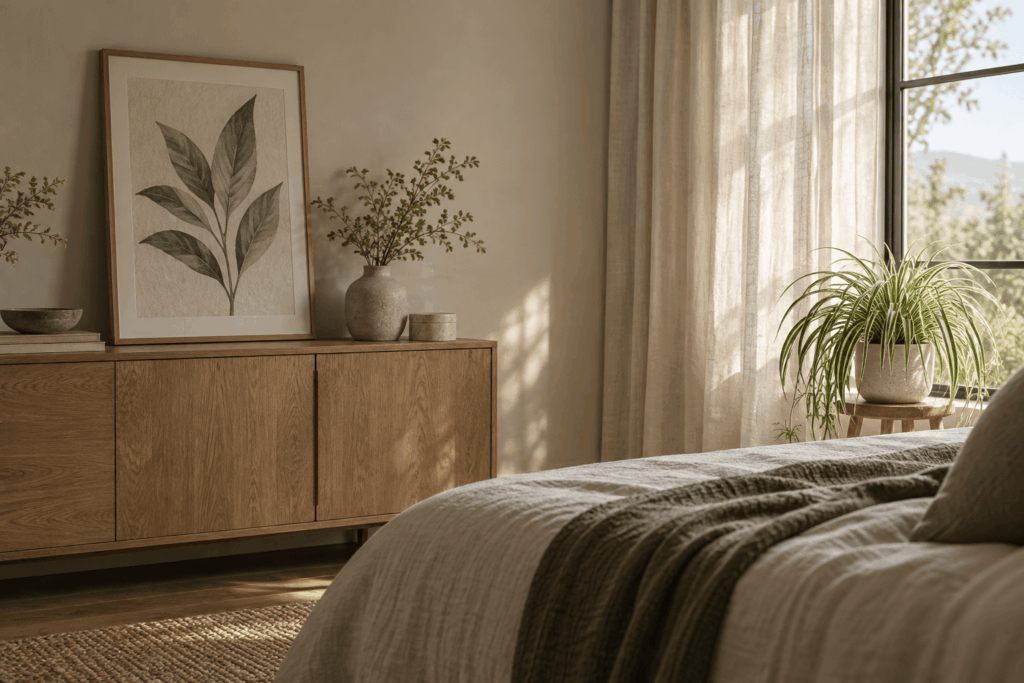
Put botanical artwork in the dark corner and the real plant beside the window. The repeated leaf shapes visually connect the two areas without asking a living plant to occupy an unsuitable spot.
Use a stable tabletop frame on existing furniture if wall mounting isn’t permitted. Choose artwork with a similar leaf shape or green tone to the plant for an intentional connection.
Light: Reserve the usable daylight for living foliage. Renter fit: Freestanding frame and pot. Skip if: The frame is unstable or pets can knock it into the planter.
23. A Warm Bedside Lamp With a Separate Plant Display
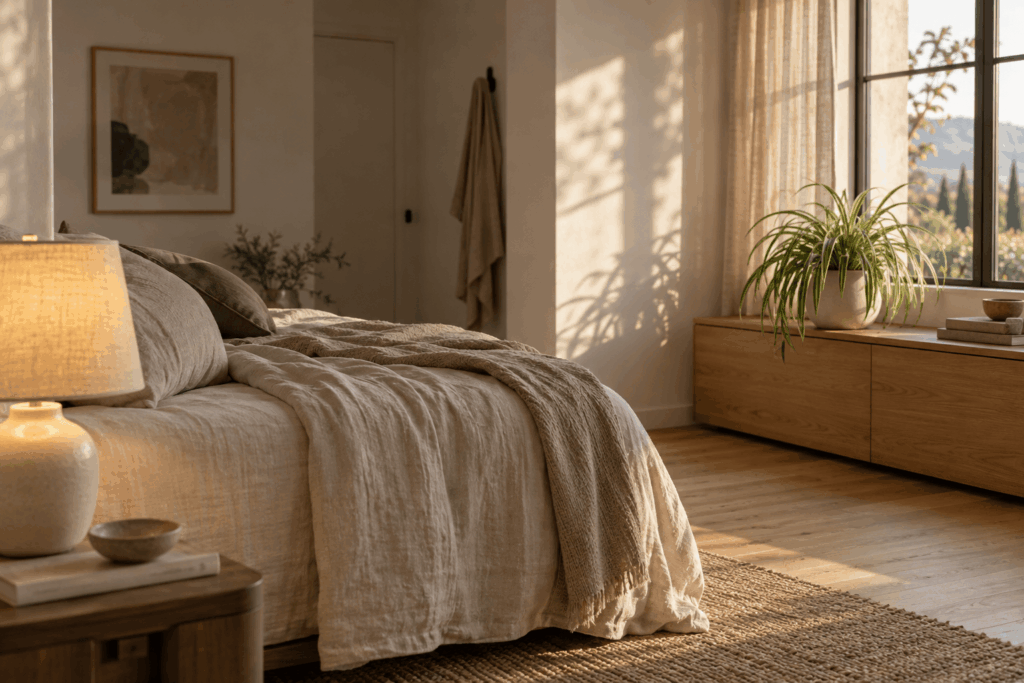
Keep a warm lamp beside the bed and place the plant where daytime light suits it. The room can still feel connected through matching ceramic finishes or a repeated accent color.
A decorative lamp isn’t automatically adequate growing light. Its purpose here is evening atmosphere, while the separate window-side display handles the plant’s daily light needs.
Light: Assess daylight at the plant, not the glow beside the bed. Renter fit: Existing lamp and furniture. Skip if: Foliage touches the bulb or pets can pull nearby cords.
Flexible arrangements: These final four ideas suit rooms where surfaces, cleaning access, and furniture use change throughout the week.
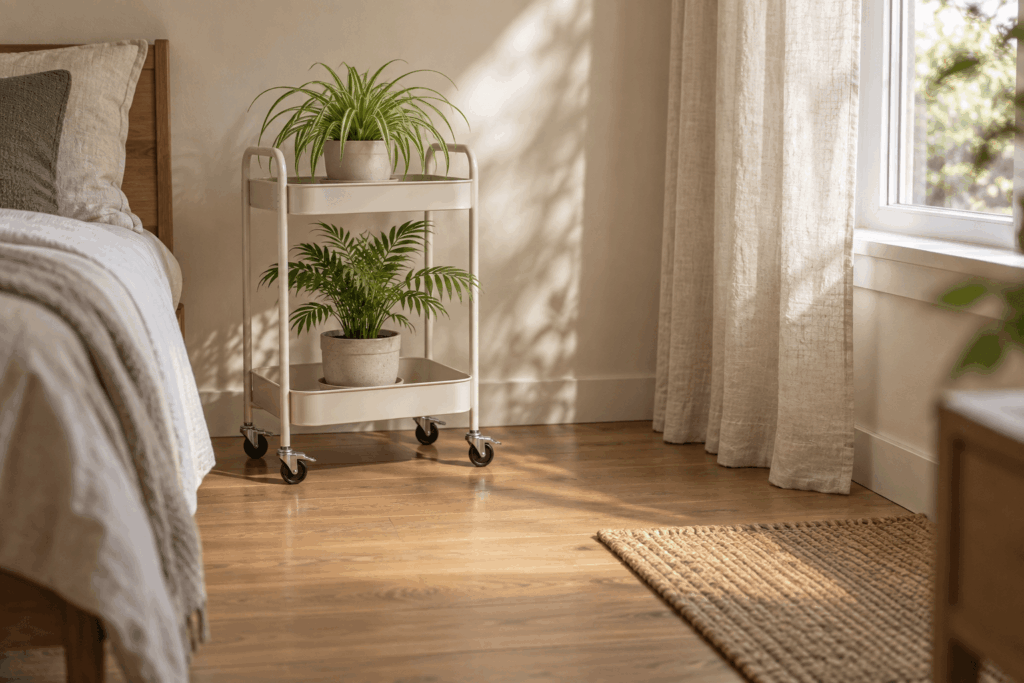
24. A Compact Plant Cart With Locking Casters
Use a small cart to make the plant display easier to move for cleaning. Keep heavier pots low, use waterproof trays, and lock the casters when the cart returns to its usual position.
Mobility helps with access, but it doesn’t make every parking spot suitable. Give the cart a regular home where the plants receive the light they need.
Light: Suitable daylight in its usual location. Renter fit: Movable furniture. Skip if: Wheels catch on rugs, the cart blocks a doorway, or pets can push or climb it.
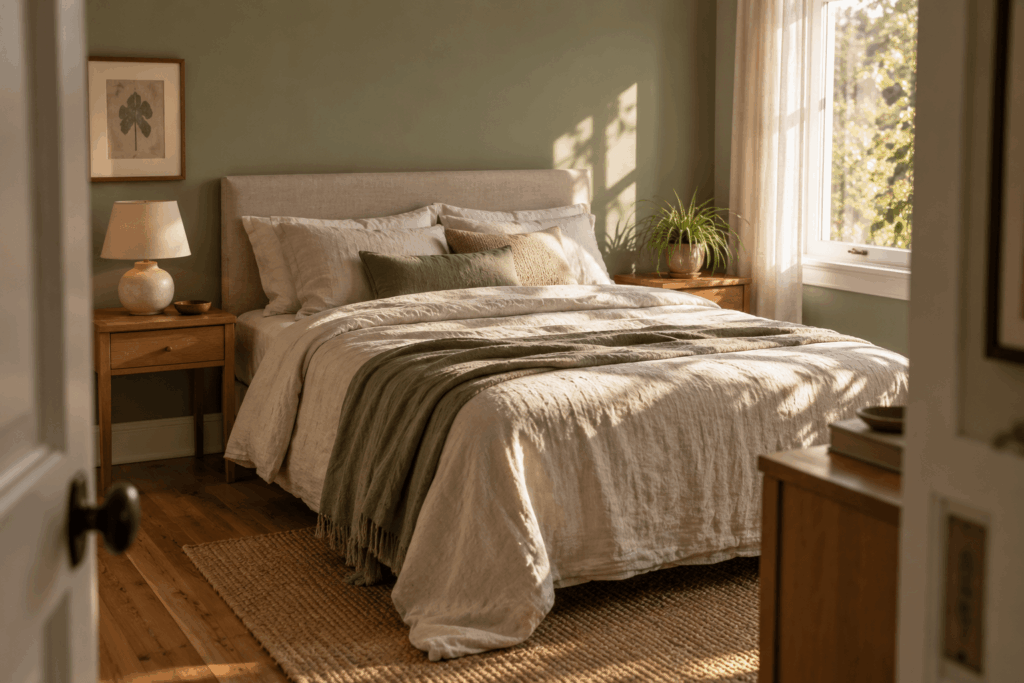
25. An Off-Center Plant Arrangement Around the Bed
Place the plant on the brighter side of the bed and balance the opposite side with a lamp or framed print. The two sides can feel related without needing identical objects.
Repeat one material, such as oak, or one color across the room. That small connection helps an asymmetric bedroom look deliberate even when its windows and furniture don’t line up neatly.
Light: Use the side that actually suits the plant. Renter fit: Rearranged accessories. Skip if: The brighter side is too cramped or lies within a pet’s regular jumping route.
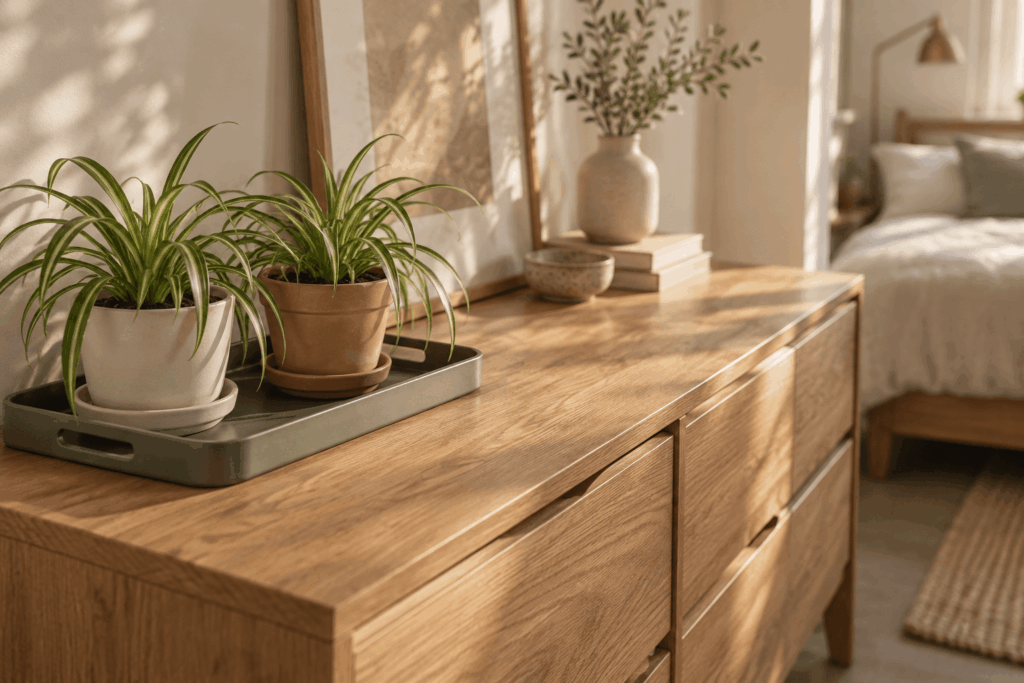
26. A Lift-Out Plant Tray for a Multipurpose Dresser
Group two small pots on a waterproof tray with handles so you can clear the dresser when needed. Choose a tray you can lift comfortably with both watered plants in place.
Keep each pot in its own saucer and empty any collected runoff. The tray makes the arrangement movable; it shouldn’t become a shared reservoir of standing water.
Light: Return the display to its suitable everyday position. Renter fit: Removable tabletop arrangement. Skip if: The tray flexes, becomes too heavy, or offers handles that pets can pull.
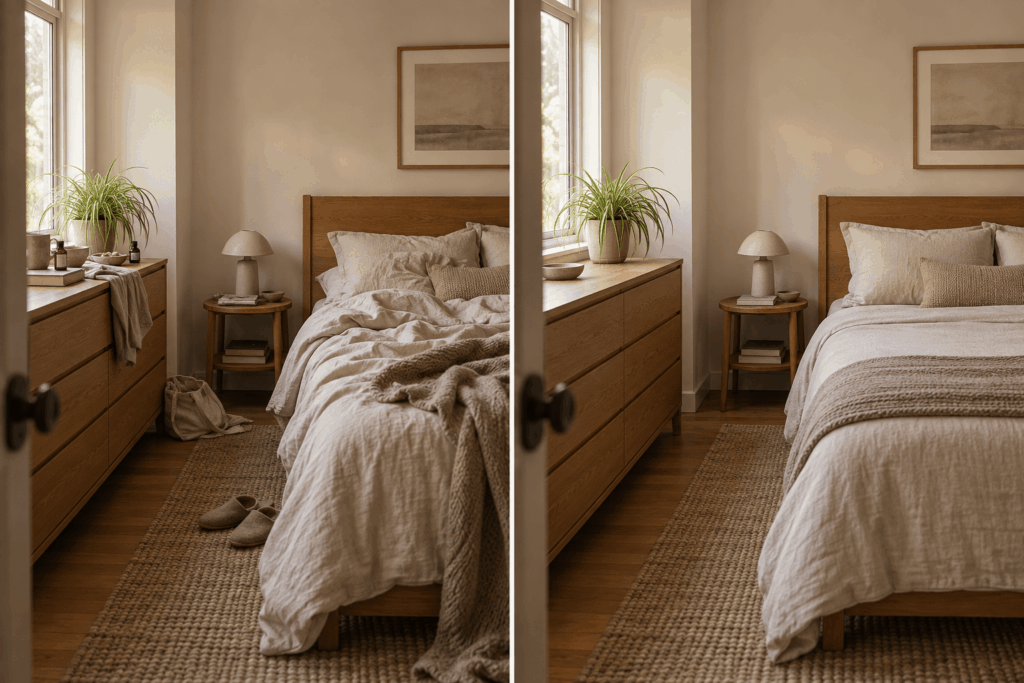
27. A One-Plant Before-and-After Bedroom Reset
Keep one plant and improve its placement, the surrounding clutter, and the existing textiles. Move unrelated objects off the display surface and straighten the bedding before deciding you need more greenery.
My pick for an overwhelmed beginner is the one-plant reset. Photograph the room from the same position before and after so you can judge the change without adding purchases.
Light: A suitable, reachable home for the existing plant. Renter fit: Rearrangement only. Skip if: The new position reduces light or creates a pet-access problem.
Choose the arrangement you can keep accessible on an ordinary busy day.
How to Pick the Right Setup for Your Space
Choose the location by light first, then narrow the arrangement by available space, pets, and installation limits. A setup earns its place when you can reach the pot, use nearby furniture normally, and move through the bedroom comfortably, including when curtains are closed or the heating is running.
| Your situation | Try | Check first |
|---|---|---|
| One usable surface | Idea 1 or 3 | Room for everyday essentials |
| No drilling permitted | Idea 8 or 10 | Stability and securing requirements |
| Pets investigate plants | Idea 21 | Exact species and chewing access |
| Little usable daylight | Idea 19 | Suitable lighting and cord placement |
| Limited maintenance capacity | Idea 27 | One easily reachable pot |
Check the room before shopping. Look at the proposed spot at several times of day with your usual curtains in place. University of Minnesota Extension advises matching plants to available light; stretching growth can indicate a shortfall, while yellowing leaves require checking other causes too.
Keep care manageable. Use the spider plant care guide for the bedside option, or compare beginner-friendly indoor plants before expanding the collection.
Revisit the arrangement seasonally. University of Minnesota Extension’s winter guidance highlights reduced indoor humidity, lighting needs, and inspecting and quarantining new plants for pests. A window-side location may need reconsidering when seasonal conditions change.
Keep the benefit realistic. Plants can contribute to a bedroom’s visual atmosphere, but don’t buy them expecting dependable room-scale air purification or guaranteed better sleep. The EPA’s assessment of houseplant air-cleaning claims explains why small test-chamber results don’t establish comparable performance in ordinary rooms.
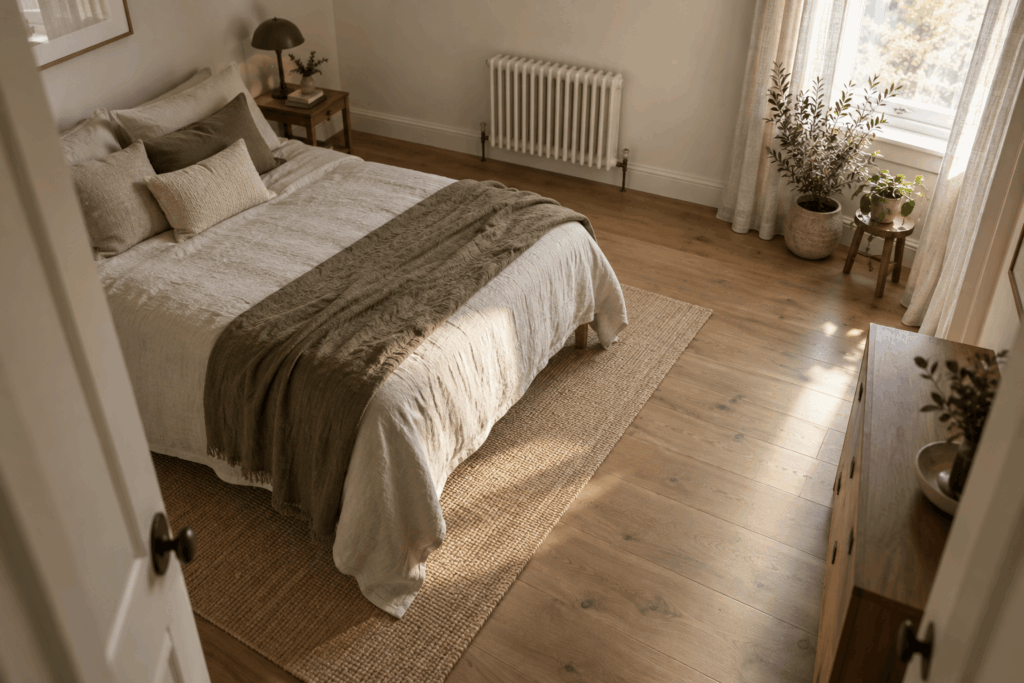
The right display fits the room’s daily use as comfortably as its decorating style.
FAQs
Can I keep bedroom plants if I have a cat or dog?
Yes, you can keep bedroom plants with pets by checking the exact species and preventing repeated chewing. Spider plant, Chlorophytum comosum, is listed as non-toxic to cats and dogs by the ASPCA, but that does not make it something to encourage pets to eat. Use stable pots and consider your pet’s actual climbing habits when choosing a location. ASPCA spider plant listing
How do I decorate a small bedroom with plants without creating clutter?
Start with one small plant on a usable windowsill, dresser end, or rear nightstand corner, leaving everyday essentials accessible. Repeat a planter color already present in your bedding or furniture to make the display feel connected. Before adding another pot, check that you can open drawers, move curtains, water the plant, and walk past comfortably.
What plant works well in a bedroom with lower light?
A parlor palm, Chamaedorea elegans, is an option for a bedroom with lower light, provided the chosen spot still receives sufficient illumination. Place it near usable window light rather than assuming the darkest corner will work. Check curtains and outdoor obstructions, and add suitable supplemental lighting if daylight cannot meet the plant’s needs. University of Minnesota Extension lighting guide
Can I grow bedroom plants without natural sunlight?
Yes, bedroom plants can grow without natural sunlight if suitable artificial lighting supplies the light they need. University of Minnesota Extension gives 12–14 total daily light hours as general guidance for foliage houseplants, with lamp output and distance also affecting results. Use a timer to schedule lighting around bedtime, and follow guidance for your particular plant and fixture. University of Minnesota Extension lighting guide
How can renters display bedroom plants without drilling?
Renters can display plants without drilling by using existing windowsills, sturdy stools, tabletop trays, or supports that do not require permanent fittings. Start with one stable surface and check the full footprint before adding a pot. Follow furniture and support instructions, because some freestanding stands still require anchoring, and include the watered plant’s weight when checking load limits.
Why shouldn’t I rely on bedroom plants to clean the air?
Bedroom plants should not be relied on for dependable room-scale air purification because results from small laboratory chambers do not establish comparable performance in ordinary rooms. The EPA’s assessment explains this limitation in houseplant air-cleaning claims. Choose greenery for its visual contribution, and avoid presenting a bedside plant collection as a proven replacement for managing indoor pollution sources and ventilation.
What Actually Matters
The most useful Cozy Bedroom with Plants Ideas Aesthetic setup fits both your room and the plant’s needs. Begin with suitable light, a stable container, and a position you can reach easily; the cozy effect can come from one plant, familiar furniture, and textiles you already enjoy.
Save one look from this collection and identify its workable location before shopping. If that location fails the light, access, or pet check, choose another idea.
Your nightstand can still hold the lamp, charger, and water glass. The plant just needs a place that belongs to it.