

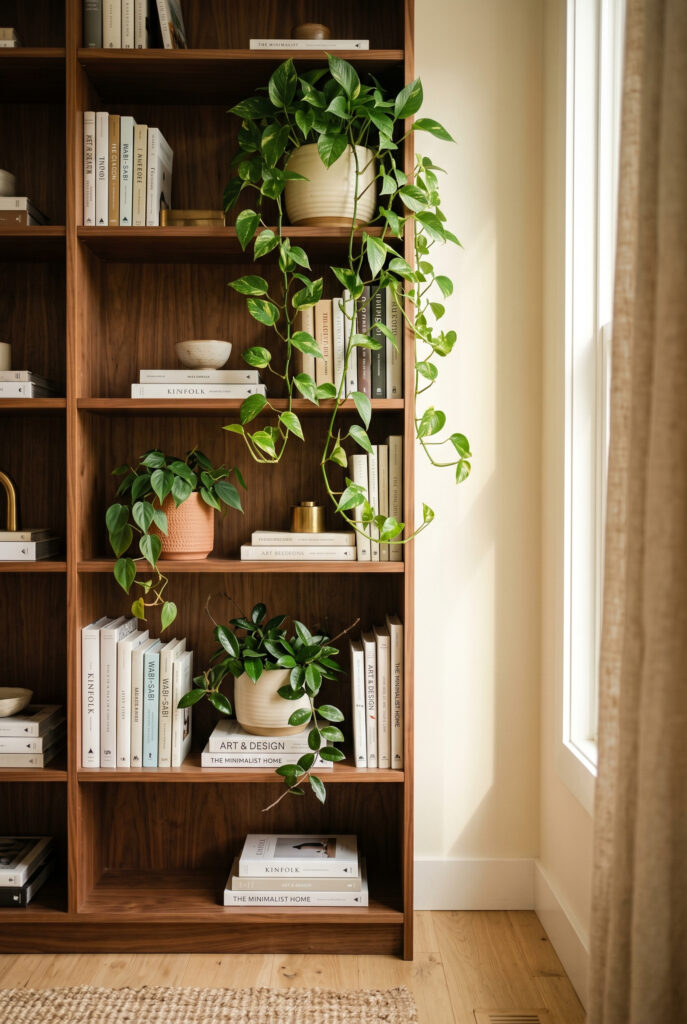
A bookcase looks better with one trailing plant than three perfectly-arranged decor objects. But only if the plant survives the shelf it’s actually sitting on. Most trailing indoor plants for shelves and bookcases die not from poor care, but from being matched to the wrong spot.
The Pinterest photo you saved? That plant is two years old and lives near a south-facing window. Yours might be three weeks old, sitting on a dim middle shelf, quietly losing leaves.
The pattern is easy to miss: every shelf in your bookcase gets different light. The plant has to match the shelf, not the room.
TL;DR
- Top shelf (most light): String of Pearls, String of Hearts, Burro’s Tail, Hoya
- Middle shelf (medium light): Pothos, Heartleaf Philodendron, Tradescantia, Hoya
- Deep or dark interior shelf: Mistletoe Cactus, Pothos, Heartleaf Philodendron
- All 13 trailing indoor plants for shelves and bookcases ranked here by mess factor, trail speed, and pet safety
Why Most “Trailing Plant” Lists Fail Bookcase Owners
Most lists treat every trailing plant as interchangeable. Pothos? String of Pearls? Burro’s Tail? Just pick the one you like.
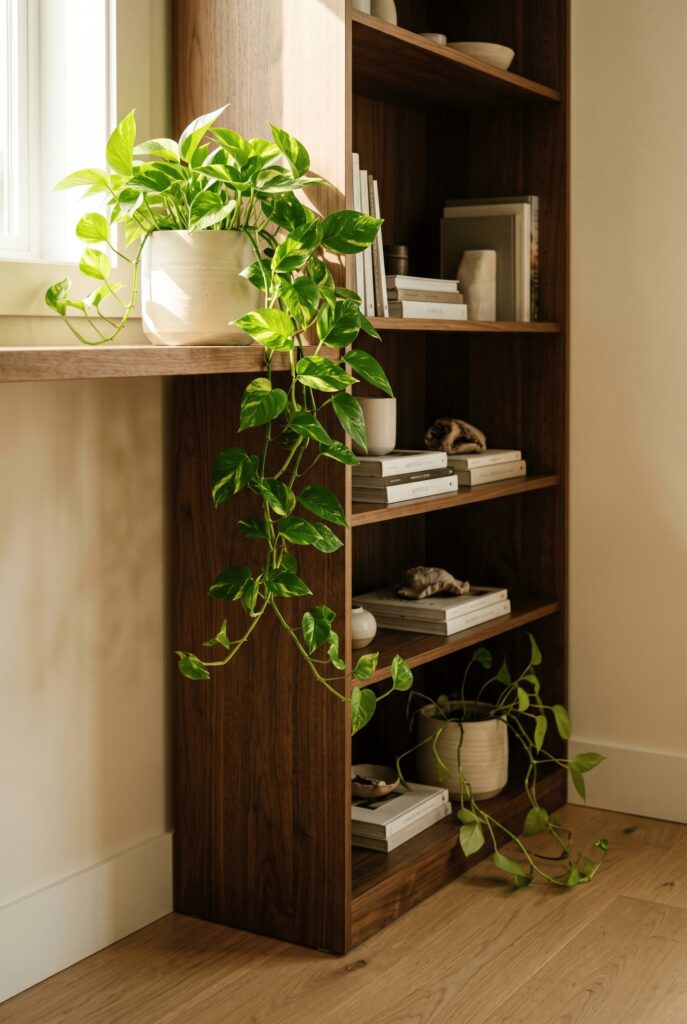
The problem: a bookcase isn’t one location. It’s a stack of five or six microclimates. Penn State Extension notes that indoor light drops off sharply with distance from a window, and that drop happens across a single piece of furniture too. Your top shelf might get bright indirect light. The shelf two rows down? Low light, at best.
A String of Pearls on the bottom shelf will be dead in six weeks. A Pothos on the same shelf will keep trailing for years.
The other thing nobody mentions: trail speed. Pinterest shows you the finished result. A Pothos hits “magazine-worthy” in about six months. A String of Pearls takes two years to look the same way, and that’s if you don’t kill it first. Match the plant to the shelf you actually have, not the bookcase in the photo.
Before You Buy: 4 Things to Check on Your Shelf
Five minutes of checking saves a dead plant later.
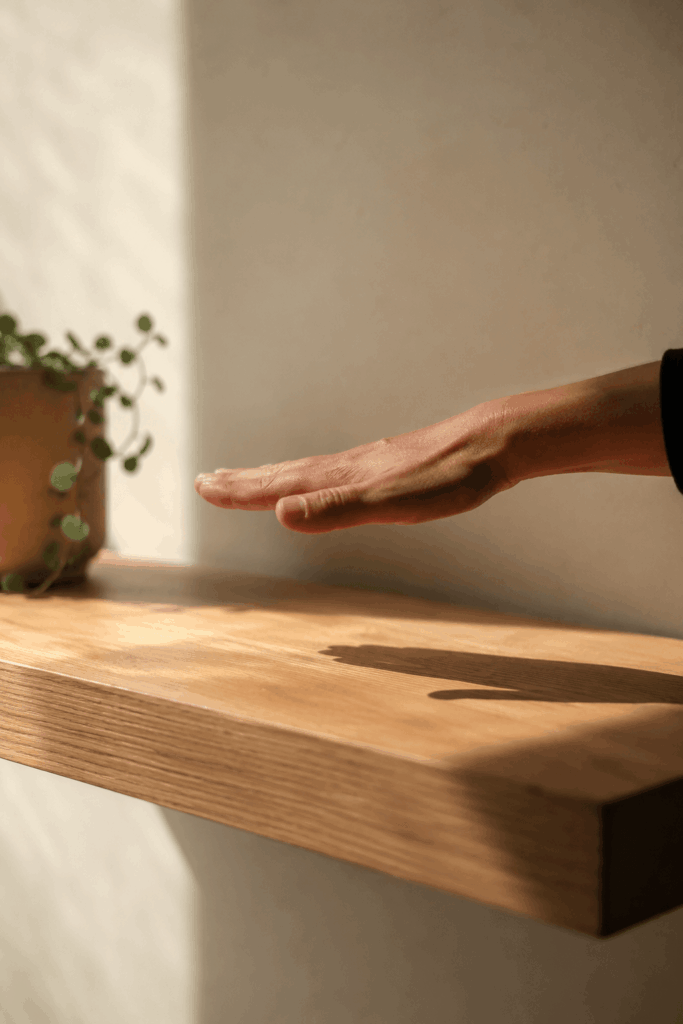
1. Light gradient. Hold your hand 12 inches above the shelf at noon. A clear, defined shadow means bright indirect light. A soft, blurry shadow means medium light. No real shadow means low light. Test each shelf separately. Iowa State Extension’s troubleshooting guides note that legginess in trailing plants is almost always a light problem, not a watering one.
2. Weight capacity. A mature Burro’s Tail in a 6-inch ceramic pot weighs three to five pounds wet. Floating shelves rated for books may not handle that plus a water saucer. Check your shelf’s rating before buying anything succulent.
3. Drip protection. Water and wood don’t mix, and water and books mix worse. A cork coaster, glazed ceramic saucer, or simple plastic drip tray under every pot is non-negotiable.
4. Renter setup. If you can’t drill, you can still trail. Cachepots that sit on the shelf, tension rods between shelves, and removable adhesive hooks all work without damaging anything. Skip ceiling hooks, skip wall anchors. Let gravity do the trailing work.
If your bookcase sits against an interior wall with no nearby window, you’ll want to jump straight to the deep-interior picks in Section 4.
The 13 Trailing Indoor Plants for Shelves and Bookcases, Ranked
Ordered easiest to hardest. Each pick notes ideal shelf position, trail speed, mess factor, and whether it’s safe around pets.
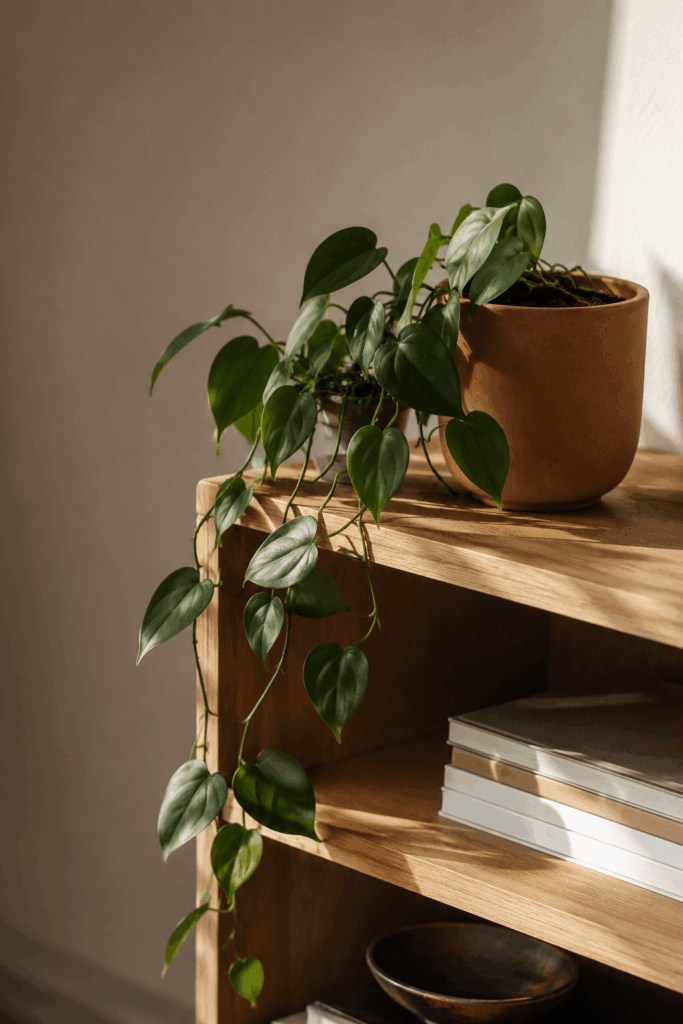
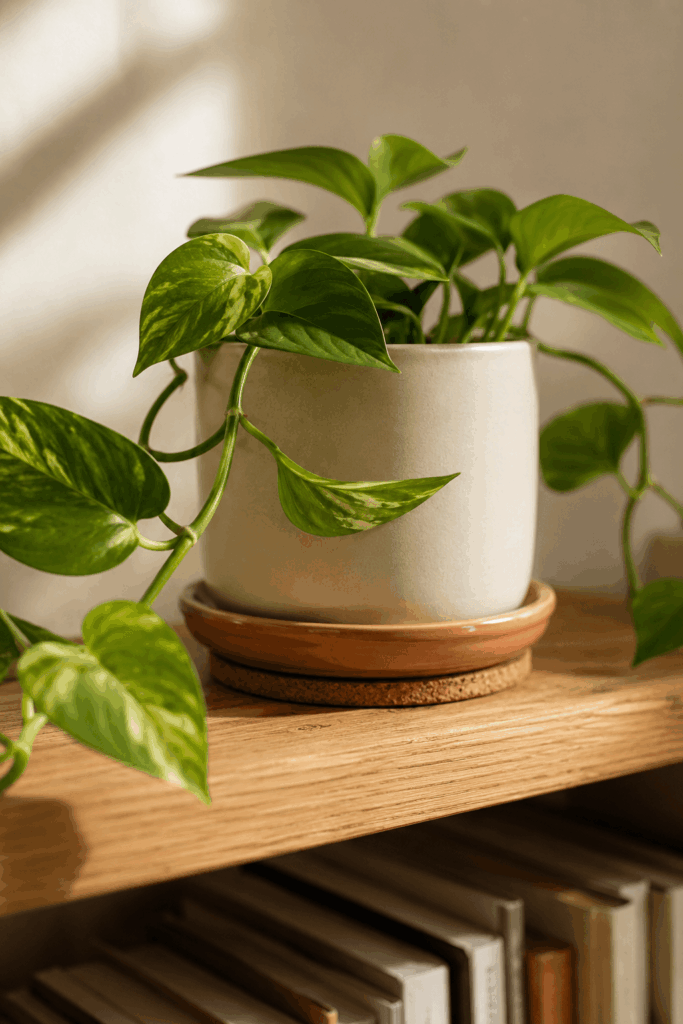
1. Pothos (Epipremnum aureum)
The workhorse. If you’ve killed three plants and you’re tired of trying, start here.
Best shelf: Any. Top, middle, deep interior.
Light: Tolerates low to bright indirect. NC State Extension lists it as one of the most adaptable houseplants.
Water: Every 7 to 10 days. Leaves droop visibly when thirsty.
Trail speed: 6 months to looking full.
Mess factor: 2 of 5. Rarely drops leaves.
Pets: Toxic to cats and dogs per ASPCA (calcium oxalate crystals).
Beginner mistake: Watering on a schedule. Pothos tells you when it’s thirsty. Wait for the droop.
2. Heartleaf Philodendron (Philodendron hederaceum)
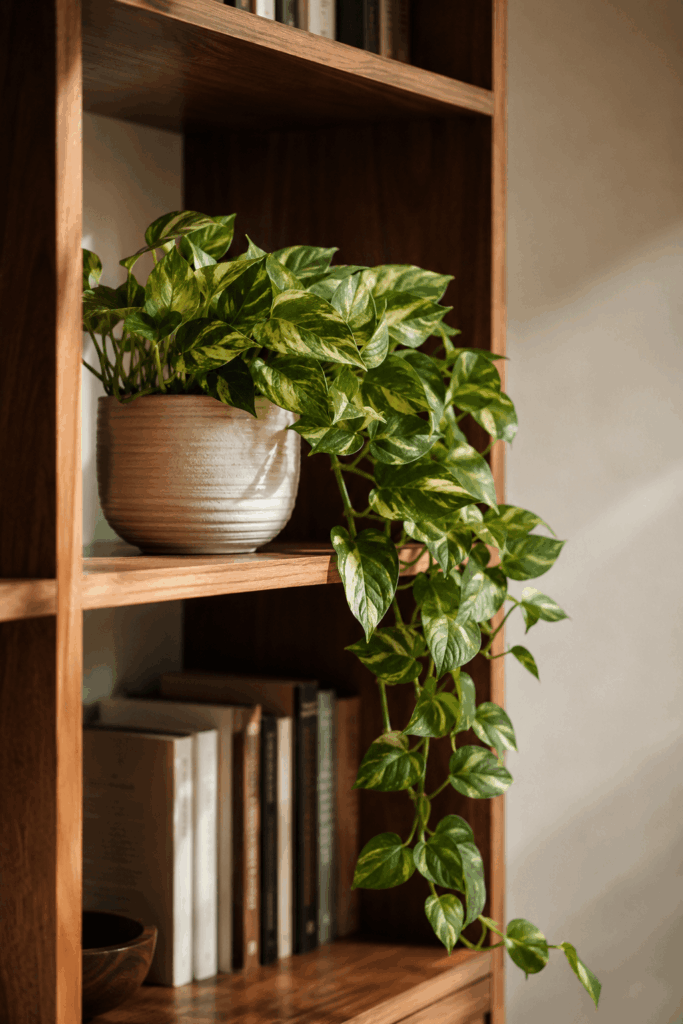
Pothos’s softer cousin. Heart-shaped leaves, more flexible vines, slightly more forgiving in low light.
Best shelf: Middle or deep interior.
Light: Low to medium indirect. Handles the back of a bookcase better than most.
Water: Weekly. Let the top inch of soil dry.
Trail speed: 6 to 9 months.
Mess factor: 2 of 5.
Pets: Toxic to cats and dogs.
Beginner mistake: Confusing it with Pothos and overwatering. Philodendron leaves are thinner; they don’t bounce back from soggy roots as easily.
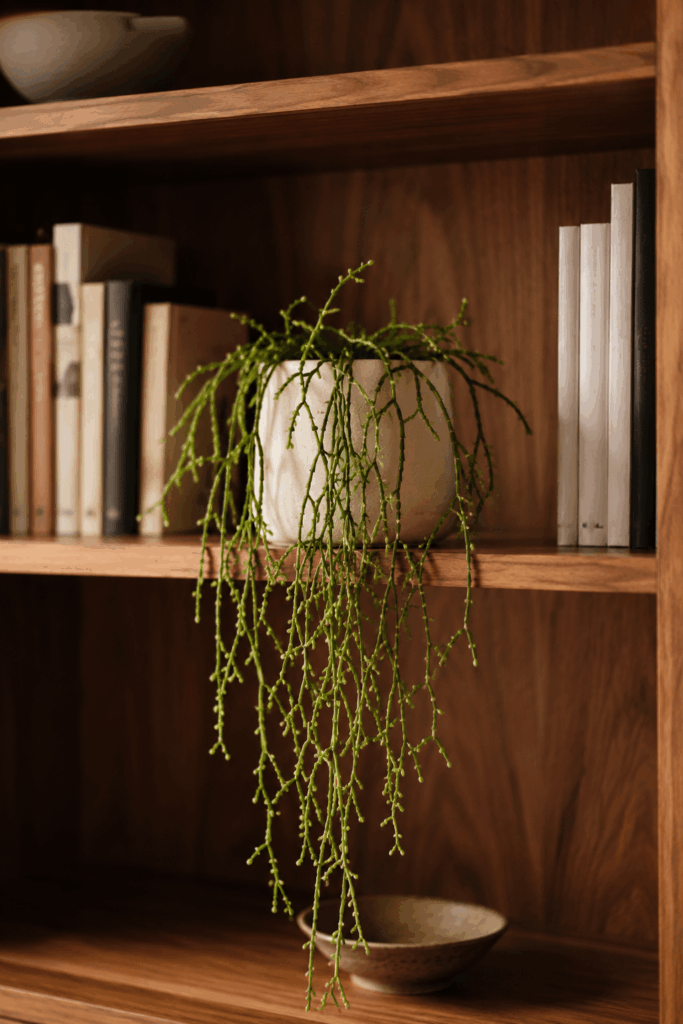
3. Mistletoe Cactus (Rhipsalis baccifera)
The secret weapon for dim interior shelves. A jungle cactus that hates direct sun. Long, pencil-thin green stems trail in soft cascades.
Best shelf: Deep interior, low-light corner.
Light: Low to medium indirect. Missouri Botanical Garden notes it’s native to rainforest understory.
Water: Every 10 to 14 days.
Trail speed: 12 to 18 months.
Mess factor: 1 of 5. Almost zero drop.
Pets: Non-toxic per ASPCA.
Beginner mistake: Treating it like a desert cactus. It wants more water and less light than you’d think.
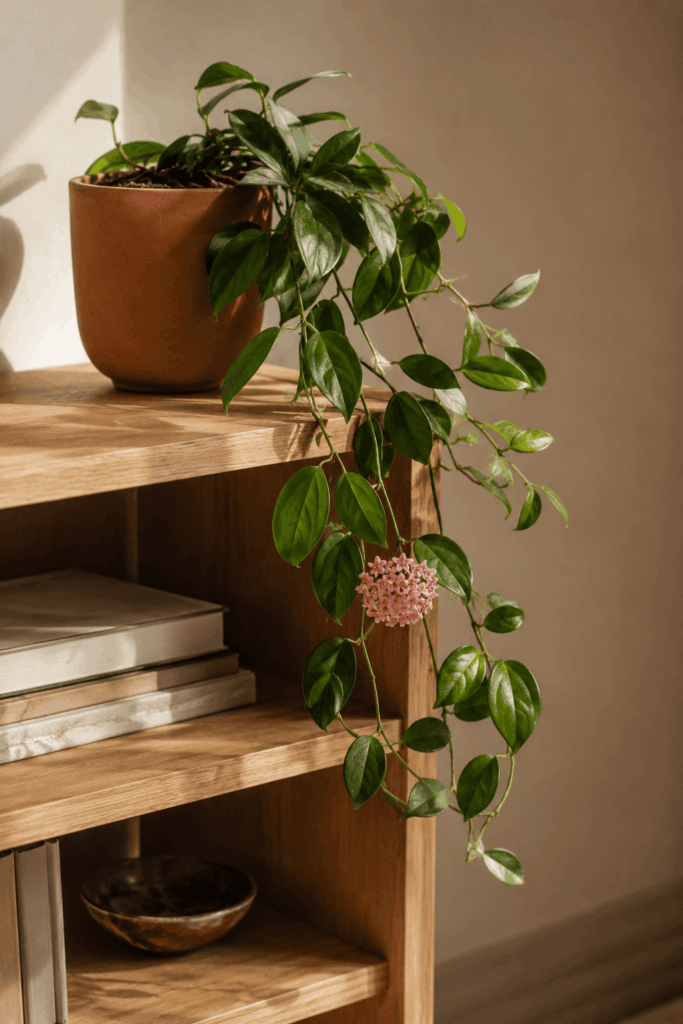
4. Hoya carnosa (Wax Plant)
Slow, tidy, book-safe. Thick waxy leaves that don’t drop. With patience, it rewards you with clusters of star-shaped flowers.
Best shelf: Top or upper-middle.
Light: Bright indirect.
Water: Every 10 to 14 days. Let it dry between.
Trail speed: 12 to 24 months. Patience pays.
Mess factor: 1 of 5.
Pets: Non-toxic per ASPCA.
Beginner mistake: Repotting too often. Hoyas bloom best when slightly root-bound.
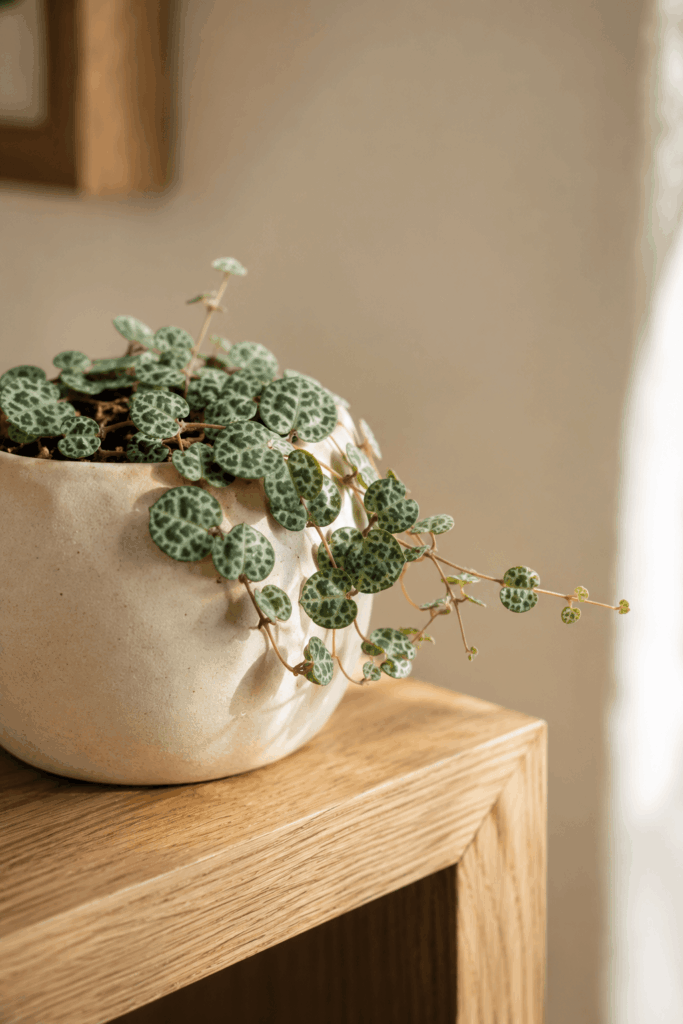
5. String of Turtles (Peperomia prostrata)
Compact, slow, never messy. Tiny patterned leaves that look hand-painted. Best for short cascades off a bookcase edge.
Best shelf: Middle to top.
Light: Medium to bright indirect.
Water: Every 10 days. Thin leaves wrinkle when thirsty.
Trail speed: Slow. 12 to 18 months for a full cascade.
Mess factor: 1 of 5.
Pets: Non-toxic per ASPCA.
Beginner mistake: Overwatering. The succulent-like leaves store moisture; it doesn’t need much
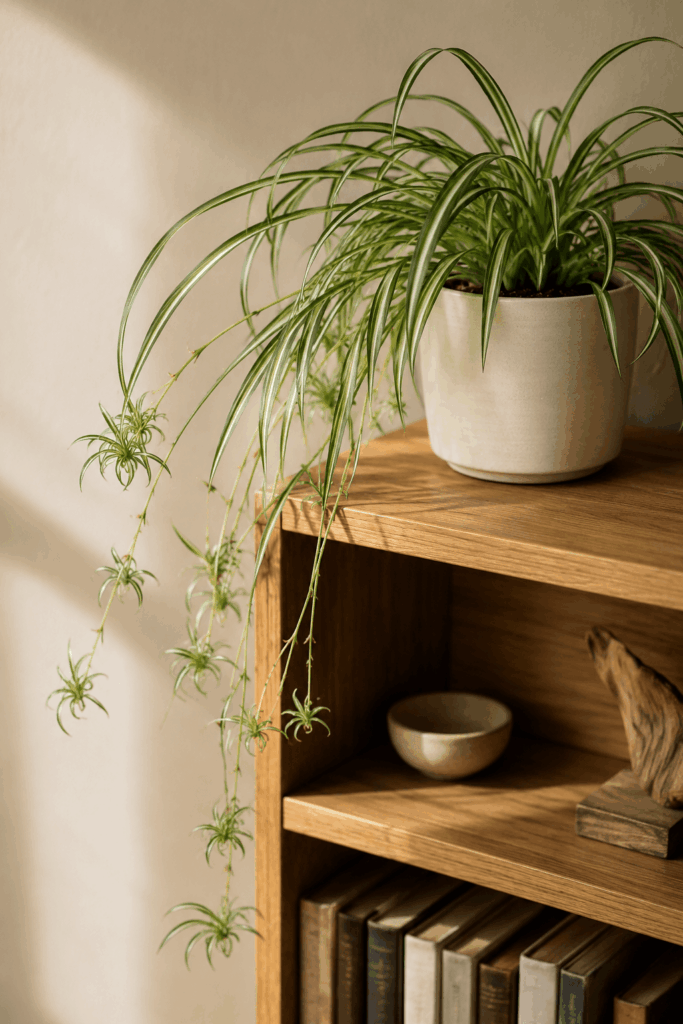
6. Spider Plant (Chlorophytum comosum)
Sends out arching stems with miniature plantlets dangling from them. Genuinely fun to watch.
Best shelf: Top or middle, with room below for the babies to dangle.
Light: Medium to bright indirect.
Water: Weekly. Brown tips usually mean tap water; try filtered.
Trail speed: 8 to 12 months to start producing pups.
Mess factor: 3 of 5. Long leaves can shed tips.
Pets: Non-toxic per ASPCA, though cats love to chew it.
Beginner mistake: Tossing the babies. Snip them off, root in water, free plants.
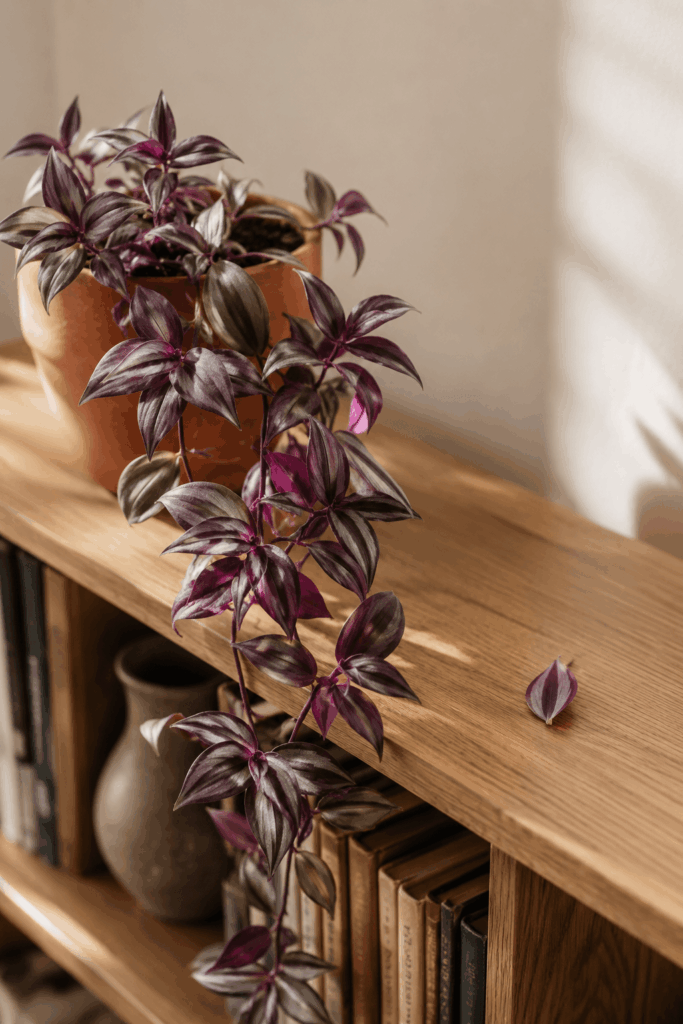
7. Tradescantia Zebrina (Inch Plant)
Fast color, striking purple and silver stripes. Trails quickly. Also the messiest plant on this list.
Best shelf: Top or middle. Not over open books.
Light: Bright indirect. Color fades in low light.
Water: Weekly.
Trail speed: 3 to 4 months. Fastest on this list.
Mess factor: 5 of 5. Drops leaves constantly. Cuttings root in water, which makes the mess feel less wasteful.
Pets: Mildly toxic to cats and dogs; can cause skin irritation.
Beginner mistake: Putting it directly over open books. Use a drip tray with a wide lip.
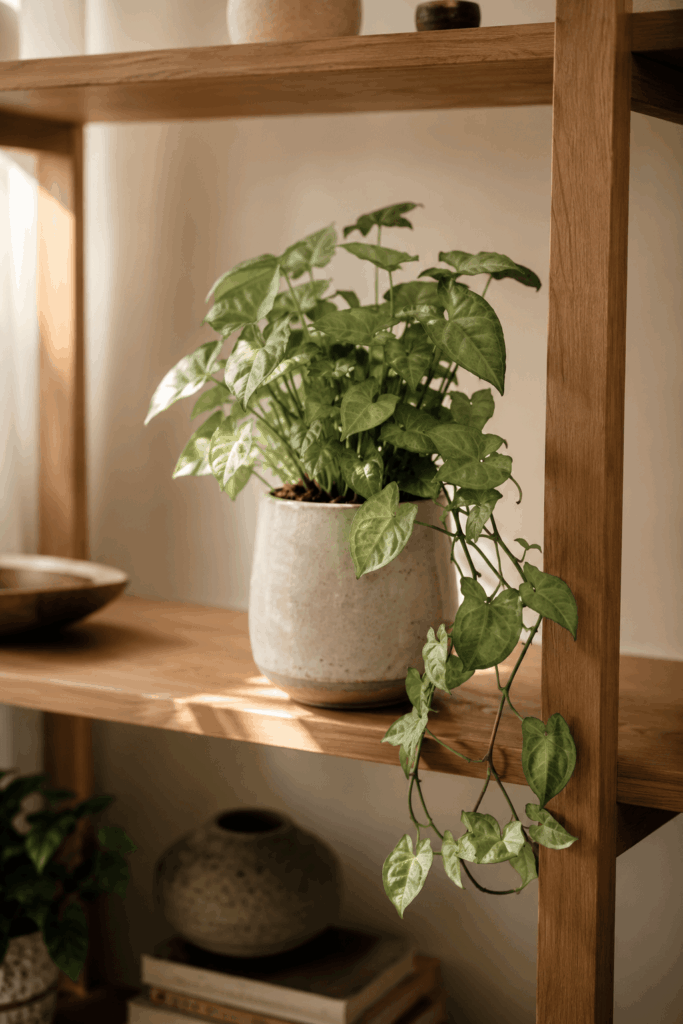
8. Arrowhead Vine (Syngonium podophyllum)
Starts upright, then transitions to a trailing form as it matures. Two plants in one.
Best shelf: Middle to upper.
Light: Medium to bright indirect.
Water: Every 7 to 10 days.
Trail speed: 9 to 12 months once it transitions.
Mess factor: 2 of 5.
Pets: Toxic to cats and dogs.
Beginner mistake: Expecting immediate trailing. The first six months are upright; the cascade comes later.
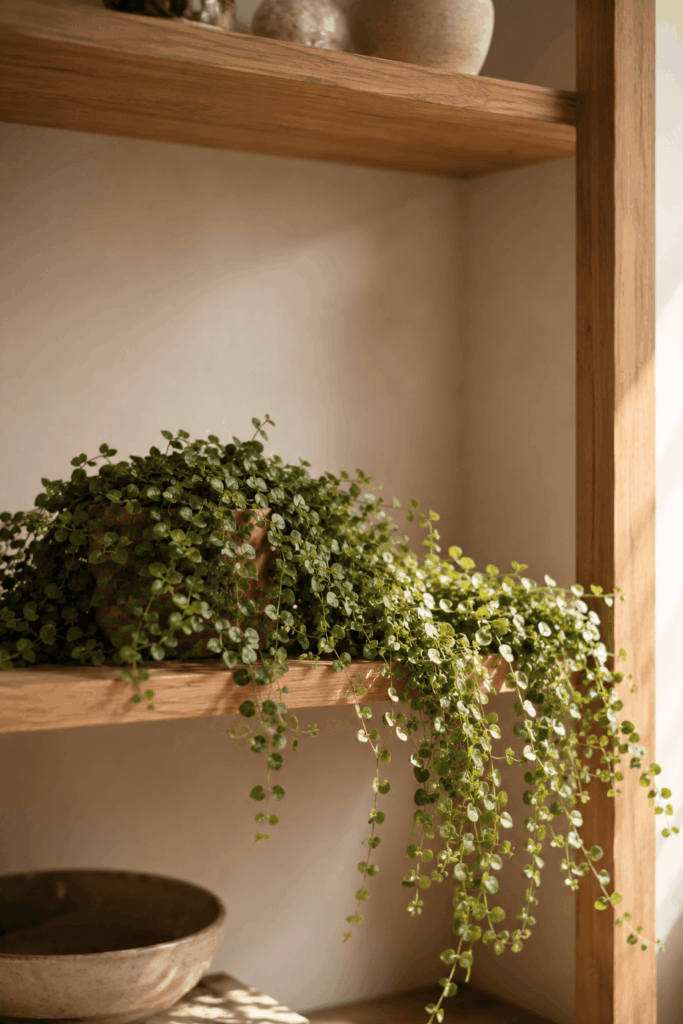
9. Creeping Fig (Ficus pumila)
Dense small leaves create a green-wall effect in miniature. Loves humidity, which makes it tricky in dry apartments.
Best shelf: Middle. Avoid radiator-adjacent shelves.
Light: Medium to bright indirect.
Water: Weekly. Mist occasionally if your apartment runs dry.
Trail speed: 9 to 12 months.
Mess factor: 2 of 5.
Pets: Toxic to cats and dogs.
Beginner mistake: Letting it dry out completely. Creeping Fig doesn’t bounce back from full dehydration the way Pothos does.
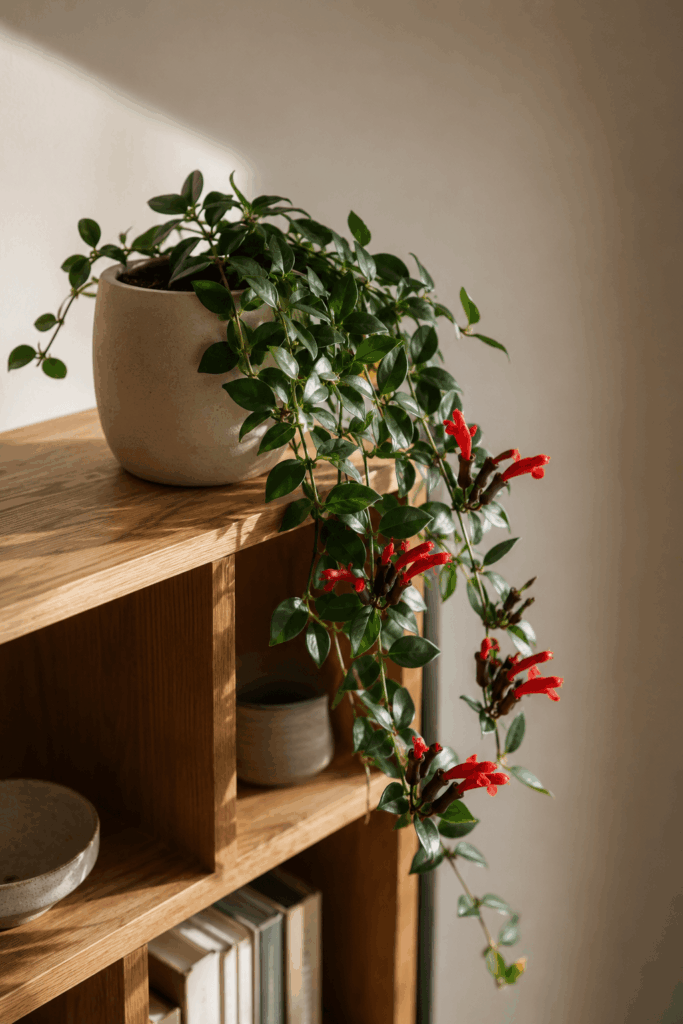
10. Lipstick Plant (Aeschynanthus radicans)
Trailing vines plus tubular red flowers that look like tiny lipsticks pushing out of dark calyxes. A showpiece on the right shelf.
Best shelf: Top, near a window.
Light: Bright indirect, no harsh direct sun.
Water: Weekly. Slightly drier in winter.
Trail speed: 12 months to first bloom; longer to look full.
Mess factor: 3 of 5. Drops spent flowers.
Pets: Non-toxic per ASPCA.
Beginner mistake: Moving it once it starts budding. Bud drop happens fast if you relocate it.
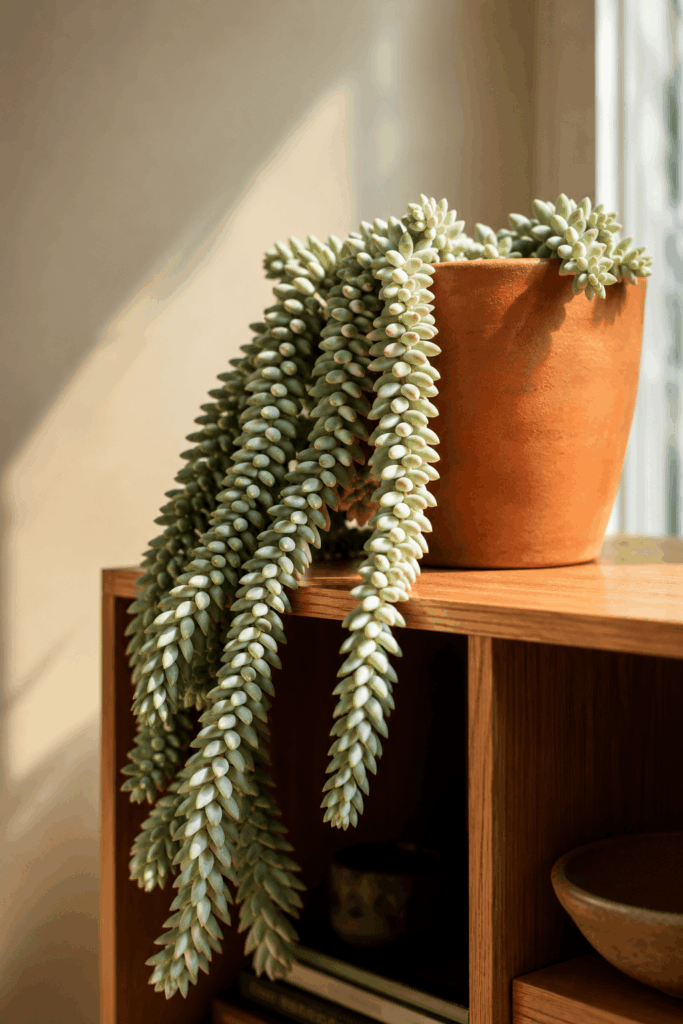
11. Burro’s Tail (Sedum morganianum)
Dramatic ropes of plump silvery-green leaves. Stunning when mature, fragile in the worst way: leaves fall off if you breathe on them.
Best shelf: Top only, in a high-traffic-free spot.
Light: Bright indirect to some direct.
Water: Every 14 to 21 days. Treat it like a true succulent.
Trail speed: 18 to 24 months for the rope look.
Mess factor: 4 of 5, but only because every brush against it drops leaves.
Pets: Non-toxic per ASPCA.
Beginner mistake: Moving the pot. Pick the spot, leave it there.
12. String of Hearts (Ceropegia woodii)
Delicate, photogenic, the plant in every styled bookcase photo. Thin trailing strands of marbled heart-shaped leaves.
Best shelf: Top, with bright indirect light.
Light: Bright indirect. Low light makes leaves space out.
Water: Every 10 to 14 days.
Trail speed: 12 to 18 months.
Mess factor: 2 of 5.
Pets: Toxic to cats and dogs.
Beginner mistake: Overwatering. Soft mushy leaves mean root rot is already in progress.
13. String of Pearls (Senecio rowleyanus)
The Pinterest star. Also the most likely plant on this list to die in your care. Honest.
Best shelf: Top, very close to a bright window.
Light: The brightest indirect light you have. Some direct sun is fine.
Water: Every 14 to 21 days. Missouri Botanical Garden lists it as drought-tolerant.
Trail speed: 18 to 24 months.
Mess factor: 3 of 5. Pearls drop when stressed.
Pets: Toxic to cats and dogs.
Beginner mistake: Buying it before you’ve successfully kept a Hoya alive. Build up to this one.
Match the Plant to the Shelf Position
The single biggest mistake is buying a plant for the bookcase, not the shelf. Each shelf is its own microclimate.
Top shelf (closest to ceiling, often closest to a window): This is your bright-light shelf. The high-demand picks live here. String of Pearls, String of Hearts, Burro’s Tail, Hoya, Lipstick Plant. If your top shelf is genuinely sunny, this is the only place succulent trailers will survive.
Middle shelves: Medium light, the most flexible position. Pothos, Heartleaf Philodendron, Tradescantia, Spider Plant, Arrowhead Vine, Creeping Fig, and String of Turtles all thrive here. If you’re unsure where to start, the middle shelf is the safest bet for any plant on this list.
Deep interior shelves (back of bookcase, far from any window): This is the graveyard for most plants. Only three on the list will reliably survive: Mistletoe Cactus, Pothos, and Heartleaf Philodendron. If your bookcase is against an interior wall with no nearby window, plan for those three and nothing else.
The hand-shadow test from Section 2 is the quickest way to settle this. Defined shadow at noon means top-shelf candidates work anywhere on that shelf. Blurry shadow means stick to middle-shelf picks. No shadow at all means three plants, period.
Setup: Pots, Drainage, and Protecting Your Books
The plant matters, but the pot matters almost as much, especially when wood and paper are below.
Cachepot method. Pot the plant in a plastic nursery pot with drainage holes, then drop that inside a decorative ceramic cachepot without holes. On watering day, take the nursery pot to the sink, water it through, let it drain, and return it. The cachepot stays clean, the books stay safe.
Drip protection. If you do water in place, every pot needs a saucer wider than the pot’s base. Cork coasters work for small plants. Glazed ceramic saucers handle bigger ones. Plastic plant trays are ugly but functional. Never put a draining pot directly on a wood shelf.
Pot weight. Ceramic is heavy. Plastic is light. If you’re on a floating shelf, plastic with a decorative outer wrap is the safer play. A wet ceramic pot can easily double the weight you put on the shelf.
Renter setup. Cachepots that sit fully on the shelf (no drilling), tension rods between two shelves to hang small pots, and 3M removable hooks for ultra-light trailers. None of this damages a shelf you don’t own.
Honest Trade-offs Pinterest Doesn’t Show You
Three things that styled photos hide.
Trail speed is measured in years, not weeks. A Pothos can look Pinterest-ready in six months. A String of Pearls needs two years. If you want the cascade now, buy a more mature plant from a local nursery rather than a 4-inch starter from a big-box store.
Every trailing plant drops something. Leaves, spent flowers, sap, tiny pearls. The mess factor on each pick above is honest. If you keep books on the shelf, a Tradescantia is a long-term relationship with a small dustpan.
Light changes with seasons. Your bright bookcase in July might be a low-light bookcase in January. Watch your plants in late autumn. Legginess, slow growth, and yellowing usually mean the seasonal light dropped below what the plant needs. Rotate plants between rooms or shelves if you can.
Thirty seconds a day glancing at your plants beats any care app or notification.
Quick Reference: All 13 Plants Side-by-Side
A condensed version for when you’re standing in front of a nursery shelf trying to decide.
- Pothos: Any shelf, low to bright indirect, weekly water, mess 2/5, pet-toxic.
- Heartleaf Philodendron: Middle or deep, low to medium light, weekly water, mess 2/5, pet-toxic.
- Mistletoe Cactus: Deep interior, low to medium light, every 10-14 days, mess 1/5, pet-safe.
- Hoya: Top, bright indirect, every 10-14 days, mess 1/5, pet-safe.
- String of Turtles: Middle or top, medium to bright indirect, every 10 days, mess 1/5, pet-safe.
- Spider Plant: Top or middle, medium to bright indirect, weekly, mess 3/5, pet-safe.
- Tradescantia: Top or middle, bright indirect, weekly, mess 5/5, pet-toxic.
- Arrowhead Vine: Middle to top, medium to bright indirect, every 7-10 days, mess 2/5, pet-toxic.
- Creeping Fig: Middle, medium to bright indirect, weekly plus humidity, mess 2/5, pet-toxic.
- Lipstick Plant: Top, bright indirect, weekly, mess 3/5, pet-safe.
- Burro’s Tail: Top, bright indirect, every 14-21 days, mess 4/5, pet-safe.
- String of Hearts: Top, bright indirect, every 10-14 days, mess 2/5, pet-toxic.
- String of Pearls: Top by a window, brightest indirect, every 14-21 days, mess 3/5, pet-toxic.
FAQs
Q1: What is the easiest trailing plant for a bookshelf?
Pothos is the easiest trailing plant for a bookshelf. It tolerates low to bright indirect light, only needs water every 7 to 10 days, and visibly droops when thirsty so you know exactly when to water. It will trail on any shelf in your bookcase, including dim interior shelves, and forgives nearly every beginner mistake.
Q2: Are trailing indoor plants safe for cats and dogs?
Some trailing indoor plants are safe for cats and dogs, but most popular ones are not. ASPCA lists Hoya, Mistletoe Cactus, String of Turtles, Spider Plant, Lipstick Plant, and Burro’s Tail as non-toxic. Pothos, Heartleaf Philodendron, String of Pearls, String of Hearts, Arrowhead Vine, and Creeping Fig are all toxic to pets and should sit above paw reach.
Q3: How much light does a trailing plant need on a bookcase?
Most trailing plants need medium to bright indirect light, but it depends on the species. Pothos, Heartleaf Philodendron, and Mistletoe Cactus survive on low-light interior shelves. String of Pearls, Burro’s Tail, and String of Hearts only thrive on a top shelf near a bright window. Test each shelf with the hand-shadow trick before buying.
Q4: Why is my trailing plant leggy on the bookshelf?
Leggy growth on trailing plants almost always means too little light, not a watering problem. Iowa State Extension notes that long bare stems with sparse leaves are a classic light-deficiency symptom. Move the plant to a brighter shelf, rotate it closer to a window, or switch to a low-light species like Pothos or Mistletoe Cactus.
Q5: How long does a trailing plant take to look full on a shelf?
A Pothos looks Pinterest-ready in about 6 months. Slower trailing plants like String of Pearls, Burro’s Tail, and Hoya take 18 to 24 months for a full cascade. For instant impact, buy a more mature plant from a local nursery instead of a 4-inch starter from a big-box store.
Q6: Can trailing plants live on a bookshelf with no window nearby?
Yes, but only three trailing plants reliably survive deep-interior shelves: Pothos, Heartleaf Philodendron, and Mistletoe Cactus. The other 10 plants on this list will get leggy or die without nearby light. If your bookcase sits against an interior wall with no window, plan for those three picks and nothing else.
What Actually Matters
Choosing trailing indoor plants for shelves and bookcases comes down to one question: where on the bookcase will it actually live? The plant has to match the shelf, not the room. Top shelf gets the succulent trailers. Middle shelf gets the workhorses. Deep interior gets three picks, no more.
If you’re starting today, start with a Pothos. It will trail on any shelf, forgive every mistake, and teach you the watering rhythm your apartment needs before you buy something more demanding.
Then, after you’ve watched a Pothos cascade for six months and you’re ready for the Pinterest moment, work your way up. String of Pearls last, not first.
That one trailing plant on your bookshelf really will look better than three perfectly-arranged decor objects. Just give it the shelf it can actually survive.