
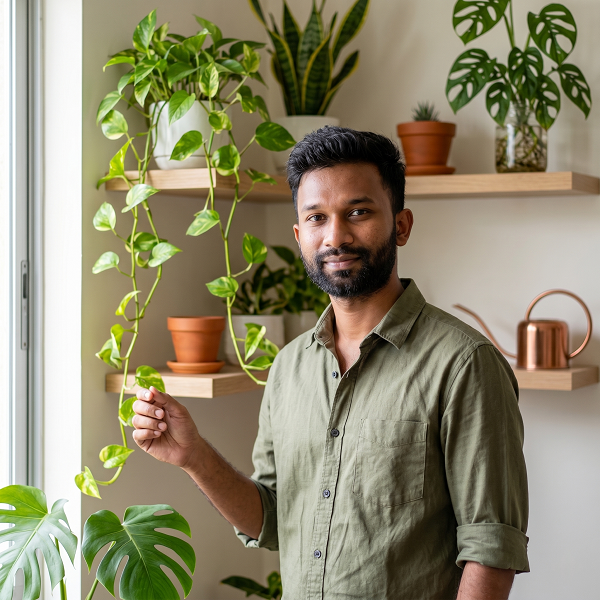
The first plant I researched for this article was a pothos, and I almost overwatered it to death in week two. Turns out that’s the most common beginner story there is.
Most plant deaths aren’t a personal failing. They’re a mismatch. Wrong plant, wrong window, wrong watering schedule copied from someone whose apartment looks nothing like yours.
This list is my shortlist of low maintenance indoor plants for beginners, the nine I wish someone had handed me on day one. Plants that actually forgive you, sorted by how much neglect they’ll quietly tolerate, with pet safety flagged on every single one.
TL;DR
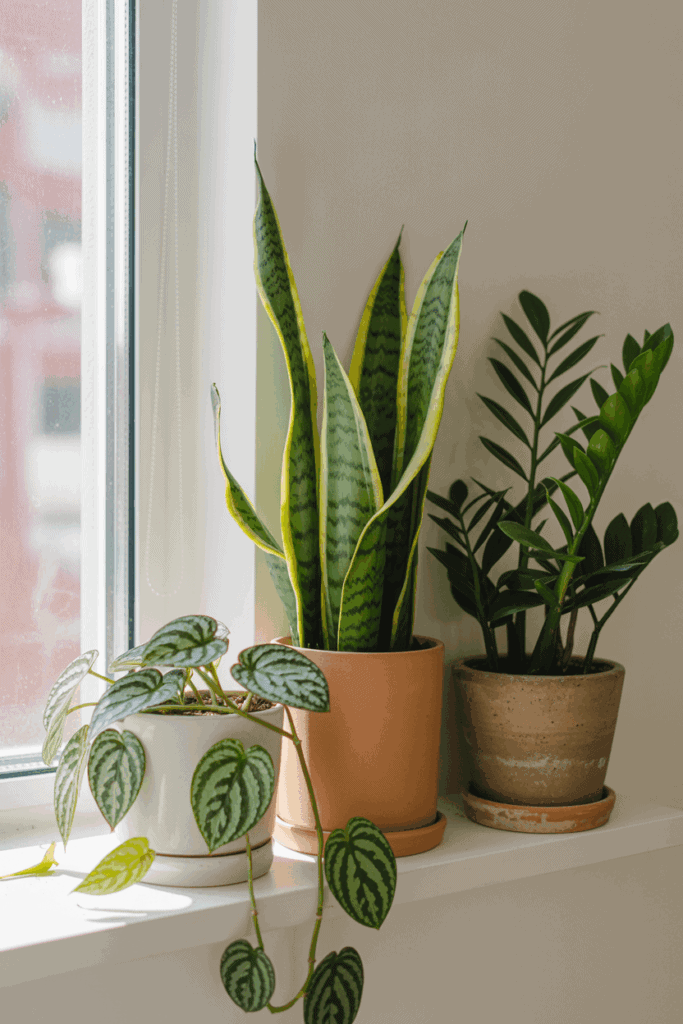
- The most forgiving plants for beginners are snake plant, pothos, ZZ plant, and spider plant — all four survive missed waterings.
- “Low light” is mostly marketing. Most plants tolerate low light but want bright indirect light to actually thrive.
- If you have cats or dogs, stick to spider plant, parlor palm, cast iron plant, and prayer plant. The rest of this list is mildly toxic if chewed.
- Underwatering kills fewer houseplants than overwatering. When in doubt, wait three more days.
Why Most Beginner Plants Die (And It’s Not Your Fault)
The most common cause of houseplant death isn’t drought. It’s drowning.
Cornell Cooperative Extension and Iowa State University Extension both list overwatering as the leading cause of indoor plant decline. Roots need oxygen as much as moisture. When soil stays soggy for days on end, roots suffocate and rot. By the time the leaves yellow and droop, the damage underground is usually weeks old.
The second killer is light mismatch. A fiddle leaf fig in a north-facing studio is going to lose leaves no matter how perfectly you water it. Right plant, wrong room.
The third killer is buying the wrong species for your life. A prayer plant needs more attention than someone who travels twice a month can give. A pothos does not.
If you’ve already killed a plant: you didn’t fail. You probably picked a species that was never going to make it in your space, or you watered it on a schedule instead of when it actually needed water. Both are fixable. Neither makes you bad at this.
How I Picked These 9 Plants
I’m not a master gardener. I’m a researcher pulling from extension service publications, the ASPCA database, and species profiles from NC State Extension. That’s the rubric.
To make the list, a plant had to clear five filters:
- Survives one to two weeks of total neglect without dying.
- Tolerates average apartment light (no grow lights required).
- Doesn’t need a humidifier to look decent in winter.
- Available at most US garden centers, hardware stores, or online plant shops.
- Pet safety status is unambiguous and clearly labeled.
That last filter knocked out a lot of usual suspects. Aloe and jade plant get pushed by influencers as beginner-friendly, but both are toxic to pets and finicky about light. Fiddle leaf figs sometimes sneak onto “easy” lists, which is honestly almost a prank.
9 Low Maintenance Indoor Plants for Beginners, Ranked by Forgiveness
Ranked roughly from most forgiving to most needy. Even the bottom of this list is easier than 80% of houseplants you’ll see at a garden center.
1. Snake Plant (Dracaena trifasciata)
Almost the official houseplant of “I forgot.” Stiff upright leaves, slow growth, no drama.
Light: Tolerates everything from low to bright indirect.
Water: Every two to three weeks. Let the soil dry completely first.
Pets: Toxic to cats and dogs (mild) per ASPCA.
Skip if: you have a curious cat who chews leaves.
Beginner tip: If you remember it once a month, that’s enough.
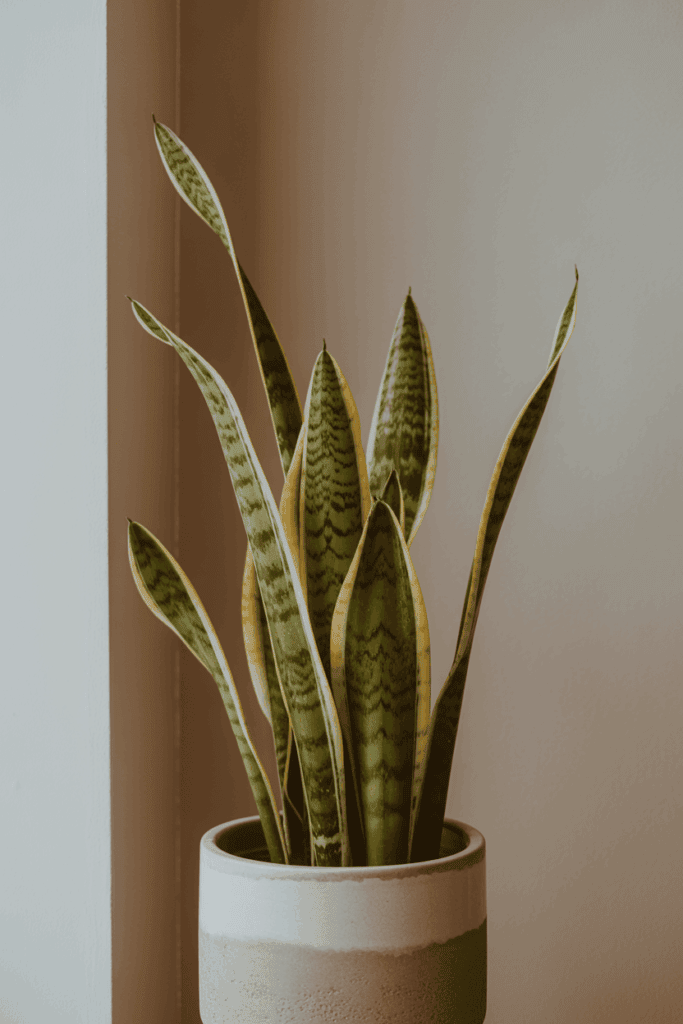
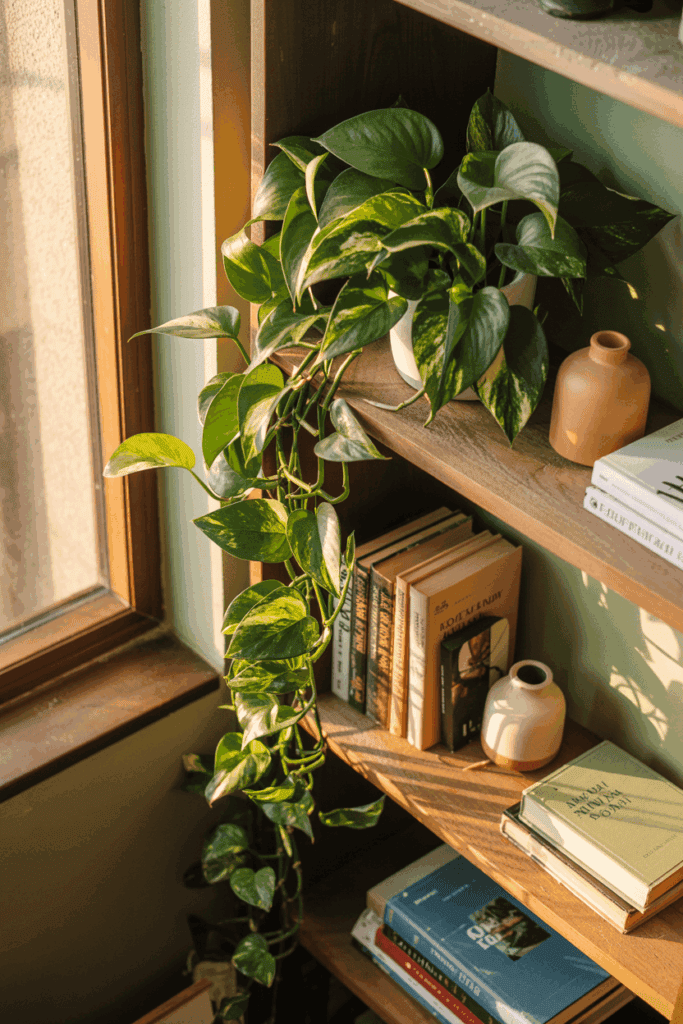
2. Pothos (Epipremnum aureum)
The vine that practically waves at you when it’s thirsty. Leaves droop, you water, leaves perk back up within hours. It’s incredibly satisfying.
Light: Bright indirect ideal; tolerates medium to lowish light, but variegation fades the darker it gets.
Water: Once a week-ish, when the top inch of soil feels dry.
Pets: Toxic to cats and dogs if chewed.
Skip if: your only window faces north and gets zero direct sun.
Beginner tip: Hang it high or put it on a top shelf so trailing vines have room to dangle.
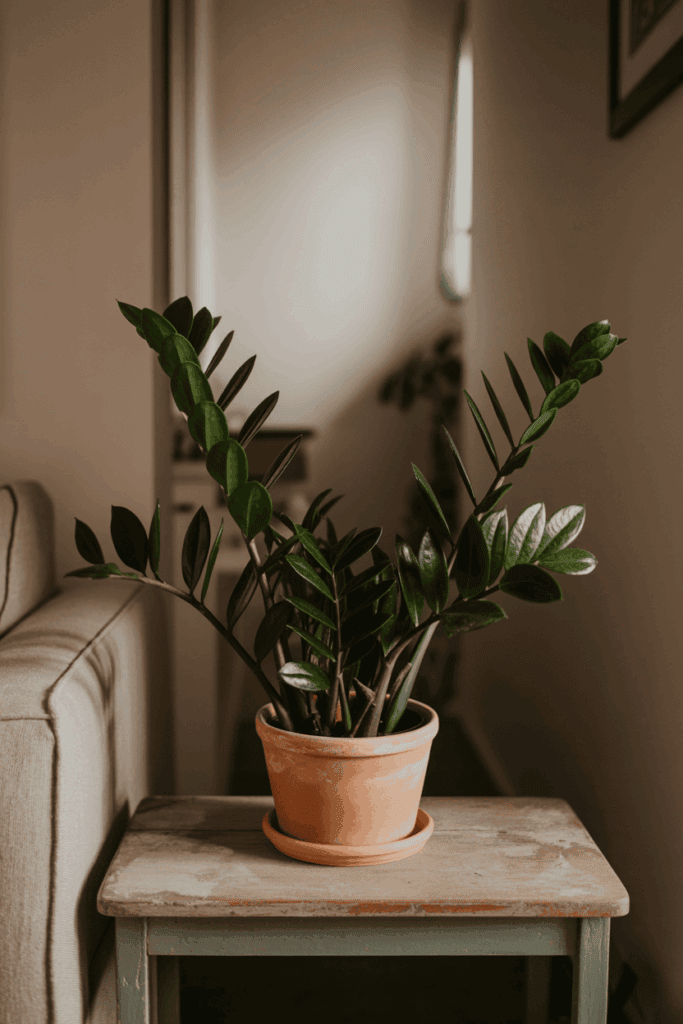
3. ZZ Plant (Zamioculcas zamiifolia)
Stores water in thick underground rhizomes, which means it genuinely thrives on neglect. The biggest threat to a ZZ plant is your love.
Light: Low to medium indirect. One of the only plants that’s truly fine in dim corners.
Water: Every two to four weeks. Underwater on purpose.
Pets: Toxic to cats and dogs.
Skip if: you tend to overwater out of love.
Beginner tip: If you’re not sure whether to water it, don’t.
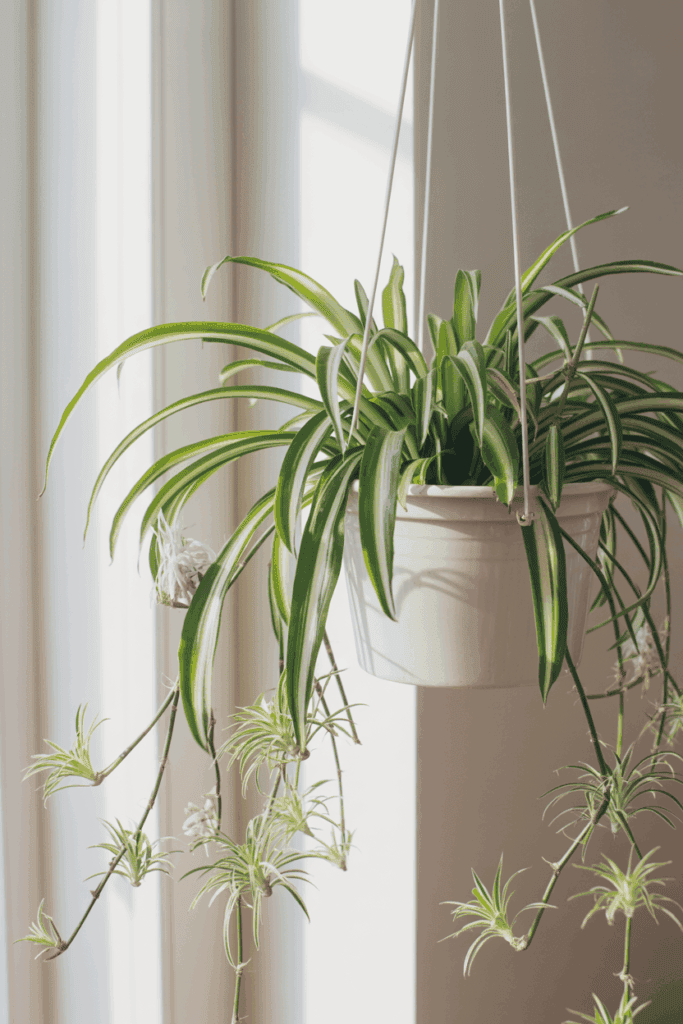
4. Spider Plant (Chlorophytum comosum)
The pet-safe MVP of this list. Arching striped leaves, fast growth, and once it’s happy it sends out little spider babies you can pot up and give away.
Light: Bright indirect. Tolerates medium.
Water: Once a week. Doesn’t love going bone-dry.
Pets: Non-toxic per ASPCA. Cats sometimes nibble; that’s normal and harmless.
Skip if: you want a “set it and forget it” plant. Spider plants like consistency.
Beginner tip: Brown leaf tips usually mean tap water. Try filtered or let water sit overnight.
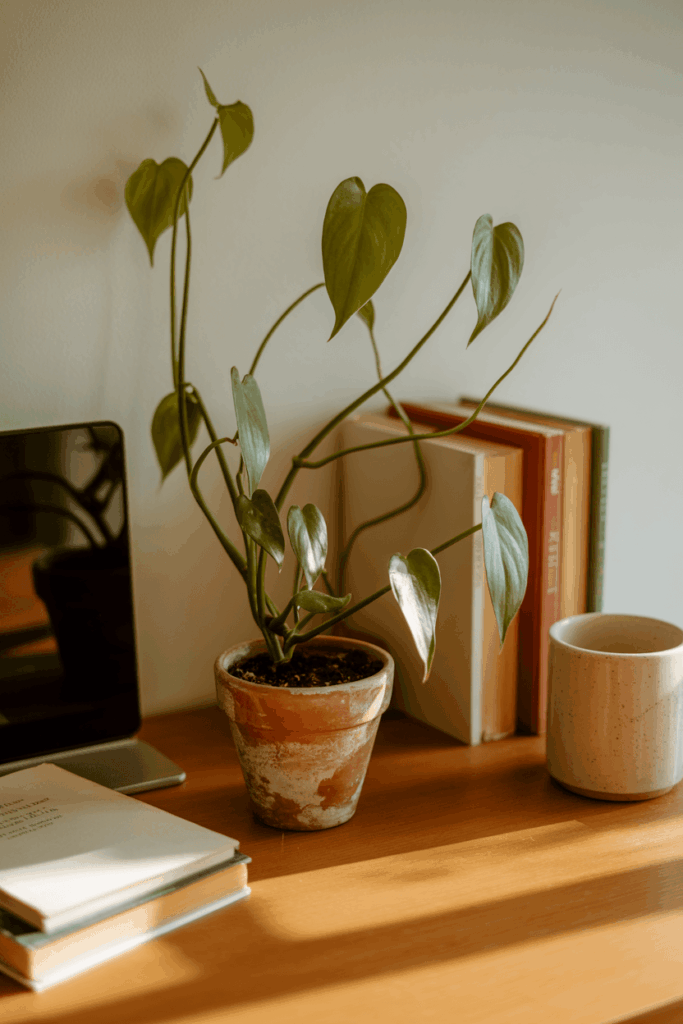
5. Heartleaf Philodendron (Philodendron hederaceum)
Pothos’s gentler cousin. Slightly softer leaves, slightly more shade-tolerant, often mislabeled as pothos at big-box stores.
Light: Medium indirect. Genuinely tolerates lower light than pothos.
Water: When the top inch is dry.
Pets: Toxic to cats and dogs.
Skip if: you have toddlers who chew leaves or pets that graze.
Beginner tip: If your pothos struggles in your dimmest room, try this instead.
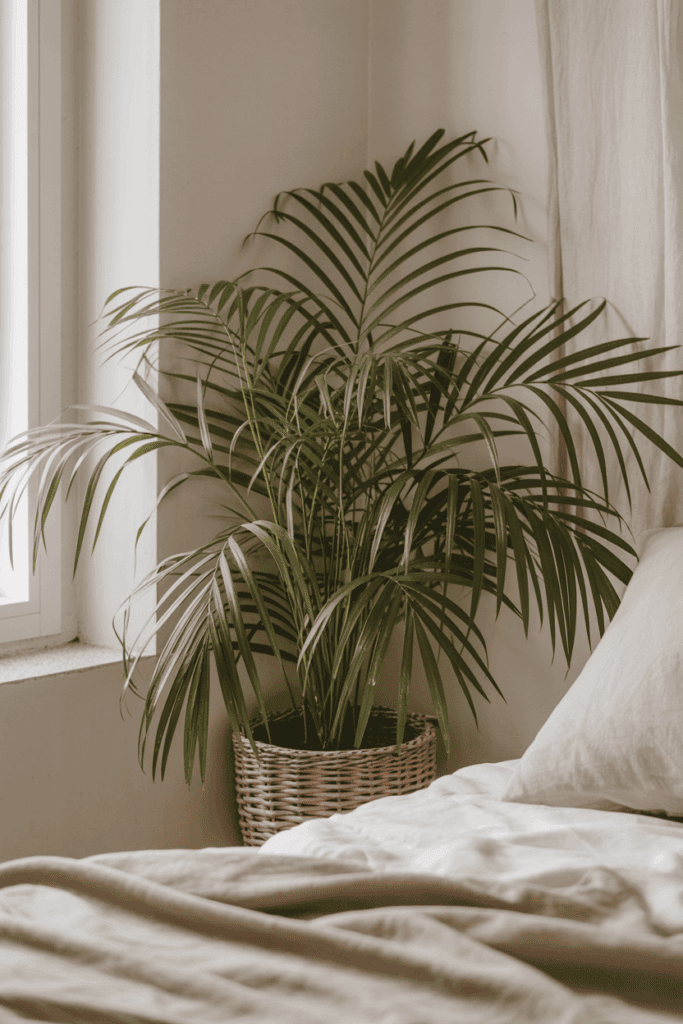
6. Parlor Palm (Chamaedorea elegans)
Adds a tropical feel without fiddle-leaf-fig drama. Slow grower, soft fronds, surprisingly tolerant of apartment air.
Light: Medium indirect. No direct afternoon sun.
Water: When the top inch of soil dries. Likes humidity but doesn’t demand it.
Pets: Non-toxic per ASPCA.
Skip if: your apartment runs dry and hot in winter from radiator heat.
Beginner tip: Group it with other plants. They share humidity and look better together.
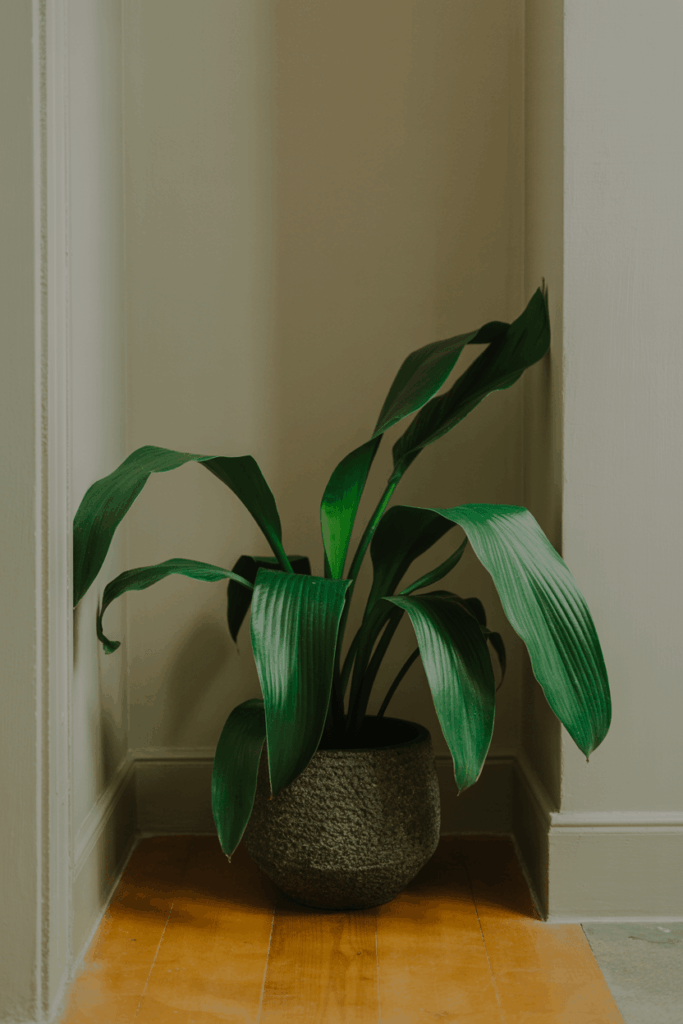
7. Cast Iron Plant (Aspidistra elatior)
It earned the name. Cast iron handles low light, irregular watering, and temperature swings most plants would sulk through.
Light: Low to medium. One of the few true low-light champions.
Water: Every two to three weeks.
Pets: Non-toxic per ASPCA.
Skip if: you want fast growth or visible new leaves every month.
Beginner tip: Buy the largest one you can afford. It grows slowly.
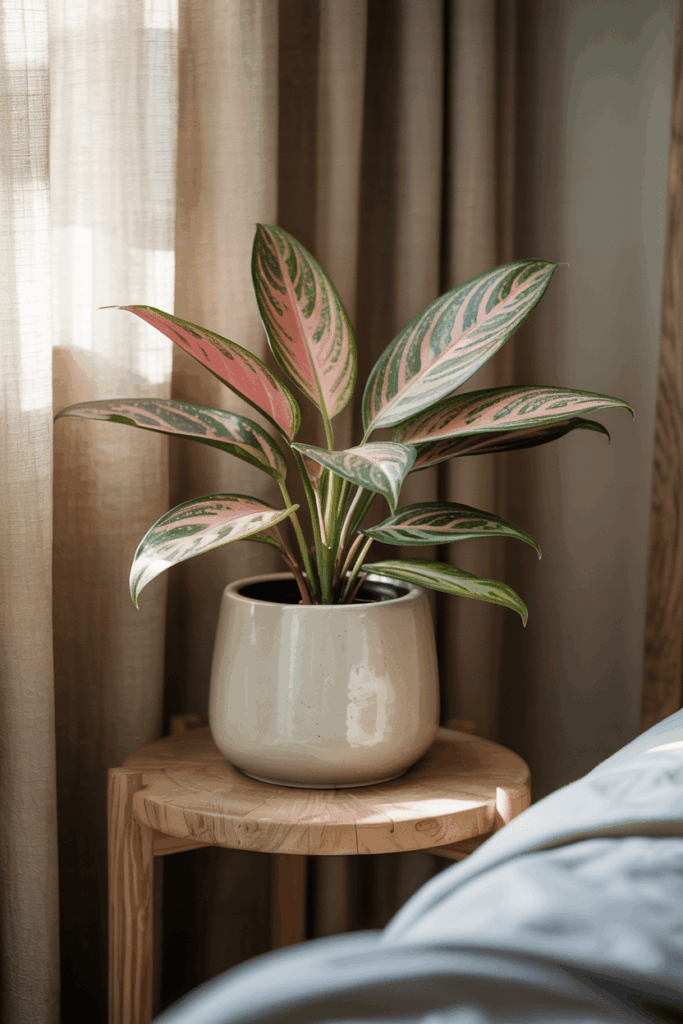
8. Chinese Evergreen (Aglaonema)
The best true low-light performer with actual visual interest. Patterned leaves in silver, green, pink, and red varieties depending on cultivar.
Light: Low to medium indirect. Pink varieties need more light to keep their color.
Water: When the top inch is dry, roughly weekly.
Pets: Toxic to cats and dogs.
Skip if: your apartment runs cold below 60°F in winter. Aglaonema sulks in chill.
Beginner tip: The plain green varieties are tougher than the trendy pink ones.
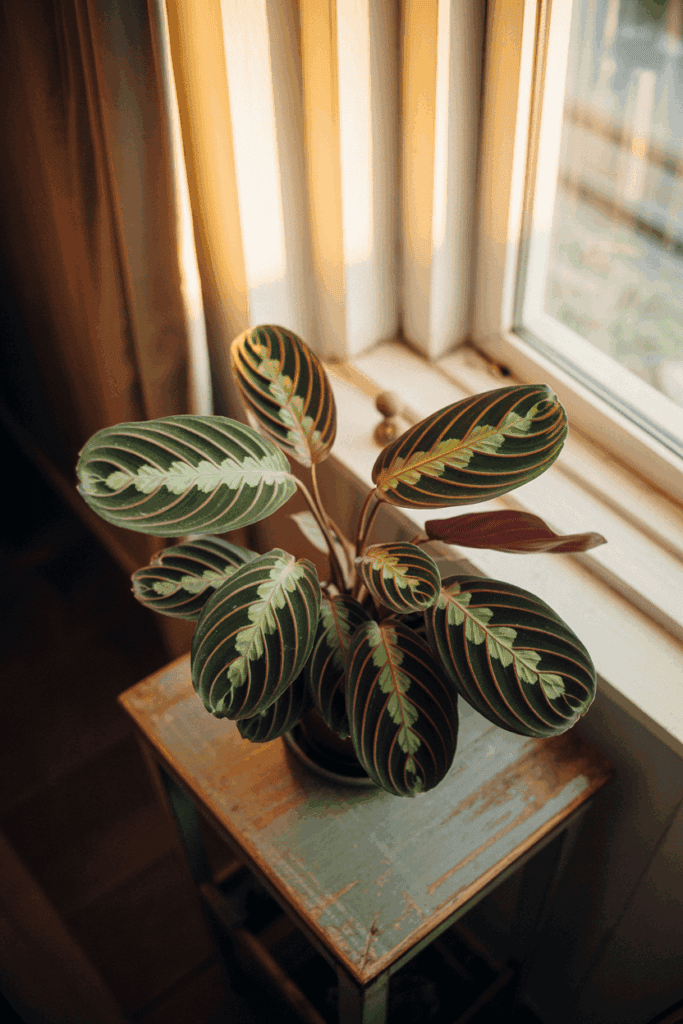
9. Prayer Plant (Maranta leuconeura)
Leaves fold up at night and open in the morning. A small daily delight that makes the plant feel almost like a pet. Pet-safe, too.
Light: Medium indirect. No direct sun.
Water: Keep evenly moist, never soggy. Once or twice a week.
Pets: Non-toxic per ASPCA.
Skip if: you forget to water for two-plus weeks at a stretch.
Beginner tip: Brown crispy edges almost always mean dry air. A pebble tray under the pot helps.
The Pet Safety Shortlist (If You Have Cats or Dogs)
If chewed leaves are a real risk in your home, narrow this list to four:
- Spider Plant (non-toxic, ASPCA)
- Parlor Palm (non-toxic, ASPCA)
- Cast Iron Plant (non-toxic, ASPCA)
- Prayer Plant (non-toxic, ASPCA)
Honorable mentions worth considering: African violet, Boston fern, and Areca palm — all listed as non-toxic in the ASPCA database.
If you’re thinking “but my cat doesn’t chew plants”: sometimes they don’t, until they do. Bored cats and bored dogs find new hobbies. The toxic plants on this list will mostly cause drooling, vomiting, or mouth irritation rather than serious harm, but it’s an emergency vet visit nobody wants. The pet-safe four cover almost every apartment scenario without that risk.
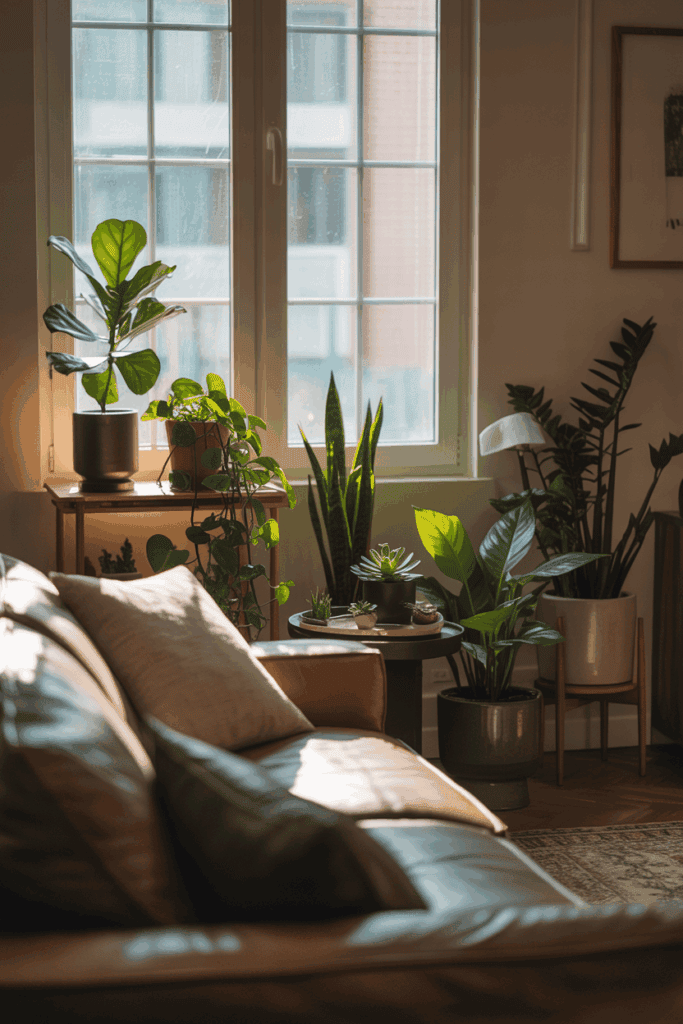
Apartment Light Reality Check
Plant tags lie. Or at least, they generalize. “Low light” on a label often means “tolerates low light without dying for a while,” not “thrives there.”
Penn State Extension breaks indoor light into three honest categories:
- Bright indirect: A few feet from a south or east-facing window. You can read a book without turning on a lamp at noon.
- Medium indirect: Across the room from a sunny window, or right next to a north-facing one. Comfortable but not bright.
- Low light: A windowless bathroom, a dim hallway, or a bedroom corner where you’d need a lamp at noon. Honestly, very few plants thrive here. They tolerate.
The shadow test: Hold your hand a foot above the spot you’re considering on a sunny day. A crisp shadow means bright light. A soft fuzzy shadow means medium. Barely any shadow means low.
If you have a north-facing window: you have medium light, not low. Snake plant, ZZ, pothos, philodendron, and cast iron will all do fine. Skip cacti and succulents.
Winter cuts everyone’s light by 30 to 50%. Plants near a window in summer might need to move closer in December.
The One Skill That Matters Most: Watering Less
If you only learn one thing from this site, learn to water less than you think.
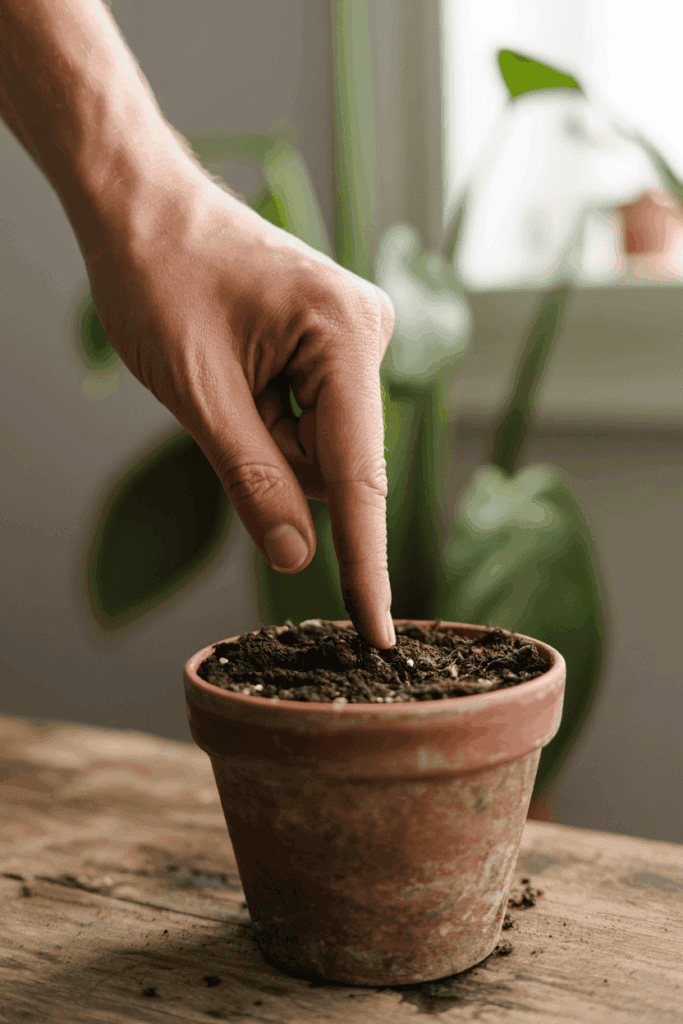
Iowa State University Extension recommends checking soil before watering, not the calendar. Stick a clean finger into the pot up to the second knuckle. If it comes out dry, water. If it comes out cool and damp, wait three more days and check again.
The weight test works too. Lift the pot right after watering, then again a few days later. Light pots are thirsty. Heavy pots are fine.
Drainage holes are non-negotiable. If you fall in love with a decorative pot, use it as a cachepot — keep the plant in its plastic nursery pot inside, and lift it out to water in the sink.
If you’re going on vacation: water deeply the morning you leave. Most plants on this list will be fine for two weeks. ZZ and snake plant will be fine for a month.
The soggy soil rescue: If the pot is waterlogged and the leaves are yellowing, take the plant out, let the root ball air-dry on a paper towel for a few hours, repot in fresh dry soil, and skip watering for at least a week. It’s not a guaranteed save, but it works more than half the time.
Where to Buy and What to Look For
Most beginners overpay online when their local hardware store has the same pothos for half the price. Here’s the rough hierarchy:
- Hardware stores and big-box garden centers (Lowe’s, Home Depot): cheapest, decent selection, hit-or-miss plant health. Best for snake plant, pothos, ZZ, spider plant.
- Trader Joe’s and grocery stores: mid-range pricing on small to medium plants, often surprisingly healthy stock.
- Local nurseries: mid-range to premium pricing, usually the healthiest plants and the best advice. Worth the trip.
- Online specialty growers (The Sill, Bloomscape): premium pricing, beautiful packaging, occasionally stressed plants from shipping. Best for harder-to-find varieties.
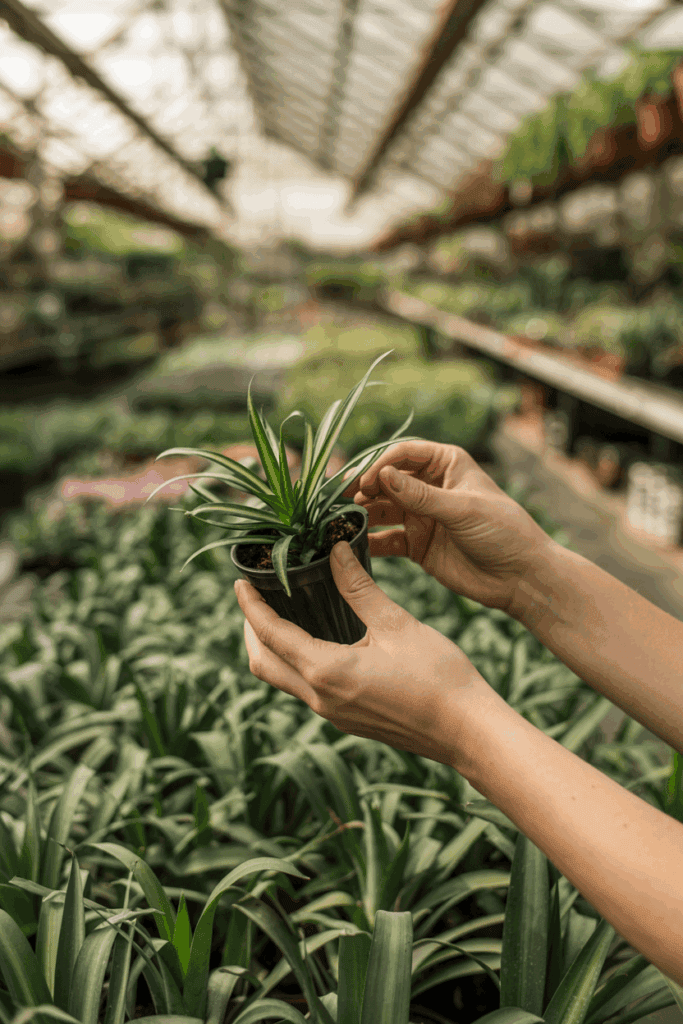
Inspect before you buy. Check under the leaves for tiny webs or sticky residue (pests). Gently lift the plant from the pot if you can; healthy roots are white or light tan, not mushy or black. Soil that smells sour is a red flag.
Frequently Asked Questions
Q1: What if I’ve killed every plant I’ve owned so far?
That usually means a mismatch, not a failure. You probably picked a plant that didn’t fit your light, or watered on a schedule instead of when the soil was actually dry. Start with a snake plant or ZZ plant, water it half as often as you think, and you’ll likely break the streak this time.
Q2: What’s the easiest indoor plant for a beginner with low light?
A ZZ plant is the closest thing to a true low-light champion — it stores water in underground rhizomes and tolerates dim corners that would kill most houseplants. Snake plant comes second. Both forgive weeks of neglect and won’t dramatically protest if you forget them entirely for a month.
Q3: Which indoor plants are safe for cats and dogs?
Spider plant, parlor palm, cast iron plant, and prayer plant are all listed as non-toxic by the ASPCA. African violet, Boston fern, and areca palm are good additions if you want more variety. Pothos, snake plant, ZZ plant, and philodendron are all toxic to pets if chewed and worth skipping in pet households.
Q4: How often should I water a beginner houseplant?
Most low maintenance houseplants want water every 7 to 14 days, but check the soil instead of the calendar. Push a finger an inch into the pot — if it comes out dry, water; if it’s damp, wait three more days. Snake plant and ZZ plant can stretch to every two to four weeks comfortably.
Q5: Do low light indoor plants really exist, or is that marketing?
Mostly marketing. Almost no plant truly thrives in low light — most just tolerate it without dying. ZZ plant, cast iron plant, and snake plant are the closest to genuine low-light performers. Even those grow faster and look better in medium or bright indirect light. If a room needs a lamp at noon, expect slow growth at best.
Q6: Where’s the best place to buy beginner houseplants?
For staples like pothos, snake plant, and ZZ plant, hardware stores and big-box garden centers usually have the lowest prices. Local nurseries cost more but stock healthier plants and give better advice. Online specialty growers are best for harder-to-find varieties — though shipping stress is a real downside for fragile species.
What Actually Matters
If you remember one thing, remember this: pick the right plant for your light, then water it less than you think.
That’s the entire job. Everything else is a refinement.
If you’re starting today, pick one. Just one. A snake plant if your space is dim, a pothos if you have any decent window, a spider plant if you have a cat or a dog. Bring it home, put it where the light fits, and leave it alone for a week.
Most beginners kill their first plant with kindness. The hardest part of indoor gardening isn’t doing more. It’s doing less, and trusting that the plant knows what it’s doing.