

Finding safe houseplants for cats and dogs is harder than it should be. There are roughly 200 houseplants the ASPCA flags as toxic to cats or dogs, and the four most popular ‘pet-safe’ lists on Google contradict each other on at least nine of them.
That contradiction is why this article exists. When I started cross-checking blog roundups against the ASPCA database and university extension sources, the gaps were embarrassing. Popular lists were including plants that cause vomiting, naming the wrong botanical species, or recommending picks that need six hours of direct sun (the opposite of most apartments).
So this list is built differently. Every plant here passes three filters: confirmed non-toxic to both cats and dogs by the ASPCA, beginner-proof in actual care, and tolerant of typical apartment light. No asterisks, no “well, technically.”
TL;DR
- 12 safe houseplants for cats and dogs, confirmed non-toxic by ASPCA and university extension sources
- Every pick is beginner-friendly and tolerates typical apartment light
- Includes the toxic look-alikes that trip up new plant owners (sago palm, asparagus fern, peace lily)
- Quick care notes: light, water, and whether your cat will treat it like a salad bar
Why Pet-Safe Plant Lists Conflict (And How I Built This One)
The first problem is what “non-toxic” actually means. The ASPCA classifies a plant as non-toxic when ingestion doesn’t cause organ damage, severe poisoning, or death. That’s a low bar. A plant can still cause vomiting, diarrhea, or mouth irritation and stay on the safe list.
So a calathea is “safe,” but if your cat eats half a leaf you might still spend an evening cleaning carpet.
The second problem is botanical sloppiness. Blogs say “fern” without specifying species. Boston fern is non-toxic. Asparagus fern (which isn’t even a true fern) is toxic. Same word, very different vet bill.
The third problem is care. Some pet-safe plants are notoriously hard to keep alive in low light or dry indoor air. A Boston fern that crisps to a brown skeleton in three weeks isn’t useful to anyone.
For this list, I cross-checked every plant against the ASPCA Toxic and Non-Toxic Plants Database, NC State Extension’s Plant Toolbox, and Penn State Extension’s houseplant care guidance. Where any source flagged uncertainty, I left the plant off. Even popular picks like English ivy (toxic to both species) didn’t make the cut.
The result is shorter than most lists and more honest about it.
The 12 Safe Houseplants for Cats and Dogs
1. Spider Plant (Chlorophytum comosum)
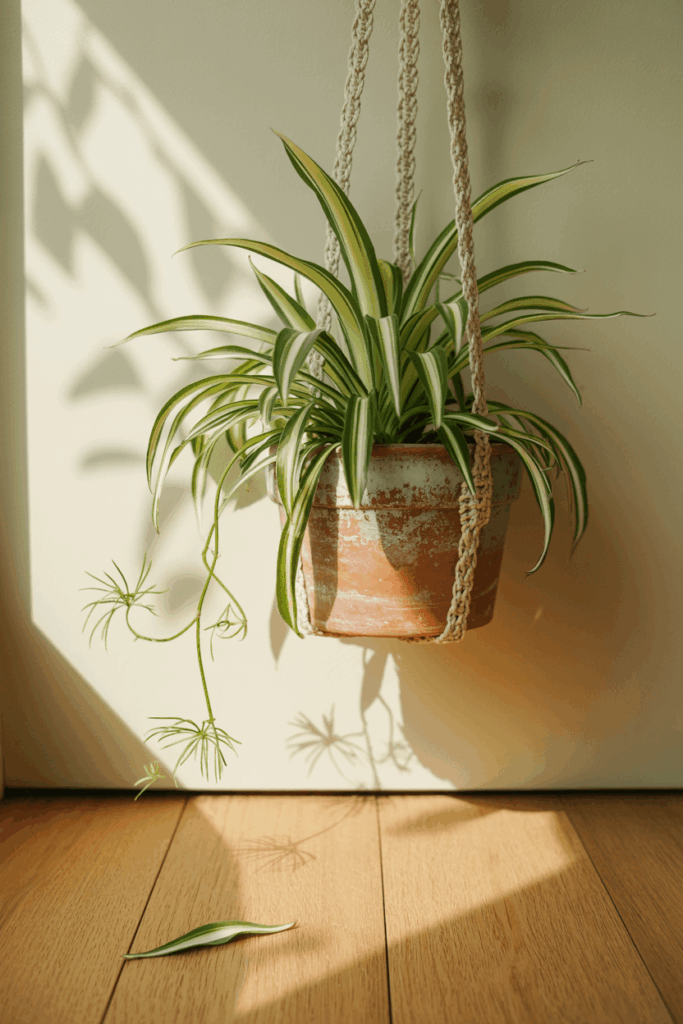
The gateway pet-safe plant. Arching variegated leaves, baby plantlets dangling on stems, almost impossible to kill.
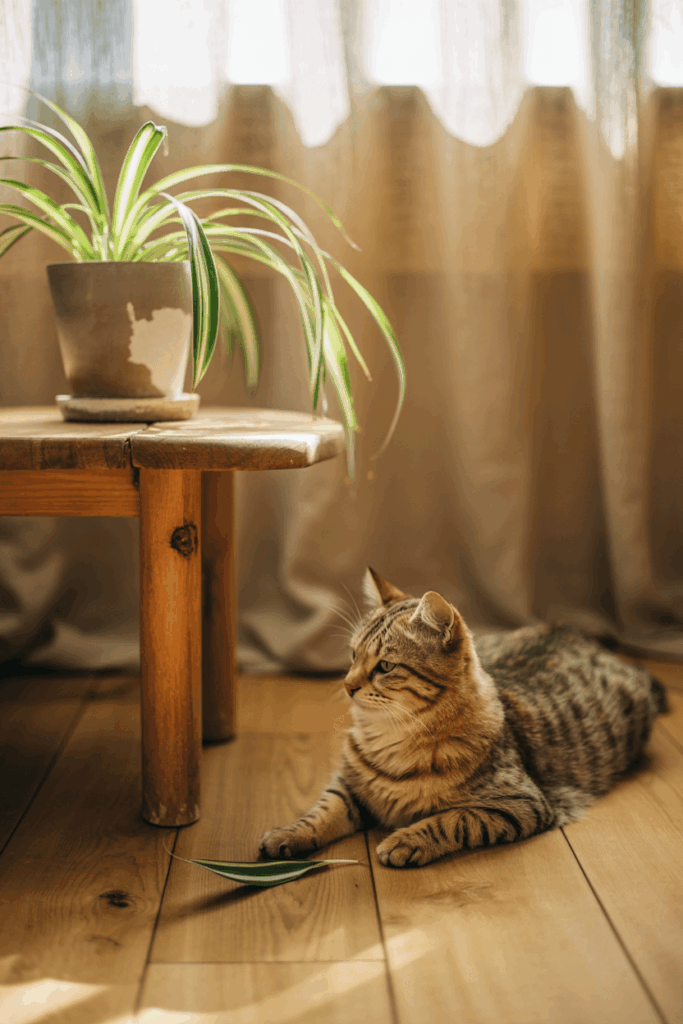
Cats love spider plants. They have a mild attractant effect similar to catnip, which is why your cat will flop next to it and chew. ASPCA confirms it’s non-toxic, though heavy chewing can still cause vomiting from sheer volume.
Light: Bright indirect; tolerates medium light.
Water: When the top inch of soil is dry.
Difficulty: 1/3 (easy).
Pet behavior: Cats will chew. Hang it.
2. Boston Fern (Nephrolepis exaltata)
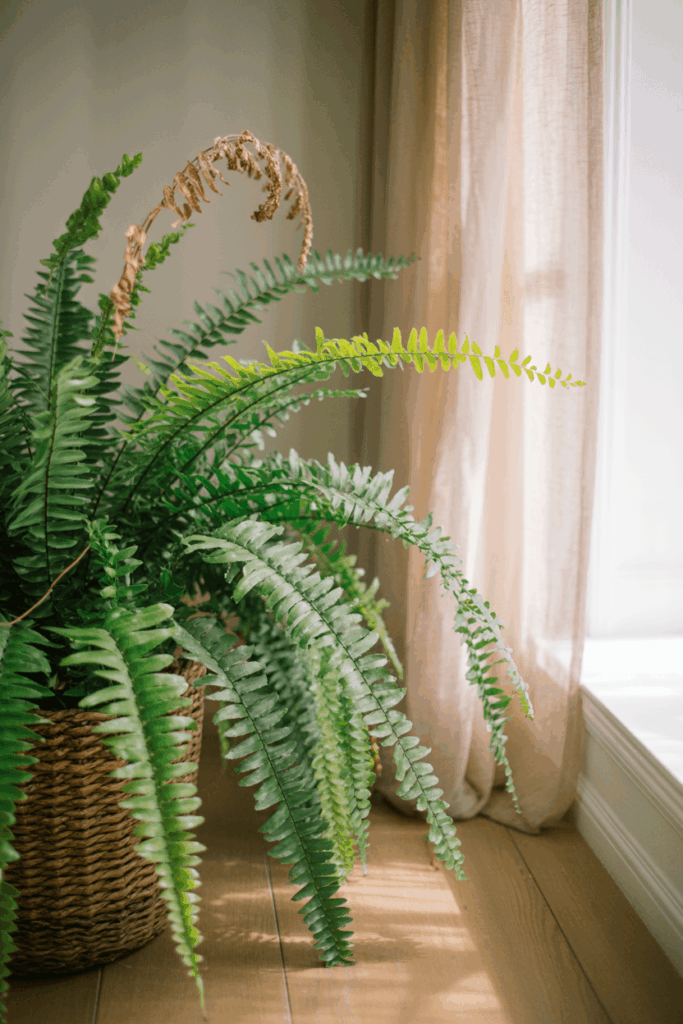
The classic Victorian parlor fern. Lacy fronds that arch outward, dramatic in a hanging basket.
Confirmed non-toxic by ASPCA and Penn State Extension. The catch is humidity. Boston ferns drop fronds fast in dry indoor air, so if your apartment runs heat in winter, plan to mist or run a small humidifier nearby.
Light: Bright indirect.
Water: Keep soil consistently moist, not soggy.
Difficulty: 2/3 (moderate; needs humidity).
Pet behavior: Dogs may dig the loose soil; place out of reach.
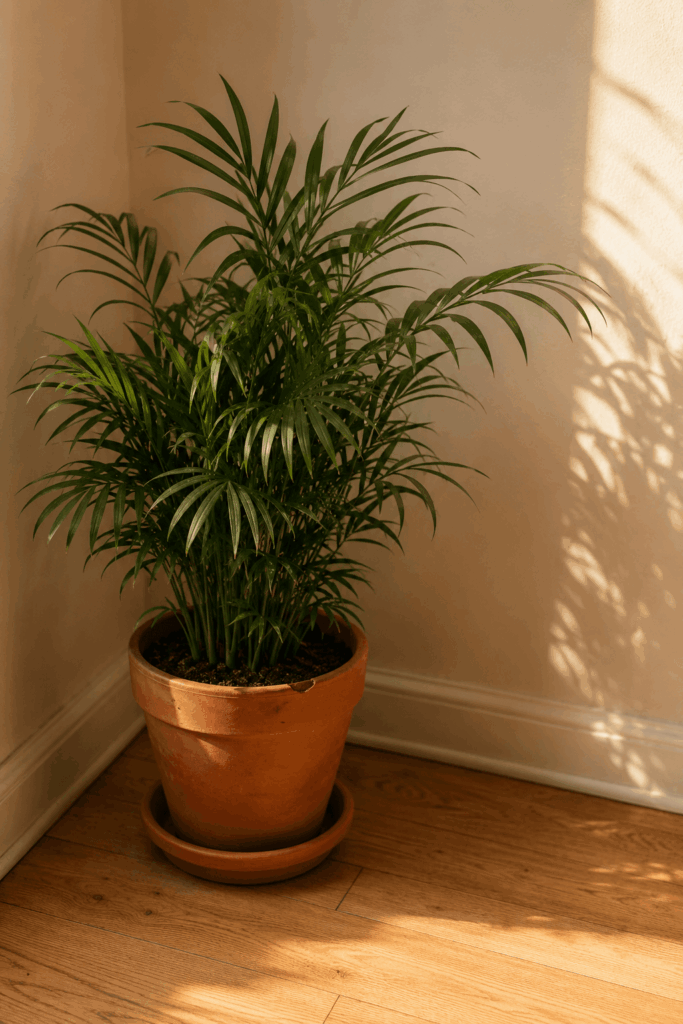
3. Parlor Palm (Chamaedorea elegans)
The safest palm you can put in a pet home. Slow-growing, tolerates lower light than most palms, doesn’t outgrow an apartment.
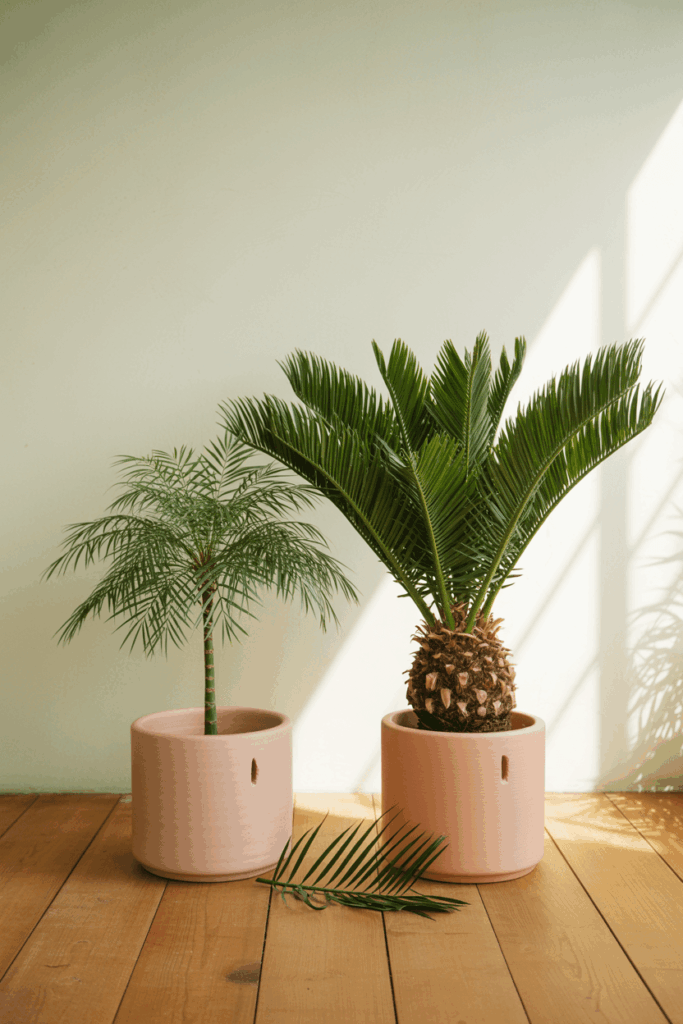
This one matters because the toxic sago palm (Cycas revoluta) is one of the most dangerous plants for dogs, and it’s often sold without clear labeling next to harmless palms. The parlor palm has thin feathery fronds; the sago has stiff, sharp, dark green leaves and a thick scaly trunk. They look nothing alike once you know.
Light: Medium to bright indirect; tolerates low light.
Water: When top 1–2 inches of soil dry out.
Difficulty: 1/3 (easy).
Pet behavior: Generally ignored; cats may bat at fronds.
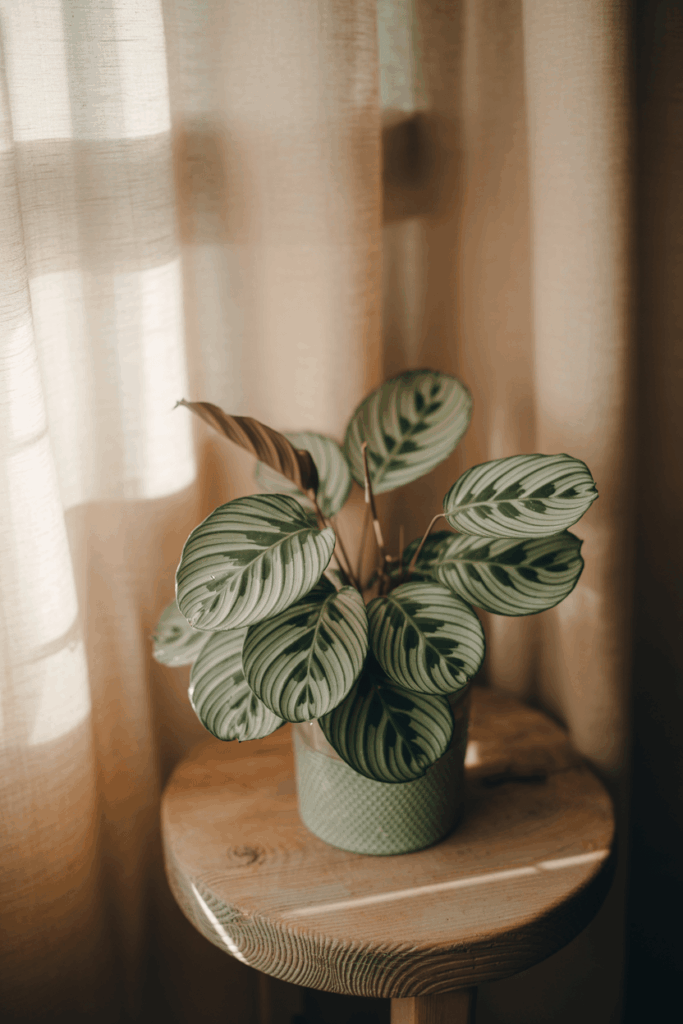
4. Calathea / Prayer Plant (Calathea spp.)
The plant Pinterest can’t get enough of. Patterned leaves (pinstripes, polka dots, peacock-feather greens) that fold up at night, which is the “prayer” name.
Non-toxic, but fussy. Calatheas hate tap water (the chlorine and minerals brown the leaf edges), need consistent humidity, and react to underwatering by curling dramatically. Beginner-proof? Borderline.
Light: Medium indirect; no direct sun.
Water: Filtered or rainwater; keep evenly moist.
Difficulty: 2/3 (moderate).
Pet behavior: Mostly ignored; soft leaves don’t tempt chewers.
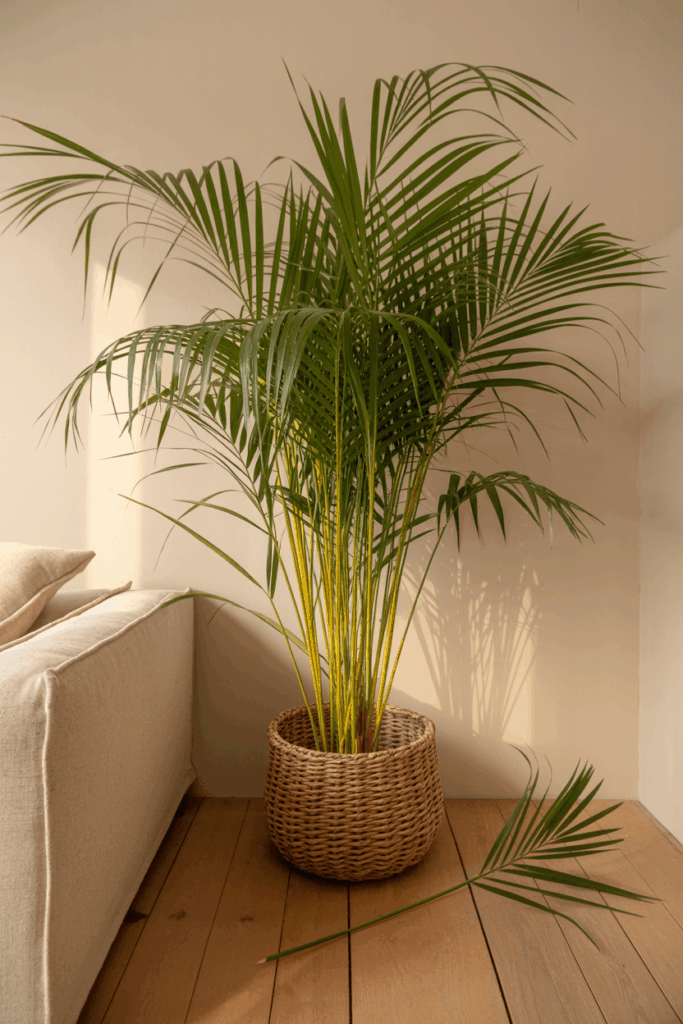
5. Areca Palm (Dypsis lutescens)
The big living-room statement palm. Multiple golden-green stems clustered in one pot, fronds that can reach six feet over a few years.
ASPCA confirms non-toxic to both cats and dogs. Areca palms also rank among the better air-cleaning houseplants in NASA’s Clean Air Study, though the real-apartment effect is modest. Mostly you grow it because it makes a corner feel alive.
Light: Bright indirect; some morning direct sun is okay.
Water: When top inch dries; sensitive to overwatering.
Difficulty: 2/3 (moderate).
Pet behavior: Heavy pot deters dogs; tall fronds out of cat reach.
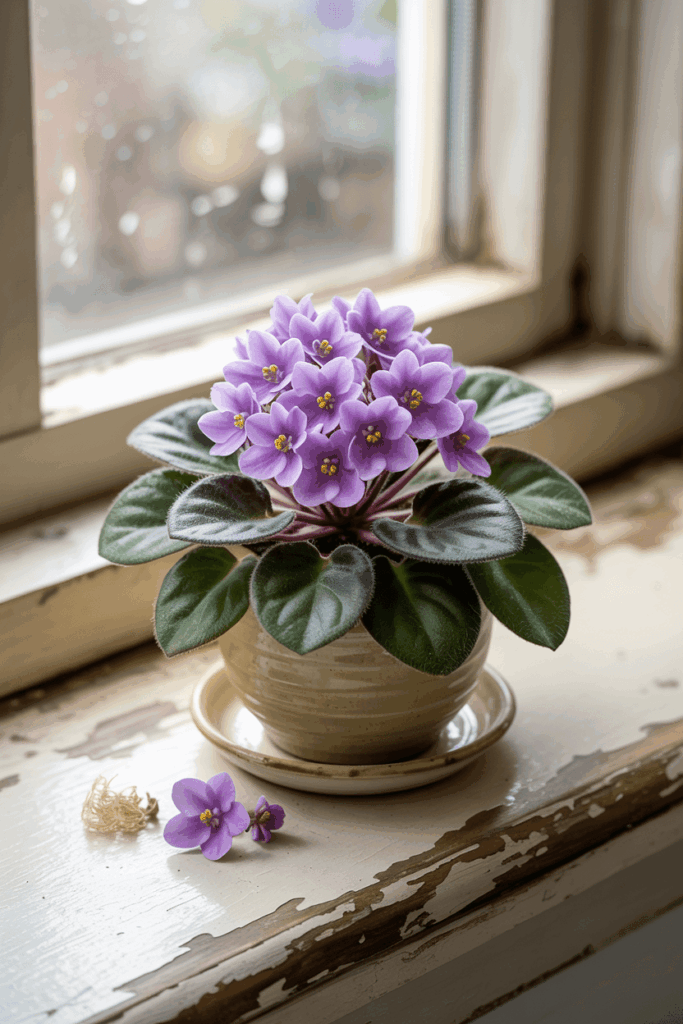
6. African Violet (Saintpaulia)
The flowering option on this list. Compact rosette of fuzzy green leaves with clusters of purple, pink, or white blooms that flower repeatedly through the year.
Non-toxic to both cats and dogs per ASPCA. The trick to keeping them alive is the bottom-water method: set the pot in a saucer of water for 15 minutes, then drain. Wet leaves spot and rot.
Light: Bright indirect; an east window is ideal.
Water: Bottom-water once a week.
Difficulty: 2/3 (technique-specific).
Pet behavior: Small, tabletop placement; mostly ignored.
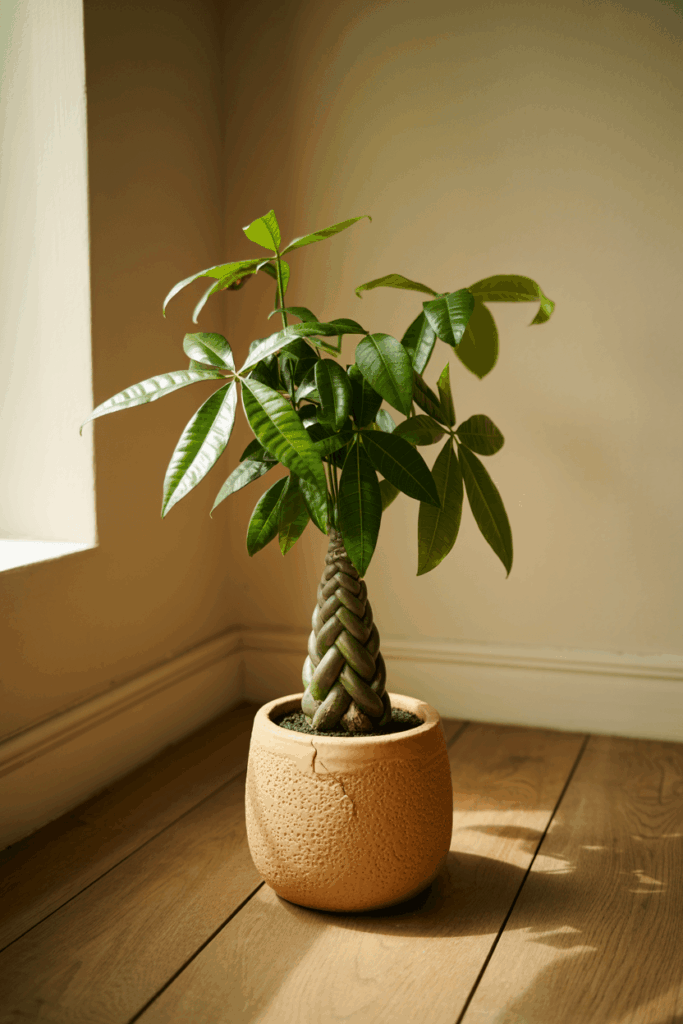
7. Money Tree (Pachira aquatica)
The braided-trunk plant you’ve seen at every office reception desk. Five-fingered leaves, glossy and palm-like, on a trunk that’s literally several saplings woven together when the plant was young.
ASPCA lists Pachira aquatica as non-toxic. Note: this is different from the toxic “Chinese money plant” or “money plant” that sometimes refers to other species. The braided-trunk Pachira is the safe one.
Light: Bright indirect; tolerates medium.
Water: Every 1–2 weeks; let top inch dry.
Difficulty: 1/3 (easy).
Pet behavior: Tall and woody; rarely chewed.
8. Friendship Plant (Pilea involucrata)
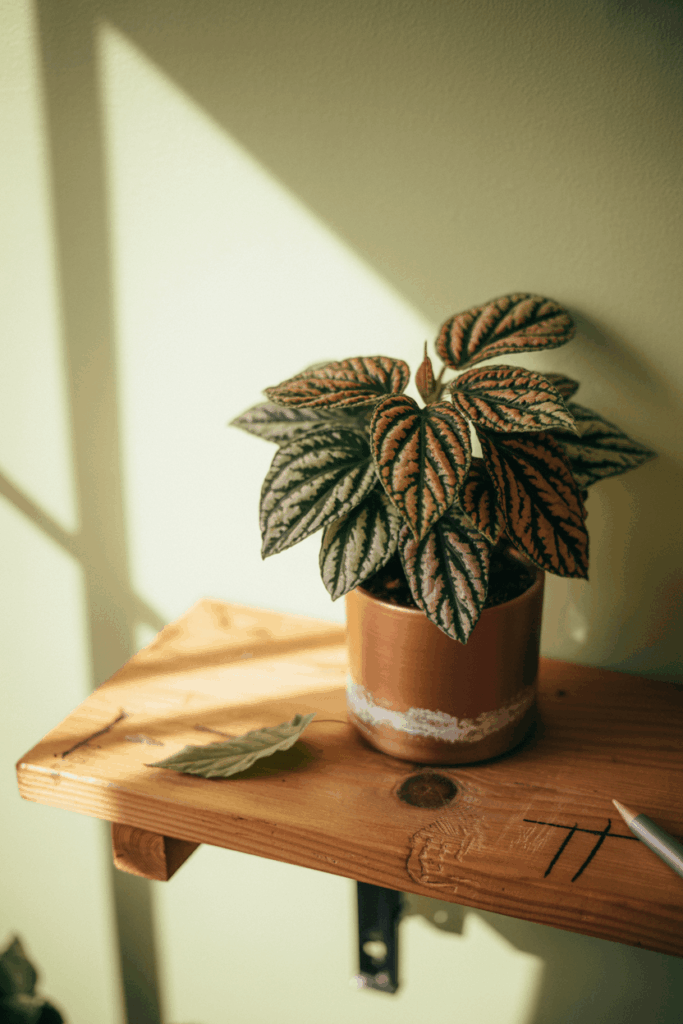
Smaller cousin of the more famous Chinese money plant (Pilea peperomioides, also non-toxic, often confused). Friendship plant has crinkled, deeply textured leaves with bronze and silver tones.
Stays compact, which makes it perfect for shelves where bigger plants would overwhelm. Easy to propagate from cuttings, which is where the “friendship” name comes from: passed between gardeners.
Light: Medium to bright indirect.
Water: Keep evenly moist; doesn’t like to dry out.
Difficulty: 1/3 (easy).
Pet behavior: Small footprint; place high to avoid swatters.
9. Christmas Cactus (Schlumbergera)
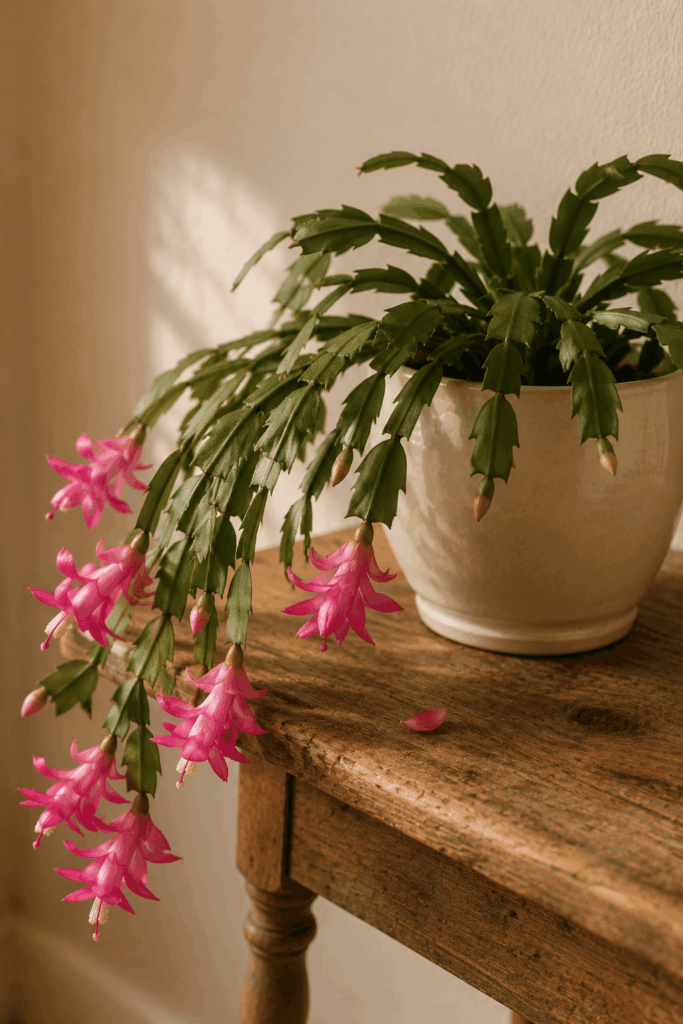
Not a true cactus. No spines, no desert behavior. Flat segmented leaves that drape over the pot edge, with vivid pink, red, or white blooms appearing in late autumn through winter.
ASPCA confirms non-toxic. Mild fiber irritation is possible if a pet eats a lot, but no toxicity concerns. The hardest part is getting it to bloom: it needs cooler nights and shorter daylight in autumn to set buds.
Light: Bright indirect; some morning sun.
Water: When top inch is dry; less in winter.
Difficulty: 1/3 (easy to keep, harder to bloom).
Pet behavior: Trailing habit; keep on high shelves.
10. Hoya (Hoya carnosa)
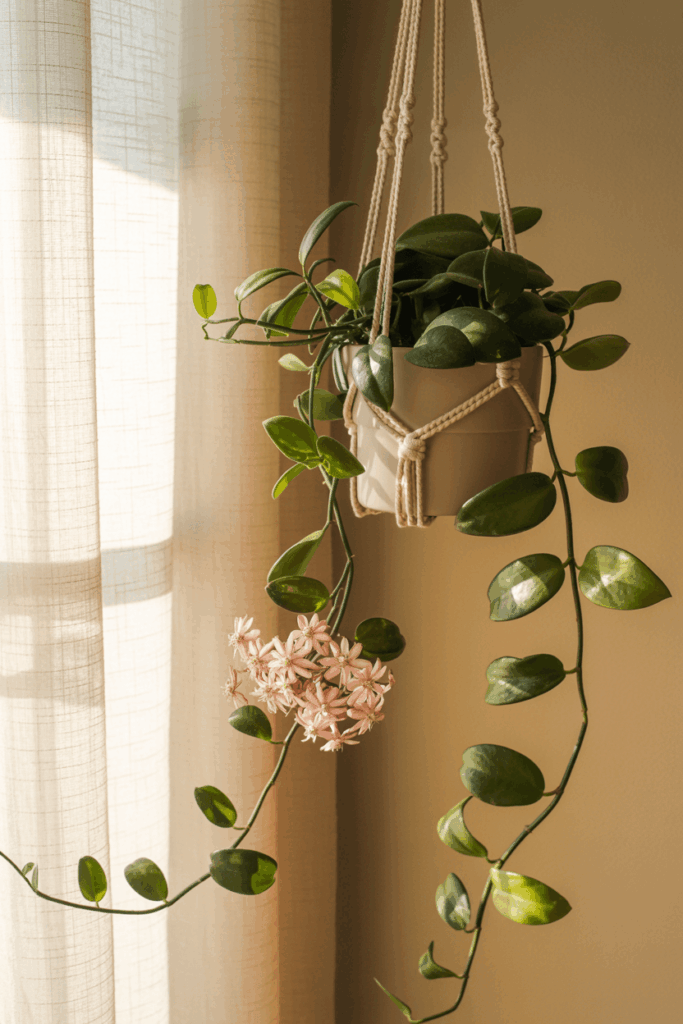
Thick waxy leaves on long vining stems, with star-shaped flower clusters that smell like chocolate when they bloom. Slow-growing, almost impossible to overwater into death.
Hoyas are particularly good for pet households because they look beautiful in hanging planters, naturally out of reach. The wax coating on the leaves also makes them unappealing to chew.
Light: Bright indirect; some direct sun helps blooming.
Water: Let soil dry between waterings.
Difficulty: 1/3 (easy).
Pet behavior: Hung high; rarely an issue.
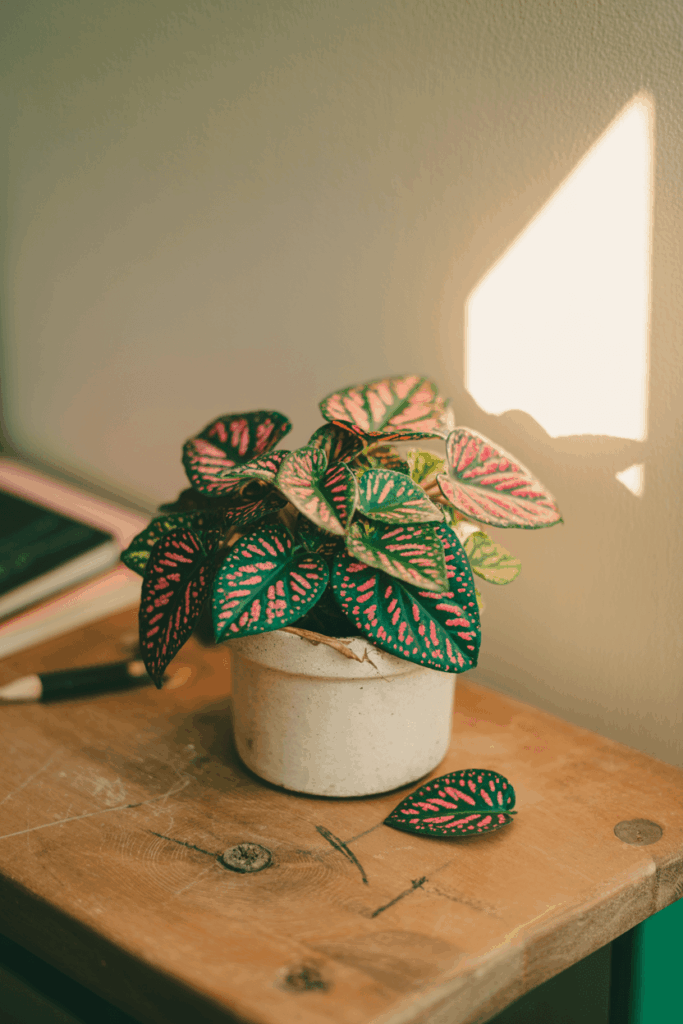
11. Polka Dot Plant (Hypoestes phyllostachya)
The plant you buy for color. Leaves splashed with pink, red, or white spots over a green base, looking like someone got creative with paint.
Non-toxic per ASPCA. Polka dot plants are also short-lived. They tend to get leggy and stop performing after a year or two, which means they’re forgiving if you’re still learning. Low-stakes choice for testing your watering instincts.
Light: Bright indirect; brighter light deepens color.
Water: Keep evenly moist.
Difficulty: 1/3 (easy; expect replacement after 1–2 years).
Pet behavior: Small and shelf-friendly.
12. Cast Iron Plant (Aspidistra elatior)
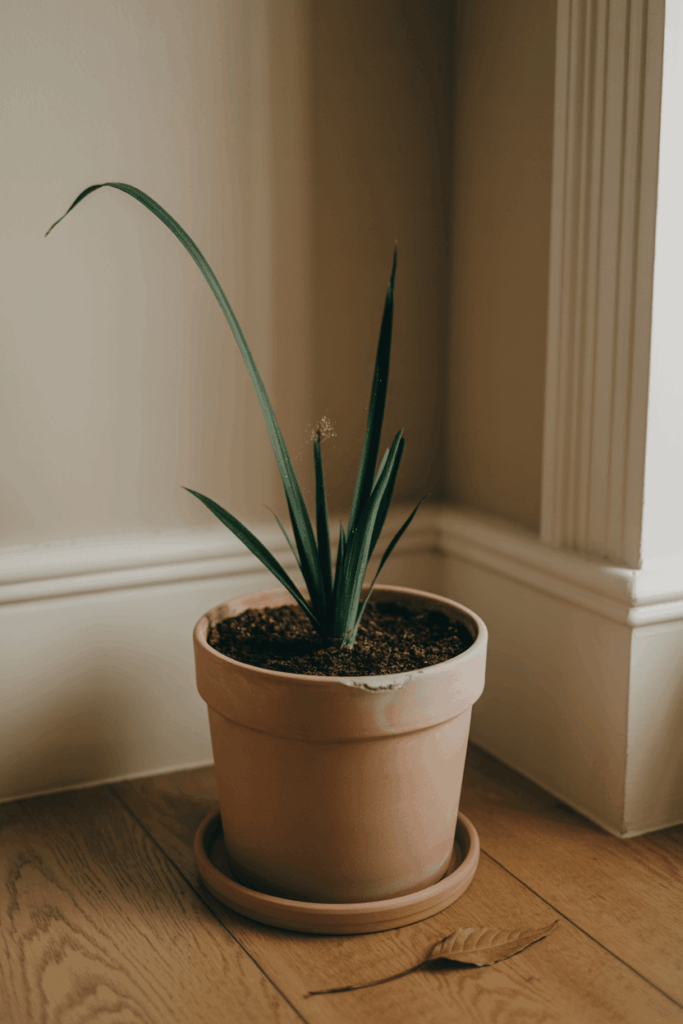
The dim-apartment champion. Long strap-like dark green leaves coming straight up from the soil, growing slowly but tolerating conditions that kill almost everything else: low light, drafts, neglect.
If you have a north-facing apartment with one weak window: this is the plant. ASPCA confirms non-toxic. Slow growth means you buy it at the size you want; it won’t catch up quickly.
Light: Low to medium indirect; truly low-light tolerant.
Water: When top 2 inches dry; very forgiving.
Difficulty: 1/3 (extremely easy).
Pet behavior: Sturdy leaves resist most chewing.
Toxic Look-Alikes to Watch For
This is the section most pet-safe lists skip. Walking into a nursery, you’ll see plants tagged with common names that overlap dangerously.
Sago palm vs. parlor palm: The most dangerous mix-up. Sago palm (Cycas revoluta) causes acute liver failure in dogs, and even one seed can be fatal. It has a thick, scaly trunk and stiff, sharp dark fronds. Parlor palm has thin feathery fronds and a slim green stem. Always check the botanical name on the tag, not just “palm.”
Asparagus fern vs. Boston fern: Asparagus fern (Asparagus aethiopicus) isn’t a true fern, and it’s toxic to cats and dogs. Its foliage is needle-like and feathery; Boston fern has flat, lacy fronds that arch downward. If the leaves look like soft pine needles, it’s probably the asparagus.
Peace lily vs. Chinese evergreen: Peace lily (Spathiphyllum) contains insoluble calcium oxalates that cause severe mouth irritation and drooling. Chinese evergreen (Aglaonema) is also toxic, despite being misidentified as safe in older lists. Both should stay out of pet homes; neither is on this list for that reason.
Pothos vs. hoya: Pothos (Epipremnum) is the popular trailing vine that’s toxic to both cats and dogs. Hoya looks similar at a glance with vining stems and oval leaves, but hoya leaves are thicker and waxier. If the leaves feel like soft paper, it’s pothos. If they feel like polished plastic, it’s hoya.
Aloe vs. haworthia: Aloe vera is mildly toxic to cats and dogs. Haworthia (often sold as “zebra plant”) looks similar — small succulent rosette with banded leaves — but is non-toxic. Haworthia leaves are smaller, darker green, with white horizontal stripes.
The pattern: when in doubt, photograph the plant tag with the botanical name and check it against ASPCA’s database before checkout.
Placement: Plant-Proofing a Pet Apartment
Even non-toxic plants are better off out of reach. A safe plant chewed in volume can still cause vomiting, and a dog digging soil for fun creates a different kind of problem.
Cats and dogs need different defenses.
For cats: Hanging planters, ceiling hooks, and tall shelves are the answer. Cats jump, but they prefer landings. Plants on narrow ledges or hung from ceiling brackets are usually left alone. Macramé hangers work well for vining plants like hoya. Avoid windowsills if your cat patrols them.
For dogs: The problem is digging, not jumping. Cover the topsoil with river stones or a layer of sphagnum moss to discourage paws. Heavy pots on the floor are fine if the soil is protected. Smaller plants belong on side tables or shelves above shoulder height.
For both: Avoid placing plants near food bowls or sleeping spots. Pets will investigate by mouth. A plant stand in a corner the pet doesn’t normally use is the safest default. NC State Extension recommends keeping new plants in a separate room for the first few days while you watch how your pet reacts to them.
Quick Reference: My Pick for Each Situation
- Best for low light: Cast iron plant.
- Best for cat-chewers: Spider plant (cats love it; it’s safe).
- Best for dog households: Money tree (heavy, hard to knock over).
- Best flowering pick: African violet.
- Best statement plant: Areca palm.
FAQ
Are spider plants really safe for cats, even though they chew on them?
Yes, spider plants are confirmed non-toxic by the ASPCA for both cats and dogs. They contain a mild compound similar to catnip, which is why cats are drawn to chew them. The only risk is vomiting from eating large amounts, but no organ damage or poisoning will occur.
What’s the most dangerous houseplant for dogs?
Sago palm (Cycas revoluta) tops the list. Even one seed can cause acute liver failure in dogs, and it’s frequently sold next to harmless palms with vague “palm” labels. Always check the botanical name on the plant tag, not just the common name, before bringing any palm home.
Why do pet-safe plant lists contradict each other?
Most blog roundups copy from each other without checking the ASPCA database or university extension sources. Botanical names get blurred (Boston fern vs. asparagus fern), and “non-toxic” is misunderstood — it means no organ damage, not that pets won’t vomit after eating it. Always verify against ASPCA directly.
Is pothos safe for cats and dogs?
No. Pothos (Epipremnum aureum) is toxic to both cats and dogs and contains insoluble calcium oxalates that cause mouth irritation, drooling, and vomiting. It’s often confused with hoya, which is safe. If the trailing leaves feel papery and soft, it’s pothos. Waxy and thick means hoya.
What’s the easiest pet-safe plant for a low-light apartment?
Cast iron plant (Aspidistra elatior) wins for low-light tolerance. It survives north-facing windows, drafts, and inconsistent watering that would kill most plants. Spider plants and parlor palms are close runners-up, both forgiving in medium-light apartments and confirmed non-toxic to cats and dogs by the ASPCA.
Should I still keep non-toxic plants out of my pet’s reach?
Yes. Non-toxic only means no poisoning — pets can still vomit from eating large quantities, and dogs may dig the soil. Hanging planters work for cats; covered topsoil with river stones discourages digging dogs. Keep new plants in a separate room for the first few days to observe pet behavior.
What Actually Matters
Building a list of safe houseplants for cats and dogs comes down to one thing: verify the botanical name. If you remember nothing else, remember the botanical name. ‘Palm’ can mean parlor palm or sago palm, and one of those will kill your dog. Photograph the tag, check the ASPCA database, then buy.
Start with one plant, not five. A spider plant or cast iron plant in a corner is enough to learn from. Watch how your pet reacts to it for a week before adding another.
Pet-safe plant lists will keep contradicting each other, because the underlying sources don’t always agree. The strategy isn’t to find the perfect list. It’s to learn which sources you trust and verify everything else against them. ASPCA and university extensions are the floor.
The hardest part of plant-proofing an apartment isn’t picking the right plants. It’s resisting the urge to fill the room before you know what survives.