
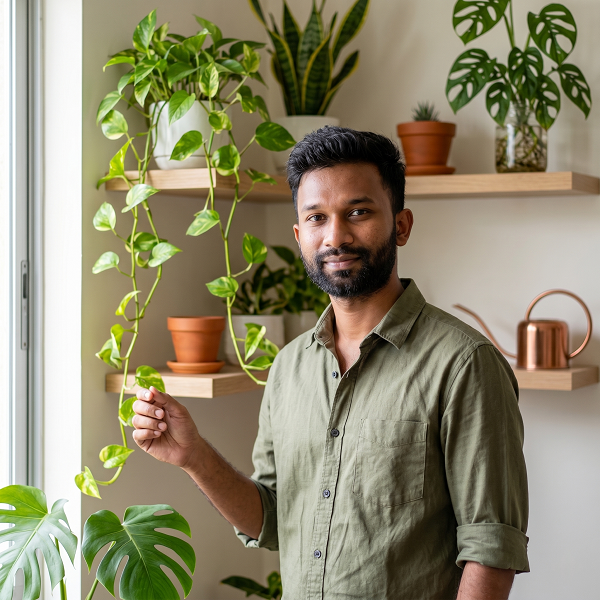
Humidity is the easy part of a bathroom. The hard part is light, and most lists of bathroom plants that thrive in humidity pretend that’s not true.
I’ve spent months curating the picks that actually deliver, and the same pattern keeps showing up in every popular roundup. Gorgeous photos of leafy bathrooms with huge windows, paired with care advice that quietly skips the question of what happens when your bathroom barely sees daylight.
This guide does the opposite. Every plant is sorted by the one variable that actually decides whether it lives: light. Each pick gets a pet-safety tag, a placement suggestion, and one beginner mistake to skip. Bright bathroom, frosted window, no window at all — there’s an honest answer for each.
TL;DR
- 15 Bathroom Plants That Thrive in Humidity, sorted by the only thing that actually decides survival: light
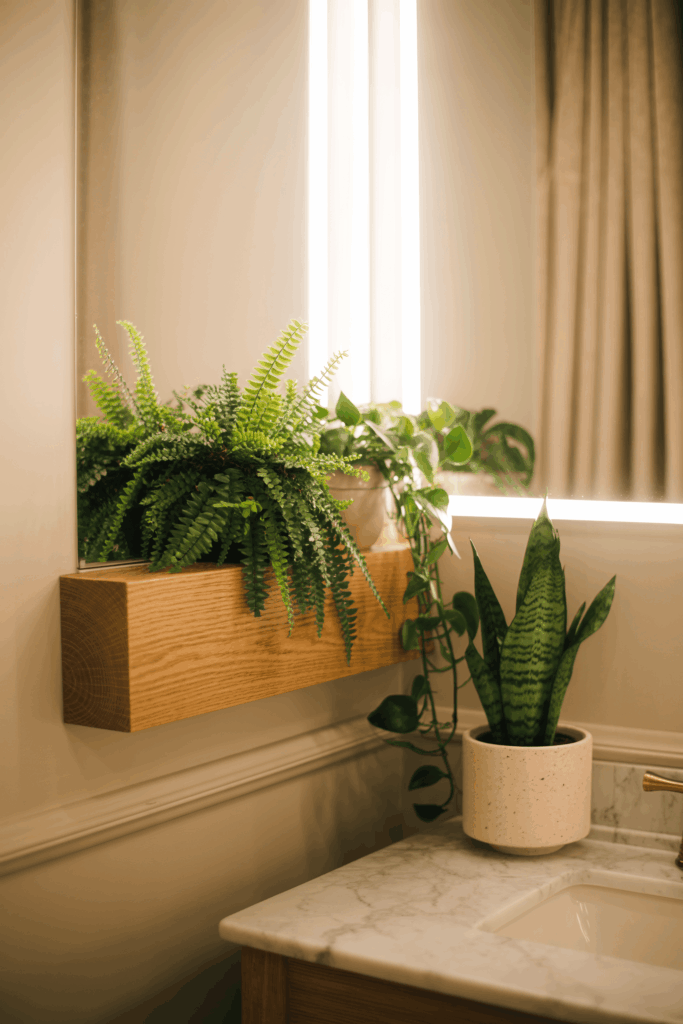
- Bright bathrooms (real window): Boston fern, bird’s nest fern, orchid, calathea, pothos
- Low-light bathrooms (small or frosted window): pothos, philodendron, snake plant, spider plant, lucky bamboo, peace lily
- Windowless bathrooms: ZZ plant, cast iron, aglaonema, air plants (and even these need help)
- Every pick tagged inline for cats and dogs using ASPCA data
Why Bathrooms Are Both Great and Tricky for Plants
Humidity is a real asset. Most popular houseplants come from tropical understories where the air sits around 60-80% relative humidity, and our heated homes usually hover closer to 30%. A bathroom regularly pushes past 50%, especially after a shower.
Penn State Extension notes that higher humidity reduces transpiration stress and helps tropical foliage stay turgid and healthy. So far, so good.
The trouble is what else a bathroom is.
It’s often the smallest, darkest room in the home. The door stays shut most of the day. Lights flick on for ten minutes at a time. Temperatures swing every time someone showers. Overnight cold spells happen on exterior walls.
If your bathroom has no window and you only use it twice a day with the door closed, your plant lives in a dark closet 23 hours a day. Humidity alone won’t save it.
Iowa State Extension is blunt about this point: no houseplant truly grows in zero light. Some merely survive longer than others.
The honest takeaway: humidity is a bonus. Light is the dealbreaker.
Before You Pick: Read Your Bathroom Honestly
Three quick questions decide what will actually work.
The Window Test
Does your bathroom have a window? If yes, how big, which direction does it face, and is the glass clear or frosted?
A clear south or west window can support real bright-light plants. A small frosted window cuts usable light by roughly half. North-facing windows give cool, gentle light all day, which is fine for low-light tropicals but not enough for orchids.
The Ventilation Check
A bathroom with a working exhaust fan stays more comfortable for plants. Stagnant air invites mold on soil surfaces when humidity stays high and light stays low. Cracking the door for a few hours a day helps without killing the humidity advantage.
The Pet Reality Check
Cats jump on counters. They chew dangling vines. Dogs nose around floor pots. Run anything you’re considering past the ASPCA toxic plant database if you live with curious animals. I’ve flagged pet safety on every pick below, but double-check for your specific species — guinea pigs, rabbits, and birds react to different compounds than cats and dogs do.
If your bathroom flunks the window test entirely, you have three honest options: keep a grow bulb in the fixture for at least eight hours a day, rotate plants in and out of a brighter room weekly, or stick to the windowless tier below.
The honest takeaway: most beginners overestimate their bathroom light by a lot.
Best Plants for Bright Bathrooms
These work in a bathroom with a clear window getting indirect daylight most of the day.
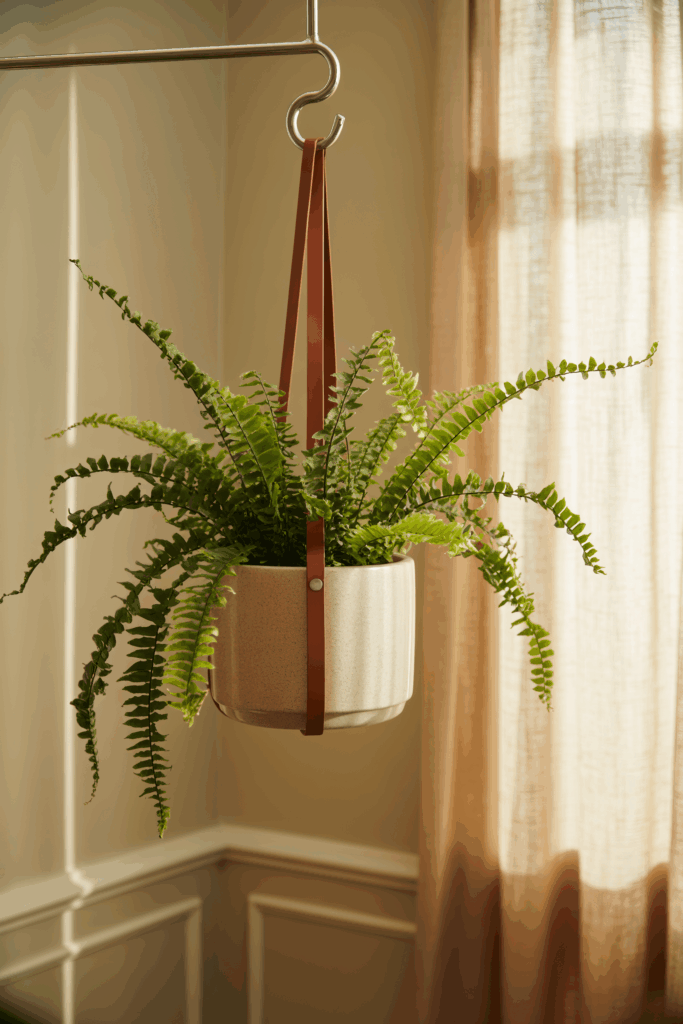
1. Boston Fern (Nephrolepis exaltata)
The classic bathroom fern, and the one most people picture when they imagine a steamy plant-filled room. Soft arching fronds that respond visibly to humidity. They crisp up fast in dry rooms.
Light: Bright indirect. A few feet from a window is ideal.
Water: Keep consistently moist, never soggy. Humidity helps but doesn’t replace watering.
Pets: Safe for cats and dogs (ASPCA non-toxic).
Placement: Hanging from the ceiling or a high shelf where fronds can drape.
One mistake to skip: don’t let it sit in standing water. NC State Extension recommends watering when the top inch of soil feels dry to the touch, even in a humid room.
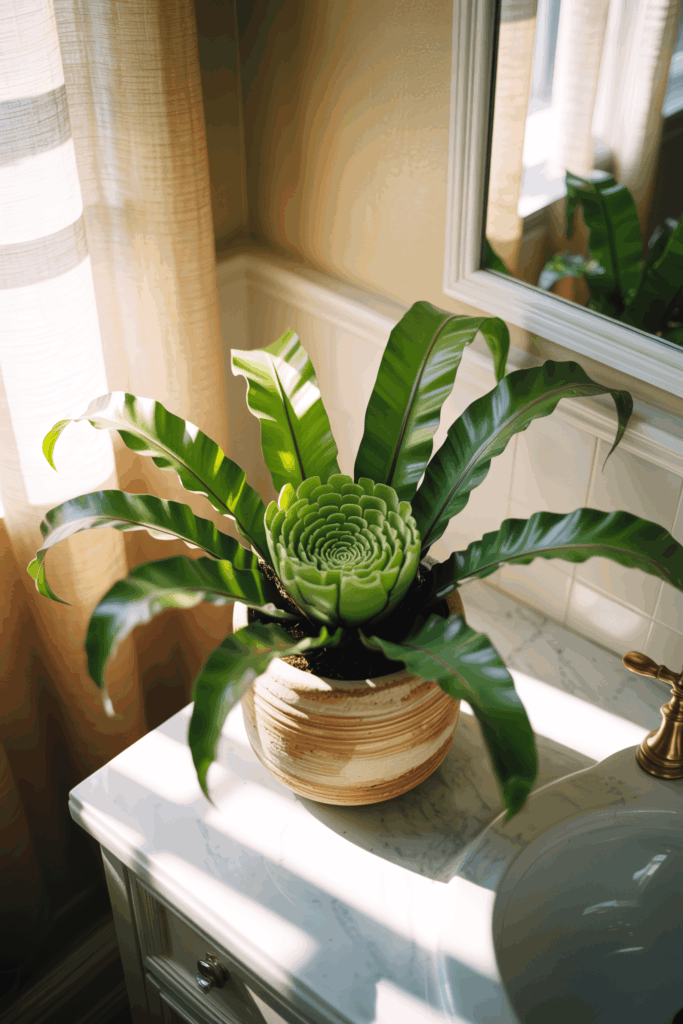
2. Bird’s Nest Fern (Asplenium nidus)
The fern for people who say they don’t like ferns. Glossy, undivided fronds that spiral out from a central rosette. Less fussy than Boston fern and visually distinctive.
Light: Medium to bright indirect. Tolerates lower light than most ferns.
Water: Water around the edges of the rosette, not into the center crown. The crown rots easily if pooled.
Pets: Safe for cats and dogs (ASPCA non-toxic).
Placement: Vanity countertop or a wide shelf where the rosette can spread.
One mistake to skip: never water into the central crown. Most bird’s nest fern deaths are crown rot, not drought.
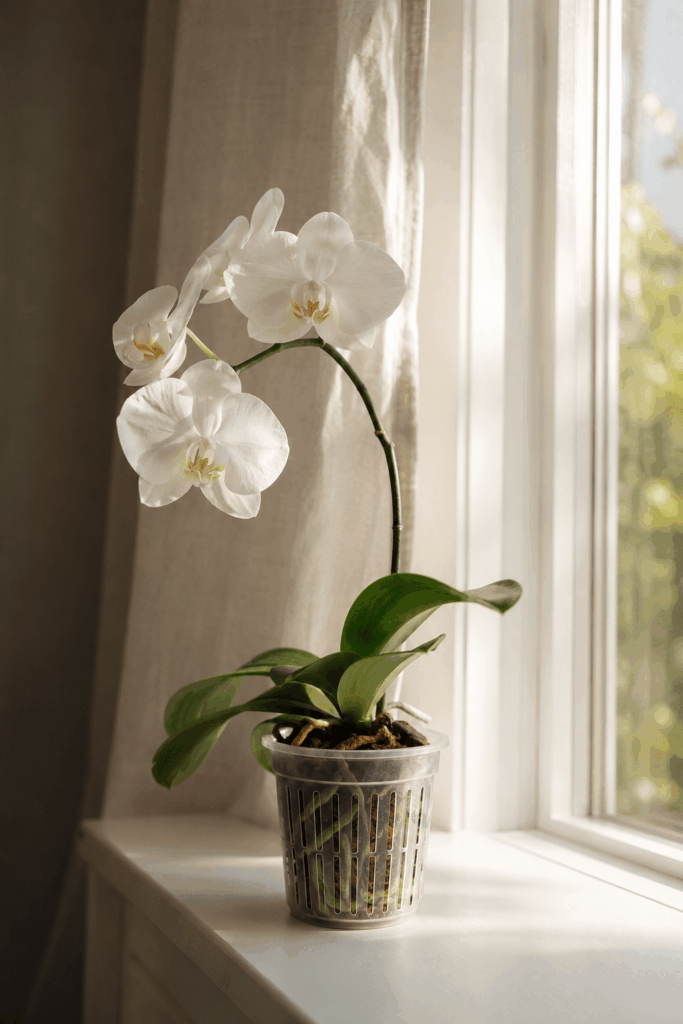
3. Orchid (Phalaenopsis)
Surprising one for beginners, but bathrooms are actually closer to an orchid’s natural conditions than most living rooms. The humidity, the indirect bright light from a window, the consistent warmth — Phalaenopsis tolerates all of it.
Light: Bright indirect. East or filtered south window is ideal. Direct sun burns leaves.
Water: Once a week, by soaking the bark in water for fifteen minutes, then draining fully.
Pets: Safe for cats and dogs (ASPCA non-toxic).
Placement: Vanity or windowsill where the blooms can be seen and the roots get airflow.
One mistake to skip: don’t pot Phalaenopsis in regular soil. They’re epiphytes. Use orchid bark mix, available at most big-box garden centers.
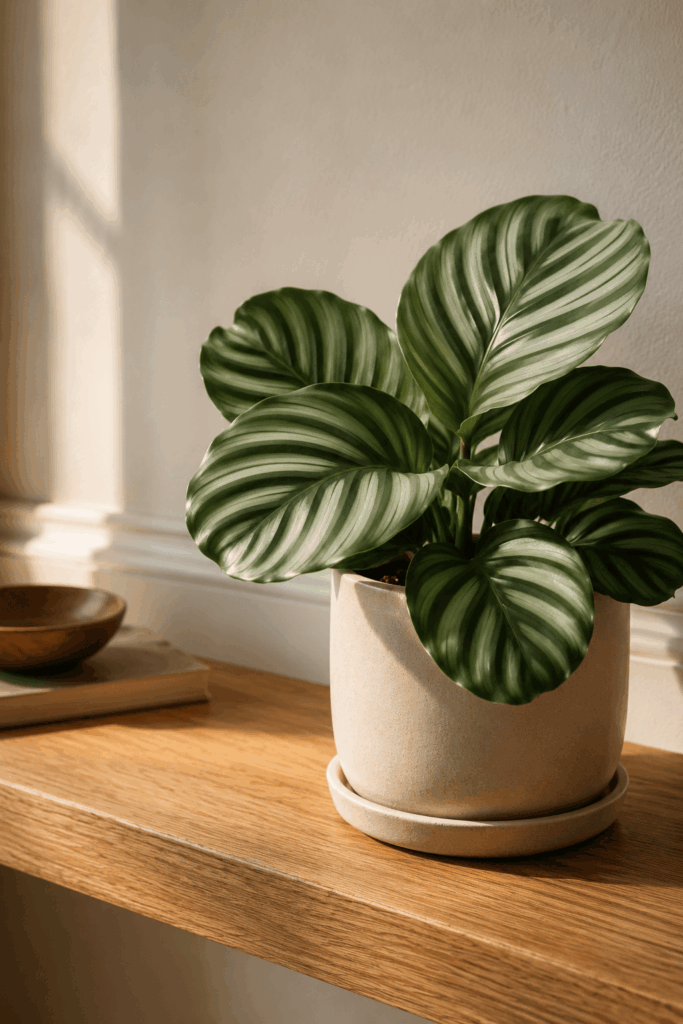
4. Calathea (Prayer Plant family)
The patterned-leaf showpieces. Calatheas fold their leaves up at night and unfurl by day, which is why people call the broader family prayer plants. Stunning in photographs and famously dramatic in dry rooms — the bathroom suits them.
Light: Medium indirect. Direct sun fades the patterns.
Water: Keep evenly moist. Use filtered or distilled water if you can. Calatheas are sensitive to tap water minerals.
Pets: Safe for cats and dogs (ASPCA non-toxic).
Placement: Vanity, low shelf, or floor pot away from heating vents.
One mistake to skip: don’t water with hard tap water. Brown leaf edges are usually a tap water complaint.
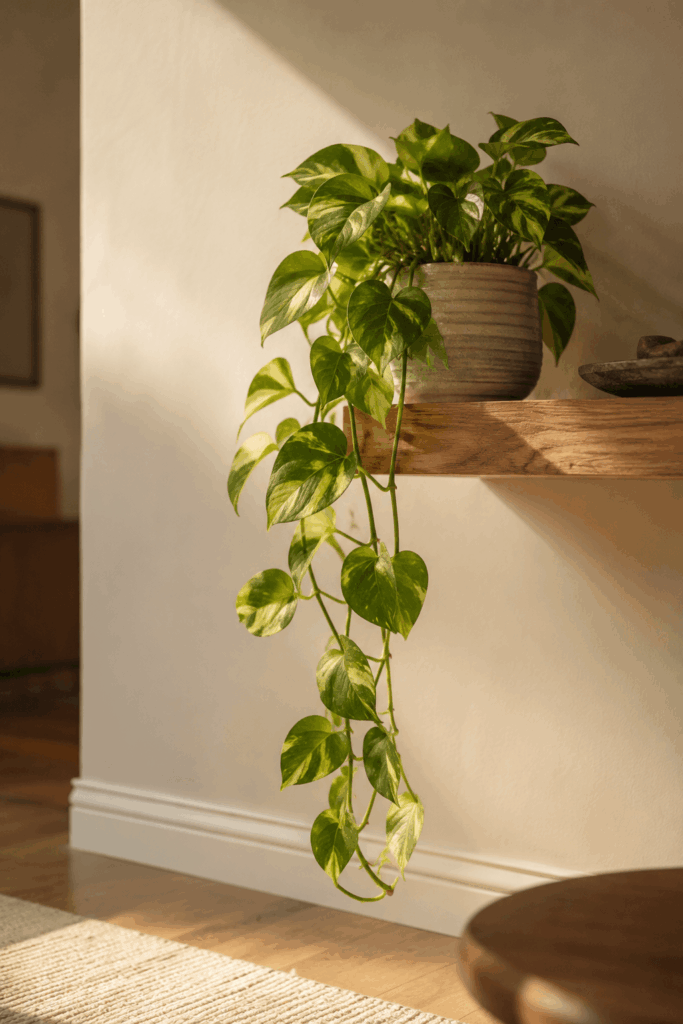
5. Pothos (Epipremnum aureum)
In a bright bathroom, pothos goes from “survives” to “thrives.” Vines grow faster, leaves get bigger, variegation gets richer. The same plant that limps along in a dim bedroom will trail four feet down from a bathroom shelf in a year.
Light: Bright indirect grows the best variegation. Tolerates much lower.
Water: Let the top two inches dry between waterings. Easy to overdo.
Pets: Toxic to cats and dogs (mild but real, per ASPCA). Hang well out of reach.
Placement: High shelf or hanging pot. Vines trail visually and stay away from curious pets.
One mistake to skip: don’t let pothos sit in wet soil. The leaves yellowing means too much water far more often than too little.
Best Plants for Low-Light Bathrooms
Most apartment bathrooms live here. Small frosted window, one window with a curtain, or a window that faces a brick wall ten feet away. This is the tier with the most honest options.
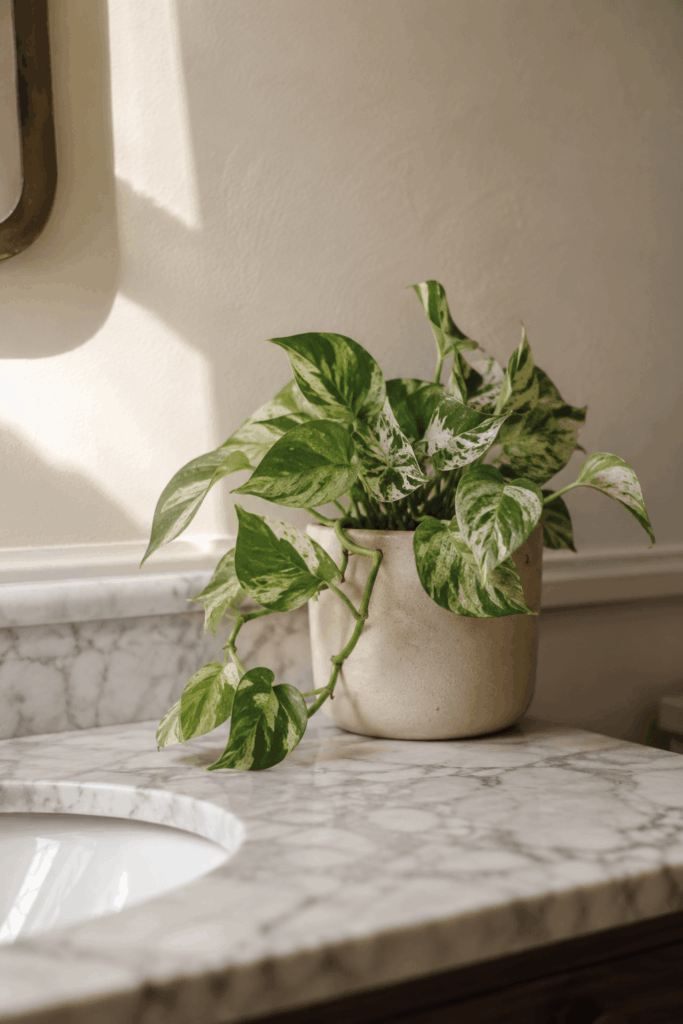
6. Pothos (Marble Queen or Golden)
Yes, pothos shows up twice. It belongs in both tiers because it genuinely handles either. In low light, expect slower growth and slightly less dramatic variegation. Marble Queen tolerates dimness better than Neon or Golden varieties.
Light: Low to bright indirect. Survives surprising dimness.
Water: Every 1-2 weeks. Less in lower light.
Pets: Toxic to cats and dogs (mild). Keep out of reach.
Placement: High shelf or hanging pot above pet height.
One mistake to skip: don’t water on a schedule. Iowa State Extension stresses that watering frequency depends on light, pot, and humidity — not the calendar.
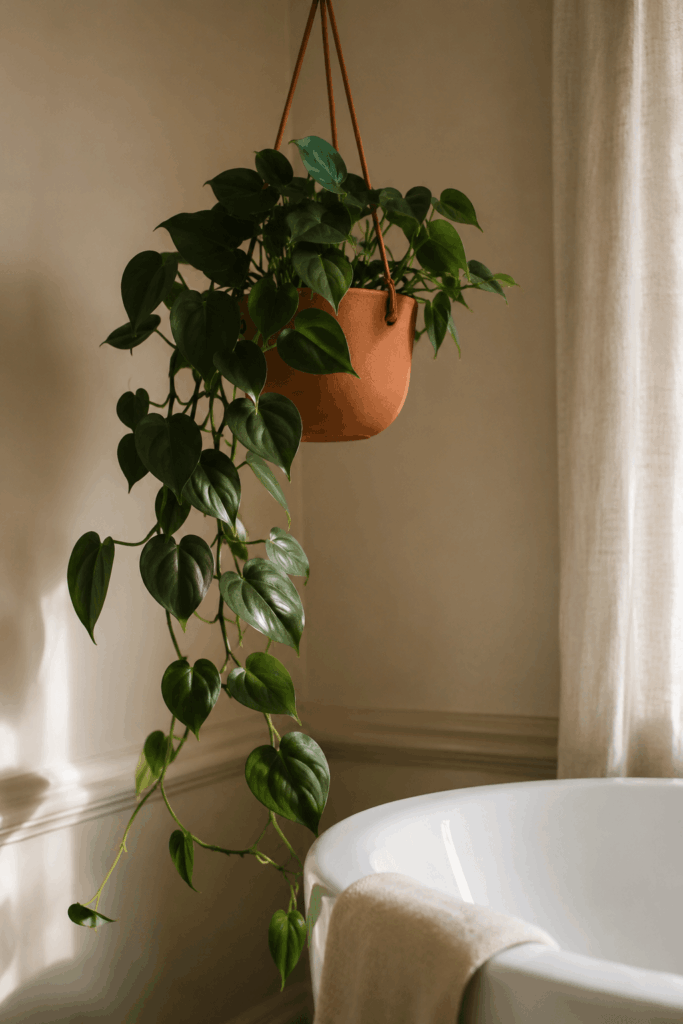
7. Heartleaf Philodendron (Philodendron hederaceum)
Pothos’s quieter cousin. Smaller heart-shaped leaves, softer texture, and more tolerant of genuinely low light. From a few feet away most people can’t tell the two apart, but philodendron tends to keep growing when pothos sulks.
Light: Low to medium indirect. One of the most shade-tolerant trailing plants.
Water: Top inch dry between waterings.
Pets: Toxic to cats and dogs. Hang it.
Placement: Hanging pot or high shelf. The vines look best draping.
One mistake to skip: don’t confuse it with pothos and assume identical care. Philodendron tolerates less light but slightly more consistent moisture.
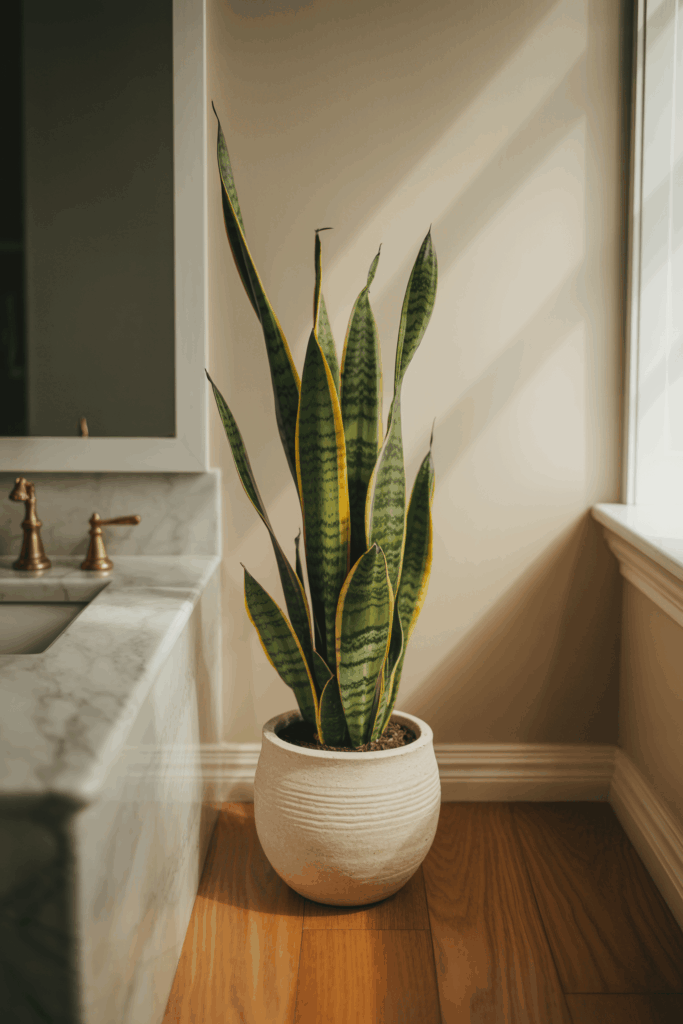
8. Snake Plant (Dracaena trifasciata)
Almost the official houseplant of “I forgot.” Stiff upright leaves, slow growth, no drama. Tolerates bathroom humidity fine despite its desert reputation — what it can’t handle is overwatering.
Light: Anything from low to bright indirect.
Water: Every 2-3 weeks. Let soil dry completely first.
Pets: Toxic to cats and dogs (mild, per ASPCA).
Placement: Floor pot beside the vanity, or a sturdy countertop spot. Stands tall and graphic.
One mistake to skip: don’t water it on a tropical-plant schedule. Most snake plant deaths are root rot from kindness.
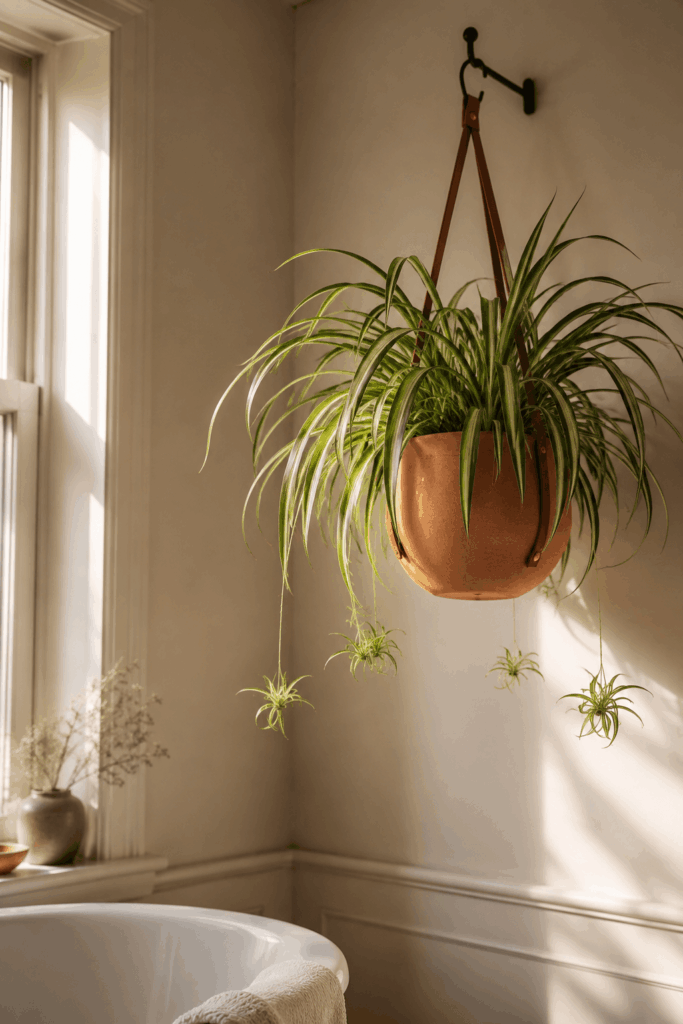
9. Spider Plant (Chlorophytum comosum)
The one with the babies. Arching strap-like leaves and tiny plantlets dangling from runners — they look great in a hanging pot. Spider plants love bathroom humidity and tolerate dim light better than their nursery tag suggests.
Light: Low to bright indirect.
Water: When top inch is dry. They handle inconsistency well.
Pets: Safe for cats and dogs (ASPCA non-toxic). Note: cats often chew the leaves anyway.
Placement: Hanging pot is ideal so the pups can dangle.
One mistake to skip: don’t bother snipping every brown tip. NC State Extension notes that brown tips are usually fluoride or chlorine in tap water, not disease. Switch to filtered water for a month and see if it improves.
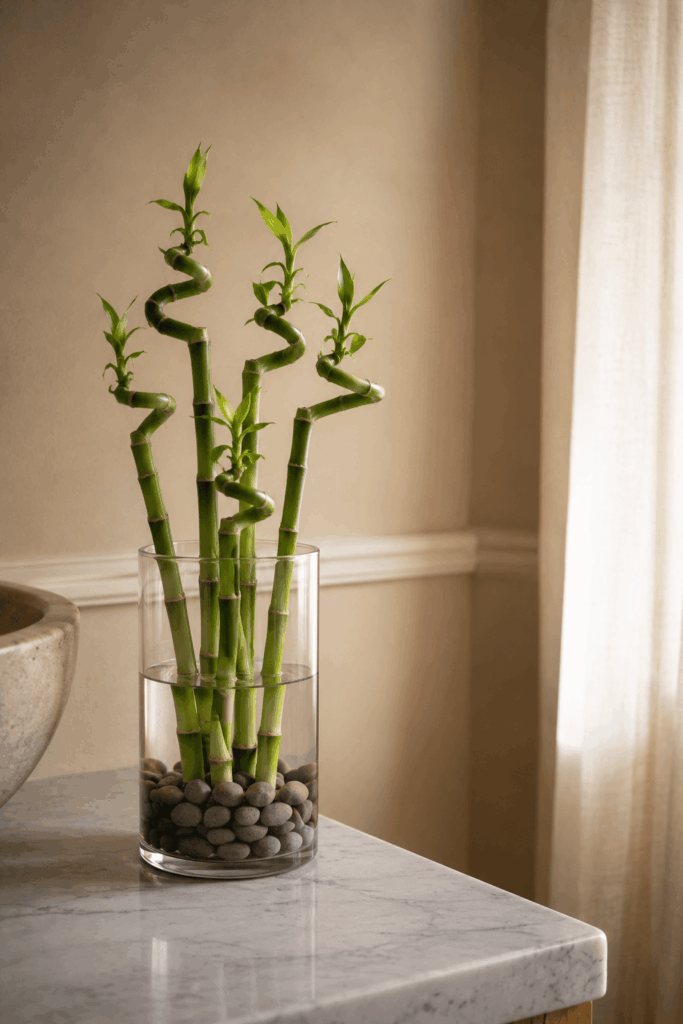
10. Lucky Bamboo (Dracaena sanderiana)
Not actually bamboo. It’s a dracaena that grows in water, which makes it perfect for a bathroom vanity. No soil to manage, no drainage holes to worry about. The look — green stalks in a glass vessel with pebbles — fits modern bathrooms without trying too hard.
Light: Low to medium indirect. Direct sun yellows the stalks.
Water: Change the water every 1-2 weeks. Use filtered or distilled; tap water often has fluoride that browns the tips.
Pets: Toxic to cats and dogs (ASPCA).
Placement: Vanity or shelf where the glass vessel becomes part of the styling.
One mistake to skip: don’t top off the water with chlorinated tap water. Use distilled or let tap water sit overnight before adding.
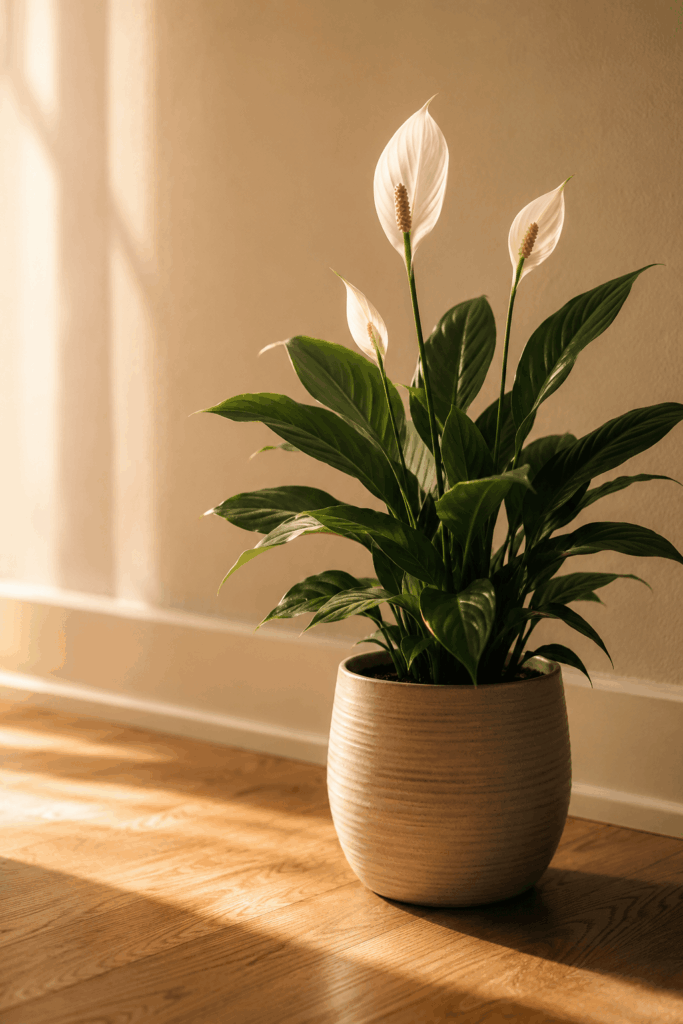
11. Peace Lily (Spathiphyllum)
The one that dramatically wilts to tell you it’s thirsty, then bounces back within an hour of watering. Peace lilies love bathroom humidity, tolerate medium-low light, and reward consistent care with white sail-like blooms.
Light: Medium indirect. Tolerates lower light, but blooms less.
Water: When the leaves droop slightly. Forgiving of occasional underwatering.
Pets: Toxic to cats and dogs (causes oral irritation, drooling, vomiting per ASPCA).
Placement: Floor pot or sturdy counter. Keep clear of pets that nibble.
One mistake to skip: don’t ignore the wilt warning. Peace lilies recover from one dry spell easily, but repeated wilting weakens the plant over time.
Best Plants for Windowless or Very Dark Bathrooms
Honest caveat first: no plant truly thrives in complete darkness. Even the picks below need some light. Your three options are turning the bathroom light on for several hours a day, rotating plants in and out of a brighter room weekly, or running a small LED grow bulb in the existing fixture. University of Vermont Extension confirms that even a basic grow bulb on a timer can substitute for natural light for shade-tolerant species.
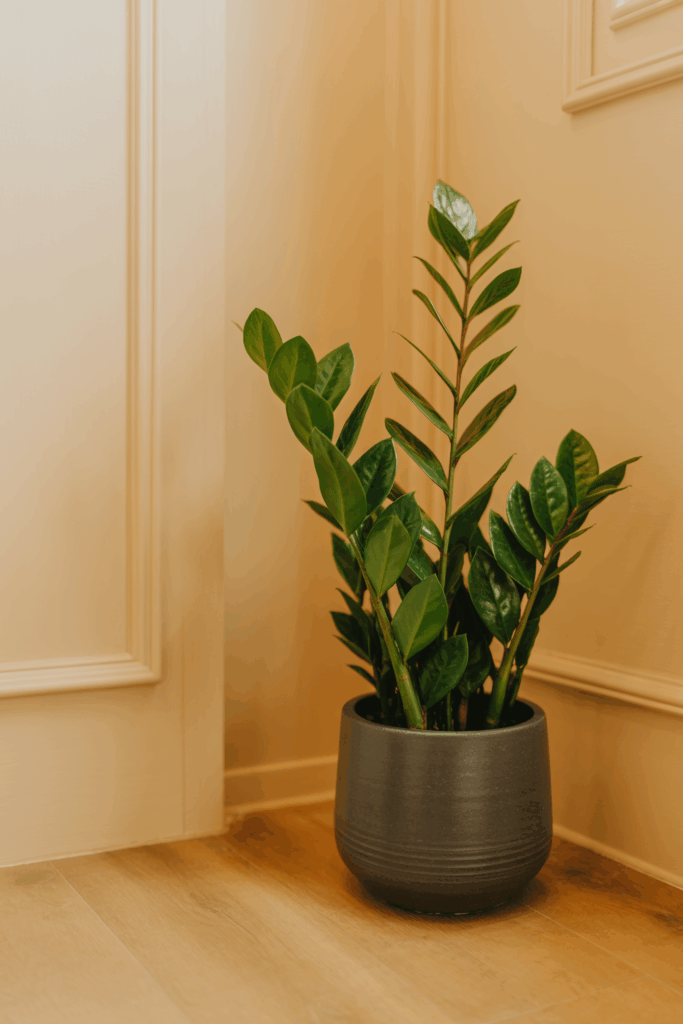
12. ZZ Plant (Zamioculcas zamiifolia)
The closest thing to a plastic plant that’s actually alive. Thick rhizomes store water for weeks. Tolerates more neglect and darkness than almost anything else commonly sold.
Light: Very low to medium indirect. Will hold its own with only artificial light.
Water: Every 2-3 weeks. Often less.
Pets: Toxic to cats and dogs.
Placement: Floor pot in a dim corner or on a vanity.
One mistake to skip: don’t water it weekly. ZZ plants die from overwatering far more than darkness.
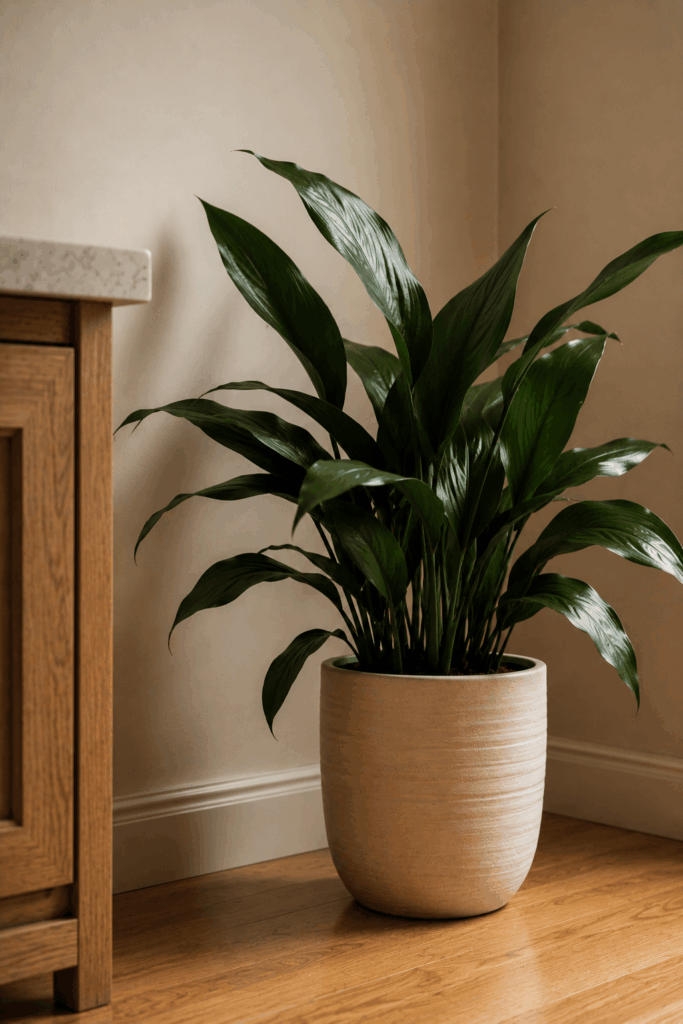
13. Cast Iron Plant (Aspidistra elatior)
Named for a reason. Broad dark-green leaves, slow growth, and a Victorian-era reputation for surviving gaslit drawing rooms. Underused today, which is a shame — it’s one of the few plants that genuinely tolerates a windowless bathroom.
Light: Very low. Avoid direct sun, which scorches the leaves.
Water: When the top two inches feel dry. Often every 2-3 weeks.
Pets: Safe for cats and dogs (ASPCA non-toxic).
Placement: Floor pot. Slow grower, so size up the pot only when roots circle.
One mistake to skip: don’t expect fast growth. Cast iron plants add a leaf or two a year. That’s normal.
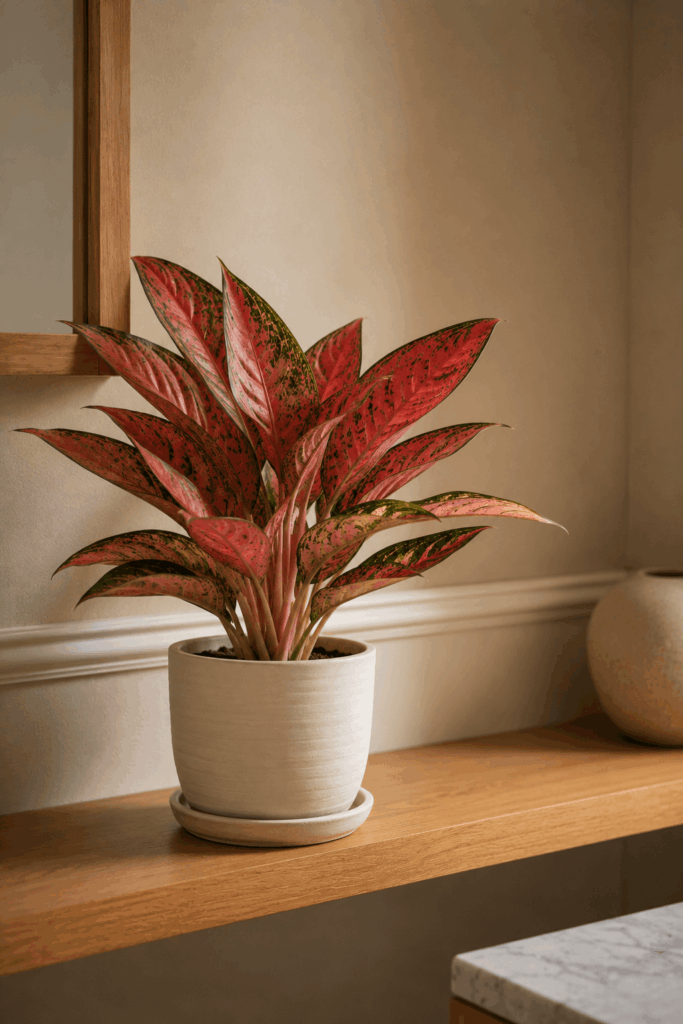
14. Aglaonema (Chinese Evergreen)
The most colorful option in the windowless tier. Modern varieties like Red Siam and Silver Bay carry pink, silver, and red variegation that holds up in low light. The color is what makes it worth picking over yet another dark-green leaf.
Light: Low to medium indirect. Brighter light keeps the color vivid.
Water: When the top inch dries. Tolerates inconsistency.
Pets: Toxic to cats and dogs.
Placement: Vanity or shelf where the color shows.
One mistake to skip: don’t put it on cold tile in winter. Aglaonemas dislike temperatures below 60°F, and bathroom floors get chilly overnight.
15. Air Plants (Tillandsia)
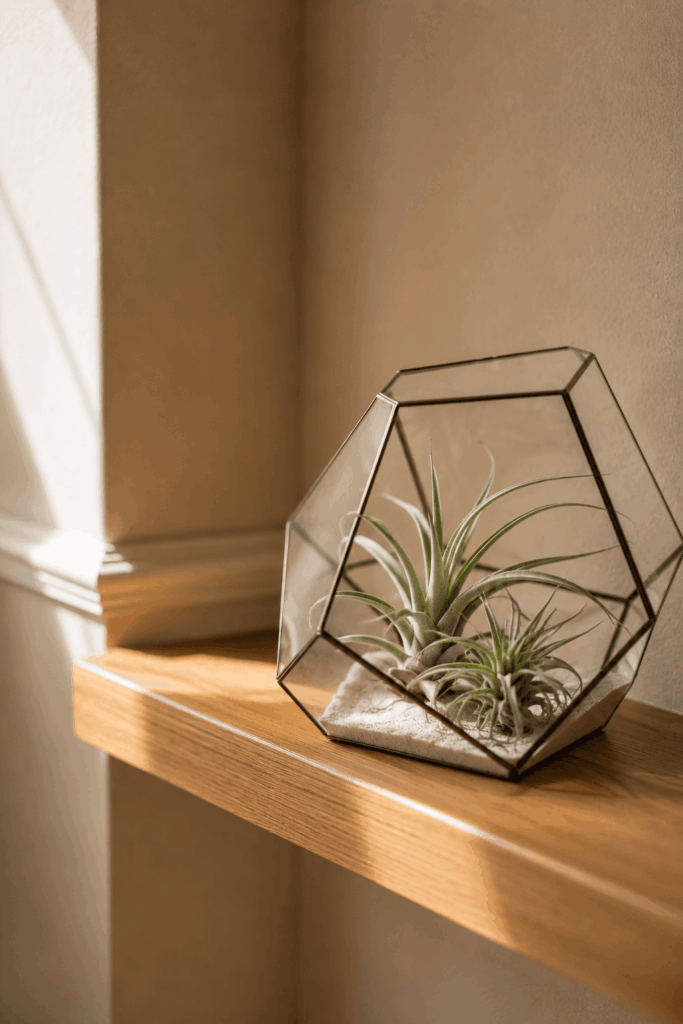
Honest caveat for the tier: even air plants need light. They tolerate windowless bathrooms only with a rotation schedule. Mist them, then move them somewhere bright for a few days each week. The payoff is no soil, no pot drainage, and unconventional display options — mounted on driftwood, hung in glass terrariums, or perched on shower ledges.
Light: Bright indirect when in rotation. They photosynthesize through their leaves.
Water: Soak in room-temperature water for 20-30 minutes once a week. Shake off excess and let dry completely before returning to display.
Pets: Generally considered safe (not on ASPCA toxic list).
Placement: Shower ledge, glass terrarium on the vanity, or mounted on a piece of driftwood.
One mistake to skip: don’t leave them wet after soaking. Trapped moisture rots the base.
Pet-Safe Quick Reference
Cats and dogs decide a lot about which plants are worth bringing home. ASPCA’s toxic plant database is the most reliable source, and every pick above is tagged against it. Here’s the at-a-glance breakdown.
Safe for cats and dogs (ASPCA non-toxic):
- Boston Fern
- Bird’s Nest Fern
- Phalaenopsis Orchid
- Calathea / Prayer Plant family
- Spider Plant
- Cast Iron Plant
- Air Plants (Tillandsia)
Toxic to cats and dogs:
- Pothos (mild)
- Heartleaf Philodendron
- Snake Plant (mild)
- Lucky Bamboo
- Peace Lily
- ZZ Plant
- Aglaonema
“Toxic” usually means oral irritation, drooling, or mild vomiting if eaten, not lethal poisoning. Still — if your cat is the type that chews everything, choose from the safe list. If you can hang plants well out of reach, the toxic options open up.
The honest takeaway: seven non-toxic options is plenty to build a full bathroom around without worrying about pets.
How to Care for Bathroom Plants That Thrive in Humidity
Humid rooms flip some of the standard care rules. Here’s what changes.
Watering Less Than You Think
Humidity slows soil evaporation. Plants in a steamy bathroom dry out more slowly than the same plants in a dry living room. If you’re used to watering a pothos every five days elsewhere, expect to stretch it to seven or eight in the bathroom. Stick a finger into the soil before reaching for the watering can.
The Shower Rinse Trick
Once every few weeks, give your bathroom plants a lukewarm shower. Set them in the tub with the showerhead on a gentle setting, rinse the leaves for a minute or two, then let them drain in place. Removes dust, helps with pest prevention, and Penn State Extension notes that clean leaves photosynthesize more efficiently.
Ventilation Without Killing Humidity
A bathroom that stays damp 24/7 invites mold on soil and around pot rims. Crack the door open for a few hours each day. Run the exhaust fan during and after showers. You want the air to move occasionally — the plants don’t need a permanent steam room.
Common Bathroom Plant Mistakes
The same handful of mistakes show up over and over.
- Overwatering because the room feels damp. Damp air doesn’t equal damp soil. Check the pot, not the vibe.
- Ignoring drainage. Glossy ceramic pots without drainage holes drown plants. Either drill drainage or use them as cachepots over a plastic nursery pot.
- Choosing a plant that needs more light than the bathroom gives. The most common reason a “humidity-loving” plant dies in a bathroom is darkness, not water.
- Forgetting the cat counter-jumps. Toxic plants on the vanity are toxic plants within reach.
- Putting plants directly in the shower’s splash zone. Hot water and soap residue damage leaves over time. Keep plants near the shower, not in it.
FAQs
Q1: Can I keep plants in a bathroom with no window?
Yes, but only a few species and only with help. ZZ plant, cast iron plant, and aglaonema tolerate windowless bathrooms when you keep the bathroom light on for several hours daily or install a small LED grow bulb. Even these low-light picks need some light source to survive long-term.
Q2: What is the best low-maintenance bathroom plant?
Snake plant is the most forgiving bathroom plant for beginners. It tolerates low to bright indirect light, needs water only every 2 to 3 weeks, and handles bathroom humidity well without complaint. Pothos and ZZ plant are close runners-up if you want trailing or compact options instead.
Q3: Are bathroom plants safe for cats and dogs?
Some are, many aren’t. Boston fern, bird’s nest fern, Phalaenopsis orchid, calathea, spider plant, cast iron plant, and Tillandsia air plants are listed as non-toxic by the ASPCA. Pothos, philodendron, peace lily, ZZ plant, lucky bamboo, and aglaonema are toxic and should be hung out of reach.
Q4: Do bathroom plants need more water because of humidity?
No, bathroom plants usually need less watering, not more. Humidity slows soil evaporation, so the same plant that needs water every 5 days in a dry living room may stretch to 7 or 8 days in a humid bathroom. Always check soil moisture before reaching for the watering can.
Q5: Will bathroom plants cause mold or attract pests?
Bathroom plants can develop soil mold if the room stays damp 24/7 with poor airflow. Run the exhaust fan during and after showers, crack the door open for a few hours daily, and avoid overwatering. Good ventilation prevents mold without killing the humidity advantage your plants love.
Q6: Which bathroom plant is best for a windowless bathroom?
ZZ plant is the top pick for windowless bathrooms. Its thick rhizomes store water for weeks, and it survives on minimal artificial light better than almost any other houseplant sold. Cast iron plant and aglaonema are strong alternatives if you want broader leaves or a pop of color.
What Actually Matters
Choosing bathroom plants that love humidity comes down to one honest variable: light. Humidity is a real bonus, but it can’t override the fact that plants need photons to live.
If you only remember one thing, remember this — read your bathroom honestly before you shop. Window or no window. Frosted or clear. Lights on for hours, or for ten minutes at a time. The right plant for a bright bathroom is the wrong plant for a windowless one, and pretending otherwise is how beginners end up replacing three orchids in a row.
Start here: pick one plant from the tier that matches your bathroom, not the one with the prettiest photo. Spider plant if you have a frosted window and a cat. Pothos if you have a bright window and want fast growth. ZZ plant if your bathroom is genuinely dim and you forget to water. One healthy plant beats a graveyard of ambitious ones.
The hard part of indoor gardening was never doing more. It’s doing less, and matching the plant to the room you actually have.