
I’ve watched friends mourn the same dead pothos three times in a row, convinced they’re cursed. Every one of those plants drowned, not starved.
That’s the quiet truth behind most Hard to Kill Houseplants for Forgetful People: they’re built to survive drought, not pampering. The trick isn’t remembering more. It’s matching the plant to your actual habits.
Some plants in this list will forgive eight weeks of pure neglect. Others tap out after two. The 13 picks below are ranked with a Forgive-Meter, so you can choose by your real schedule, not the one you wish you kept.
TL;DR
- The leading cause of beginner houseplant death is overwatering, not forgetting
- 13 Hard to Kill Houseplants for Forgetful people, grouped into 3 tiers by Forgive-Meter rating
- Every pick is checked against the ASPCA toxic and non-toxic plant database for cat and dog safety
- Tier 1 survives 4–8+ weeks of neglect; Tier 3 covers pet-safe options for households with cats or dogs
Why “Forgetting” Is Closer to Correct Than You Think
Root rot is the most common cause of houseplant death, not drought. Penn State Extension lists overwatering as the leading reason indoor plants fail, because waterlogged soil suffocates roots and invites fungal disease.
NC State Cooperative Extension echoes the same point across its houseplant care guides. Most popular indoor plants evolved in environments where their roots dried out completely between rains.
Iowa State Extension’s profiles on snake plant and ZZ plant describe both as drought-adapted species that store water in thick rhizomes. Frequent watering is the fastest way to kill them.
So if you’ve killed a few plants by leaving them alone, the math is honestly stacked against you. Forgetfulness paired with the right plant looks a lot like good care.
The 13 picks below were chosen for one reason: they tolerate neglect without dying or looking ugly. Each one was verified against the ASPCA Toxic and Non-Toxic Plant Database, with pet-safety badges throughout.
How the Forgive-Meter Works
Every plant in this article carries four quick tags so you can scan instead of read.
Forgive-Meter: The number of weeks the plant can go between waterings without permanent damage. A 2-week rating means you can travel for two weeks. An 8-week rating means you can forget about it until next month.
Light: The lowest light condition the plant tolerates. “Bright indirect” means within 3 to 5 feet of a sunny window. “Low” means a hallway corner or interior room with no direct sun at all.
Recovery: Whether the plant bounces back after neglect or slowly declines. The bouncers are pothos and philodendron. The slow-decline types are the dramatic plants you won’t find on this list.
Pet Safety: Cross-checked against the ASPCA database. “Pet-safe” means non-toxic to cats and dogs. “Toxic” means it can cause vomiting, mouth irritation, or worse if chewed.
The ratings are conservative. A snake plant rated for 6 weeks will probably survive 8 in a cool, dim corner. They’re meant to set a realistic floor, not push limits.
The 13 Hard to Kill Houseplants for Forgetful People, Grouped by Tier
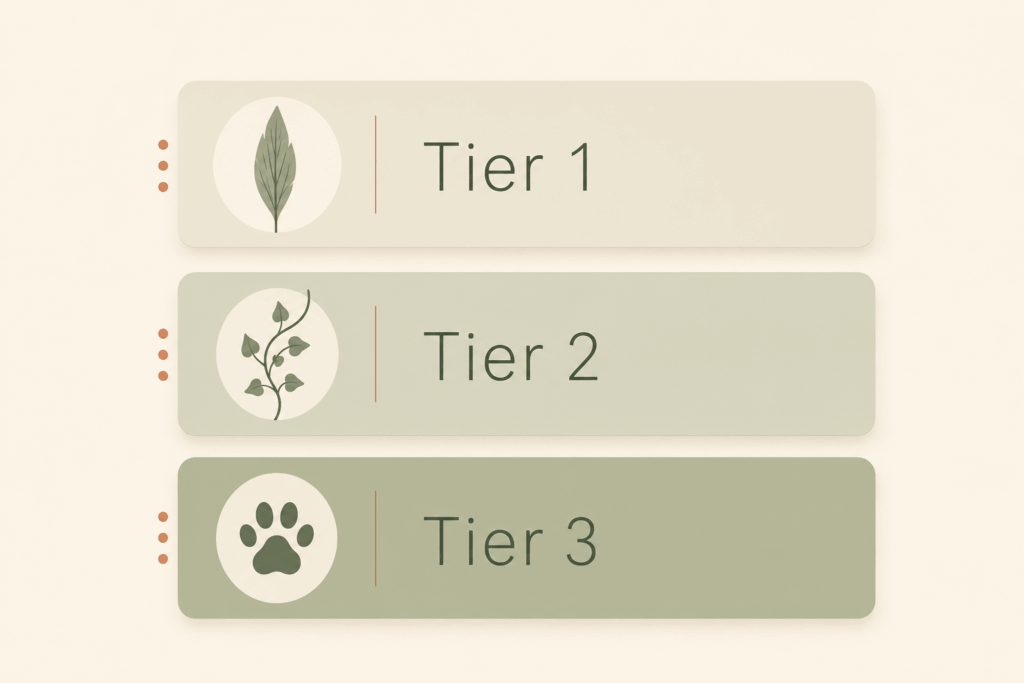
The picks below split into three tiers based on Forgive-Meter rating. Tier 1 survives 4 weeks or more without complaint. Tier 2 holds up for 2 to 4. Tier 3 covers pet-safe options for households with cats or dogs.
Read the tier that matches your real life. If you travel often or forget for weeks at a stretch, start in Tier 1. If you remember sometimes, Tier 2 has the most variety. If you’ve got pets and need non-toxic picks, jump to Tier 3.
Tier 1: The Bulletproof Four (4–8+ Weeks of Neglect)
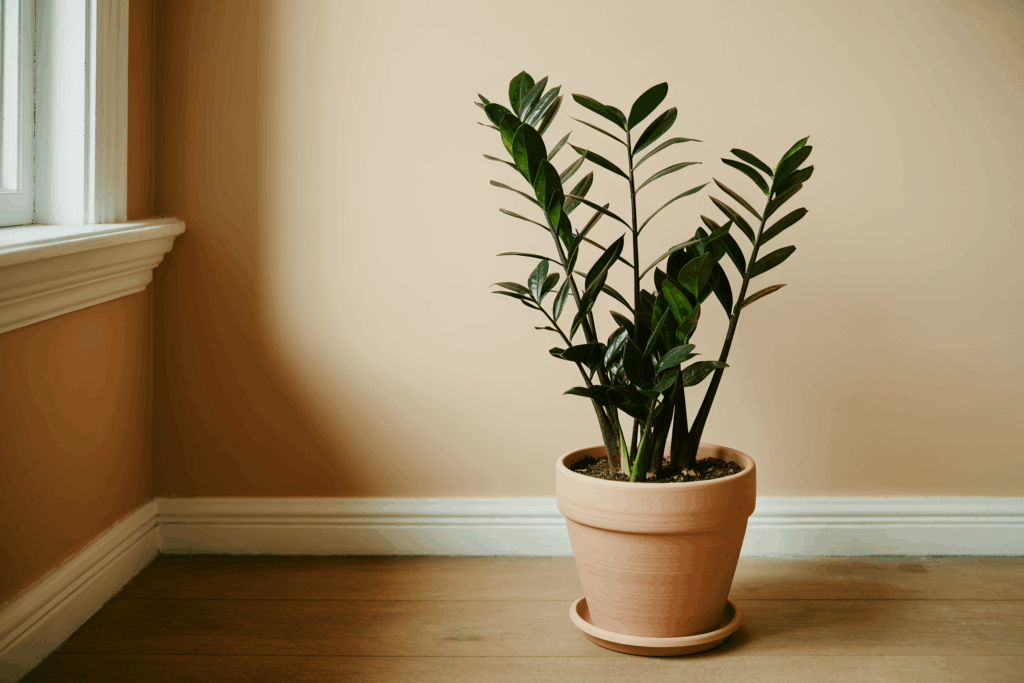
1. ZZ Plant (Zamioculcas zamiifolia)
The closest thing to a houseplant on autopilot. Glossy waxy leaves on upright stems, almost zero opinions about anything. Iowa State Extension lists it among the most drought-tolerant indoor plants commonly sold.
Its underground rhizomes store water like camel humps. Skip a month, and the plant looks the same.
Forgive-Meter: 6–8 weeks
Light: Low to bright indirect; survives windowless interior corners.
Water: Every 3–4 weeks at most. Let the top half of soil dry first.
Pets: Toxic to cats and dogs (ASPCA). Mouth irritation if chewed.
Best for: A dim hallway, an office desk, or a renter who travels a lot.
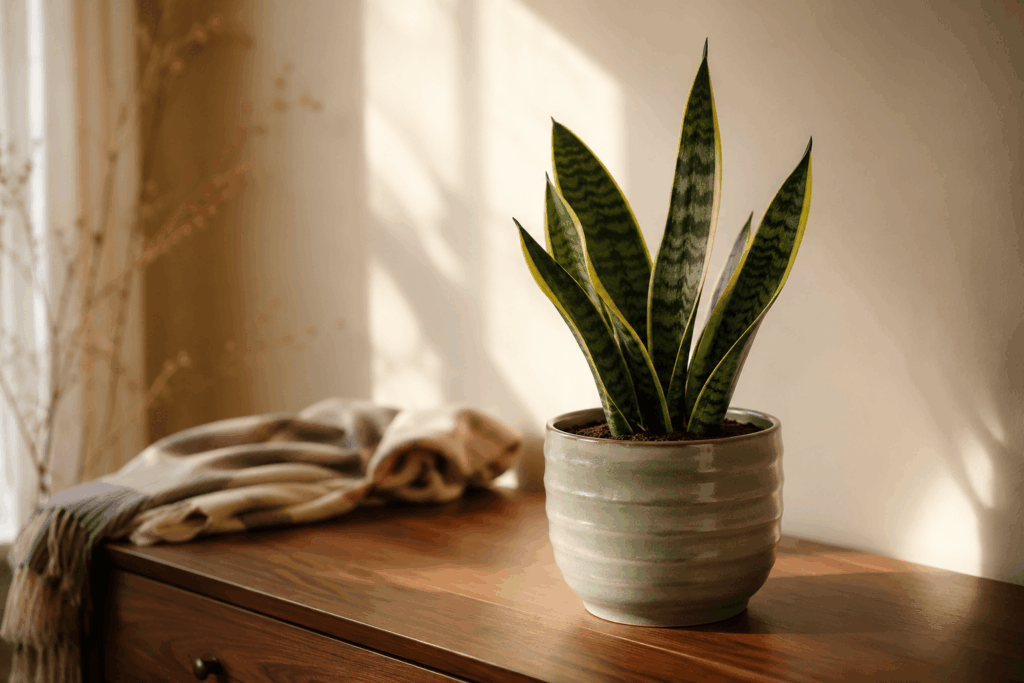
2. Snake Plant (Dracaena trifasciata)
The plant most often gifted to non-plant-people, for good reason. Stiff sword-shaped leaves, slow growth, no drama. NC State Extension notes it tolerates a wider range of conditions than nearly any other houseplant.
Pick a tall variety for floor placement or a dwarf cultivar for shelves. Both behave the same way.
Forgive-Meter: 4–6 weeks
Light: Adapts to anything from full shade to bright direct sun.
Water: Every 2–3 weeks in spring and summer, every 4–6 in winter.
Pets: Toxic to cats and dogs (mild). Drooling, mouth irritation.
Best for: Bedrooms, bathrooms, anywhere the light is unpredictable.
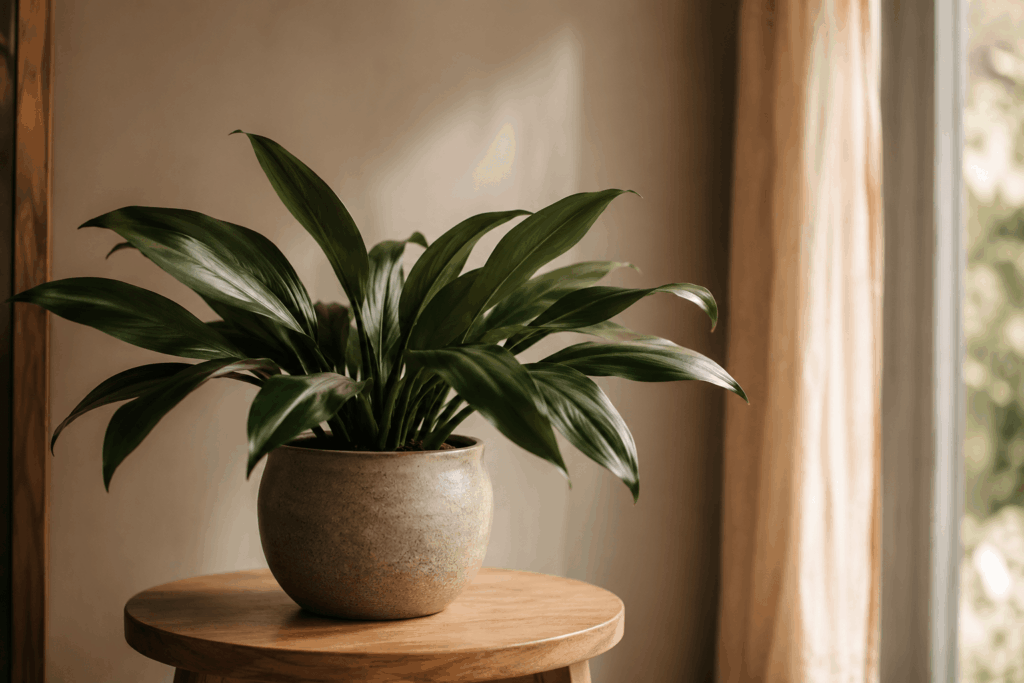
3. Cast Iron Plant (Aspidistra elatior)
Named for the obvious reason. Wide arching leaves in deep green, slow to grow, almost impossible to kill through inattention.
Penn State Extension recommends it for low-light interiors where most other plants struggle. The leaves are large and architectural. A single mature plant fills a corner.
Forgive-Meter: 4–6 weeks
Light: Low to medium indirect. Avoid bright direct sun.
Water: Every 2–3 weeks. Let soil dry between waterings.
Pets: Pet-safe (ASPCA non-toxic for cats and dogs).
Best for: North-facing apartments, interior bedrooms, low-light foyers.
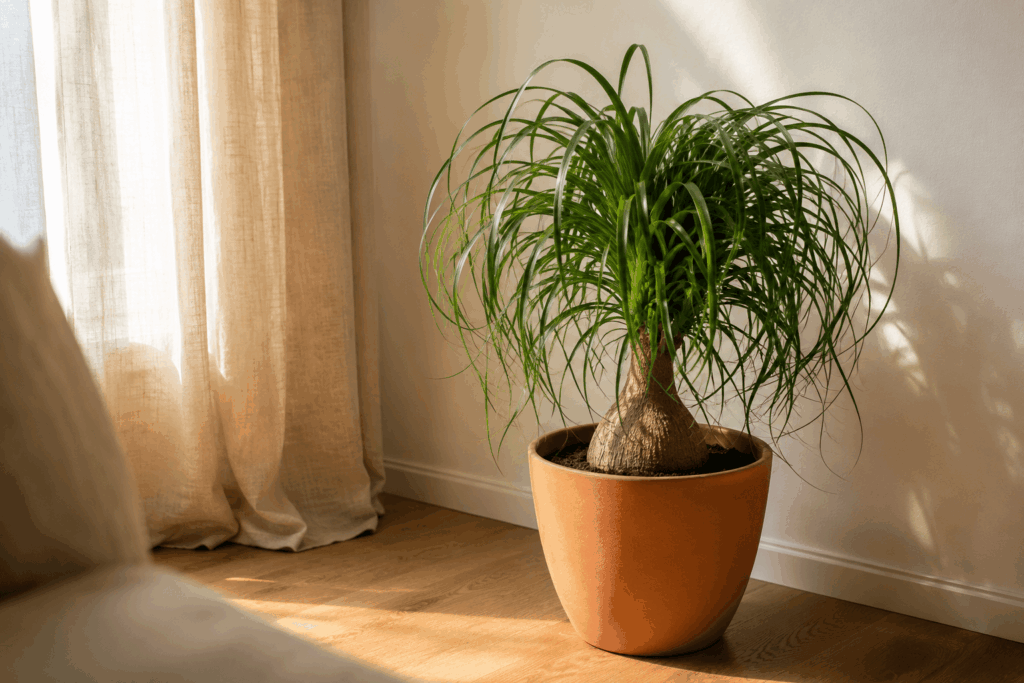
4. Ponytail Palm (Beaucarnea recurvata)
Technically a succulent, not a palm. The swollen bulbous base stores water for months at a time, which is why it earns a Tier 1 rating despite looking delicate.
Long, curly leaves cascade from the top in a slow fountain. University of Florida IFAS Extension classifies it as a low-water tropical with high drought tolerance.
Forgive-Meter: 4–6 weeks
Light: Bright indirect; tolerates some direct morning sun.
Water: Every 3–4 weeks. Underwatering is always safer than over.
Pets: Pet-safe (ASPCA non-toxic for cats and dogs).
Best for: A bright living room corner where you want a sculptural focal point.
Tier 2: The Forgiving Forgetters (2–4 Weeks of Neglect)
5. Golden Pothos (Epipremnum aureum)
The drama queen of low-maintenance plants. Pothos doesn’t just survive forgetfulness. It tells you when it’s thirsty by drooping its leaves in a slow-motion faint, then perking back up within hours of a drink.
NC State Extension lists pothos as one of the most reliable beginner vines, partly because of this clear visual feedback.
Forgive-Meter: 2–3 weeks
Light: Low to bright indirect. Variegation fades in too-low light.
Water: Every 1–2 weeks. Wait for visible droop, then water.
Pets: Toxic to cats and dogs (ASPCA). Can cause oral swelling if chewed.
Best for: A high shelf, the top of a bookcase, or a hanging basket.
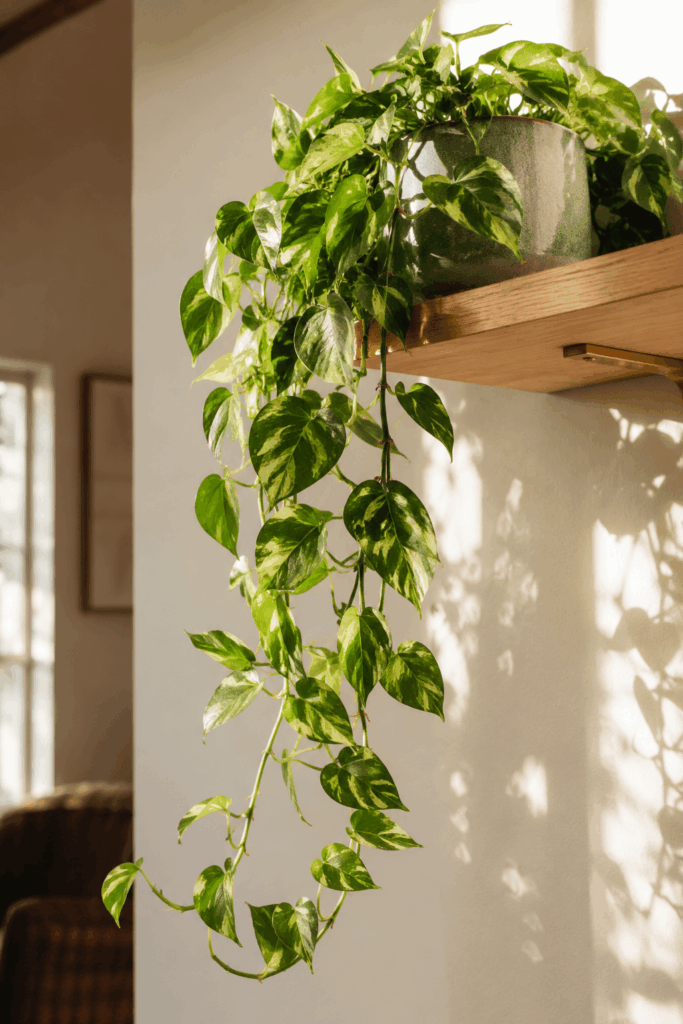
6. Heartleaf Philodendron (Philodendron hederaceum)
Pothos’s quieter cousin. Smaller, softer leaves on more delicate vines, with a slightly faster growth rate in good conditions.
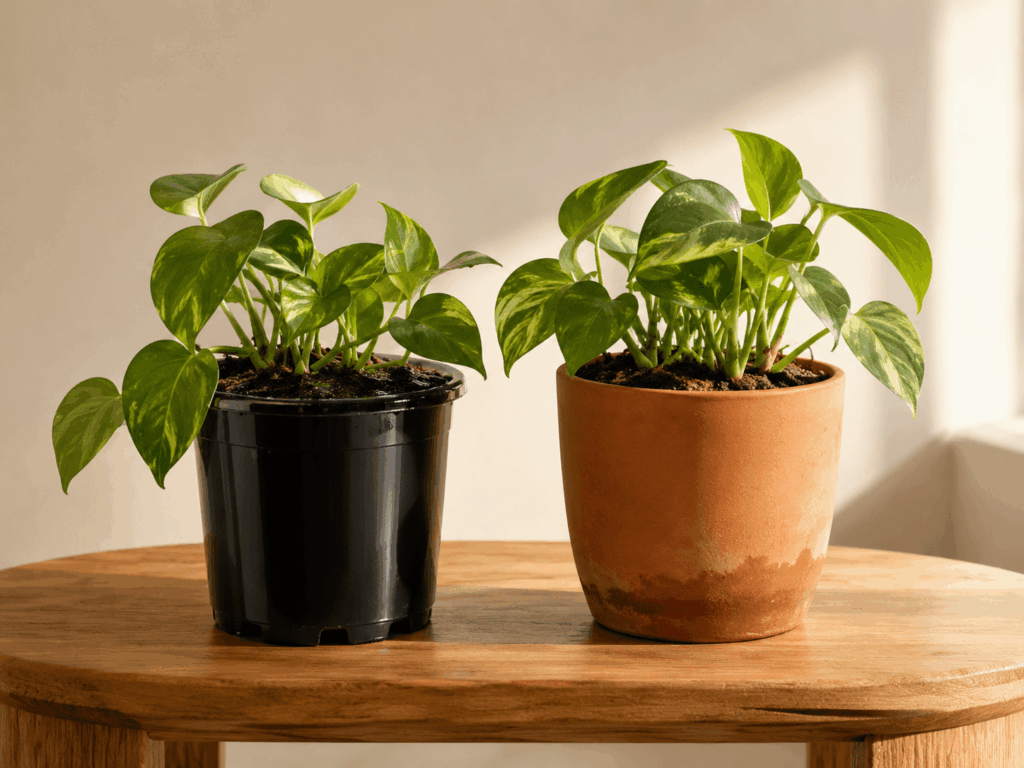
The two get confused at garden centers all the time. The easiest tell: philodendron leaves are thinner and matte. Pothos leaves are thicker and glossier.
Forgive-Meter: 2–3 weeks
Light: Low to bright indirect.
Water: Every 1–2 weeks once the top inch of soil dries.
Pets: Toxic to cats and dogs (ASPCA). Mouth and stomach irritation.
Best for: A hanging basket near a doorway or a small trellis on a shelf.
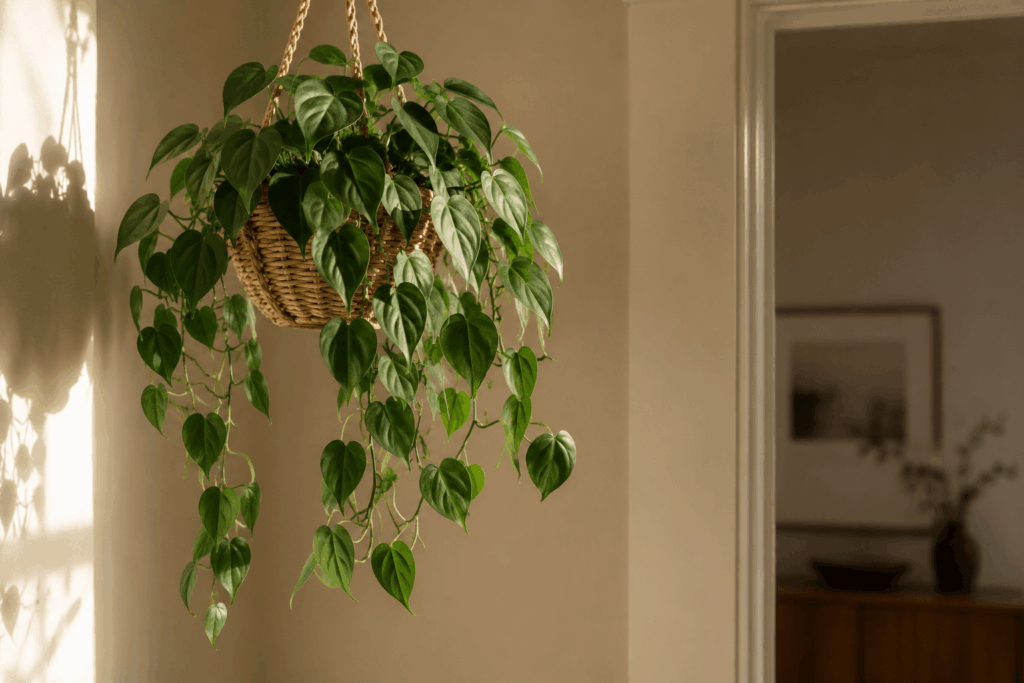
7. Chinese Evergreen (Aglaonema)
The plant for the worst corner in your apartment. Aglaonema tolerates lower light than almost anything else, and the patterned leaves still look interesting in dim conditions.
Modern cultivars come in silver, pink, red, and deep green variegations, so you can match it to the room.
Forgive-Meter: 2–3 weeks
Light: Low to medium indirect. Avoid direct sun.
Water: Every 1–2 weeks; let the top inch of soil dry.
Pets: Toxic to cats and dogs (ASPCA). Oral irritation.
Best for: The darkest corner of the room you’ve already given up on.
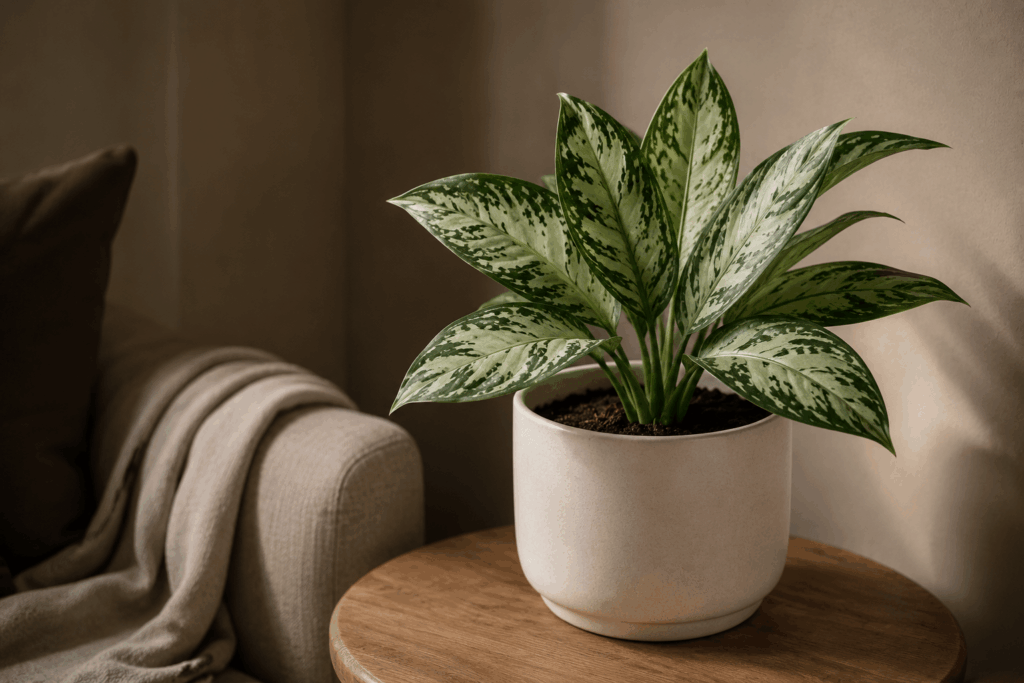
8. Jade Plant (Crassula ovata)
A small tree that grows slowly enough to outlast most apartments. Thick oval leaves store water, which makes it nearly impossible to underwater.
Iowa State Extension recommends jade for sunny windowsills, where it can develop the red tint along leaf edges that mature plants display.
Forgive-Meter: 3–4 weeks
Light: Bright direct sun required (south or west window).
Water: Every 2–3 weeks. Soil must dry completely between drinks.
Pets: Toxic to cats and dogs (ASPCA). Vomiting, lethargy if ingested.
Best for: A south-facing windowsill where you want a slow-growing accent.
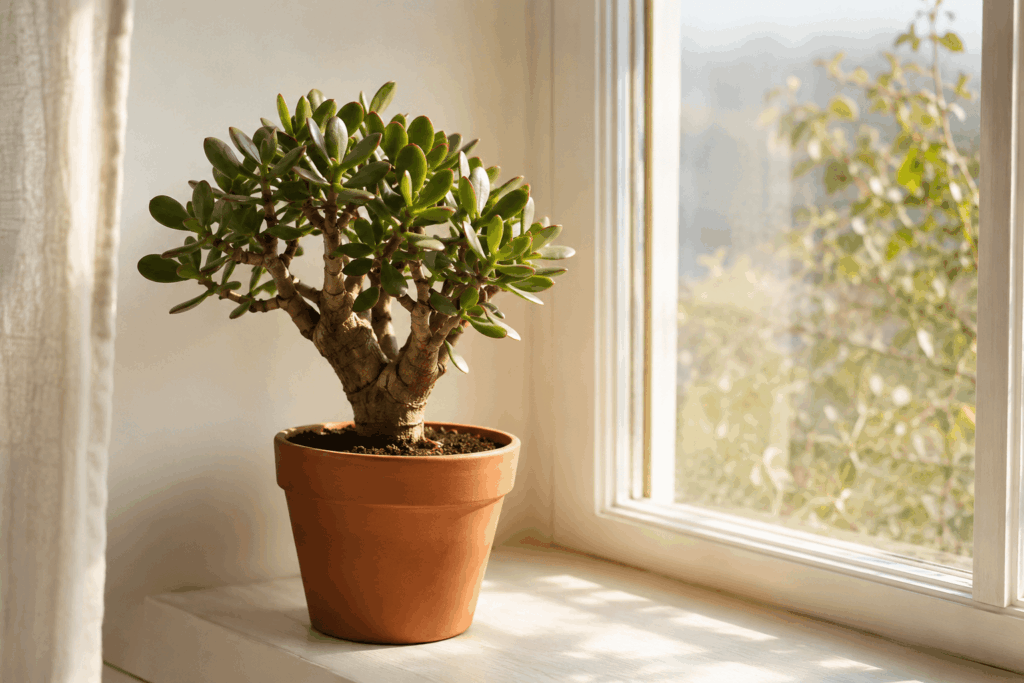
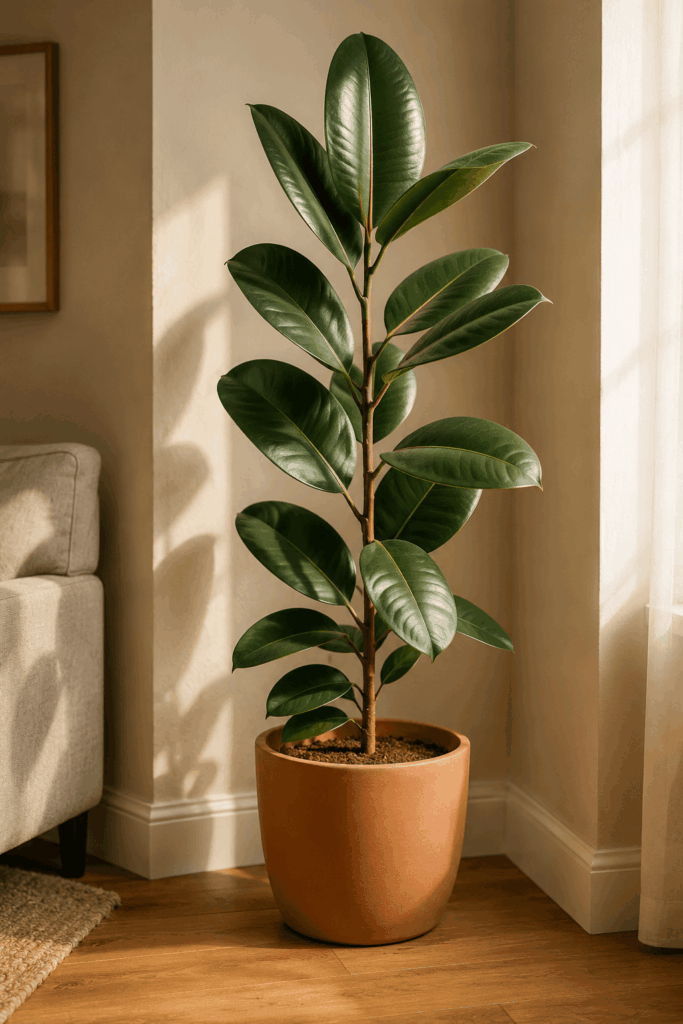
9. Rubber Plant (Ficus elastica)
The houseplant that wants to be a tree. A small nursery rubber plant becomes a six-foot floor specimen over a few years, with thick glossy leaves in deep green or burgundy.
It’s surprisingly forgiving for a ficus, which as a family is famous for dropping leaves at the slightest change.
Forgive-Meter: 2–3 weeks
Light: Bright indirect; some direct morning sun tolerated.
Water: Every 1–2 weeks. Wait for the top 2 inches to dry.
Pets: Toxic to cats and dogs (ASPCA). Sap can irritate skin.
Best for: A bright living room corner where you have years to spare.
Tier 3: The Pet-Safe Picks for Cat and Dog Households
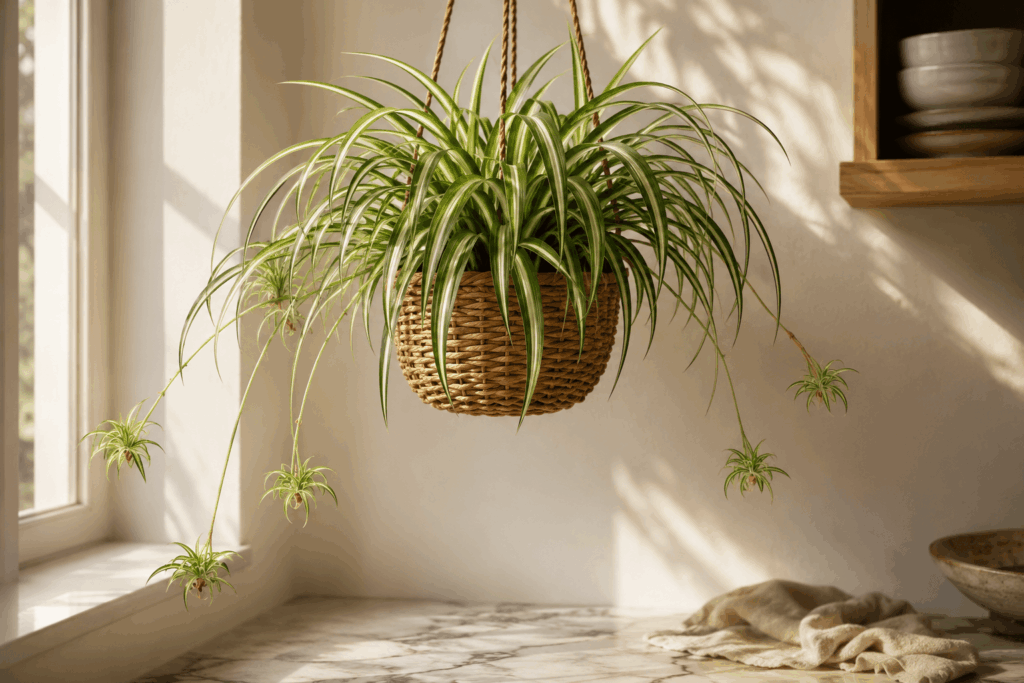
10. Spider Plant (Chlorophytum comosum)
The friendliest plant on this list, both literally and culturally. Strap-shaped leaves arch out in a fountain, and once mature, the plant sends out long stems with miniature spider babies dangling on the ends.
Those babies root easily in a glass of water, so one plant becomes ten.
Forgive-Meter: 2–3 weeks
Light: Bright indirect; tolerates medium light with slower growth.
Water: Every 1–2 weeks. Slightly more sensitive to underwatering than the rest of this list.
Pets: Pet-safe (ASPCA non-toxic). Cats sometimes nibble; harmless.
Best for: A hanging basket in the kitchen, where the babies can dangle and propagate.
11. Parlor Palm (Chamaedorea elegans)
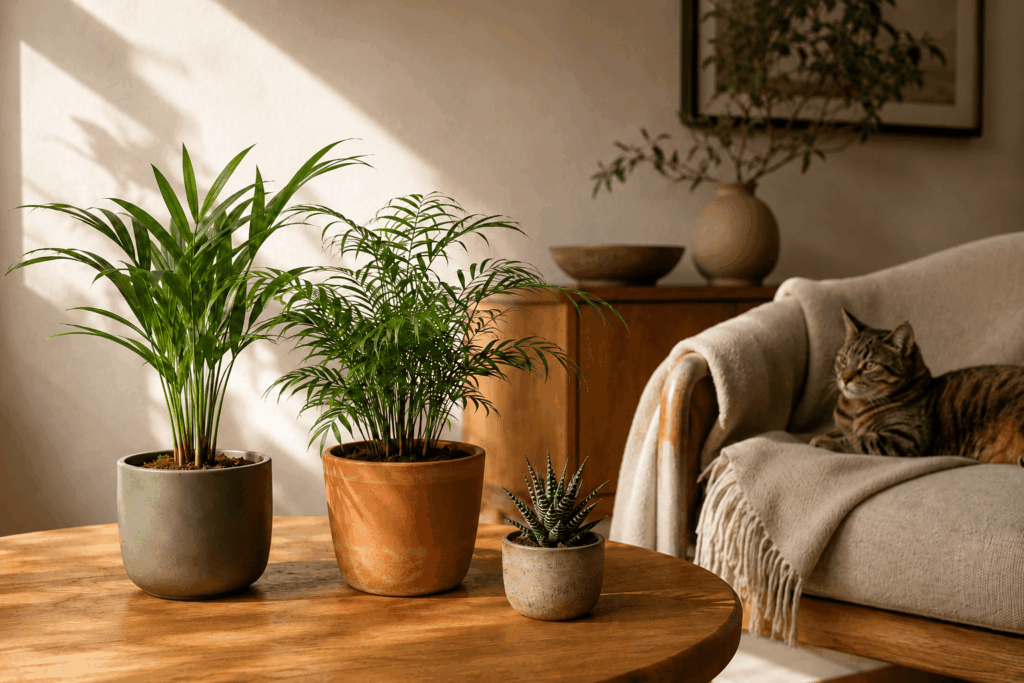
Victorian sitting rooms ran on these. Feathery arched fronds in a compact form, content with low light, and confirmed pet-safe by ASPCA.
University of Florida IFAS notes it as one of the easiest indoor palms for beginner growers.
Forgive-Meter: 2–3 weeks
Light: Low to medium indirect; avoid direct sun.
Water: Every 1–2 weeks; keep soil lightly moist, not soggy.
Pets: Pet-safe (ASPCA non-toxic for cats and dogs).
Best for: A bathroom counter, a low-light bedroom corner, or a kid’s room shelf.
12. Haworthia (Haworthiopsis attenuata)
A small spiky rosette that looks like an aloe but stays the size of a coffee cup. Often called zebra plant for the white horizontal striping on the leaves.
Unlike most succulents, it doesn’t need scorching direct sun, which makes it the rare apartment-friendly cactus relative.
Forgive-Meter: 3–4 weeks
Light: Bright indirect or a few hours of gentle direct sun.
Water: Every 2–3 weeks. Soil dry completely first.
Pets: Pet-safe (ASPCA non-toxic for cats and dogs).
Best for: A desk, a windowsill, or any tight space that needs a touch of green.
13. Areca Palm (Dypsis lutescens)
The most popular pet-safe indoor “tree” sold today. Tall, feathery fronds in clean light green, lush enough to fill a corner.
It needs slightly more attention than the rest of Tier 3, but it earns its slot for households who want a real statement plant without the toxicity worry.
Forgive-Meter: 2 weeks
Light: Bright indirect; the brighter the better, just not scorching direct.
Water: Every 1–2 weeks. Doesn’t like fully drying out.
Pets: Pet-safe (ASPCA non-toxic for cats and dogs).
Best for: A bright living room corner where renters want a tree-feel without the risk.
4 Setup Tricks That Make Any Plant More Forget-Friendly
Pick the right plant first, then stack these four habits on top. Each one buys you days of extra slack.
Switch plastic pots for terracotta. Clay breathes, which means soil dries more evenly and root rot is much harder to trigger. Terracotta also shows you the moisture line on the outside; a dark band at the bottom means there’s still water below.
Group plants by watering schedule, not by aesthetic. A single shelf of plants that all want water every 3 weeks is one decision. A shelf where each plant has a different schedule turns into a juggling act you’ll lose.
Put plants in your line of sight. Behind the couch is where plants die. The kitchen counter, the spot next to the coffee machine, the shelf in the bathroom: those are where you’ll notice a droop early.
Use self-watering inserts for long trips. A ceramic spike or a wick-based insert keeps soil evenly moist for 2–3 weeks, which covers most vacations. Most are affordable and reusable.
The Tier 1 picks above survive without any of these tricks. Use the tricks to push Tier 2 plants closer to Tier 1 behavior.
When Forgetting Has Actually Gone Too Far
Even bulletproof plants have a ceiling. The signs of damage you can’t bounce back from:
- Mushy stems at the base. Root rot has set in. The plant looks alive above and is rotting from below.
- Hollow trunks or empty rhizomes. Press gently. If it gives, the inside is gone.
- Total leaf drop with no new growth. Some plants drop leaves and recover within weeks. If a month passes with no fresh growth and no firmness at the base, it’s over.
- Foul-smelling soil. A sour or sewage smell means anaerobic rot in the root zone. Repotting can sometimes save it; often it’s too late.
Composting and starting over isn’t failure. Even the most forgiving plant in this list can hit its limit, and recognizing it is part of getting better at this.
FAQs
Q1: What are the hardest houseplants to kill?
ZZ plant and snake plant are the hardest houseplants to kill. Both store water in thick rhizomes or leaves and tolerate 4 to 8 weeks of neglect without damage. Cast iron plant and ponytail palm follow close behind, surviving similar drought stretches in low to bright indirect light. All four thrive on being left alone.
Q2: How long can houseplants go without water?
Most drought-tolerant houseplants survive 2 to 4 weeks without water. ZZ plants and snake plants stretch to 6 to 8 weeks in cool, dim conditions. Pothos, philodendron, and spider plants tap out around 2 weeks. Always check soil moisture before watering — overwatering kills more houseplants than drought ever does.
Q3: Why do my houseplants keep dying?
Overwatering is the leading cause of houseplant death, not forgetting. Penn State Extension lists root rot from waterlogged soil as the top reason indoor plants fail. Most popular houseplants evolved in environments where roots dried fully between rains. If you’ve killed plants by leaving them alone, the math is stacked against you — match the plant to your real schedule.
Q4: Are Hard to Kill Houseplants for Forgetful People safe for pets?
Many tough houseplants are toxic to cats and dogs, but several are pet-safe. The ASPCA non-toxic list includes spider plant, parlor palm, haworthia, areca palm, cast iron plant, and ponytail palm. Avoid ZZ plant, snake plant, pothos, philodendron, jade, and rubber plant if pets chew leaves — they can cause mouth irritation or vomiting.
Q5: Can houseplants survive in rooms with no windows?
Yes, ZZ plant, snake plant, cast iron plant, and Chinese evergreen survive in windowless rooms. All four tolerate full shade and can live indefinitely under standard ceiling lighting alone. Growth slows in such conditions, but the plants stay healthy. Rotate them near a window for a week every few months to keep leaves vigorous.
Q6: Is it better to underwater or overwater houseplants?
Underwatering is almost always safer than overwatering for popular houseplants. Most varieties evolved in dry climates where roots fully dried between rains. Waterlogged soil suffocates roots and triggers fungal rot within days. A wilted plant usually recovers within hours of a drink, while root rot is often fatal before symptoms appear.
What Actually Matters
Building a shortlist of Hard to Kill Houseplants for Forgetful People comes down to one thing: matching the Forgive-Meter to your honest schedule, not the schedule you wish you kept.
If you forget for weeks at a stretch, start in Tier 1. If you’ve got pets, jump to Tier 3. Skip the aspirational pick that needs daily misting and a humidifier. That one’s a different article, for a different reader.
Start with one plant. A single ZZ in a hallway corner, or a single pothos on top of a shelf. Watch it for a month. Notice what your habits actually are, not what you assume them to be.
The friends mourning their dead pothos weren’t cursed. They were just one plant off from a houseplant that would have outlasted them. Pick the right one, and forgetting becomes the feature.