
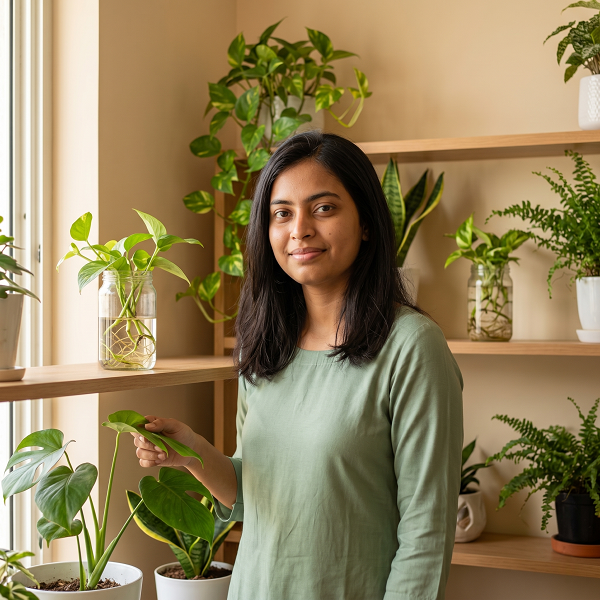
I almost bought a pothos for my desk last spring before I checked the ASPCA database. Turns out the plant half of Pinterest recommends to beginners is mildly toxic to both cats and dogs.
That moment sent me down a rabbit hole. Most “pet-friendly” plant lists are sloppy. They list 30 plants, ignore that you live in 600 square feet, and skip past the fact that ASPCA classifies toxicity by severity, not as a yes/no.
So I rebuilt the list from scratch. Every plant below passes three filters at once: non-toxic to cats and dogs per ASPCA, survives the kind of light a one-window apartment actually has, and stays under three feet at maturity.
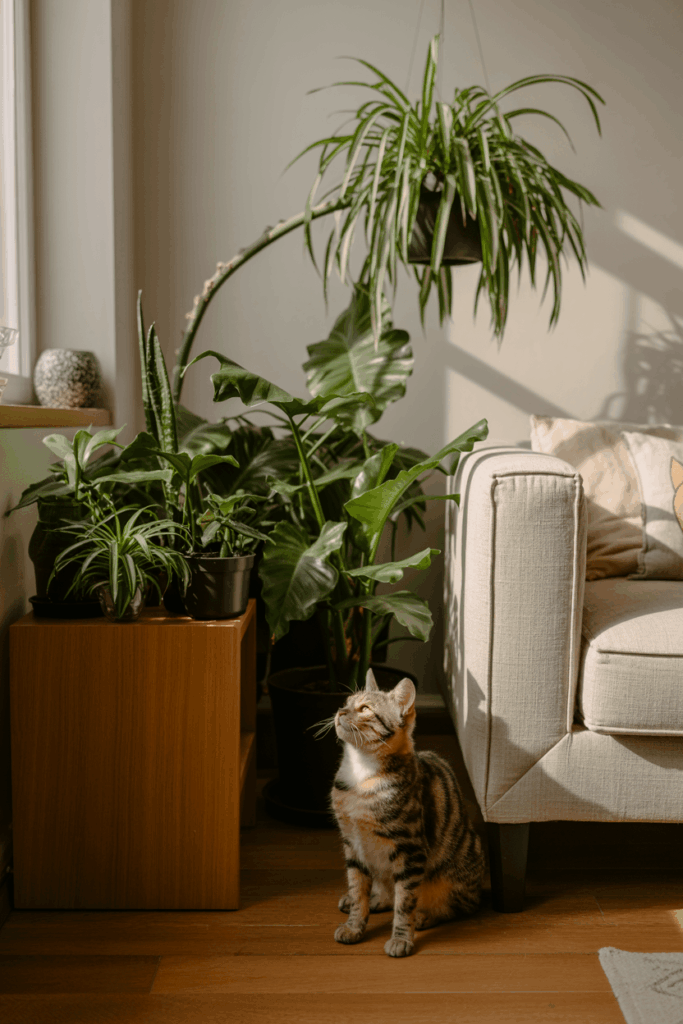
TL;DR
- All 8 plants below are listed as non-toxic to cats and dogs by the ASPCA.
- Every pick stays under 3 feet and tolerates the medium-to-low light most apartments actually have.
- Spider plant and parlor palm are the most forgiving if you’re starting from zero.
- Skip pothos, monstera, ZZ plant, peace lily, and snake plant. All are toxic to pets.
How I Picked These 8 Plants
The shortlist had to clear three filters, no exceptions.
Filter 1: ASPCA non-toxic. The ASPCA Toxic and Non-Toxic Plants database is the standard reference vets and shelters use. Every plant below appears on the non-toxic list for both cats and dogs.
Filter 2: Apartment light. Most renters get one decent window. Plants that demand five hours of direct sun are off the table, even if they’re pet-safe.
Filter 3: Mature size under three feet. A plant that triples in size your second year stops being a roommate and starts being a problem.
One honest note before the list. “Non-toxic” doesn’t mean edible. A determined chewer can still get an upset stomach from any plant, and fertilized soil or pesticide residue can cause its own issues. Non-toxic is the floor of safety, not the ceiling.
The 8 Pet-Safe Plants Worth Your Apartment Space
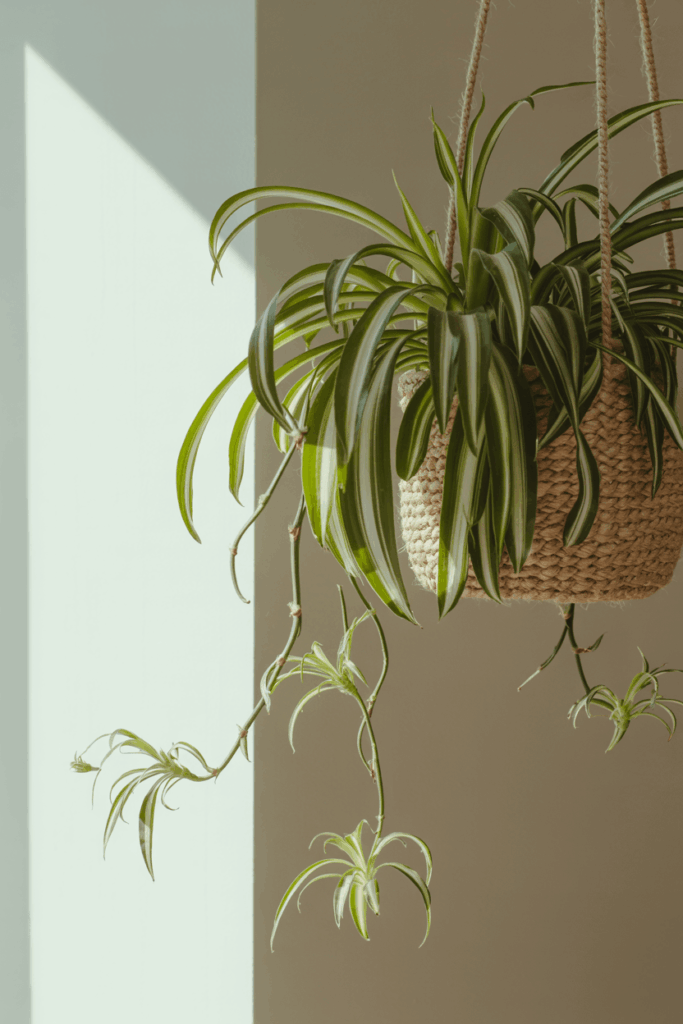
1. Spider Plant (Chlorophytum comosum)
The forgiving starter. Arched green-and-white striped leaves, sends out little baby plants on long stems that you can pot up or let dangle.
Light: Bright indirect is ideal, but it tolerates medium and even fluorescent office light.
Water: Once a week. Let the top inch of soil dry out first.
Mature size: 12 to 18 inches tall, similar spread.
Why it earns the spot: Iowa State Extension calls it one of the easiest houseplants to grow, and cats often ignore the trailing babies after a sniff or two.
Beginner mistake to avoid: Brown leaf tips usually mean tap water with chlorine or fluoride. Let water sit out overnight before using.
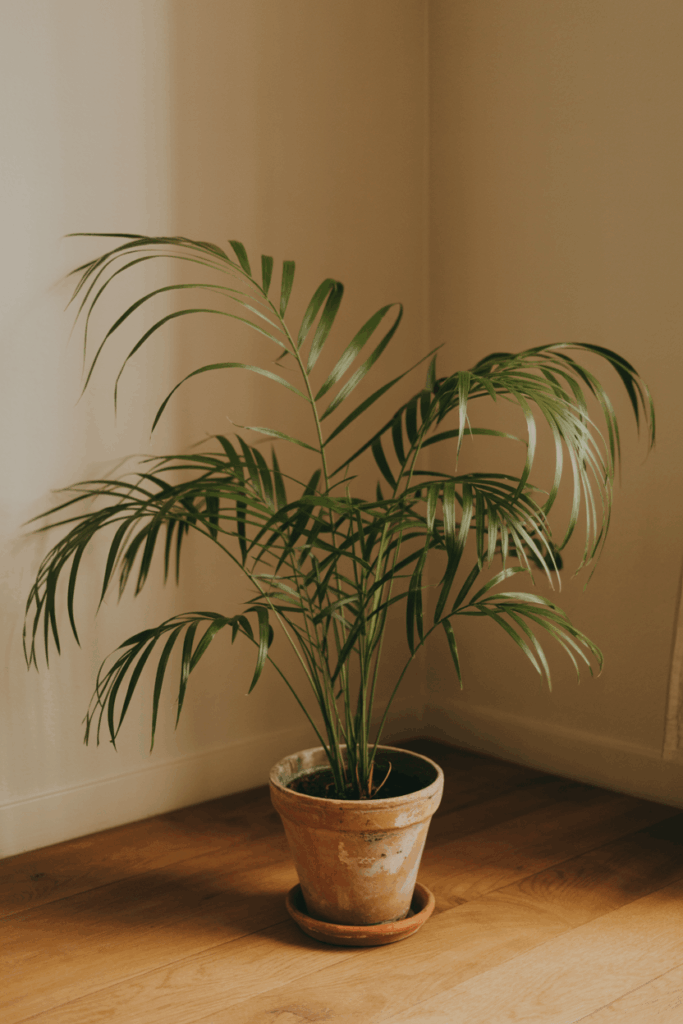
2. Parlor Palm (Chamaedorea elegans)
The low-light champion. Soft, feathery fronds on slow-growing stems. It looks tropical without acting tropical.
Light: Low to medium indirect. A north-facing window suits it fine.
Water: Every 7 to 10 days. Slightly moist soil, never soggy.
Mature size: 2 to 4 feet indoors, but very slow. You’ll have years before it pushes that limit.
Why it earns the spot: One of the few palms that genuinely thrives in dim corners, and it’s been a houseplant staple since the Victorian era for that reason.
Beginner mistake to avoid: Don’t repot for at least two years. Parlor palms hate root disturbance and will sulk for months.
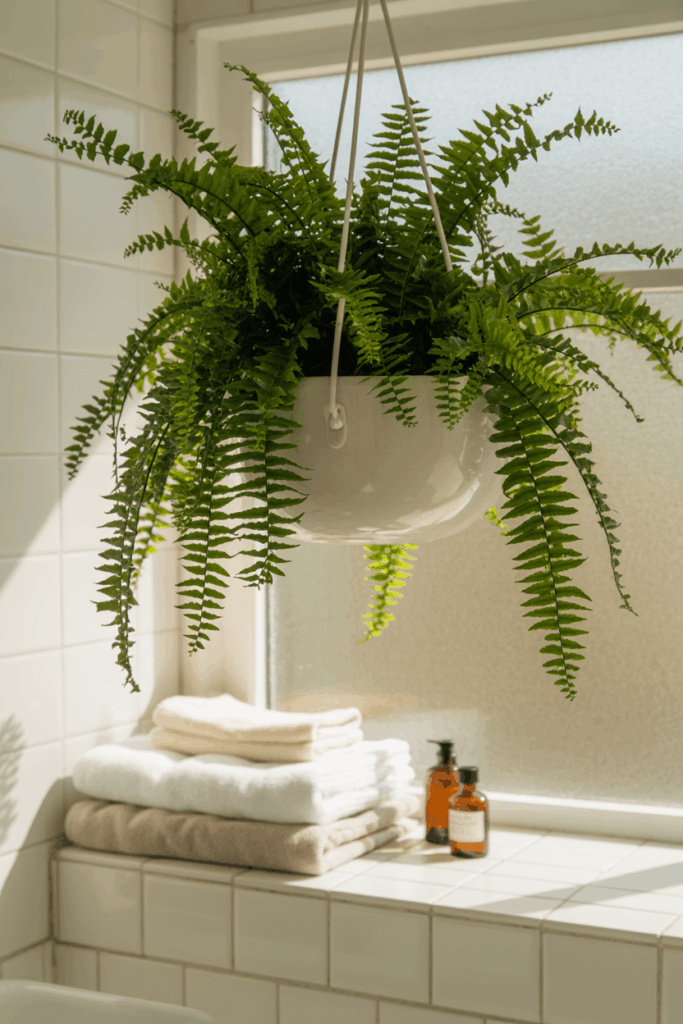
3. Boston Fern (Nephrolepis exaltata)
The bathroom shelf pick. Lacy, arching fronds, classic look, loves humidity that other plants find oppressive.
Light: Bright indirect. Avoid direct afternoon sun.
Water: Twice a week, sometimes more. The soil should stay lightly moist.
Mature size: 2 to 3 feet wide and tall, but containable in a smaller pot.
Why it earns the spot: Boston ferns are one of the few popular ferns the ASPCA confirms as non-toxic to pets, and bathrooms with steam from the shower mimic their natural humidity.
Beginner mistake to avoid: Don’t fight the dropped fronds. Some shedding is normal. Crispy fronds across the board, though, mean the air is too dry.
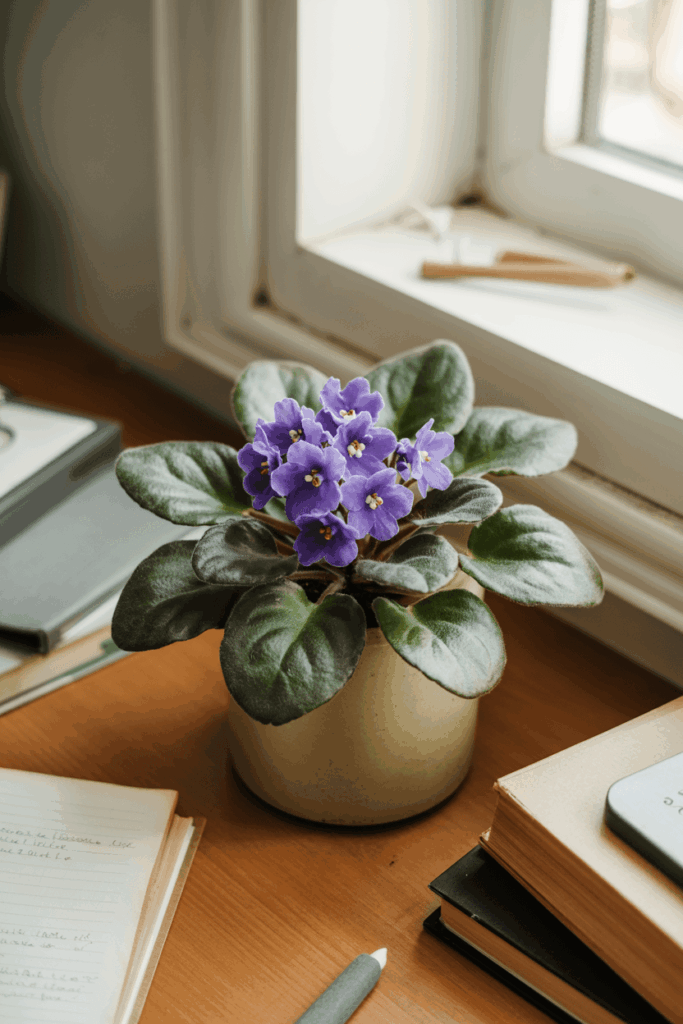
4. African Violet (Saintpaulia)
Real flowers in a fist-sized pot. Fuzzy round leaves, blooms in purple, pink, or white in cycles all year.
Light: Bright indirect. An east-facing window is the dream.
Water: Once a week from the bottom. Set the pot in a dish of water for 20 minutes, then drain.
Mature size: 6 to 8 inches across. Tiny.
Why it earns the spot: Iowa State Extension specifically recommends African violets for windowsill apartment growing, and they’re one of the few non-toxic flowering options that bloom reliably indoors.
Beginner mistake to avoid: Never water the leaves. Cold water on fuzzy foliage causes brown spots that don’t recover.
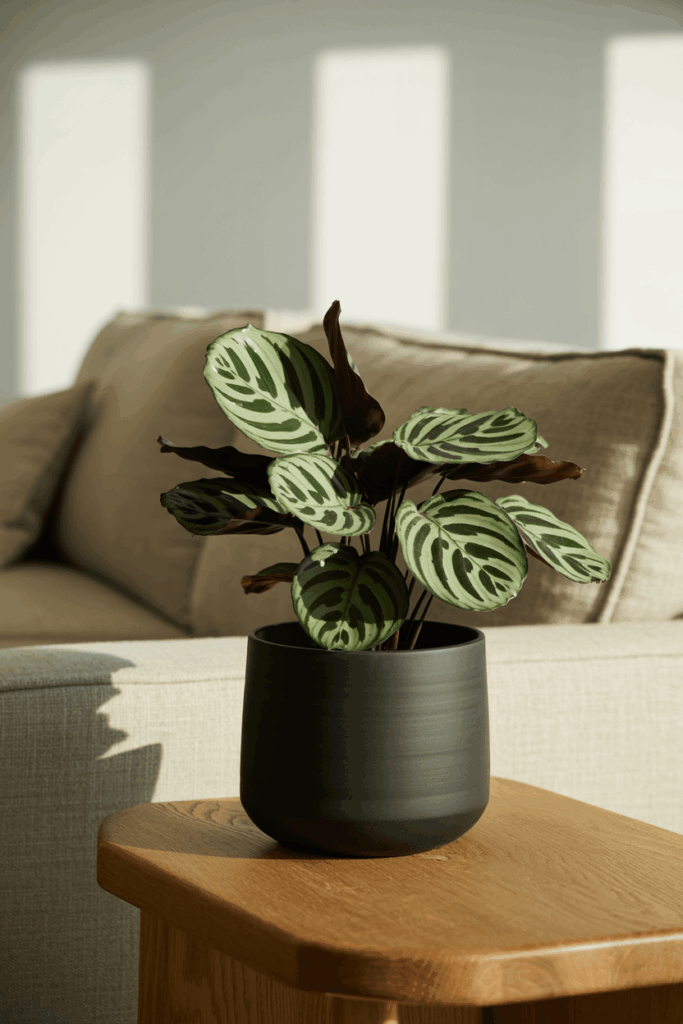
5. Calathea / Prayer Plant (Calathea / Maranta)
The plant with personality. Patterned leaves that fold up at night and open in the morning, like little hands.
Light: Medium indirect. Direct sun fades the patterns.
Water: Keep soil lightly moist. Filtered or distilled water is best.
Mature size: 1 to 2 feet, depending on species.
Why it earns the spot: Both Calathea and Maranta varieties are listed as non-toxic by the ASPCA, and the moving leaves give pets something fascinating but harmless to watch.
Beginner mistake to avoid: Crispy edges almost always mean tap water. These plants are sensitive to chlorine, fluoride, and salts.
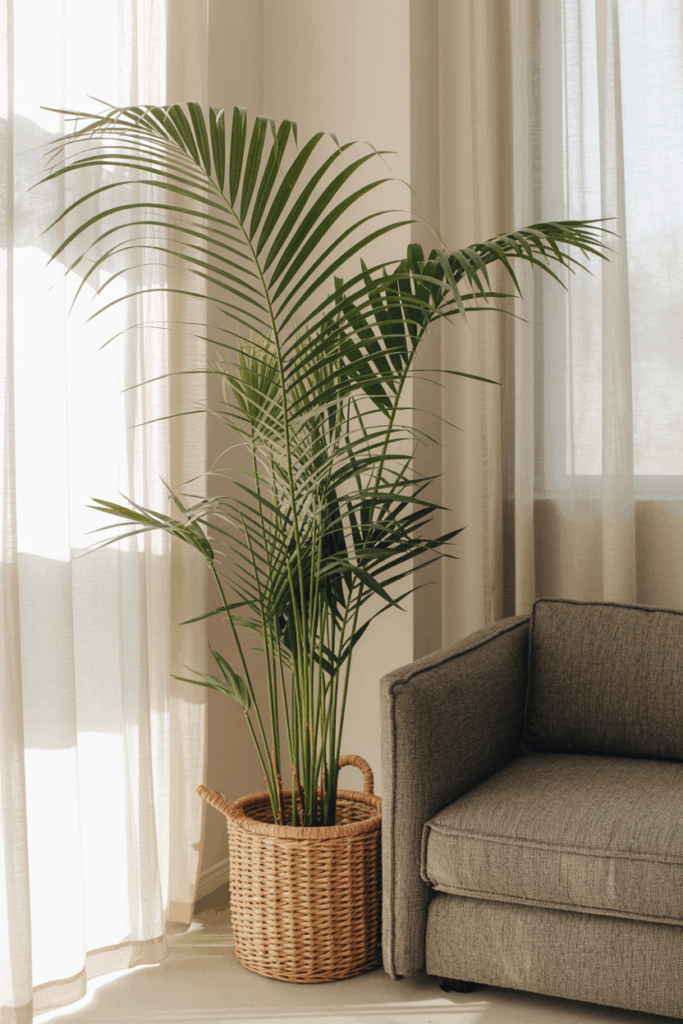
6. Areca Palm (Dypsis lutescens)
Your one statement pick. Tall, feathery, the kind of plant that anchors a corner without being aggressive about it.
Light: Bright indirect. A few hours of gentle morning sun is welcome.
Water: Once a week. Allow the top two inches of soil to dry out first.
Mature size: Indoor specimens stay around 4 to 6 feet, but slow growth means a small one will take years to get there.
Why it earns the spot: Areca palm is widely listed as non-toxic and works as a real architectural element, which most pet-safe plants don’t.
Beginner mistake to avoid: Brown tips often mean overwatering, not under. Resist the urge to “fix” with more water.
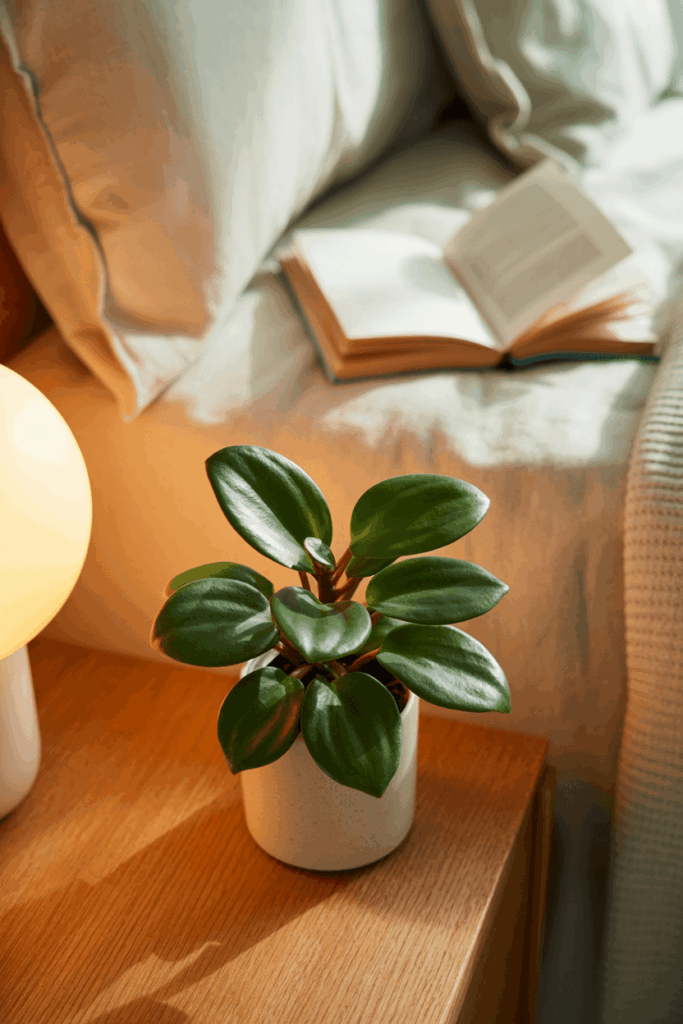
7. Baby Rubber Plant (Peperomia obtusifolia)
Desk-sized and tough. Thick, glossy round leaves on short stems. Often confused with jade, but the rubber plant version is pet-safe while real rubber tree is not.
Light: Medium to bright indirect. Tolerates a few feet back from the window.
Water: Every 10 to 14 days. The thick leaves store water, so it forgives you.
Mature size: 8 to 12 inches.
Why it earns the spot: Peperomias are one of the most apartment-suitable genera in the houseplant world: small, slow, and resilient. The ASPCA lists baby rubber plant as non-toxic to cats and dogs.
Beginner mistake to avoid: Don’t confuse this with the actual rubber tree (Ficus elastica), which is toxic. Check the Latin name on the label.
8. Friendship Plant (Pilea involucrata)
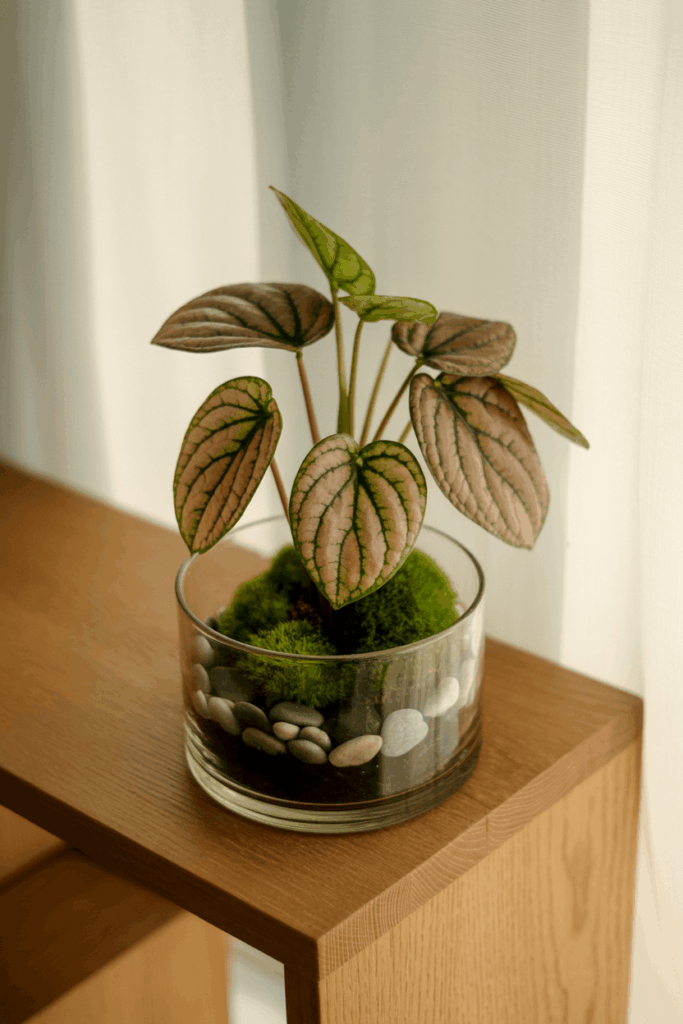
The terrarium-friendly tiny option. Quilted, textured leaves with a coppery sheen, and it stays small enough for a fish bowl or glass jar.
Light: Medium indirect. It actually prefers slightly shadier spots.
Water: Twice a week. Soil should never fully dry out.
Mature size: 6 to 12 inches.
Why it earns the spot: One of the few non-toxic options that thrives in closed terrariums, which doubles as a pet barrier if you have a determined chewer.
Beginner mistake to avoid: Leggy, stretched-out growth means it wants more light. Move it closer to the window before pruning.
That’s the full list. Eight plants, each one cleared by all three filters, each one workable in the kind of apartment you actually rent.
Popular Plants to Skip (and What to Buy Instead)
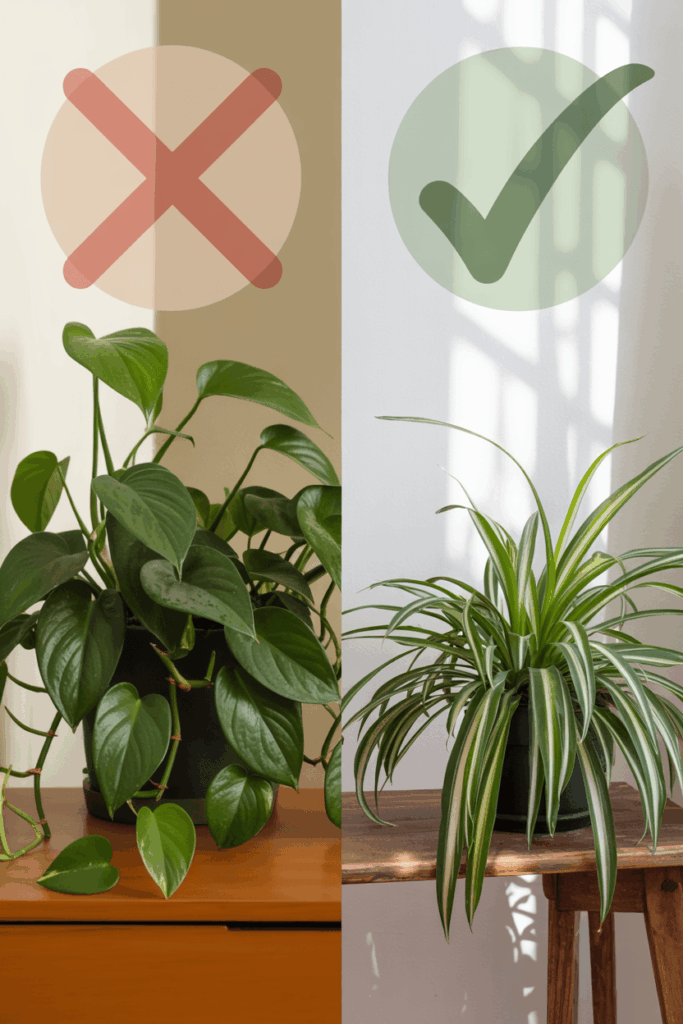
Pinterest pushes a few specific plants to beginners over and over. Most of them are toxic to pets. Here’s the swap chart I wish I’d had.
Pothos → Spider plant. If you wanted the trailing-vine look on a shelf or hanging planter, spider plant gives you the same effect. Bonus: those baby plantlets are basically free new plants.
Monstera → Parlor palm. No perfect swap exists for that famous split leaf, sadly. But if you wanted “tropical statement piece” energy, parlor palm or areca palm gives you the same vibe at a similar height without the toxicity.
ZZ plant → Peperomia obtusifolia. ZZ plants get pushed for their toughness. Peperomia is nearly as forgiving, smaller, and pet-safe.
Peace lily → African violet. If you wanted indoor flowers that bloom reliably, African violet does it in a fraction of the space without the calcium oxalate crystals that make peace lily a problem for cats and dogs.
Snake plant → Areca palm. Both bring vertical interest. Areca is taller and softer, but it’s the closest non-toxic substitute for the snake plant silhouette.
Cross-checking your existing collection against the ASPCA database takes ten minutes and is worth doing tonight, even if you’ve owned a plant for years without incident.
Apartment Reality Check: Light, Space, and the Lease
The honest truth about apartment plant care is that the constraints aren’t just botanical. They’re architectural and contractual.
Reading your light without a meter. Hold your hand a foot above the spot at midday. A sharp, dark shadow with crisp edges means bright light. A soft, fuzzy shadow means medium. Barely any shadow means low. Cornell Cooperative Extension uses essentially this same shadow test in their houseplant guidance.
Renter-safe placement. Skip drilling. Command-strip ceiling hooks rated for 5 pounds handle most small hanging planters. Tension rods across windows work for trailing plants. Wide, low pots stabilize floor plants better than tall ones if you have a curious pet.
Supplemental lighting questions. If you’re considering a grow light because the apartment is genuinely dim, parlor palm and pilea will manage without one. The other six prefer real window light and will tell you quickly if they’re struggling.
The lease-end test. Pick plants you can physically move. A 6-foot fiddle-leaf fig in a 50-pound pot is a problem when the moving truck shows up. Every plant on this list fits in a banker’s box.
Apartments aren’t a limitation, just a brief.
Living With a Curious Pet
Non-toxic isn’t a force field. A determined cat will chew a non-toxic leaf and still throw up on your rug. The label is the floor of safety, not the ceiling.
For cats. Cats are vertical thinkers. Top of the fridge, top of the bookshelf, the curtain rod, all of it is reachable. Hanging planters help, but assume any surface in the apartment is fair game.
For dogs. Dogs are mostly counter-surfers and chewers. Floor plants in heavy pots discourage tipping, and a deep cachepot makes it harder for them to drag soil out.
When to call the vet. Even with non-toxic plants, vomiting that doesn’t stop, lethargy, or trouble breathing means call. Save the ASPCA Animal Poison Control Center number in your phone now, before you need it: (888) 426-4435.
Pet-safe plants reduce risk. They don’t eliminate the need for a curious pet to be gently redirected.
How to Keep Any of These Alive Past Month Three
The three habits that kill more beginner plants than anything else are also the ones easiest to fix.
Overwatering. Penn State Extension and Cornell both flag overwatering as the leading cause of houseplant death. The fix is boring: stick a finger an inch into the soil before every watering. If it’s damp, walk away.
Repotting too soon. New plants want to settle. Wait at least 6 to 8 weeks before moving them to a new pot, and resist upsizing more than one inch in pot diameter at a time.
Moving the plant around. Plants acclimate to a single light condition. Constantly relocating them, even between similar-looking spots, stresses them out. Pick the corner. Leave the corner alone.
If you do nothing else, water less than you think, repot less than you think, and move plants less than you think. That covers about 80 percent of the long-term care for everything on this list.
FAQs
Are spider plants really safe for cats, even though my cat vomits after chewing one?
Yes, spider plants are confirmed non-toxic by the ASPCA for both cats and dogs. The vomiting is usually a mild reaction to fiber, not poisoning. Some cats are also drawn to spider plants like catnip. If symptoms last more than a day or seem severe, call your vet to be safe.
What’s the best pet-safe indoor plant for a low-light apartment?
Parlor palm is the strongest pick. It tolerates north-facing windows and dim corners that would kill most houseplants, stays slow-growing, and is ASPCA non-toxic to cats and dogs. Pilea (friendship plant) is a smaller backup option if you want something desk-sized for a shadier shelf.
Can a non-toxic plant still make my pet sick?
Yes. Non-toxic means the plant won’t poison your pet, but a determined chewer can still get an upset stomach, vomiting, or diarrhea from any plant material. Fertilizer, pesticide residue, or soil ingestion can also cause issues. Treat non-toxic as the floor of safety, not a guarantee.
How do I stop my cat from chewing on my houseplants?
Move plants out of jumping range, use hanging planters, and offer cat grass as a legal alternative. Citrus peels around the soil deter most cats. Spray bottles work short-term but rarely change long-term behavior. Honestly, the best move is just choosing pet-safe plants from the start.
Which popular houseplants should I avoid completely if I have pets?
Skip pothos, monstera, ZZ plant, peace lily, snake plant, philodendron, and rubber tree (Ficus elastica). All are toxic to cats and dogs. Lilies are especially dangerous to cats and can cause kidney failure from even small exposures. Always cross-check the Latin name on the ASPCA database before buying.
What should I do if my pet eats one of my plants?
Call the ASPCA Animal Poison Control Center at (888) 426-4435 or your vet immediately, even if the plant is on the non-toxic list. Note the plant’s full Latin name, how much was eaten, and when. Watch for vomiting, lethargy, drooling, or breathing trouble — those mean go in person.
What Actually Matters
The list isn’t really about eight plants. It’s about not having to second-guess yourself every time you walk past one.
Start with one. Spider plant or parlor palm if you’ve killed things before. African violet if you want flowers without floor space. Peperomia if your “available real estate” is a desk corner.
Keep the ASPCA poison control number saved. Cross-check anything you’re gifted before it leaves the front hallway. Trust the soil-feel test more than any watering schedule on a tag.
I almost bought a pothos. Now I have a parlor palm in the dimmest corner of my workspace and a spider plant sending out babies on the shelf. The difference between those two outcomes was ten minutes on the ASPCA website.