

I bought my first “air-purifying” snake plant after a Pinterest pin promised it would detox my bedroom overnight. That’s not how plants work, but the snake plant earned its spot anyway. The truth about Indoor Plants That Clean Air Naturally is messier than the headlines suggest, and far more useful once you stop expecting miracles.
Here’s what nobody at the garden center mentions: the famous NASA study everyone cites was run inside a sealed chamber the size of a closet. Your apartment is not a sealed chamber. But that doesn’t mean these plants are useless. It just means we need to be honest about what they actually do.
TL;DR
- Houseplants alone won’t replace an air purifier. Drexel University researchers found you’d need hundreds of them to match a basic HEPA unit.
- Indoor Plants That Clean Air Naturally do help with humidity, trace VOC absorption, and measurable mental wellbeing.
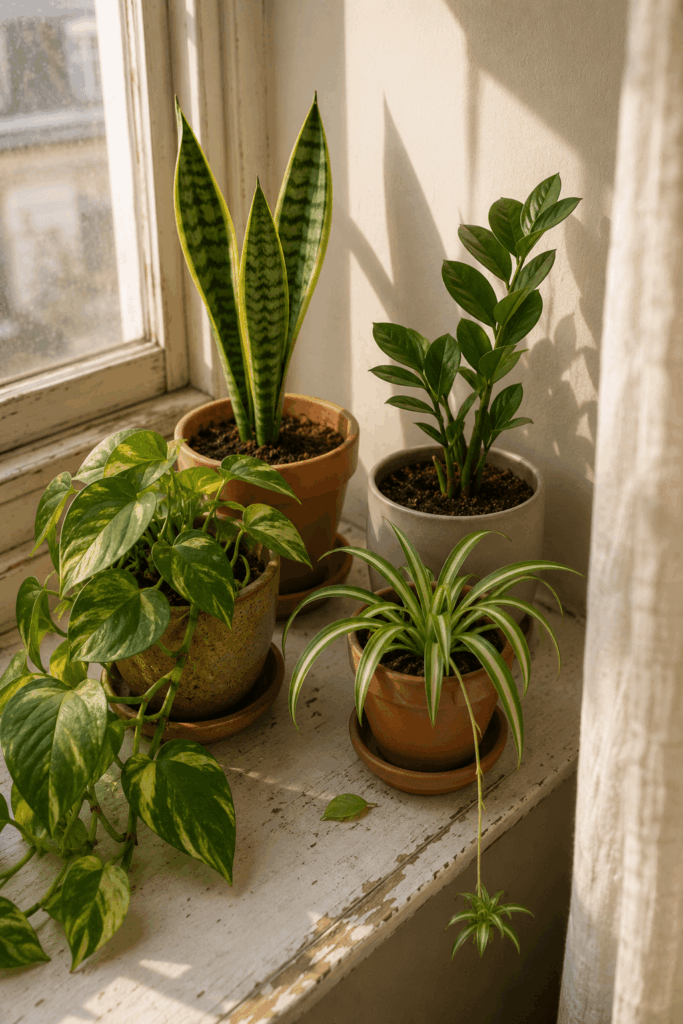
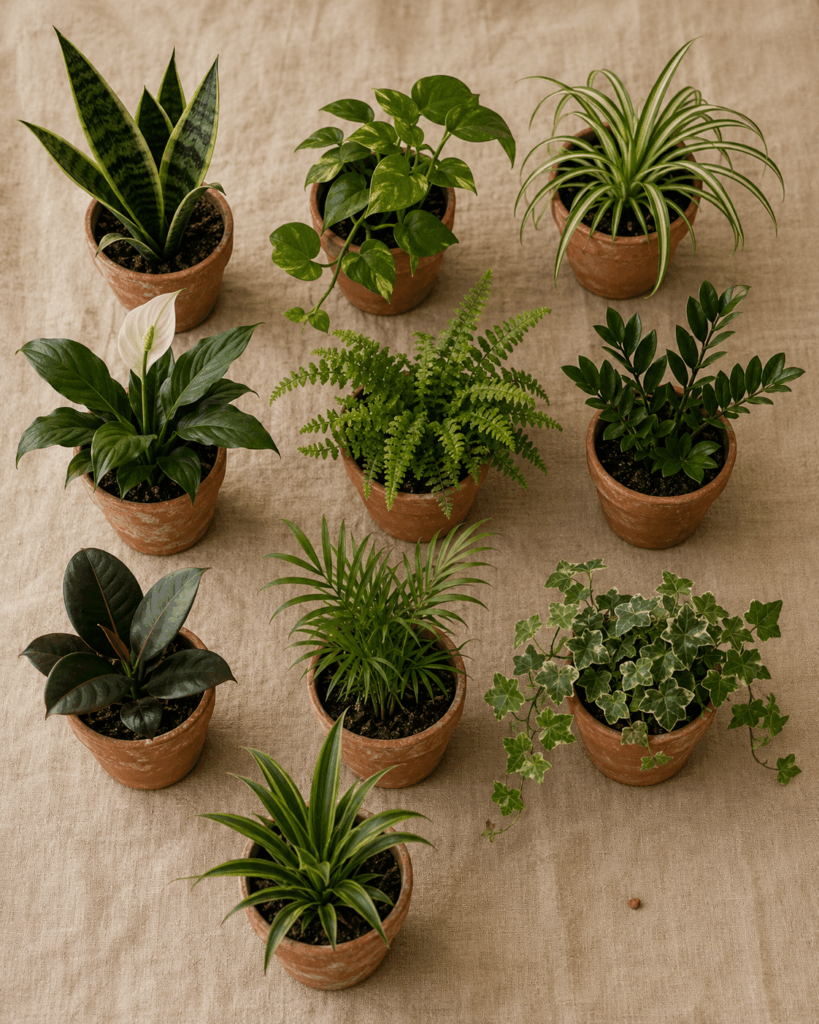
- Best beginner picks: snake plant, pothos, spider plant, ZZ plant, peace lily.
- Pet households should stick to spider plant, Boston fern, areca palm, and parlor palm. Every plant below is flagged for cat and dog safety in its heading.
The NASA Study, Honestly
In 1989, NASA tested whether common houseplants could remove volatile organic compounds (VOCs) like formaldehyde and benzene from sealed chambers. The results were impressive. The chambers were also tiny, completely closed, and nothing like a real apartment.
In 2019, Drexel University researchers reanalyzed the original NASA data alongside decades of follow-up studies. Their conclusion was sobering. To match the air-cleaning power of a basic ventilation system, you’d need somewhere between 10 and 1,000 plants per square meter of floor space. A studio apartment would need a small jungle, and even then the math barely works.
So why bother with houseplants at all? Because they do other things, and those things are real.
Plants raise indoor humidity through transpiration, which matters more than people realize when you live with central heating. The EPA notes that indoor humidity between 30 and 50 percent reduces respiratory irritation and slows the spread of airborne viruses. A grouping of three or four plants in one room nudges humidity up by a measurable amount.
They also do something quieter. Multiple peer-reviewed studies have found that being around live plants lowers self-reported stress, improves focus, and increases the perceived freshness of indoor air. That last one is psychological, not chemical, but it still counts toward how a room feels.
The honest takeaway: if you’re worried about wildfire smoke or off-gassing from new furniture, buy a HEPA purifier. If you want a calmer apartment with slightly better humidity and a daily reason to look up from your phone, buy plants.
How I Picked These 10 Plants
Three criteria, applied honestly:
- Research-backed: Either appeared in the original NASA study or has documented humidity and VOC effects in extension service literature.
- Beginner-forgiving: Tolerates inconsistent watering, low to medium light, and the occasional missed week.
- Pet status flagged: Every plant below is checked against the ASPCA toxic plant database. If you have a cat or dog, the safety flag is in the heading. No buried surprises.
That last filter knocked out several popular “top air cleaners” you’ll see on competing lists. I left them in anyway with clear toxicity warnings, because honest information beats omission. You can decide whether a particular plant is worth the placement workaround.
The 10 Indoor Plants That Clean Air Naturally, Ranked
1. Snake Plant (Dracaena trifasciata): Toxic to Pets
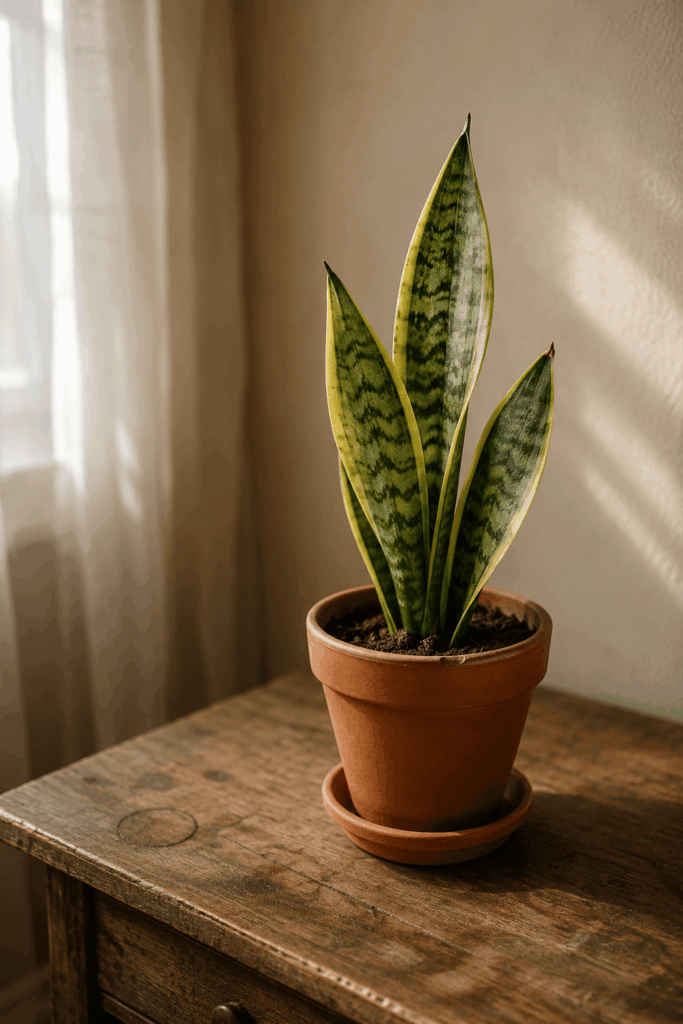
Almost the official houseplant of “I forgot.” Stiff upright leaves with pale green banding, slow growth, and zero drama. NC State Extension lists it as one of the most drought-tolerant indoor plants available.
Light: Tolerates everything from low light to bright indirect.
Water: Every two to three weeks. Let the soil dry completely first.
Pets: Toxic to cats and dogs (mild oral irritation per ASPCA).
Removes: Formaldehyde and benzene in NASA chamber tests.
Beginner trap: Watering on a schedule. Snake plants rot if you treat them like a thirsty fern.
2. Golden Pothos (Epipremnum aureum): Toxic to Pets
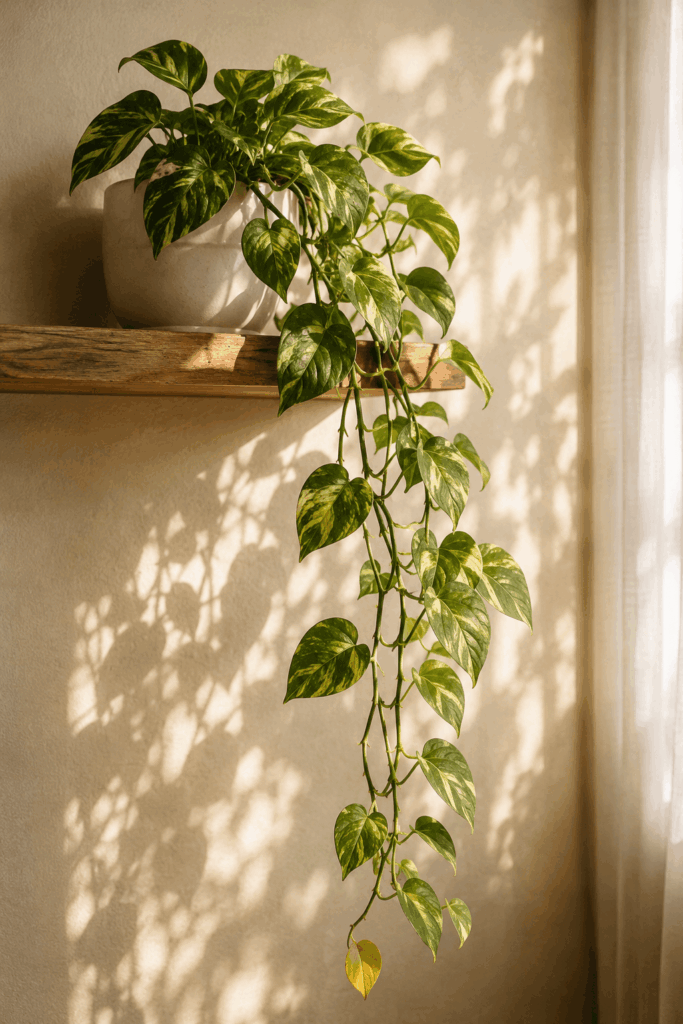
The vine that practically shouts when it’s thirsty. Heart-shaped leaves splashed with cream and gold, drooping dramatically when dry and perking back up within hours of watering.
Light: Low to bright indirect. Variegation fades in deep shade.
Water: Once a week, when the top inch of soil feels dry.
Pets: Toxic to cats and dogs. Causes oral irritation and drooling per ASPCA.
Removes: Formaldehyde, benzene, and xylene in the NASA tests.
Beginner trap: Hanging it where pets can chew the trailing vines. Place high or behind a barrier.
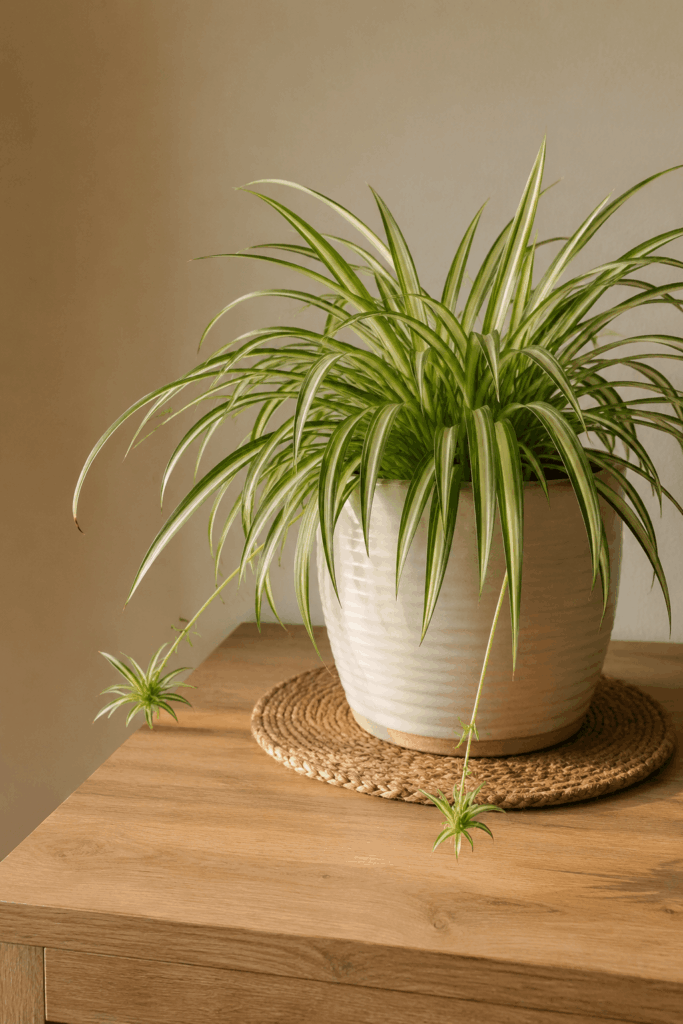
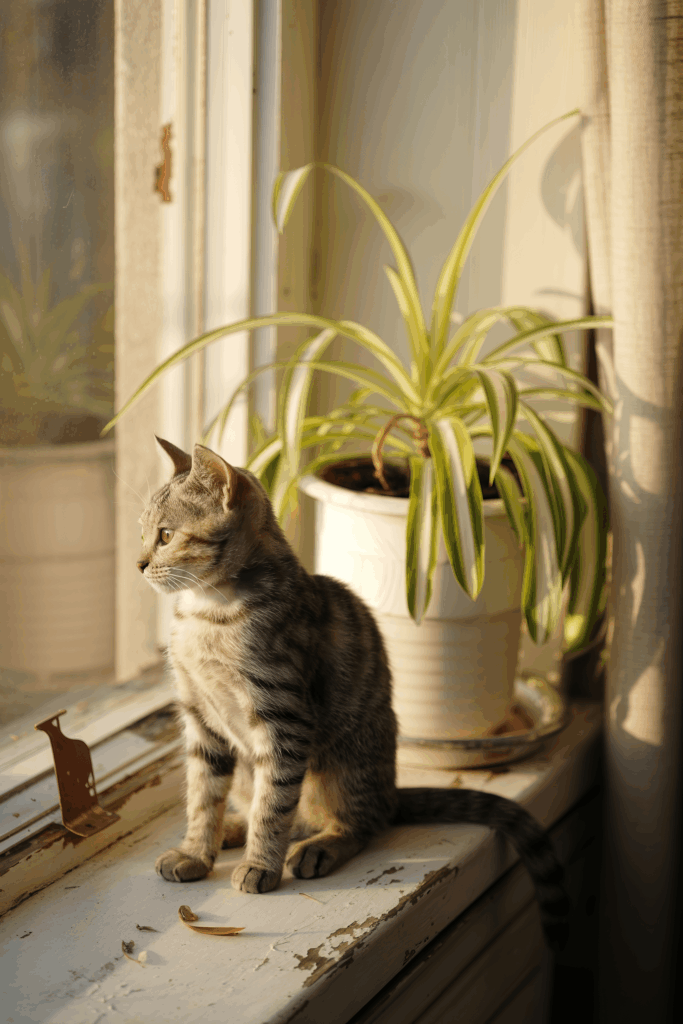
3. Spider Plant (Chlorophytum comosum): Pet-Safe
The friendliest plant on this list. Long arching leaves with cream stripes, plus baby plantlets that dangle from the parent like green parentheses. Easy to propagate by snipping a plantlet and rooting it in water.
Light: Bright indirect is ideal, but tolerates medium.
Water: Weekly. Let the surface dry between waterings.
Pets: Non-toxic to cats and dogs per ASPCA. Cats find them mildly intoxicating, but it’s not harmful.
Removes: Formaldehyde, xylene, and carbon monoxide in NASA tests.
Beginner trap: Tap water with high fluoride causes brown leaf tips. Use filtered or rainwater if yours is heavily treated.
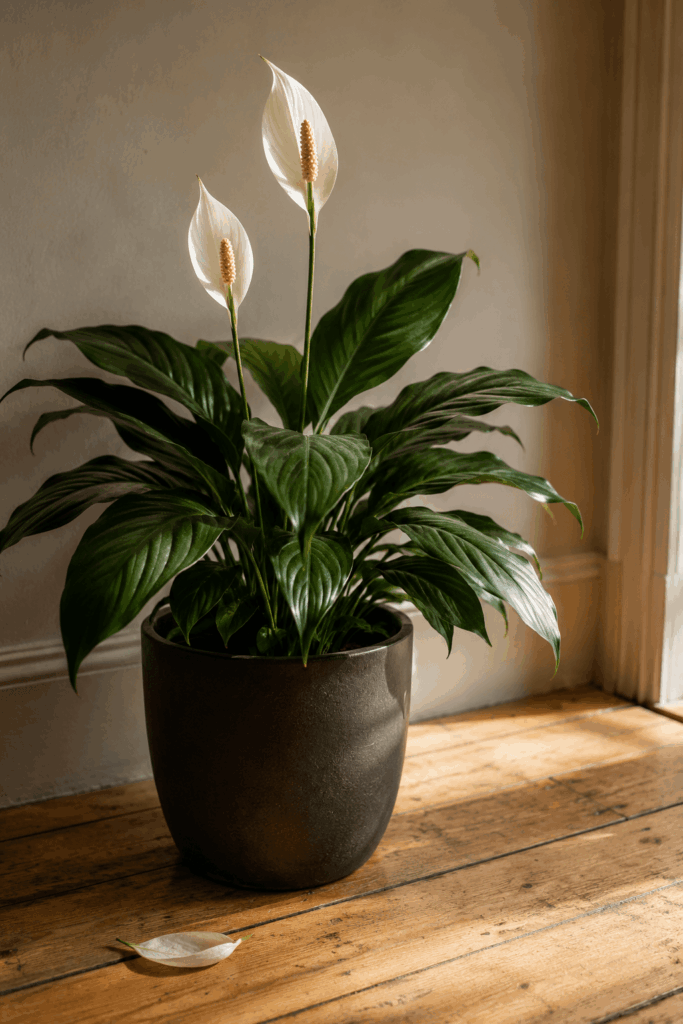
4. Peace Lily (Spathiphyllum): Toxic to Pets
The drama queen with manners. Dark green leaves and white spathes that look like flowers but technically aren’t. Wilts visibly when thirsty and recovers within hours of watering.
Light: Medium indirect. Bright direct sun scorches the leaves.
Water: Weekly, or whenever the leaves start to droop slightly.
Pets: Toxic to cats and dogs per ASPCA. Causes oral irritation and vomiting.
Removes: Ammonia, benzene, formaldehyde, and trichloroethylene.
Beginner trap: Sitting it in standing water. Peace lilies tolerate moisture, not soggy roots. Drainage matters.
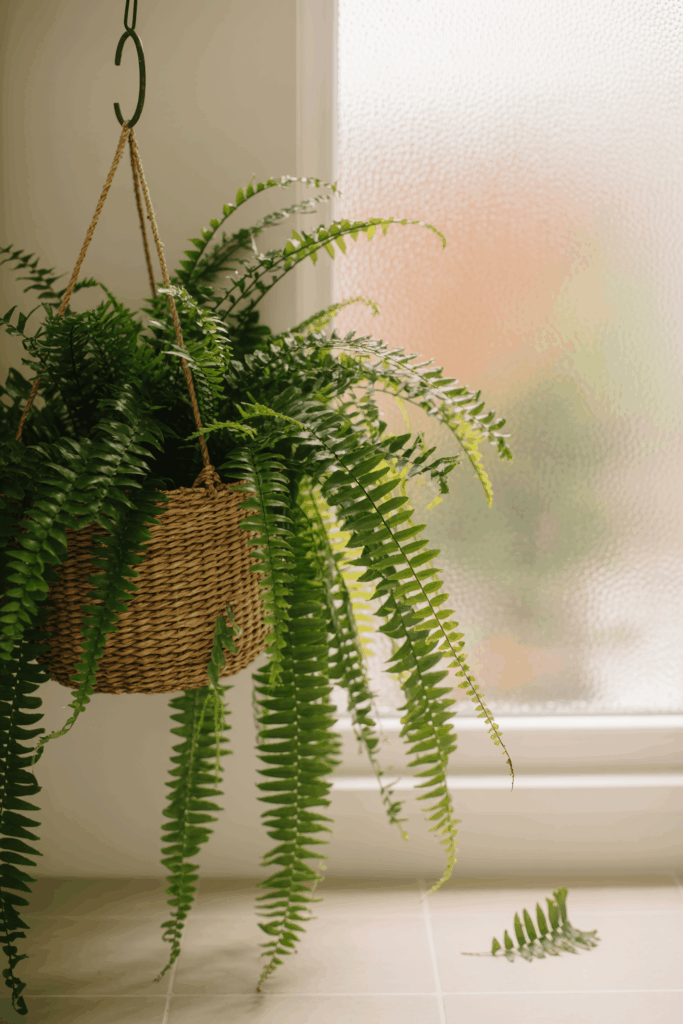
5. Boston Fern (Nephrolepis exaltata): Pet-Safe
The humidity champion. Soft, feathery fronds and a strong preference for steamy bathrooms. The only plant on this list that genuinely demands consistent watering.
Light: Bright indirect, no direct sun.
Water: Keep soil consistently moist, never soggy.
Pets: Non-toxic to cats and dogs per ASPCA.
Removes: Formaldehyde and xylene; among the most effective humidifiers on this list.
Beginner trap: Buying one for a dry, heated bedroom. Bostons drop leaves in low humidity within weeks. Bathroom or kitchen only.
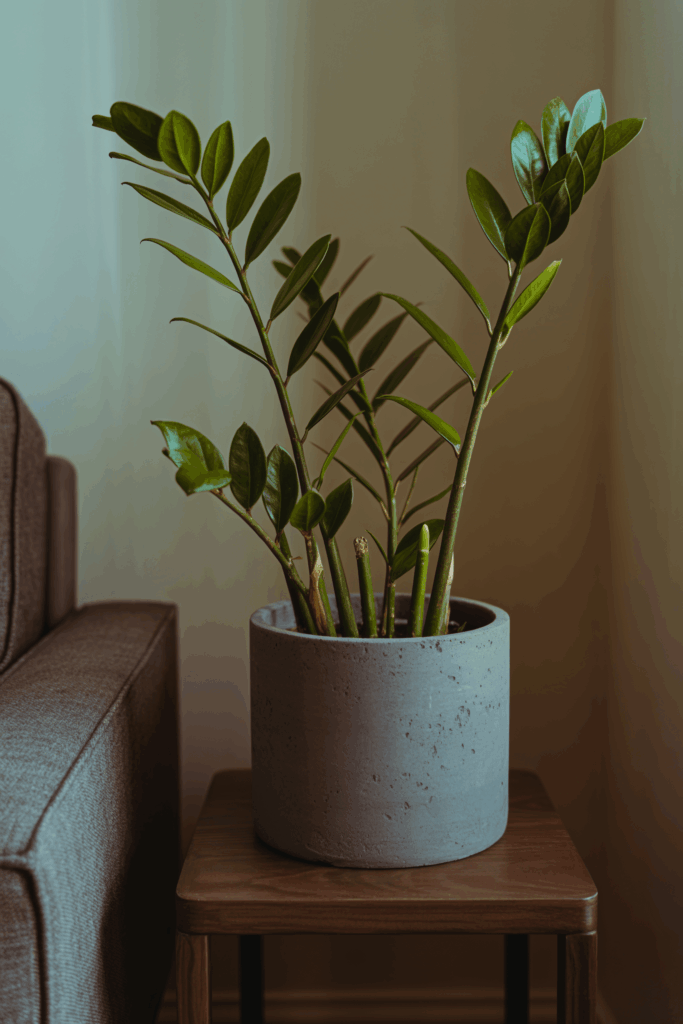
6. ZZ Plant (Zamioculcas zamiifolia): Toxic to Pets
The plant for people who travel. Glossy waxy leaves on upright stems, fed by underground rhizomes that store water like camels. Tolerates dim corners that kill almost everything else.
Light: Low to bright indirect. One of the few plants that genuinely tolerates fluorescent office light.
Water: Every two to three weeks.
Pets: Toxic to cats and dogs per ASPCA. Causes oral irritation if chewed.
Removes: Xylene, toluene, and benzene per follow-up studies.
Beginner trap: Treating it like a tropical. ZZs go dormant in winter and need almost no water from November to February.
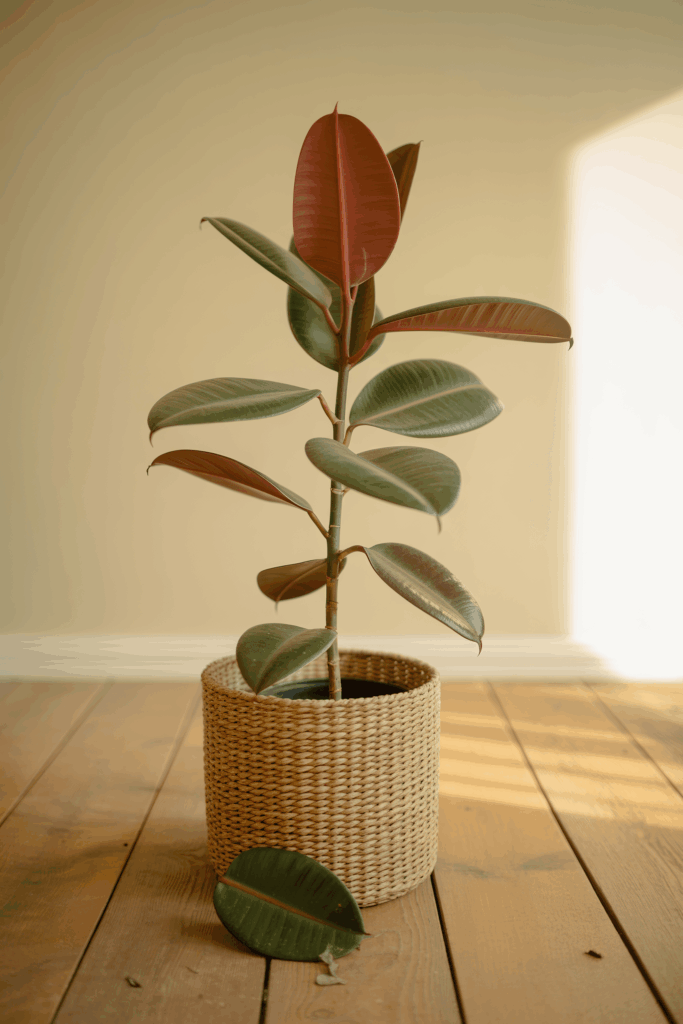
7. Rubber Plant (Ficus elastica): Toxic to Pets
The grown-up’s first floor plant. Thick burgundy or deep green leaves with a leathery sheen, slow to mature, and visually anchoring at full size.
Light: Bright indirect. Direct afternoon sun burns the leaves.
Water: Every 7 to 10 days when the topsoil dries.
Pets: Toxic to cats and dogs per ASPCA. Sap can also irritate human skin.
Removes: Formaldehyde; one of the better large-leaf options for VOC absorption surface area.
Beginner trap: Moving it around. Rubber plants drop leaves when relocated. Pick a spot and commit.
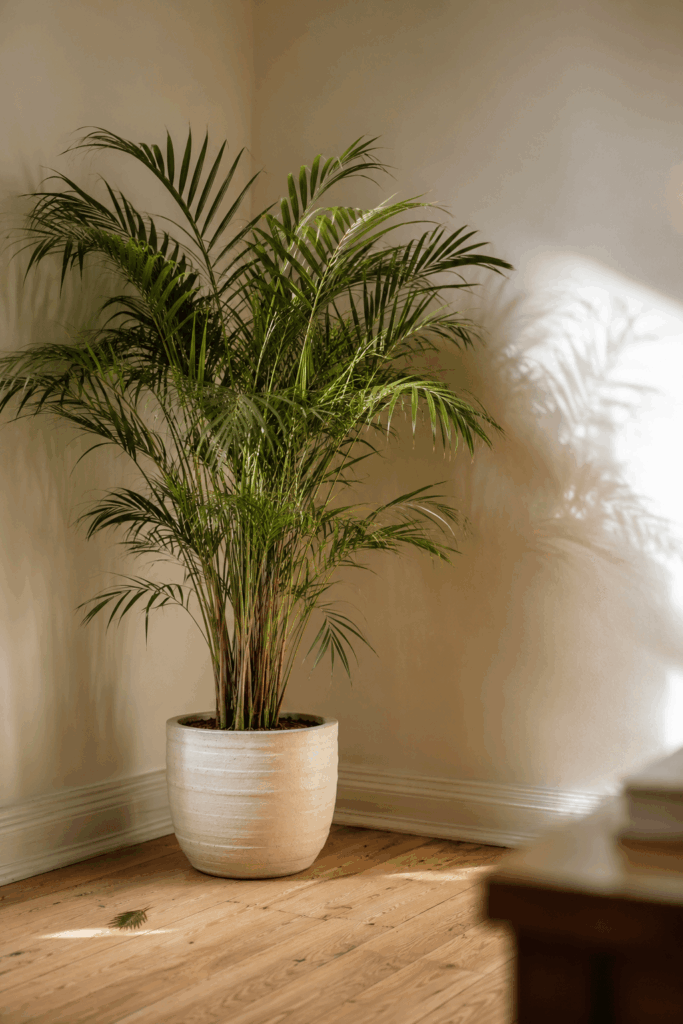
8. Areca Palm (Dypsis lutescens): Pet-Safe
The apartment-friendly tropical. Feathery green fronds on multiple slim trunks, eventual height of five to seven feet. Penn State Extension highlights it as one of the highest-transpiring houseplants, meaning real humidity contribution.
Light: Bright indirect. Tolerates a few hours of morning sun.
Water: Weekly in summer, every 10 days in winter.
Pets: Non-toxic to cats and dogs per ASPCA.
Removes: Xylene and formaldehyde, plus strong humidity contribution from high transpiration rates.
Beginner trap: Buying a small one expecting fast growth. Arecas are slow. Buy the size you want.
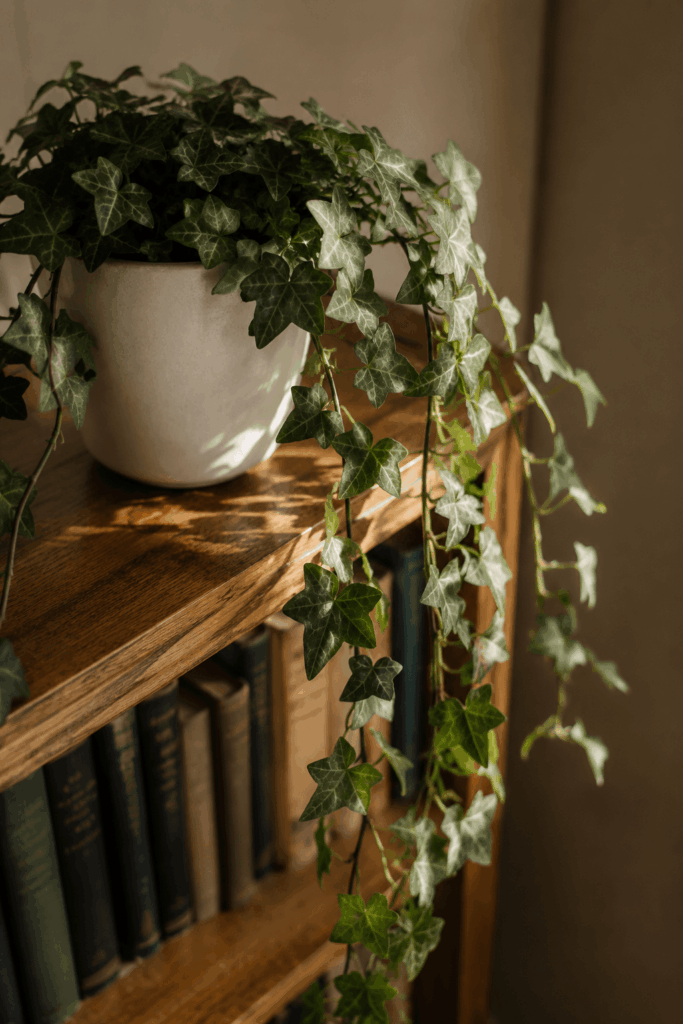
9. English Ivy (Hedera helix): Toxic to Pets
The classic cascading vine. Penn State Extension notes it as one of the most studied indoor plants for VOC removal, particularly mold spores.
Light: Medium to bright indirect.
Water: Every 5 to 7 days. Let the topsoil dry slightly.
Pets: Toxic to cats and dogs per ASPCA. Causes vomiting and abdominal pain.
Removes: Formaldehyde, benzene, and airborne mold in published studies.
Beginner trap: Letting spider mites move in. English ivy is mite-prone in dry indoor air; mist weekly or shower the leaves monthly.
10. Dracaena (Dracaena fragrans): Toxic to Pets
The vertical statement. Slim trunk topped with a tuft of long strap-shaped leaves, often sold as “corn plant” because the foliage resembles field corn. Forgiving and slow-growing once established.
Light: Medium to bright indirect.
Water: Every 7 to 10 days.
Pets: Toxic to cats and dogs per ASPCA. Causes vomiting and dilated pupils in cats.
Removes: Formaldehyde, benzene, and trichloroethylene per the NASA study.
Beginner trap: Using fluoridated tap water. Dracaenas develop brown leaf tips faster than spider plants. Distilled or rainwater fixes it.
Pet-Safe Picks at a Glance
If you have a cat that chews everything or a dog that nibbles low-hanging leaves, this is the section to bookmark.
From the list above, three plants are confirmed non-toxic by the ASPCA:
- Spider plant — the easiest pet-safe starter
- Boston fern — high humidity contribution, demands moisture
- Areca palm — the floor-plant statement piece
Two more pet-safe plants worth adding outside this list:
- Parlor palm (Chamaedorea elegans) — low-light tolerant, slow growing, ASPCA non-toxic
- Bamboo palm (Chamaedorea seifrizii) — included in the original NASA study, non-toxic to pets
Note that “non-toxic” doesn’t mean digestible. A cat that eats half a fern will still vomit. The flag means the plant won’t cause systemic poisoning, kidney damage, or worse. Watch what your pets actually go for, and place anything they target high or in a separate room.
Where to Put Them in a Small Apartment
Most apartment plant problems trace back to placement, not care. Match the plant to the room’s worst feature.
Bedroom: Snake plant. It’s one of the few houseplants that releases oxygen at night through CAM photosynthesis instead of consuming it. Place it on a dresser or nightstand.
Bathroom: Boston fern or peace lily. Both love the steamy humidity that destroys most other plants. A windowless bathroom won’t work; even peace lilies need some indirect light.
Kitchen window: Spider plant. Tolerates the temperature swings and steam from cooking. Bonus: pet-safe if your cat hangs out on the counter.
Low-light corner: ZZ plant or pothos. Both are the closest things to “no light” plants you’ll find. They won’t thrive in true darkness, but they’ll survive corners that kill other species.
Living room floor: Areca palm or rubber plant. Both grow tall enough to anchor a room without needing a shelf. Areca for pet households, rubber plant for the dramatic dark-leaf look.
If your apartment has a north-facing studio window: Stick to ZZ, pothos, and snake plant. Skip everything that requires “bright indirect” because north windows don’t deliver it through most of the year.
If you have a radiator under the only good window: Avoid Boston fern and peace lily. The dry heat will crisp their leaves within a season. Snake plant and ZZ tolerate the conditions.
How Many Do You Actually Need?
For measurable VOC removal at apartment volume, the honest answer from Drexel’s research is: more than is realistic to own. We’re talking 20 to 100 plants for a typical 600-square-foot studio. Nobody wants that.
For humidity and wellbeing, Penn State Extension recommends grouping plants together rather than scattering them. Three medium plants placed within a few feet of each other create a small humidity microclimate. Five plants spread across an entire apartment do less.
A defensible target: 1 to 3 medium plants per room, grouped where you spend time. Bedroom, living room, kitchen. That’s 3 to 9 plants total for a one-bedroom apartment, which is plenty for most beginners and won’t overwhelm your watering routine.
If you want to go bigger eventually, fine. But buying 15 plants in week one is the fastest way to end up with 15 dead plants by month three.
Beginner Mistakes That Kill These “Easy” Plants
Iowa State Extension lists overwatering as the leading cause of houseplant death across all species. Not pests. Not light. Water.
Watering on a schedule: Every plant on this list has different needs. Test the soil with your finger before reaching for the watering can. Dry to the second knuckle? Water. Still damp? Wait.
Confusing “low-light tolerant” with “no light”: Even snake plants and ZZs need some daylight, even if filtered through a window. A truly dark hallway will eventually kill them.
Skipping drainage holes: Decorative pots without drainage are plant coffins. Use a plastic nursery pot inside the pretty one and lift it out to water.
Ignoring winter dormancy: From November through February, most of these plants stop growing. Cut watering by half. Stop fertilizing. Let them rest.
Fertilizing a stressed plant: Brown leaves don’t mean the plant is hungry. Usually the opposite. Diagnose first. Feed only healthy, actively growing plants.
Do indoor plants actually clean the air in my apartment?
Honestly, not enough to replace a HEPA purifier. Drexel University researchers found you’d need 10 to 1,000 plants per square meter to match basic ventilation. What plants actually do is raise indoor humidity, absorb trace VOCs, and lower stress in measurable ways. Useful, just not miraculous.
What is the best air-purifying indoor plant for beginners?
A snake plant. It tolerates low light, survives missed waterings for weeks, and was one of the strongest performers in the original NASA chamber tests. Pothos comes second because it droops dramatically when thirsty, telling you exactly when to water. Both are nearly impossible to kill in a normal apartment.
Are air-purifying plants safe for cats and dogs?
Some are, most aren’t. From this list, only spider plant, Boston fern, and areca palm are confirmed non-toxic by the ASPCA. Snake plant, pothos, peace lily, ZZ, rubber plant, English ivy, and dracaena all cause oral irritation, vomiting, or worse if chewed. Place toxic plants high or in pet-free rooms.
How many plants do I need to clean the air in one room?
For real VOC removal, more than is realistic to own. For humidity and wellbeing benefits, Penn State Extension recommends grouping three medium plants together rather than scattering them. A defensible target is one to three plants per room, placed where you spend time. Bedroom, living room, kitchen.
Do air-purifying plants work at night?
Most plants release oxygen during the day and consume it at night, but snake plants are different. They use CAM photosynthesis, opening their pores after dark and releasing oxygen overnight. That’s why snake plants are the standard bedroom recommendation, especially for small rooms with closed doors.
Can indoor plants reduce mold and dust?
English ivy showed measurable mold-spore reduction in published studies, and any plant with broad leaves traps a small amount of airborne dust. Neither effect is significant compared to running an air filter or vacuuming with HEPA. Plants help around the edges, not as primary mold control.
What Actually Matters
The truth about Indoor Plants That Clean Air Naturally is simpler than the marketing suggests. They won’t replace a HEPA purifier. They will raise humidity, contribute trace VOC absorption, and make your apartment feel calmer in ways that show up on stress questionnaires.
If you’re starting from zero, buy a snake plant and a pothos this week. Place them somewhere you’ll see them daily. Water both about every two weeks. That’s the entire onboarding.
If you have pets, swap in a spider plant and a parlor palm instead. Same care difficulty, no toxicity worry.
The Pinterest pin that sold me on a snake plant was wrong about overnight detox. But the plant itself, three years and two repots later, is still on a windowsill doing exactly what it was meant to do: nothing dramatic, and a little bit of good.