
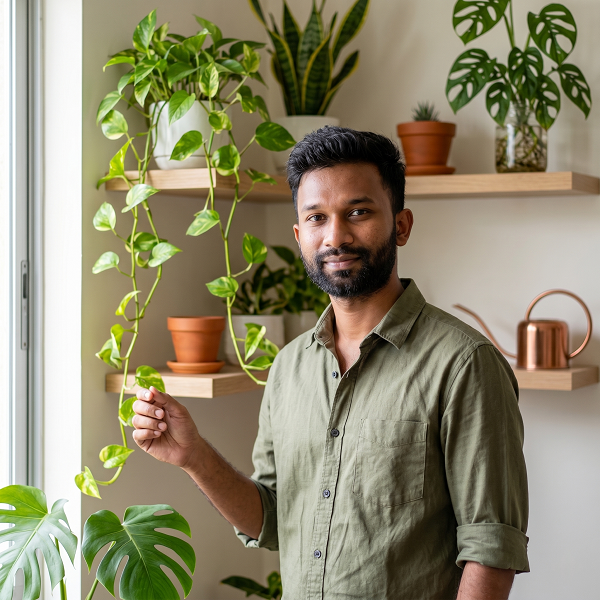
The first plant I put in my bedroom died in three weeks. I’d assumed it wanted morning sun and didn’t realize the window faced north.
That’s how most people start with low-maintenance bedroom plants. Confident, then confused, then quietly tossing a crispy fern in the bin.
What I’ve learned since: most bedroom plants don’t die from neglect. They die from misplacement, overwatering, or being chosen for their Instagram looks instead of their tolerance for a small apartment with one weak window and a constantly running HVAC system.
This list is the honest shortcut to bedroom air purifying plants low maintenance enough for any beginner. Seven that survive realistic bedroom conditions, two that release oxygen at night, three that won’t poison your cat, and zero that need a humidity dome or a fancy grow light.
I’ll also be honest about the “air purifying” claim. It’s more nuanced than most articles let on.
TL;DR
- Plants won’t measurably scrub a bedroom with normal HVAC airflow, but a few release oxygen at night and tolerate low light better than most.
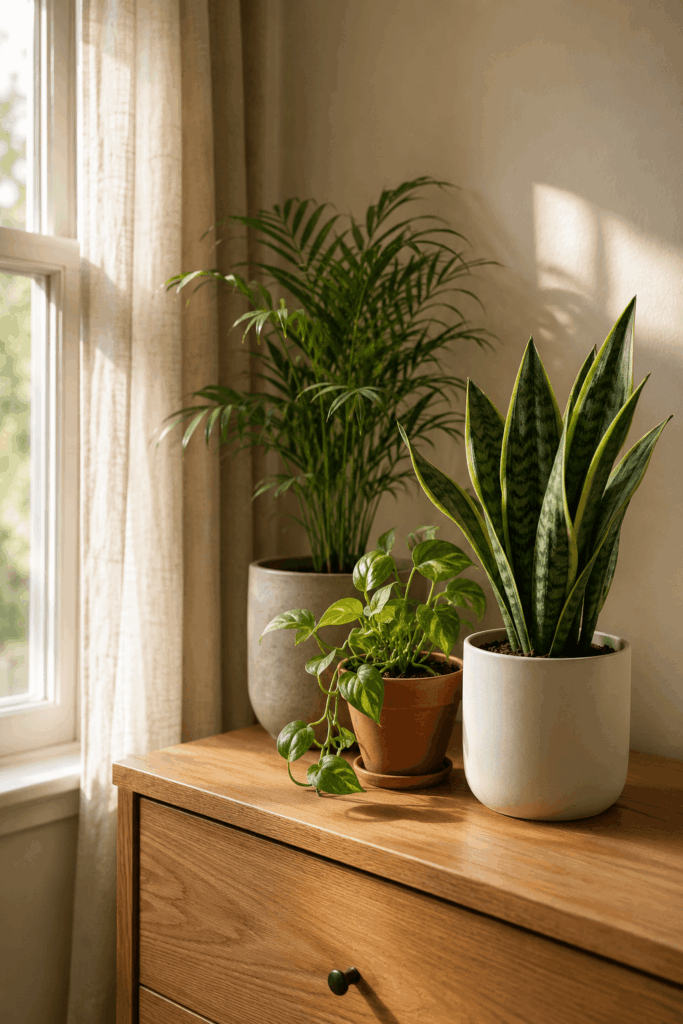
- Bedroom Air Purifying Plants Low Maintenance: snake plant, ZZ plant, and pothos.
- If you have cats or dogs, skip pothos, snake plant, ZZ, and philodendron. Start with spider plant, parlor palm, or cast iron plant.
- Most bedroom plants die from overwatering, not from forgetting to water.
The Truth About “Air Purifying” Plants
The story everyone repeats traces back to a 1989 NASA Clean Air Study, where researchers sealed plants in small chambers with formaldehyde, benzene, and other off-gassing compounds. The plants did filter the air. Significantly.
The catch: those chambers were sealed, much smaller than your bedroom, and didn’t have an HVAC system swapping air every few minutes.
A 2019 review in the Journal of Exposure Science and Environmental Epidemiology recalculated the math for actual rooms. The conclusion was unflattering. To match a single open window, you’d need somewhere between 100 and 1,000 plants per square meter. Roughly a small forest. In your bedroom.
So no, three pothos won’t measurably purify the air you sleep in.
What plants do offer in a bedroom is more modest and more honest. A handful of species use CAM photosynthesis, which means they release small amounts of oxygen overnight rather than during the day. Some lift humidity slightly, which can ease dry winter HVAC air. And visually, a corner of greenery makes a small bedroom feel calmer. That last one is hard to measure, but it’s real.
Buy plants because you like them, not because of the marketing.
What Makes a Plant Right for the Bedroom
Bedrooms are the worst rooms in most apartments for plants, and most beginner guides ignore this.
The window is often smaller. Curtains stay closed half the day. Doors close at night, killing airflow. The HVAC vent dries everything out in winter, then blasts it cold in summer. And bedside tables collect dust faster than any other surface, which clogs the leaf pores plants use to breathe.
Four criteria matter for a bedroom pick:
- Low light tolerance. Penn State Extension lists this as the single biggest filter for any indoor plant guide. Many “low light” plants on care tags actually need bright indirect light to thrive.
- Drought tolerance. You’ll forget. Pick a plant that handles missed waterings without flinching.
- Low or no fragrance. Strong-scented plants near a pillow ruin sleep. Skip jasmine and gardenia in the bedroom.
- Pet safety, if relevant. The ASPCA toxic plant list is the only source worth trusting here. Cross-check it before buying.
If you have a north-facing window: assume your bedroom is “low light” by every standard, and pick from the more shade-tolerant half of the list below.
Light is the limiting factor for almost every bedroom plant. Pick for that first, everything else second.
The 7 Best Bedroom Air Purifying Plants Low Maintenance
Each pick below tolerates the kind of light most bedrooms actually have. I’ve noted pet safety in bold so it’s impossible to miss.
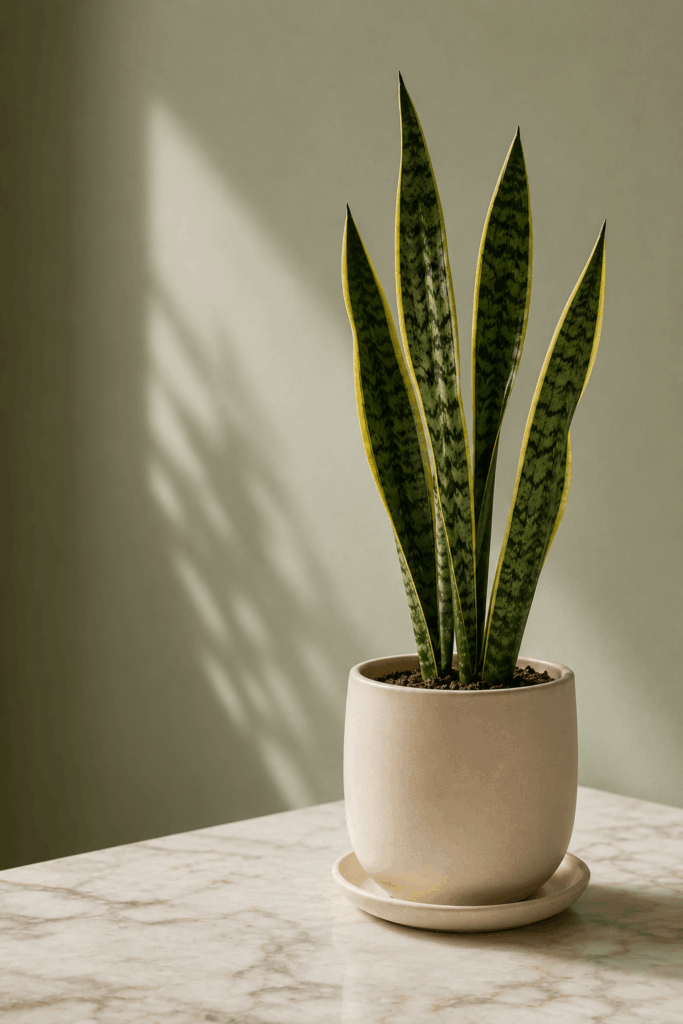
1. Snake Plant (Dracaena trifasciata)
If a plant can be described as stoic, this is the one. Stiff upright leaves, slow growth, no drama. NC State Extension lists it as one of the most light-flexible houseplants on the market, happy in low corners or bright indirect spots.
It’s also one of the few common houseplants that uses CAM photosynthesis, which means it releases a small amount of oxygen at night. Negligible for sleep quality, but a fun fact at dinner parties.
Light: Low to bright indirect. Survives almost anywhere except direct hot sun.
Water: Every two to three weeks. Let the soil dry out completely. In winter, every four weeks is plenty.
Pets: Toxic to cats and dogs (mild) per ASPCA.
Beginner mistake to avoid: Watering on a schedule. Snake plants rot fast in damp soil. Always check the soil with a finger first.
2. ZZ Plant (Zamioculcas zamiifolia)
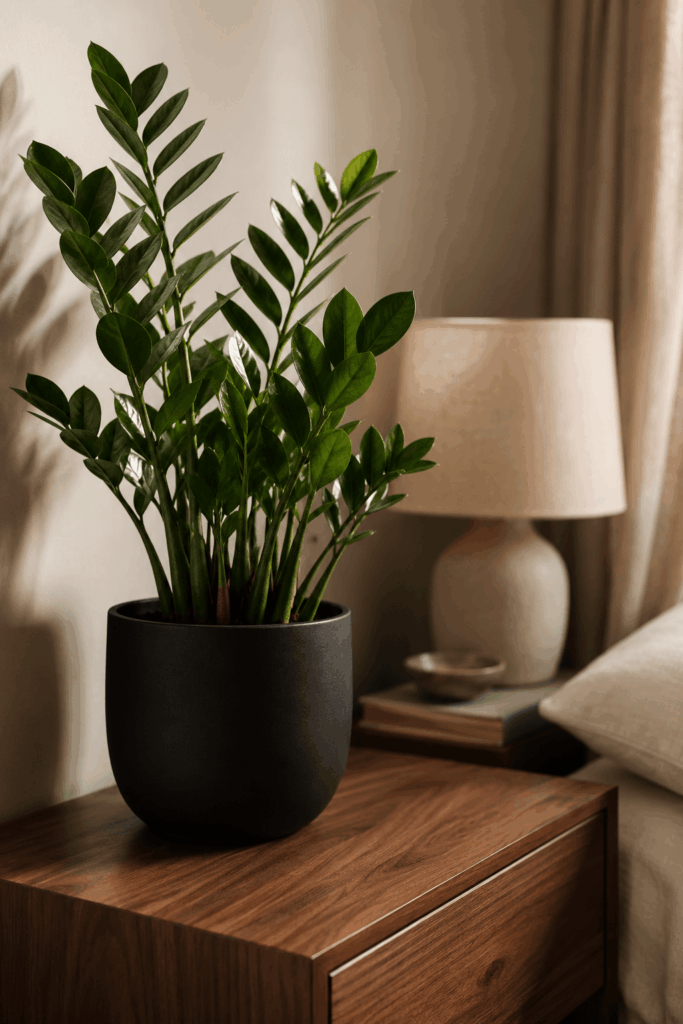
The plant equivalent of a cast iron pan. Glossy, dark green, almost suspiciously shiny. The thick rhizomes underground store water for weeks, which is why ZZs survive vacations, deadlines, and short-term forgetting.
Iowa State Extension notes that ZZ plants are among the most drought-tolerant houseplants commonly sold in big-box stores. They also handle fluorescent office light, which translates well to dim bedrooms.
Light: Low to medium indirect. Avoid direct sun, which scorches the leaves.
Water: Every two to three weeks in summer, every three to four in winter. Wait until soil is bone dry.
Pets: Toxic to cats and dogs per ASPCA. Wash hands after handling cuttings; the sap can irritate skin.
Beginner mistake to avoid: Mistaking glossy leaves for “happy” leaves. ZZs always look glossy. Yellowing means you’re overwatering.
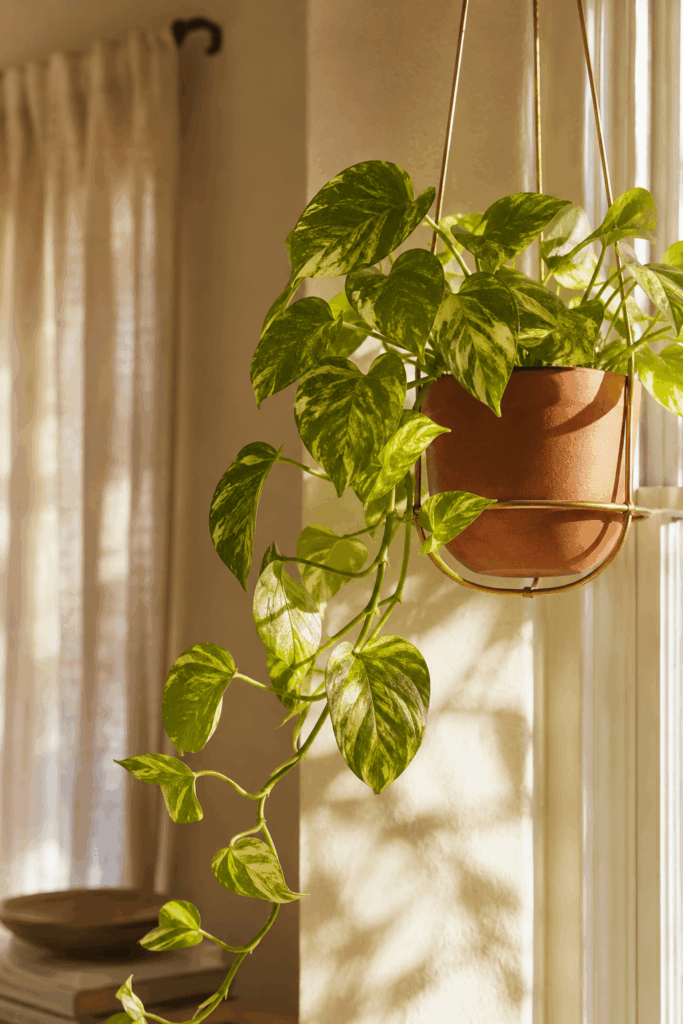
3. Pothos (Epipremnum aureum)
The plant most commonly recommended to beginners, and for good reason. Trailing vines, heart-shaped leaves, almost theatrical when it’s thirsty. Pothos doesn’t sulk silently. It droops, recovers in two hours after a drink, and gets back to growing.
You’ll see it sold under names like Golden Pothos, Marble Queen, Neon, and Pearls and Jade. They all have similar care needs.
Light: Tolerates very low light, but variegated types lose their pattern in dim corners. A spot a few feet from a window is ideal.
Water: Every one to two weeks. Top inch of soil should feel dry first.
Pets: Toxic to cats and dogs per ASPCA. Calcium oxalate crystals cause mouth irritation if chewed.
Beginner mistake to avoid: Hanging it where the trailing vines reach the floor and tempt a curious cat. Pothos is one of the most chewed houseplants in vet ER reports.
4. Spider Plant (Chlorophytum comosum)
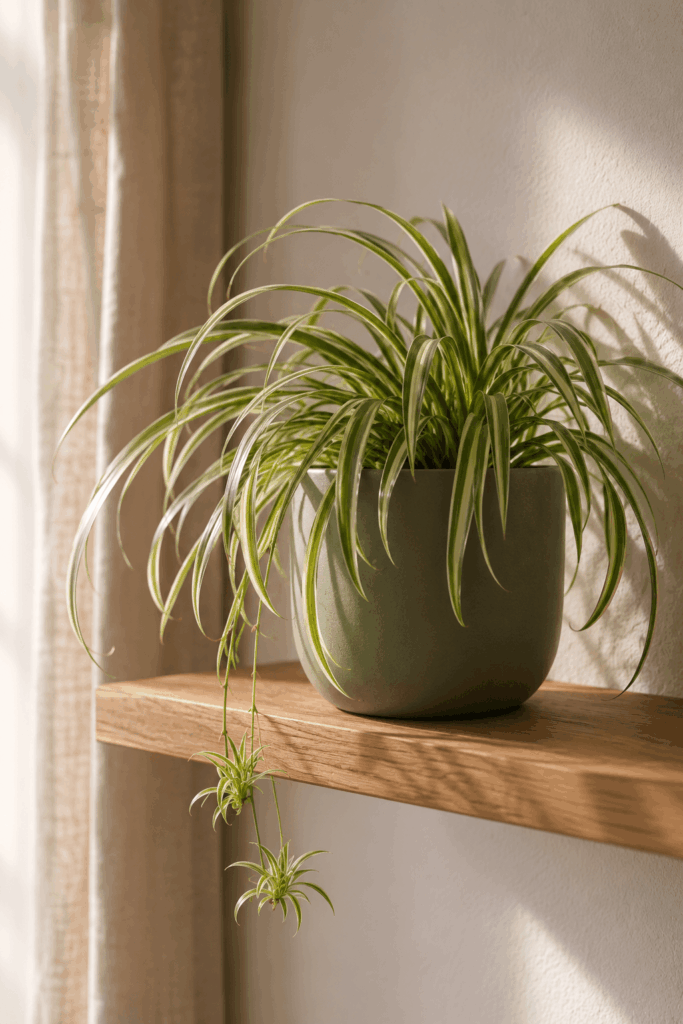
The first pet-safe pick on the list, and one of the easiest plants to find at any garden center. Long arching leaves, often with a cream stripe down the middle, and small “babies” that dangle off the mother plant once it matures. Those babies make spider plants one of the most-shared houseplants among friends.
Spider plants tolerate inconsistent watering, dry HVAC air, and most light conditions short of full shade.
Light: Bright indirect is best, but they survive medium light without complaint.
Water: Weekly in summer, every ten to fourteen days in winter. They prefer slightly moist soil, never soggy.
Pets: Non-toxic to cats and dogs per ASPCA. Worth knowing: cats are oddly attracted to the leaves and may chew them mildly hallucinogenically, similar to catnip, but it’s safe.
Beginner mistake to avoid: Using tap water with high fluoride. Spider plants are sensitive to it; brown leaf tips usually mean the water, not your care.
5. Cast Iron Plant (Aspidistra elatior)
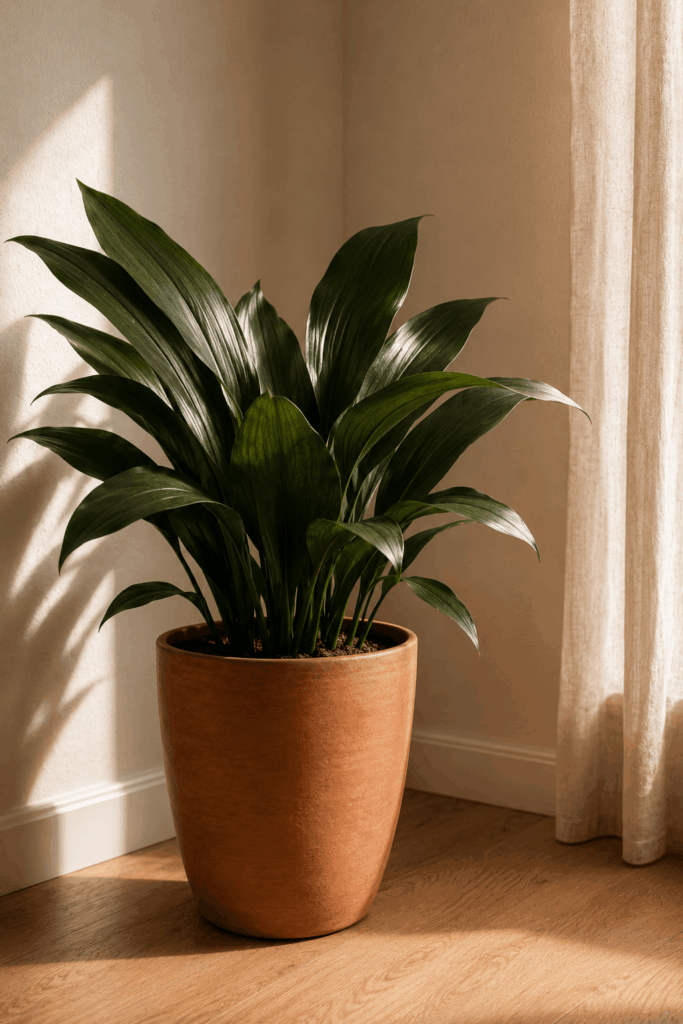
The one plant on this list with a name that’s also a promise. Cast iron plants tolerate low light, dry air, irregular watering, and being forgotten in a corner for weeks. Victorian houses kept them in coal-soot parlors. If they survived that, they’ll survive your bedroom.
The trade-off: cast irons grow extremely slowly. The plant you bring home will look about the same a year later. That’s not a flaw if you wanted reliability over drama.
Light: Low to medium indirect. Avoid direct sun, which bleaches the leaves.
Water: Every two to three weeks. Let the soil dry between waterings.
Pets: Non-toxic to cats and dogs per ASPCA.
Beginner mistake to avoid: Fussing. Cast irons are happiest when ignored. Repot only every three to four years and feed lightly twice a year.
6. Parlor Palm (Chamaedorea elegans)
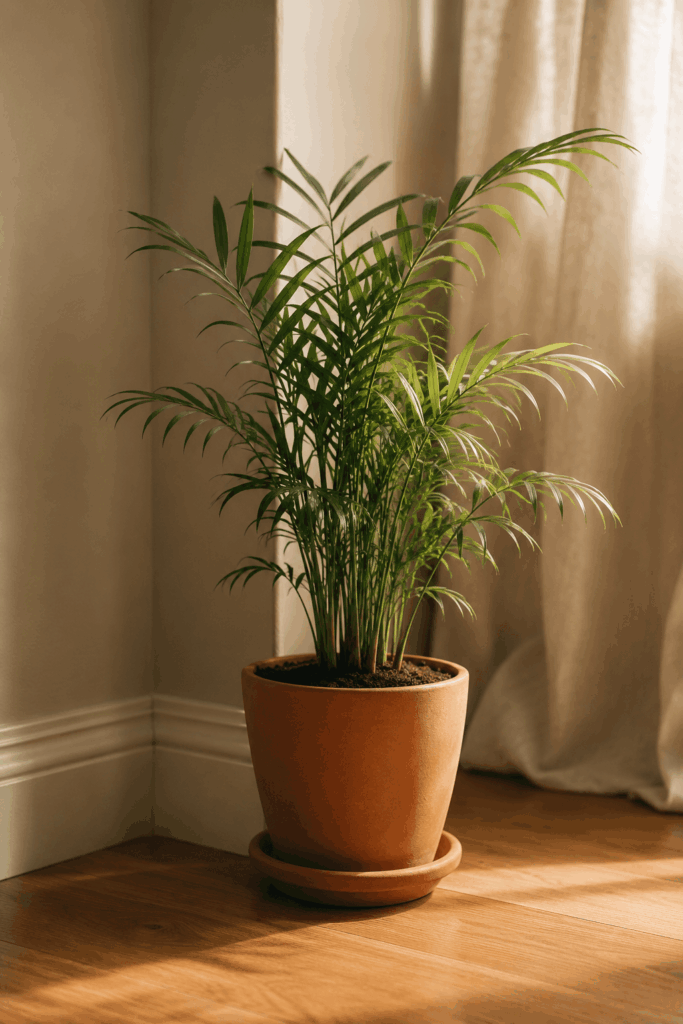
If you want the look of a tropical palm without the misting routine, this is the one. Parlor palms grow slowly, top out around three to four feet indoors, and tolerate the kind of low light that kills most other palms within a season.
NC State Extension notes that parlor palms have been a staple Victorian houseplant since the 1800s, originally because they survived dim, gas-lit drawing rooms. Not much has changed.
Light: Low to medium indirect. Direct sun browns the fronds.
Water: Weekly to every ten days. Keep soil lightly moist; parlor palms don’t tolerate full drought as well as snake or ZZ plants.
Pets: Non-toxic to cats and dogs per ASPCA.
Beginner mistake to avoid: Buying one already too big for your light. Smaller parlor palms acclimate to dim rooms; large ones often crash within months when moved into low light.
7. Heartleaf Philodendron (Philodendron hederaceum)
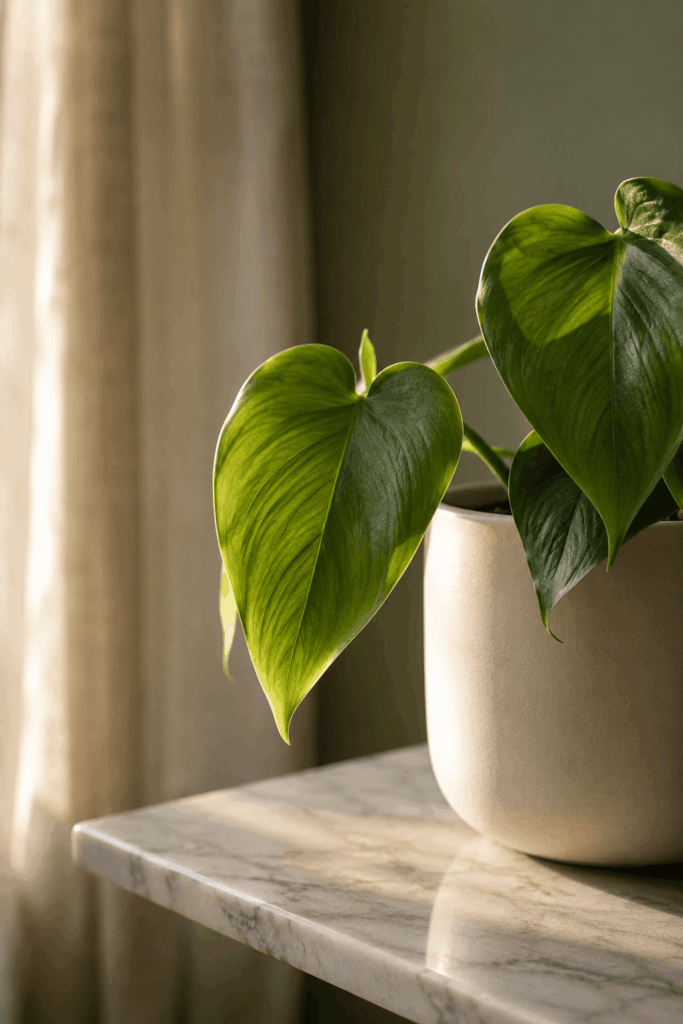
Pothos’s almost-twin and frequently mistaken for it at nurseries. The easiest tell: heartleaf philodendron has thinner, softer, more clearly heart-shaped leaves with a glossier finish. Pothos leaves are thicker and more matte.
Heartleaf is a touch more forgiving in low light than most pothos varieties, which makes it a strong pick for genuinely dim bedrooms.
Light: Low to medium indirect. One of the better true low-light performers.
Water: Every one to two weeks. Top inch of soil dry before refilling.
Pets: Toxic to cats and dogs per ASPCA. Same calcium oxalate issue as pothos.
Beginner mistake to avoid: Letting the trailing vines pile up on the floor where pets can reach. If you have a cat, this plant goes on a high shelf or it doesn’t come home.
Pet-Safe Quick Reference
Quick scan for cat and dog households. All toxicity status comes from the ASPCA Toxic and Non-Toxic Plant List, which is the closest thing to an authoritative source most vets use.
- Snake Plant: Toxic to cats and dogs (mild)
- ZZ Plant: Toxic to cats and dogs
- Pothos: Toxic to cats and dogs
- Spider Plant: Non-toxic to cats and dogs ✓
- Cast Iron Plant: Non-toxic to cats and dogs ✓
- Parlor Palm: Non-toxic to cats and dogs ✓
- Heartleaf Philodendron: Toxic to cats and dogs
“Toxic” in ASPCA-speak rarely means lethal. It usually means mouth and stomach irritation, drooling, or vomiting if a pet chews enough leaves. Still unpleasant, still avoidable.
If your household has a chewer, the safe shortlist is spider plant, cast iron plant, and parlor palm. All three are widely available at big-box stores and most local nurseries.
Where to Actually Put These Plants in a Small Bedroom
The placement guides in most articles assume you have a bay window and a built-in plant shelf. Most apartments do not. Here’s what actually works.
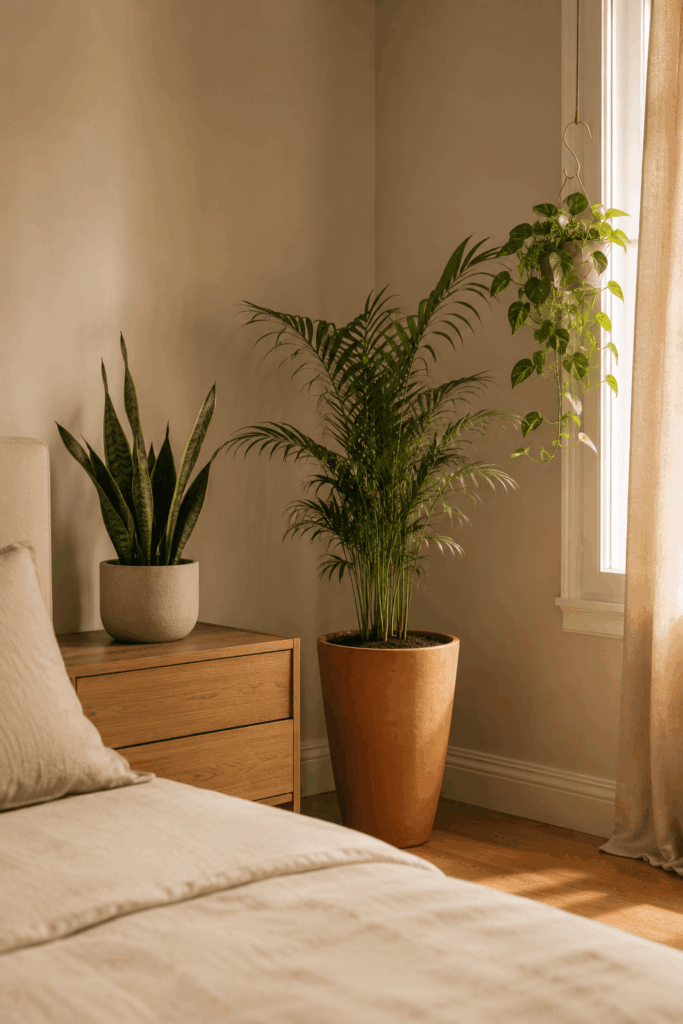
Top of dresser, away from heat vents: the prime spot. Stable surface, usually mid-height for indirect light, no foot traffic. Snake plant, ZZ plant, and parlor palm thrive here.
Bedside table, with a saucer: good for smaller plants like a young pothos or a spider plant. Always use a saucer; water rings on a wood nightstand take the romance out of plant ownership fast.
Wall shelf above the headboard: looks great in photos. In practice, anything heavier than a 4-inch pot is a fall risk over your sleeping head. Stick to small trailing pothos or philodendron in lightweight planters.
Hanging from a curtain rod: the safest spot for trailing plants if you have cats. Out of reach, gets the same indirect light as the window itself.
Floor corner near the window: for taller plants like cast iron or a maturing parlor palm. Add a plant caddy with wheels if you’ll need to move it for cleaning.
The Three Mistakes That Kill Bedroom Plants
Most plants don’t die because their owners didn’t care. They die because of three specific patterns I notice across reader emails and my own early failures.
Mistake one: watering on a schedule. Iowa State Extension lists overwatering as the leading cause of houseplant death, full stop. Bedrooms compound the problem because low light slows evaporation. The plant uses less water, the soil stays wet longer, and the roots rot. Always check soil moisture with a finger before watering. If it’s still damp an inch down, wait.
Mistake two: placing the plant on a heat vent or directly under AC. Both dry the leaves out faster than the plant can replace water. The crispy edges, the curling tips, the slow brown spread — that’s almost always vent placement, not pest damage.
Mistake three: never rotating the plant. Plants grow toward light. If yours sits on a north-facing windowsill and never moves, the side facing the window will fill out while the back goes leggy and bald. A quarter-turn every two weeks fixes this.
None of these are care-difficulty problems. They’re attention problems, and they’re easy to break once you notice the pattern.
FAQs
Q: Do bedroom plants actually purify the air while you sleep?
A: No, bedroom plants do not measurably purify indoor air in normal living conditions. The 1989 NASA Clean Air Study used sealed chambers, and a 2019 review found you’d need 100 to 1,000 plants per square meter to match a single open window. Plants do release small amounts of oxygen and slightly raise humidity, which is more modest than marketing claims suggest.
Q: What is the best low-maintenance plant for a bedroom with no sunlight?
A: The snake plant and ZZ plant are the best picks for a bedroom with little to no direct sunlight. Both tolerate genuinely low light, survive missed waterings, and store water in their leaves or rhizomes. Cast iron plant is a third option if you want zero drama and slow, reliable growth.
Q: Are bedroom plants safe for cats and dogs?
A: Most popular bedroom plants are toxic to cats and dogs per the ASPCA, including pothos, snake plant, ZZ plant, and philodendron. The pet-safe shortlist is spider plant, parlor palm, and cast iron plant. Toxicity rarely means lethal — usually mouth irritation or vomiting if chewed.
Q: How often should I water bedroom plants?
A: Most low-maintenance bedroom plants need water every 1 to 3 weeks, depending on the species. Snake plants and ZZ plants stretch to every 2 to 3 weeks, while pothos and spider plants prefer weekly checks. Always test soil with a finger first — overwatering is the leading cause of houseplant death.
Q: Which plants release oxygen at night in the bedroom?
A: Snake plant and aloe vera release small amounts of oxygen at night through CAM photosynthesis, unlike most plants that only release oxygen during the day. The amount is too small to measurably affect sleep quality, but these plants tolerate bedroom conditions better than tropical species that demand bright light.
Q: Why do my bedroom plants keep dying?
A: The three most common causes are overwatering, placement near heat or AC vents, and never rotating the plant. Iowa State Extension lists overwatering as the leading cause of houseplant death, and bedrooms compound the problem because low light slows soil evaporation. Check soil moisture with a finger before every watering.
What Actually Matters
Building a list of Bedroom Air Purifying Plants Low Maintenance comes down to one honest question: which plant matches the specific awful conditions of your specific bedroom?
If you have a north window and a closed door most of the day, snake plant or ZZ. If you have cats or dogs, parlor palm or spider plant. If you want a vine on a high shelf, pothos. If you want something so reliable you’ll forget you own it, cast iron.
Don’t buy a plant because it looks beautiful in a stranger’s apartment. Buy a plant whose care needs match the corner of your room you’re trying to fill.
The first one I bought died because I didn’t think about the window. The next three lived because I did.